Constitutional Amendment Quiz
A free social sciences worksheet ready for your classroom. Open in Kuraplan to grab the print-ready PDF, customize it for your students, or generate a fresh version in seconds.
Constitutional Amendment Quiz
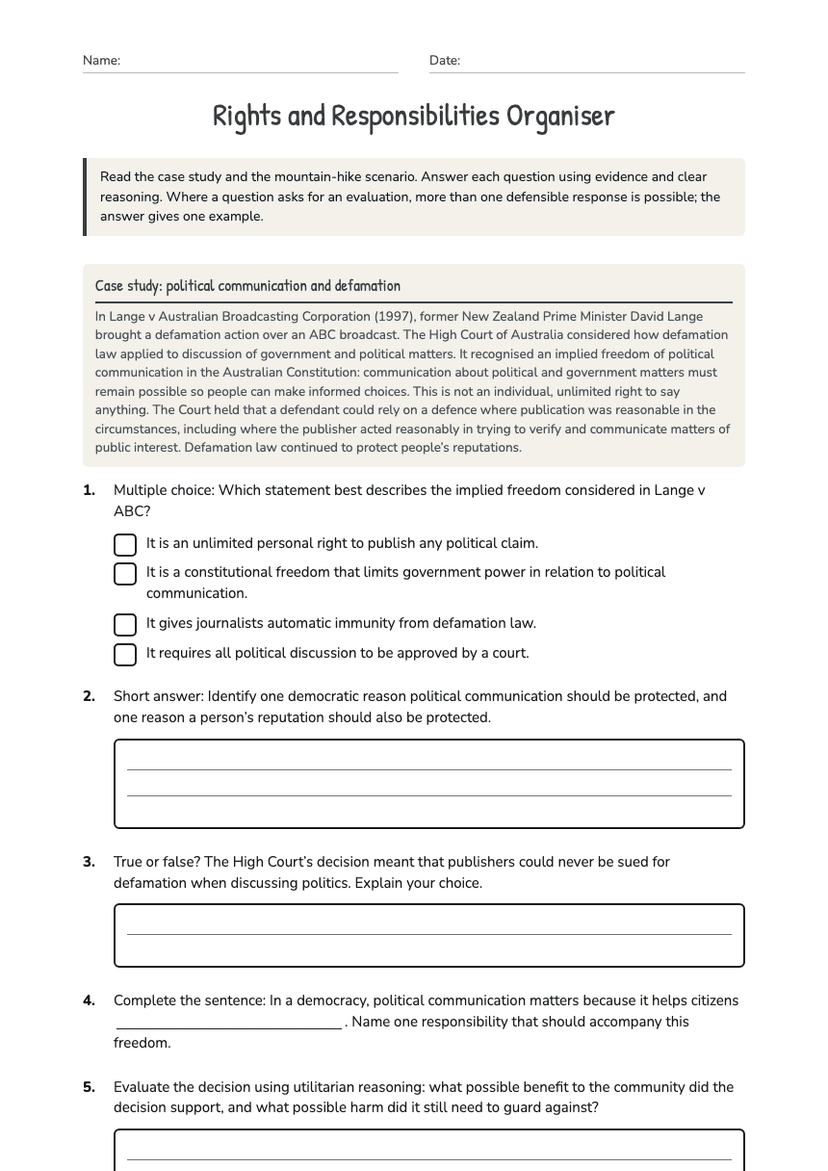
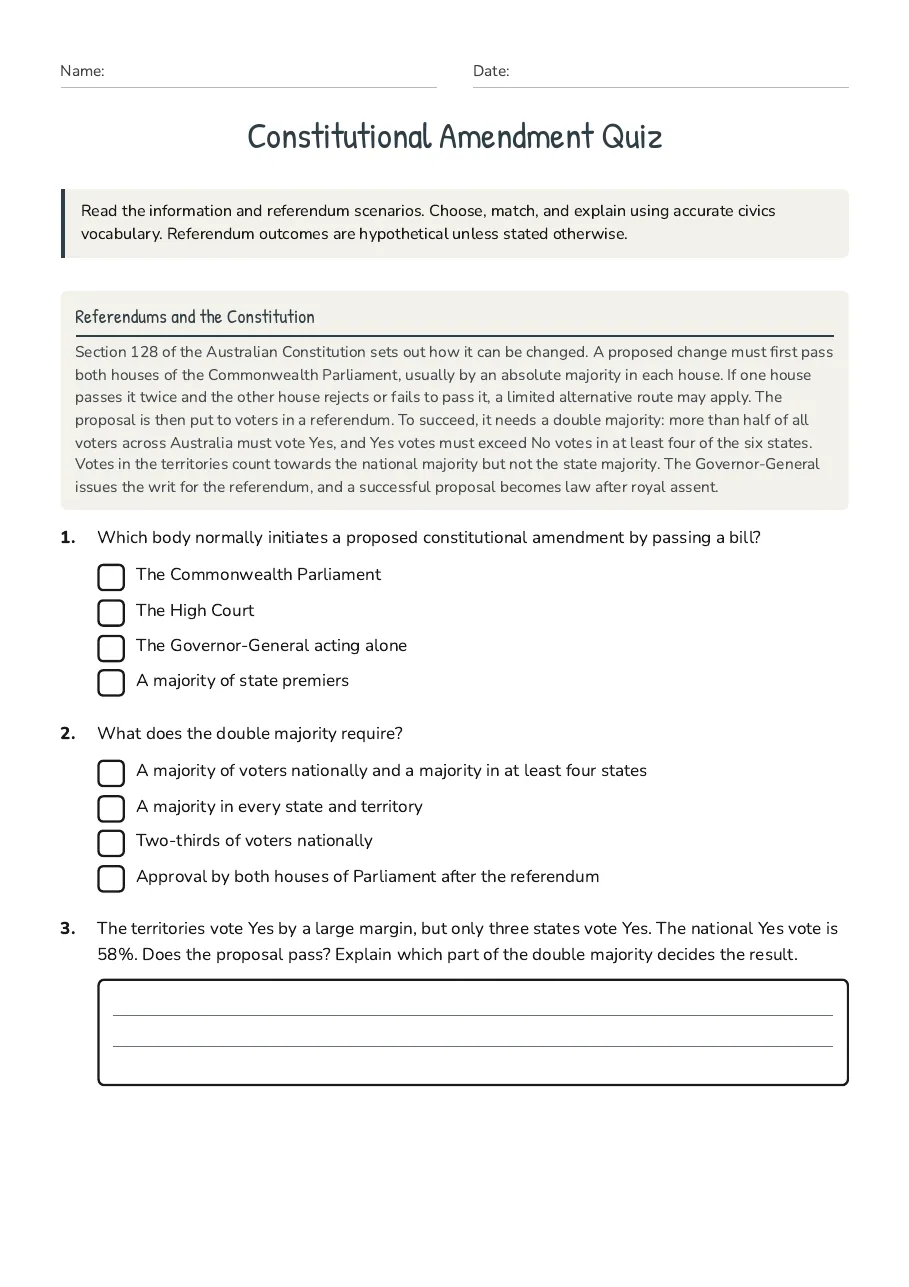
Referendums and the Constitution
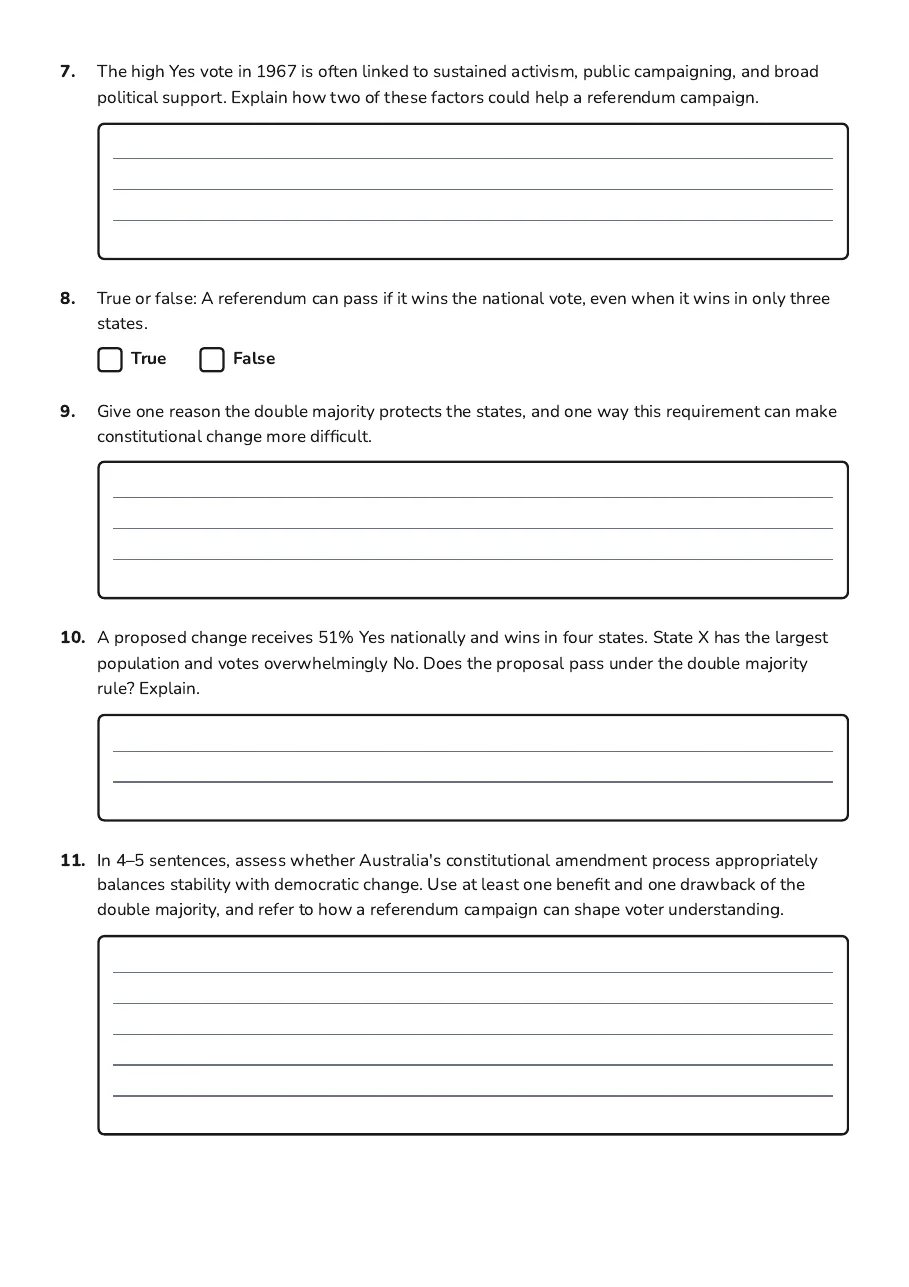
Section 128 of the Australian Constitution sets out how it can be changed. A proposed change must first pass both houses of the Commonwealth Parliament, usually by an absolute majority in each house. If one house passes it twice and the other house rejects or fails to pass it, a limited alternative route may apply. The proposal is then put to voters in a referendum. To succeed, it needs a double majority: more than half of all voters across Australia must vote Yes, and Yes votes must exceed No votes in at least four of the six states. Votes in the territories count towards the national majority but not the state majority. The Governor-General issues the writ for the referendum, and a successful proposal becomes law after royal assent.
- The Commonwealth Parliament
- The High Court
- The Governor-General acting alone
- A majority of state premiers
- A majority of voters nationally and a majority in at least four states
- A majority in every state and territory
- Two-thirds of voters nationally
- Approval by both houses of Parliament after the referendum
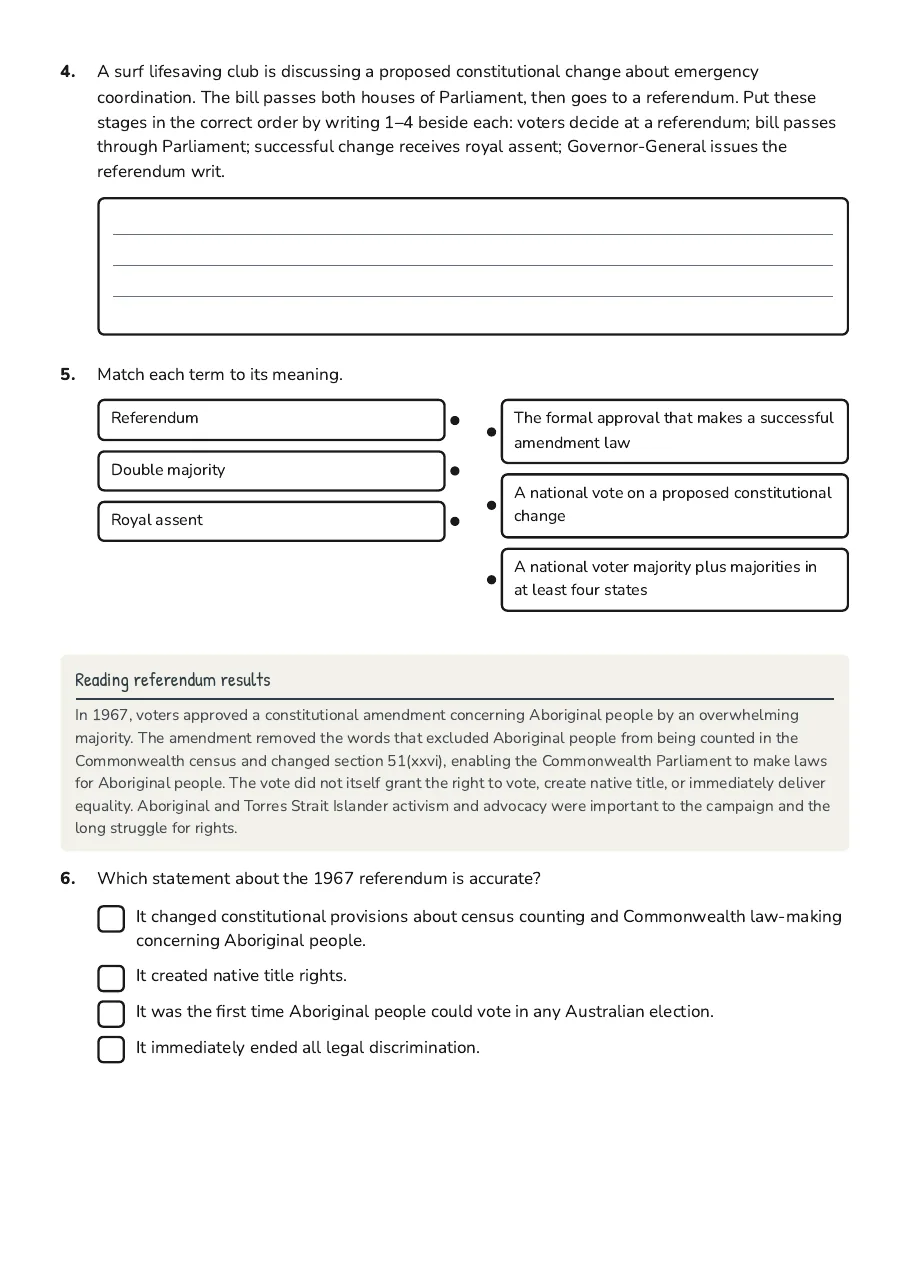
- Referendum
- Double majority
- Royal assent
- The formal approval that makes a successful amendment law
- A national vote on a proposed constitutional change
- A national voter majority plus majorities in at least four states
Reading referendum results
In 1967, voters approved a constitutional amendment concerning Aboriginal people by an overwhelming majority. The amendment removed the words that excluded Aboriginal people from being counted in the Commonwealth census and changed section 51(xxvi), enabling the Commonwealth Parliament to make laws for Aboriginal people. The vote did not itself grant the right to vote, create native title, or immediately deliver equality. Aboriginal and Torres Strait Islander activism and advocacy were important to the campaign and the long struggle for rights.
- It changed constitutional provisions about census counting and Commonwealth law-making concerning Aboriginal people.
- It created native title rights.
- It was the first time Aboriginal people could vote in any Australian election.
- It immediately ended all legal discrimination.
3 printable pages
Page 1
Page 2
Page 3
About This Worksheet
Free in Kuraplan
Sign up free, grab the PDF, and customize it for your class.
Print-Ready
Formatted for standard paper. Clean layout, easy to read.
AI-Generated
Created with Kuraplan's AI, designed for real classroom use.
For Teachers & Parents
Use in classrooms, for homework, tutoring, or homeschool.
Need a custom version of this worksheet?
Kuraplan's AI generates custom worksheets in seconds — differentiated for every learner, aligned to your curriculum.
Generate Custom Worksheets — FreeMore Social Sciences Worksheets
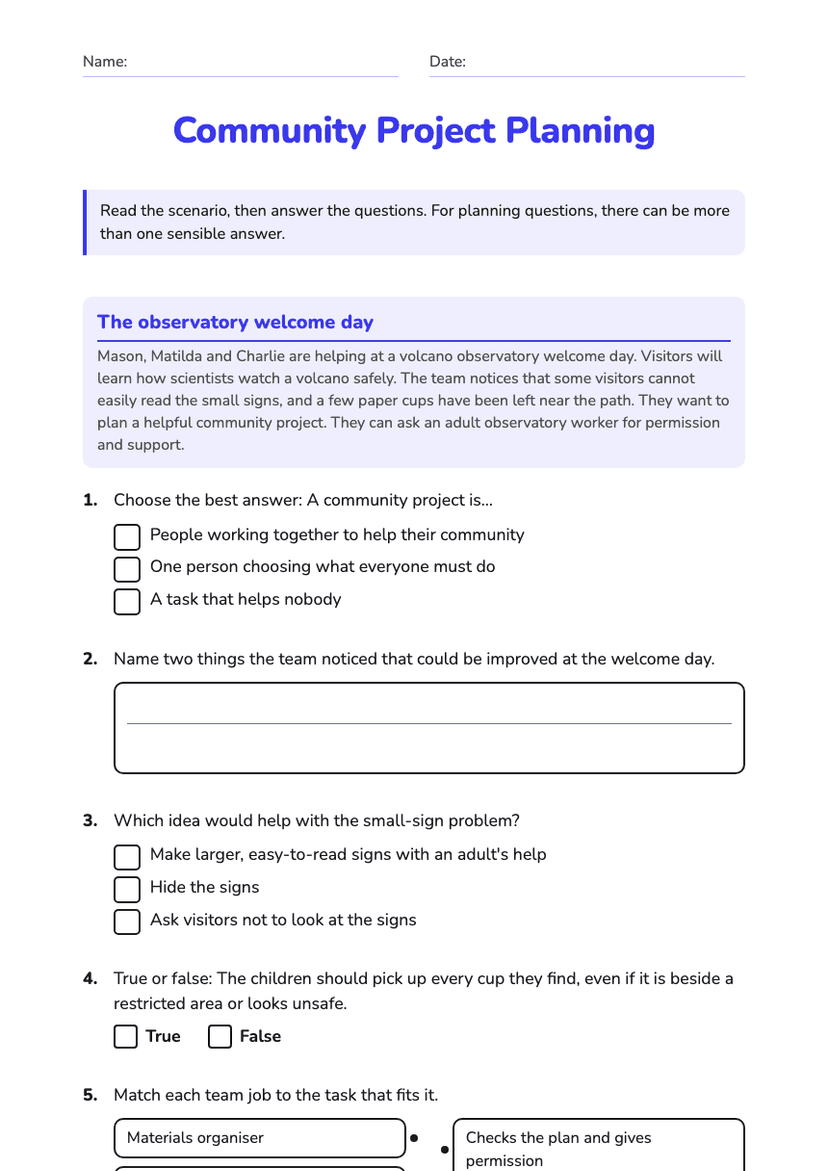
Community Project Planning
Free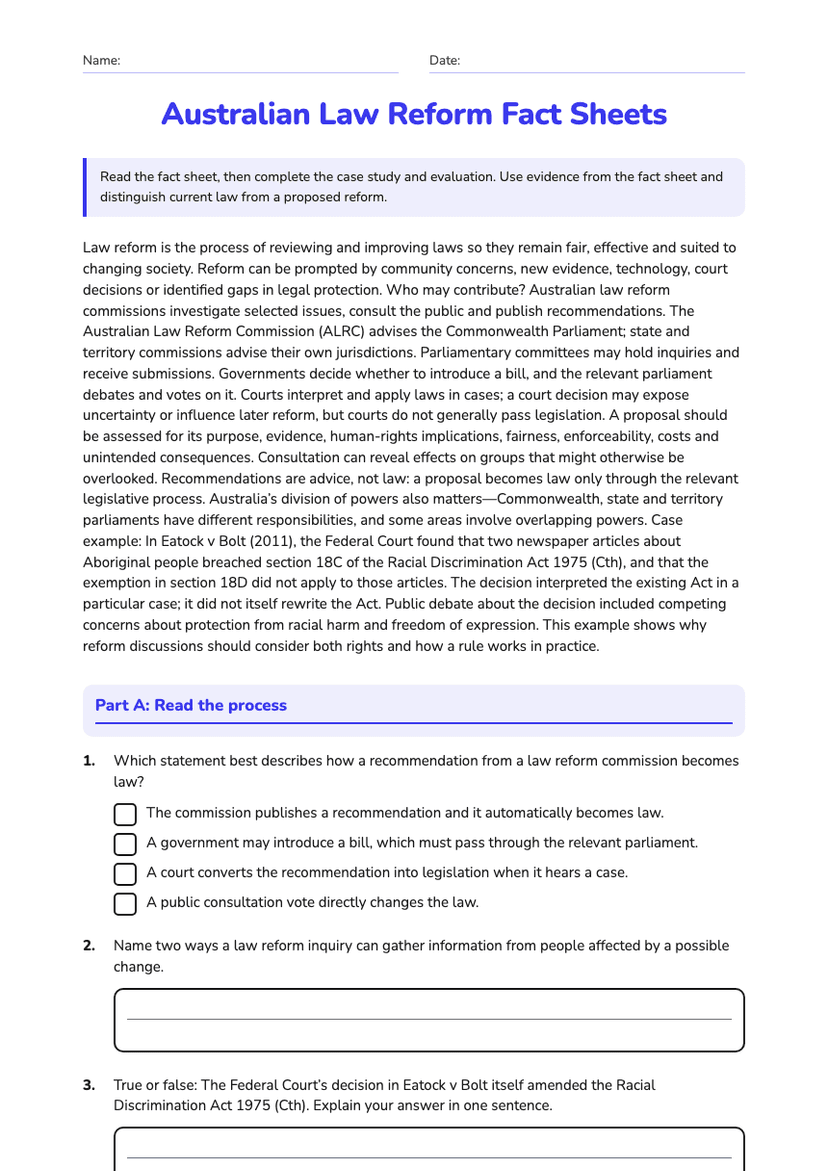
Australian Law Reform Fact Sheets
Free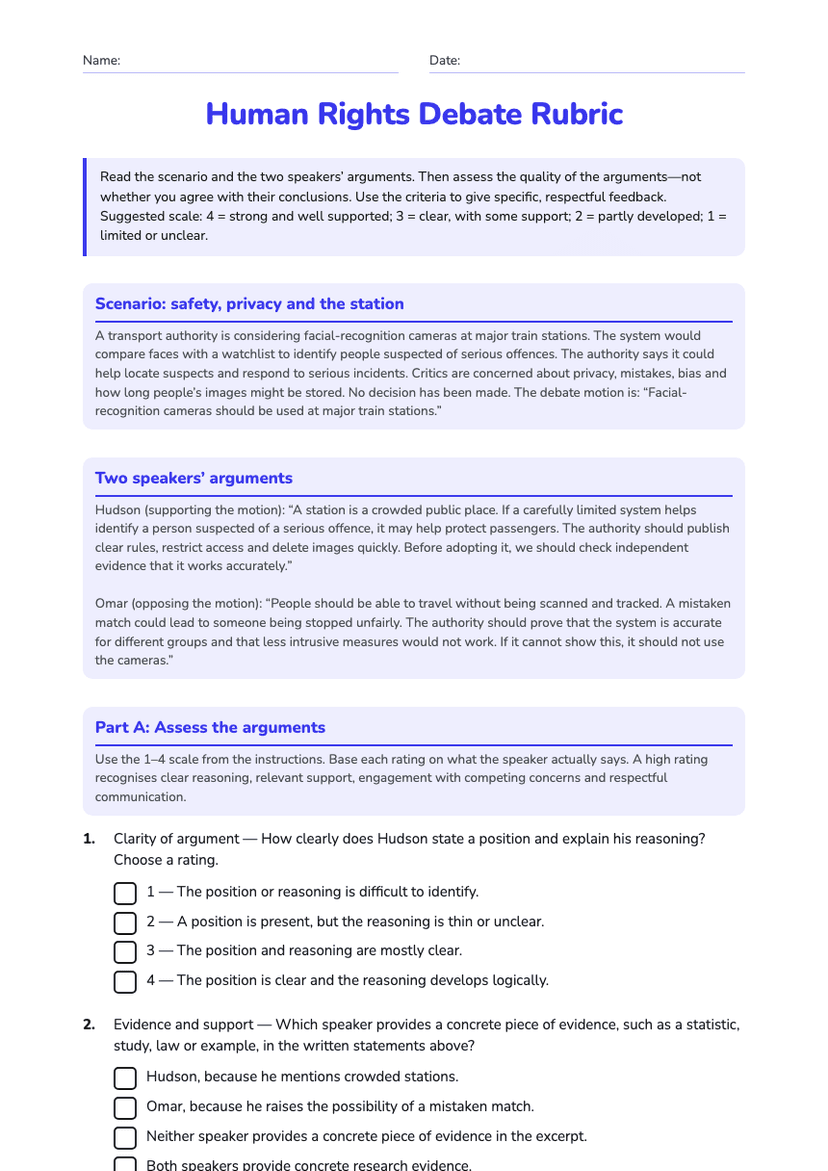
Human Rights Debate Rubric
Free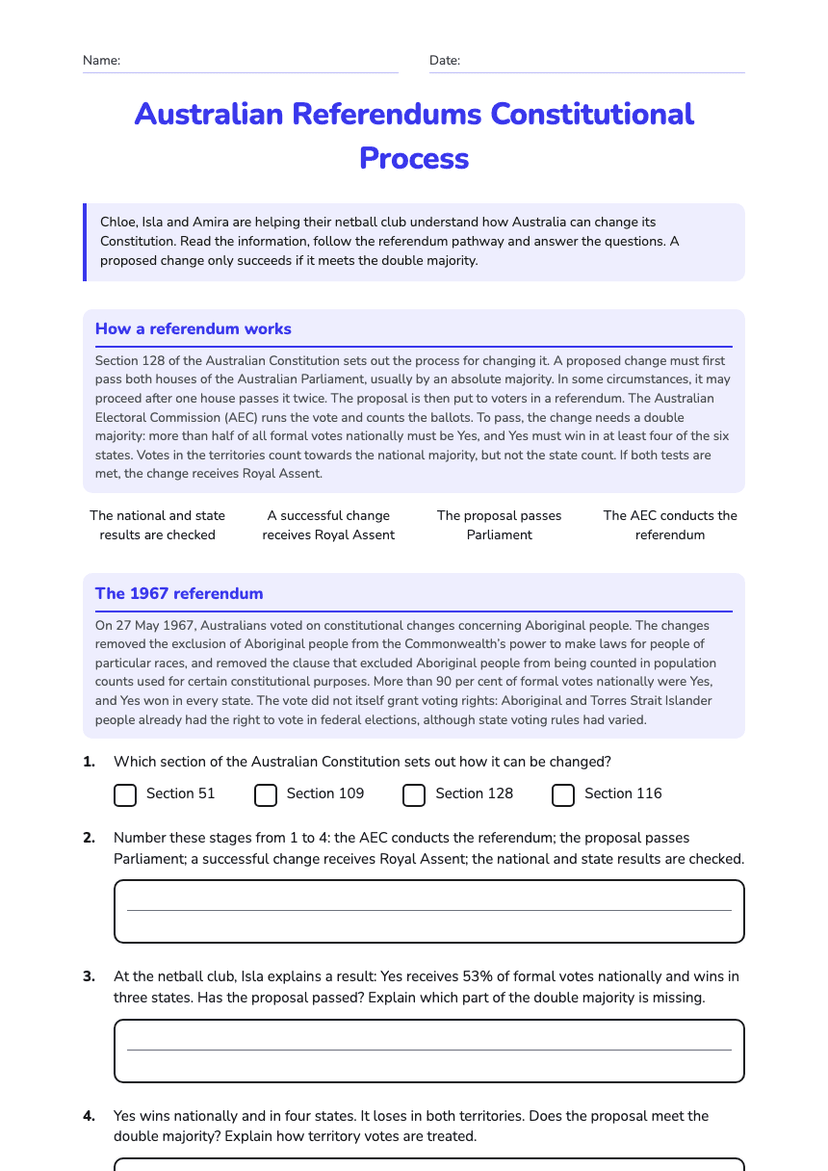
Australian Referendums Constitutional Process
Free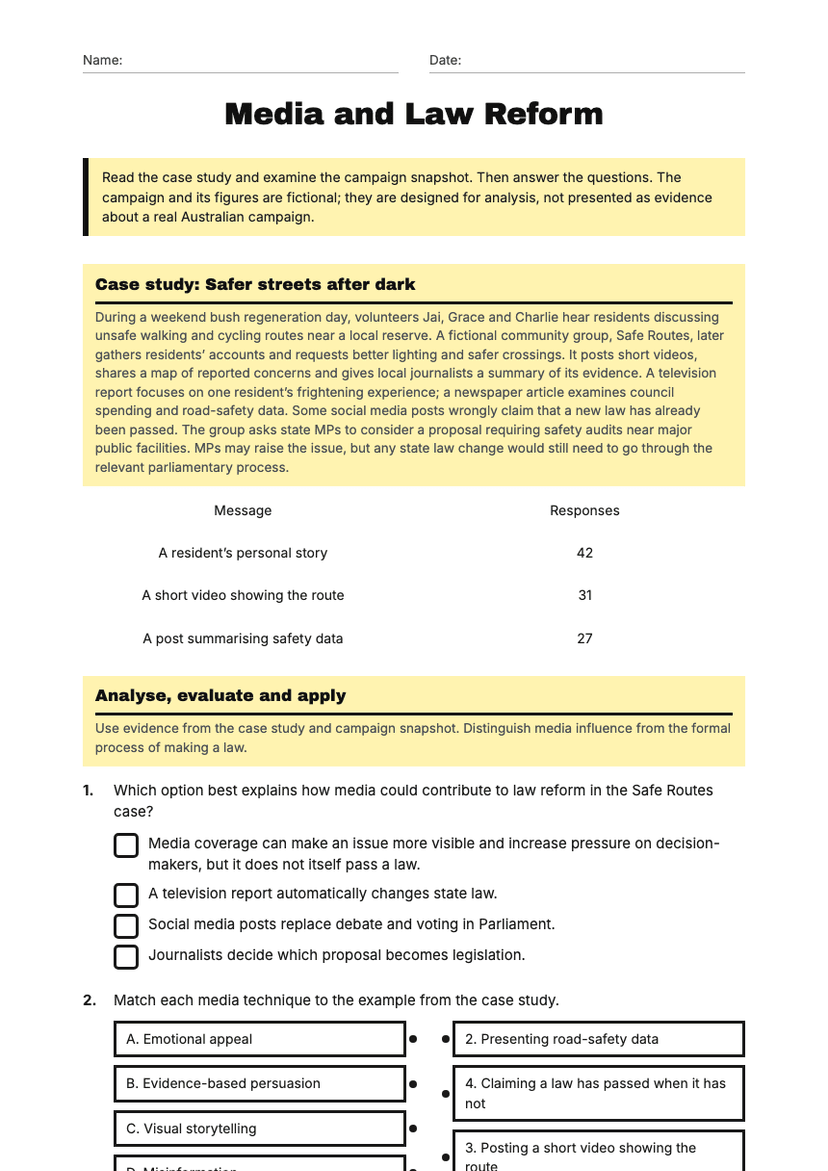
Media and Law Reform
Free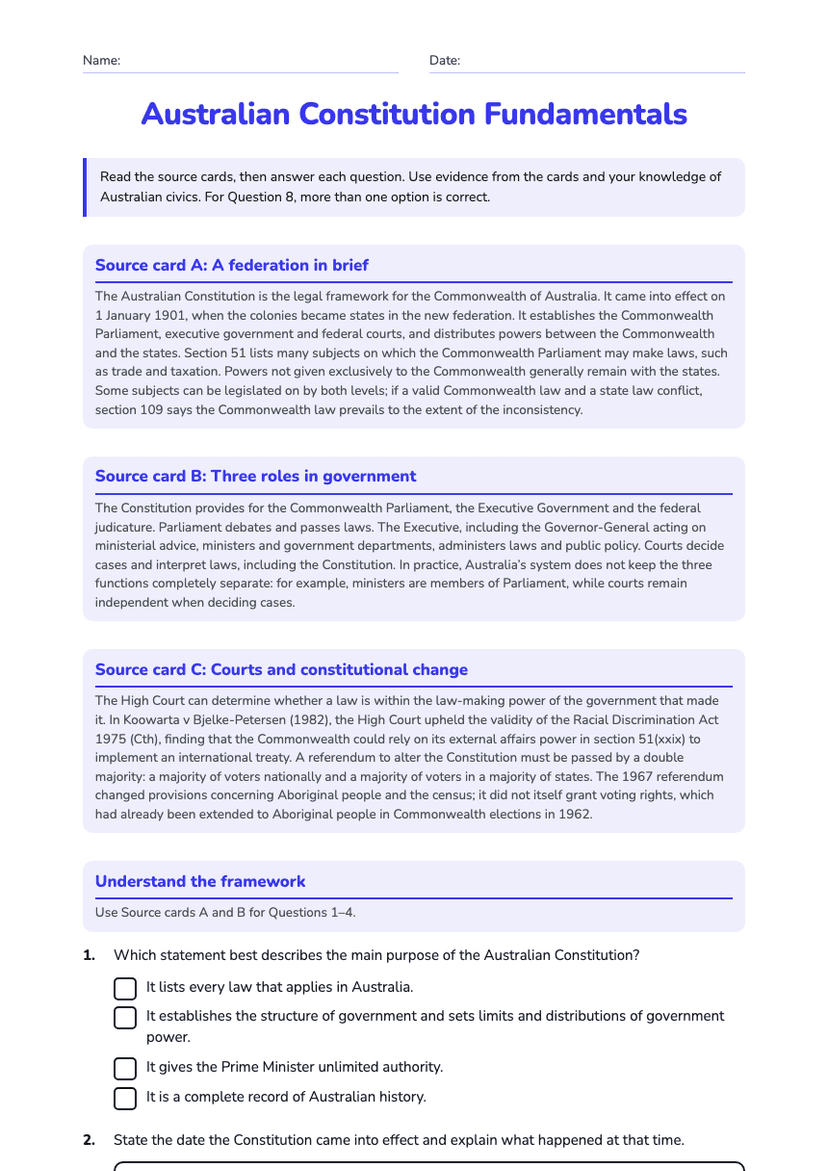
Australian Constitution Fundamentals
Free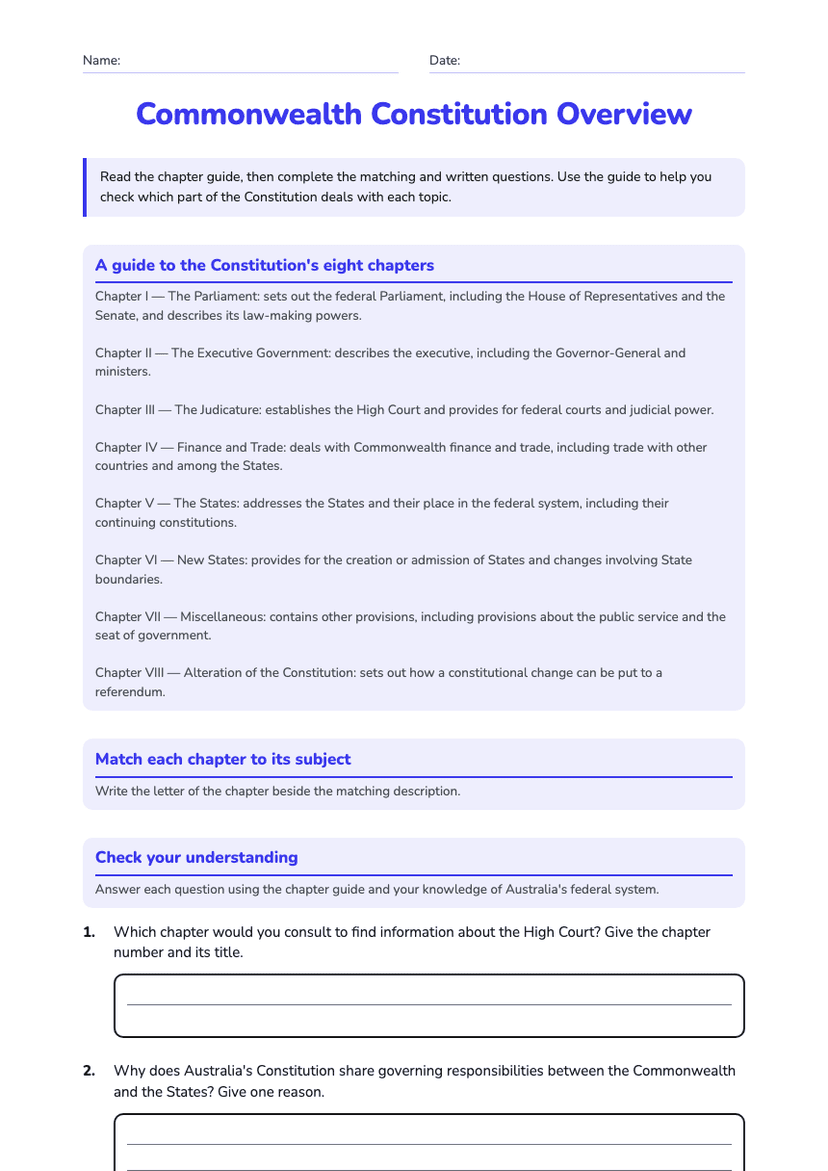
Commonwealth Constitution Overview
Free