Covalent Bonds Formation
A free science worksheet ready for your classroom. Open in Kuraplan to grab the print-ready PDF, customize it for your students, or generate a fresh version in seconds.
Covalent Bonds Formation
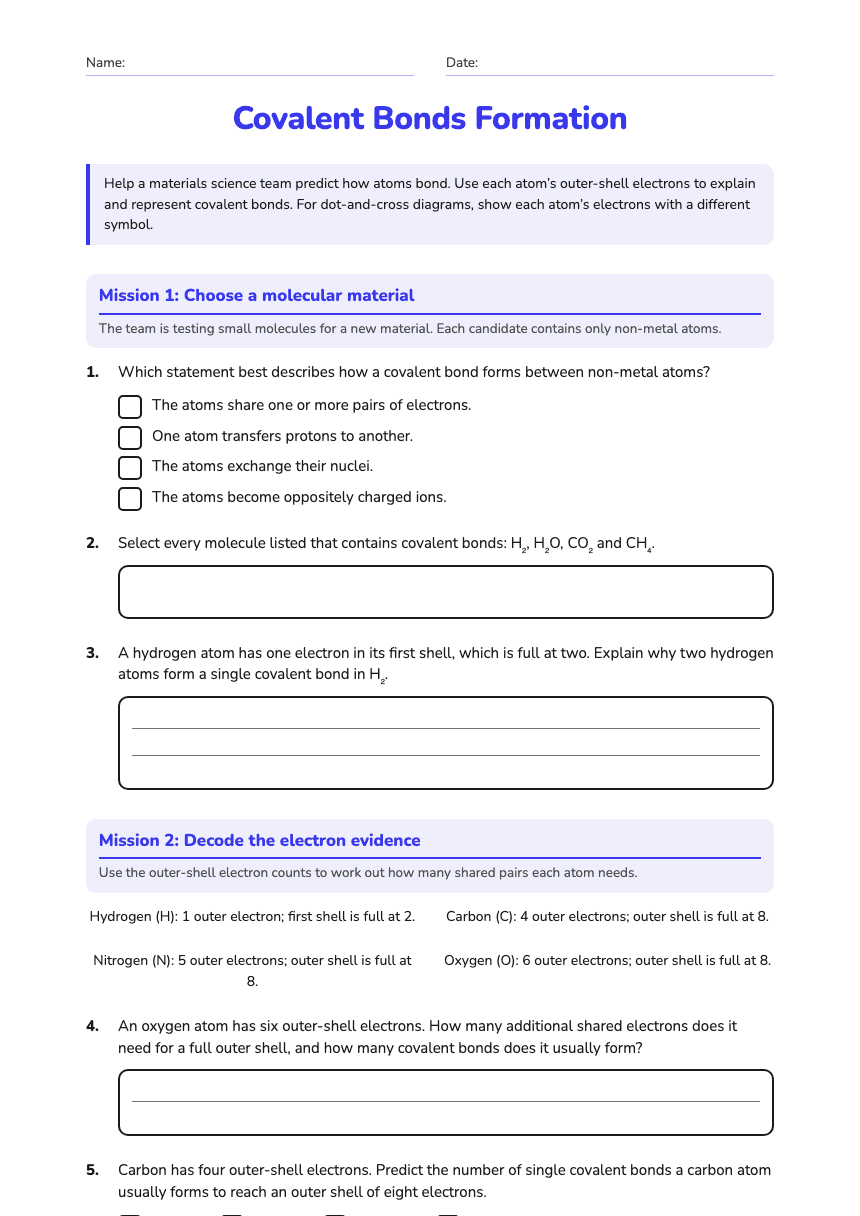
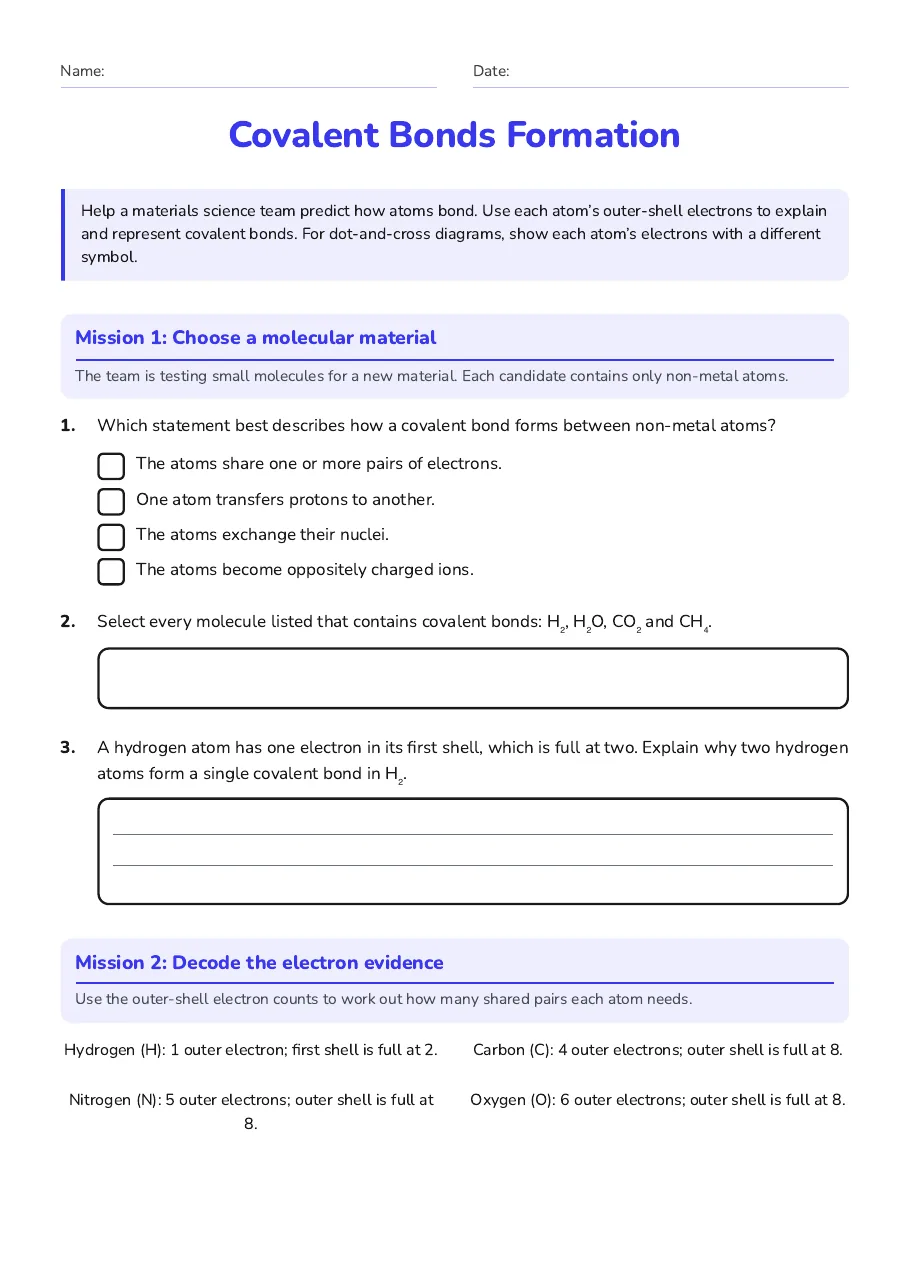
Mission 1: Choose a molecular material
The team is testing small molecules for a new material. Each candidate contains only non-metal atoms.
- The atoms share one or more pairs of electrons.
- One atom transfers protons to another.
- The atoms exchange their nuclei.
- The atoms become oppositely charged ions.
Mission 2: Decode the electron evidence
Use the outer-shell electron counts to work out how many shared pairs each atom needs.
Hydrogen (H): 1 outer electron; first shell is full at 2.
Carbon (C): 4 outer electrons; outer shell is full at 8.
Nitrogen (N): 5 outer electrons; outer shell is full at 8.
Oxygen (O): 6 outer electrons; outer shell is full at 8.
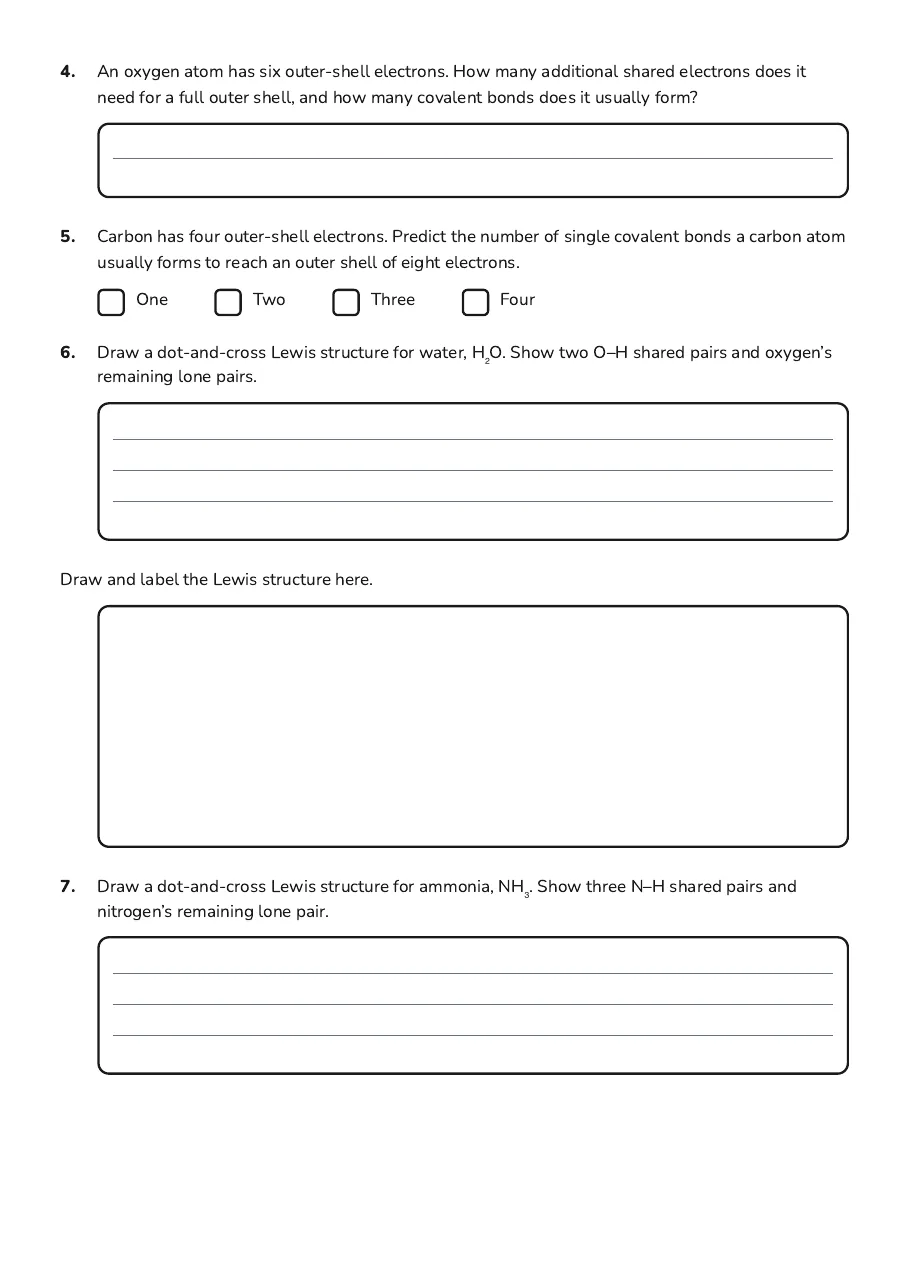
- One
- Two
- Three
- Four
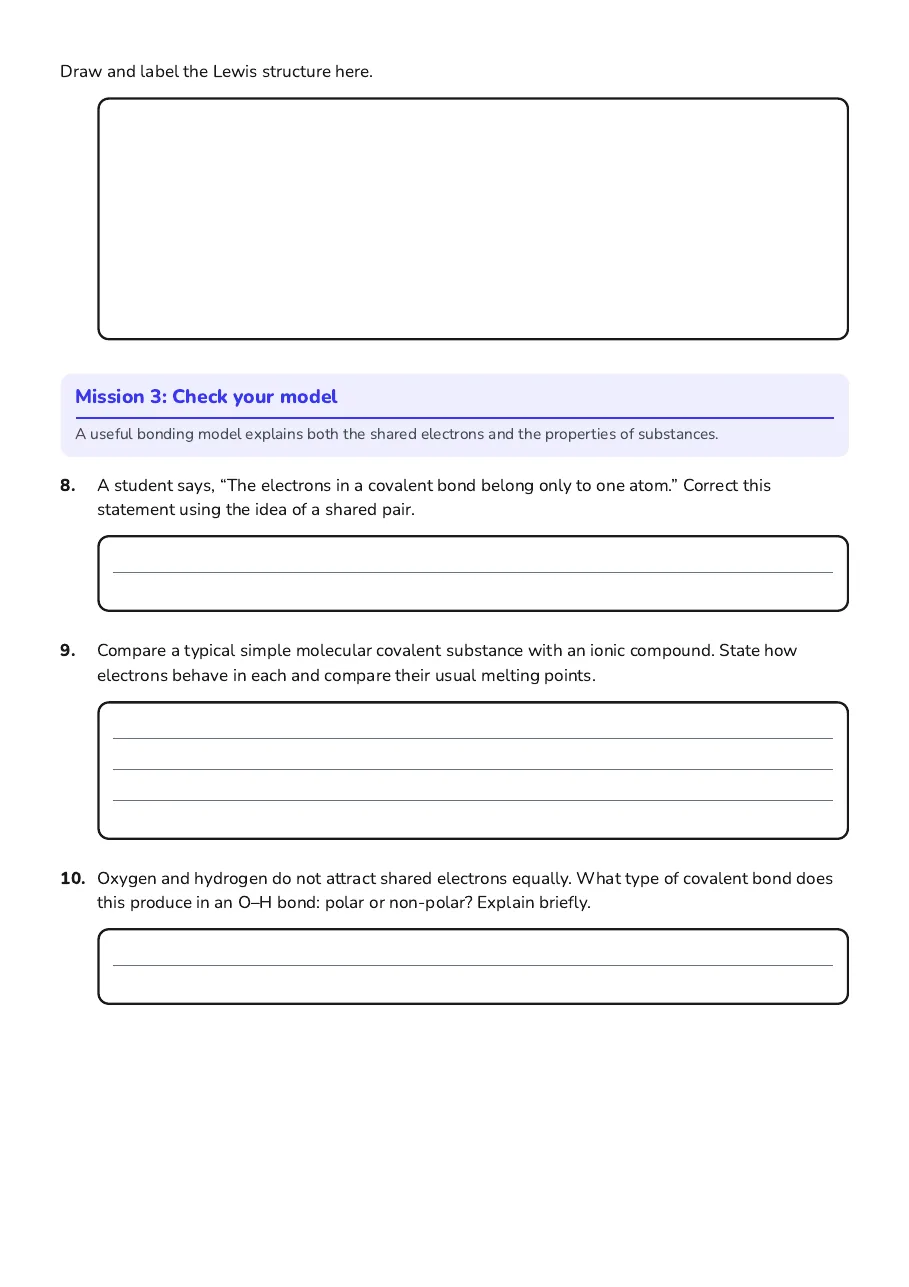
Mission 3: Check your model
A useful bonding model explains both the shared electrons and the properties of substances.
3 printable pages
Page 1
Page 2
Page 3
About This Worksheet
Free in Kuraplan
Sign up free, grab the PDF, and customize it for your class.
Print-Ready
Formatted for standard paper. Clean layout, easy to read.
AI-Generated
Created with Kuraplan's AI, designed for real classroom use.
For Teachers & Parents
Use in classrooms, for homework, tutoring, or homeschool.
Need a custom version of this worksheet?
Kuraplan's AI generates custom worksheets in seconds — differentiated for every learner, aligned to your curriculum.
Generate Custom Worksheets — FreeMore Science Worksheets
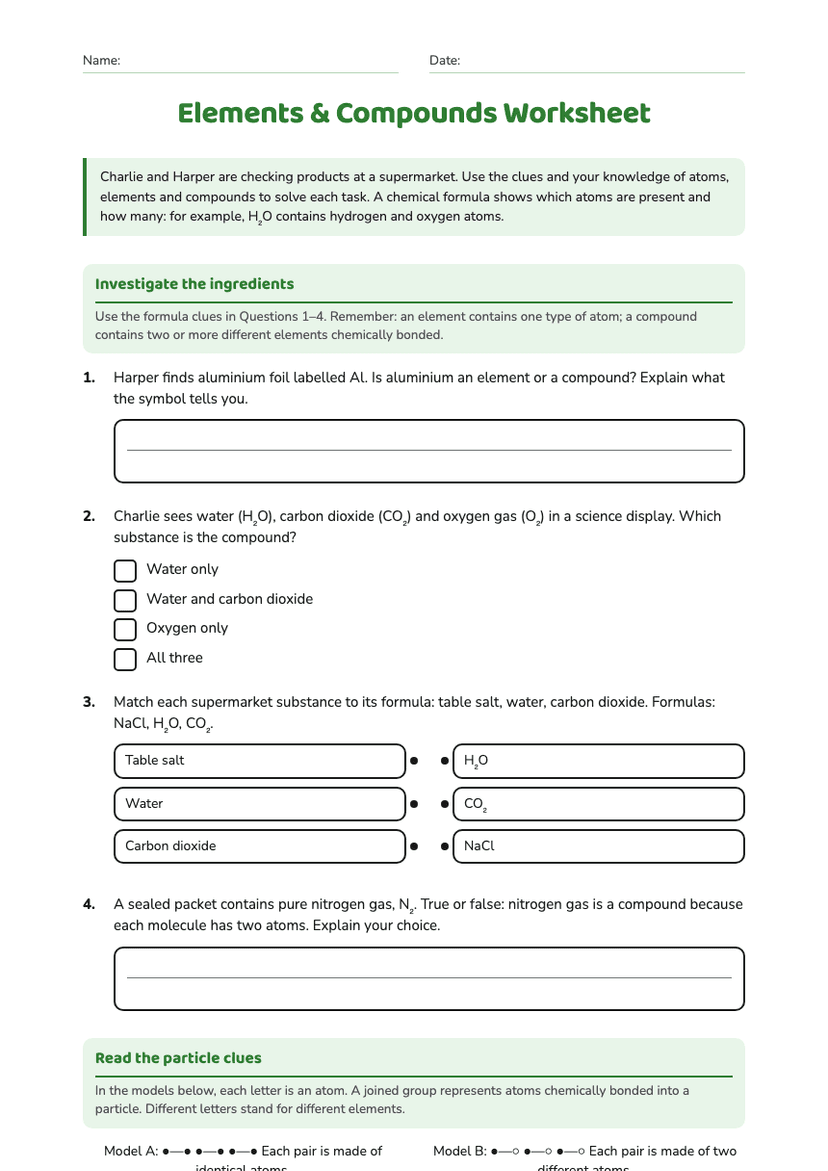
Elements & Compounds Worksheet
Free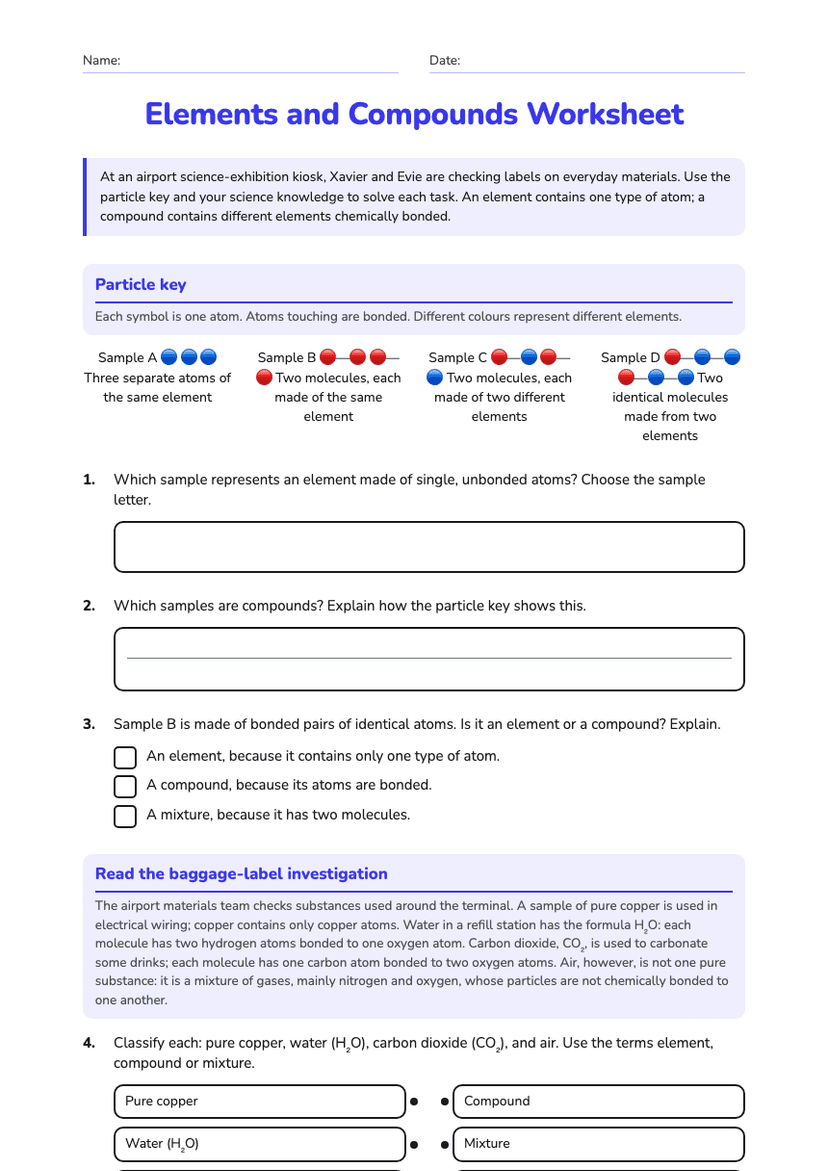
Elements and Compounds Worksheet
Free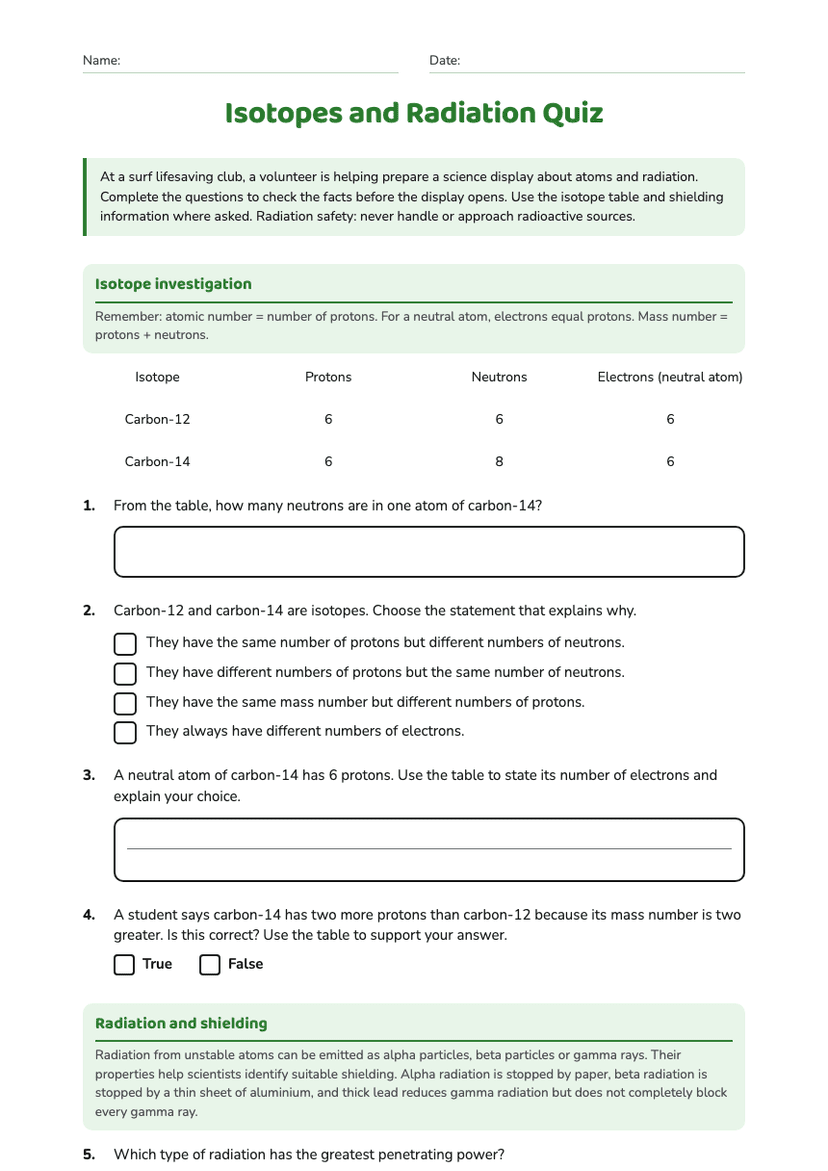
Isotopes and Radiation Quiz
Free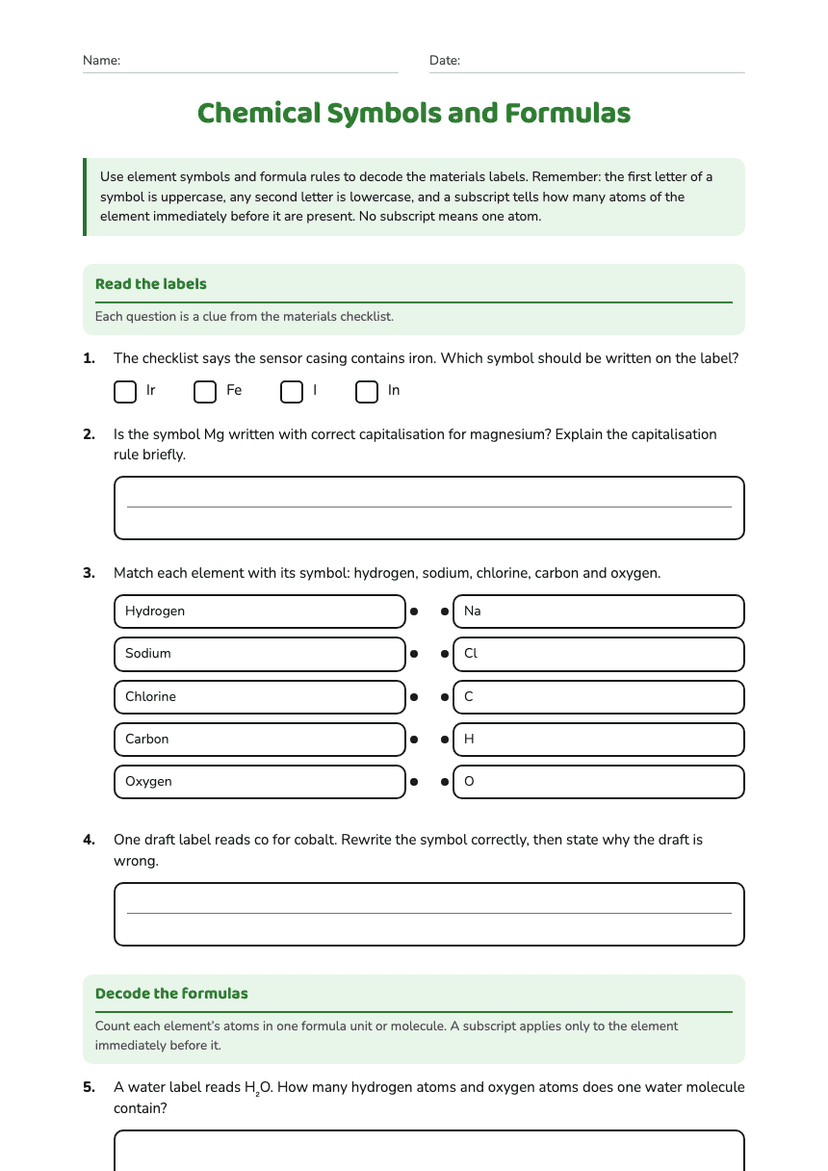
Chemical Symbols and Formulas
Free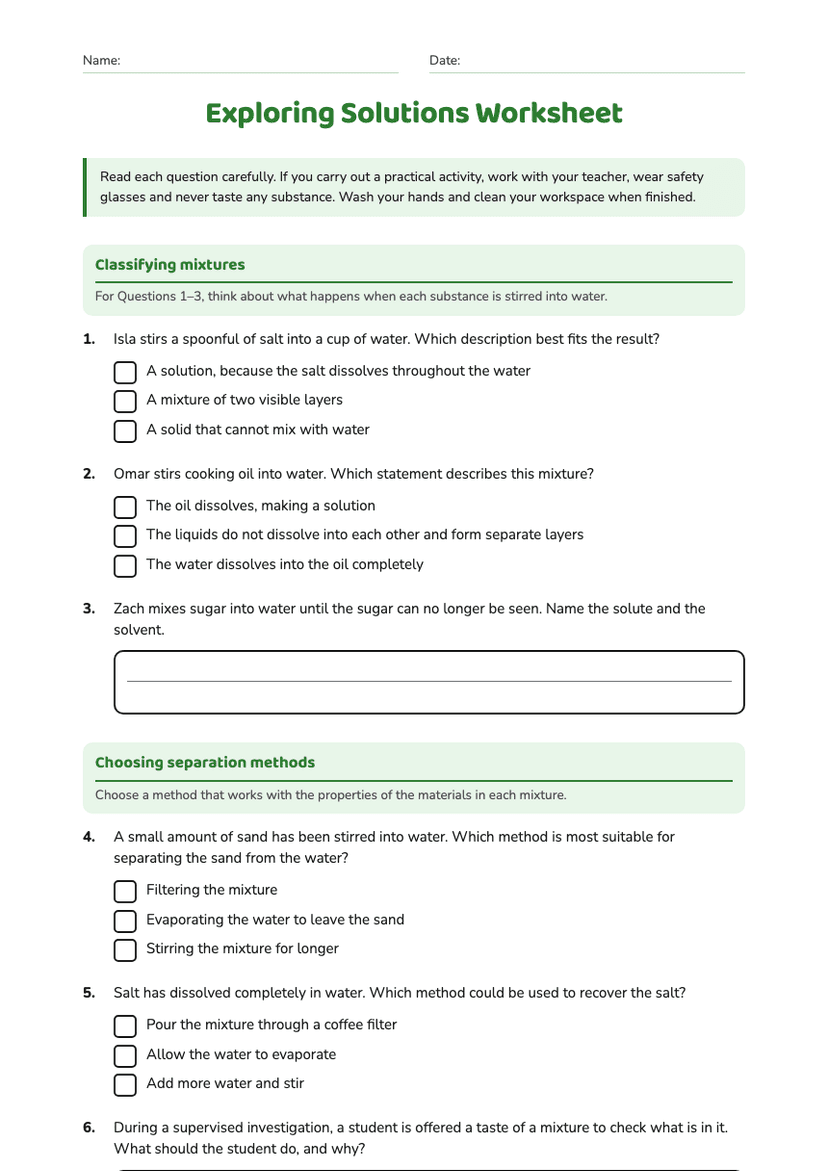
Exploring Solutions Worksheet
Free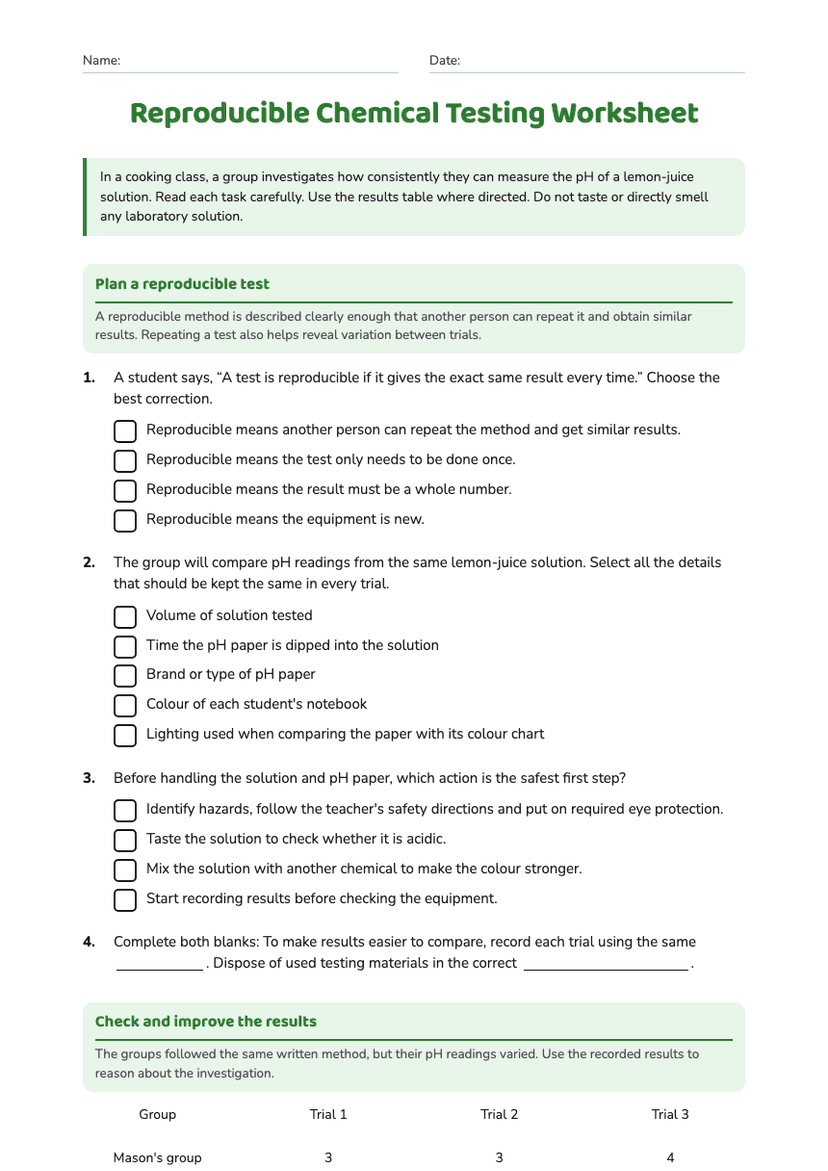
Reproducible Chemical Testing Worksheet
Free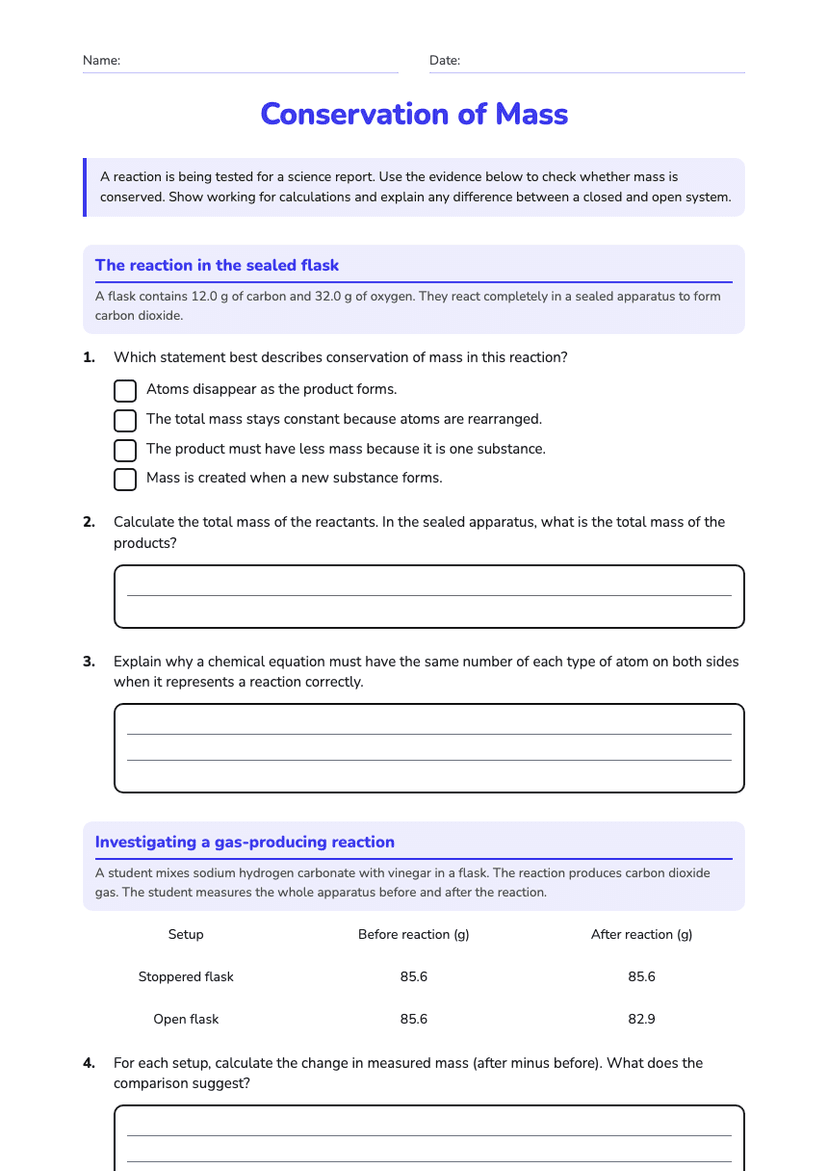
Conservation of Mass
Free