Cumberland Plain Woodland Exploration
A free social sciences worksheet ready for your classroom. Open in Kuraplan to grab the print-ready PDF, customize it for your students, or generate a fresh version in seconds.
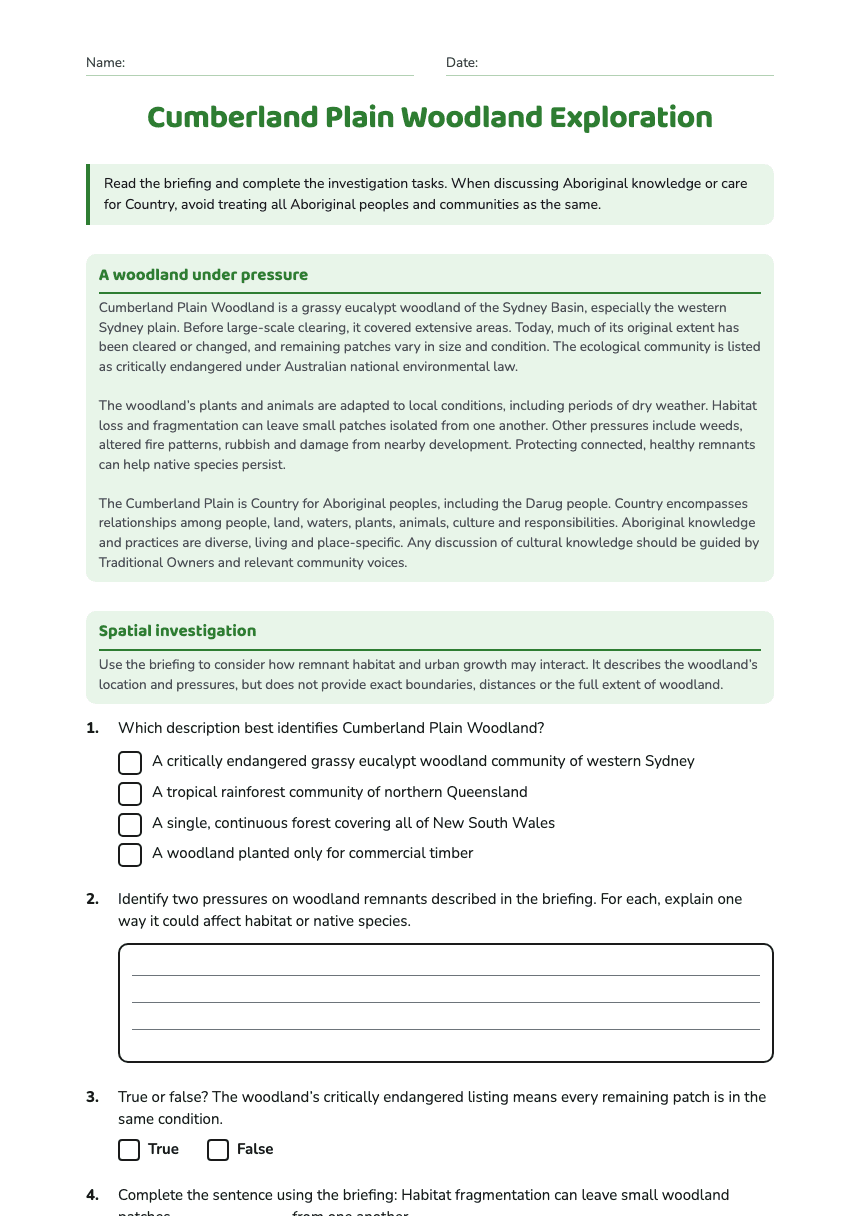
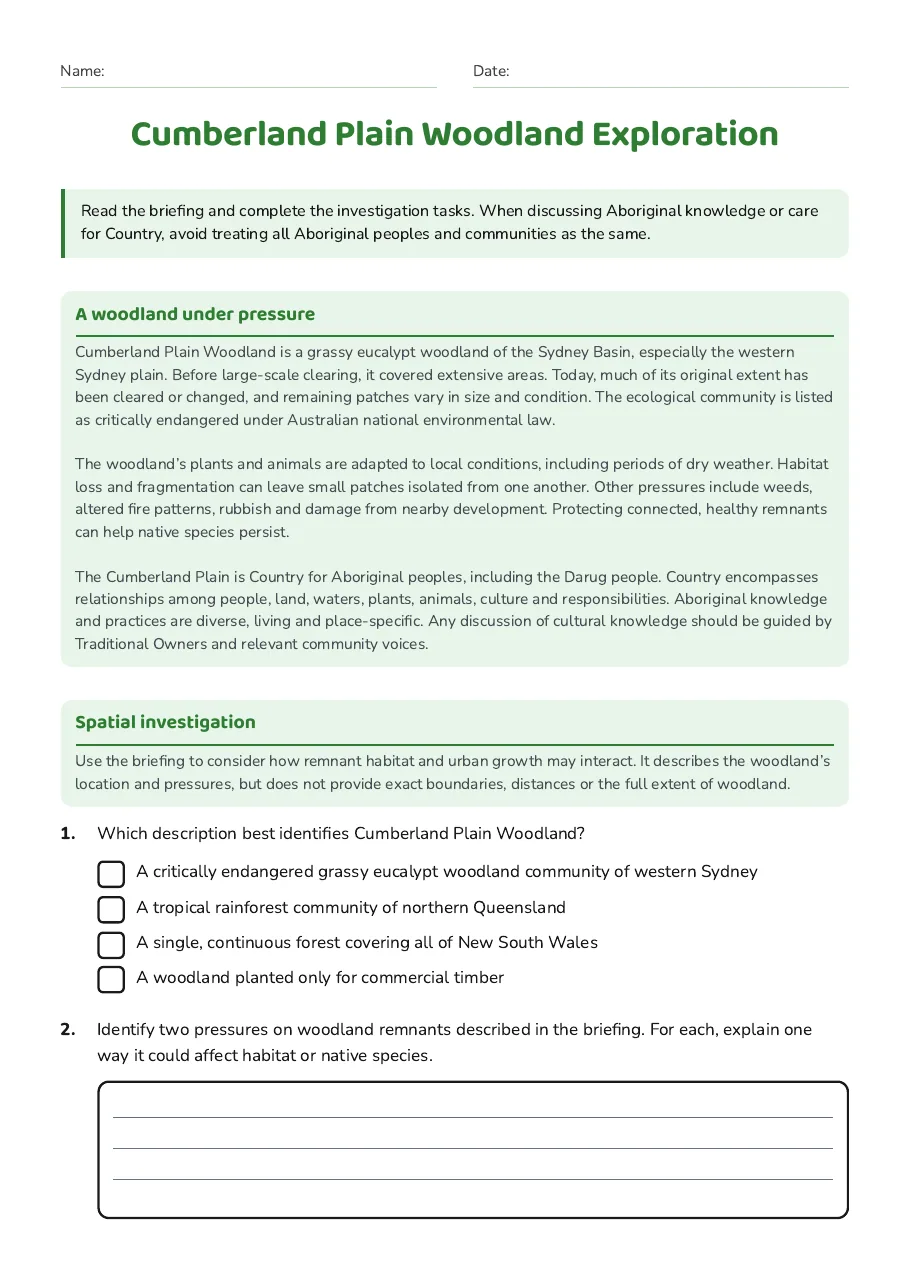
Cumberland Plain Woodland Exploration
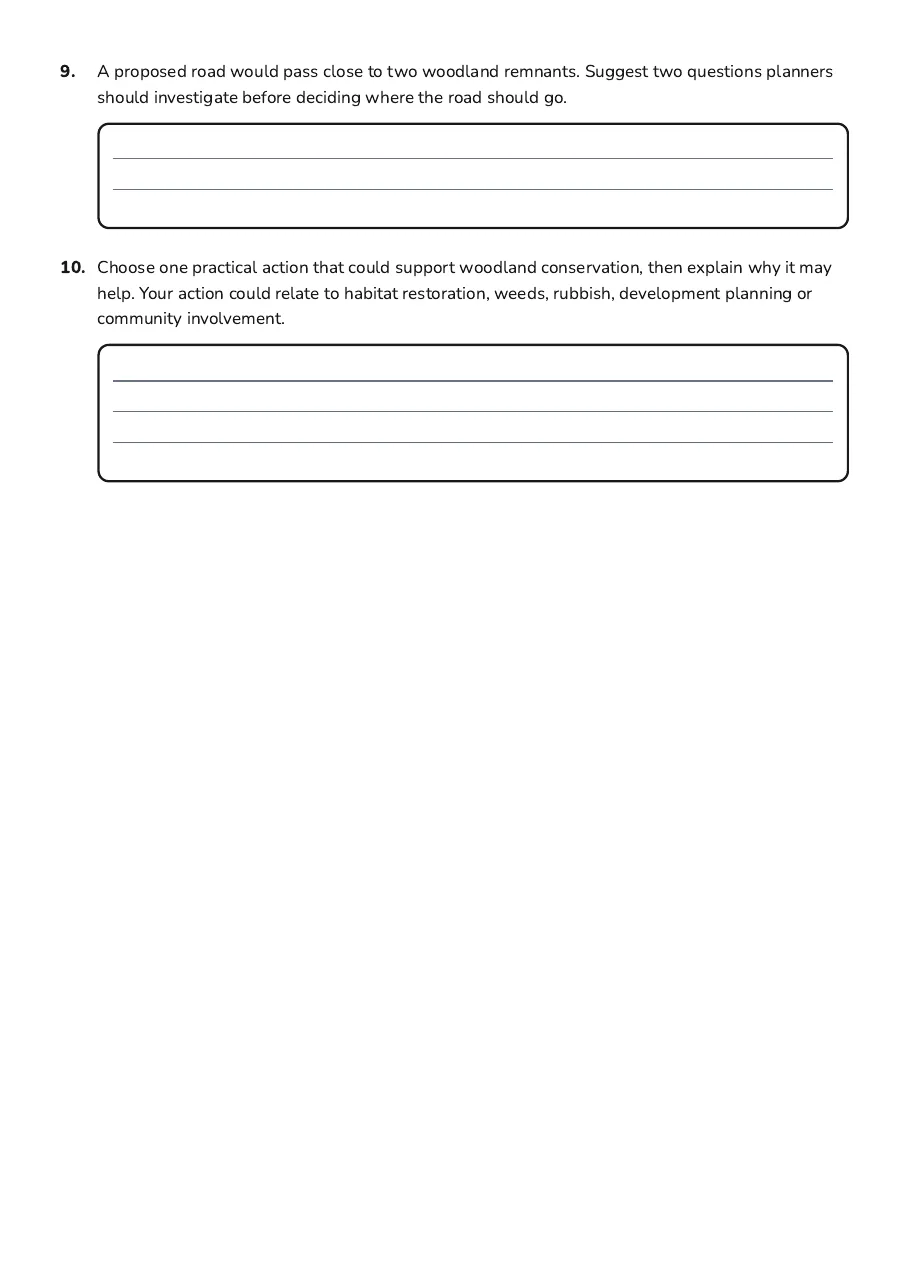
A woodland under pressure
Cumberland Plain Woodland is a grassy eucalypt woodland of the Sydney Basin, especially the western Sydney plain. Before large-scale clearing, it covered extensive areas. Today, much of its original extent has been cleared or changed, and remaining patches vary in size and condition. The ecological community is listed as critically endangered under Australian national environmental law. The woodland’s plants and animals are adapted to local conditions, including periods of dry weather. Habitat loss and fragmentation can leave small patches isolated from one another. Other pressures include weeds, altered fire patterns, rubbish and damage from nearby development. Protecting connected, healthy remnants can help native species persist. The Cumberland Plain is Country for Aboriginal peoples, including the Darug people. Country encompasses relationships among people, land, waters, plants, animals, culture and responsibilities. Aboriginal knowledge and practices are diverse, living and place-specific. Any discussion of cultural knowledge should be guided by Traditional Owners and relevant community voices.
Spatial investigation
Use the briefing to consider how remnant habitat and urban growth may interact. It describes the woodland’s location and pressures, but does not provide exact boundaries, distances or the full extent of woodland.
- A critically endangered grassy eucalypt woodland community of western Sydney
- A tropical rainforest community of northern Queensland
- A single, continuous forest covering all of New South Wales
- A woodland planted only for commercial timber
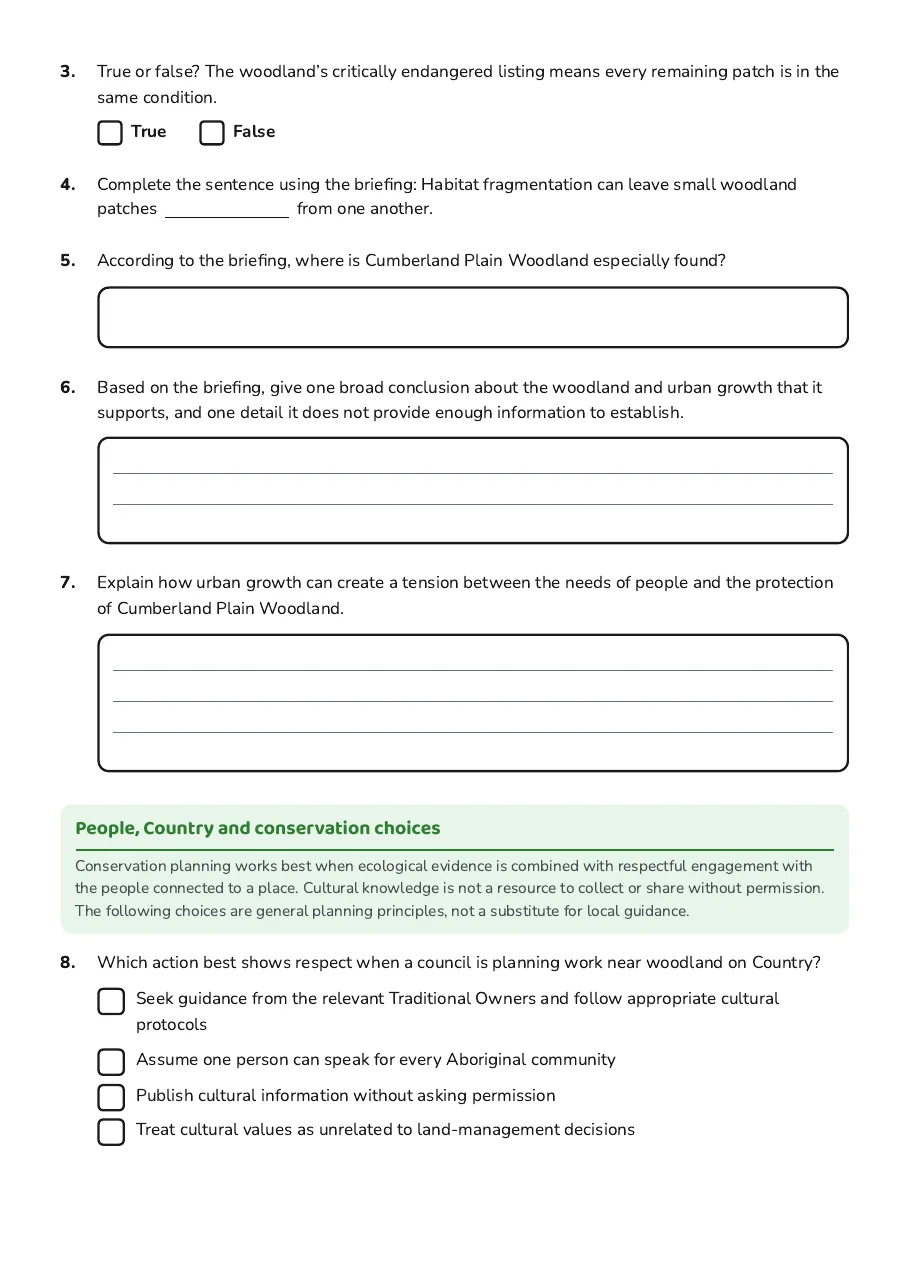
People, Country and conservation choices
Conservation planning works best when ecological evidence is combined with respectful engagement with the people connected to a place. Cultural knowledge is not a resource to collect or share without permission. The following choices are general planning principles, not a substitute for local guidance.
- Seek guidance from the relevant Traditional Owners and follow appropriate cultural protocols
- Assume one person can speak for every Aboriginal community
- Publish cultural information without asking permission
- Treat cultural values as unrelated to land-management decisions
3 printable pages
Page 1
Page 2
Page 3
About This Worksheet
Free in Kuraplan
Sign up free, grab the PDF, and customize it for your class.
Print-Ready
Formatted for standard paper. Clean layout, easy to read.
AI-Generated
Created with Kuraplan's AI, designed for real classroom use.
For Teachers & Parents
Use in classrooms, for homework, tutoring, or homeschool.
Need a custom version of this worksheet?
Kuraplan's AI generates custom worksheets in seconds — differentiated for every learner, aligned to your curriculum.
Generate Custom Worksheets — FreeMore Social Sciences Worksheets
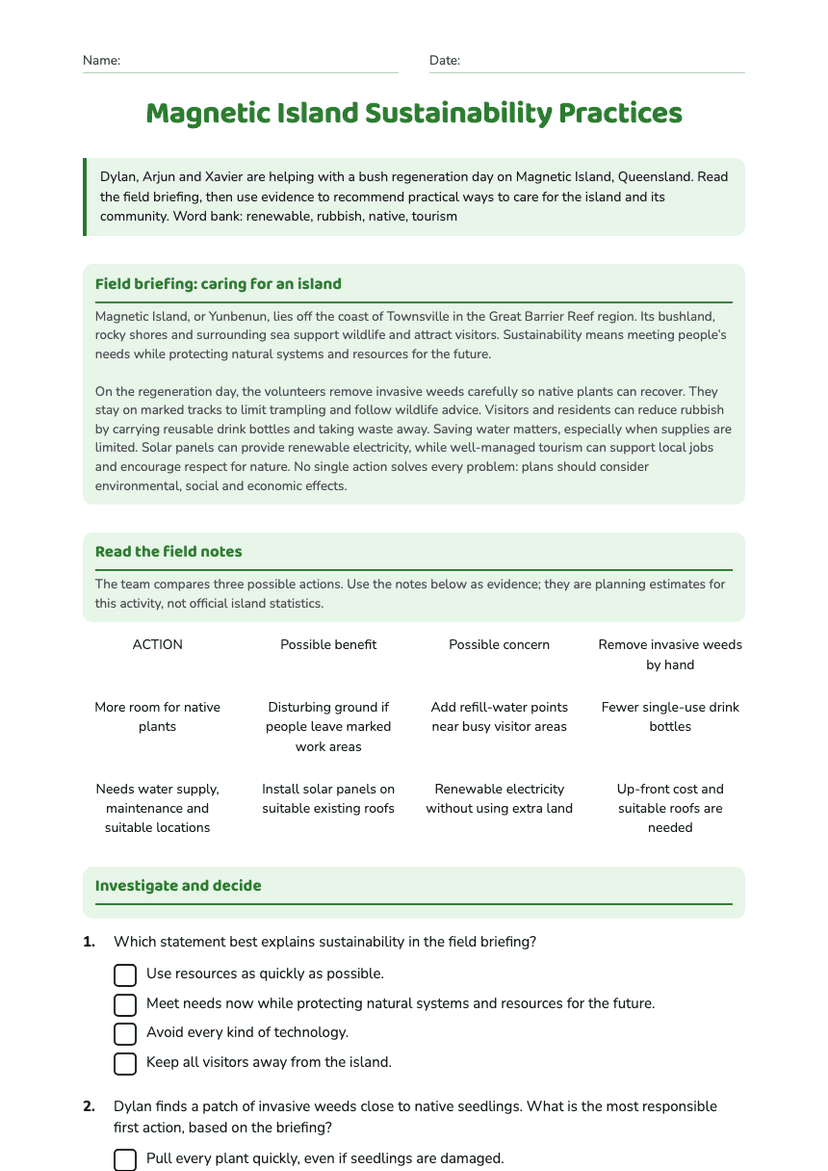
Magnetic Island Sustainability Practices
Free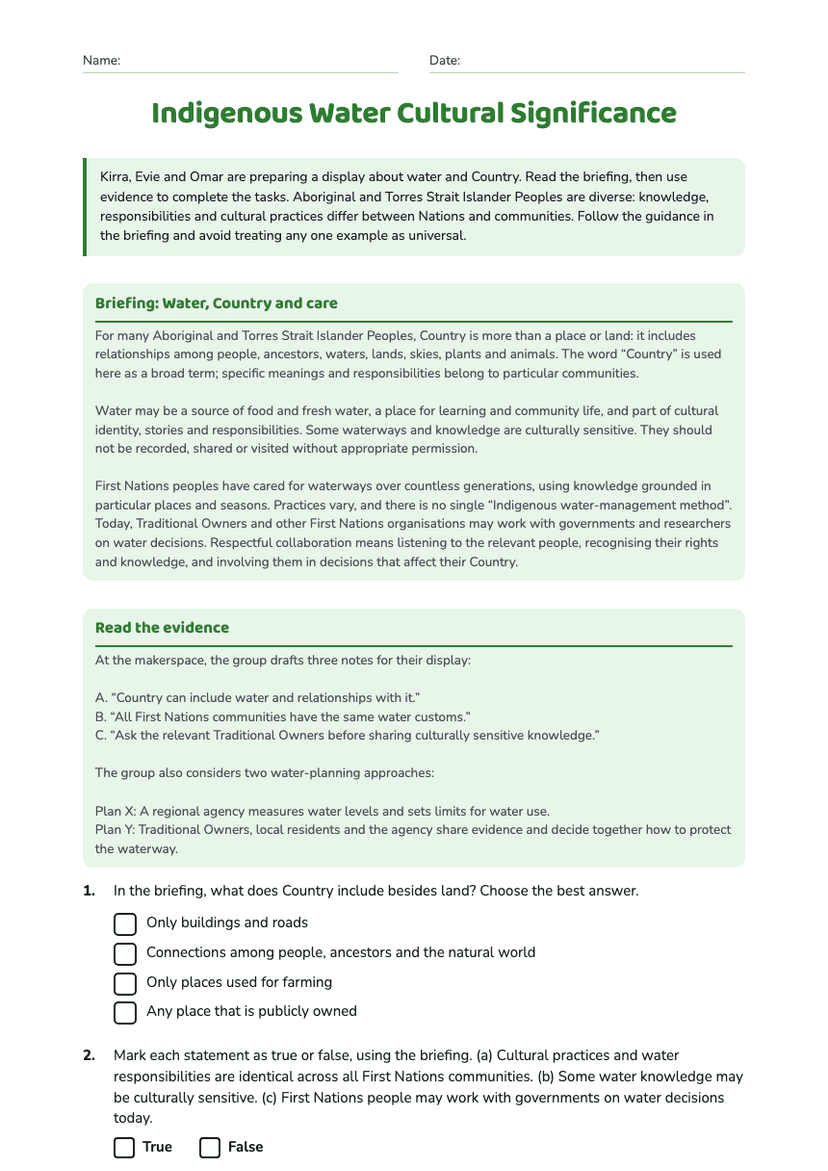
Indigenous Water Cultural Significance
Free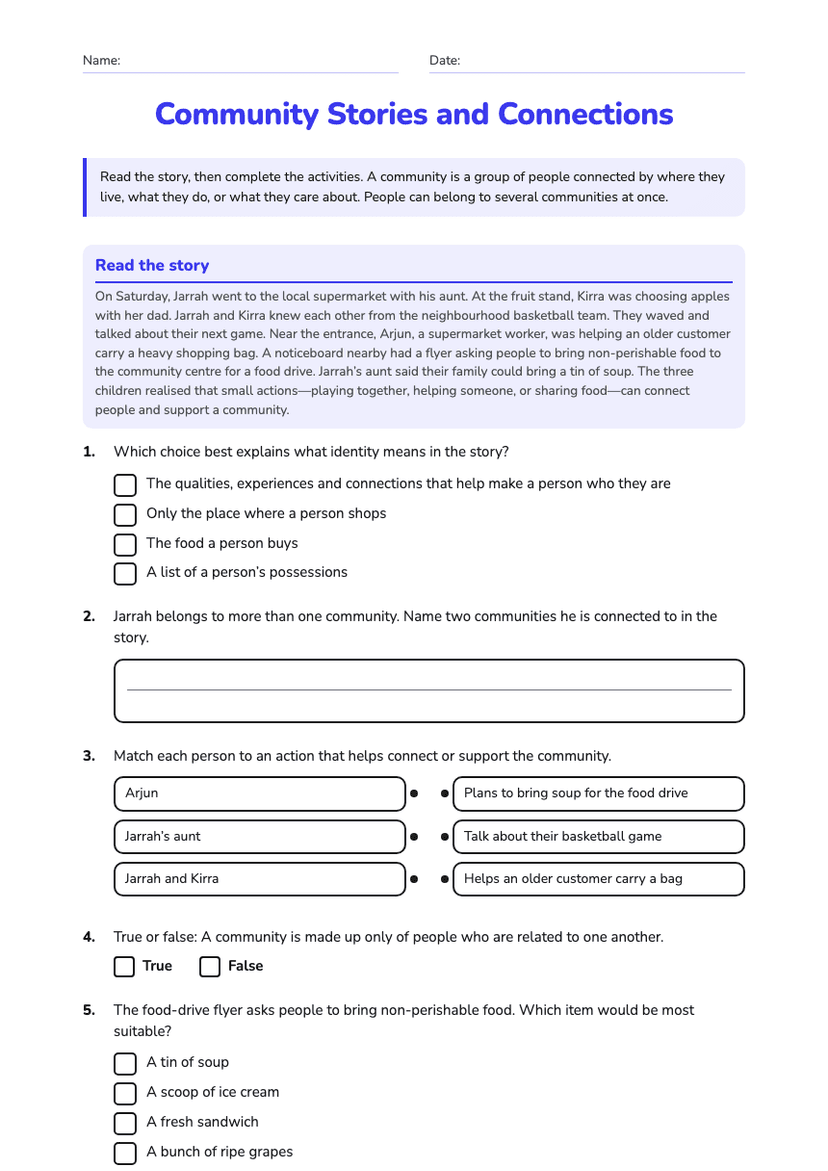
Community Stories and Connections
Free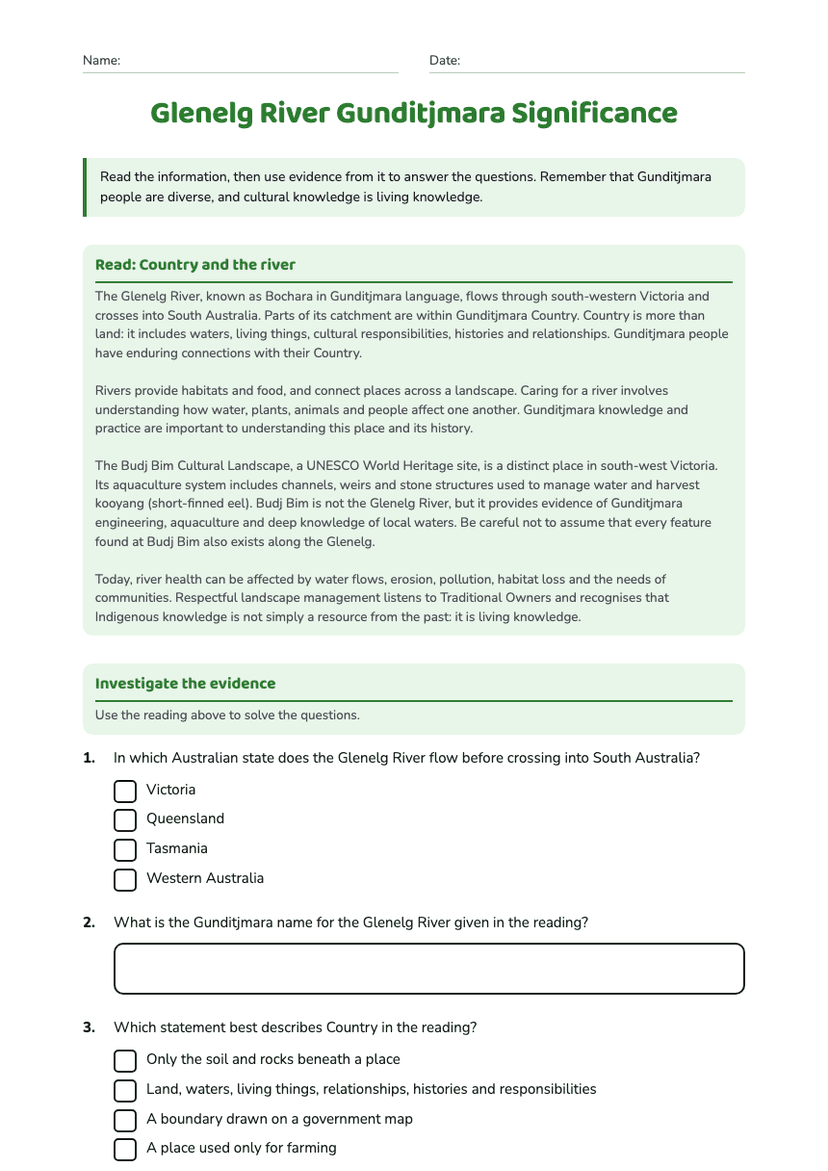
Glenelg River Gunditjmara Significance
Free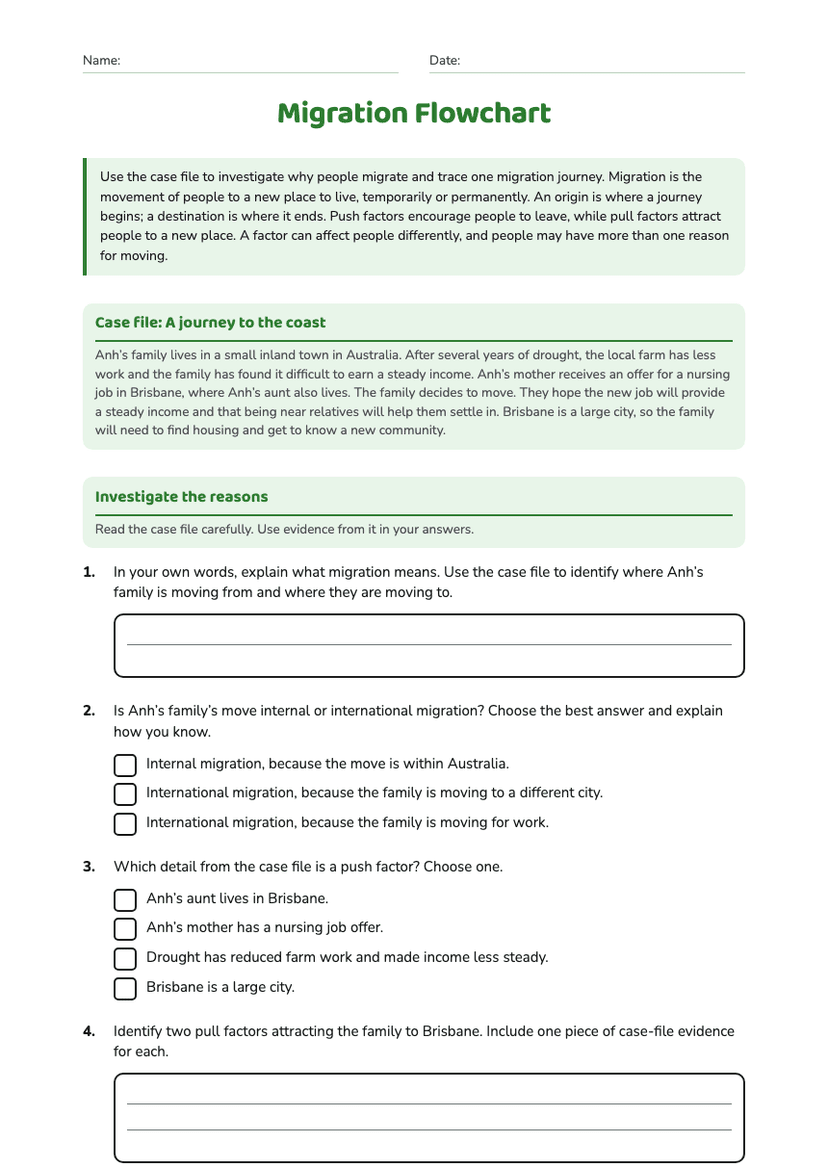
Migration Flowchart
Free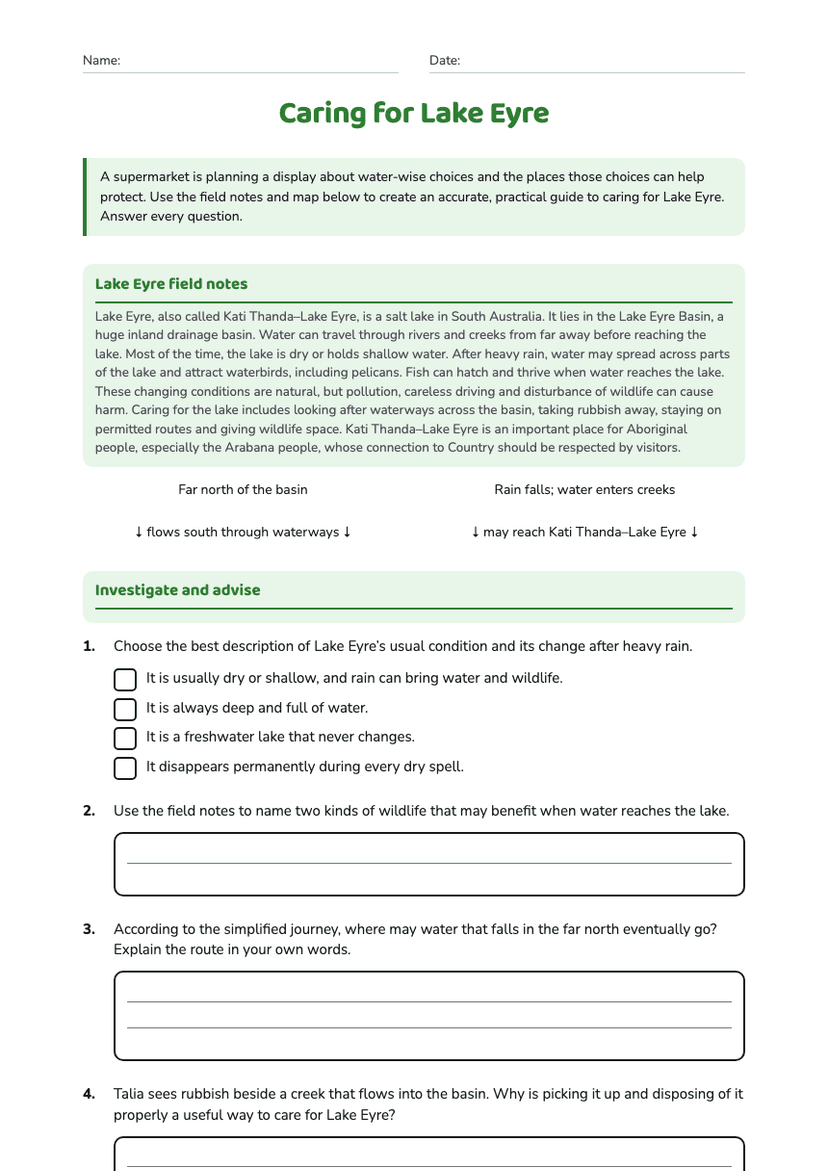
Caring for Lake Eyre
Free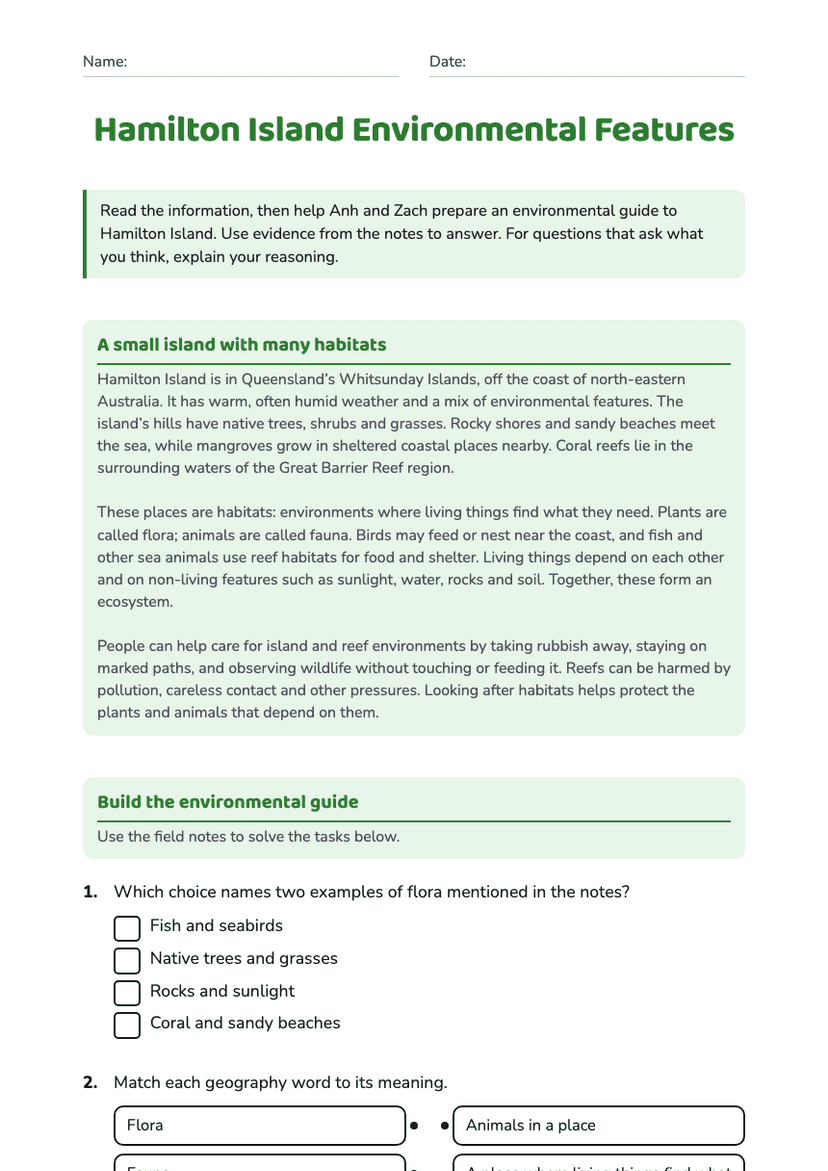
Hamilton Island Environmental Features
Free