Detective Fiction Detection Process
A free english worksheet ready for your classroom. Open in Kuraplan to grab the print-ready PDF, customize it for your students, or generate a fresh version in seconds.
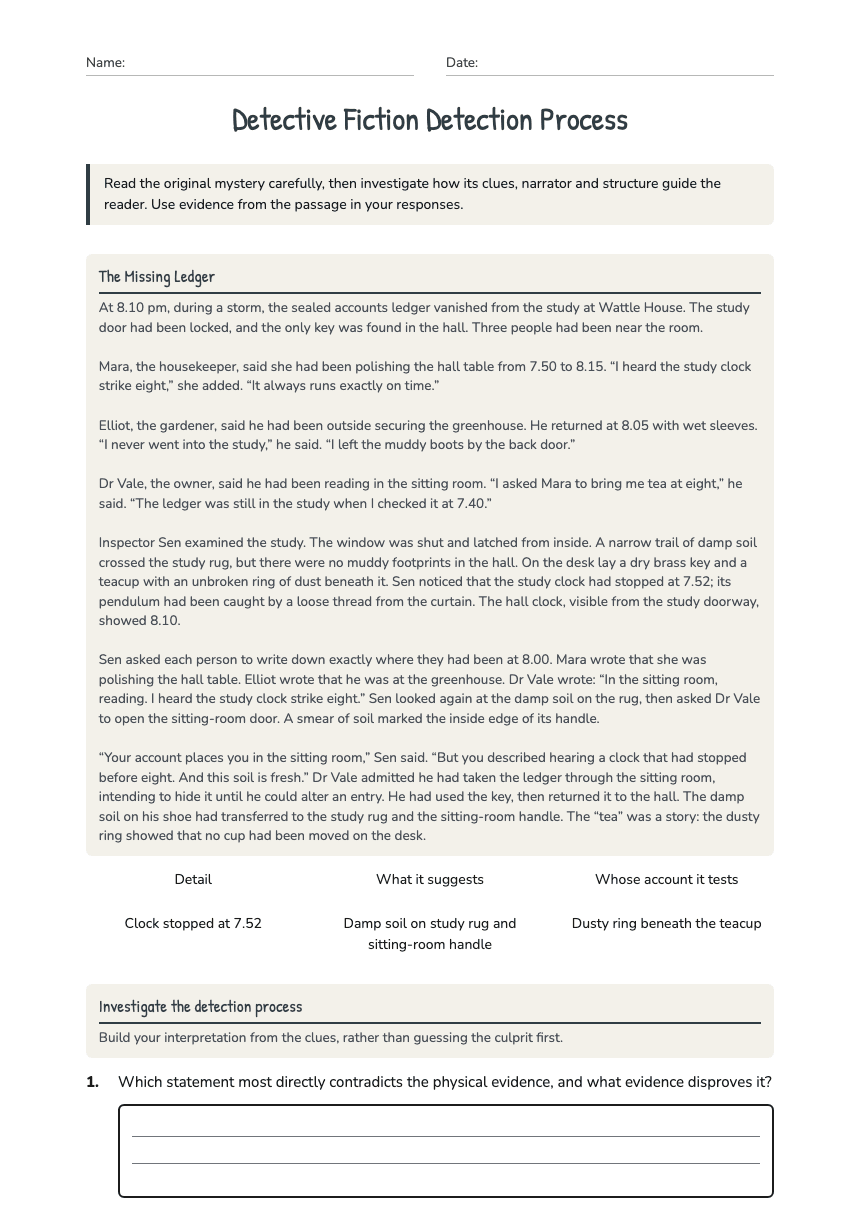
Detective Fiction Detection Process
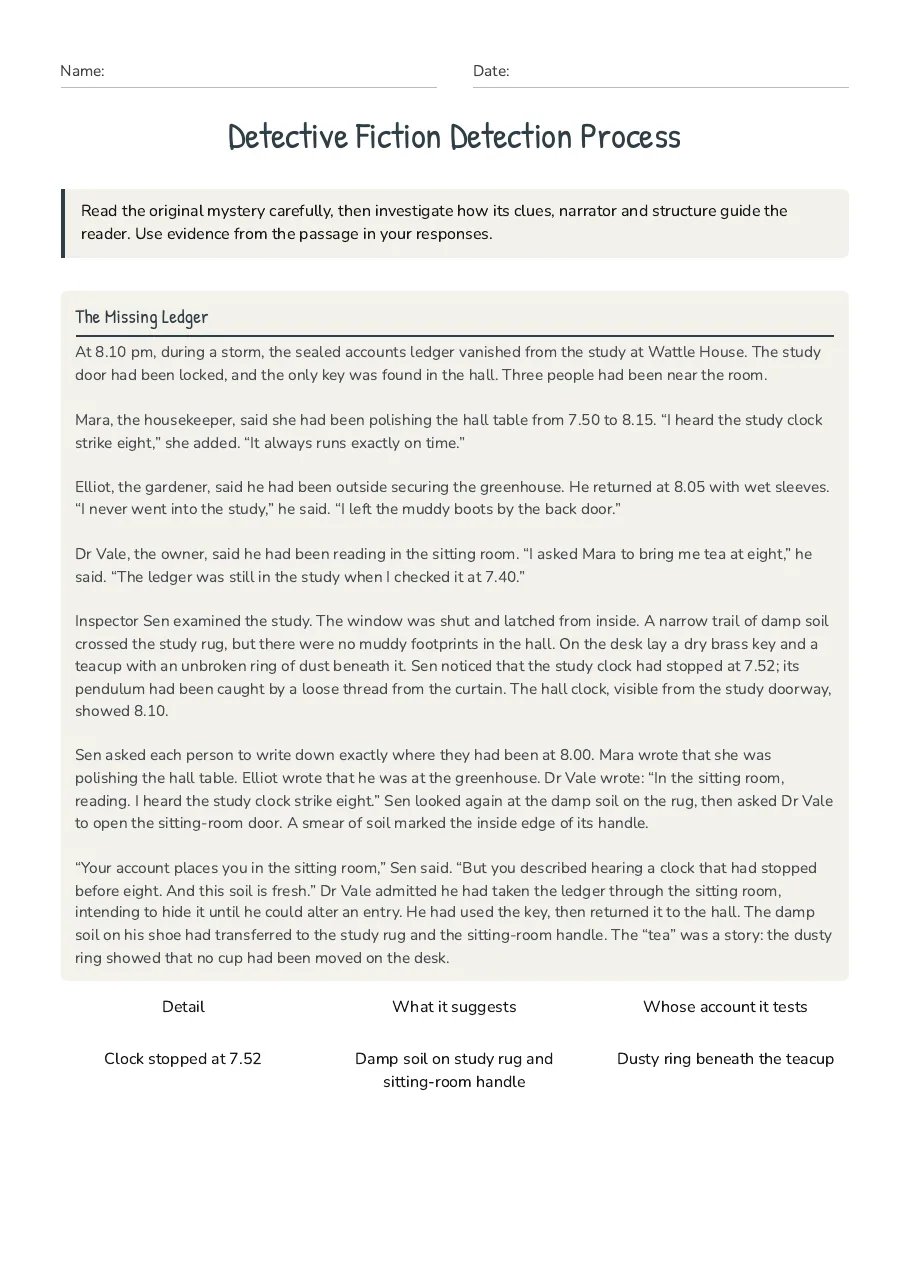
The Missing Ledger
At 8.10 pm, during a storm, the sealed accounts ledger vanished from the study at Wattle House. The study door had been locked, and the only key was found in the hall. Three people had been near the room. Mara, the housekeeper, said she had been polishing the hall table from 7.50 to 8.15. “I heard the study clock strike eight,” she added. “It always runs exactly on time.” Elliot, the gardener, said he had been outside securing the greenhouse. He returned at 8.05 with wet sleeves. “I never went into the study,” he said. “I left the muddy boots by the back door.” Dr Vale, the owner, said he had been reading in the sitting room. “I asked Mara to bring me tea at eight,” he said. “The ledger was still in the study when I checked it at 7.40.” Inspector Sen examined the study. The window was shut and latched from inside. A narrow trail of damp soil crossed the study rug, but there were no muddy footprints in the hall. On the desk lay a dry brass key and a teacup with an unbroken ring of dust beneath it. Sen noticed that the study clock had stopped at 7.52; its pendulum had been caught by a loose thread from the curtain. The hall clock, visible from the study doorway, showed 8.10. Sen asked each person to write down exactly where they had been at 8.00. Mara wrote that she was polishing the hall table. Elliot wrote that he was at the greenhouse. Dr Vale wrote: “In the sitting room, reading. I heard the study clock strike eight.” Sen looked again at the damp soil on the rug, then asked Dr Vale to open the sitting-room door. A smear of soil marked the inside edge of its handle. “Your account places you in the sitting room,” Sen said. “But you described hearing a clock that had stopped before eight. And this soil is fresh.” Dr Vale admitted he had taken the ledger through the sitting room, intending to hide it until he could alter an entry. He had used the key, then returned it to the hall. The damp soil on his shoe had transferred to the study rug and the sitting-room handle. The “tea” was a story: the dusty ring showed that no cup had been moved on the desk.
Detail
What it suggests
Whose account it tests
Clock stopped at 7.52
Damp soil on study rug and sitting-room handle
Dusty ring beneath the teacup
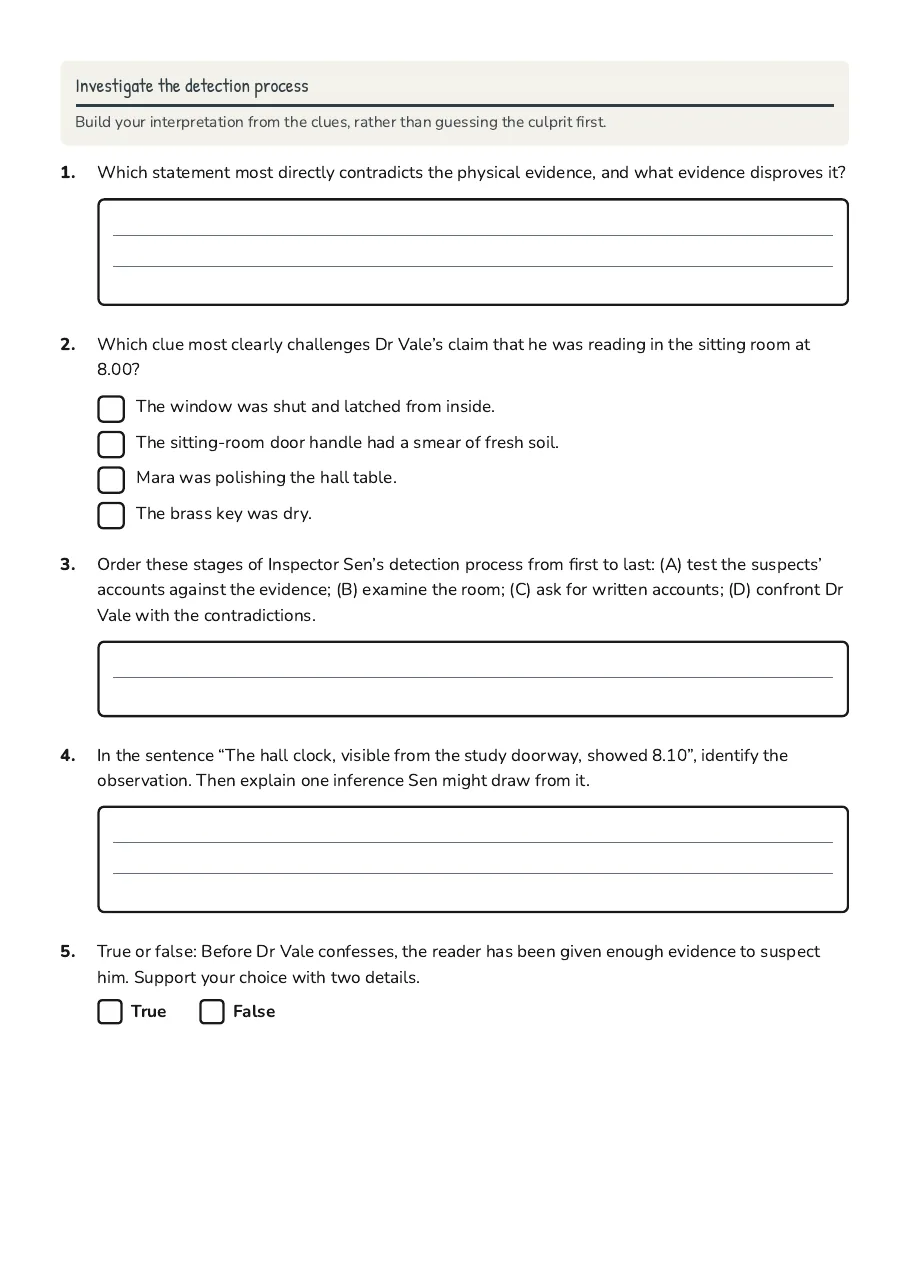
Investigate the detection process
Build your interpretation from the clues, rather than guessing the culprit first.
- The window was shut and latched from inside.
- The sitting-room door handle had a smear of fresh soil.
- Mara was polishing the hall table.
- The brass key was dry.
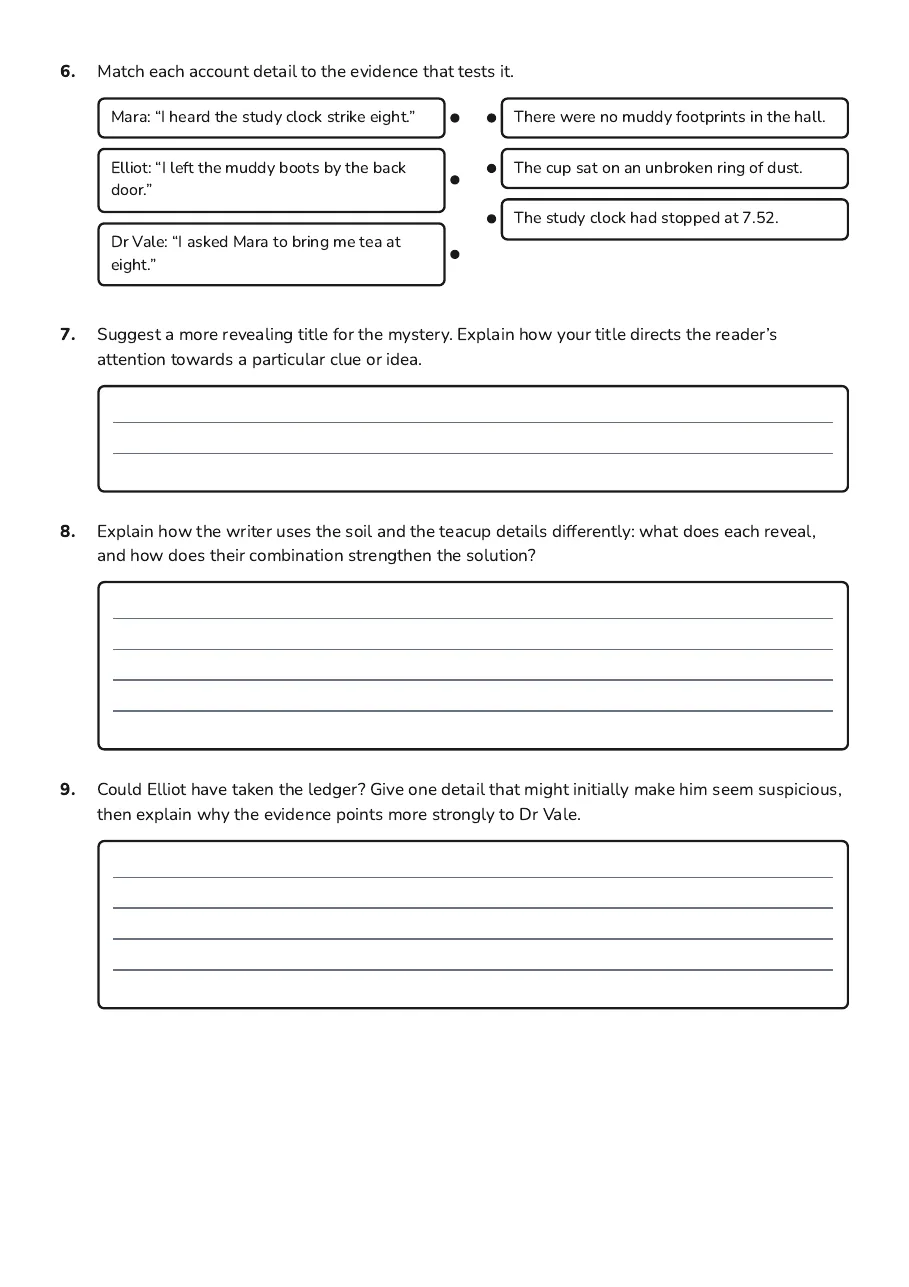
- Mara: “I heard the study clock strike eight.”
- Elliot: “I left the muddy boots by the back door.”
- Dr Vale: “I asked Mara to bring me tea at eight.”
- There were no muddy footprints in the hall.
- The cup sat on an unbroken ring of dust.
- The study clock had stopped at 7.52.
4 printable pages
Page 1
Page 2
Page 3

Page 4
About This Worksheet
Free in Kuraplan
Sign up free, grab the PDF, and customize it for your class.
Print-Ready
Formatted for standard paper. Clean layout, easy to read.
AI-Generated
Created with Kuraplan's AI, designed for real classroom use.
For Teachers & Parents
Use in classrooms, for homework, tutoring, or homeschool.
Need a custom version of this worksheet?
Kuraplan's AI generates custom worksheets in seconds — differentiated for every learner, aligned to your curriculum.
Generate Custom Worksheets — Free