Feudal Japan's Economic Roles
A free other worksheet ready for your classroom. Open in Kuraplan to grab the print-ready PDF, customize it for your students, or generate a fresh version in seconds.
Feudal Japan's Economic Roles
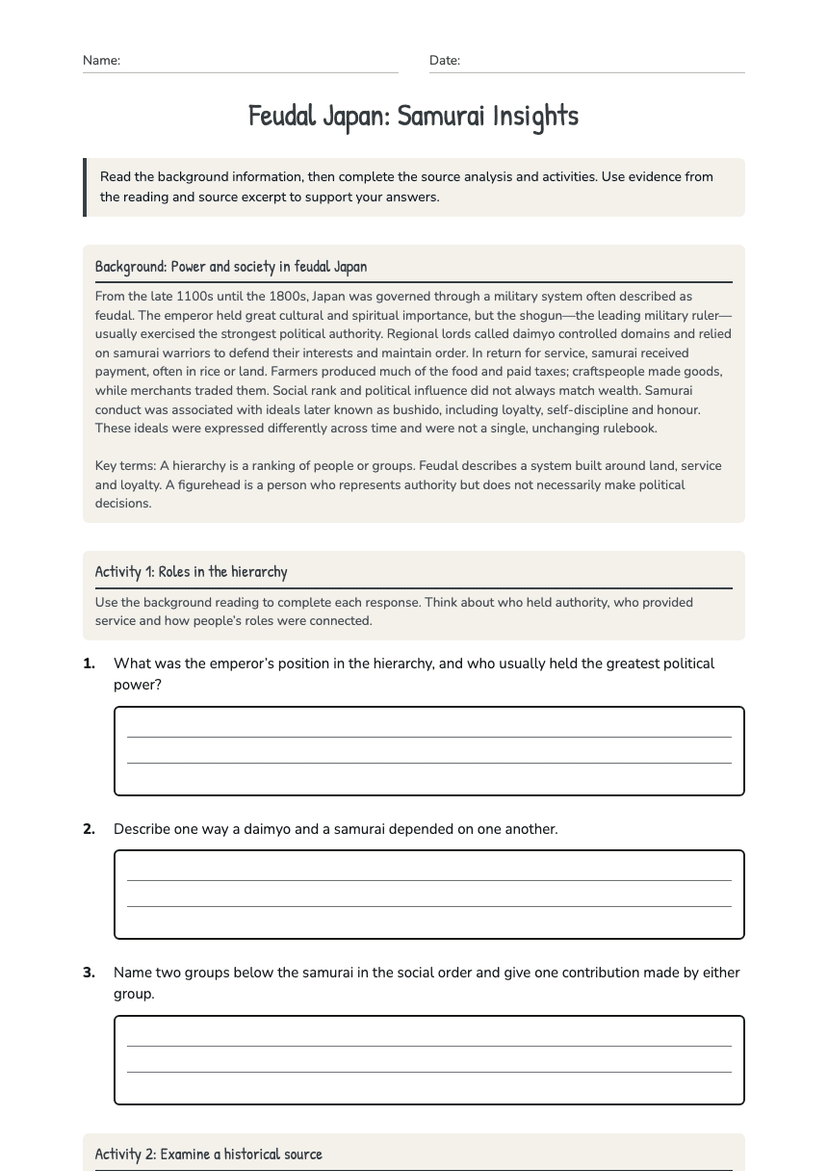
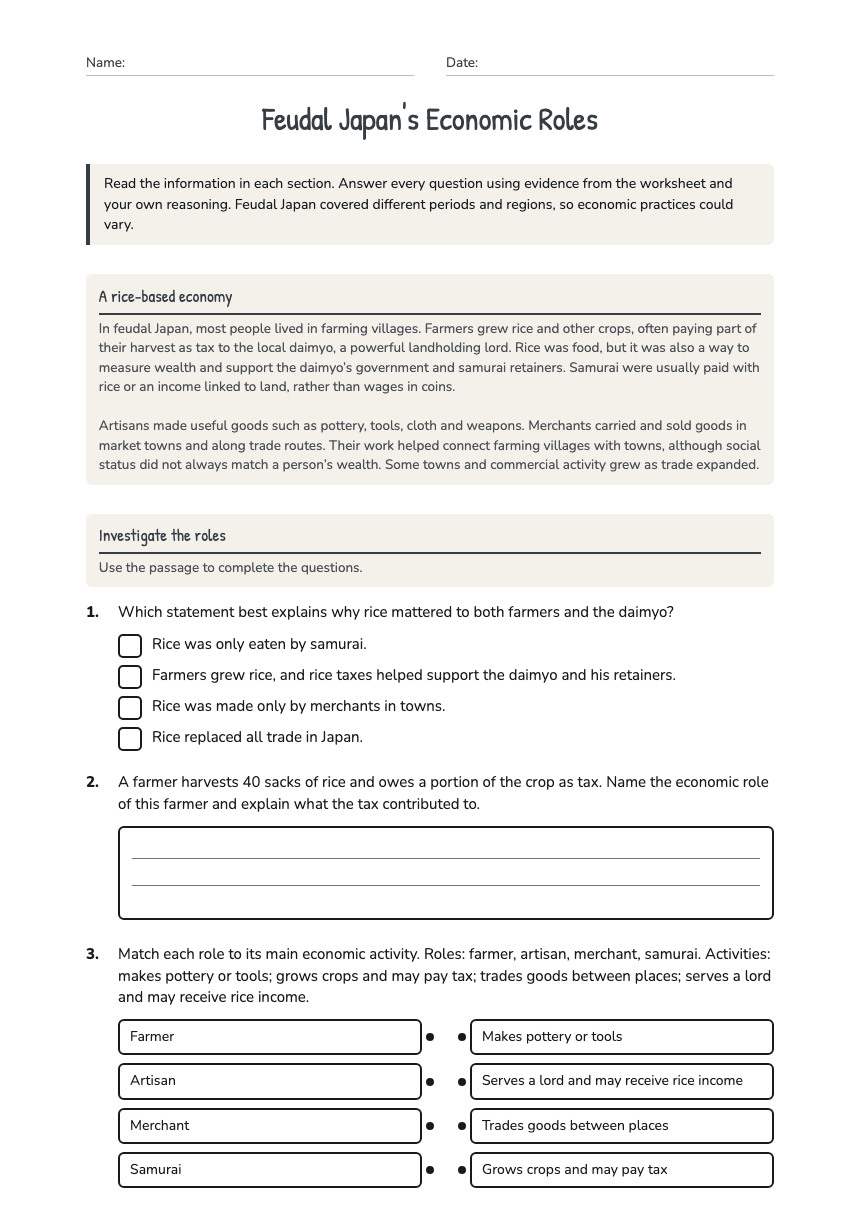
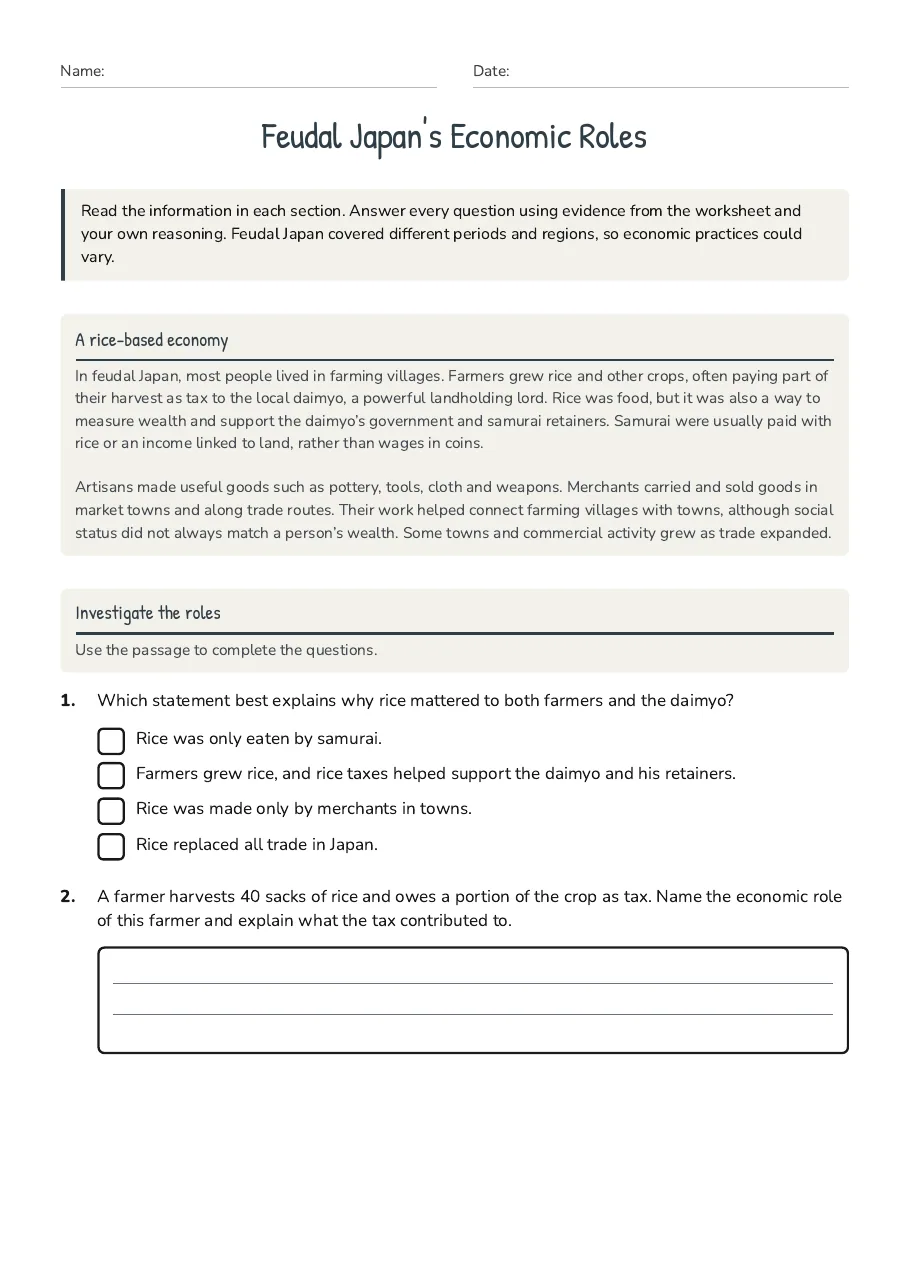
A rice-based economy
In feudal Japan, most people lived in farming villages. Farmers grew rice and other crops, often paying part of their harvest as tax to the local daimyo, a powerful landholding lord. Rice was food, but it was also a way to measure wealth and support the daimyo’s government and samurai retainers. Samurai were usually paid with rice or an income linked to land, rather than wages in coins. Artisans made useful goods such as pottery, tools, cloth and weapons. Merchants carried and sold goods in market towns and along trade routes. Their work helped connect farming villages with towns, although social status did not always match a person’s wealth. Some towns and commercial activity grew as trade expanded.
Investigate the roles
Use the passage to complete the questions.
- Rice was only eaten by samurai.
- Farmers grew rice, and rice taxes helped support the daimyo and his retainers.
- Rice was made only by merchants in towns.
- Rice replaced all trade in Japan.
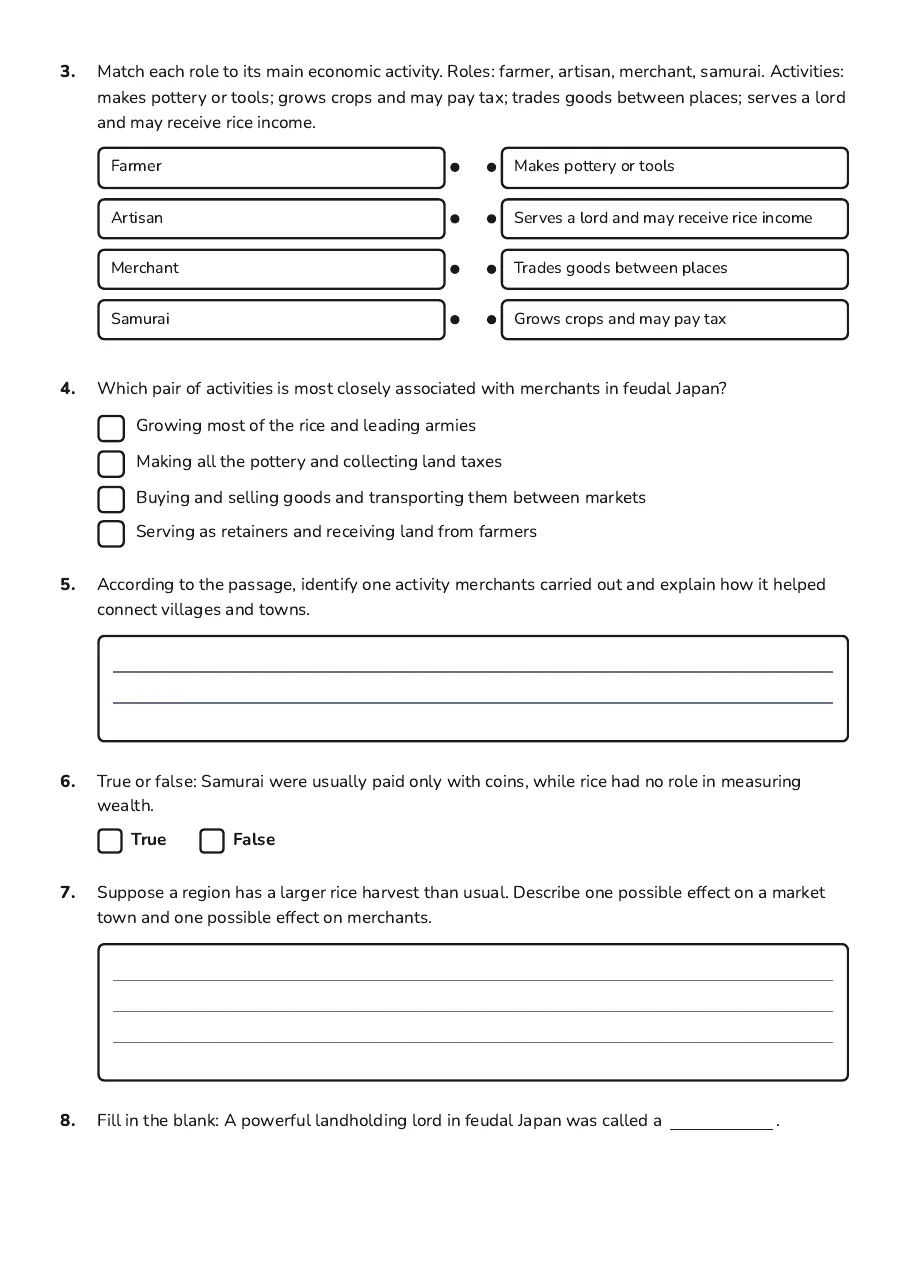
- Farmer
- Artisan
- Merchant
- Samurai
- Makes pottery or tools
- Serves a lord and may receive rice income
- Trades goods between places
- Grows crops and may pay tax
- Growing most of the rice and leading armies
- Making all the pottery and collecting land taxes
- Buying and selling goods and transporting them between markets
- Serving as retainers and receiving land from farmers
3 printable pages
Page 1
Page 2
Page 3
About This Worksheet
Free in Kuraplan
Sign up free, grab the PDF, and customize it for your class.
Print-Ready
Formatted for standard paper. Clean layout, easy to read.
AI-Generated
Created with Kuraplan's AI, designed for real classroom use.
For Teachers & Parents
Use in classrooms, for homework, tutoring, or homeschool.
Need a custom version of this worksheet?
Kuraplan's AI generates custom worksheets in seconds — differentiated for every learner, aligned to your curriculum.
Generate Custom Worksheets — Free