Folk Story Analysis Support
A free english worksheet ready for your classroom. Open in Kuraplan to grab the print-ready PDF, customize it for your students, or generate a fresh version in seconds.
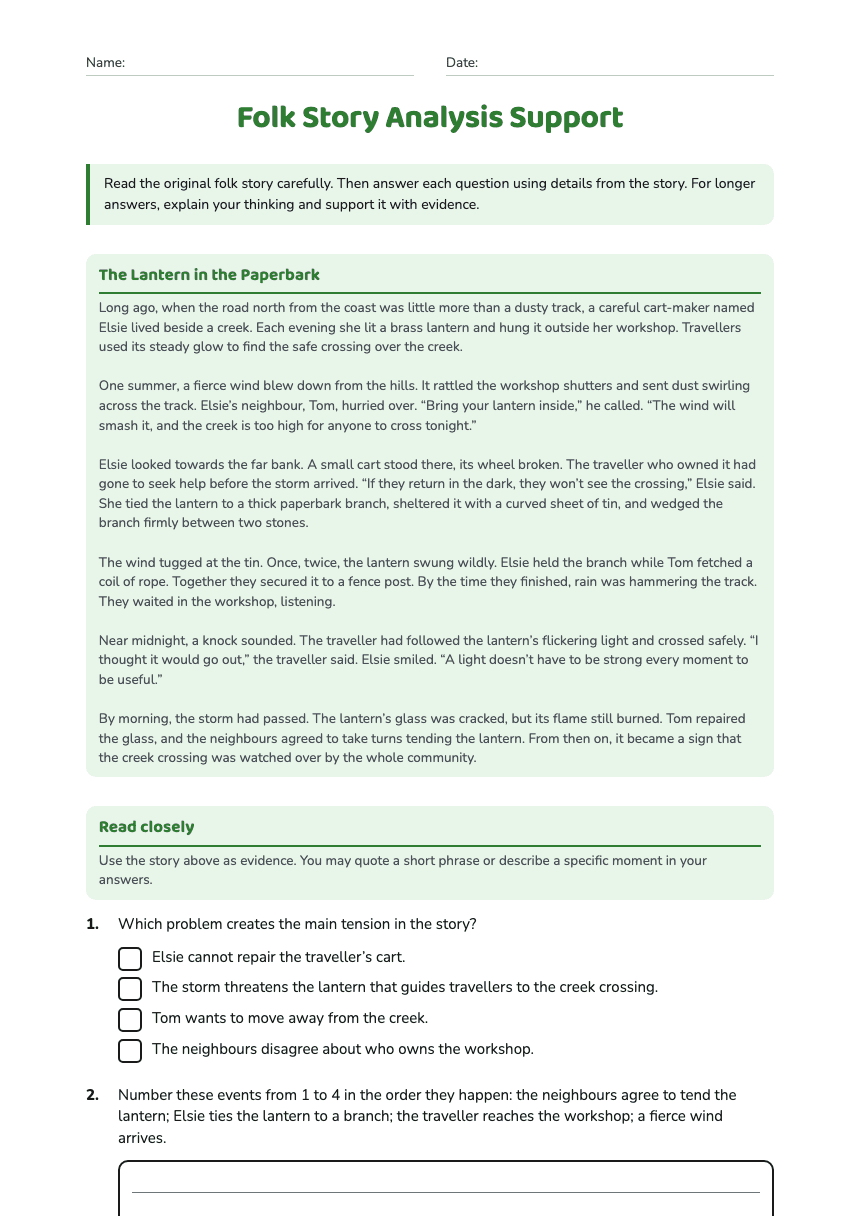
Folk Story Analysis Support
The Lantern in the Paperbark
Long ago, when the road north from the coast was little more than a dusty track, a careful cart-maker named Elsie lived beside a creek. Each evening she lit a brass lantern and hung it outside her workshop. Travellers used its steady glow to find the safe crossing over the creek. One summer, a fierce wind blew down from the hills. It rattled the workshop shutters and sent dust swirling across the track. Elsie’s neighbour, Tom, hurried over. “Bring your lantern inside,” he called. “The wind will smash it, and the creek is too high for anyone to cross tonight.” Elsie looked towards the far bank. A small cart stood there, its wheel broken. The traveller who owned it had gone to seek help before the storm arrived. “If they return in the dark, they won’t see the crossing,” Elsie said. She tied the lantern to a thick paperbark branch, sheltered it with a curved sheet of tin, and wedged the branch firmly between two stones. The wind tugged at the tin. Once, twice, the lantern swung wildly. Elsie held the branch while Tom fetched a coil of rope. Together they secured it to a fence post. By the time they finished, rain was hammering the track. They waited in the workshop, listening. Near midnight, a knock sounded. The traveller had followed the lantern’s flickering light and crossed safely. “I thought it would go out,” the traveller said. Elsie smiled. “A light doesn’t have to be strong every moment to be useful.” By morning, the storm had passed. The lantern’s glass was cracked, but its flame still burned. Tom repaired the glass, and the neighbours agreed to take turns tending the lantern. From then on, it became a sign that the creek crossing was watched over by the whole community.
Read closely
Use the story above as evidence. You may quote a short phrase or describe a specific moment in your answers.
- Elsie cannot repair the traveller’s cart.
- The storm threatens the lantern that guides travellers to the creek crossing.
- Tom wants to move away from the creek.
- The neighbours disagree about who owns the workshop.
3 printable pages
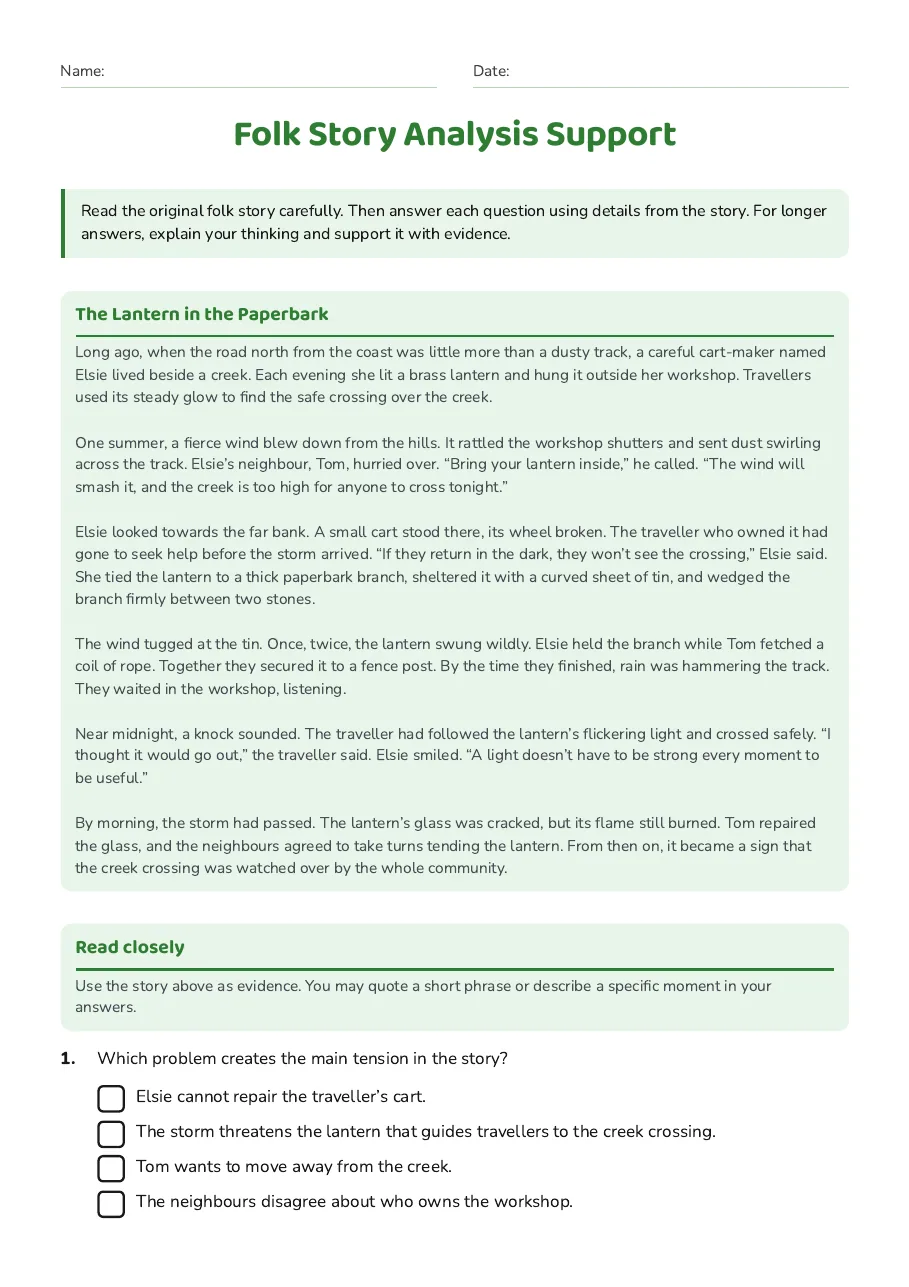
Page 1
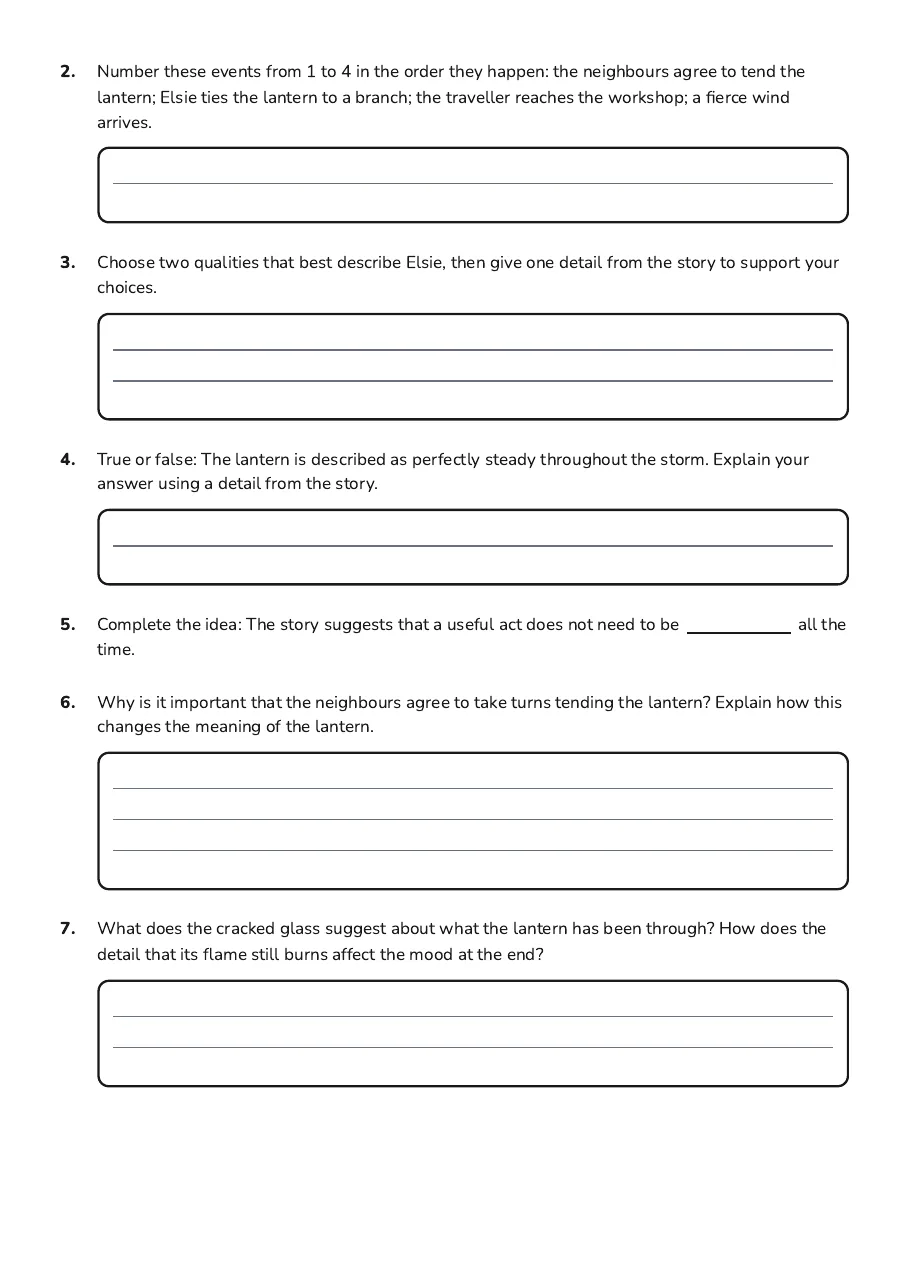
Page 2
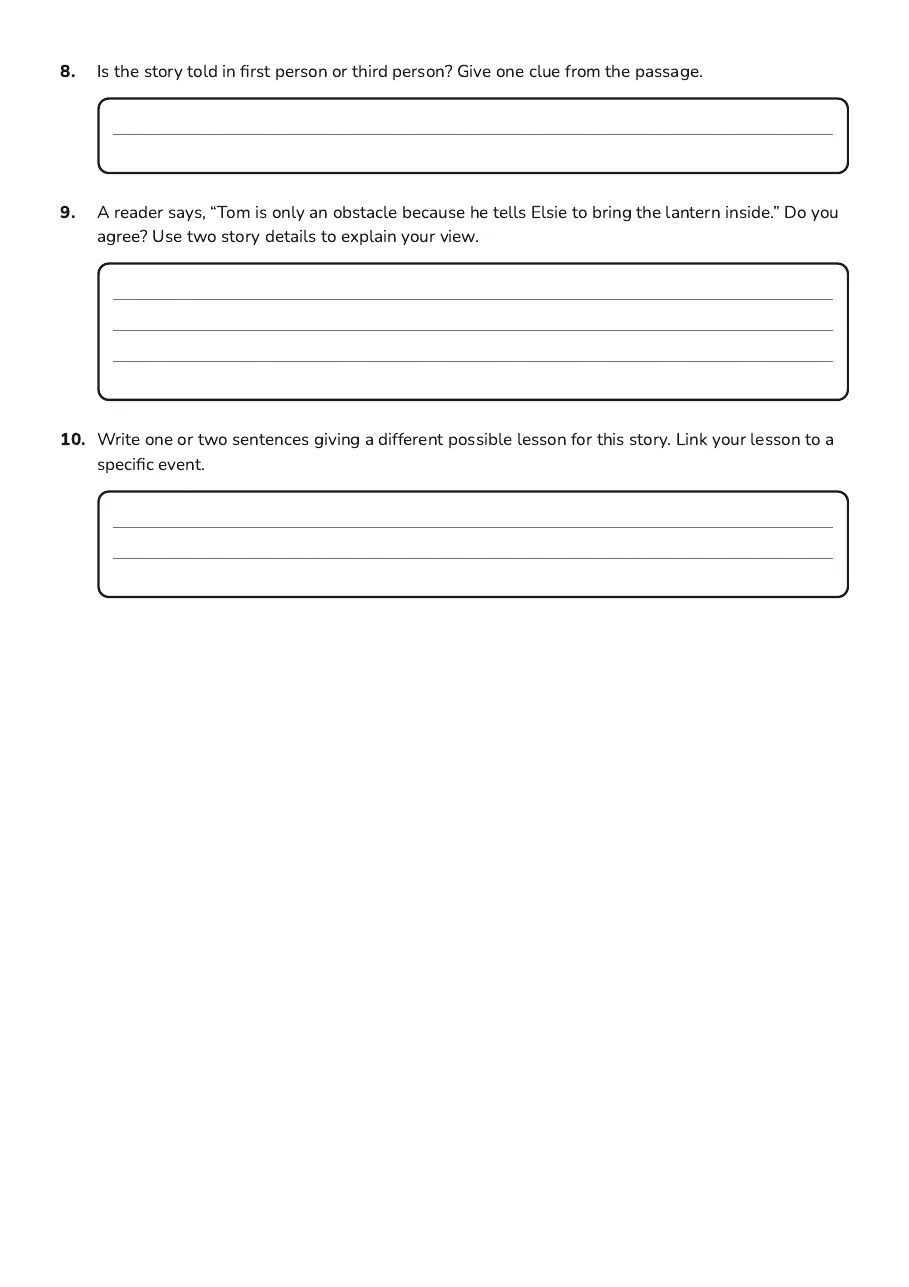
Page 3
About This Worksheet
Free in Kuraplan
Sign up free, grab the PDF, and customize it for your class.
Print-Ready
Formatted for standard paper. Clean layout, easy to read.
AI-Generated
Created with Kuraplan's AI, designed for real classroom use.
For Teachers & Parents
Use in classrooms, for homework, tutoring, or homeschool.
Need a custom version of this worksheet?
Kuraplan's AI generates custom worksheets in seconds — differentiated for every learner, aligned to your curriculum.
Generate Custom Worksheets — Free