Forensic Blood Case Studies
A free science worksheet ready for your classroom. Open in Kuraplan to grab the print-ready PDF, customize it for your students, or generate a fresh version in seconds.
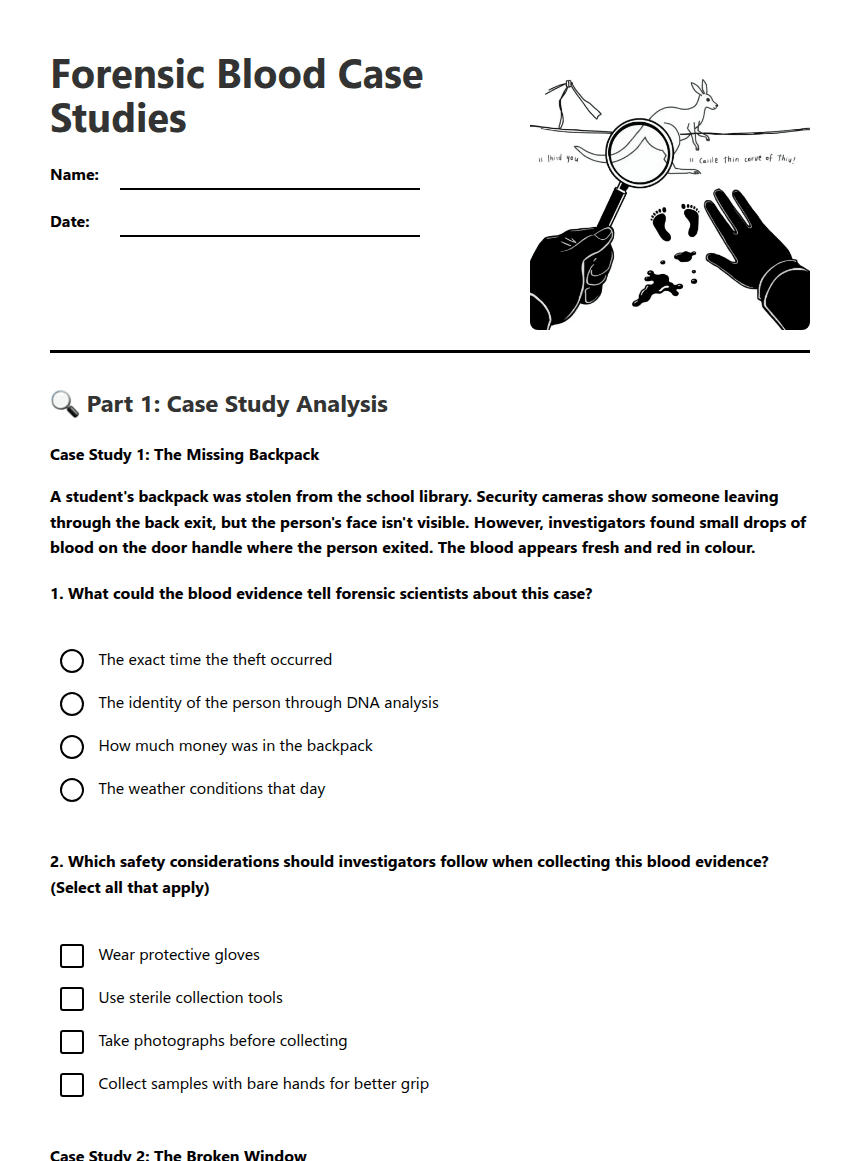
Forensic Blood Case Studies
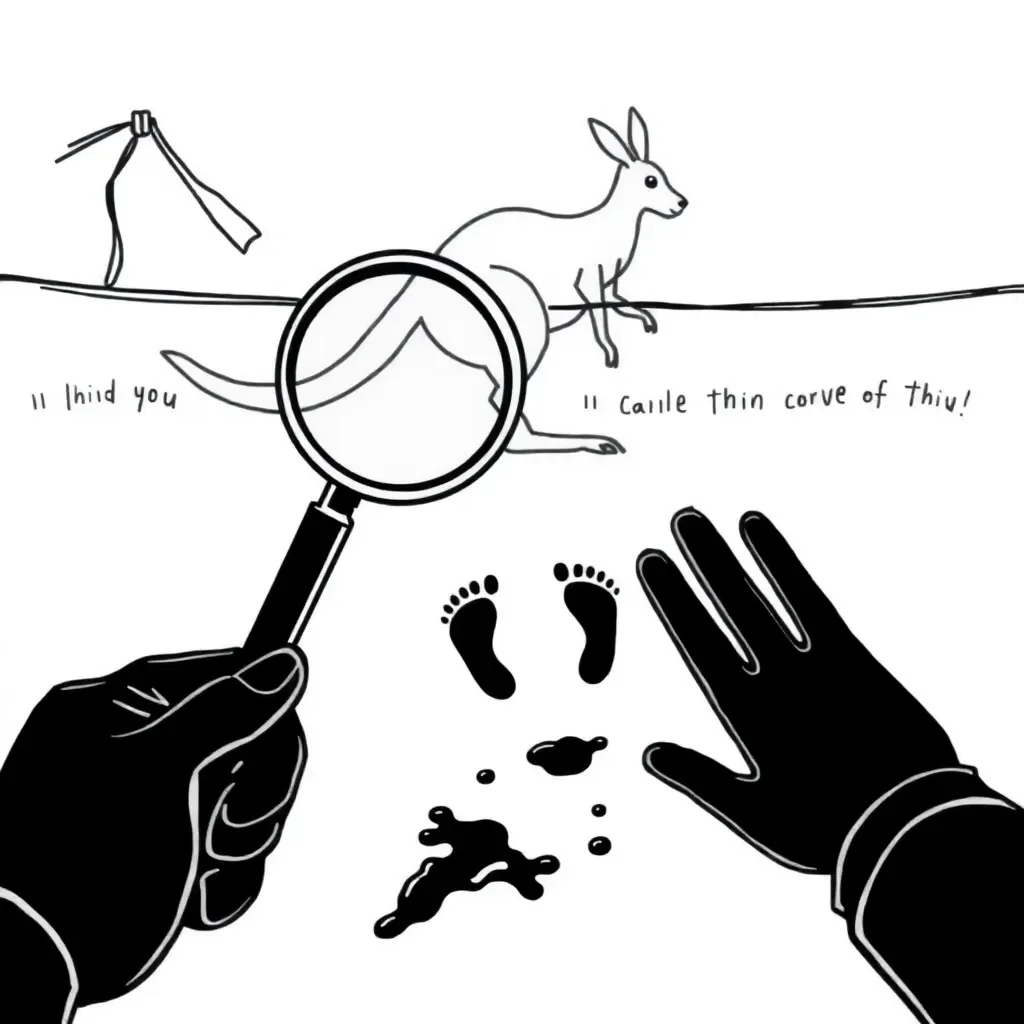
🔍 Part 1: Case Study Analysis
A student's backpack was stolen from the school library. Security cameras show someone leaving through the back exit, but the person's face isn't visible. However, investigators found small drops of blood on the door handle where the person exited. The blood appears fresh and red in colour.
A shop window was broken during the night. Glass fragments are scattered on both sides of the window. Blood drops are found on some glass pieces inside the shop, and there's a trail of blood drops leading away from the scene for about 10 metres before disappearing.
🧬 Part 2: Investigative Questions
In a school science laboratory, a student accidentally cut their finger while cleaning glassware. The teacher needs to clean up the blood safely and determine if the cut requires medical attention. There are several small drops of blood on the bench and one larger spot where the student initially bled.
🔬 Part 3: Planning Your Investigation
After a football match, the team's expensive equipment bag goes missing from the change rooms. The next morning, a small amount of blood is found on the door frame of the equipment storage room. The blood has darkened overnight and begun to clot.
About This Worksheet
Free in Kuraplan
Sign up free, grab the PDF, and customize it for your class.
Print-Ready
Formatted for standard paper. Clean layout, easy to read.
AI-Generated
Created with Kuraplan's AI, designed for real classroom use.
For Teachers & Parents
Use in classrooms, for homework, tutoring, or homeschool.
Need a custom version of this worksheet?
Kuraplan's AI generates custom worksheets in seconds — differentiated for every learner, aligned to your curriculum.
Generate Custom Worksheets — Free