Foundations of Democracy
A free social sciences worksheet ready for your classroom. Open in Kuraplan to grab the print-ready PDF, customize it for your students, or generate a fresh version in seconds.
Foundations of Democracy
Democracy in action
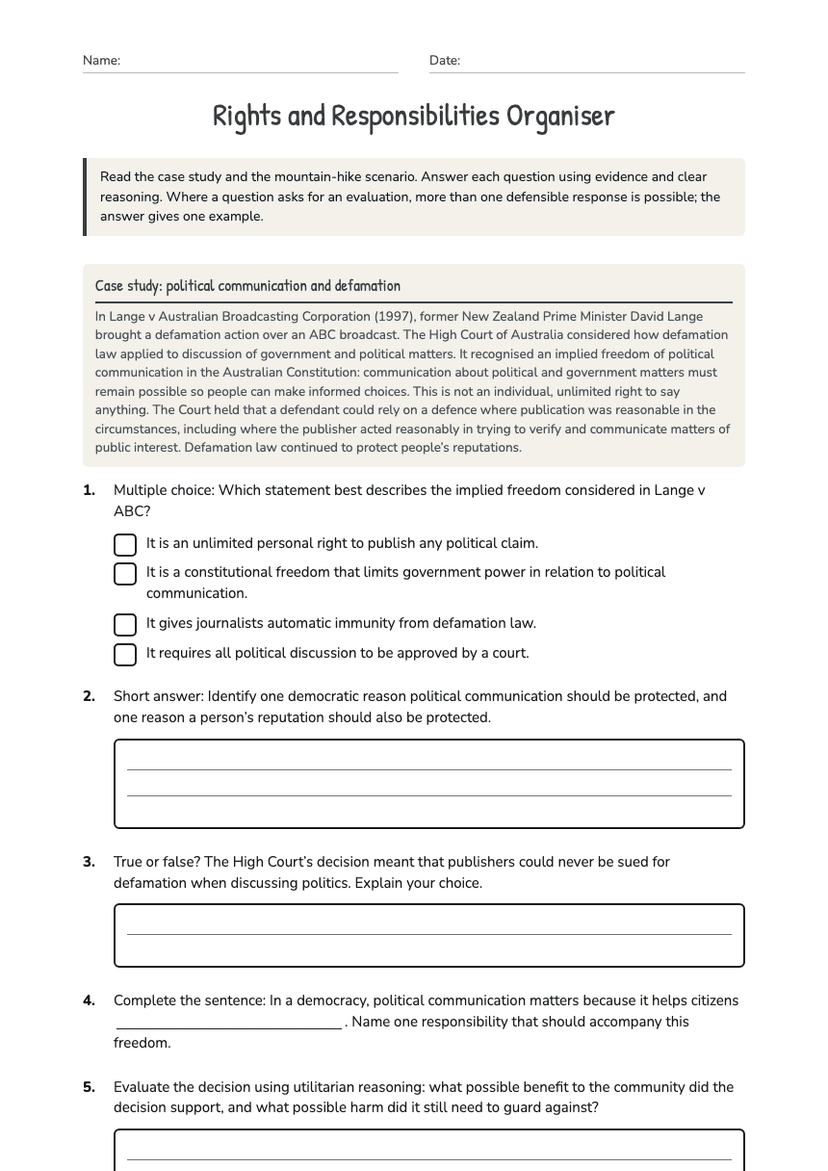
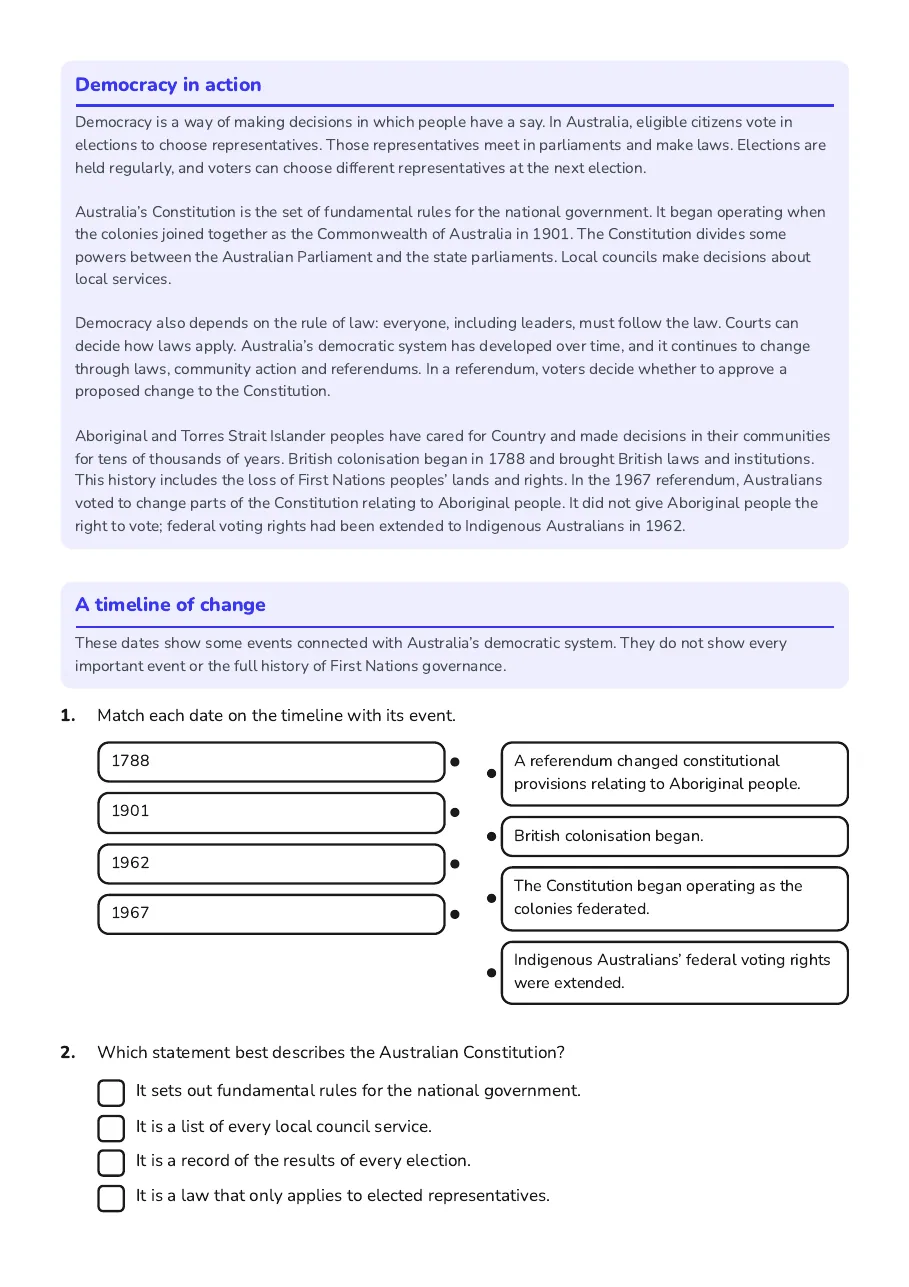
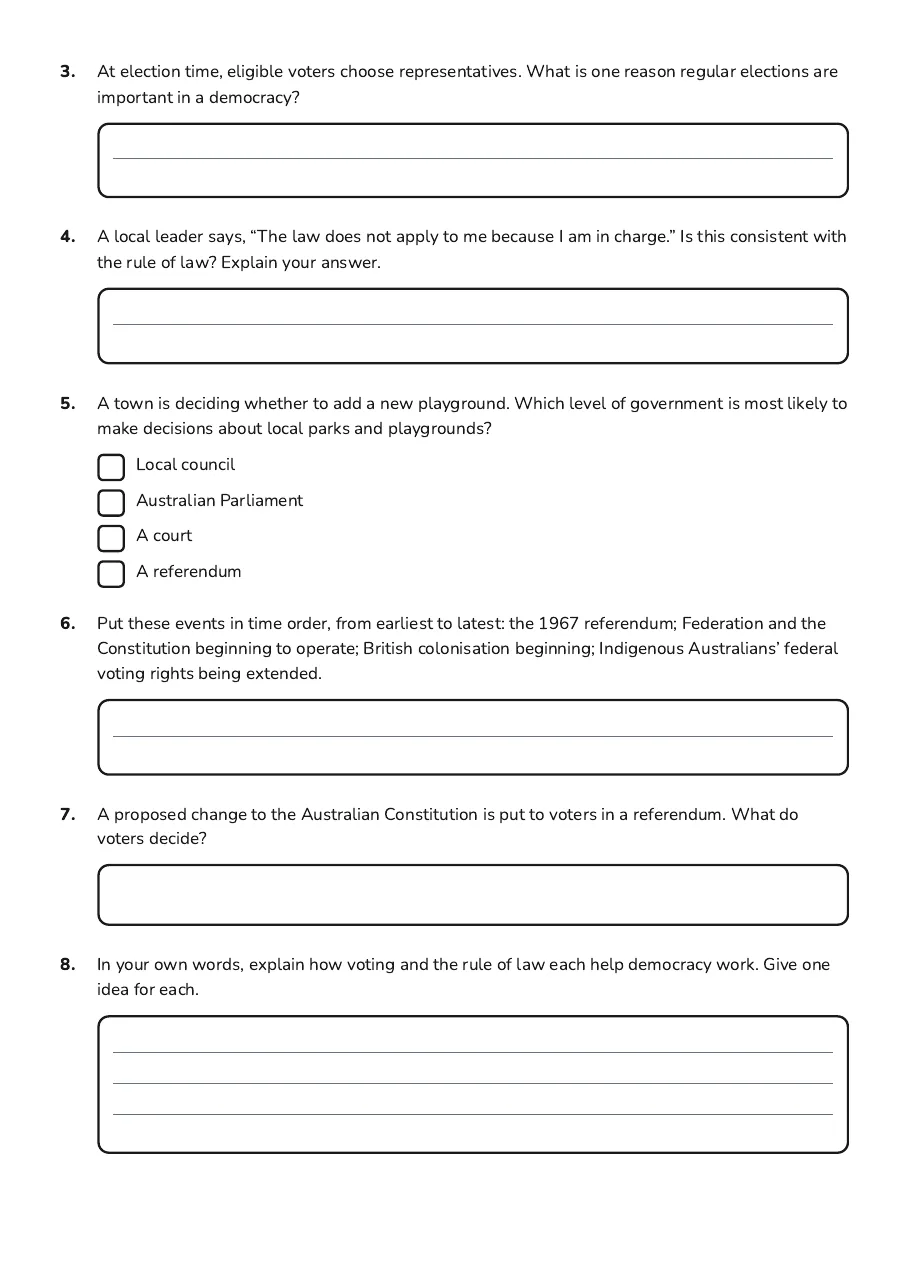
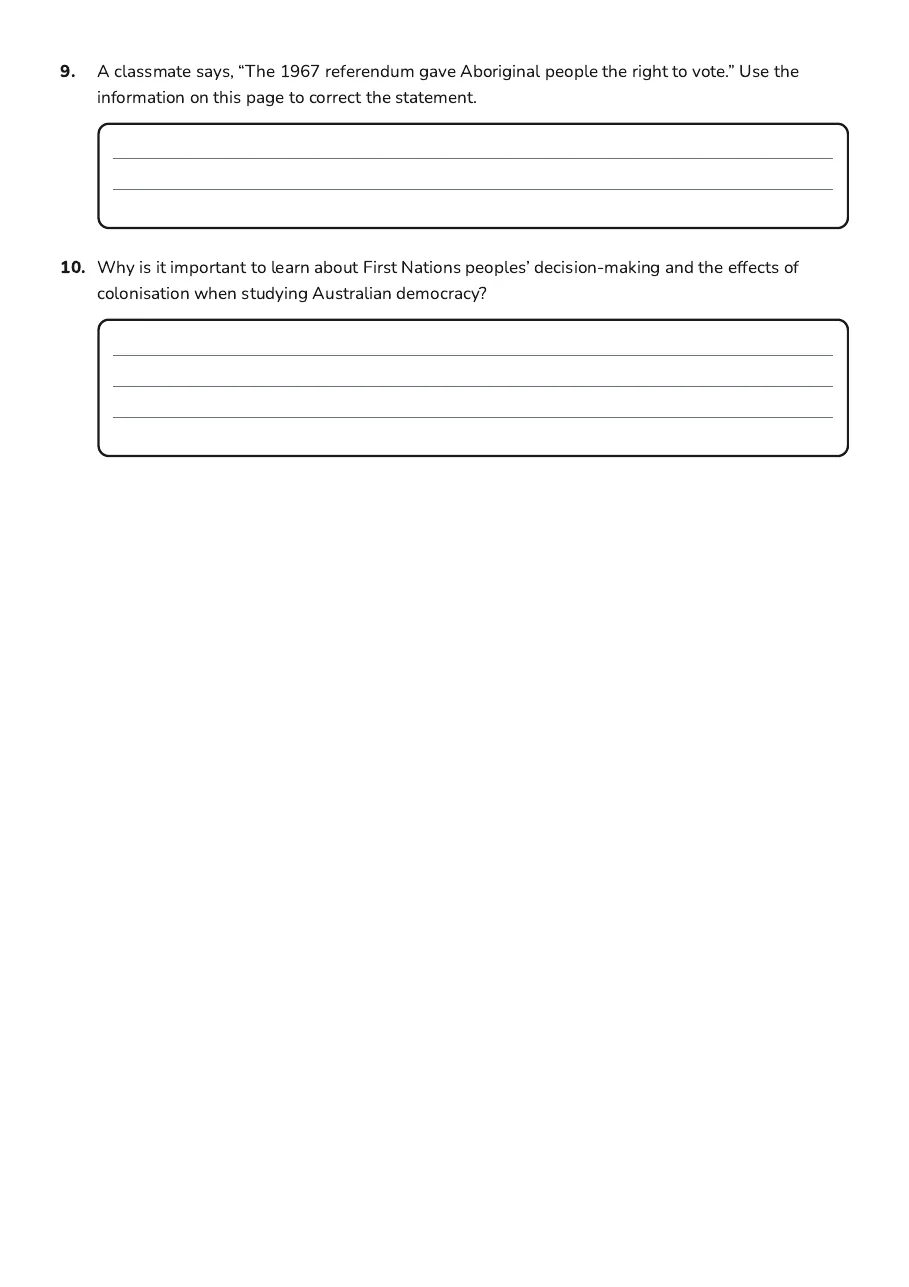
Democracy is a way of making decisions in which people have a say. In Australia, eligible citizens vote in elections to choose representatives. Those representatives meet in parliaments and make laws. Elections are held regularly, and voters can choose different representatives at the next election. Australia’s Constitution is the set of fundamental rules for the national government. It began operating when the colonies joined together as the Commonwealth of Australia in 1901. The Constitution divides some powers between the Australian Parliament and the state parliaments. Local councils make decisions about local services. Democracy also depends on the rule of law: everyone, including leaders, must follow the law. Courts can decide how laws apply. Australia’s democratic system has developed over time, and it continues to change through laws, community action and referendums. In a referendum, voters decide whether to approve a proposed change to the Constitution. Aboriginal and Torres Strait Islander peoples have cared for Country and made decisions in their communities for tens of thousands of years. British colonisation began in 1788 and brought British laws and institutions. This history includes the loss of First Nations peoples’ lands and rights. In the 1967 referendum, Australians voted to change parts of the Constitution relating to Aboriginal people. It did not give Aboriginal people the right to vote; federal voting rights had been extended to Indigenous Australians in 1962.
A timeline of change
These dates show some events connected with Australia’s democratic system. They do not show every important event or the full history of First Nations governance.
- 1788
- 1901
- 1962
- 1967
- A referendum changed constitutional provisions relating to Aboriginal people.
- British colonisation began.
- The Constitution began operating as the colonies federated.
- Indigenous Australians’ federal voting rights were extended.
- It sets out fundamental rules for the national government.
- It is a list of every local council service.
- It is a record of the results of every election.
- It is a law that only applies to elected representatives.
- Local council
- Australian Parliament
- A court
- A referendum
4 printable pages
Page 1
Page 2
Page 3
Page 4
About This Worksheet
Free in Kuraplan
Sign up free, grab the PDF, and customize it for your class.
Print-Ready
Formatted for standard paper. Clean layout, easy to read.
AI-Generated
Created with Kuraplan's AI, designed for real classroom use.
For Teachers & Parents
Use in classrooms, for homework, tutoring, or homeschool.
Need a custom version of this worksheet?
Kuraplan's AI generates custom worksheets in seconds — differentiated for every learner, aligned to your curriculum.
Generate Custom Worksheets — FreeMore Social Sciences Worksheets
Community Project Planning
Free
Australian Law Reform Fact Sheets
Free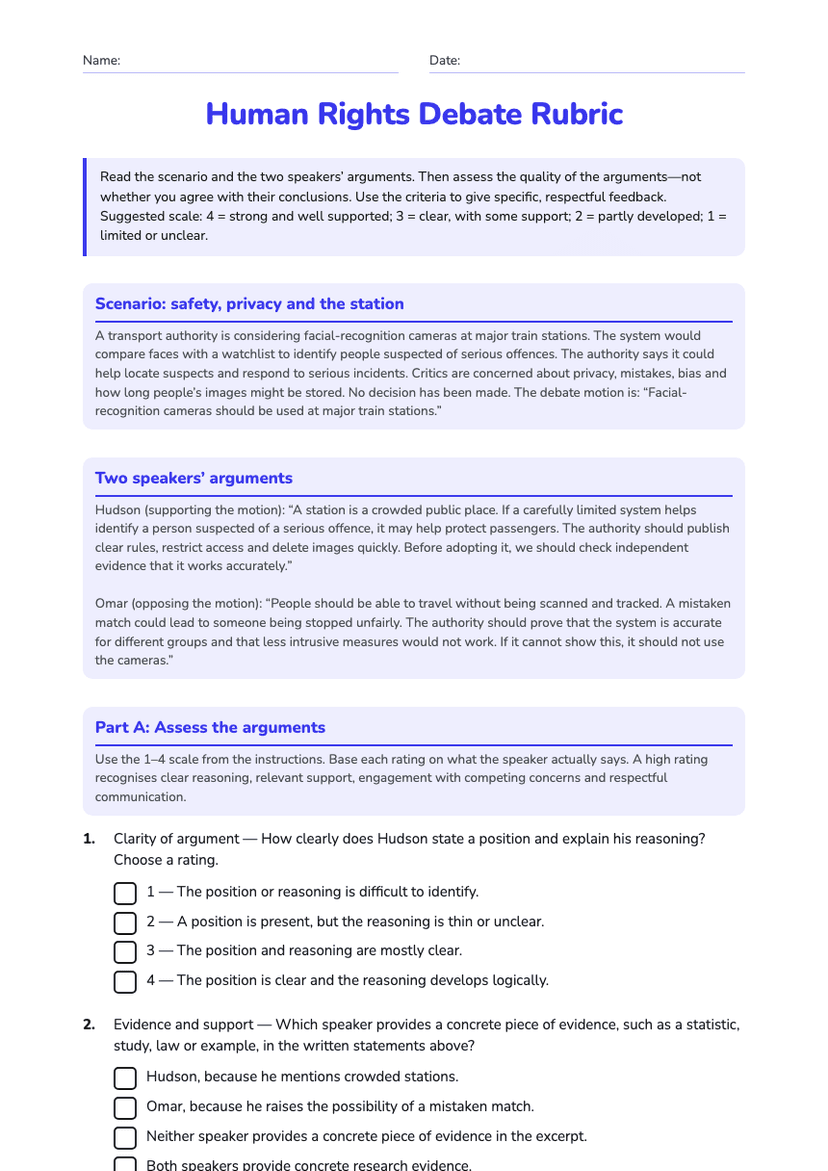
Human Rights Debate Rubric
Free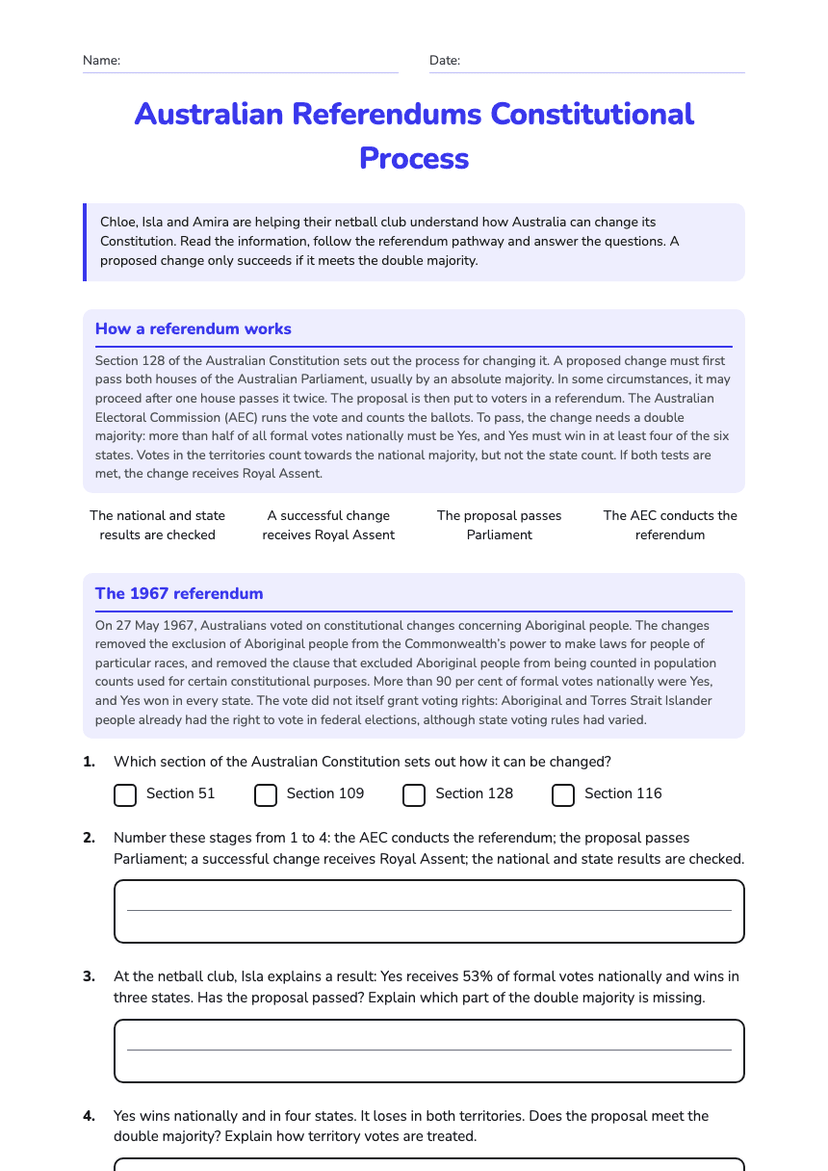
Australian Referendums Constitutional Process
Free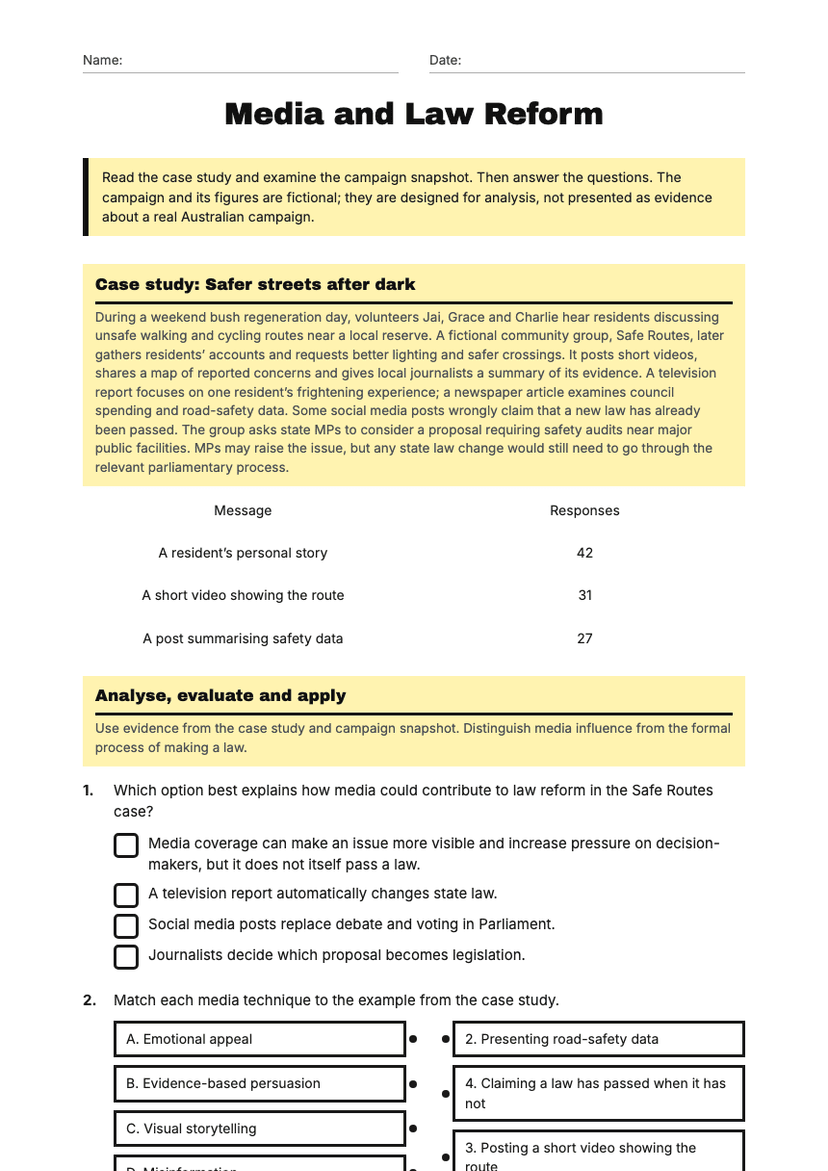
Media and Law Reform
Free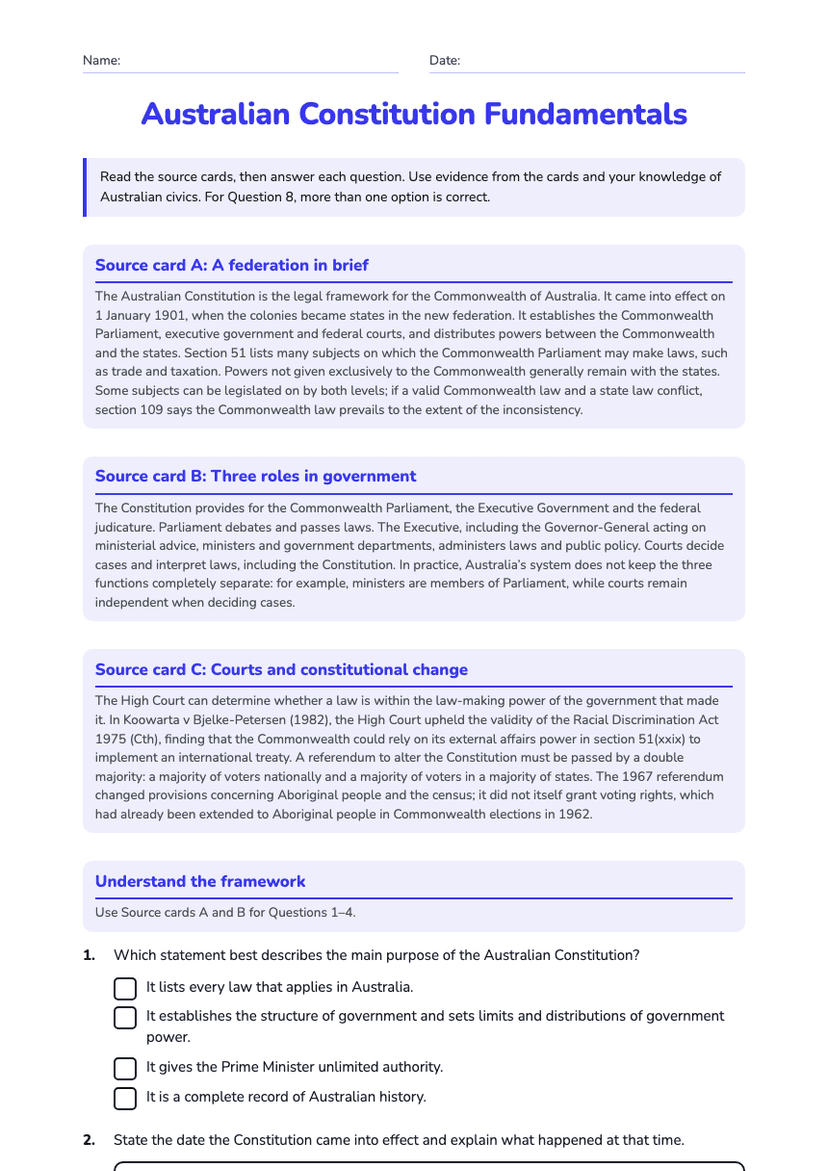
Australian Constitution Fundamentals
Free
Commonwealth Constitution Overview
Free