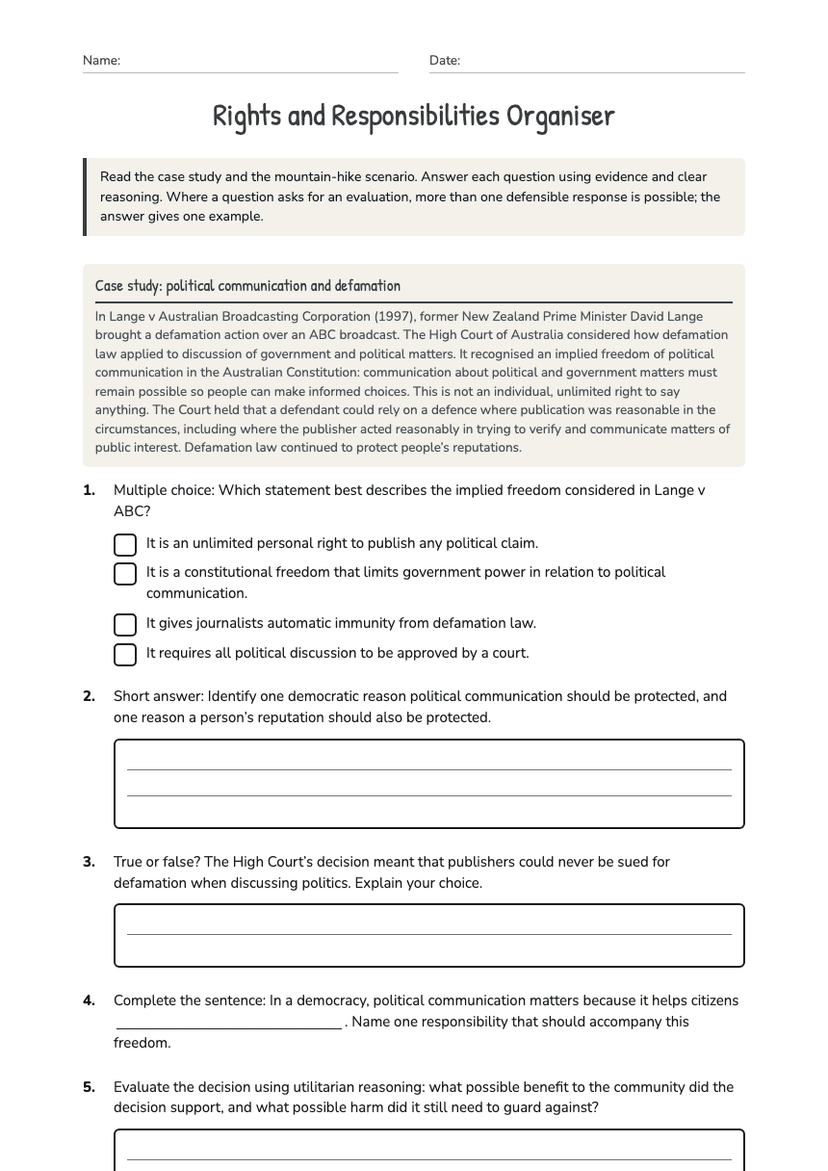
Balancing Rights and Responsibilities
A free social sciences worksheet ready for your classroom. Open in Kuraplan to grab the print-ready PDF, customize it for your students, or generate a fresh version in seconds.
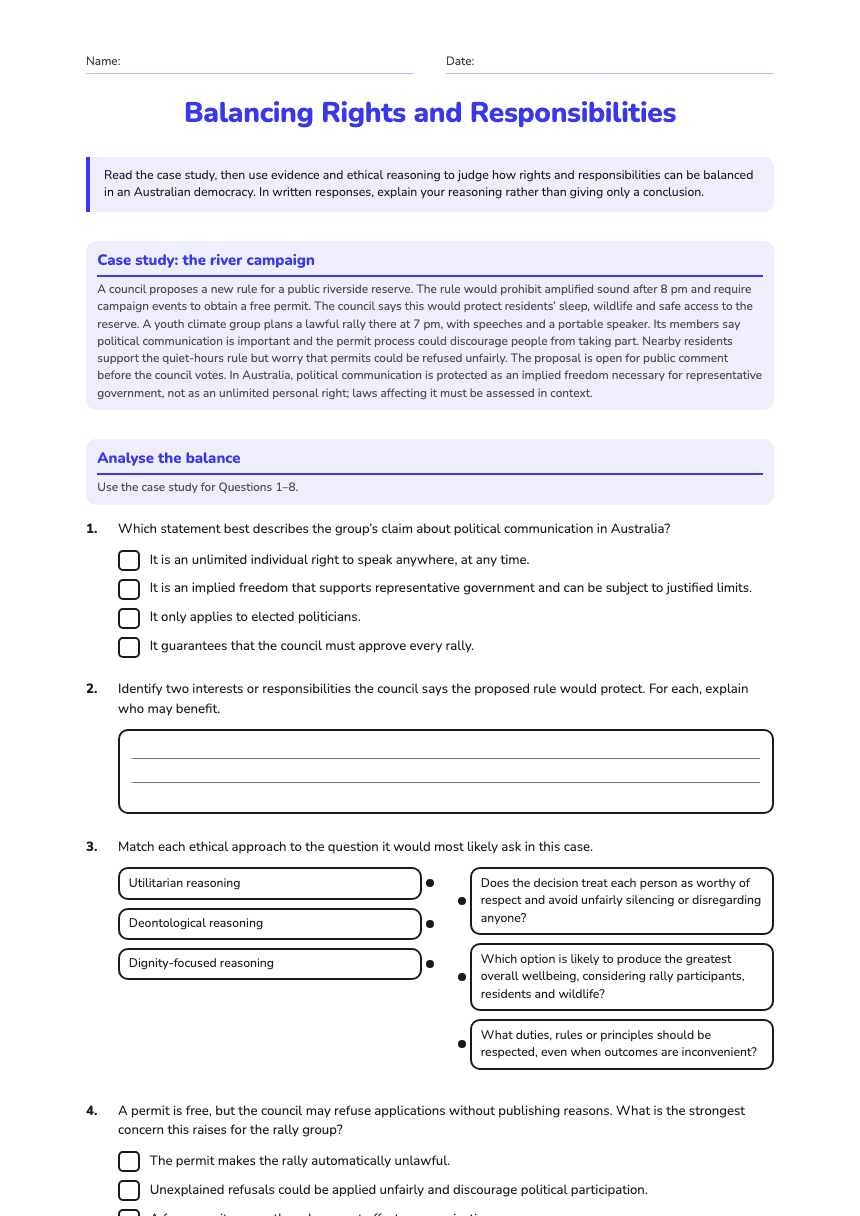
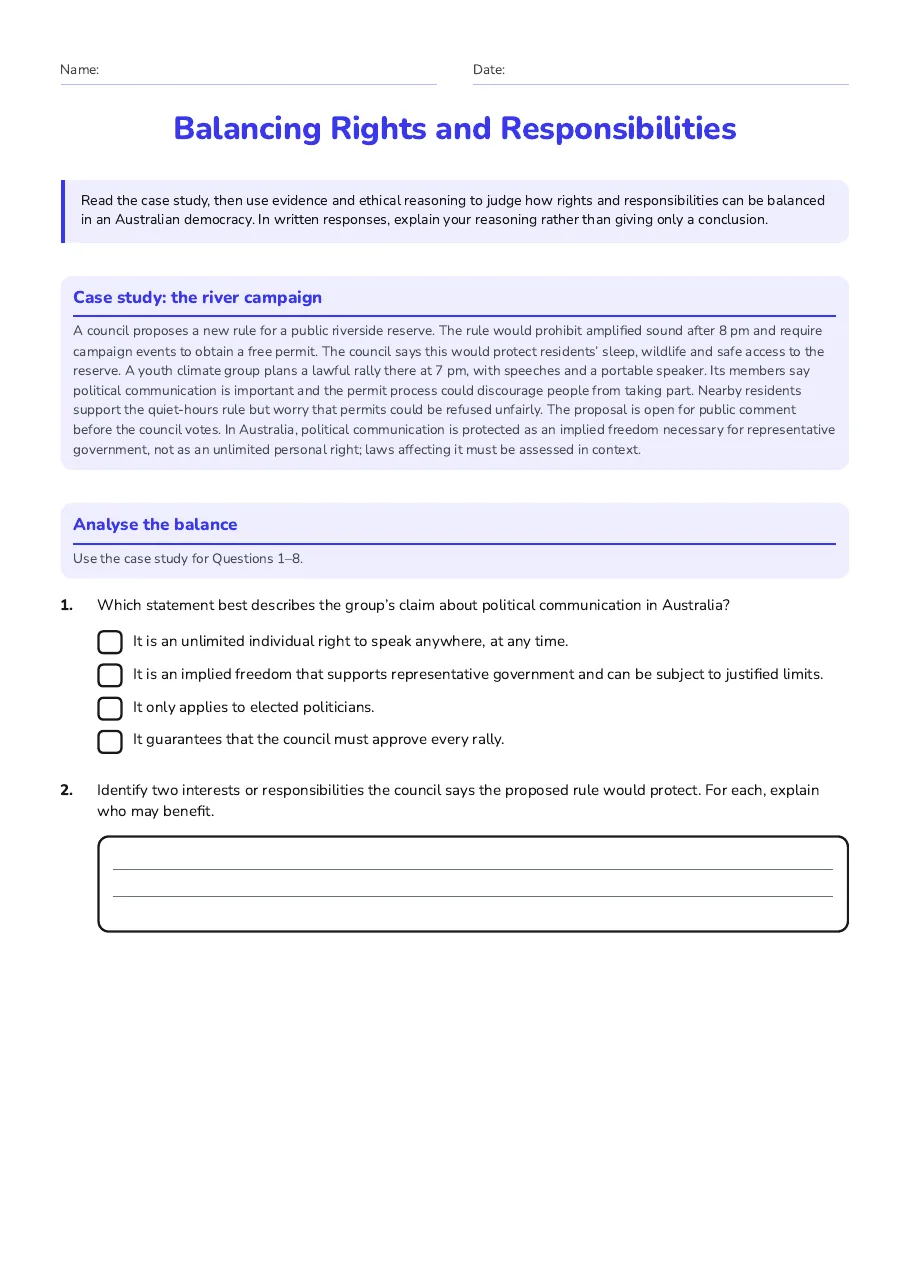
Balancing Rights and Responsibilities
Case study: the river campaign
A council proposes a new rule for a public riverside reserve. The rule would prohibit amplified sound after 8 pm and require campaign events to obtain a free permit. The council says this would protect residents’ sleep, wildlife and safe access to the reserve. A youth climate group plans a lawful rally there at 7 pm, with speeches and a portable speaker. Its members say political communication is important and the permit process could discourage people from taking part. Nearby residents support the quiet-hours rule but worry that permits could be refused unfairly. The proposal is open for public comment before the council votes. In Australia, political communication is protected as an implied freedom necessary for representative government, not as an unlimited personal right; laws affecting it must be assessed in context.
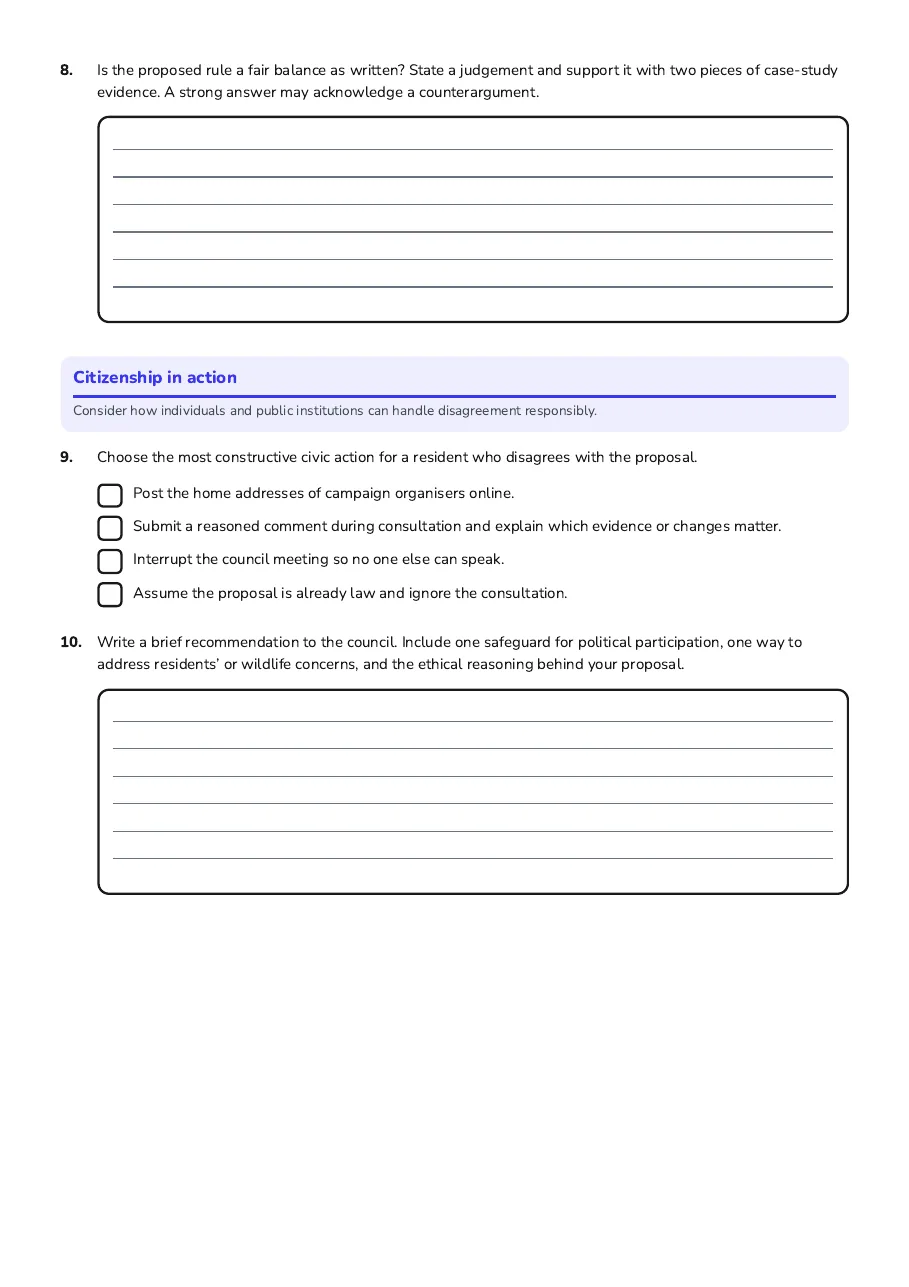
Analyse the balance
Use the case study for Questions 1–8.
- It is an unlimited individual right to speak anywhere, at any time.
- It is an implied freedom that supports representative government and can be subject to justified limits.
- It only applies to elected politicians.
- It guarantees that the council must approve every rally.
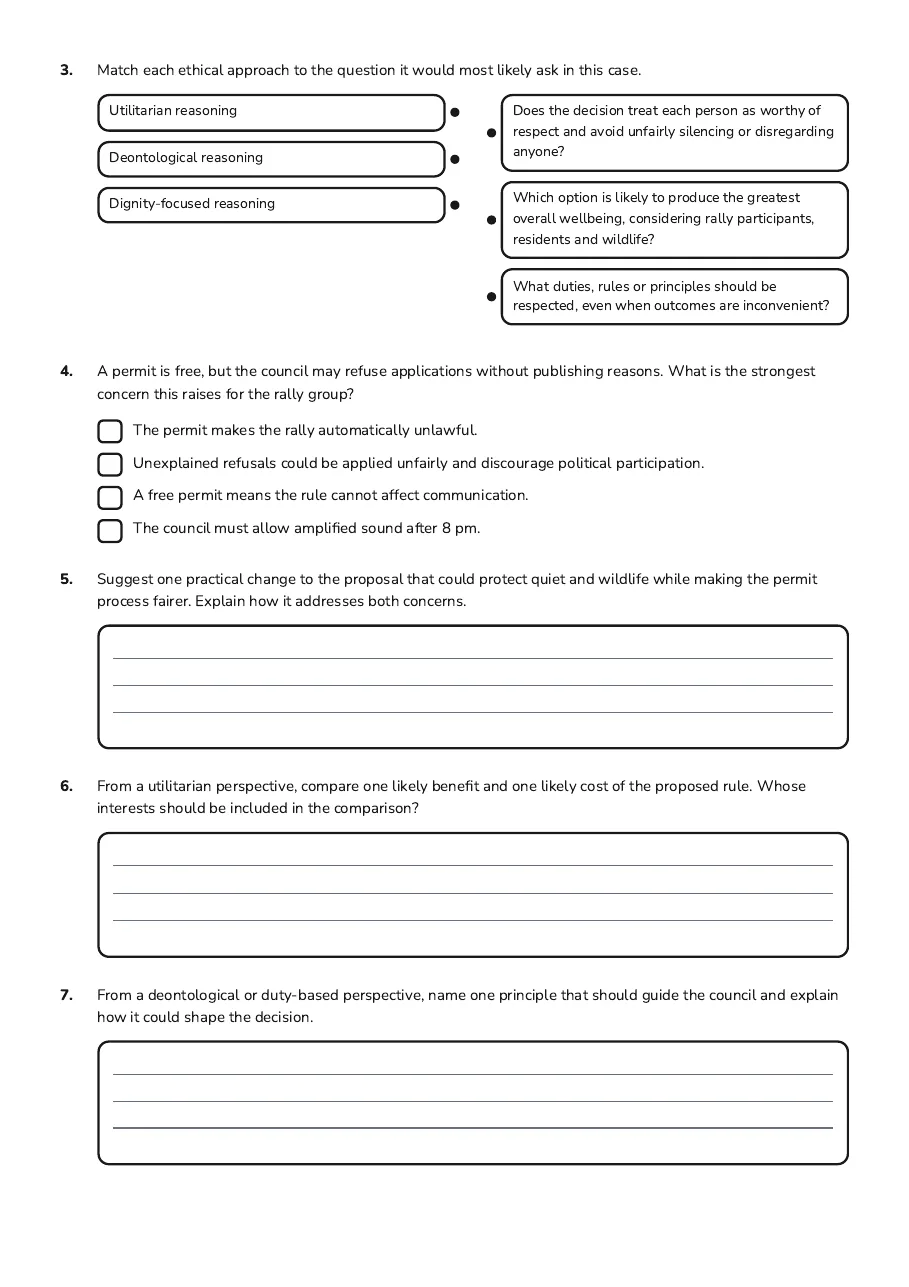
- Utilitarian reasoning
- Deontological reasoning
- Dignity-focused reasoning
- Does the decision treat each person as worthy of respect and avoid unfairly silencing or disregarding anyone?
- Which option is likely to produce the greatest overall wellbeing, considering rally participants, residents and wildlife?
- What duties, rules or principles should be respected, even when outcomes are inconvenient?
- The permit makes the rally automatically unlawful.
- Unexplained refusals could be applied unfairly and discourage political participation.
- A free permit means the rule cannot affect communication.
- The council must allow amplified sound after 8 pm.
Citizenship in action
Consider how individuals and public institutions can handle disagreement responsibly.
- Post the home addresses of campaign organisers online.
- Submit a reasoned comment during consultation and explain which evidence or changes matter.
- Interrupt the council meeting so no one else can speak.
- Assume the proposal is already law and ignore the consultation.
3 printable pages
Page 1
Page 2
Page 3
About This Worksheet
Free in Kuraplan
Sign up free, grab the PDF, and customize it for your class.
Print-Ready
Formatted for standard paper. Clean layout, easy to read.
AI-Generated
Created with Kuraplan's AI, designed for real classroom use.
For Teachers & Parents
Use in classrooms, for homework, tutoring, or homeschool.
Need a custom version of this worksheet?
Kuraplan's AI generates custom worksheets in seconds — differentiated for every learner, aligned to your curriculum.
Generate Custom Worksheets — FreeMore Social Sciences Worksheets
Community Project Planning
Free
Australian Law Reform Fact Sheets
Free
Human Rights Debate Rubric
Free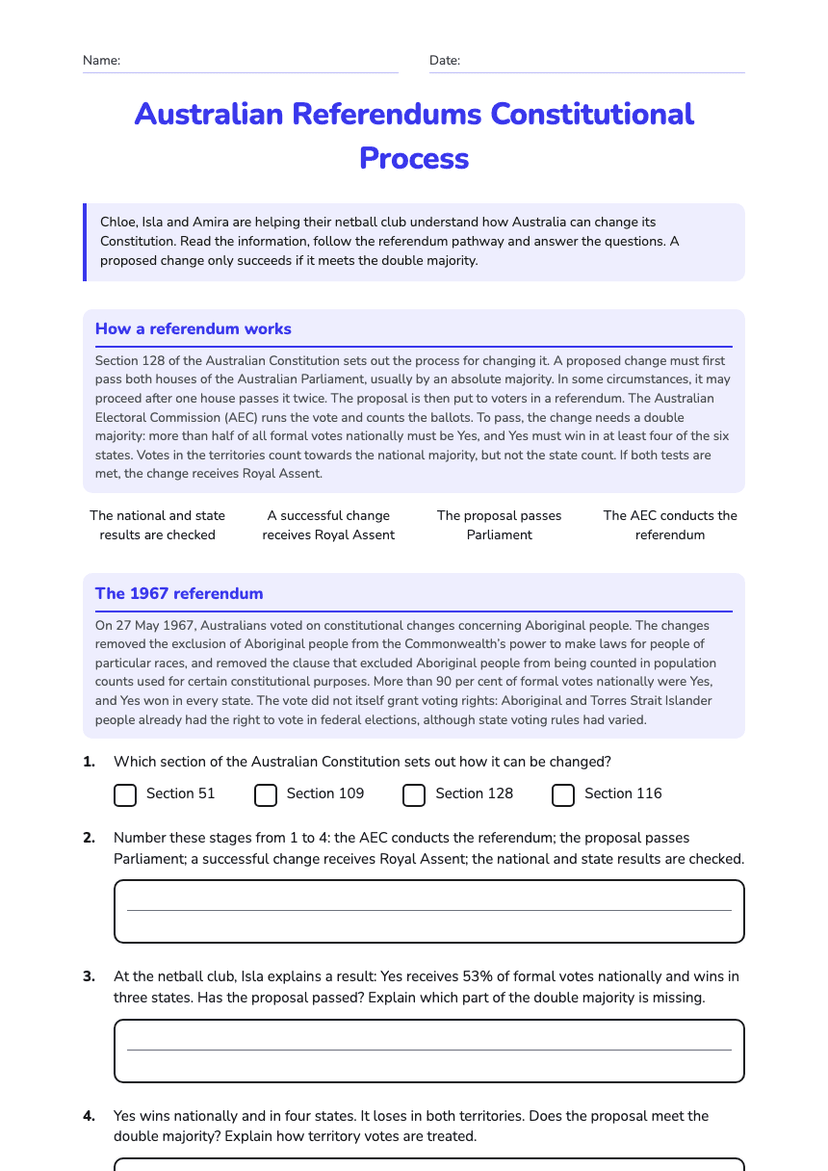
Australian Referendums Constitutional Process
Free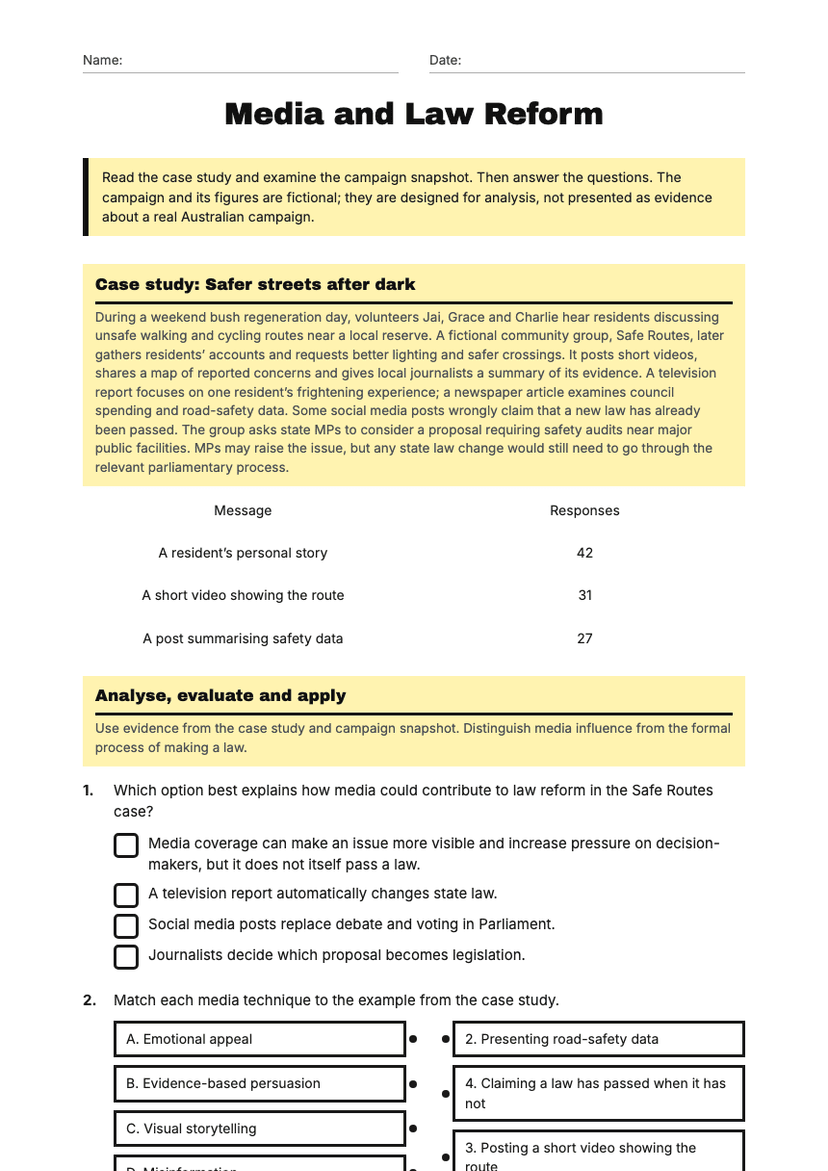
Media and Law Reform
Free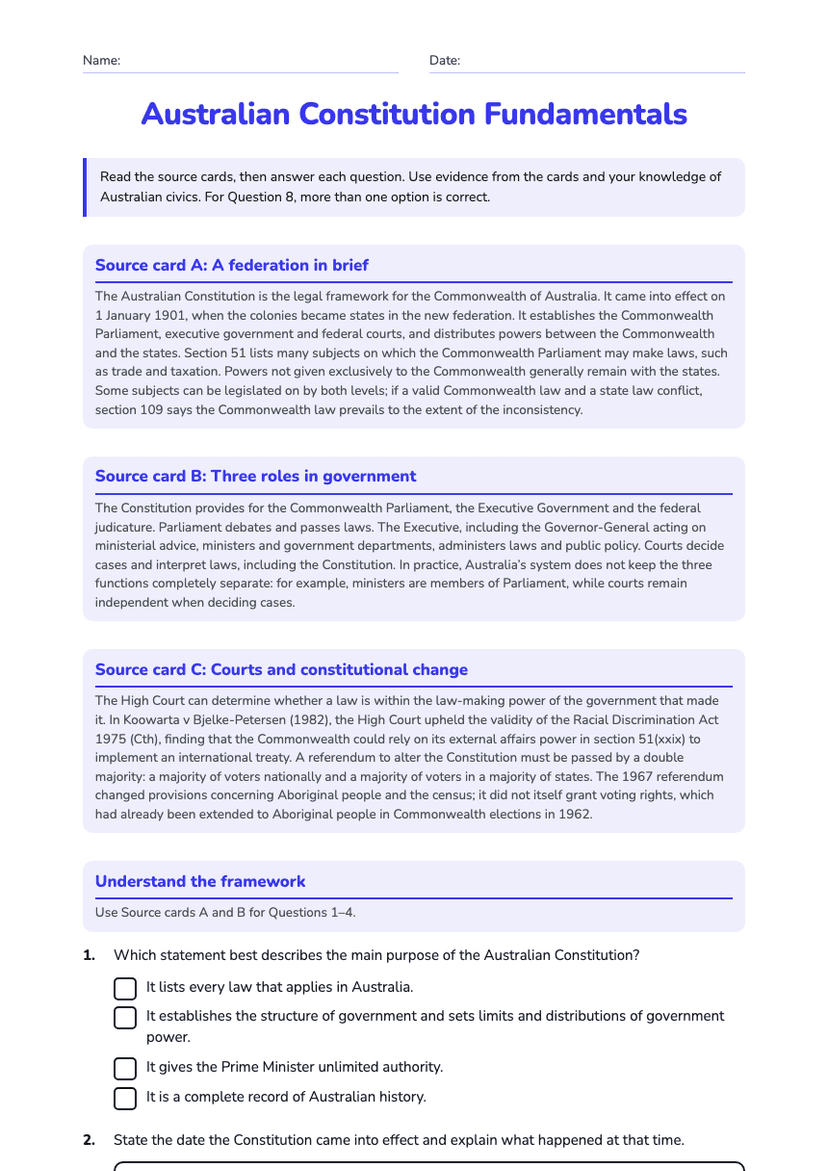
Australian Constitution Fundamentals
Free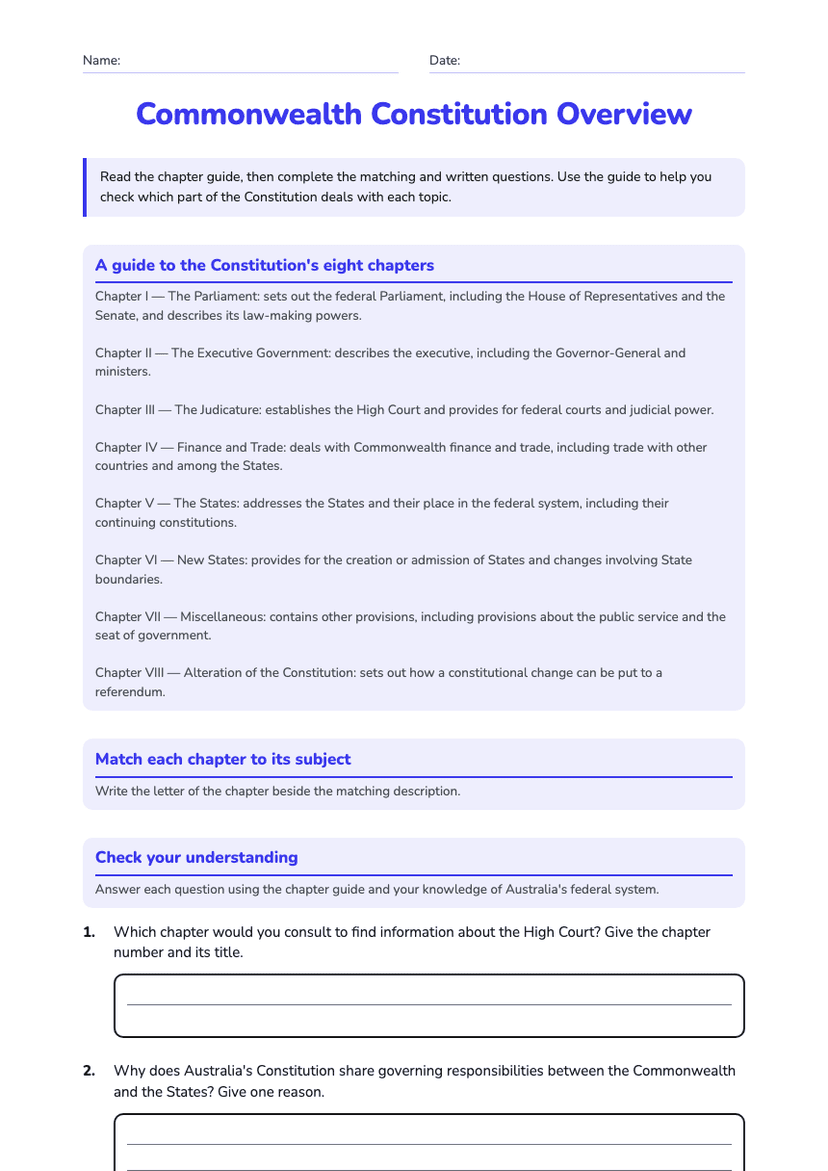
Commonwealth Constitution Overview
Free