Historical Recount Writing
A free english worksheet ready for your classroom. Open in Kuraplan to grab the print-ready PDF, customize it for your students, or generate a fresh version in seconds.
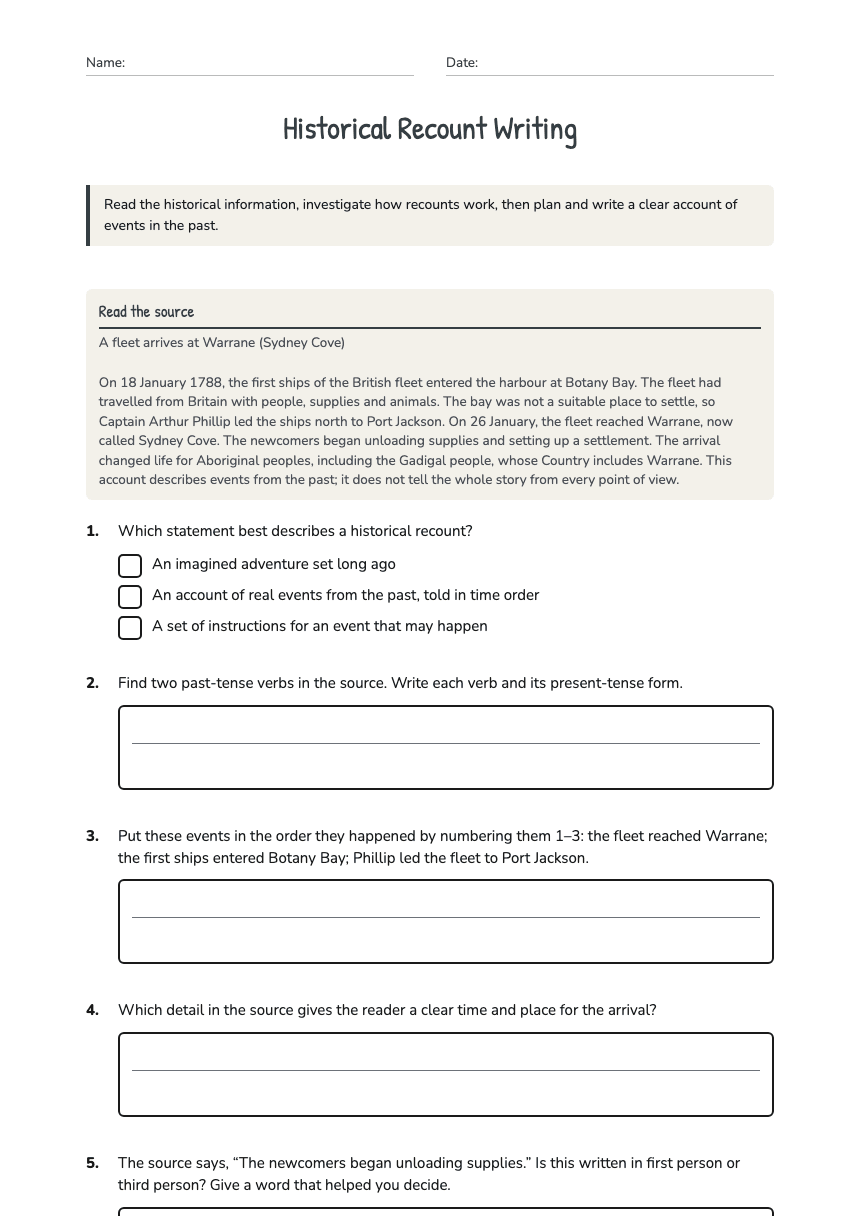
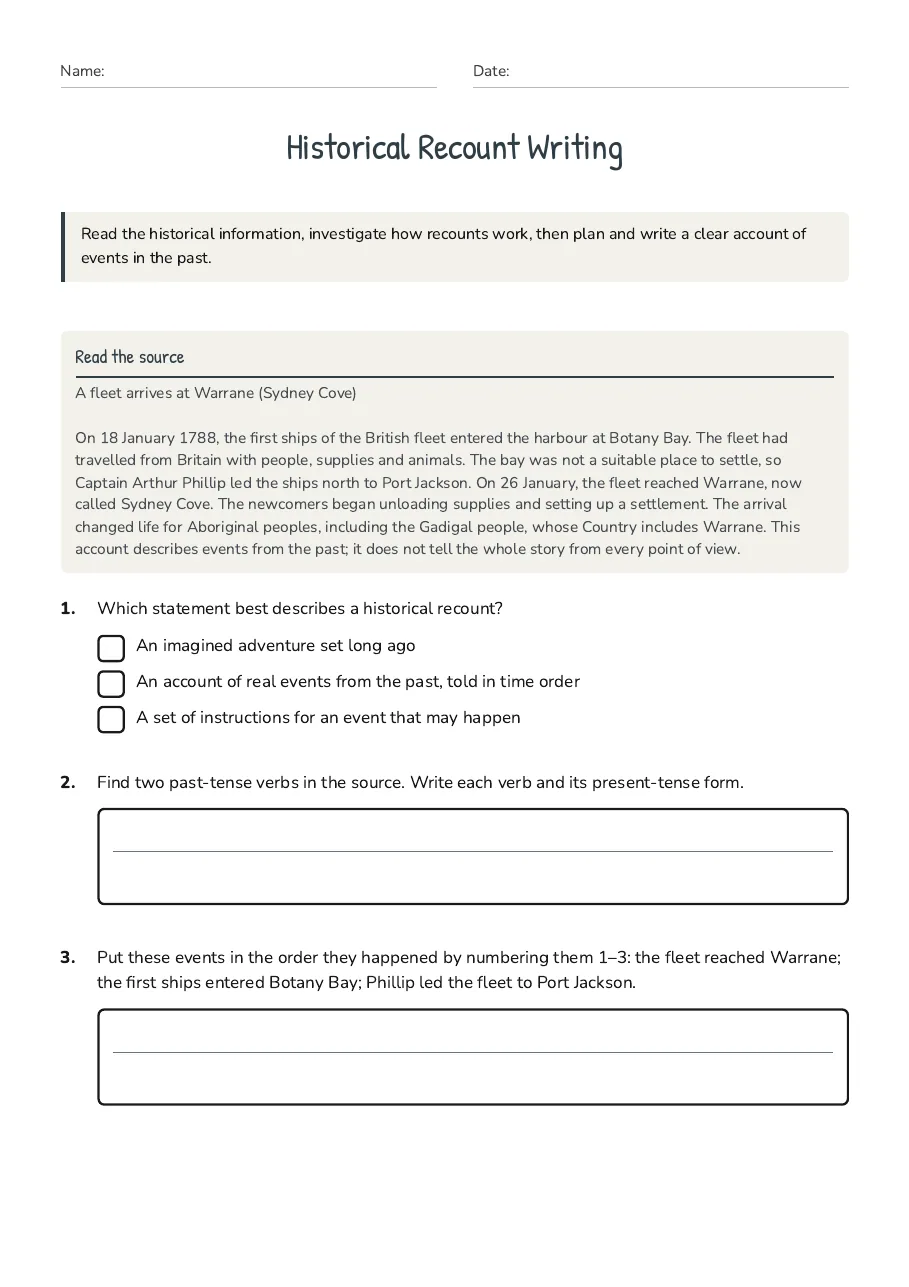
Historical Recount Writing
Read the source
A fleet arrives at Warrane (Sydney Cove) On 18 January 1788, the first ships of the British fleet entered the harbour at Botany Bay. The fleet had travelled from Britain with people, supplies and animals. The bay was not a suitable place to settle, so Captain Arthur Phillip led the ships north to Port Jackson. On 26 January, the fleet reached Warrane, now called Sydney Cove. The newcomers began unloading supplies and setting up a settlement. The arrival changed life for Aboriginal peoples, including the Gadigal people, whose Country includes Warrane. This account describes events from the past; it does not tell the whole story from every point of view.
- An imagined adventure set long ago
- An account of real events from the past, told in time order
- A set of instructions for an event that may happen
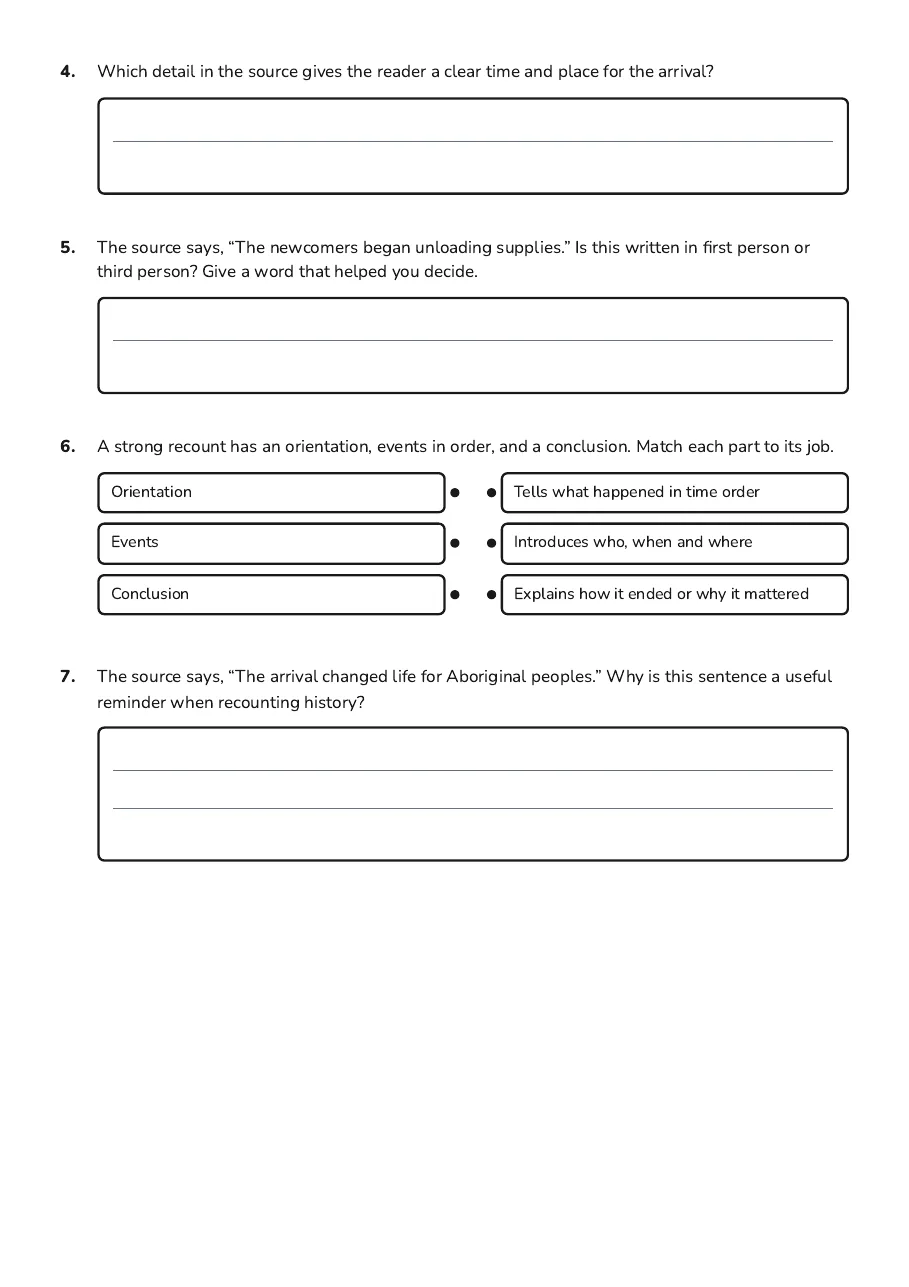
- Orientation
- Events
- Conclusion
- Tells what happened in time order
- Introduces who, when and where
- Explains how it ended or why it mattered
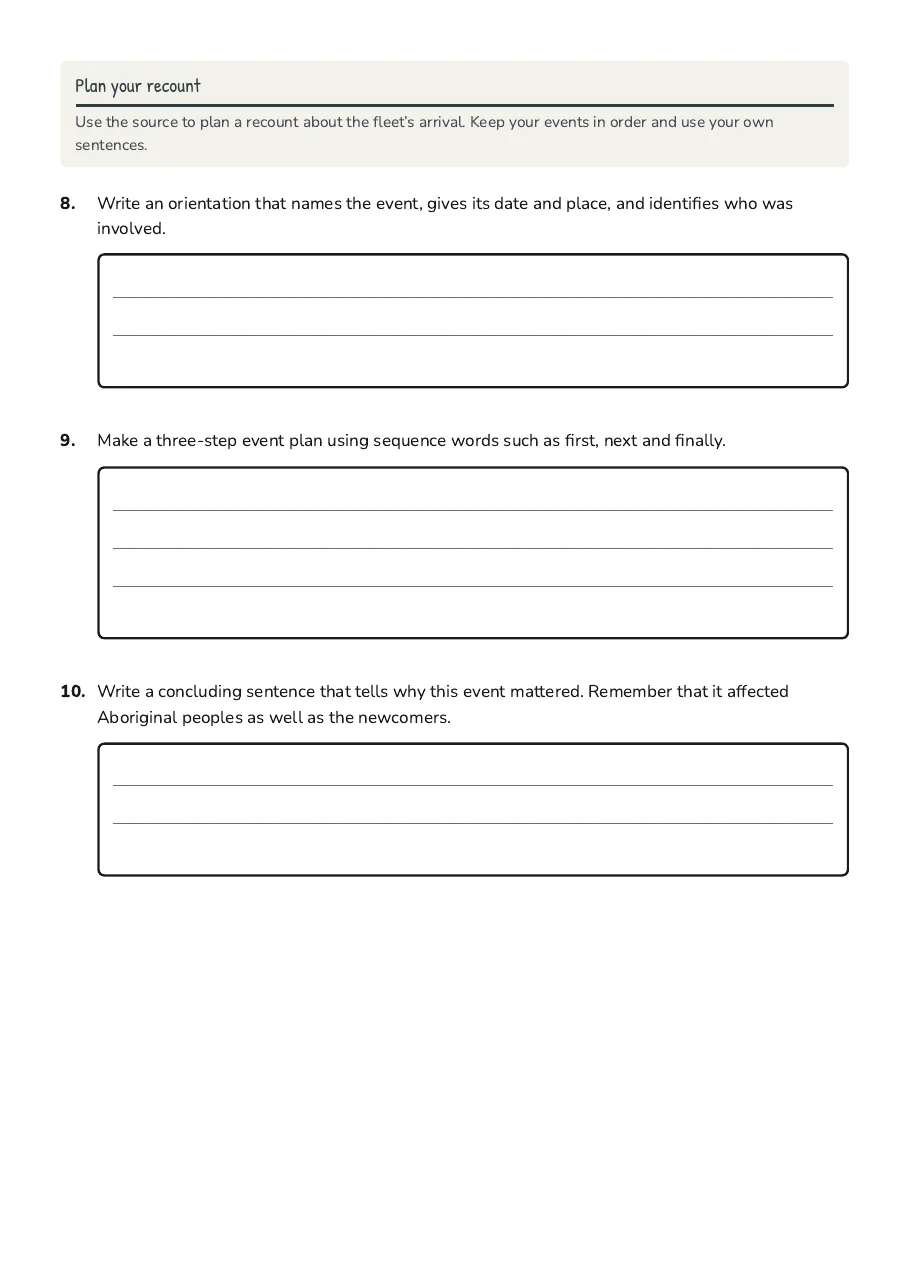
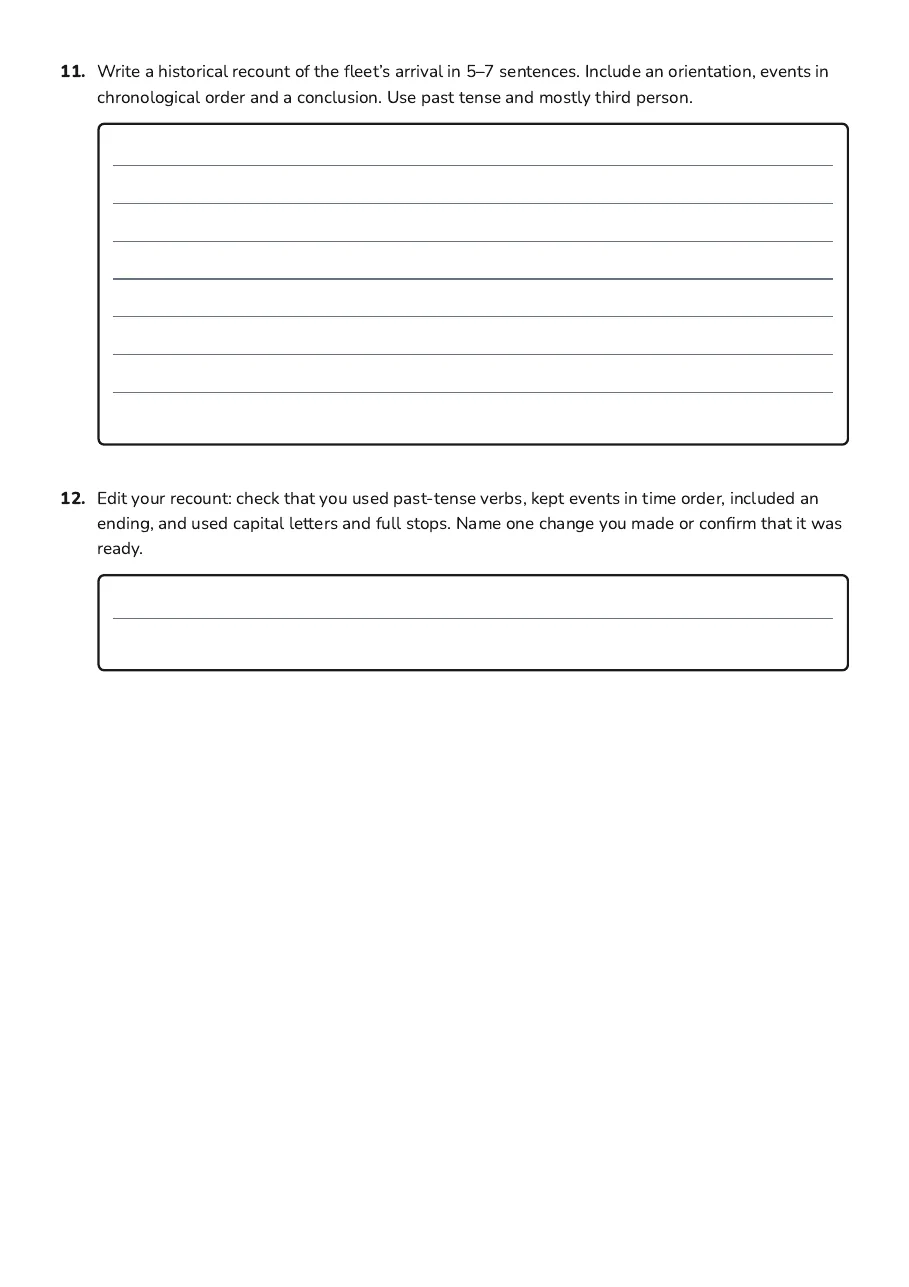
Plan your recount
Use the source to plan a recount about the fleet’s arrival. Keep your events in order and use your own sentences.
4 printable pages
Page 1
Page 2
Page 3
Page 4
About This Worksheet
Free in Kuraplan
Sign up free, grab the PDF, and customize it for your class.
Print-Ready
Formatted for standard paper. Clean layout, easy to read.
AI-Generated
Created with Kuraplan's AI, designed for real classroom use.
For Teachers & Parents
Use in classrooms, for homework, tutoring, or homeschool.
Need a custom version of this worksheet?
Kuraplan's AI generates custom worksheets in seconds — differentiated for every learner, aligned to your curriculum.
Generate Custom Worksheets — FreeMore English Worksheets
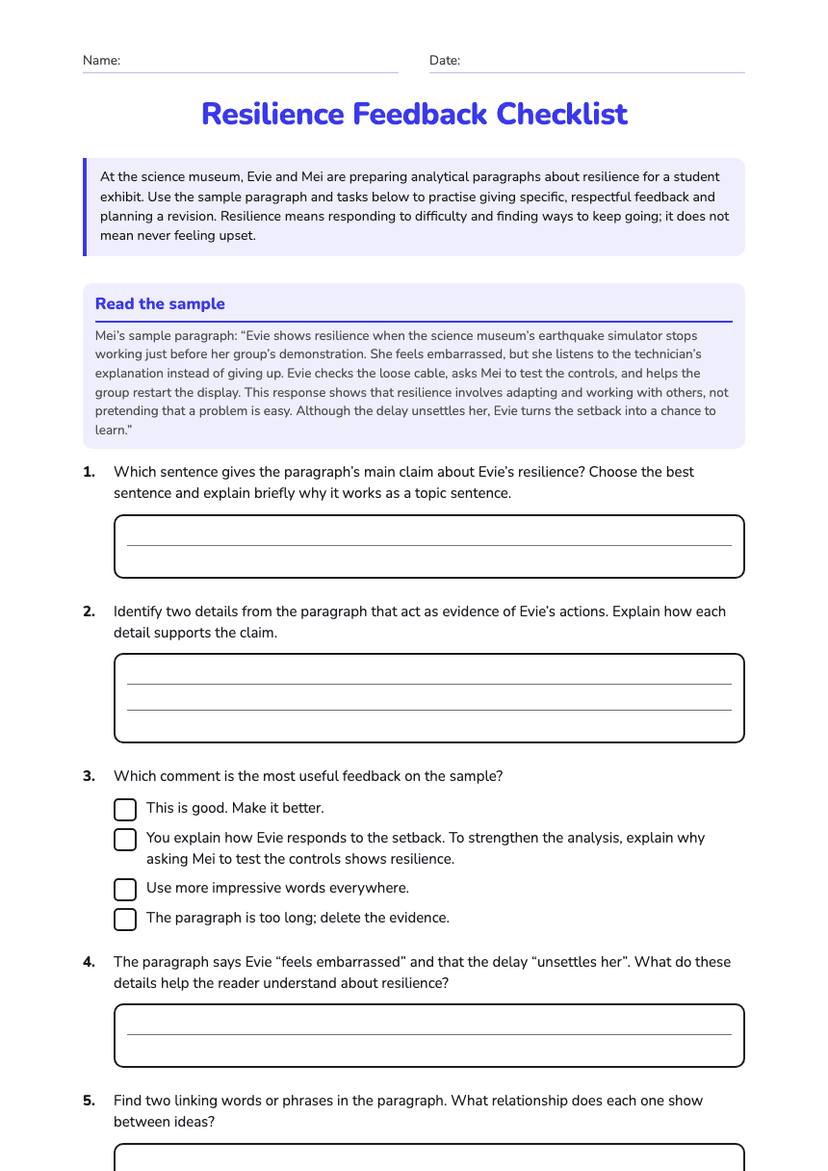
Resilience Feedback Checklist
Free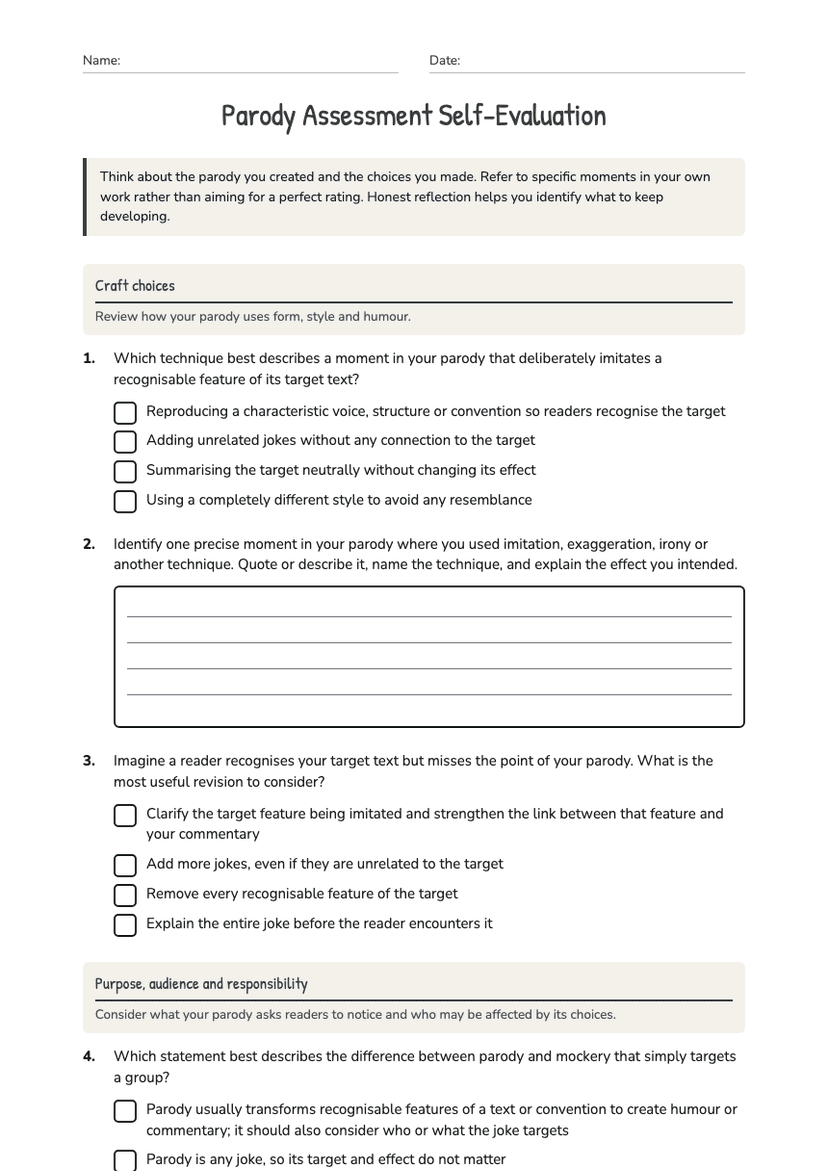
Parody Assessment Self-Evaluation
Free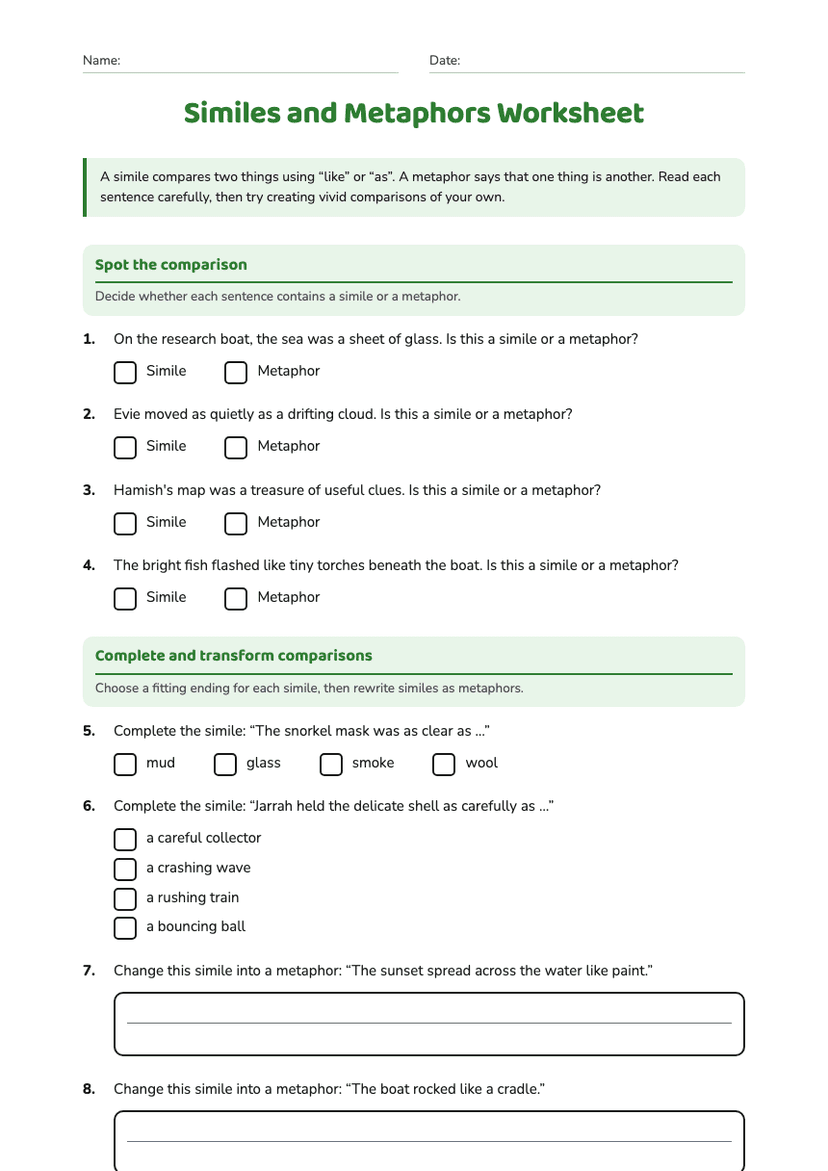
Similes and Metaphors Worksheet
Free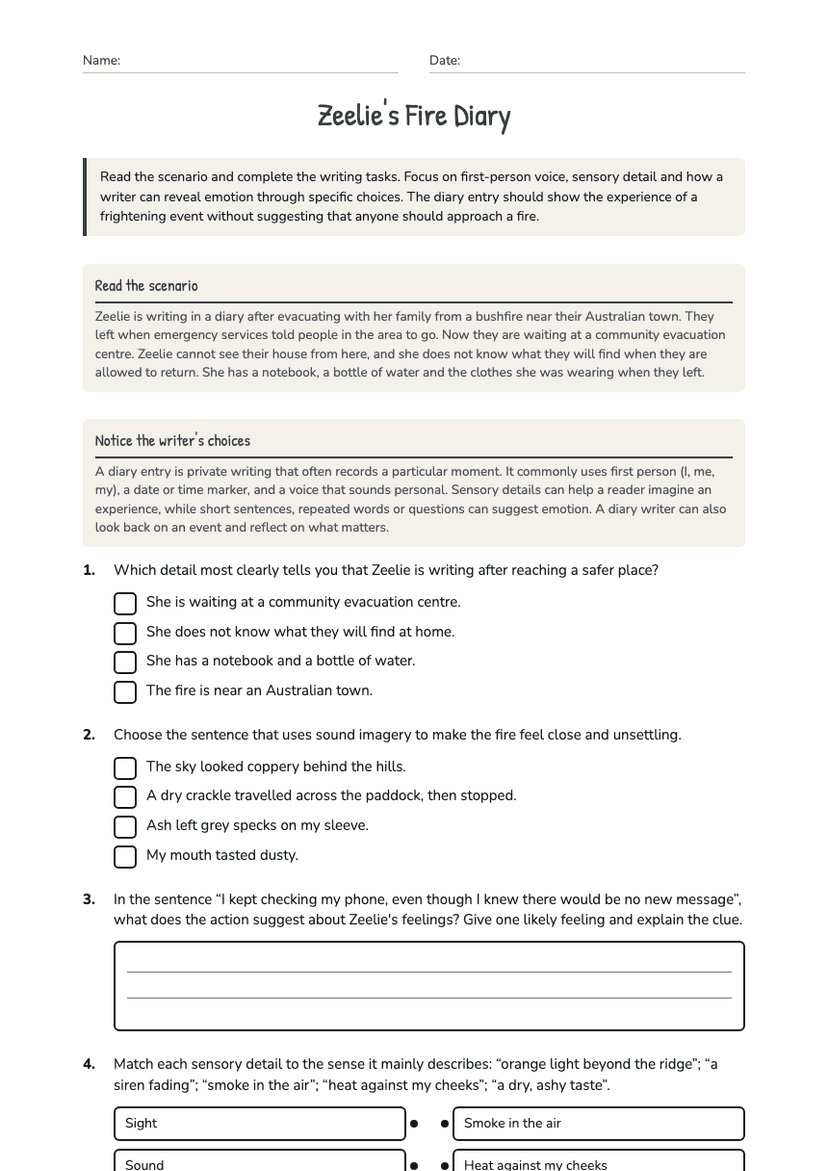
Zeelie's Fire Diary
Free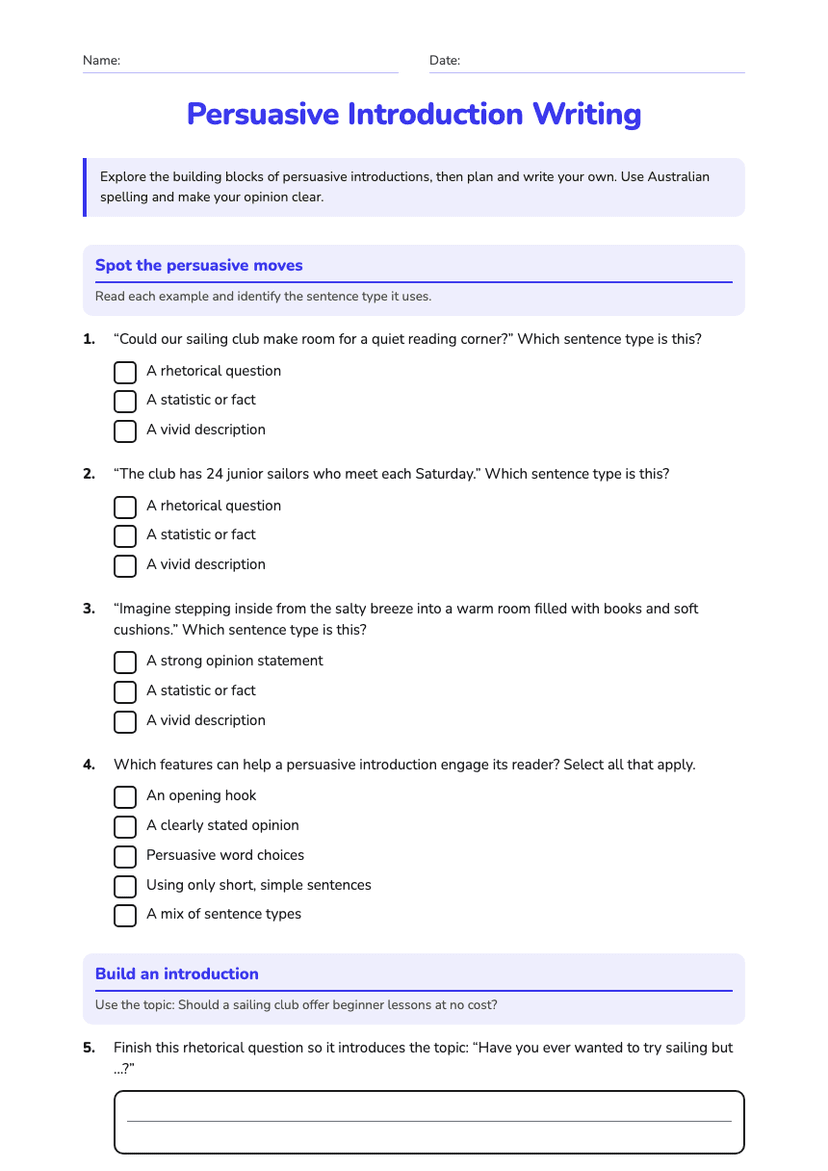
Persuasive Introduction Writing
Free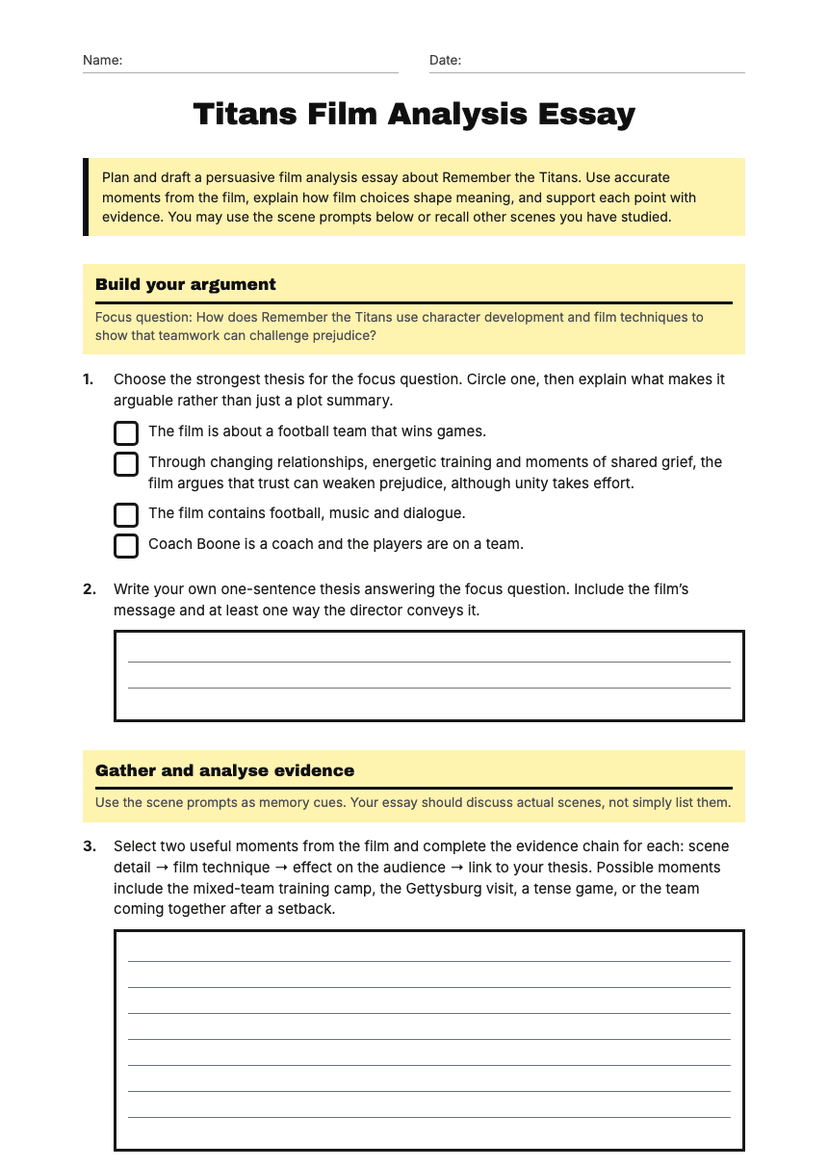
Titans Film Analysis Essay
Free
Persuasive Writing Editing Checklist
Free