Human Impact on Rivers
A free social sciences worksheet ready for your classroom. Open in Kuraplan to grab the print-ready PDF, customize it for your students, or generate a fresh version in seconds.
Human Impact on Rivers
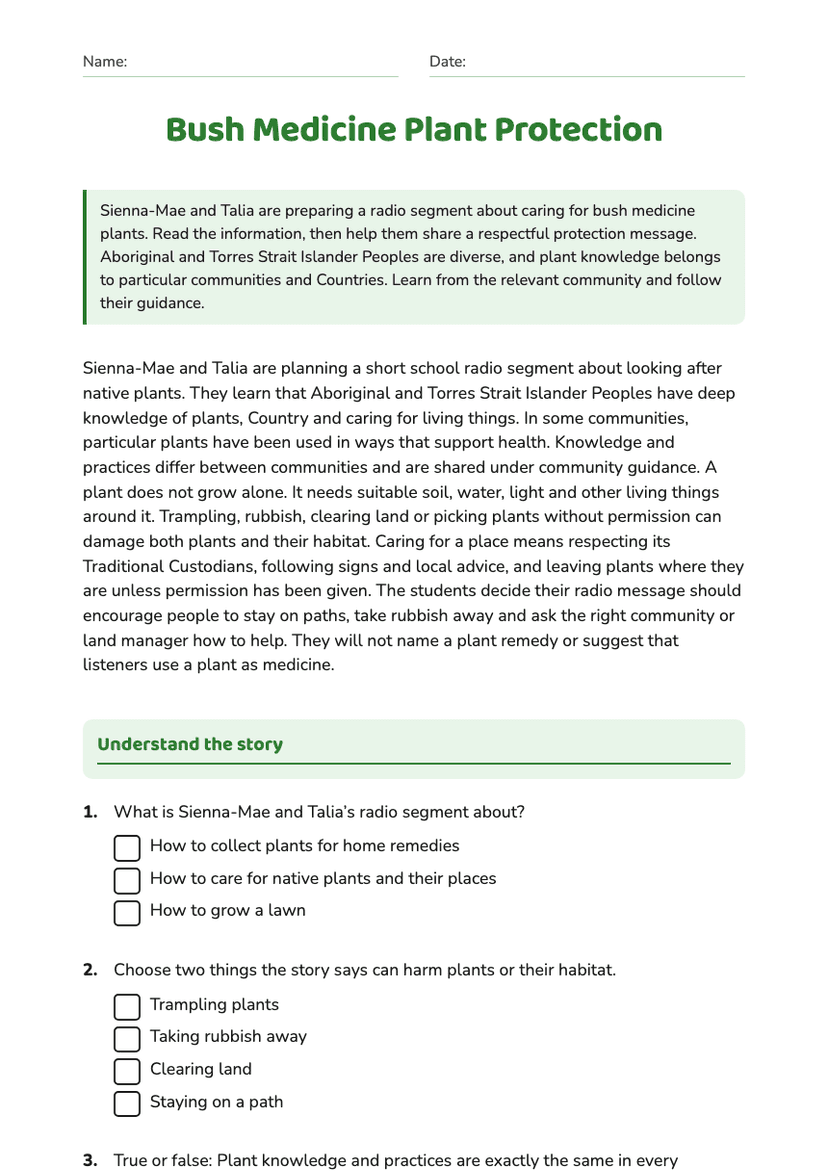
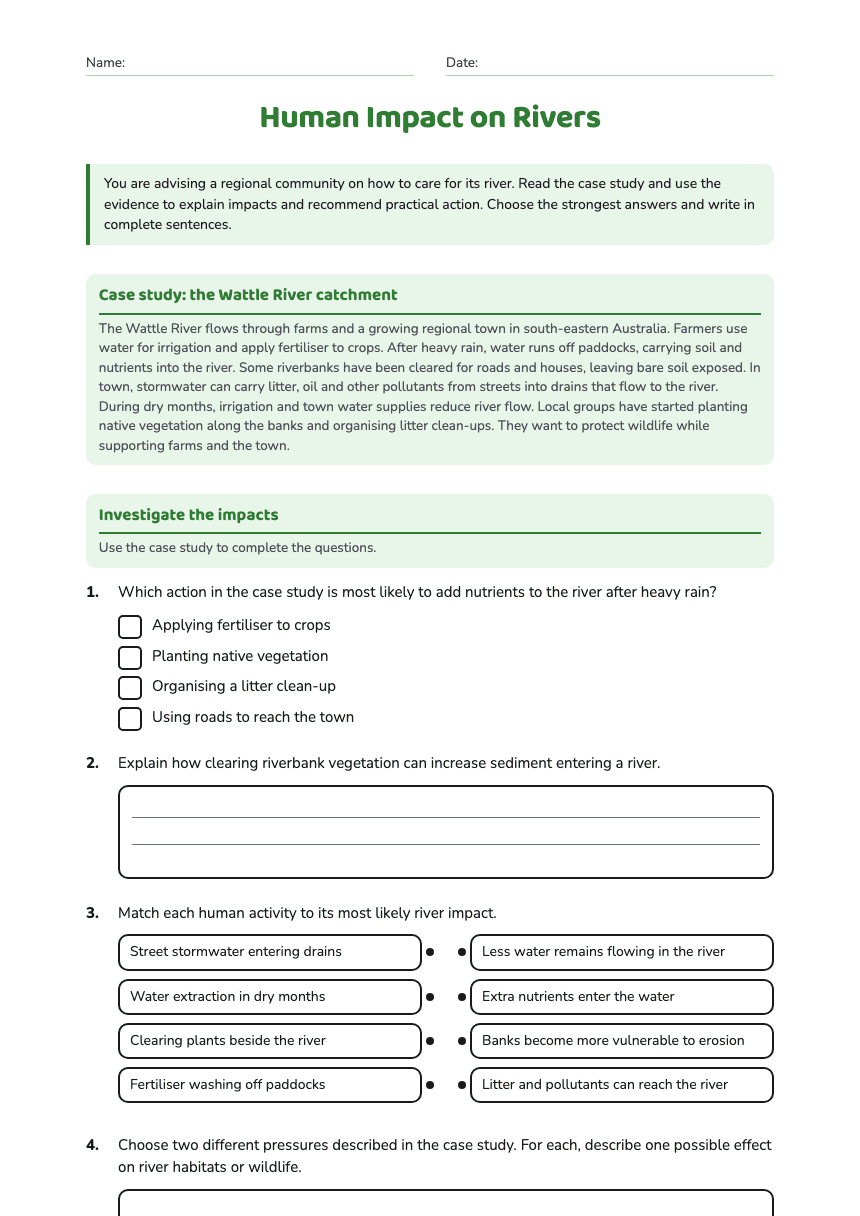
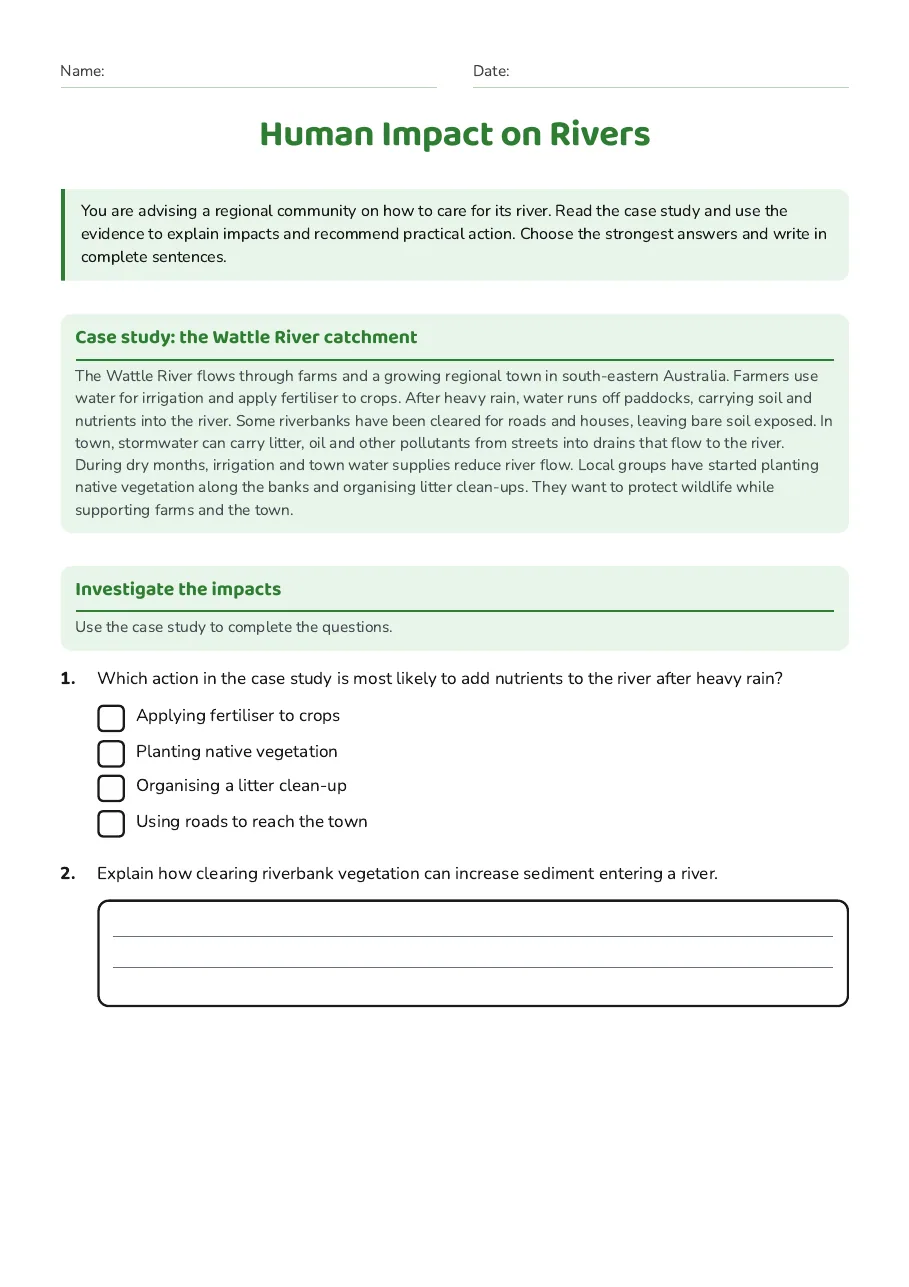
Case study: the Wattle River catchment
The Wattle River flows through farms and a growing regional town in south-eastern Australia. Farmers use water for irrigation and apply fertiliser to crops. After heavy rain, water runs off paddocks, carrying soil and nutrients into the river. Some riverbanks have been cleared for roads and houses, leaving bare soil exposed. In town, stormwater can carry litter, oil and other pollutants from streets into drains that flow to the river. During dry months, irrigation and town water supplies reduce river flow. Local groups have started planting native vegetation along the banks and organising litter clean-ups. They want to protect wildlife while supporting farms and the town.
Investigate the impacts
Use the case study to complete the questions.
- Applying fertiliser to crops
- Planting native vegetation
- Organising a litter clean-up
- Using roads to reach the town
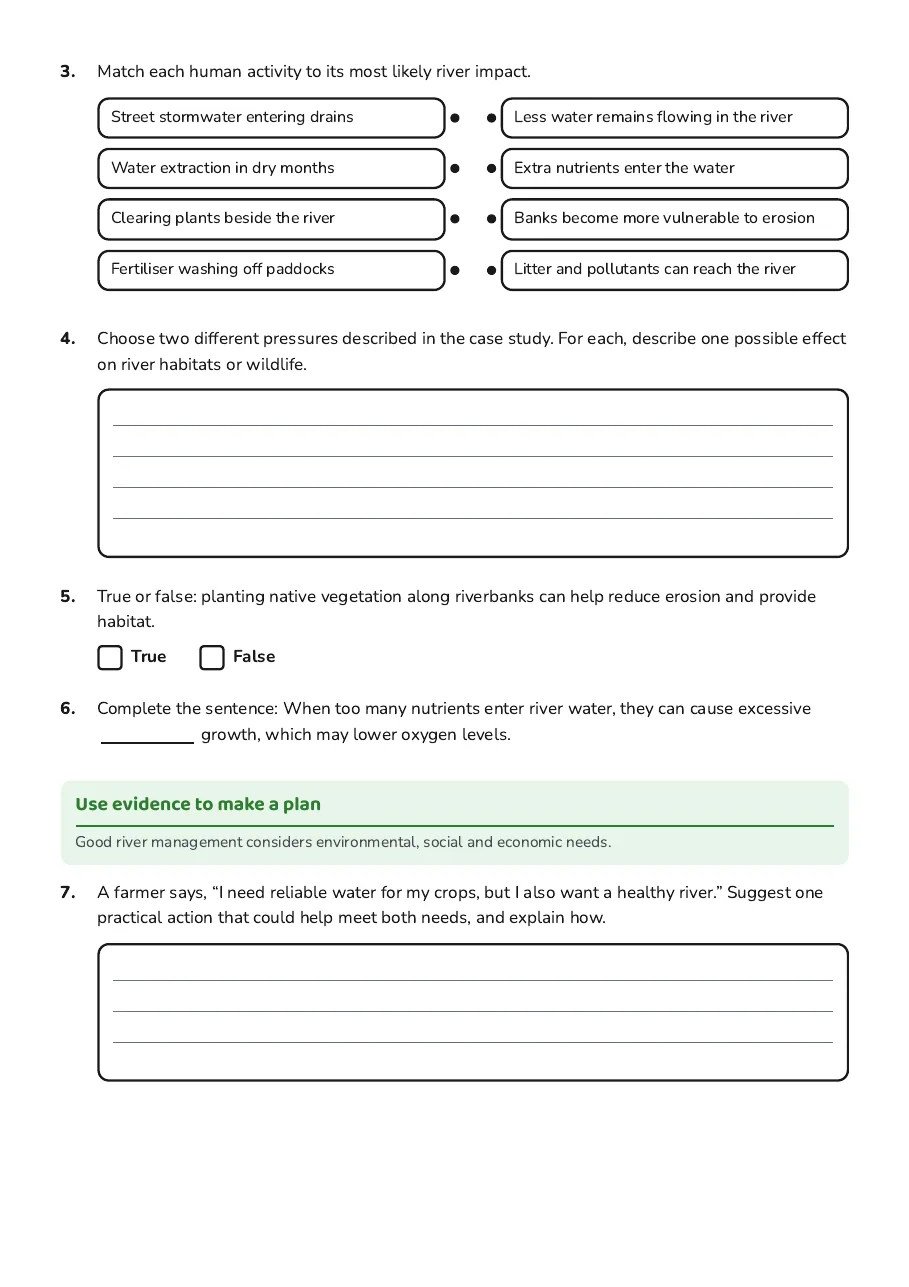
- Street stormwater entering drains
- Water extraction in dry months
- Clearing plants beside the river
- Fertiliser washing off paddocks
- Less water remains flowing in the river
- Extra nutrients enter the water
- Banks become more vulnerable to erosion
- Litter and pollutants can reach the river
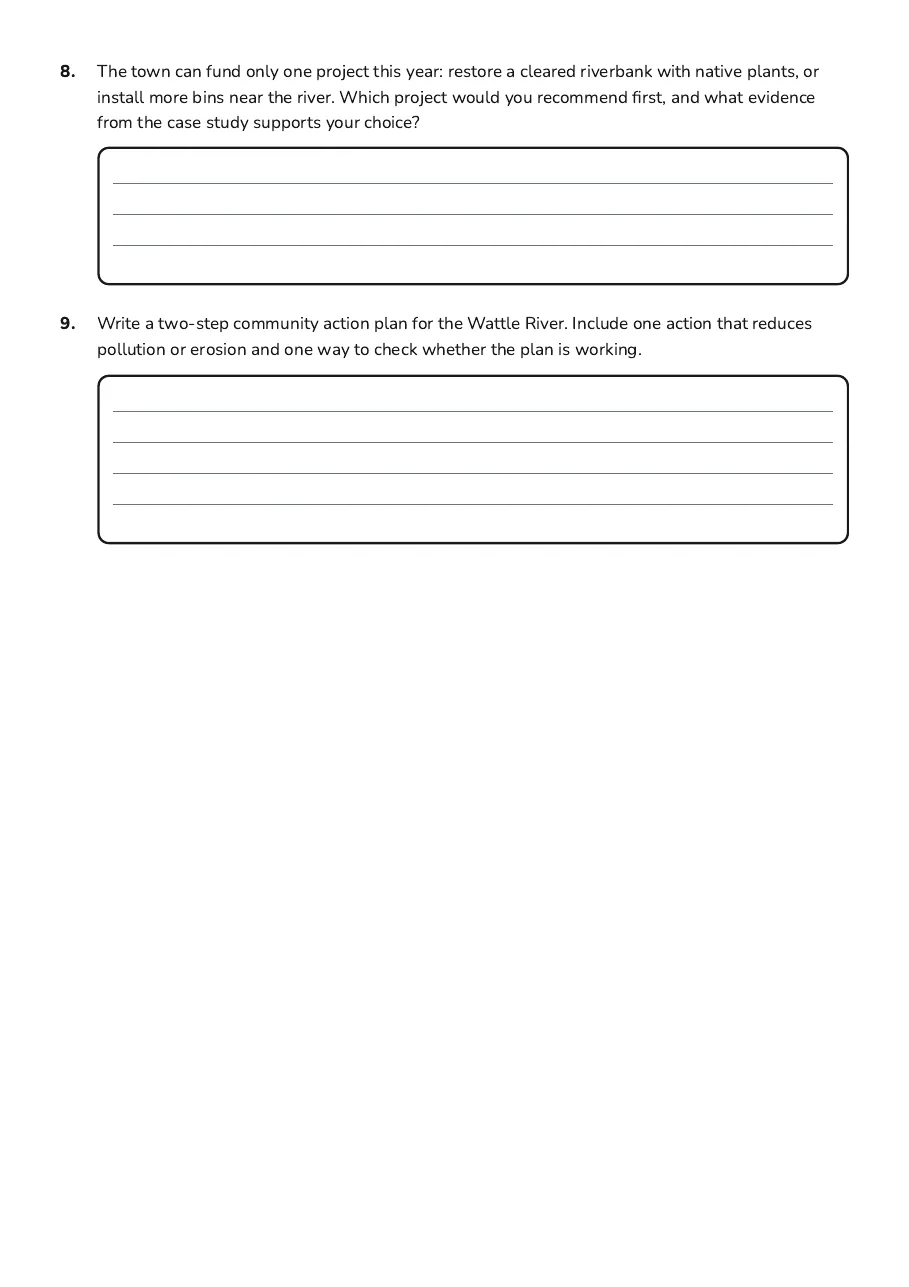
Use evidence to make a plan
Good river management considers environmental, social and economic needs.
3 printable pages
Page 1
Page 2
Page 3
About This Worksheet
Free in Kuraplan
Sign up free, grab the PDF, and customize it for your class.
Print-Ready
Formatted for standard paper. Clean layout, easy to read.
AI-Generated
Created with Kuraplan's AI, designed for real classroom use.
For Teachers & Parents
Use in classrooms, for homework, tutoring, or homeschool.
Need a custom version of this worksheet?
Kuraplan's AI generates custom worksheets in seconds — differentiated for every learner, aligned to your curriculum.
Generate Custom Worksheets — FreeMore Social Sciences Worksheets
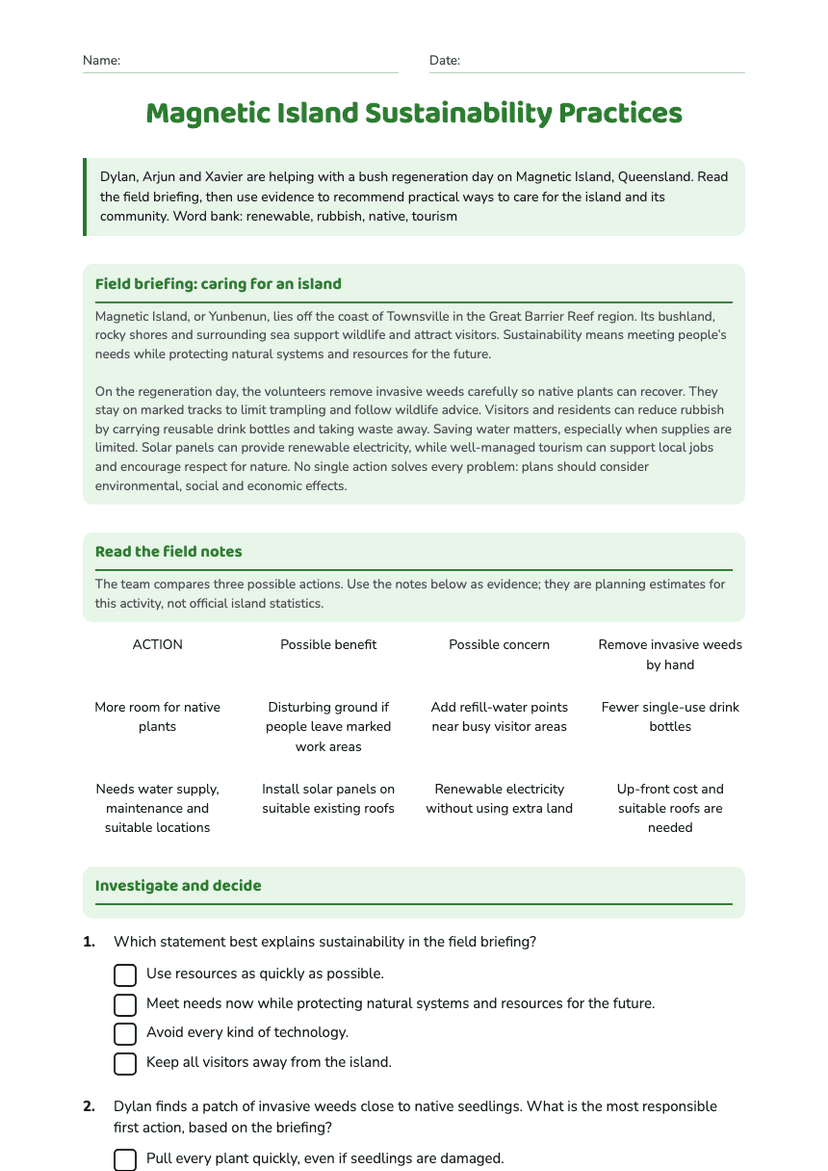
Magnetic Island Sustainability Practices
Free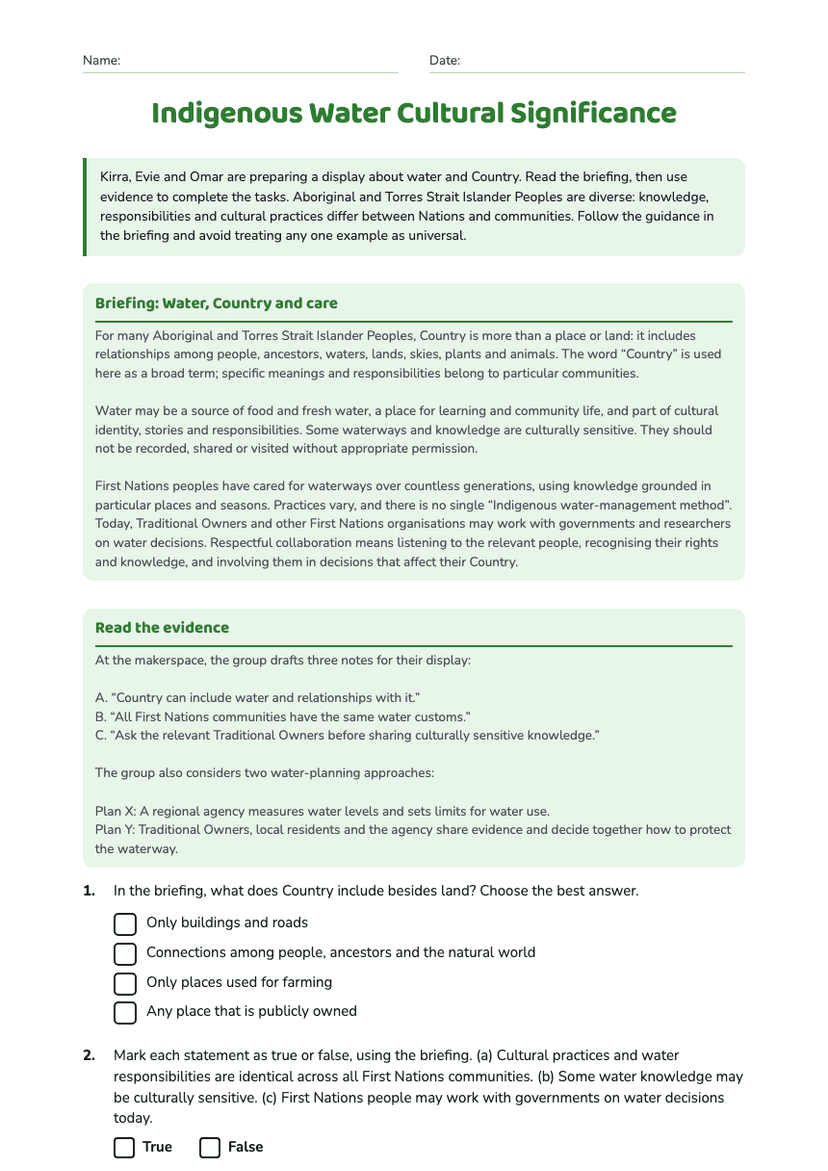
Indigenous Water Cultural Significance
Free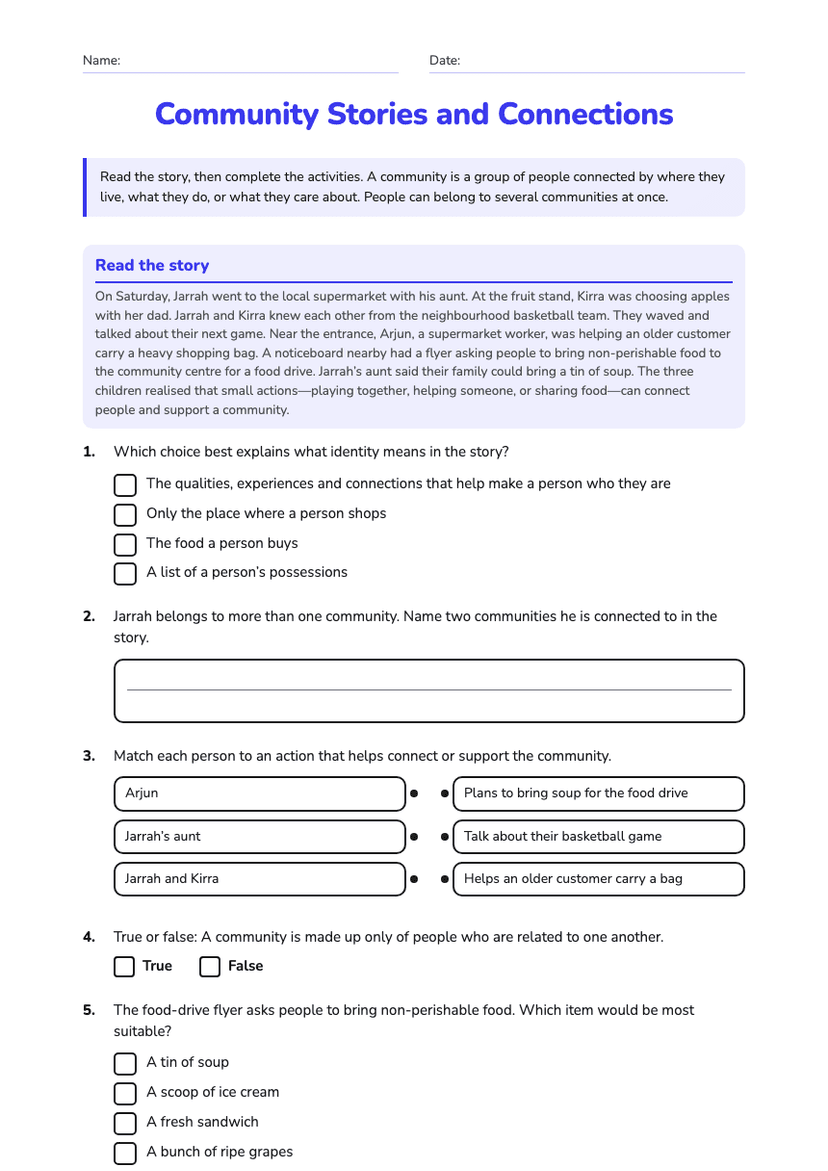
Community Stories and Connections
Free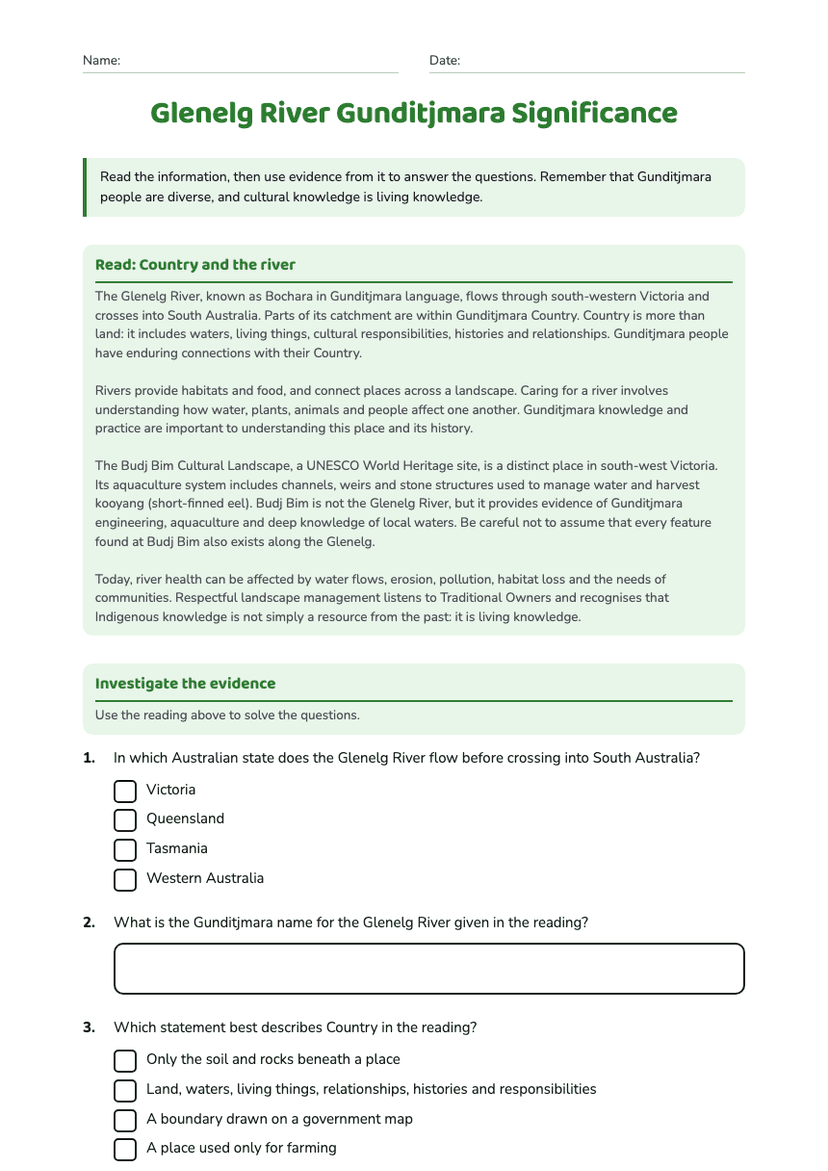
Glenelg River Gunditjmara Significance
Free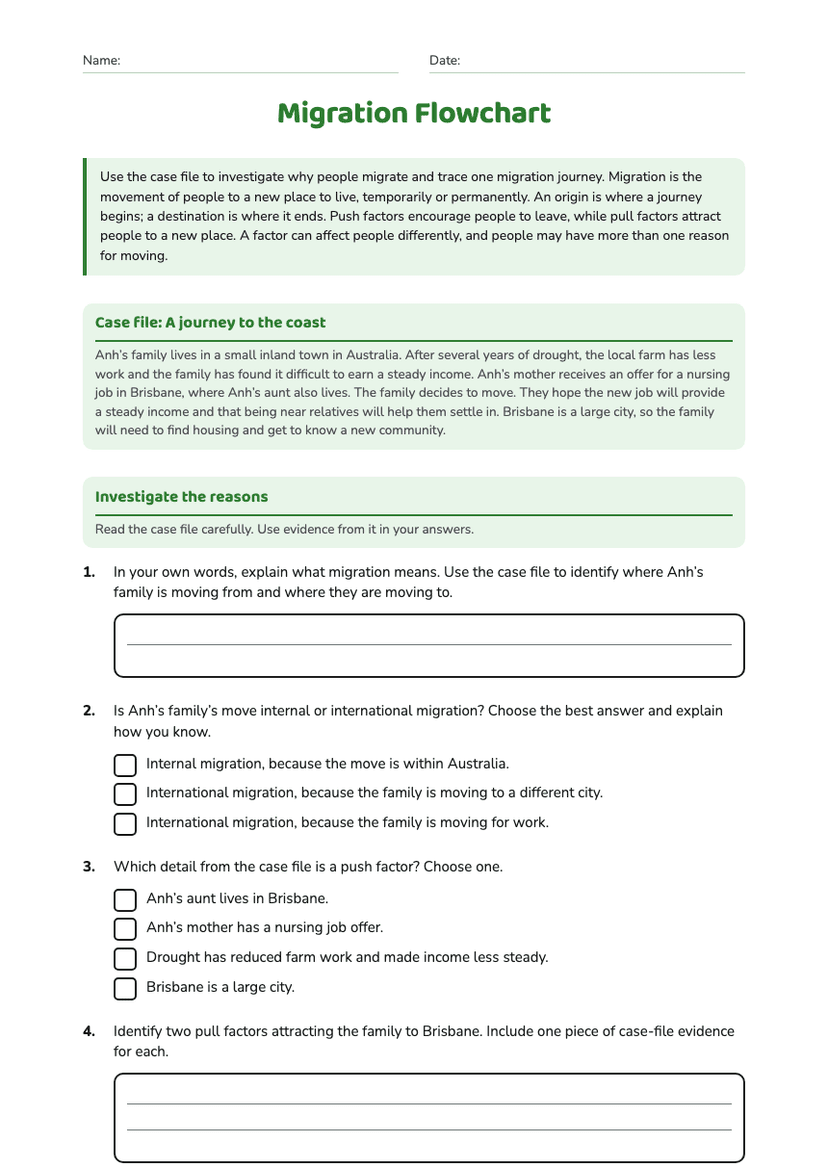
Migration Flowchart
Free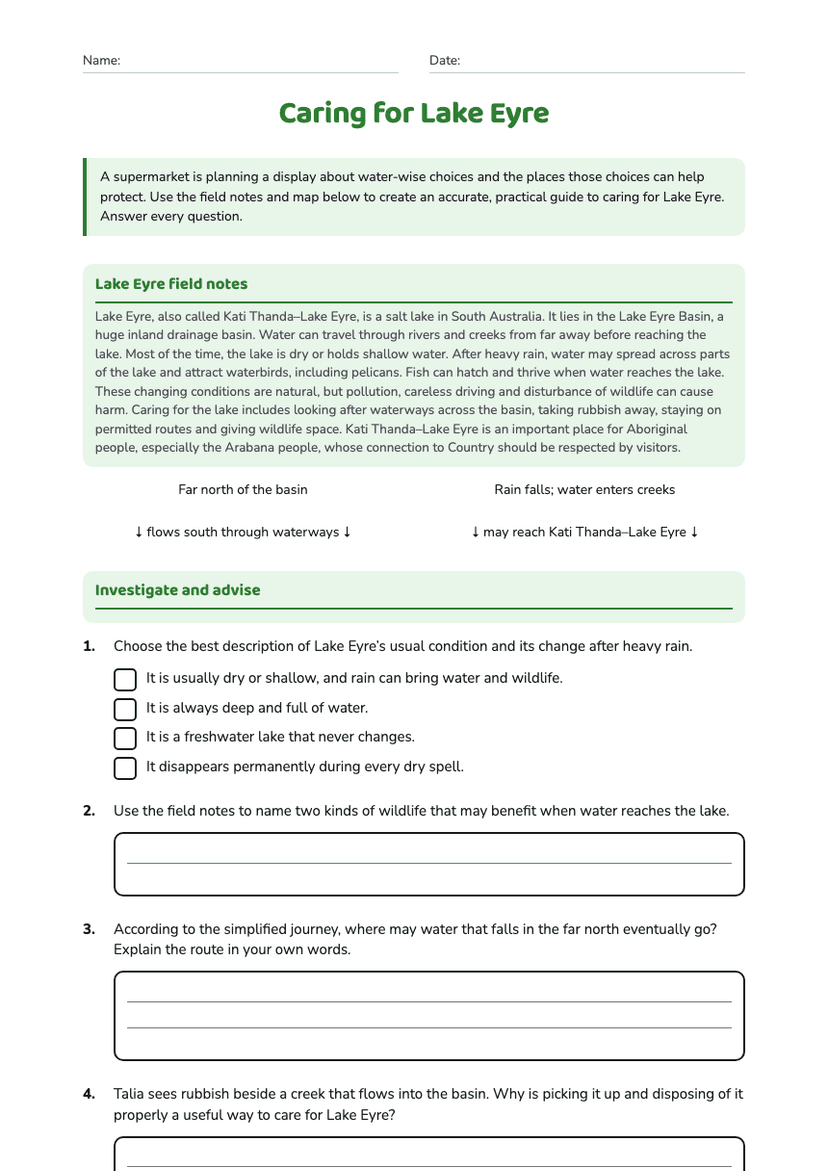
Caring for Lake Eyre
Free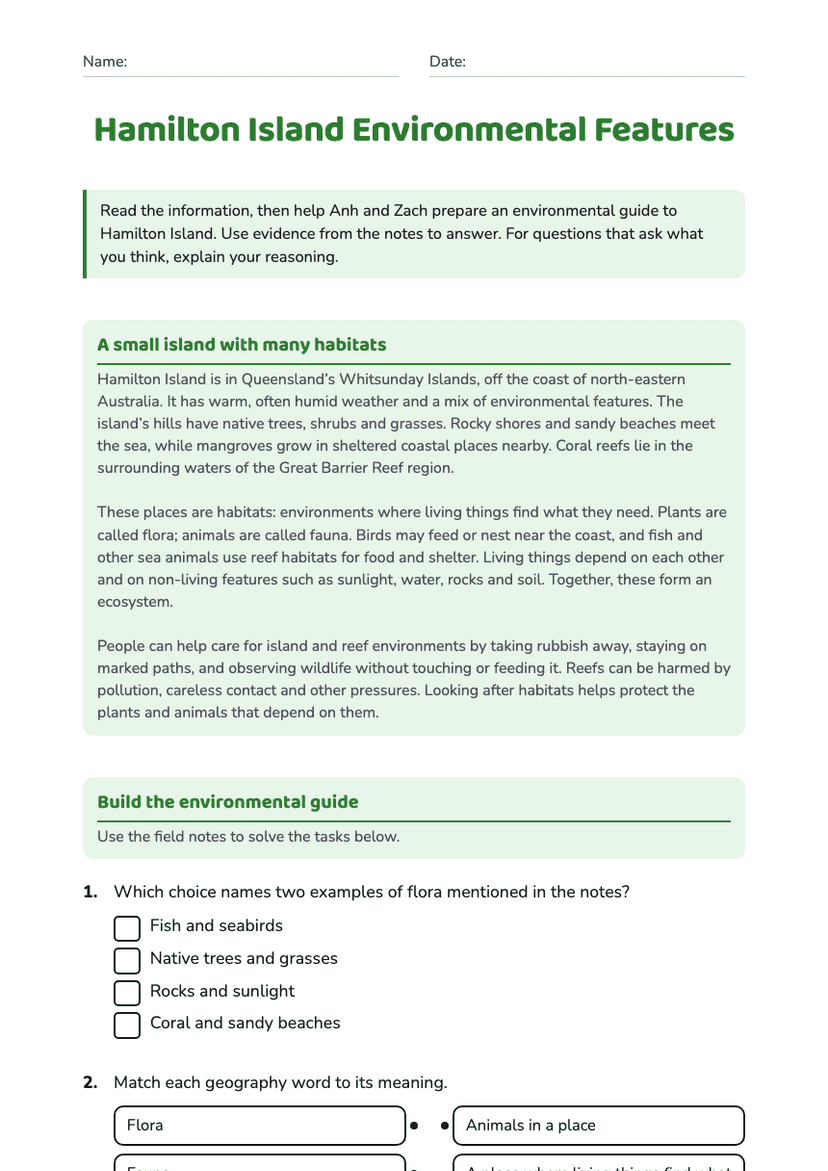
Hamilton Island Environmental Features
Free