Human Rights Argument Models
A free social sciences worksheet ready for your classroom. Open in Kuraplan to grab the print-ready PDF, customize it for your students, or generate a fresh version in seconds.
Human Rights Argument Models
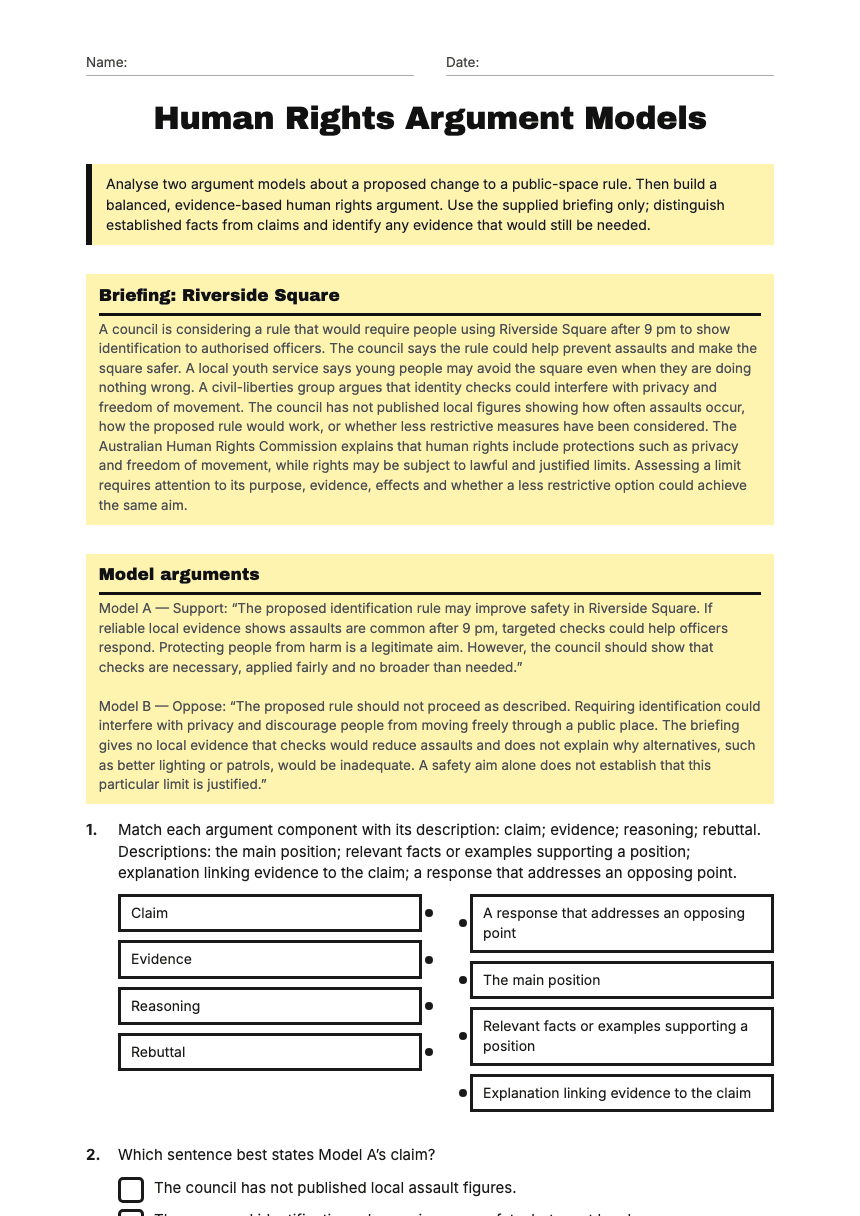
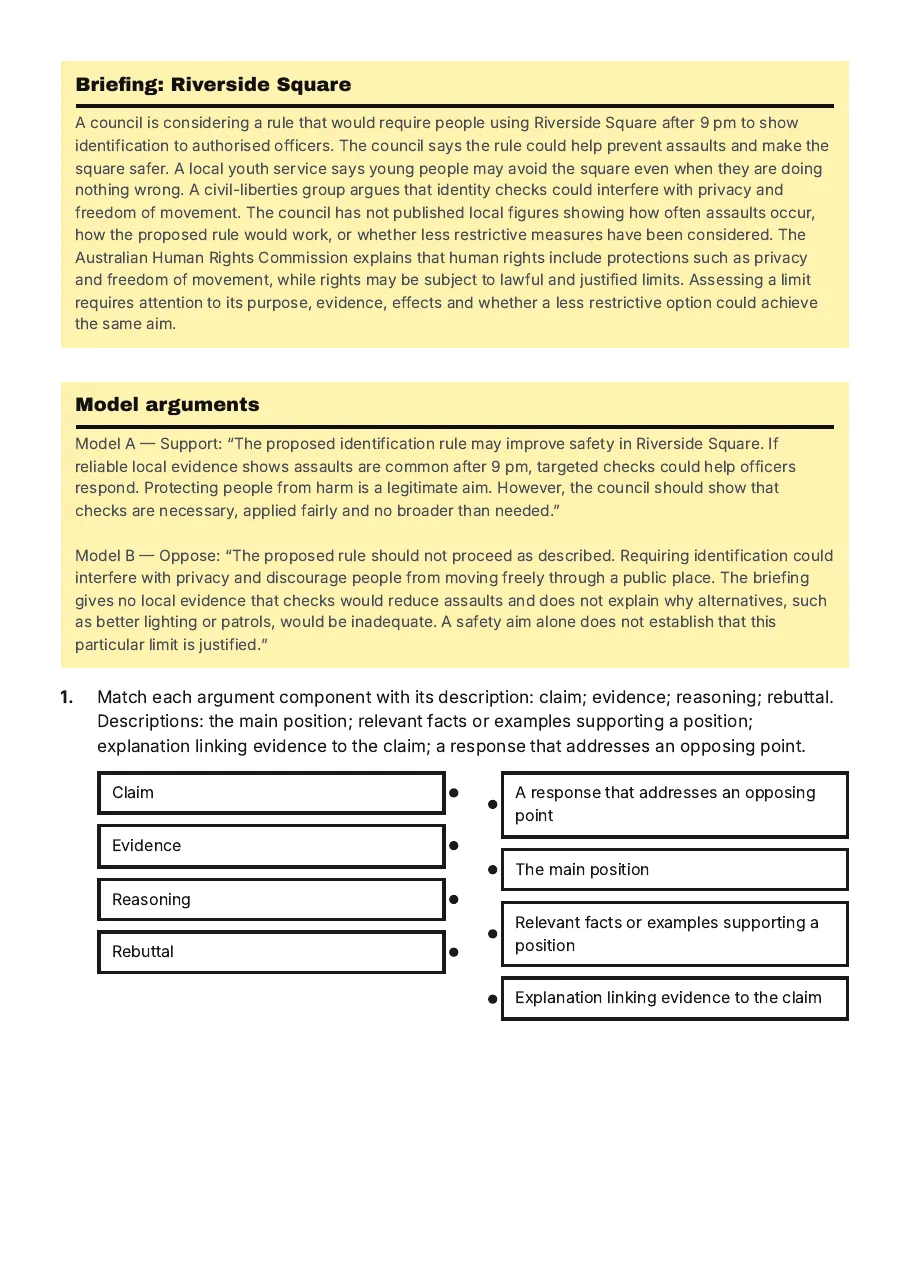
Briefing: Riverside Square
A council is considering a rule that would require people using Riverside Square after 9 pm to show identification to authorised officers. The council says the rule could help prevent assaults and make the square safer. A local youth service says young people may avoid the square even when they are doing nothing wrong. A civil-liberties group argues that identity checks could interfere with privacy and freedom of movement. The council has not published local figures showing how often assaults occur, how the proposed rule would work, or whether less restrictive measures have been considered. The Australian Human Rights Commission explains that human rights include protections such as privacy and freedom of movement, while rights may be subject to lawful and justified limits. Assessing a limit requires attention to its purpose, evidence, effects and whether a less restrictive option could achieve the same aim.
Model arguments
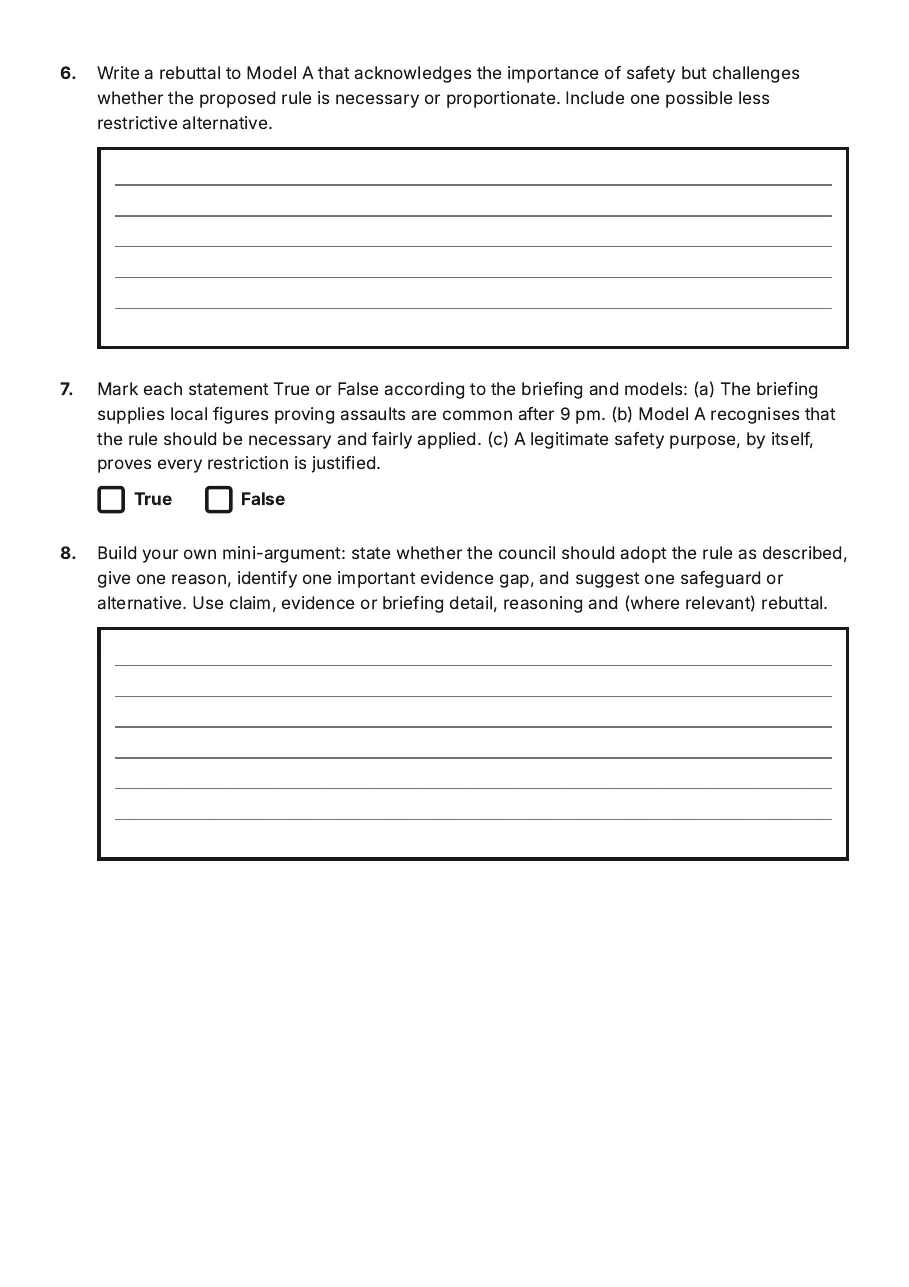
Model A — Support: “The proposed identification rule may improve safety in Riverside Square. If reliable local evidence shows assaults are common after 9 pm, targeted checks could help officers respond. Protecting people from harm is a legitimate aim. However, the council should show that checks are necessary, applied fairly and no broader than needed.” Model B — Oppose: “The proposed rule should not proceed as described. Requiring identification could interfere with privacy and discourage people from moving freely through a public place. The briefing gives no local evidence that checks would reduce assaults and does not explain why alternatives, such as better lighting or patrols, would be inadequate. A safety aim alone does not establish that this particular limit is justified.”
- Claim
- Evidence
- Reasoning
- Rebuttal
- A response that addresses an opposing point
- The main position
- Relevant facts or examples supporting a position
- Explanation linking evidence to the claim
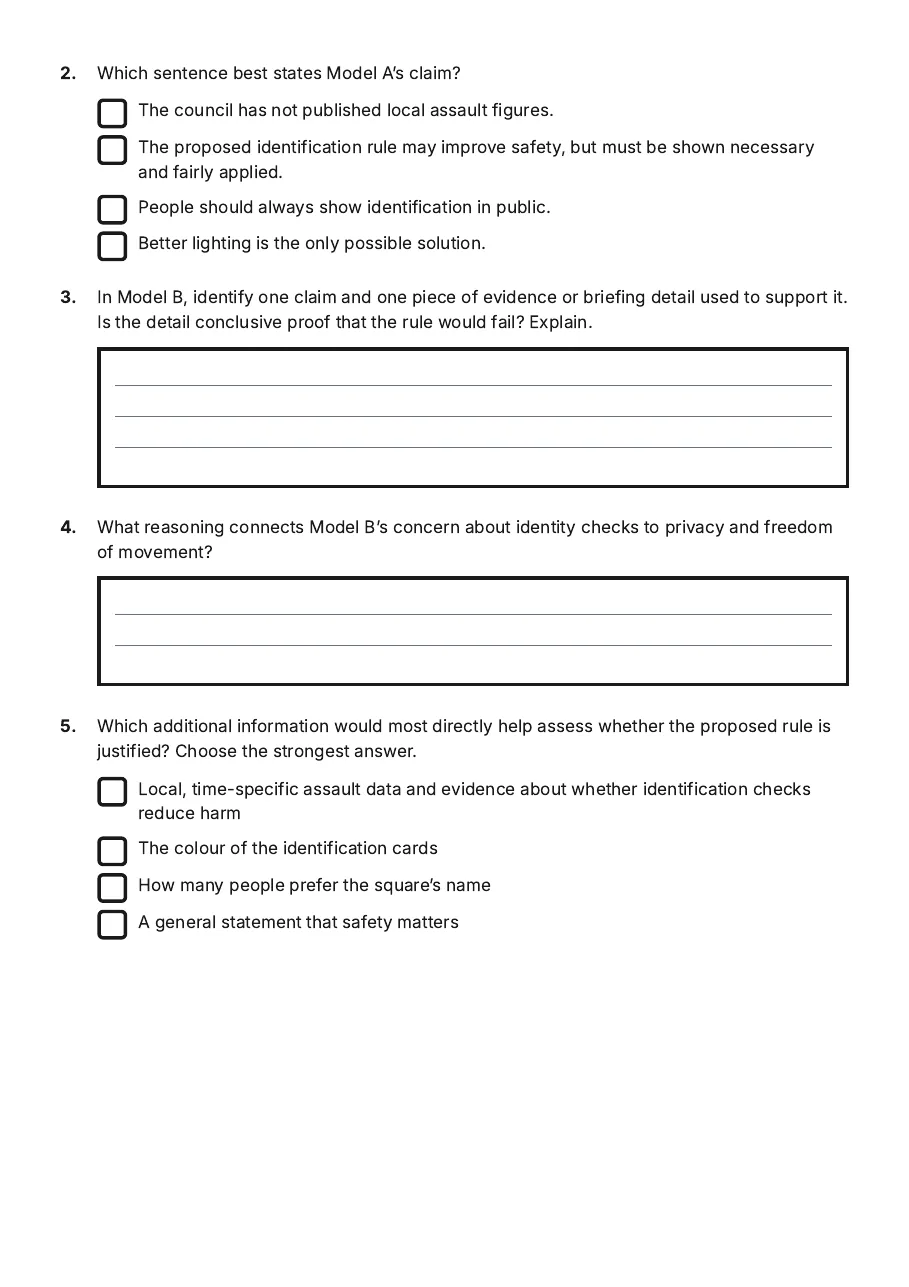
- The council has not published local assault figures.
- The proposed identification rule may improve safety, but must be shown necessary and fairly applied.
- People should always show identification in public.
- Better lighting is the only possible solution.
- Local, time-specific assault data and evidence about whether identification checks reduce harm
- The colour of the identification cards
- How many people prefer the square’s name
- A general statement that safety matters
4 printable pages
Page 1
Page 2
Page 3
Page 4
About This Worksheet
Free in Kuraplan
Sign up free, grab the PDF, and customize it for your class.
Print-Ready
Formatted for standard paper. Clean layout, easy to read.
AI-Generated
Created with Kuraplan's AI, designed for real classroom use.
For Teachers & Parents
Use in classrooms, for homework, tutoring, or homeschool.
Need a custom version of this worksheet?
Kuraplan's AI generates custom worksheets in seconds — differentiated for every learner, aligned to your curriculum.
Generate Custom Worksheets — FreeMore Social Sciences Worksheets
Community Project Planning
Free
Australian Law Reform Fact Sheets
Free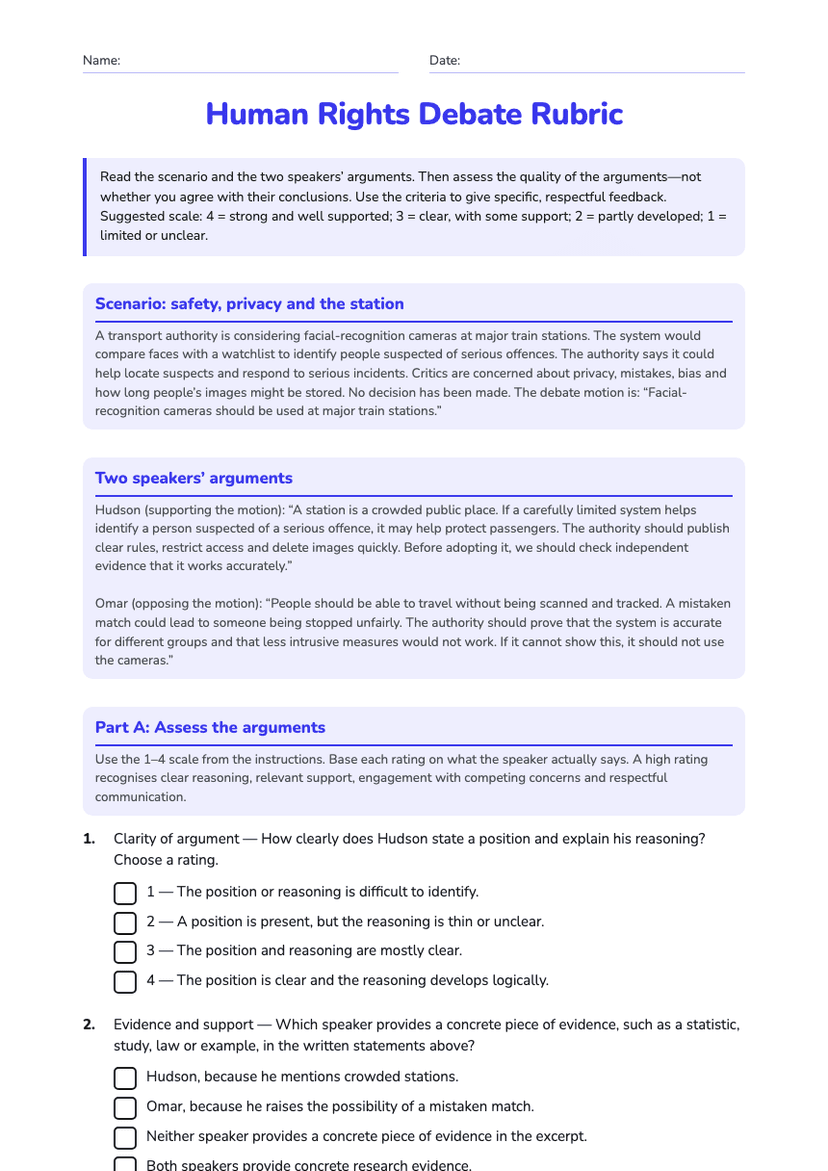
Human Rights Debate Rubric
Free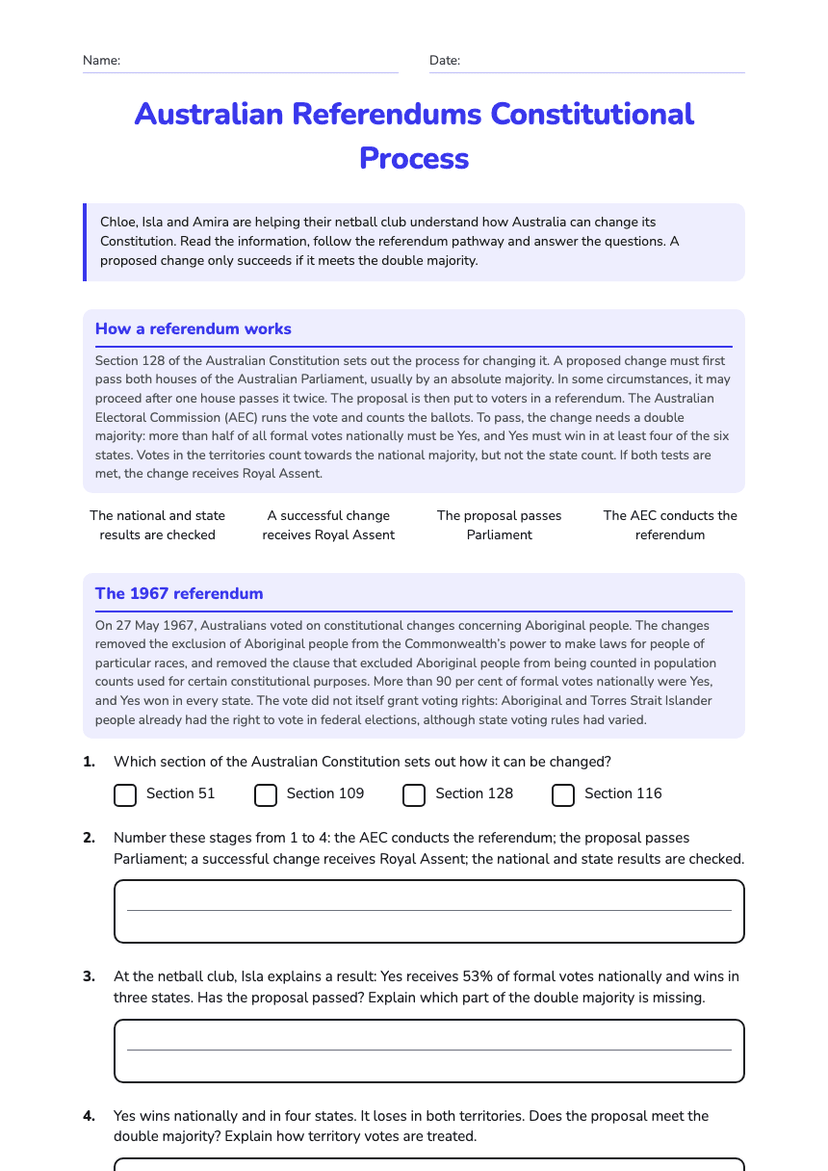
Australian Referendums Constitutional Process
Free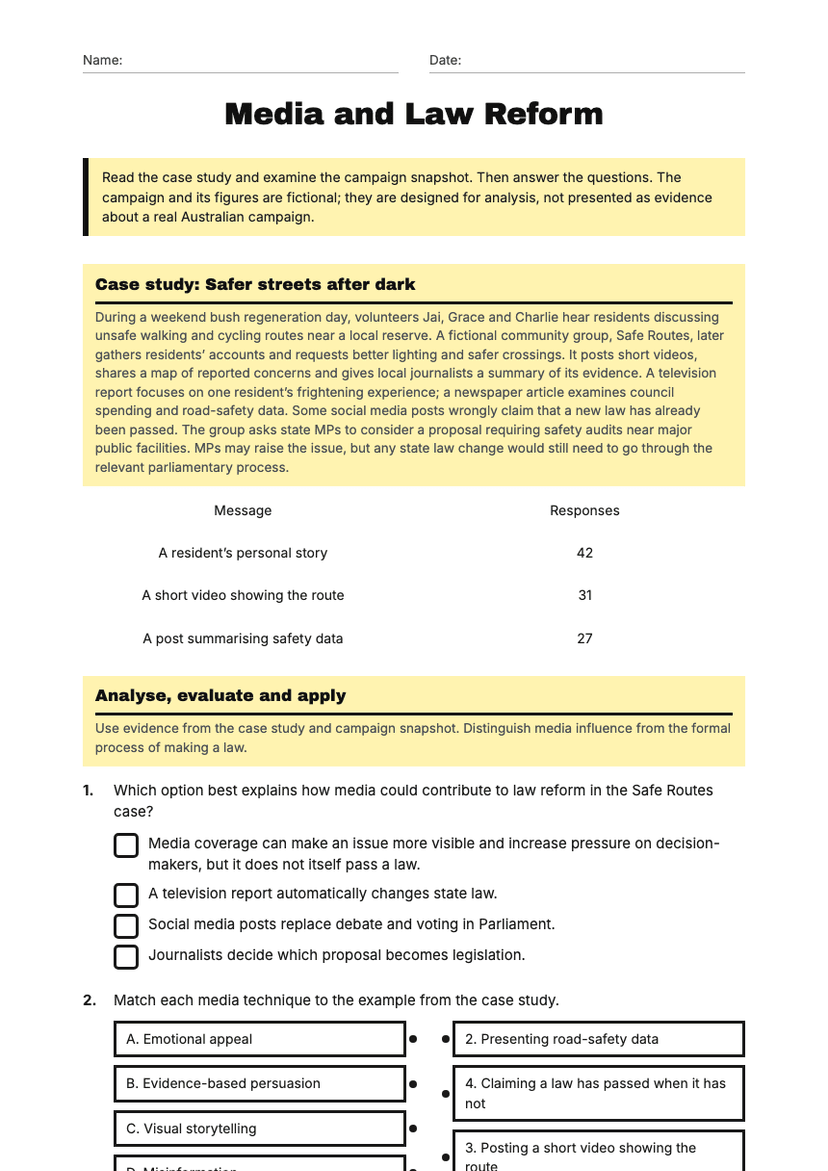
Media and Law Reform
Free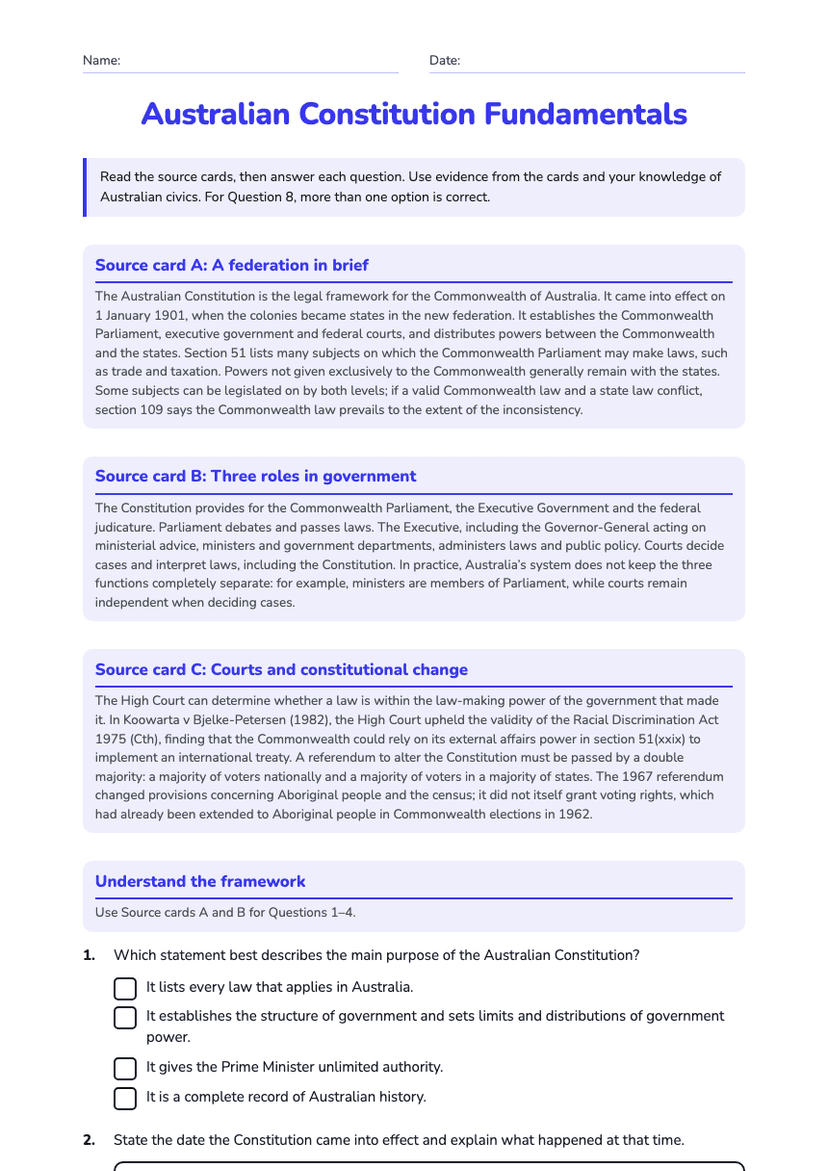
Australian Constitution Fundamentals
Free
Commonwealth Constitution Overview
Free