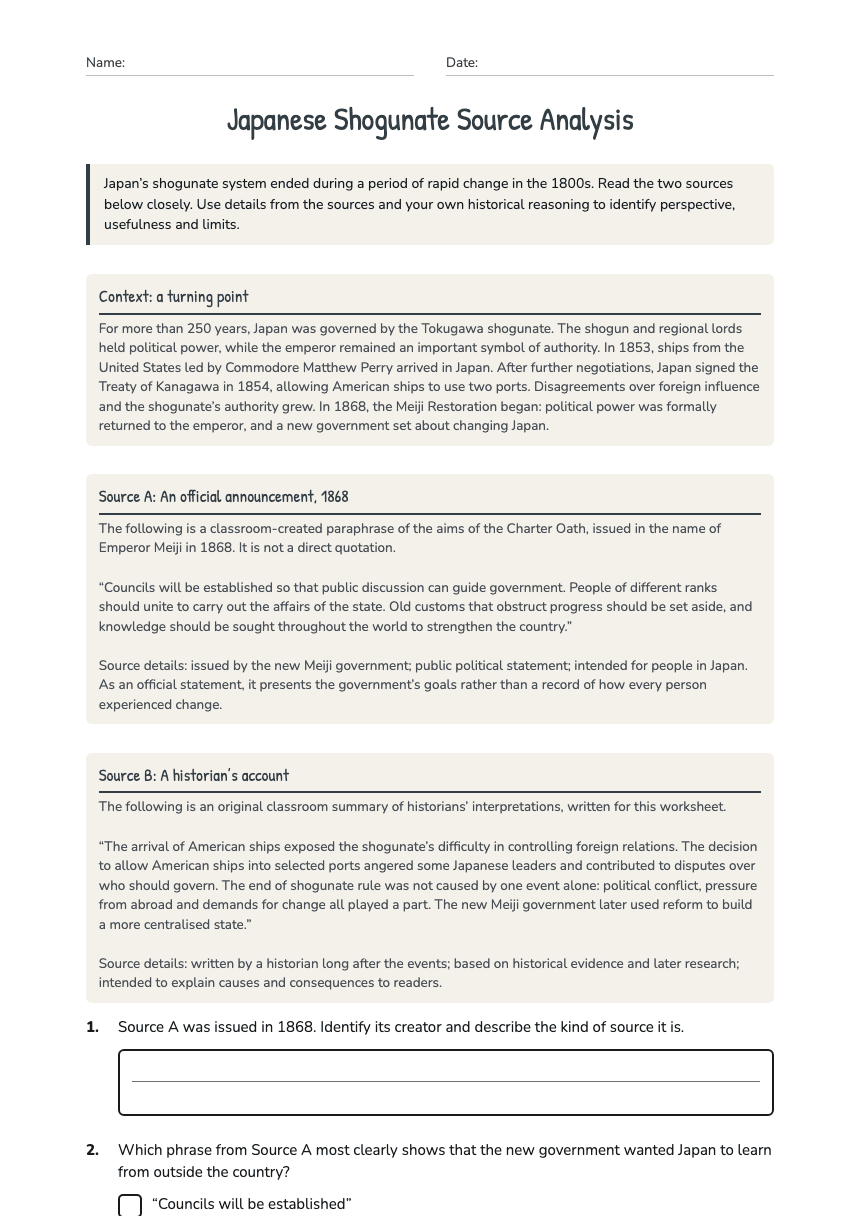
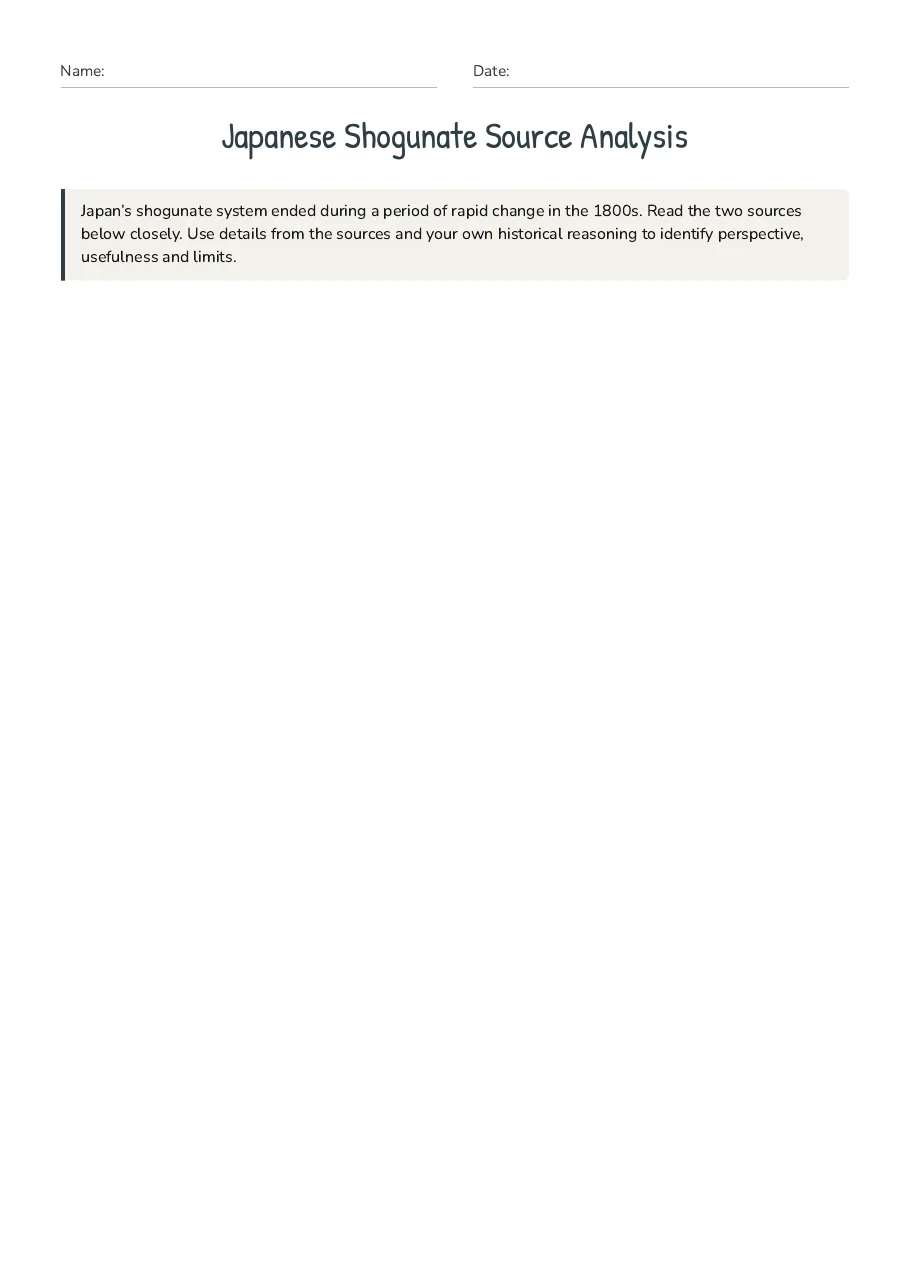
Japanese Shogunate Source Analysis
A free social sciences worksheet ready for your classroom. Open in Kuraplan to grab the print-ready PDF, customize it for your students, or generate a fresh version in seconds.
Japanese Shogunate Source Analysis
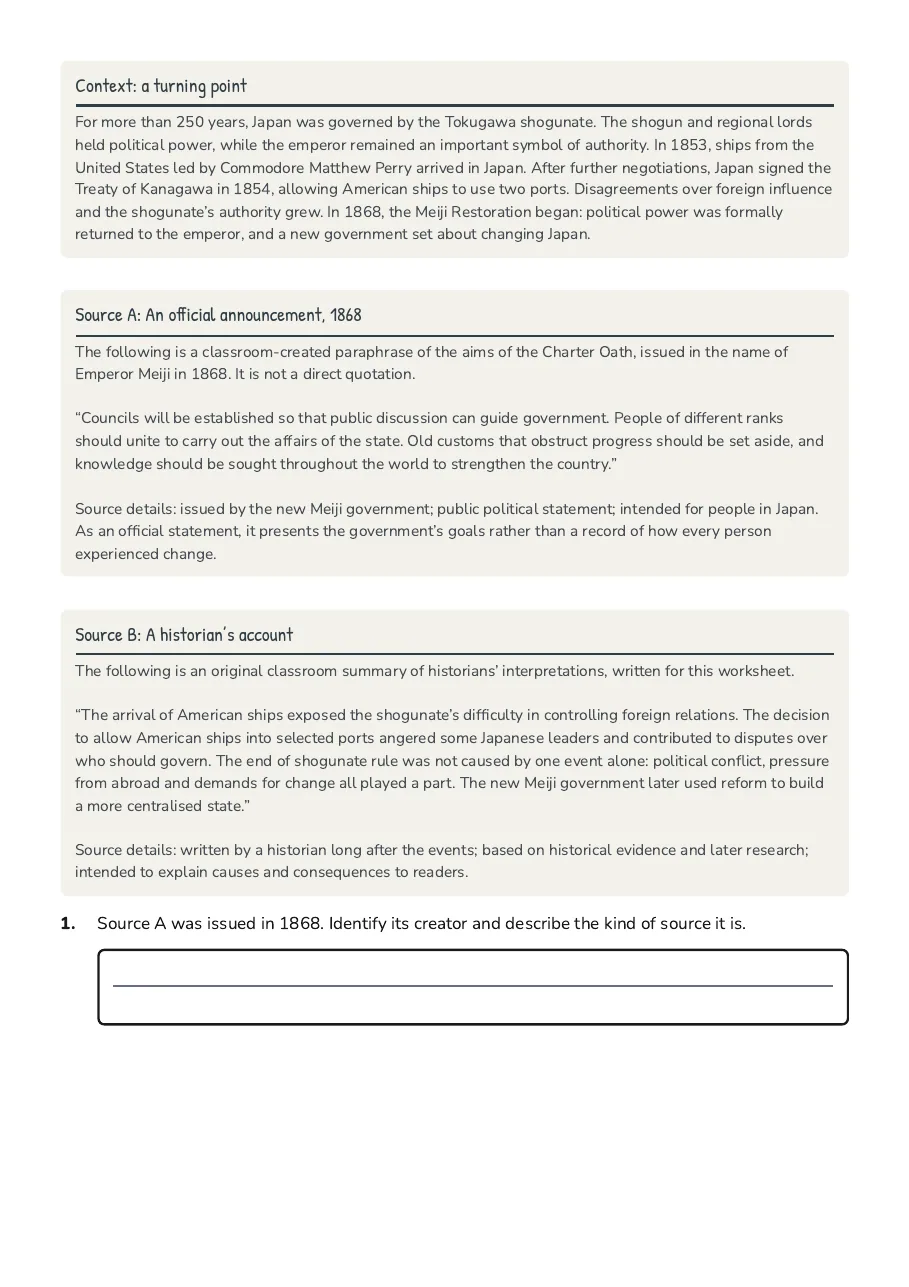
Context: a turning point
For more than 250 years, Japan was governed by the Tokugawa shogunate. The shogun and regional lords held political power, while the emperor remained an important symbol of authority. In 1853, ships from the United States led by Commodore Matthew Perry arrived in Japan. After further negotiations, Japan signed the Treaty of Kanagawa in 1854, allowing American ships to use two ports. Disagreements over foreign influence and the shogunate’s authority grew. In 1868, the Meiji Restoration began: political power was formally returned to the emperor, and a new government set about changing Japan.
Source A: An official announcement, 1868
The following is a classroom-created paraphrase of the aims of the Charter Oath, issued in the name of Emperor Meiji in 1868. It is not a direct quotation. “Councils will be established so that public discussion can guide government. People of different ranks should unite to carry out the affairs of the state. Old customs that obstruct progress should be set aside, and knowledge should be sought throughout the world to strengthen the country.” Source details: issued by the new Meiji government; public political statement; intended for people in Japan. As an official statement, it presents the government’s goals rather than a record of how every person experienced change.
Source B: A historian’s account
The following is an original classroom summary of historians’ interpretations, written for this worksheet. “The arrival of American ships exposed the shogunate’s difficulty in controlling foreign relations. The decision to allow American ships into selected ports angered some Japanese leaders and contributed to disputes over who should govern. The end of shogunate rule was not caused by one event alone: political conflict, pressure from abroad and demands for change all played a part. The new Meiji government later used reform to build a more centralised state.” Source details: written by a historian long after the events; based on historical evidence and later research; intended to explain causes and consequences to readers.
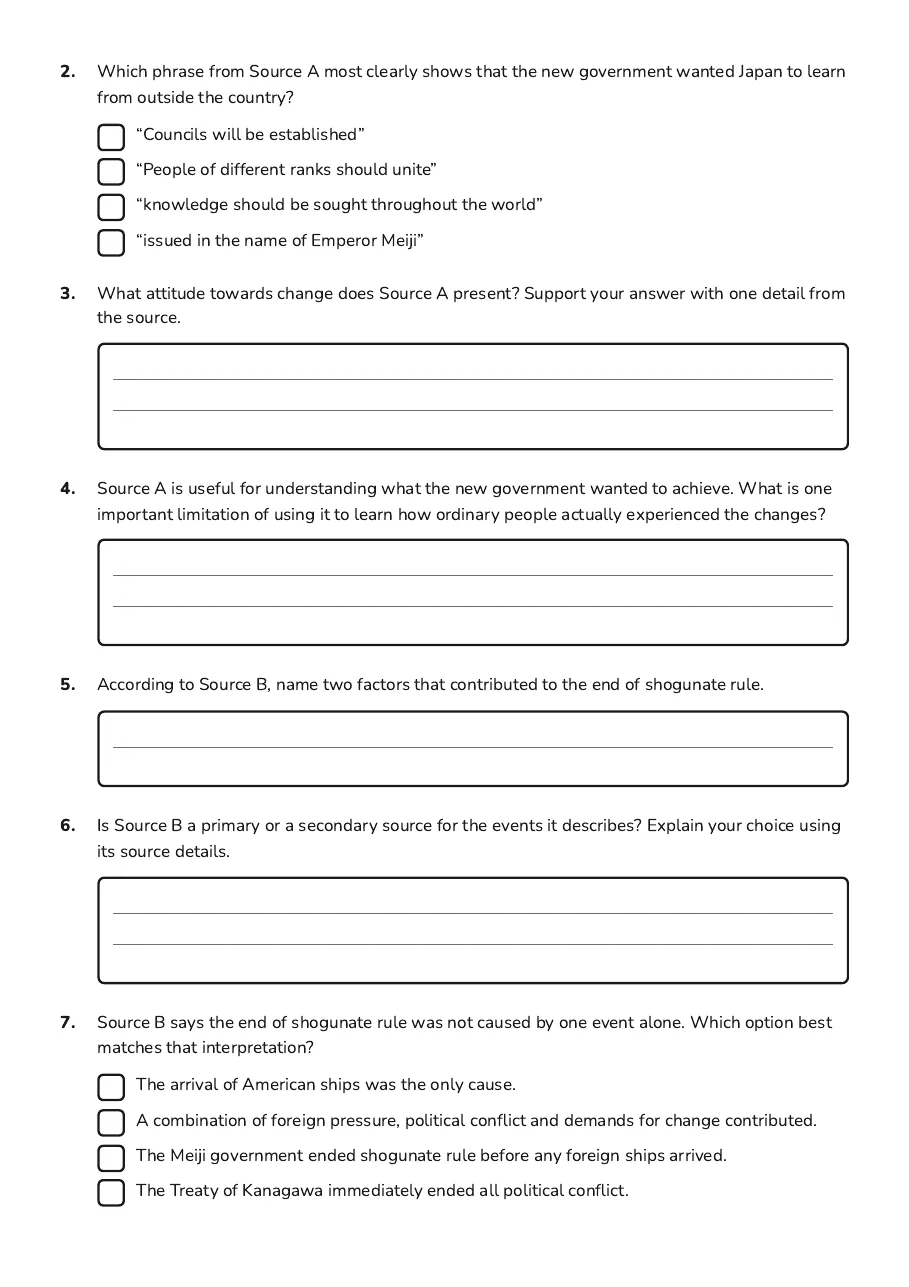
- “Councils will be established”
- “People of different ranks should unite”
- “knowledge should be sought throughout the world”
- “issued in the name of Emperor Meiji”
- The arrival of American ships was the only cause.
- A combination of foreign pressure, political conflict and demands for change contributed.
- The Meiji government ended shogunate rule before any foreign ships arrived.
- The Treaty of Kanagawa immediately ended all political conflict.
4 printable pages
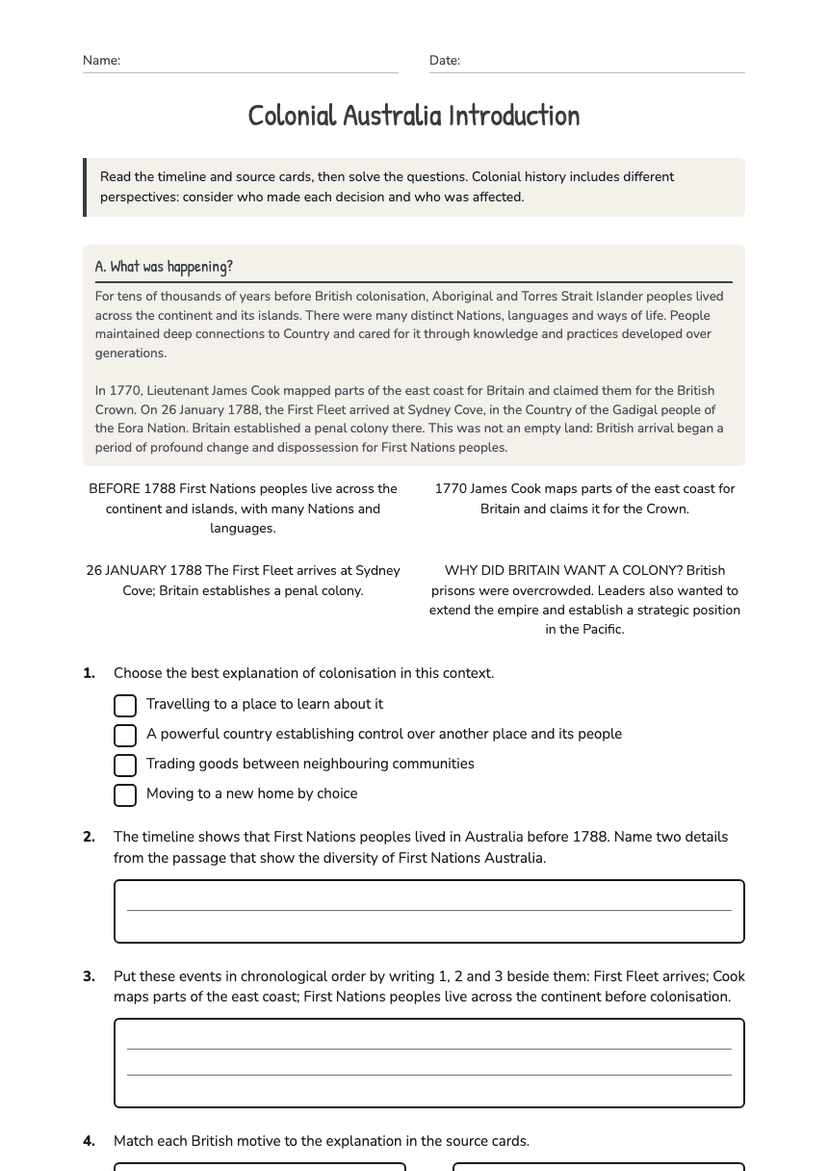
Page 1
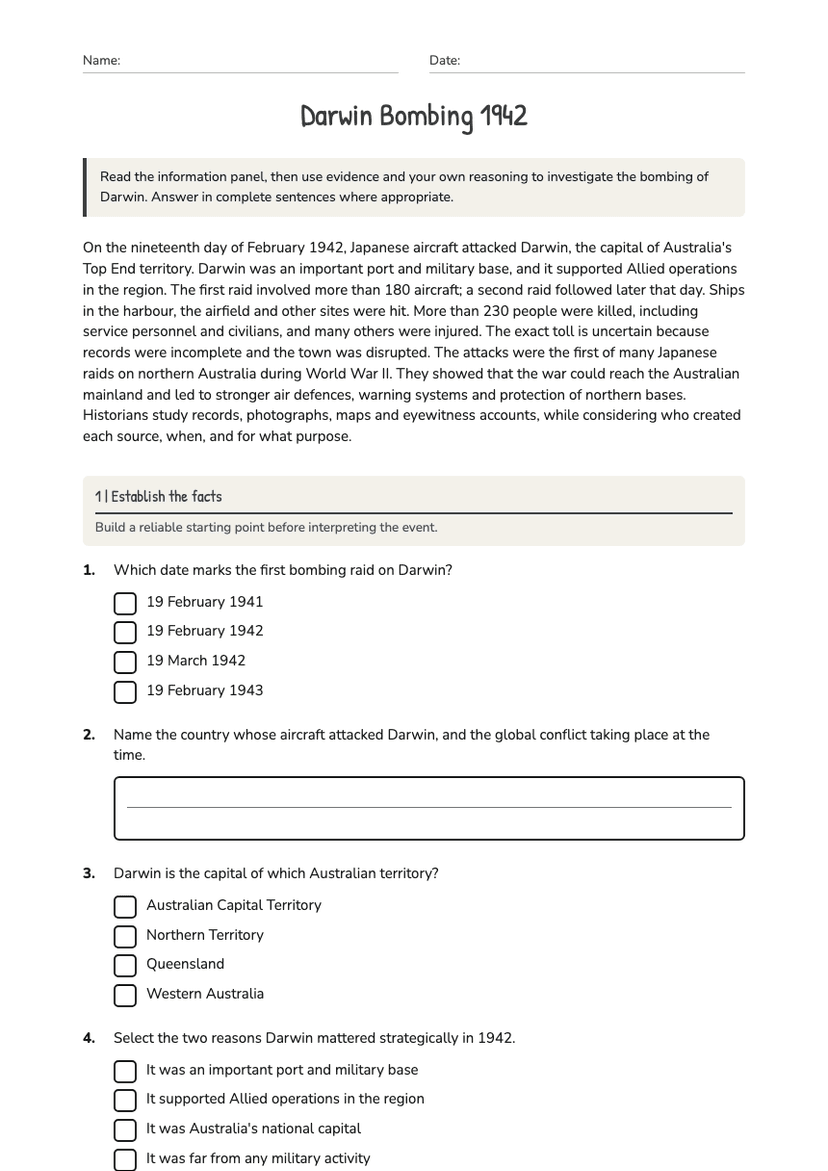
Page 2
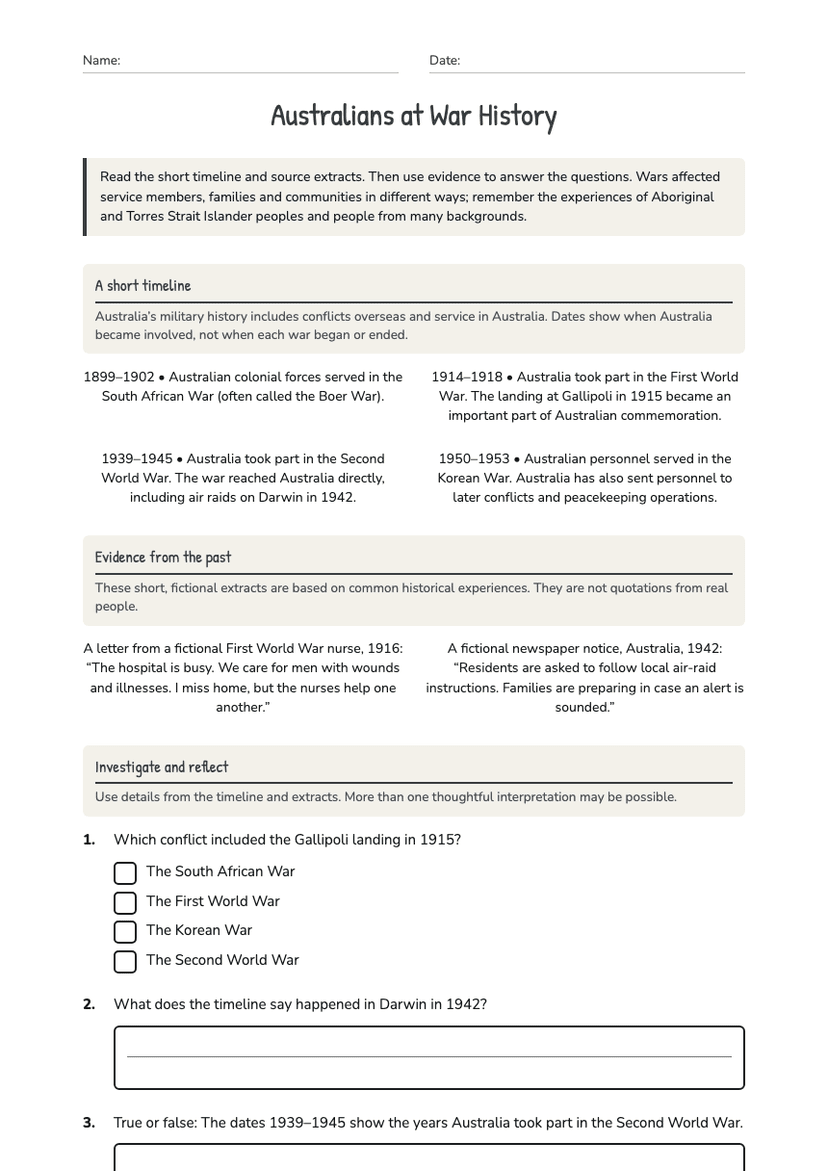
Page 3
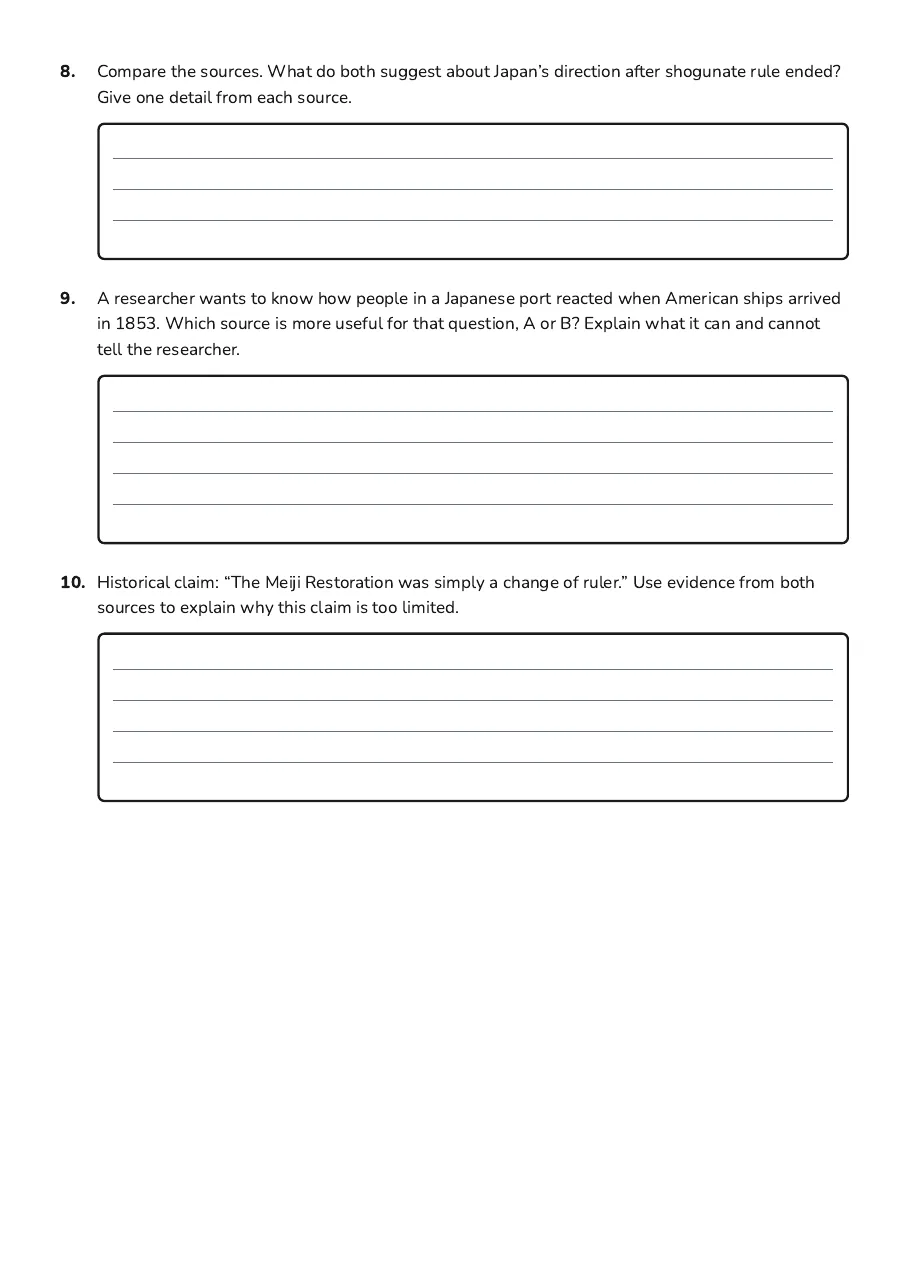
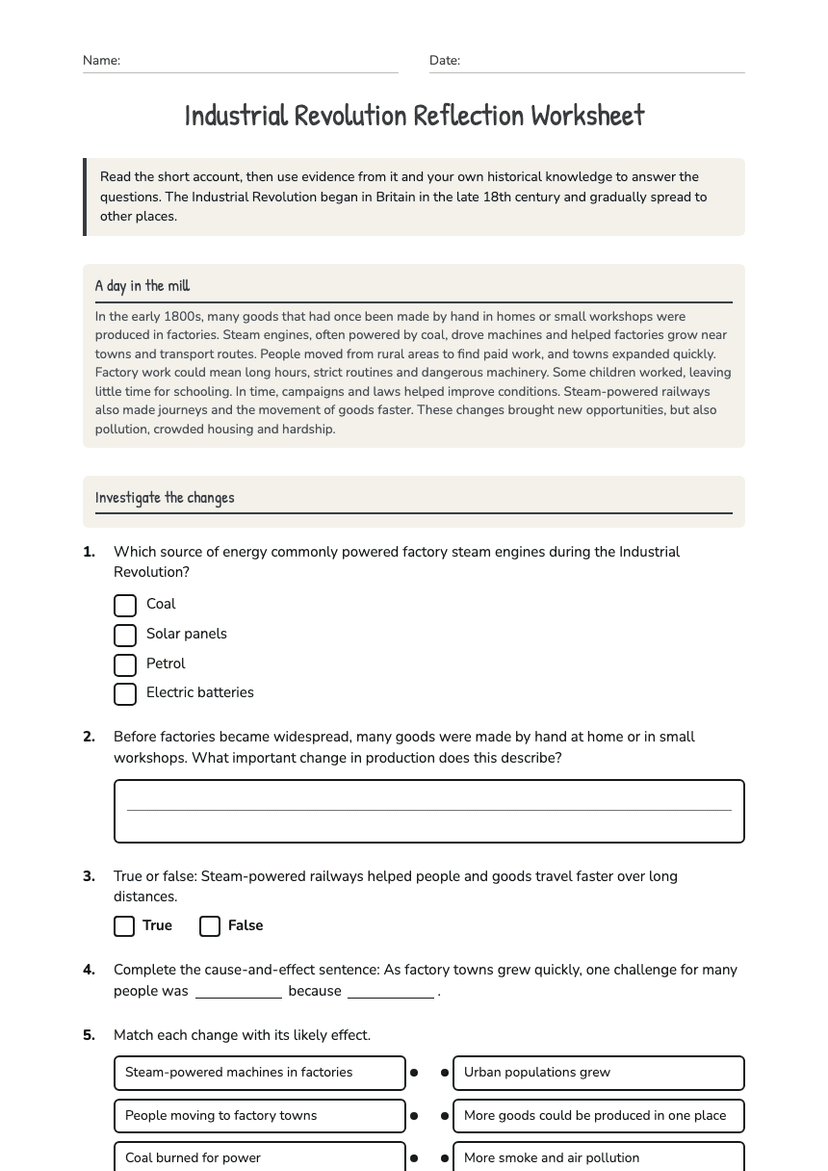
Page 4
About This Worksheet
Free in Kuraplan
Sign up free, grab the PDF, and customize it for your class.
Print-Ready
Formatted for standard paper. Clean layout, easy to read.
AI-Generated
Created with Kuraplan's AI, designed for real classroom use.
For Teachers & Parents
Use in classrooms, for homework, tutoring, or homeschool.
Need a custom version of this worksheet?
Kuraplan's AI generates custom worksheets in seconds — differentiated for every learner, aligned to your curriculum.
Generate Custom Worksheets — Free