Mabo Case Notes Summary
A free social sciences worksheet ready for your classroom. Open in Kuraplan to grab the print-ready PDF, customize it for your students, or generate a fresh version in seconds.
Mabo Case Notes Summary
📚 Part 1: Case Facts and Legal Issues
Mabo v Queensland (No 2) [1992] was a landmark Australian High Court case that changed the way Australian law recognised Indigenous land rights. Eddie Mabo and other Torres Strait Islanders challenged the legal doctrine of terra nullius (meaning "land belonging to no one") which had been used since European settlement in 1788.
_________________________
⚖️ Part 2: The Decision and Its Impact
The High Court ruled 6-1 in favour of Mabo and the other plaintiffs. The court decided that terra nullius was legally incorrect and that Indigenous Australians had "native title" rights to their traditional lands. This meant that Indigenous peoples had legal ownership rights that existed before European settlement and continued unless specifically extinguished by government action.
_______ judges voted in favour, _______ judge voted against.
🤔 Part 3: Critical Thinking and Reflection
Case name: _________________________________
What human rights issue did it address? _________________________________
About This Worksheet
Free in Kuraplan
Sign up free, grab the PDF, and customize it for your class.
Print-Ready
Formatted for standard paper. Clean layout, easy to read.
AI-Generated
Created with Kuraplan's AI, designed for real classroom use.
For Teachers & Parents
Use in classrooms, for homework, tutoring, or homeschool.
Need a custom version of this worksheet?
Kuraplan's AI generates custom worksheets in seconds — differentiated for every learner, aligned to your curriculum.
Generate Custom Worksheets — FreeMore Social Sciences Worksheets
Australian Diversity Categories
Free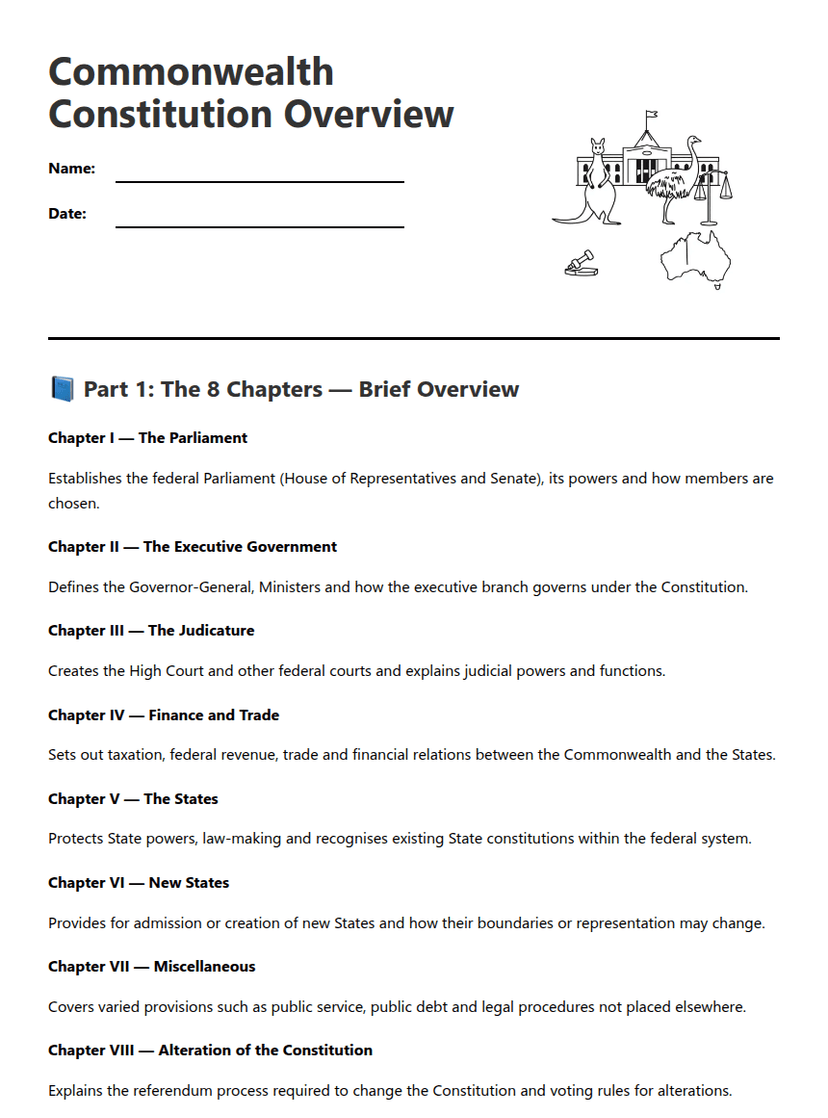
Commonwealth Constitution Overview
Free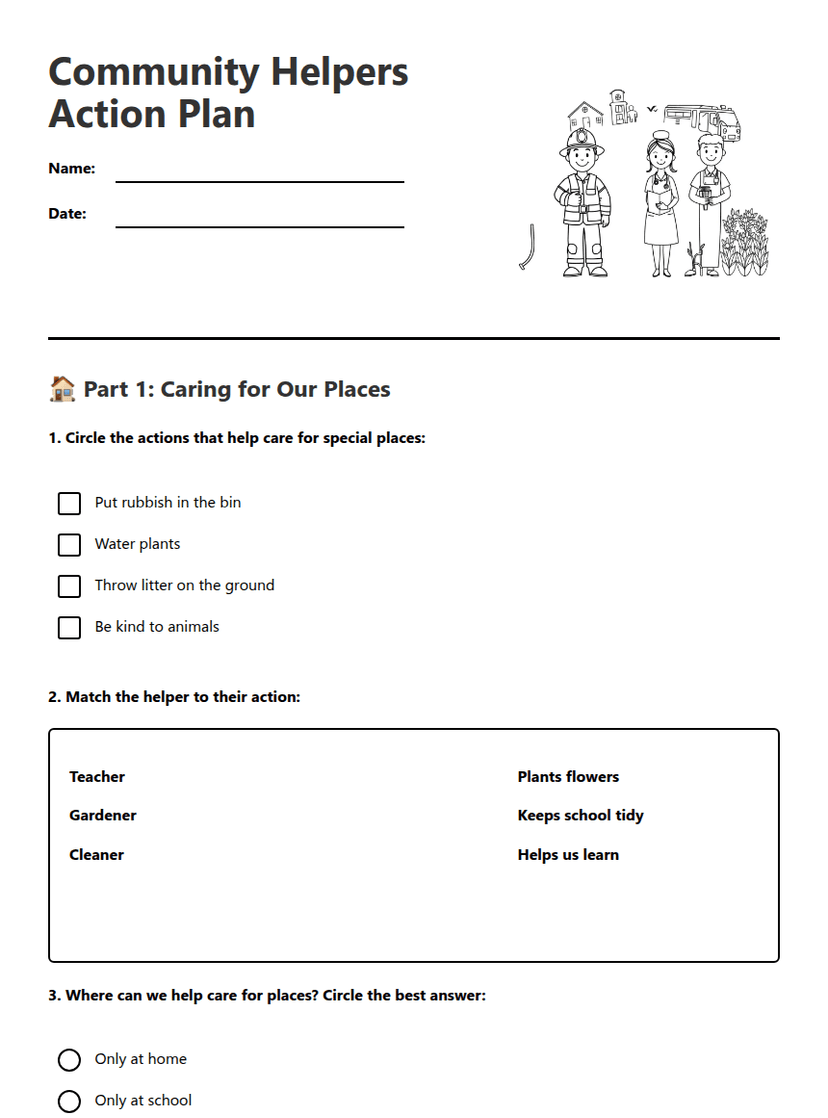
Community Helpers Action Plan
Free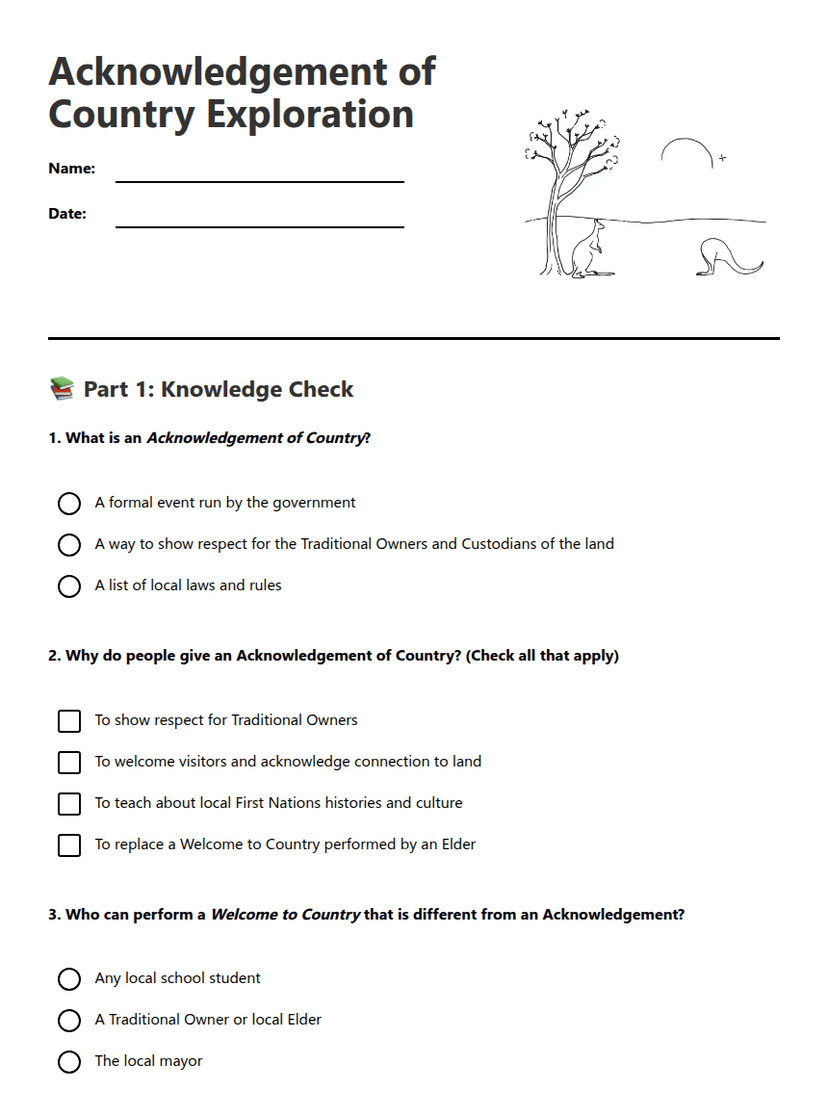
Acknowledgement of Country Exploration
Free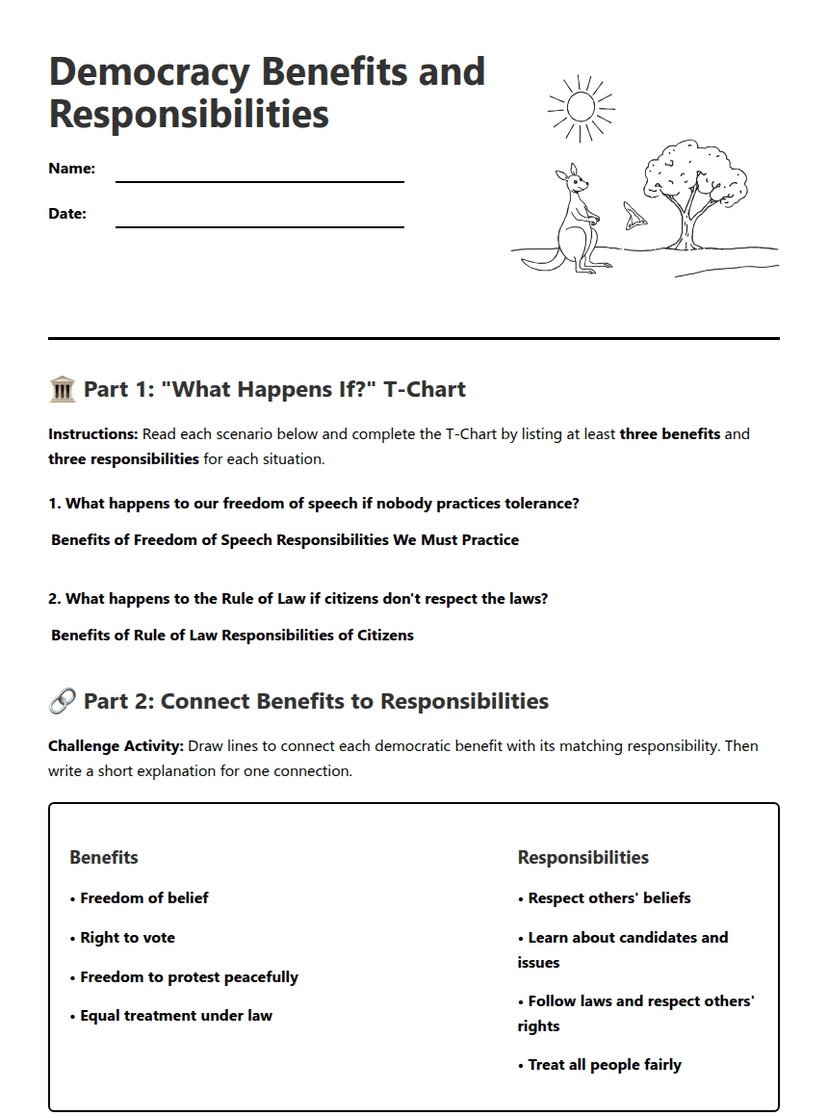
Democracy Benefits and Responsibilities
Free
Democracy in Action Diagram
Free
Treaty Principles Today
Free