Macbeth Analytical Paragraph Organiser
A free english worksheet ready for your classroom. Open in Kuraplan to grab the print-ready PDF, customize it for your students, or generate a fresh version in seconds.
Macbeth Analytical Paragraph Organiser

📝 Part 1: Planning Your Analytical Paragraph
Sentence Starters:
Key Quotes to Consider:
🔍 Part 2: Analysis and Connection
Sentence Starter: Shakespeare uses _____________ to reveal...
Sentence Starters:
• This demonstrates that power...
• Through Macbeth's paranoia, Shakespeare suggests that those in power...
• The relationship between power and fear is shown when...
Sentence Starters:
• Ultimately, Shakespeare reveals...
• This portrayal of paranoia emphasises...
• Therefore, Macbeth's fears illustrate...
⭐ Extension for Advanced Learners
Shakespearean Terms: soliloquy, dramatic irony, metaphorical language, characterisation, foreshadowing
About This Worksheet
Free in Kuraplan
Sign up free, grab the PDF, and customize it for your class.
Print-Ready
Formatted for standard paper. Clean layout, easy to read.
AI-Generated
Created with Kuraplan's AI, designed for real classroom use.
For Teachers & Parents
Use in classrooms, for homework, tutoring, or homeschool.
Need a custom version of this worksheet?
Kuraplan's AI generates custom worksheets in seconds — differentiated for every learner, aligned to your curriculum.
Generate Custom Worksheets — FreeMore English Worksheets
English Essay Writing
Free
English Writing Practice
Free
Paragraph Builder: Connect and Explain
Free
First, Next, Last: Planting a Seed
Free
My Weekend News Worksheet
Free
My Weekend Life Skills
Free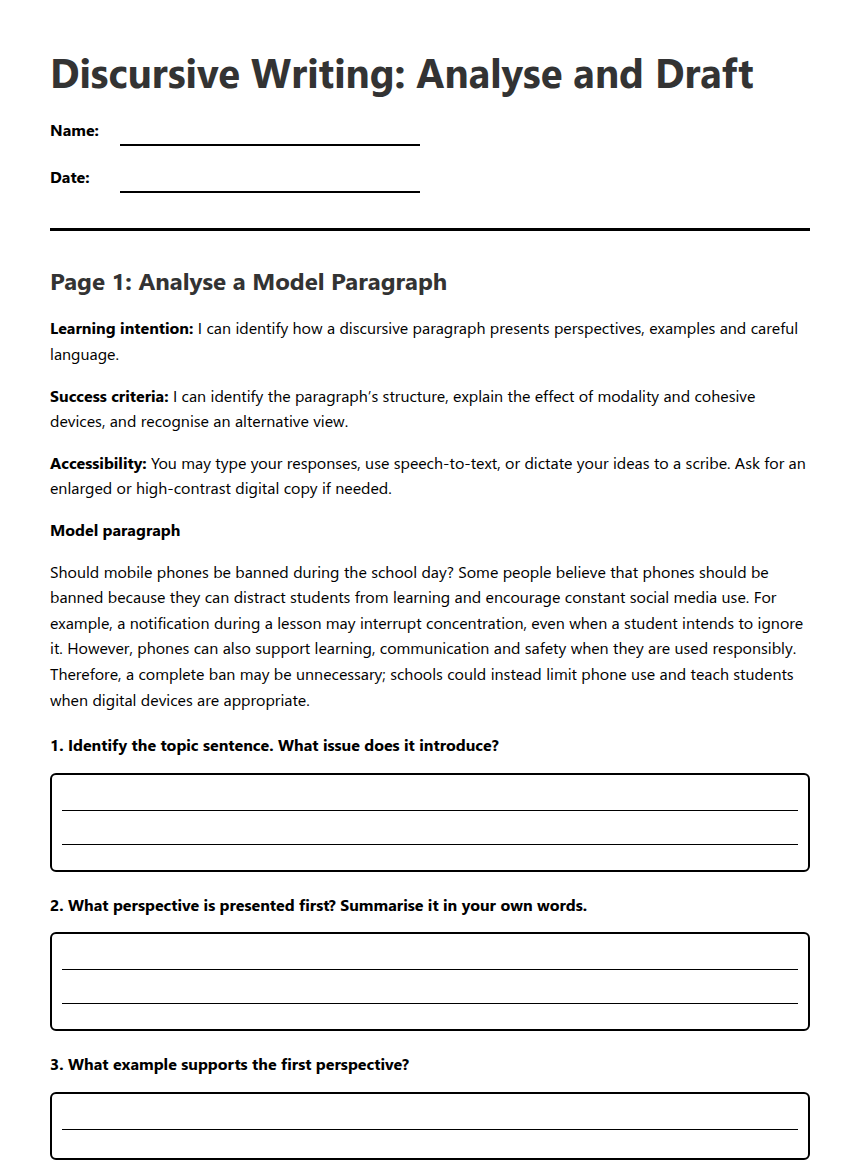
Discursive Writing: Analyse and Draft
Free