Mr Nobody Close Reading
A free english worksheet ready for your classroom. Open in Kuraplan to grab the print-ready PDF, customize it for your students, or generate a fresh version in seconds.
Mr Nobody Close Reading
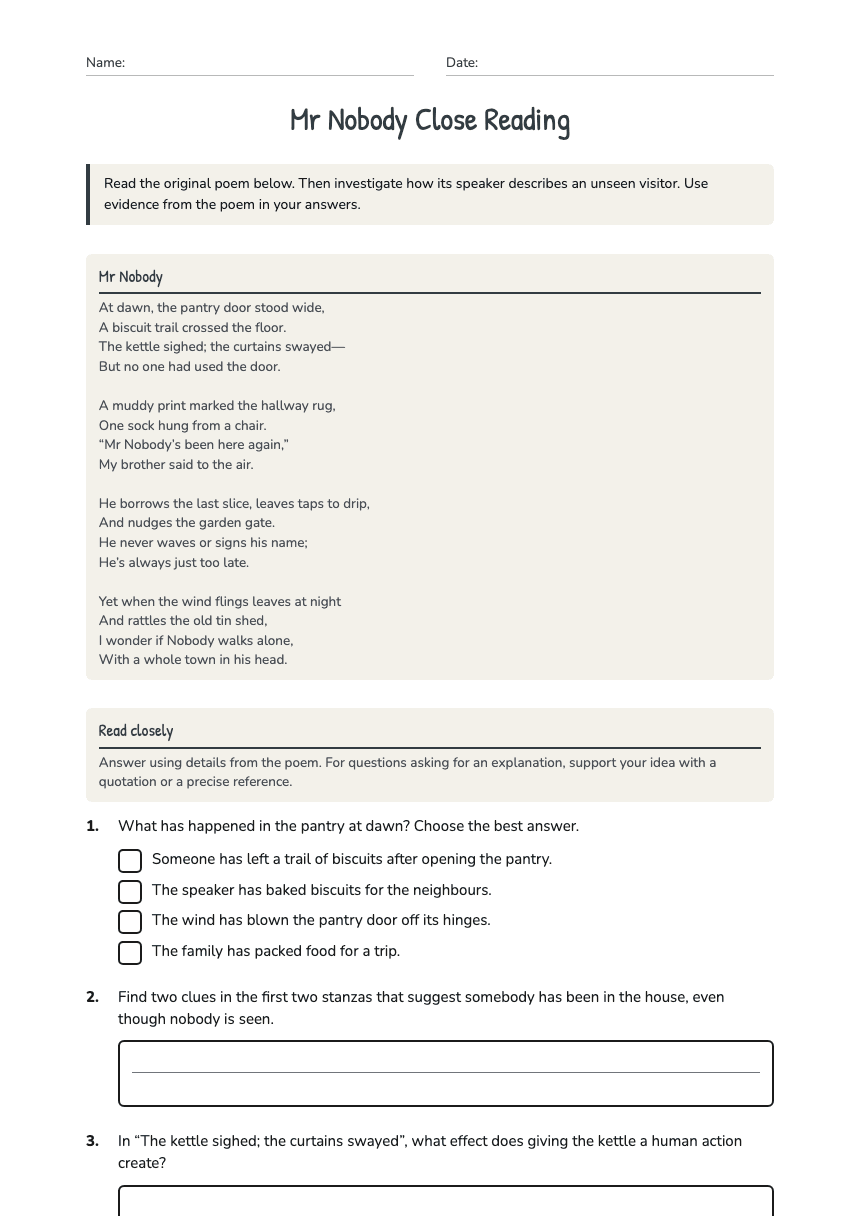
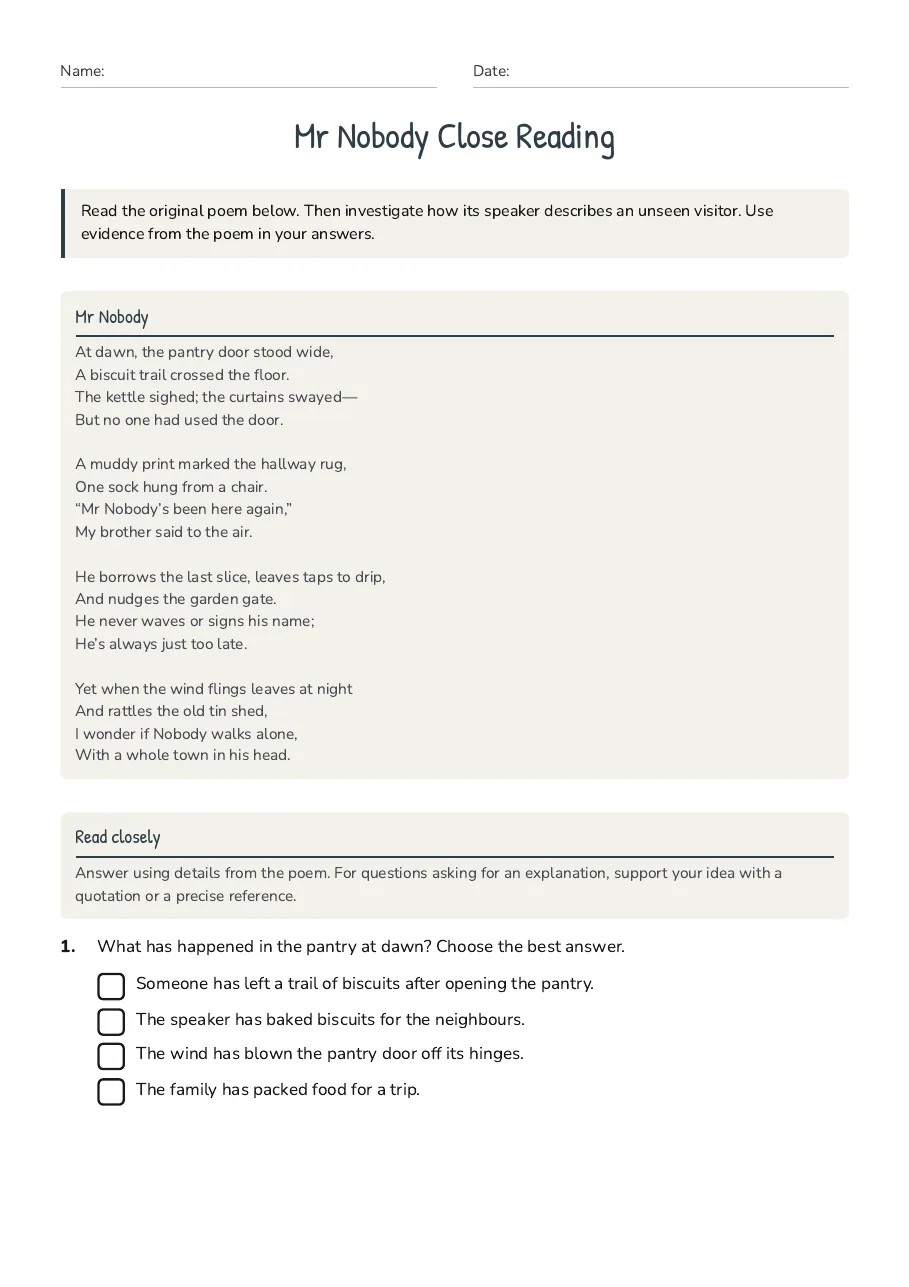
Mr Nobody
At dawn, the pantry door stood wide, A biscuit trail crossed the floor. The kettle sighed; the curtains swayed— But no one had used the door. A muddy print marked the hallway rug, One sock hung from a chair. “Mr Nobody’s been here again,” My brother said to the air. He borrows the last slice, leaves taps to drip, And nudges the garden gate. He never waves or signs his name; He’s always just too late. Yet when the wind flings leaves at night And rattles the old tin shed, I wonder if Nobody walks alone, With a whole town in his head.
Read closely
Answer using details from the poem. For questions asking for an explanation, support your idea with a quotation or a precise reference.
- Someone has left a trail of biscuits after opening the pantry.
- The speaker has baked biscuits for the neighbours.
- The wind has blown the pantry door off its hinges.
- The family has packed food for a trip.
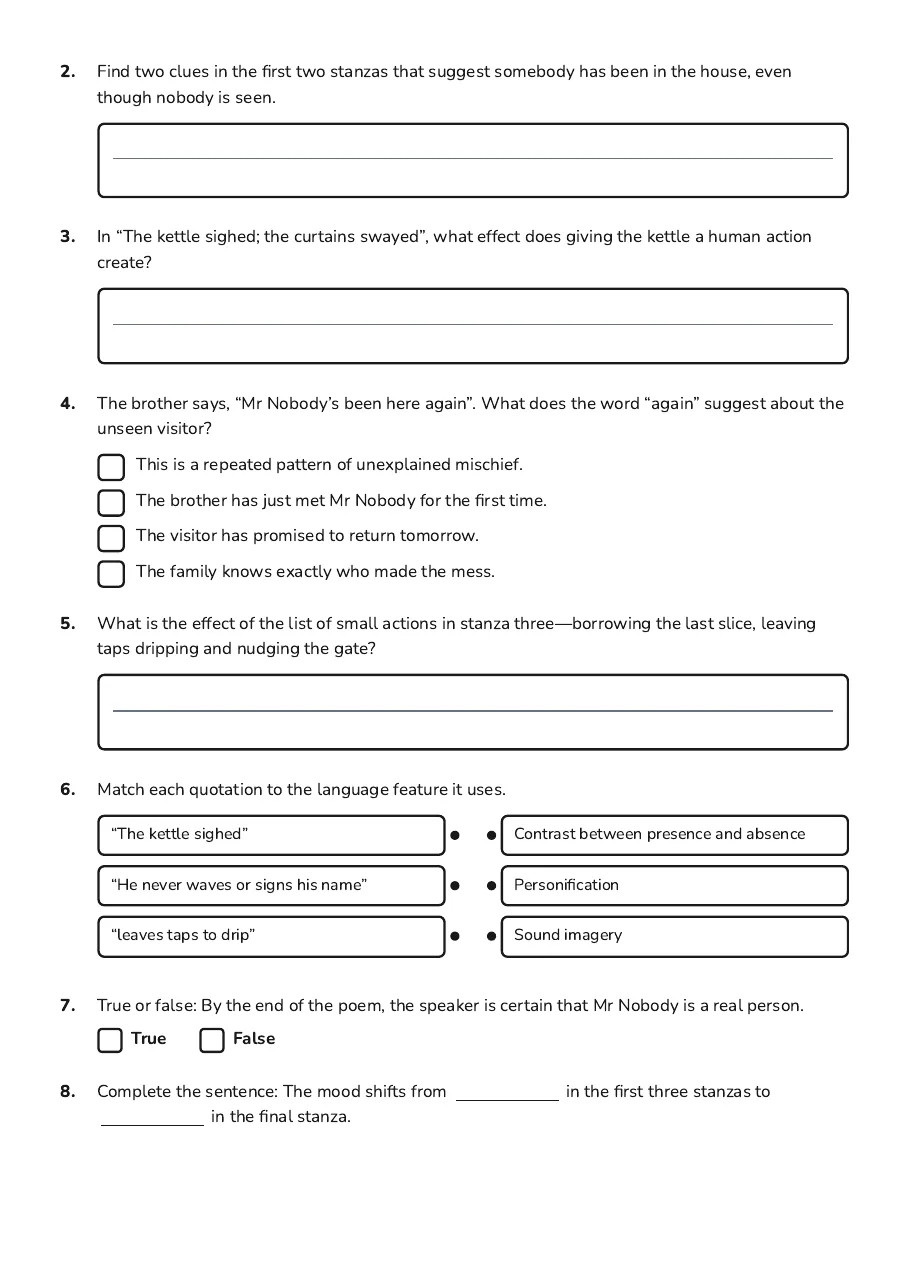
- This is a repeated pattern of unexplained mischief.
- The brother has just met Mr Nobody for the first time.
- The visitor has promised to return tomorrow.
- The family knows exactly who made the mess.
- “The kettle sighed”
- “He never waves or signs his name”
- “leaves taps to drip”
- Contrast between presence and absence
- Personification
- Sound imagery
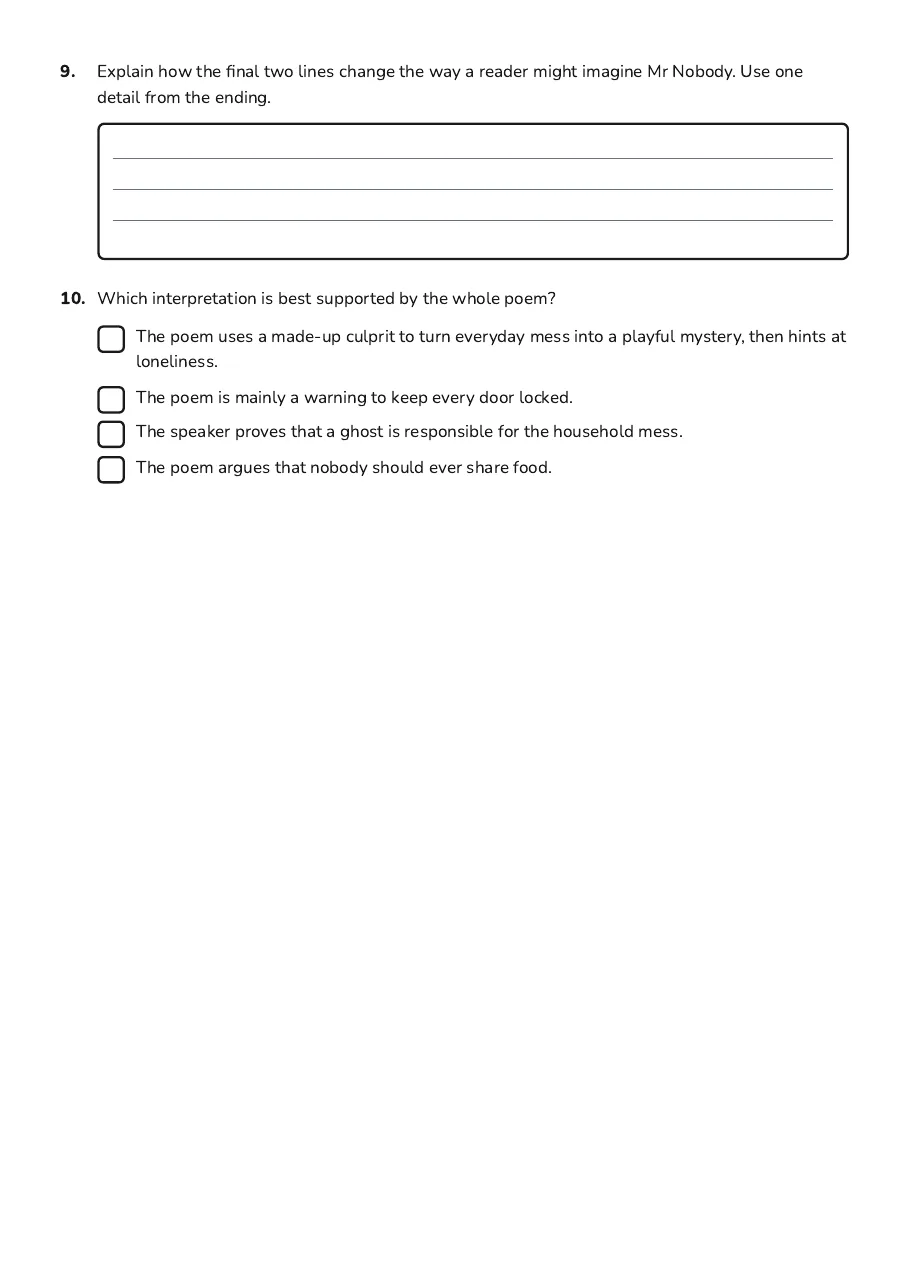
- The poem uses a made-up culprit to turn everyday mess into a playful mystery, then hints at loneliness.
- The poem is mainly a warning to keep every door locked.
- The speaker proves that a ghost is responsible for the household mess.
- The poem argues that nobody should ever share food.
3 printable pages
Page 1
Page 2
Page 3
About This Worksheet
Free in Kuraplan
Sign up free, grab the PDF, and customize it for your class.
Print-Ready
Formatted for standard paper. Clean layout, easy to read.
AI-Generated
Created with Kuraplan's AI, designed for real classroom use.
For Teachers & Parents
Use in classrooms, for homework, tutoring, or homeschool.
Need a custom version of this worksheet?
Kuraplan's AI generates custom worksheets in seconds — differentiated for every learner, aligned to your curriculum.
Generate Custom Worksheets — Free