Parody Tone and Style
A free english worksheet ready for your classroom. Open in Kuraplan to grab the print-ready PDF, customize it for your students, or generate a fresh version in seconds.
Parody Tone and Style
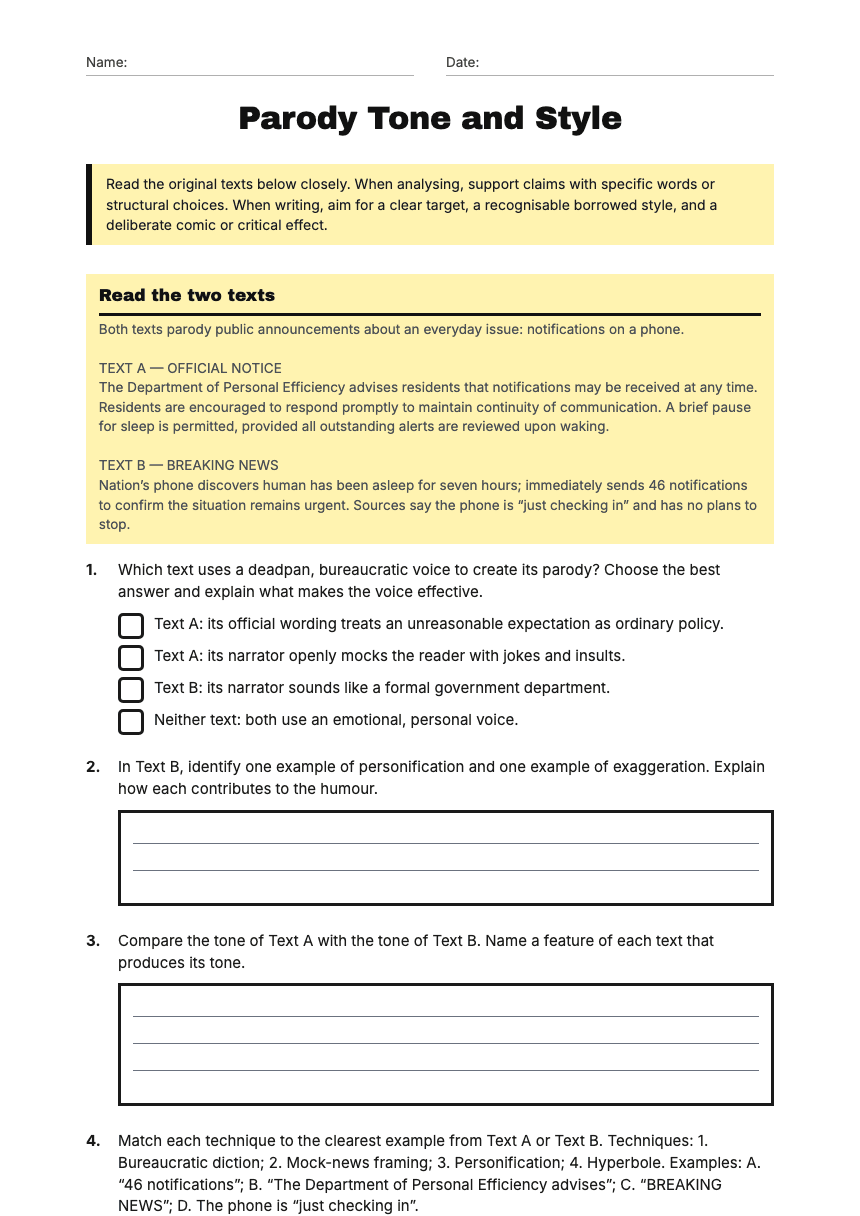
Read the two texts
Both texts parody public announcements about an everyday issue: notifications on a phone. TEXT A — OFFICIAL NOTICE The Department of Personal Efficiency advises residents that notifications may be received at any time. Residents are encouraged to respond promptly to maintain continuity of communication. A brief pause for sleep is permitted, provided all outstanding alerts are reviewed upon waking. TEXT B — BREAKING NEWS Nation’s phone discovers human has been asleep for seven hours; immediately sends 46 notifications to confirm the situation remains urgent. Sources say the phone is “just checking in” and has no plans to stop.
- Text A: its official wording treats an unreasonable expectation as ordinary policy.
- Text A: its narrator openly mocks the reader with jokes and insults.
- Text B: its narrator sounds like a formal government department.
- Neither text: both use an emotional, personal voice.
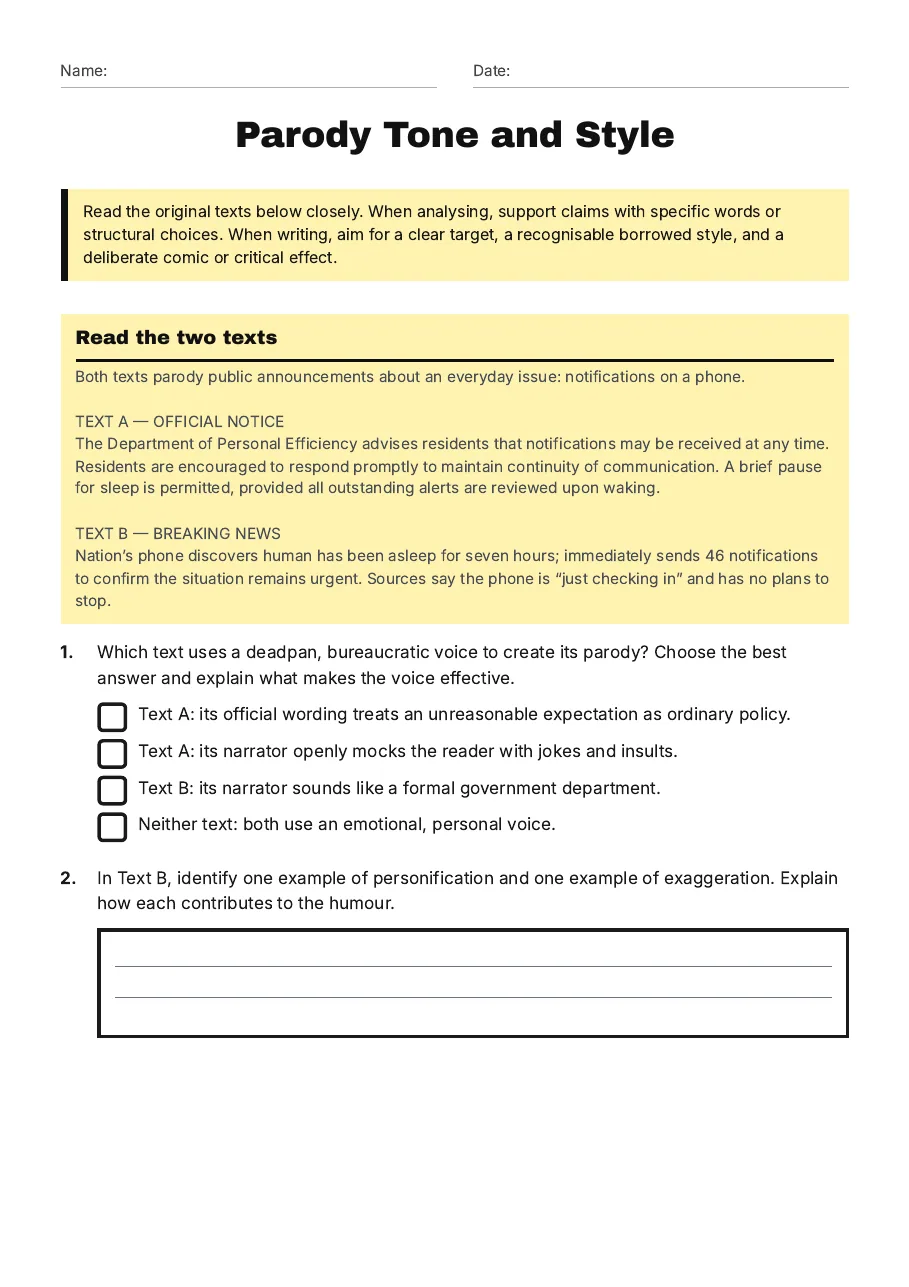
- 1. Bureaucratic diction
- 2. Mock-news framing
- 3. Personification
- 4. Hyperbole
- C. “BREAKING NEWS”
- A. “46 notifications”
- D. The phone is “just checking in”
- B. “The Department of Personal Efficiency advises”
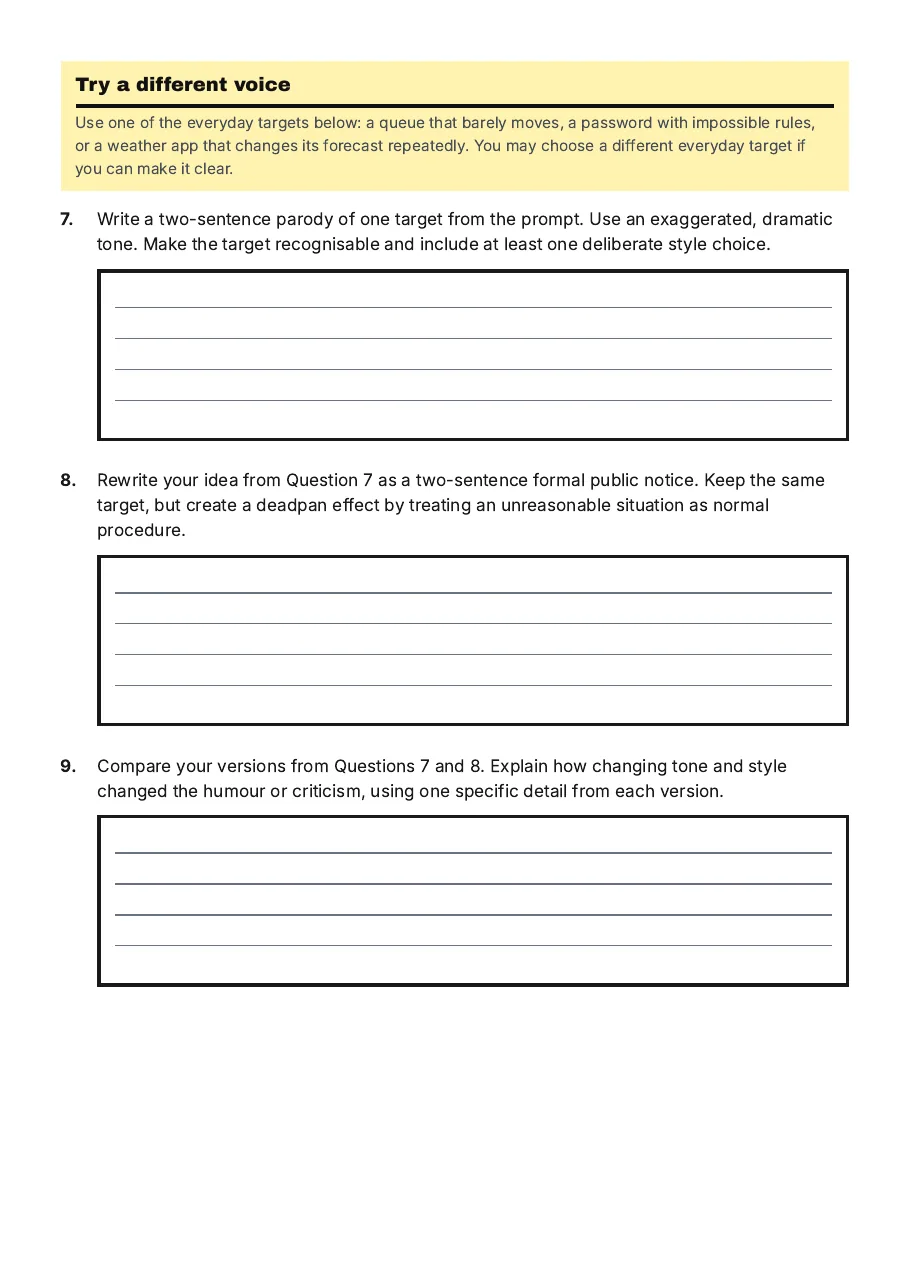
Try a different voice
Use one of the everyday targets below: a queue that barely moves, a password with impossible rules, or a weather app that changes its forecast repeatedly. You may choose a different everyday target if you can make it clear.
4 printable pages
Page 1
Page 2
Page 3
Page 4
About This Worksheet
Free in Kuraplan
Sign up free, grab the PDF, and customize it for your class.
Print-Ready
Formatted for standard paper. Clean layout, easy to read.
AI-Generated
Created with Kuraplan's AI, designed for real classroom use.
For Teachers & Parents
Use in classrooms, for homework, tutoring, or homeschool.
Need a custom version of this worksheet?
Kuraplan's AI generates custom worksheets in seconds — differentiated for every learner, aligned to your curriculum.
Generate Custom Worksheets — FreeMore English Worksheets
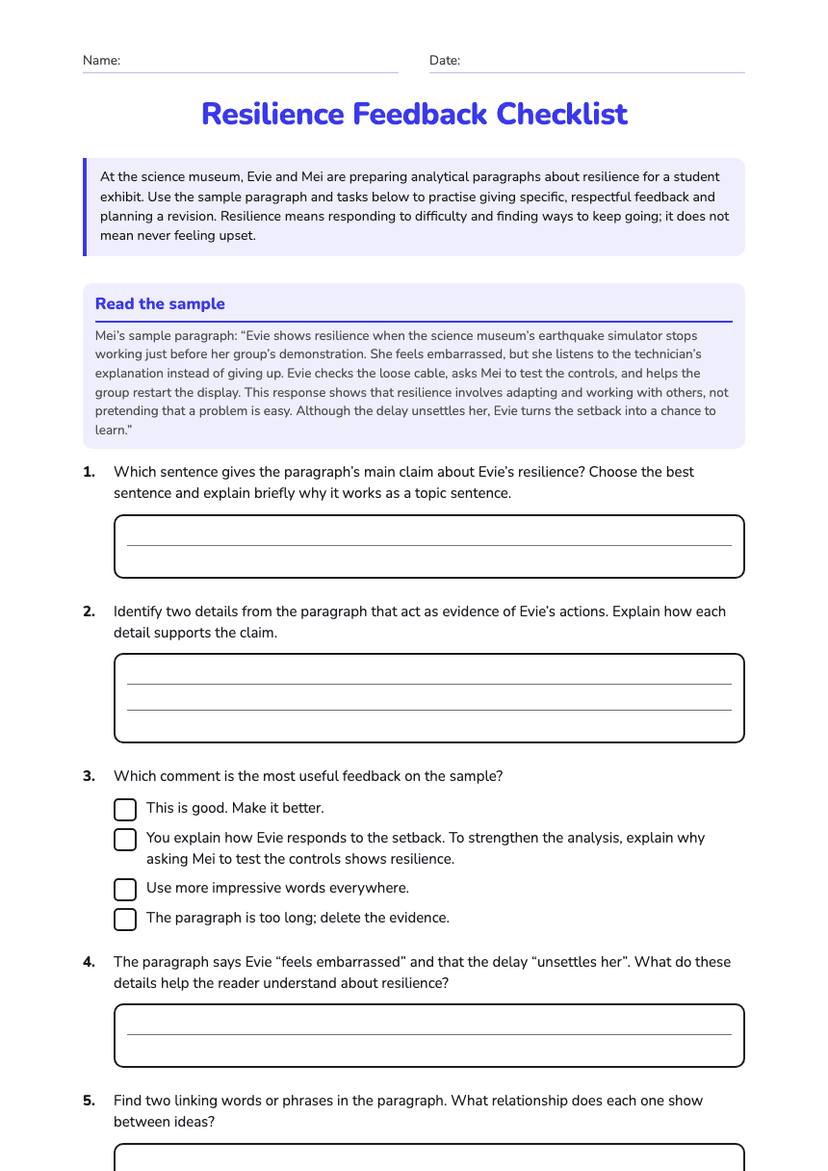
Resilience Feedback Checklist
Free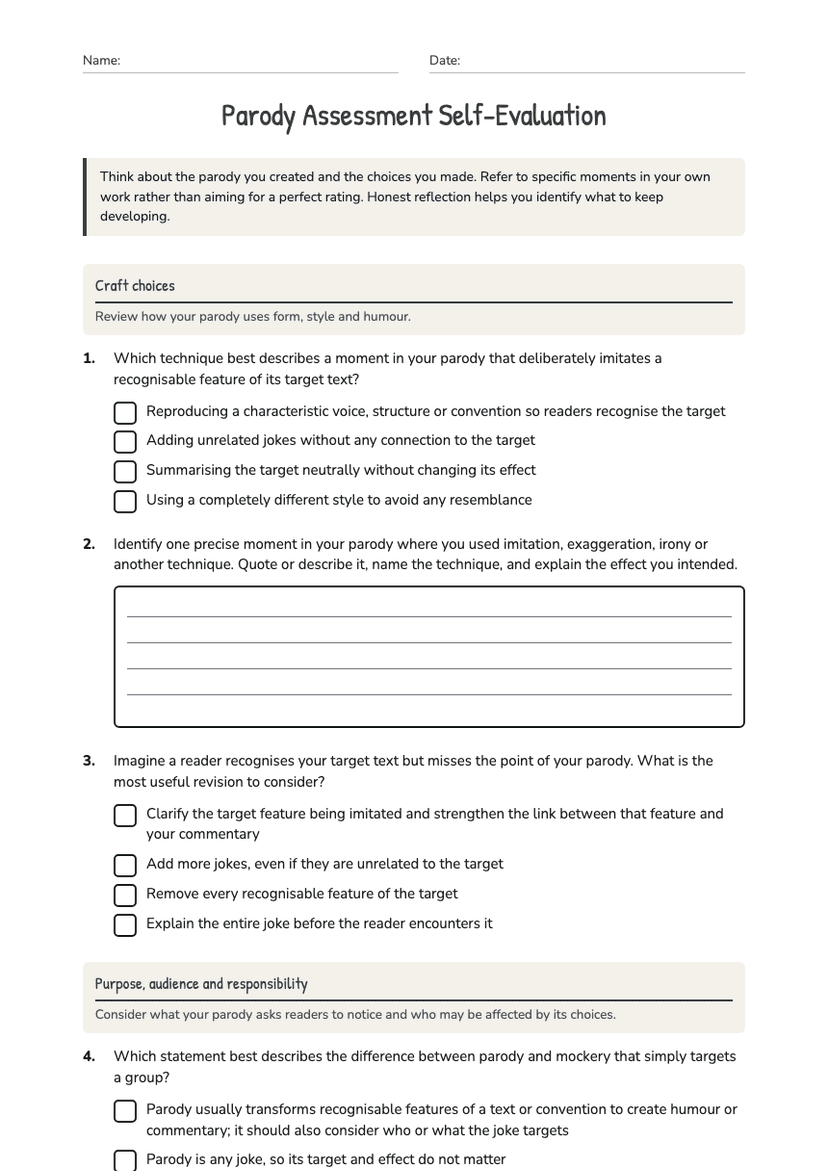
Parody Assessment Self-Evaluation
Free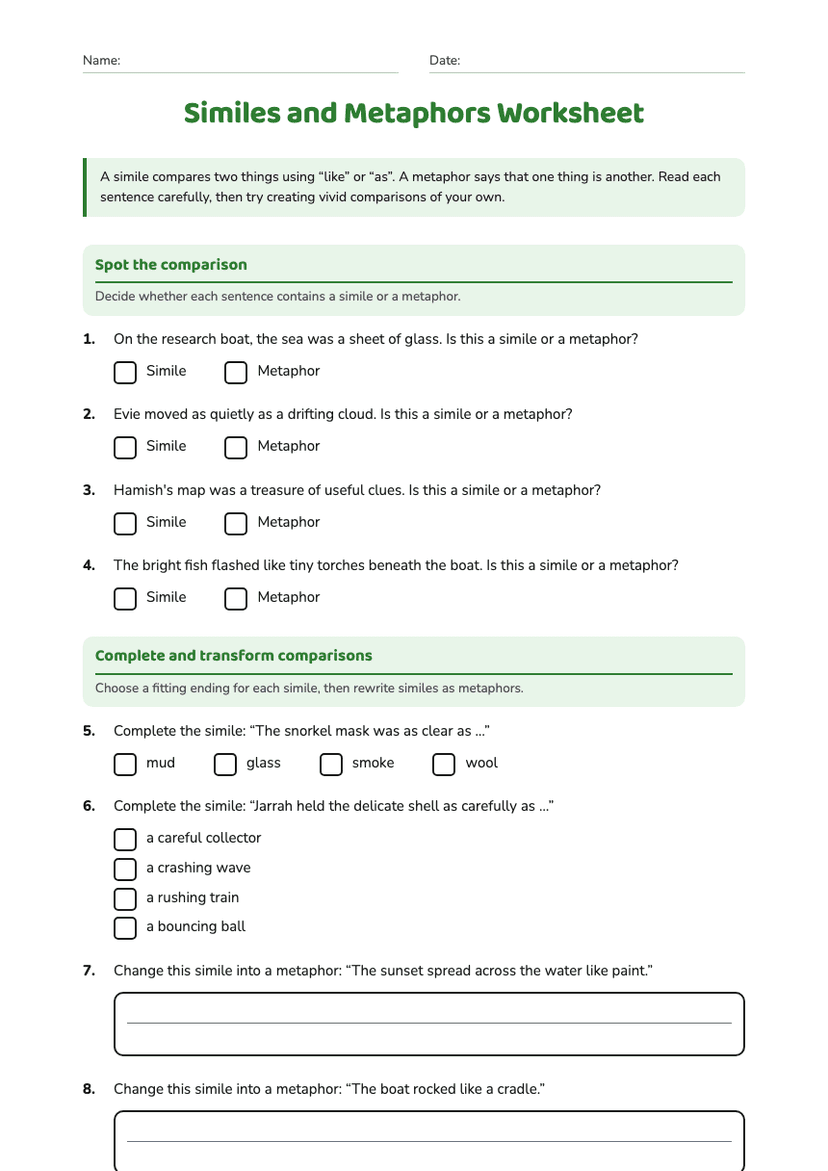
Similes and Metaphors Worksheet
Free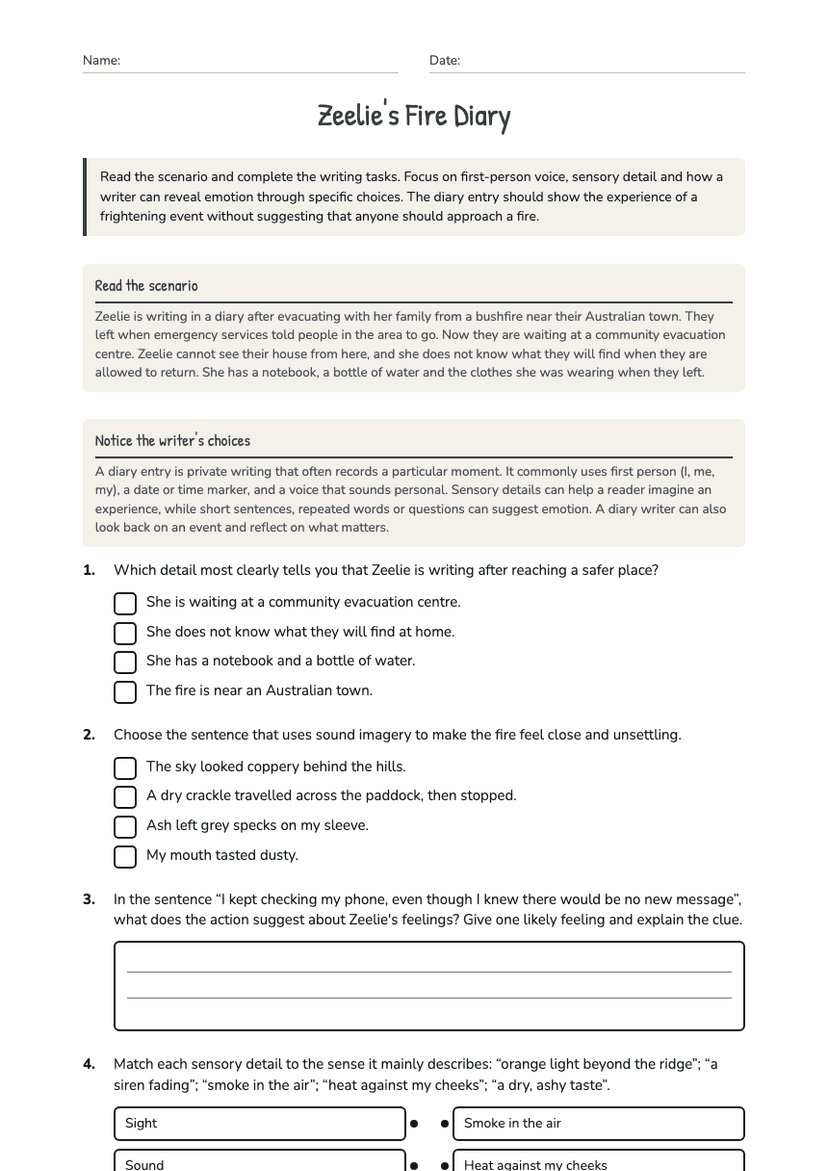
Zeelie's Fire Diary
Free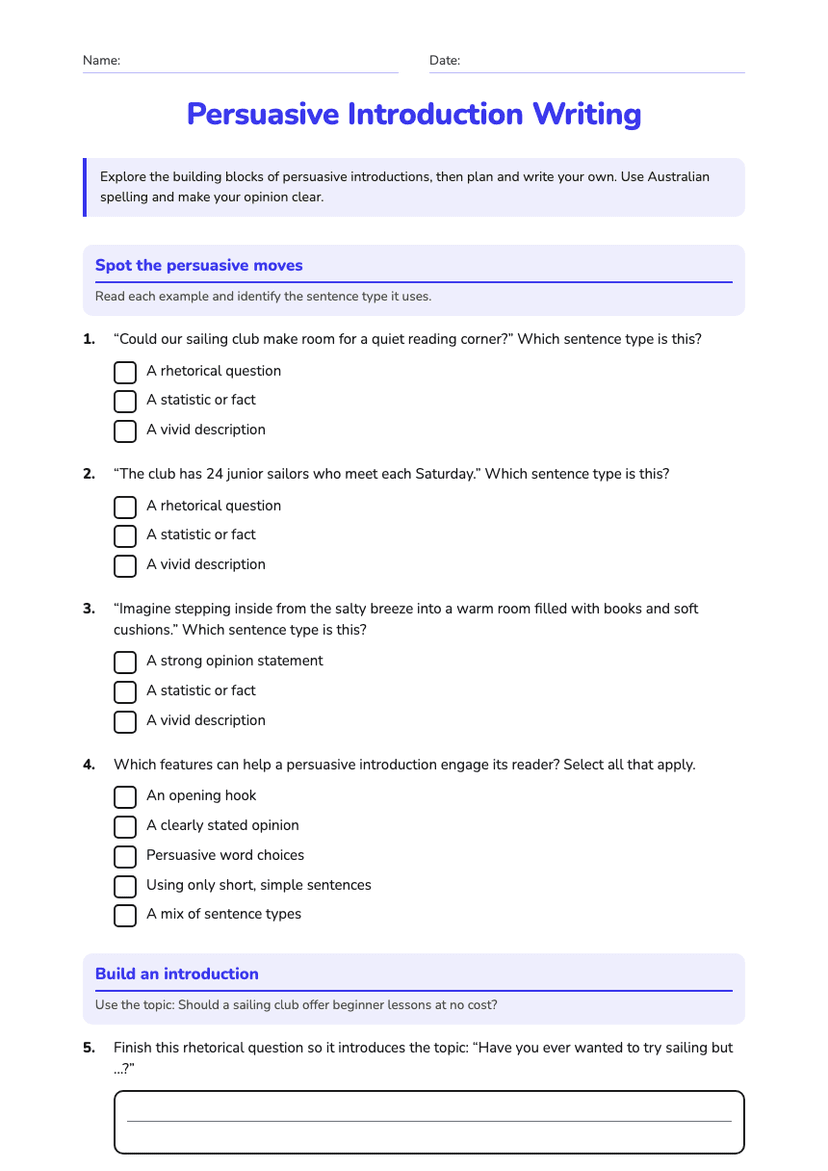
Persuasive Introduction Writing
Free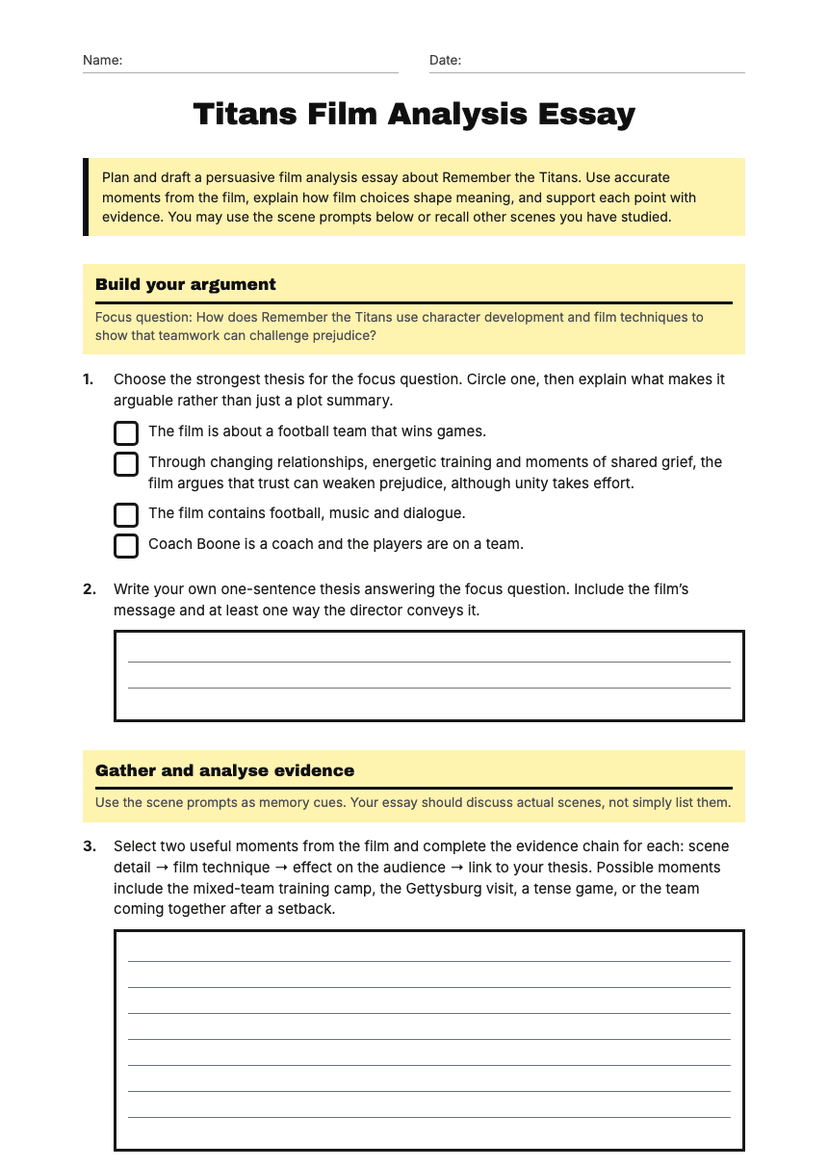
Titans Film Analysis Essay
Free
Persuasive Writing Editing Checklist
Free