Periodic Table Element Classification
A free science worksheet ready for your classroom. Open in Kuraplan to grab the print-ready PDF, customize it for your students, or generate a fresh version in seconds.
Periodic Table Element Classification

🔬 Part 1: Element Properties Knowledge
Nonmetals are usually _____________ conductors of electricity and have a _____________ appearance.
📊 Part 2: Element Classification Challenge
Iron (Fe): _______ Hint: Used to make steel, magnetic, conducts electricity
Oxygen (O): _______ Hint: Gas at room temperature, essential for breathing
Silicon (Si): _______ Hint: Used in computer chips, semiconductor properties
Carbon (C): _______ Hint: Forms diamonds and graphite, poor conductor as diamond
Aluminium (Al): _______ Hint: Used in foil and cans, lightweight and shiny
Boron (B): _______ Hint: Has properties between metals and nonmetals
🔗 Part 3: Matching Properties to Groups
🌍 Part 4: Real-World Applications
Cooking pot: Element type: ____________
Why suitable: _________________________________________________
Computer microchip: Element type: ____________
Why suitable: _________________________________________________
Balloon gas (helium): Element type: ____________
Why suitable: _________________________________________________
🎯 Part 5: Extension Challenge
Metalloid chosen: ________________________
About This Worksheet
Free in Kuraplan
Sign up free, grab the PDF, and customize it for your class.
Print-Ready
Formatted for standard paper. Clean layout, easy to read.
AI-Generated
Created with Kuraplan's AI, designed for real classroom use.
For Teachers & Parents
Use in classrooms, for homework, tutoring, or homeschool.
Need a custom version of this worksheet?
Kuraplan's AI generates custom worksheets in seconds — differentiated for every learner, aligned to your curriculum.
Generate Custom Worksheets — FreeMore Science Worksheets
Atomic Theory Research Worksheet
Free
Physical and Chemical Changes
Free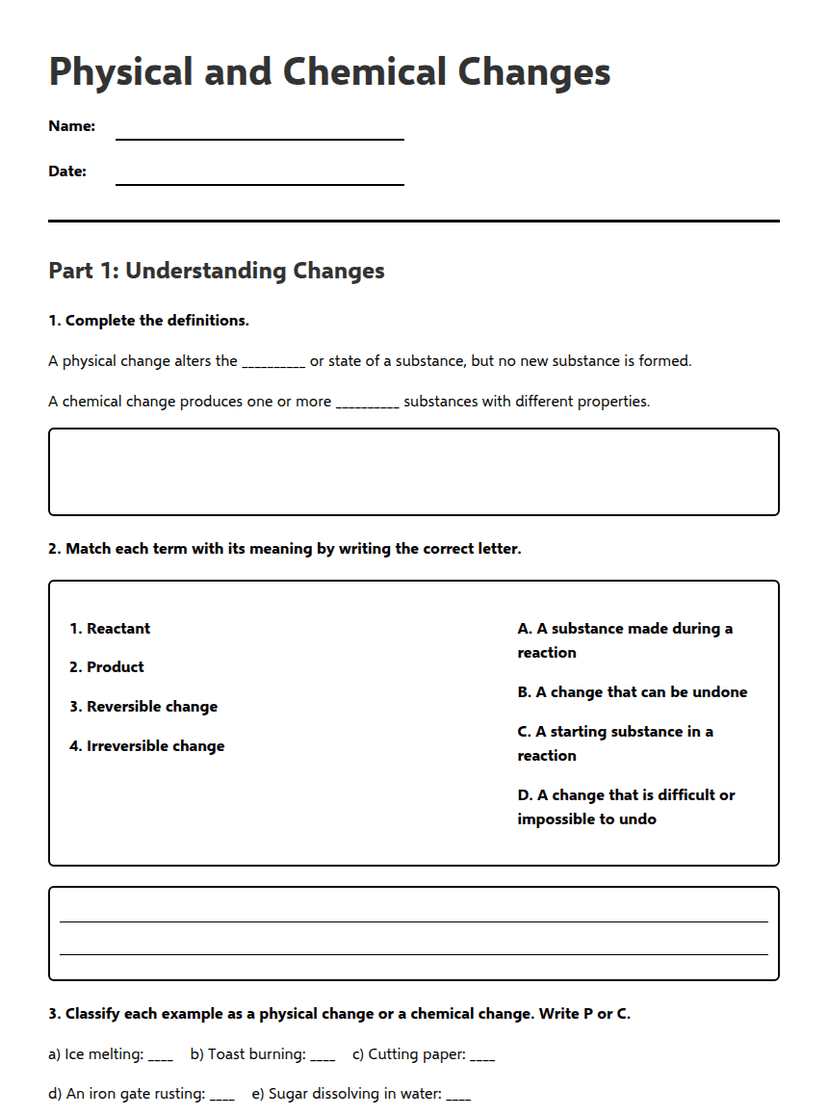
Physical and Chemical Changes
Free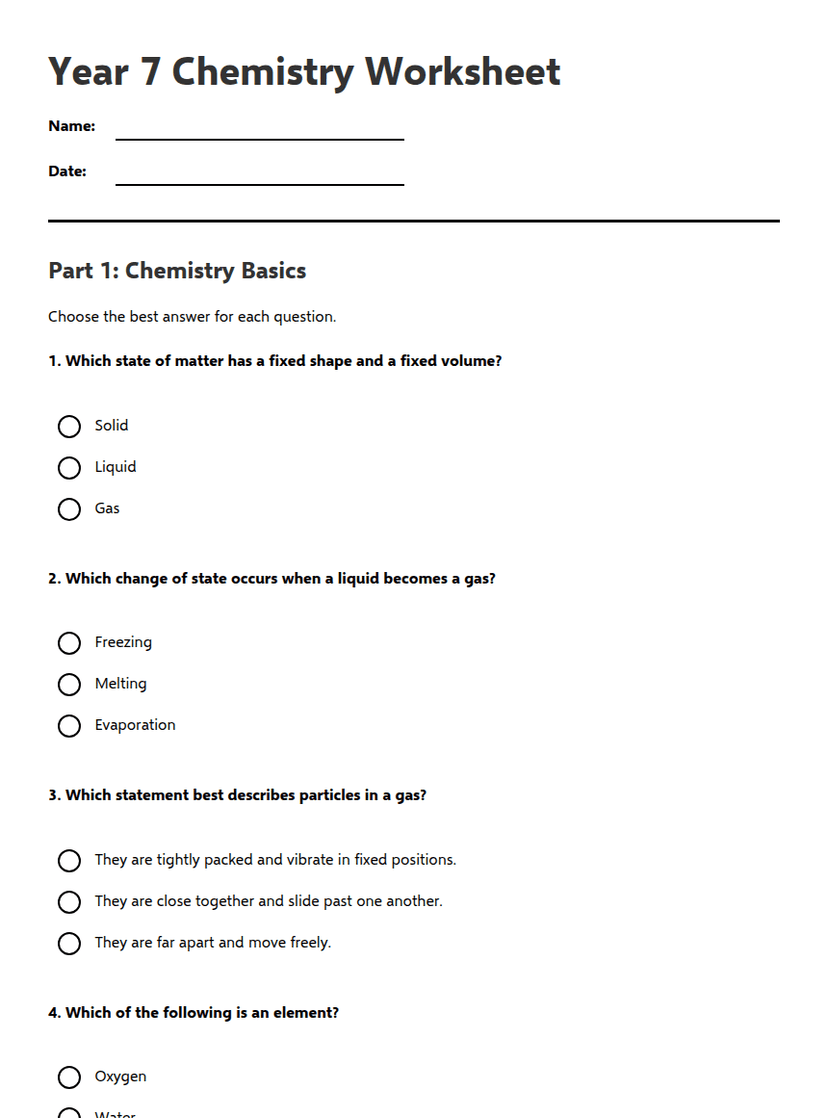
Year 7 Chemistry Worksheet
Free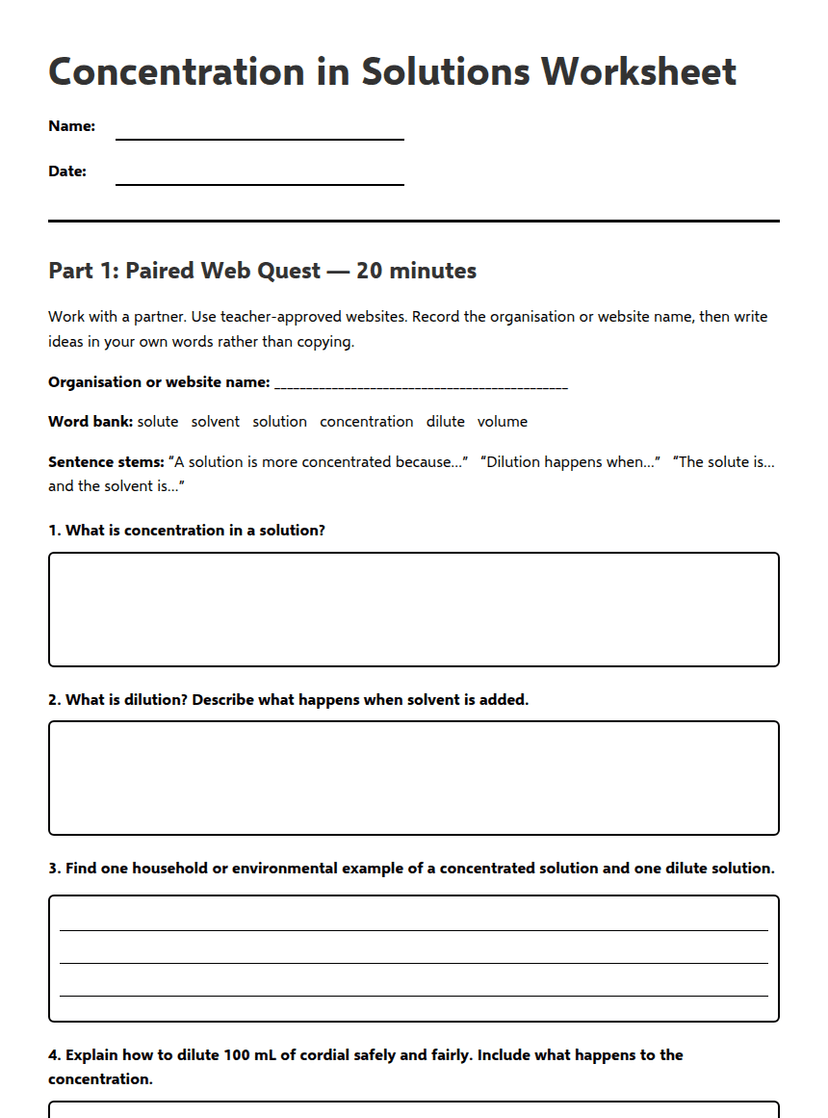
Concentration in Solutions Worksheet
Free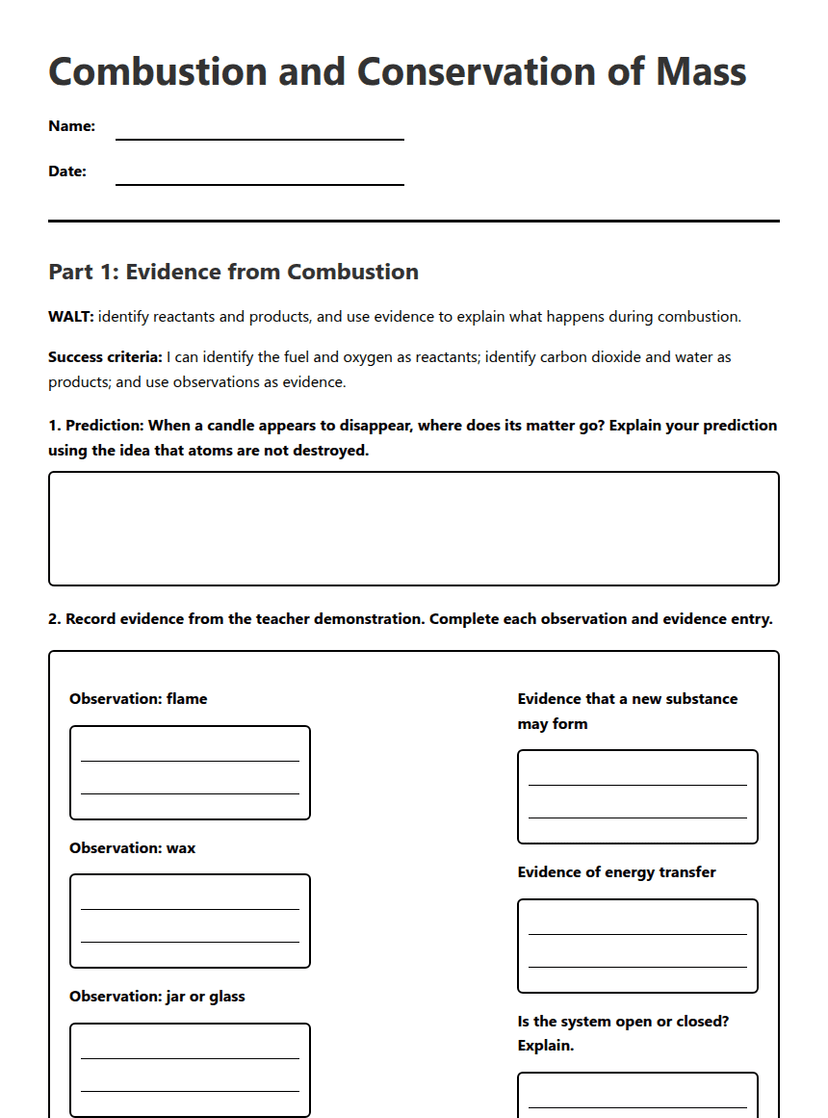
Combustion and Conservation of Mass
Free
Collision Theory and Reaction Rates
Free