Periodic Table Origins
A free science worksheet ready for your classroom. Open in Kuraplan to grab the print-ready PDF, customize it for your students, or generate a fresh version in seconds.
Periodic Table Origins
🧪 Part 1: Historical Knowledge
Dmitri Mendeleev arranged elements by increasing _____________ and noticed that element properties showed _____________ patterns. When he found gaps in his table, he predicted that _____________ elements would be discovered to fill these spaces.
🔬 Part 2: Modern Periodic Table Organisation
⚛️ Part 3: Element Properties and Groups
The periodic table is arranged from left to right and top to bottom by increasing _____________. Elements are placed in _____________ (columns) based on similar properties and _____________ (rows) based on the number of electron shells.
🎯 Part 4: Understanding and Application
About This Worksheet
Free in Kuraplan
Sign up free, grab the PDF, and customize it for your class.
Print-Ready
Formatted for standard paper. Clean layout, easy to read.
AI-Generated
Created with Kuraplan's AI, designed for real classroom use.
For Teachers & Parents
Use in classrooms, for homework, tutoring, or homeschool.
Need a custom version of this worksheet?
Kuraplan's AI generates custom worksheets in seconds — differentiated for every learner, aligned to your curriculum.
Generate Custom Worksheets — FreeMore Science Worksheets
Atomic Theory Research Worksheet
Free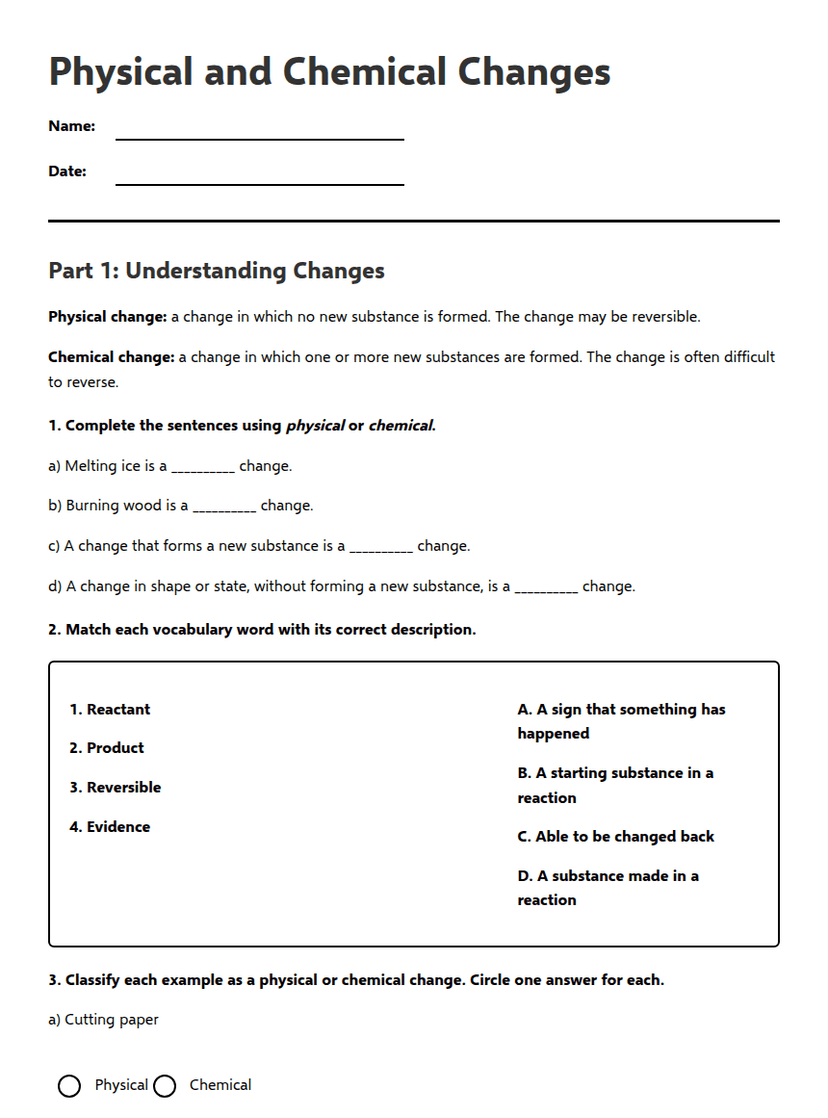
Physical and Chemical Changes
Free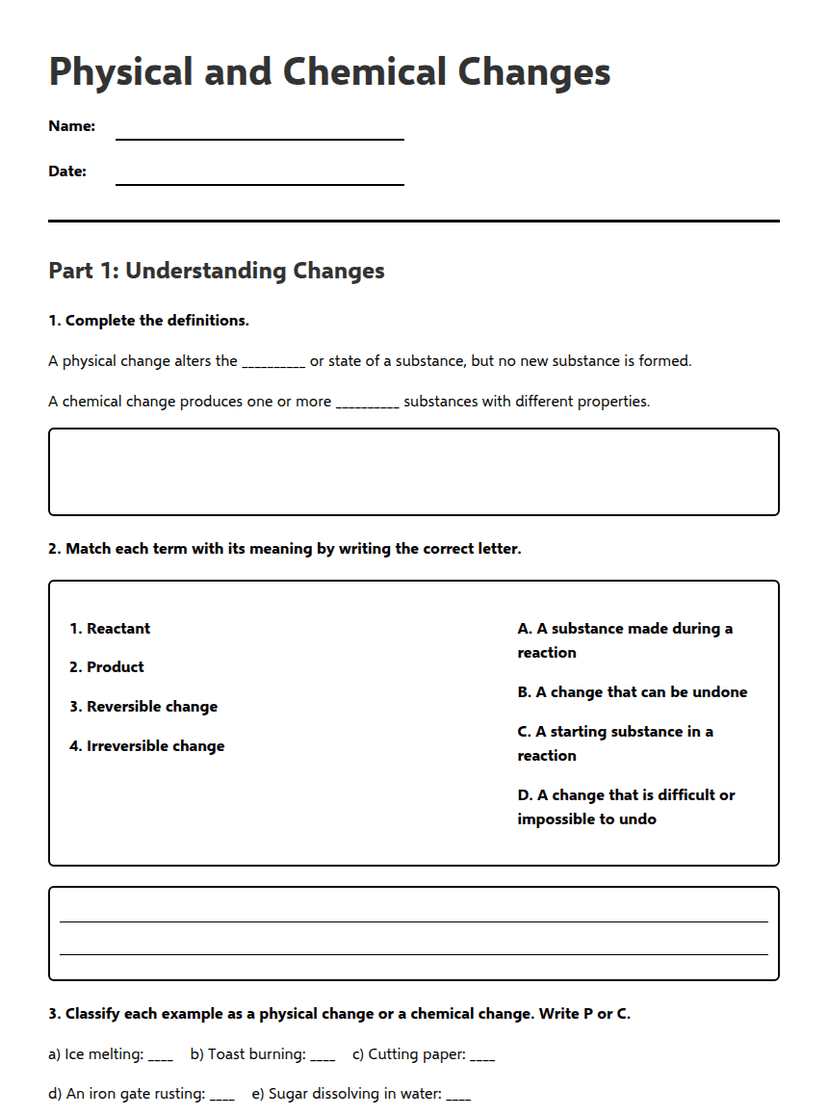
Physical and Chemical Changes
Free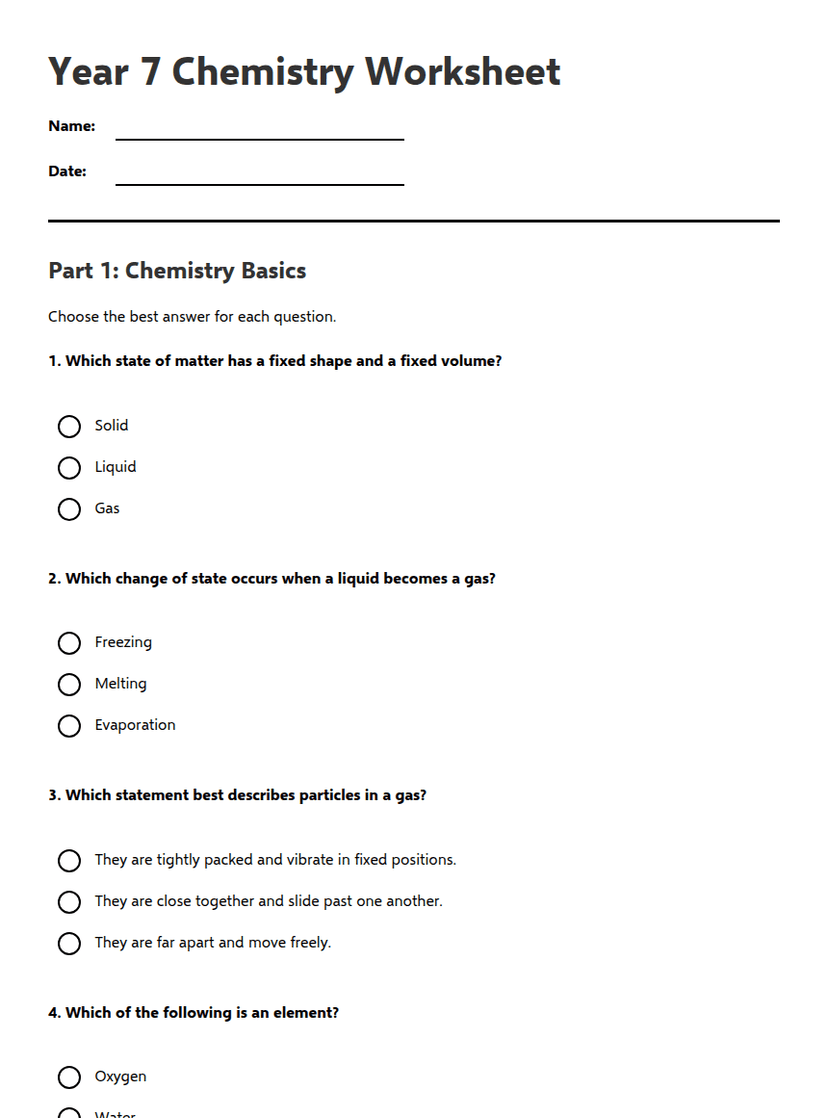
Year 7 Chemistry Worksheet
Free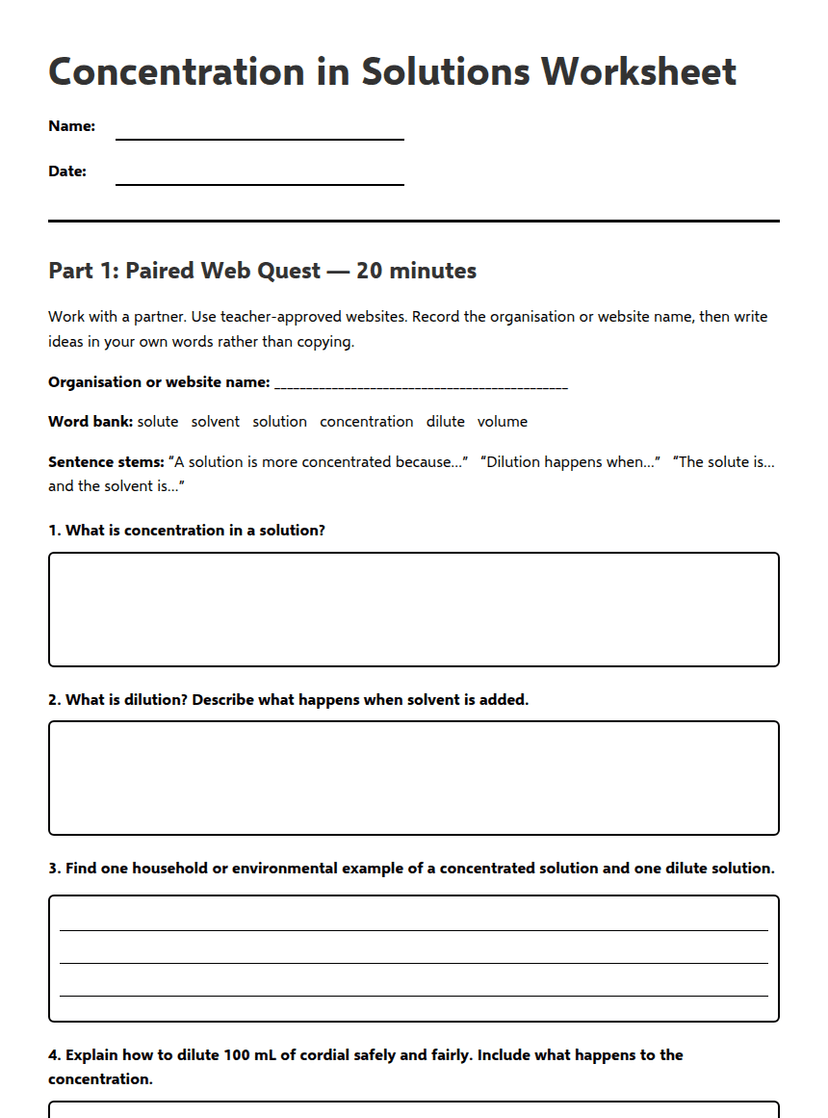
Concentration in Solutions Worksheet
Free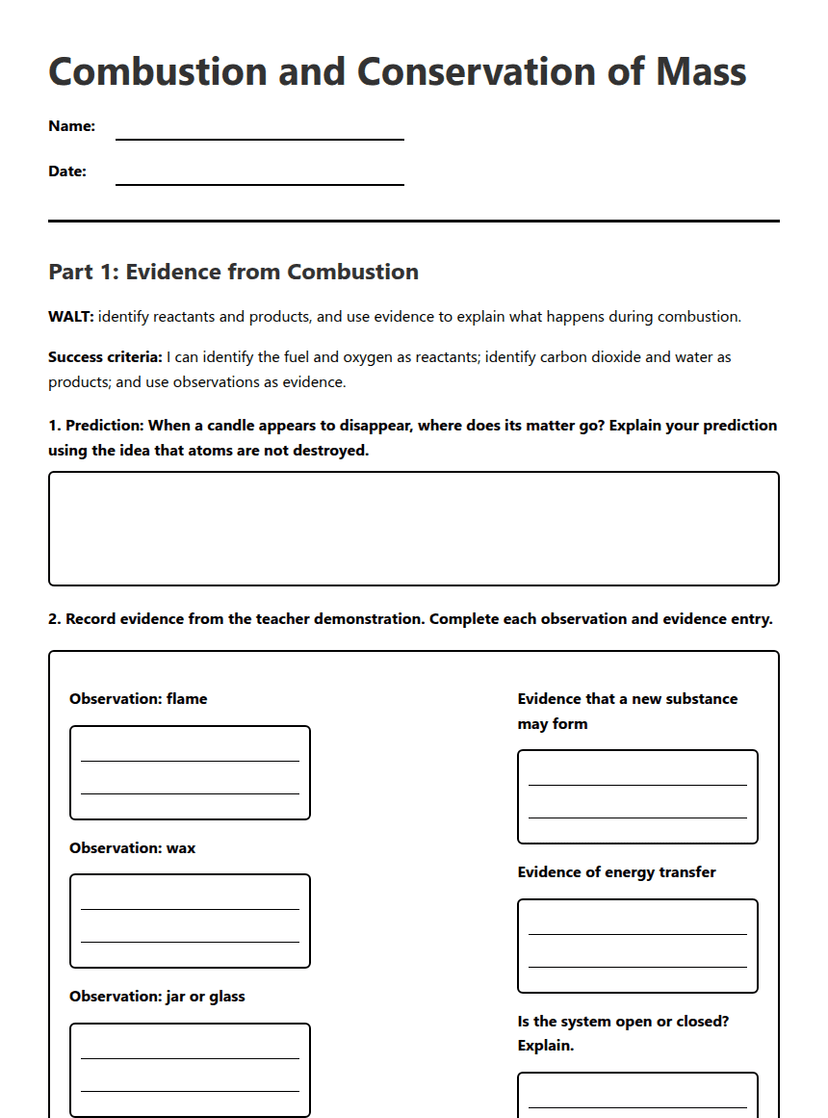
Combustion and Conservation of Mass
Free
Collision Theory and Reaction Rates
Free