ScienceFreePrintable

Wind Turbine Design Planning

A free science worksheet ready for your classroom. Open in Kuraplan to grab the print-ready PDF, customize it for your students, or generate a fresh version in seconds.
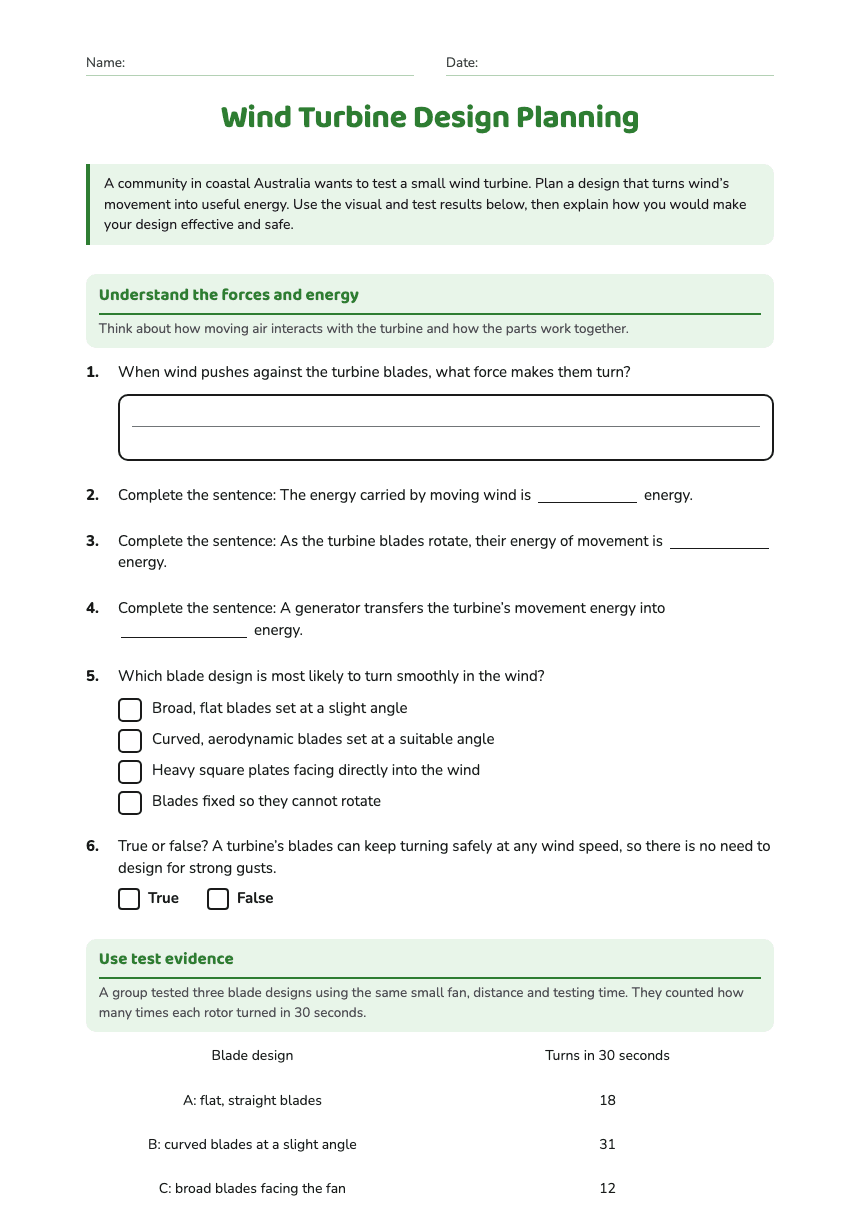
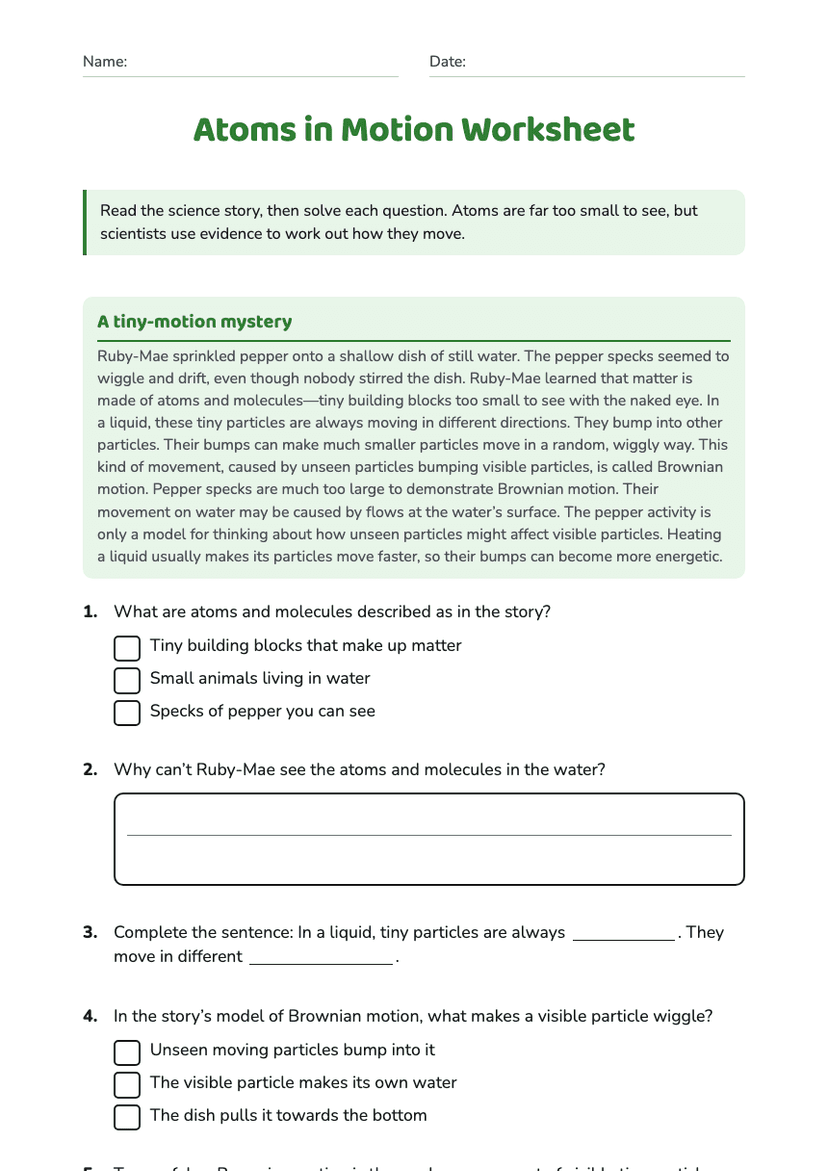
Wind Turbine Design Planning worksheet preview
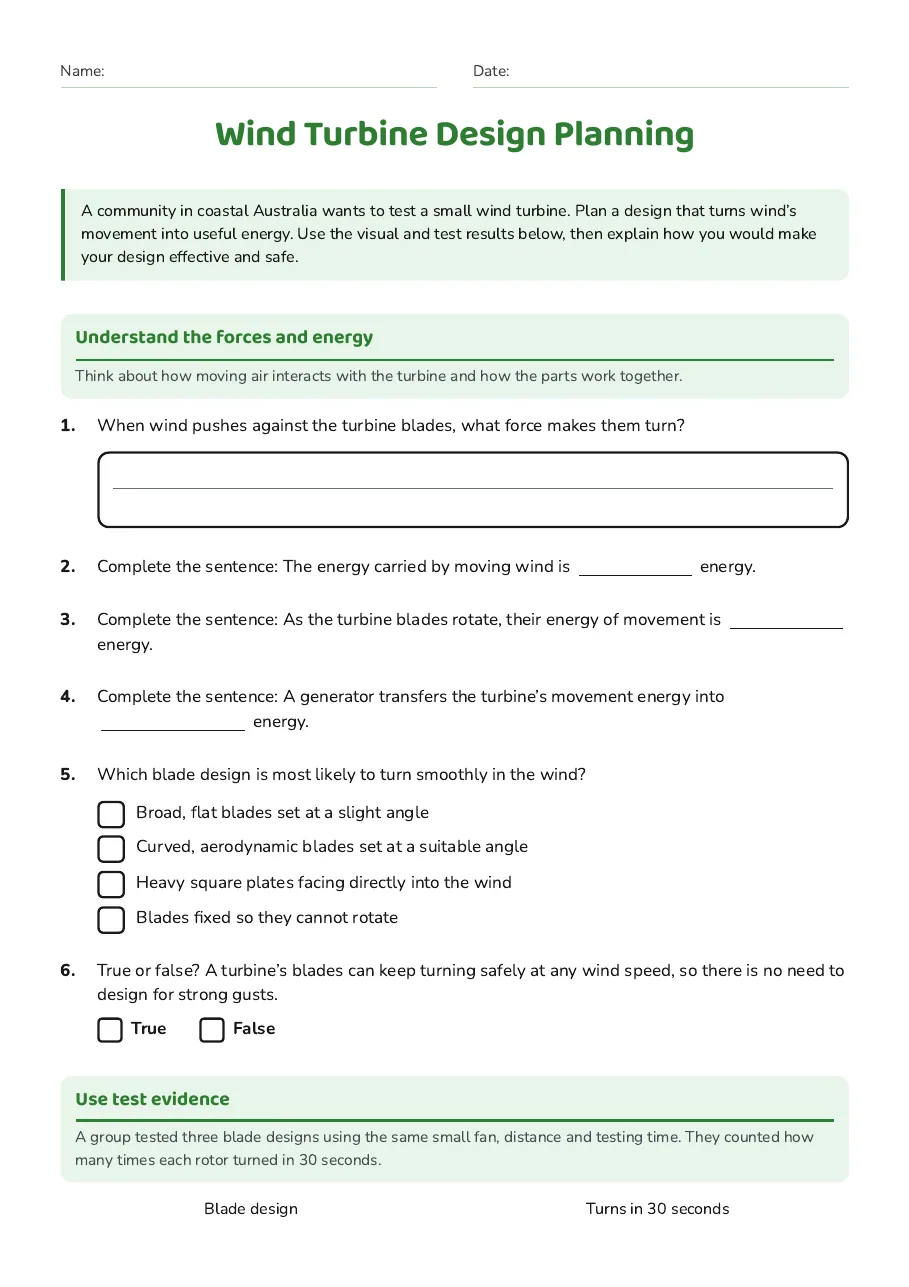
Name:Date:

Wind Turbine Design Planning

A community in coastal Australia wants to test a small wind turbine. Plan a design that turns wind’s movement into useful energy. Use the visual and test results below, then explain how you would make your design effective and safe.

Understand the forces and energy

Think about how moving air interacts with the turbine and how the parts work together.

1.When wind pushes against the turbine blades, what force makes them turn?
2.Complete the sentence: The energy carried by moving wind is energy.
3.Complete the sentence: As the turbine blades rotate, their energy of movement is energy.
4.Complete the sentence: A generator transfers the turbine’s movement energy into energy.
5.Which blade design is most likely to turn smoothly in the wind?
  • Broad, flat blades set at a slight angle
  • Curved, aerodynamic blades set at a suitable angle
  • Heavy square plates facing directly into the wind
  • Blades fixed so they cannot rotate
6.True or false? A turbine’s blades can keep turning safely at any wind speed, so there is no need to design for strong gusts.
TrueFalse

Use test evidence

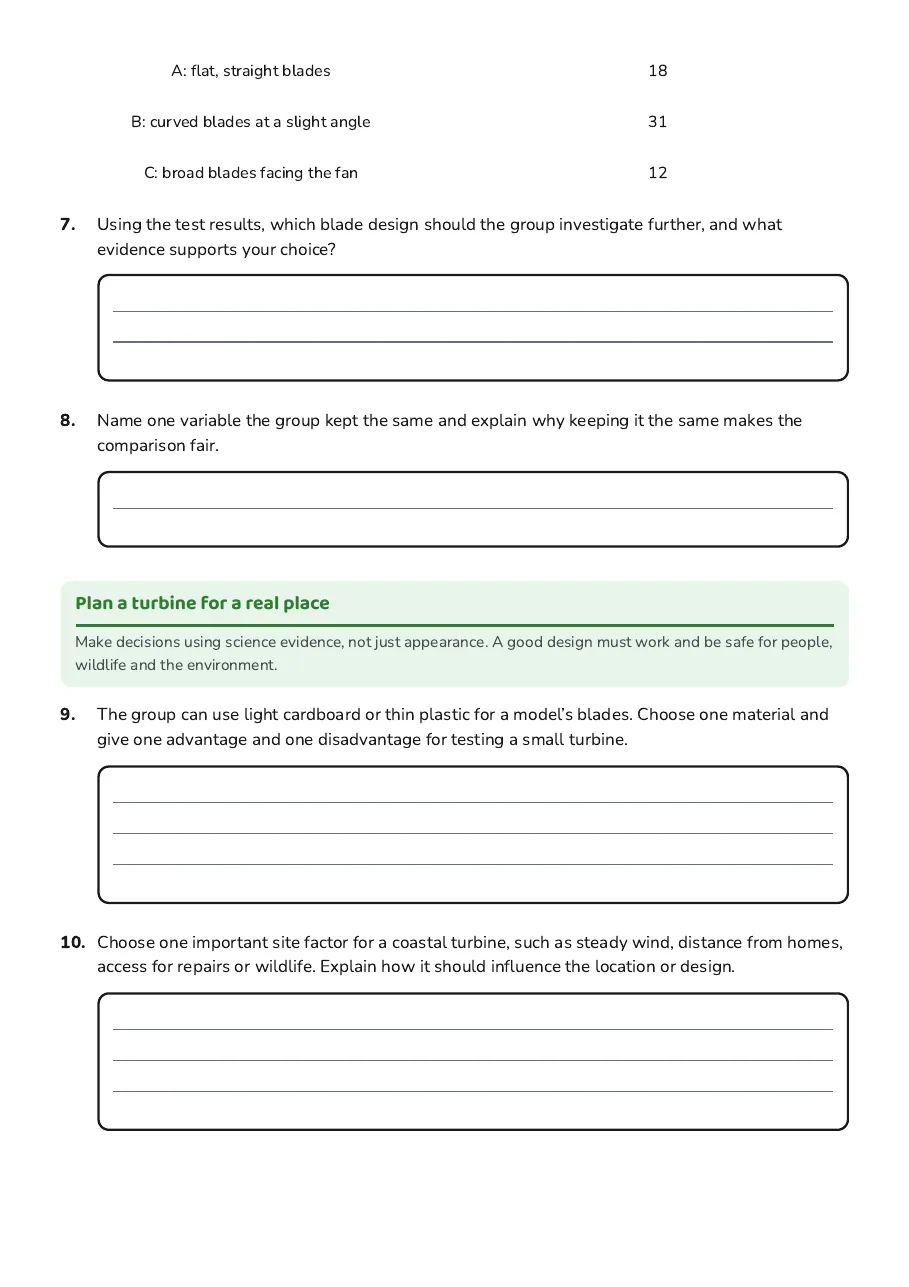
A group tested three blade designs using the same small fan, distance and testing time. They counted how many times each rotor turned in 30 seconds.

Blade design

Turns in 30 seconds

A: flat, straight blades

18

B: curved blades at a slight angle

31

C: broad blades facing the fan

12

7.Using the test results, which blade design should the group investigate further, and what evidence supports your choice?
8.Name one variable the group kept the same and explain why keeping it the same makes the comparison fair.

Plan a turbine for a real place

Make decisions using science evidence, not just appearance. A good design must work and be safe for people, wildlife and the environment.

9.The group can use light cardboard or thin plastic for a model’s blades. Choose one material and give one advantage and one disadvantage for testing a small turbine.
10.Choose one important site factor for a coastal turbine, such as steady wind, distance from homes, access for repairs or wildlife. Explain how it should influence the location or design.
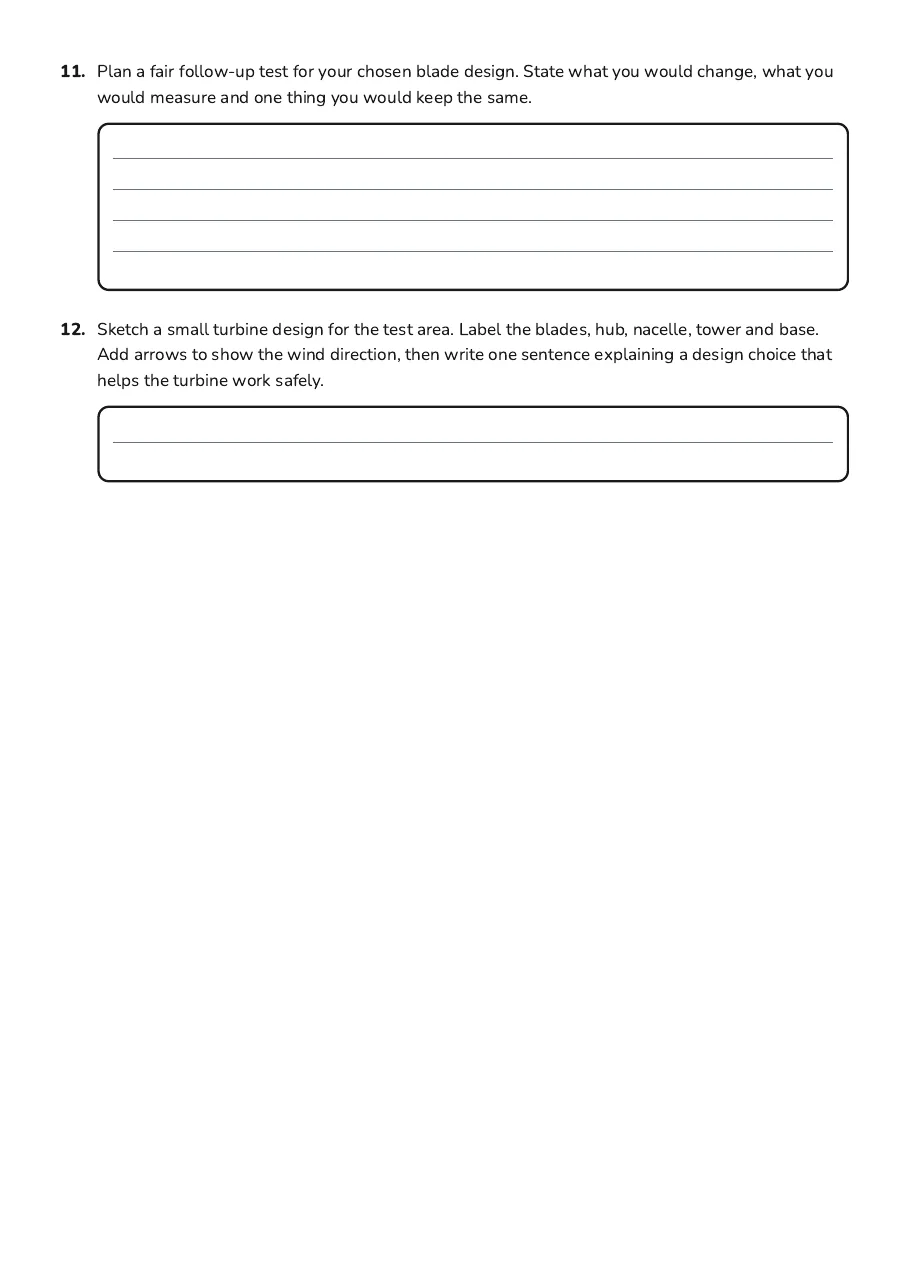
11.Plan a fair follow-up test for your chosen blade design. State what you would change, what you would measure and one thing you would keep the same.
12.Sketch a small turbine design for the test area. Label the blades, hub, nacelle, tower and base. Add arrows to show the wind direction, then write one sentence explaining a design choice that helps the turbine work safely.

3 printable pages

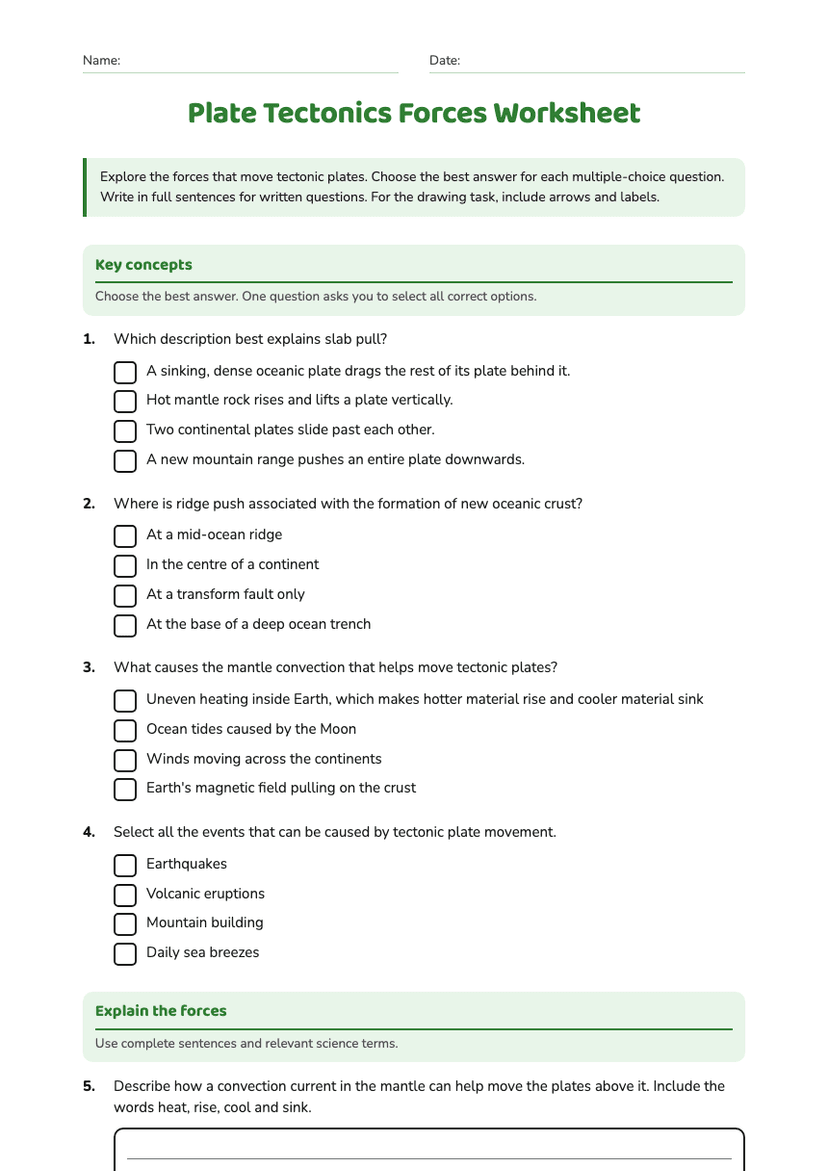
  • Wind Turbine Design Planning, page 1 of 3: Understand the forces and energy, Use test evidence

    Page 1

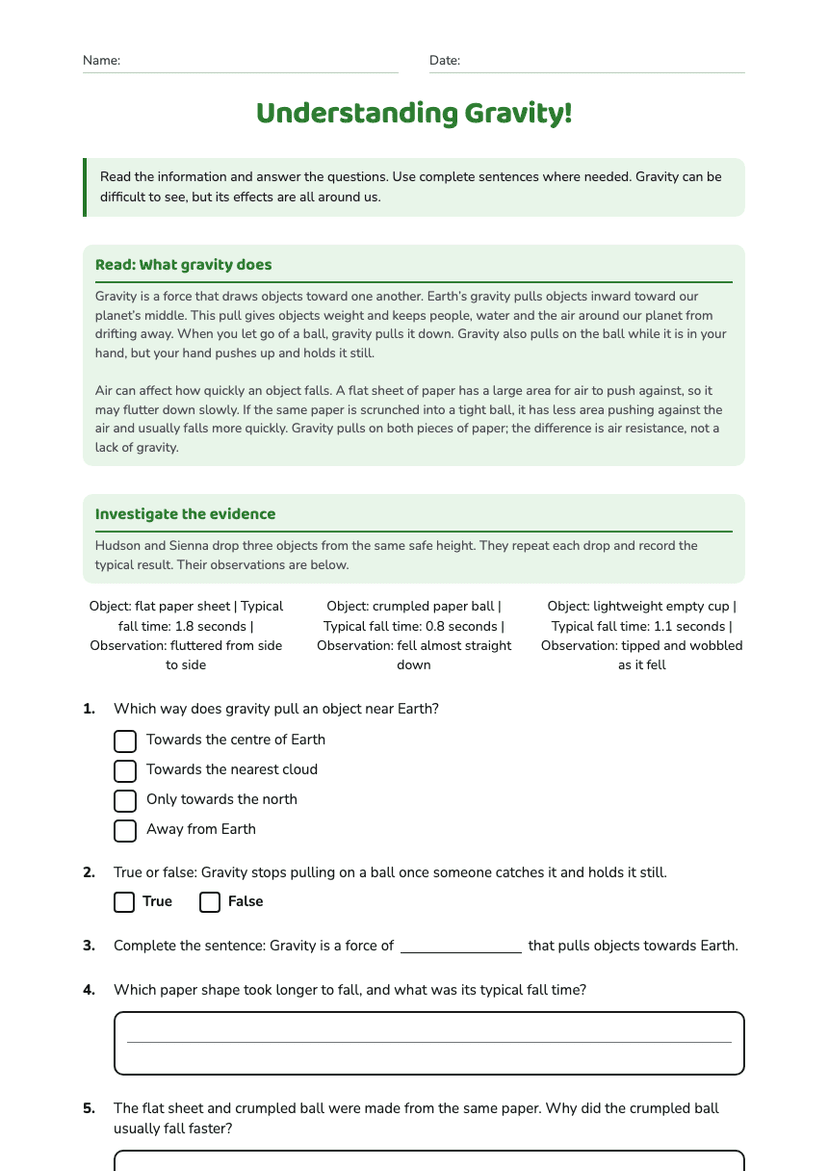
  • Wind Turbine Design Planning, page 2 of 3: Plan a turbine for a real place

    Page 2

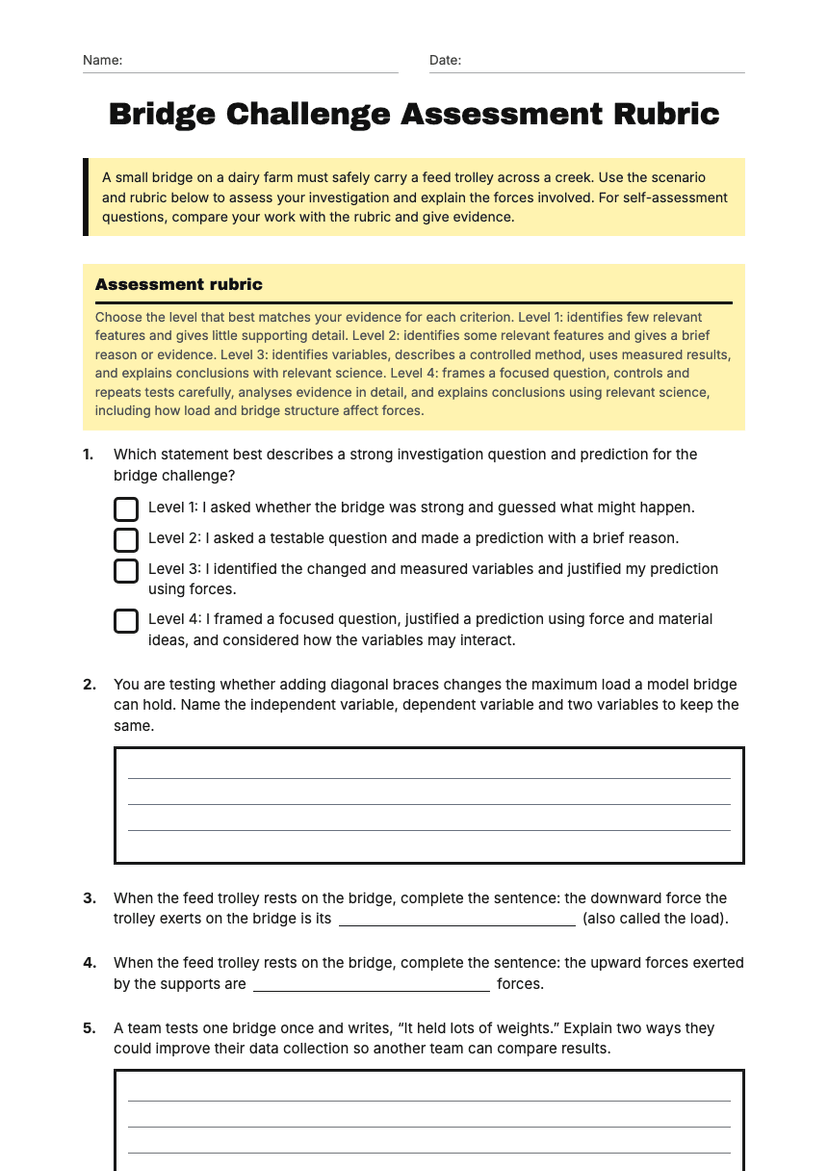
  • Wind Turbine Design Planning, page 3 of 3: 11. Plan a fair follow-up test for your chosen blade design. State what you would change,…

    Page 3

About This Worksheet

Free in Kuraplan

Sign up free, grab the PDF, and customize it for your class.

Print-Ready

Formatted for standard paper. Clean layout, easy to read.

AI-Generated

Created with Kuraplan's AI, designed for real classroom use.

For Teachers & Parents

Use in classrooms, for homework, tutoring, or homeschool.

Need a custom version of this worksheet?

Kuraplan's AI generates custom worksheets in seconds — differentiated for every learner, aligned to your curriculum.

Generate Custom Worksheets — Free
No credit card Curriculum-aligned Under 60 seconds