ScienceFreePrintable

Periodic Table Reactivity Trends

A free science worksheet ready for your classroom. Open in Kuraplan to grab the print-ready PDF, customize it for your students, or generate a fresh version in seconds.
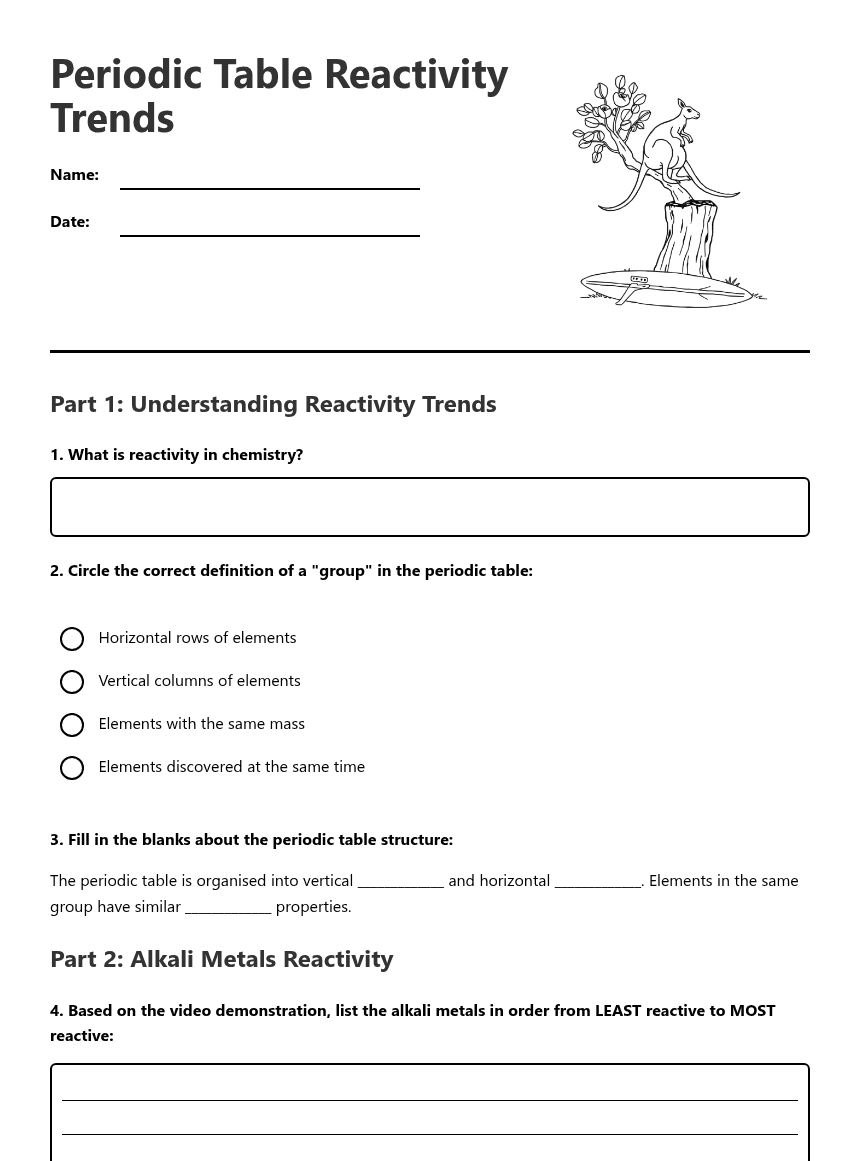
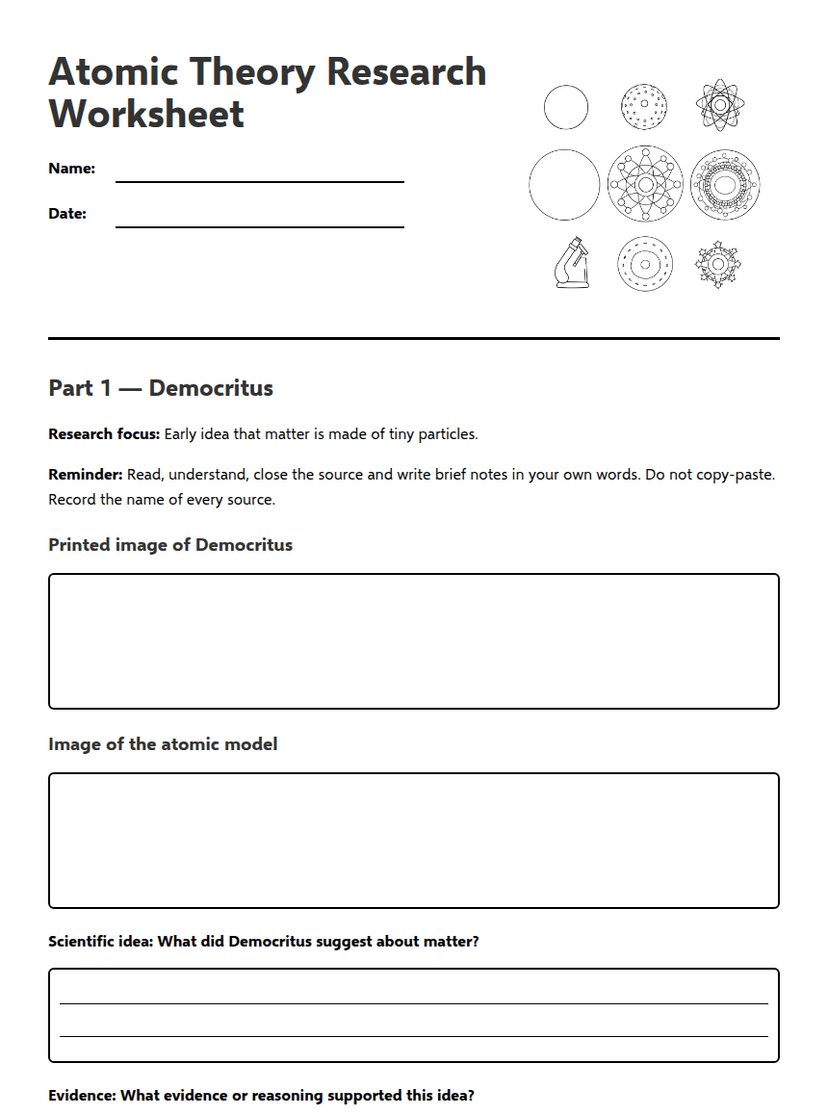
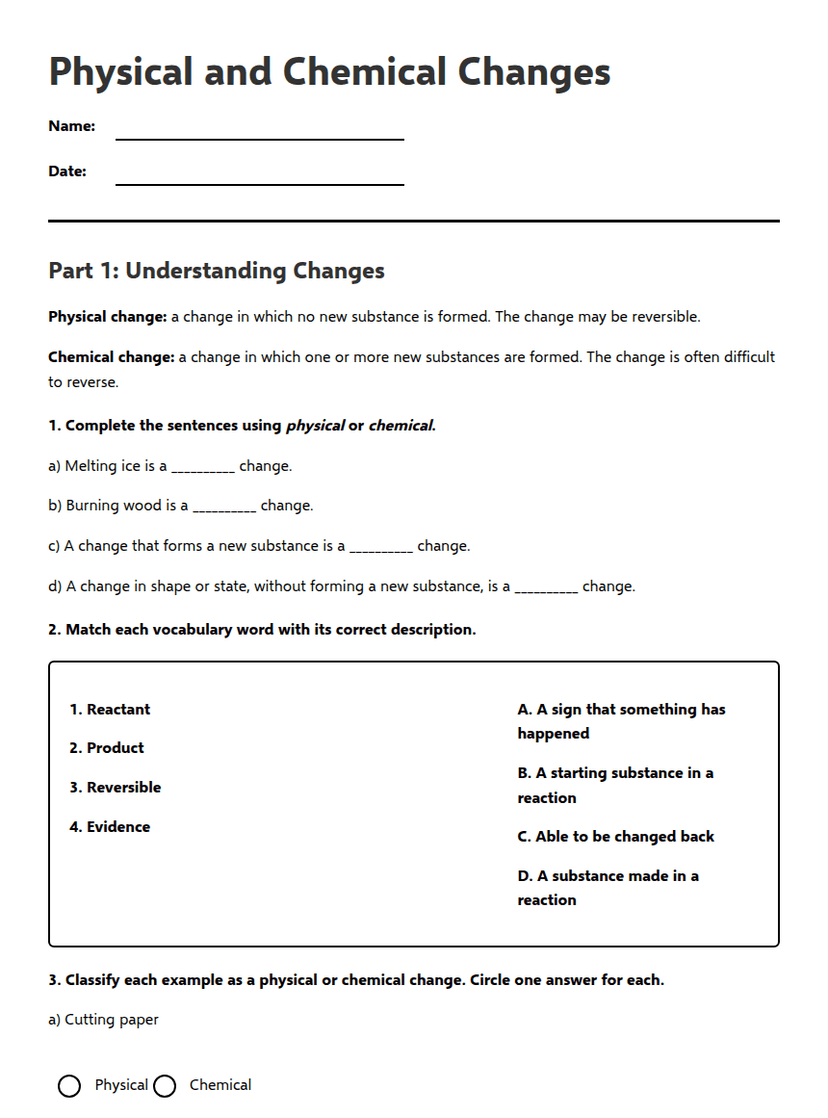
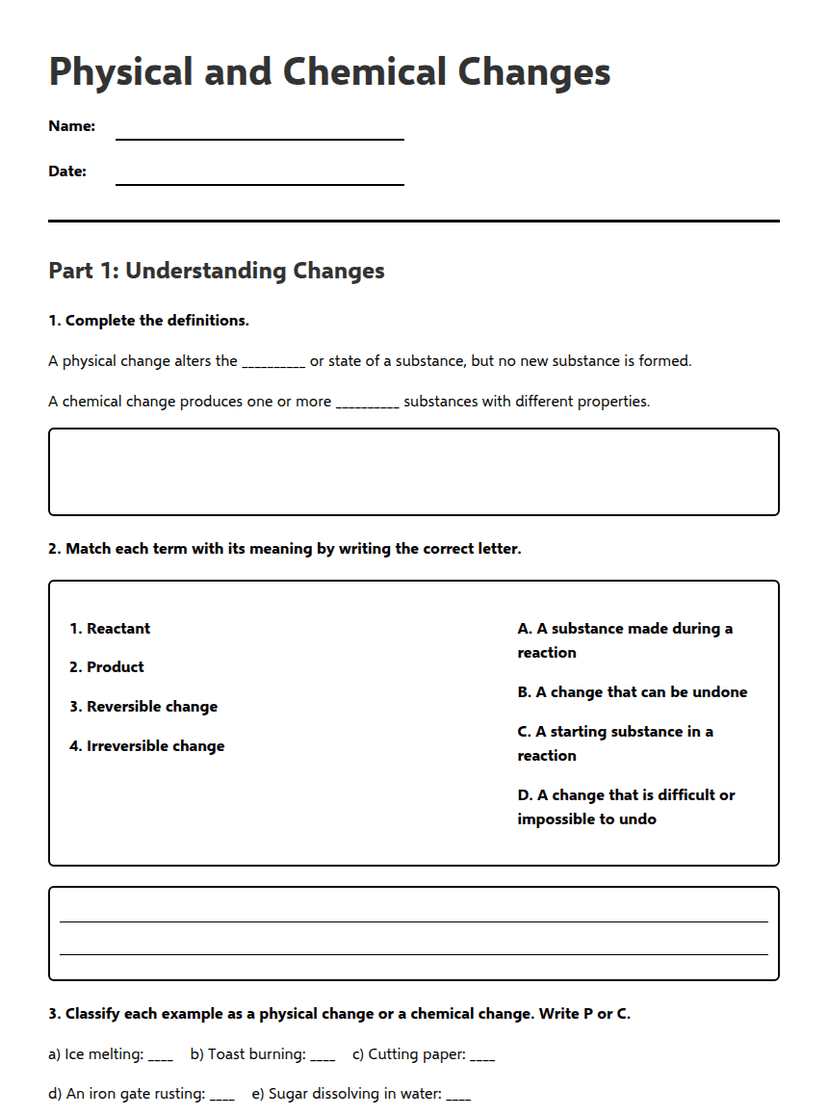
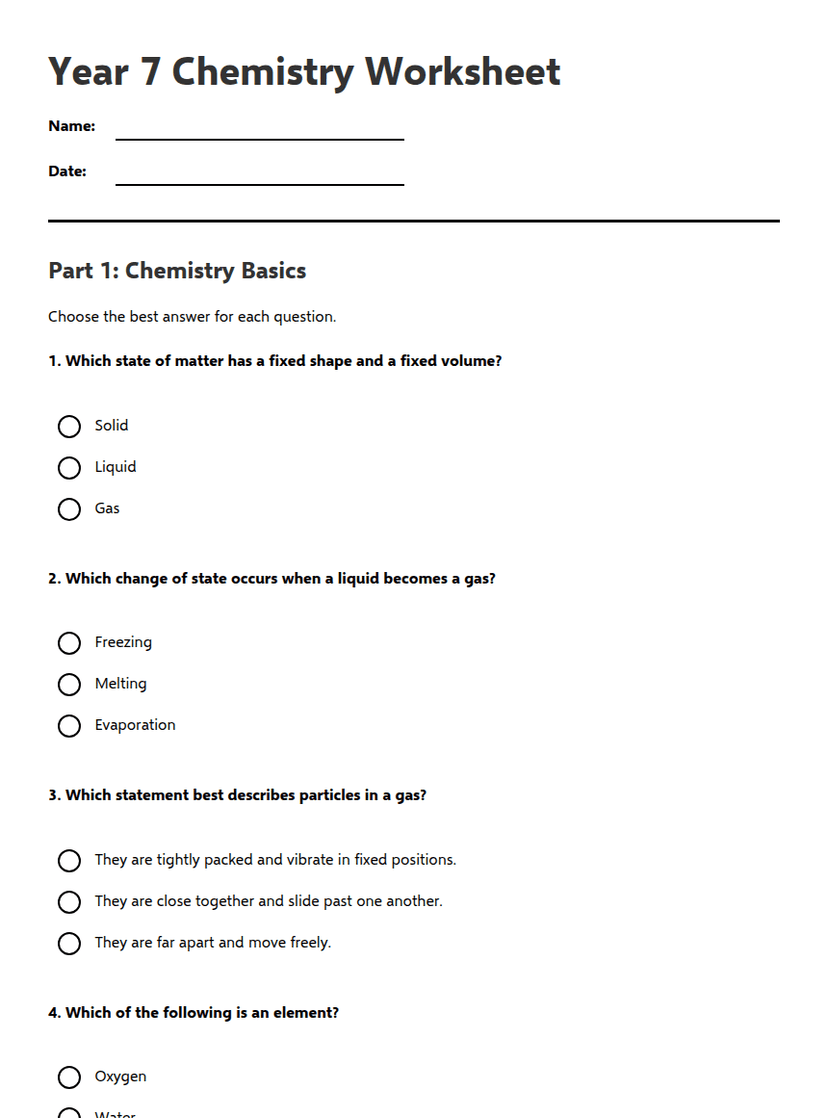
Periodic Table Reactivity Trends worksheet preview

Periodic Table Reactivity Trends

Periodic Table Reactivity Trends

Periodic table with highlighted groups showing reactivity trends

Part 1: Understanding Reactivity Trends

1. What is reactivity in chemistry?
2. Circle the correct definition of a "group" in the periodic table:

Horizontal rows of elements

Vertical columns of elements

Elements with the same mass

Elements discovered at the same time

3. Fill in the blanks about the periodic table structure:

The periodic table is organised into vertical _____________ and horizontal _____________. Elements in the same group have similar _____________ properties.

Part 2: Alkali Metals Reactivity

4. Based on the video demonstration, list the alkali metals in order from LEAST reactive to MOST reactive:
5. Which alkali metal would react more violently with water - lithium or potassium? Circle your answer and explain why:

Lithium

Potassium

6. Complete this statement about alkali metal reactivity:

As you move _____________ the alkali metals group, reactivity _____________. This is because the outer electron becomes _____________ to lose as atoms get _____________.

Part 3: Halogen Reactivity

7. From the video demonstration, which halogen appeared to be the MOST reactive?

Chlorine

Bromine

Iodine

Fluorine

8. How does halogen reactivity change as you move down the group? Explain the pattern:
9. True or False: Halogens become more reactive as you move down the group.

True

False

Part 4: Electron Configuration and Reactivity

10. Draw a simple diagram showing the electron shells for sodium (Na) and explain why it's reactive:
11. Match the scientific terms with their correct definitions:
1. Electron shell
2. Reactivity
3. Group trend
4. Outer electron
A. How readily an element undergoes reactions
B. Pattern of properties within a vertical column
C. Energy level where electrons orbit the nucleus
D. Electron in the outermost shell of an atom

Part 5: Applying Your Knowledge

12. Check all the real-world applications where understanding reactivity trends is important:

Making fireworks

Food preservation

Salt formation

Water treatment

Battery design

13. Predict: If you had an unknown alkali metal that reacted more violently than sodium but less than potassium, where would it likely be positioned in Group 1?
14. Reflection: Summarise the key reactivity trends you learned today in 2-3 sentences using scientific language:

About This Worksheet

Free in Kuraplan

Sign up free, grab the PDF, and customize it for your class.

Print-Ready

Formatted for standard paper. Clean layout, easy to read.

AI-Generated

Created with Kuraplan's AI, designed for real classroom use.

For Teachers & Parents

Use in classrooms, for homework, tutoring, or homeschool.

Need a custom version of this worksheet?

Kuraplan's AI generates custom worksheets in seconds — differentiated for every learner, aligned to your curriculum.

Generate Custom Worksheets — Free
No credit card Curriculum-aligned Under 60 seconds