HealthFreePrintable
Puberty Changes and Coping
A free health worksheet ready for your classroom. Open in Kuraplan to grab the print-ready PDF, customize it for your students, or generate a fresh version in seconds.
Puberty Changes and Coping
🌱 Part 1: Understanding Puberty Changes
1. What are the three main types of changes that occur during puberty? Check all that apply:
Physical changes
Emotional changes
Social changes
Academic changes
2. Circle the age range when puberty typically begins:
6-8 years
8-14 years
15-18 years
18-21 years
3. List three physical changes that might occur during puberty:
💭 Part 2: Emotional and Social Changes
4. Fill in the blanks about emotional changes during puberty:
During puberty, you might experience more intense _____________ and mood swings. It's _____________ to feel confused or overwhelmed sometimes. These changes happen because of _____________ in your body.
5. Which of these are healthy ways to cope with mood changes? Check all that apply:
Talking to a trusted adult
Keeping feelings bottled up inside
Regular exercise and physical activity
Getting enough sleep
Avoiding friends and family
Writing in a journal
6. Describe how friendships might change during puberty:
🤝 Part 3: Coping Strategies and Support
7. Match each challenge with an appropriate coping strategy:
1. Feeling overwhelmed by body changes
2. Mood swings and irritability
3. Friendship conflicts
4. Feeling different from peers
A. Practice deep breathing and mindfulness
B. Talk openly with friends about feelings
C. Remember everyone develops at their own pace
D. Learn about normal puberty changes
8. Who are three trusted adults you could talk to about puberty concerns?
9. Circle the Australian helpline specifically for young people:
Lifeline (13 11 14)
Kids Helpline (1800 55 1800)
Beyond Blue (1300 22 4636)
Emergency Services (000)
🌏 Part 4: Cultural Perspectives and Identity
10. How might different cultures view and celebrate the transition from childhood to adulthood? Give two examples:
11. True or False: Everyone experiences puberty in exactly the same way.
True
False
12. Explain why it's important to respect different cultural beliefs about growing up:
🎯 Part 5: Personal Reflection and Action Plan
13. What is one positive change you've noticed about yourself recently?
14. Create a personal coping toolkit. List three strategies you can use when feeling stressed about changes:
15. How can you support a friend who might be struggling with puberty changes?
16. Draw or write about what "growing up" means to you:
About This Worksheet
Free in Kuraplan
Sign up free, grab the PDF, and customize it for your class.
Print-Ready
Formatted for standard paper. Clean layout, easy to read.
AI-Generated
Created with Kuraplan's AI, designed for real classroom use.
For Teachers & Parents
Use in classrooms, for homework, tutoring, or homeschool.
Need a custom version of this worksheet?
Kuraplan's AI generates custom worksheets in seconds — differentiated for every learner, aligned to your curriculum.
Generate Custom Worksheets — Free No credit card Curriculum-aligned Under 60 seconds
More Health Worksheets
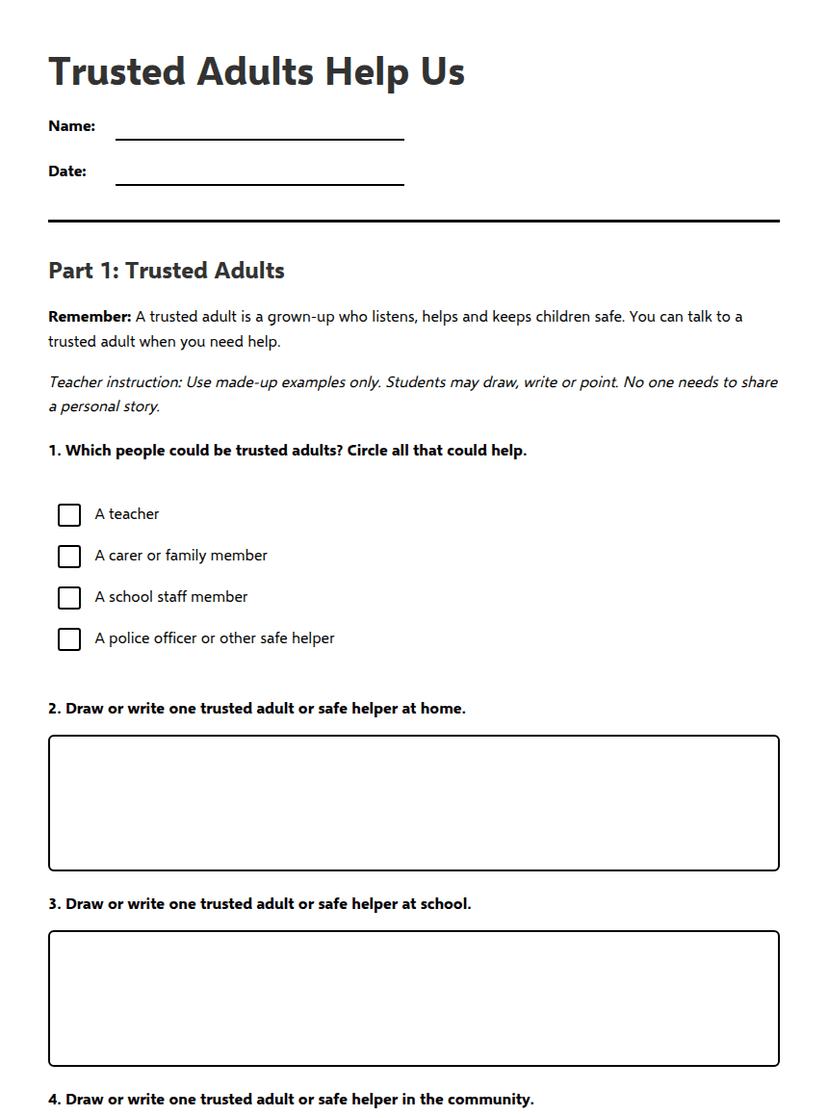
Year 1
Trusted Adults Help Us
Free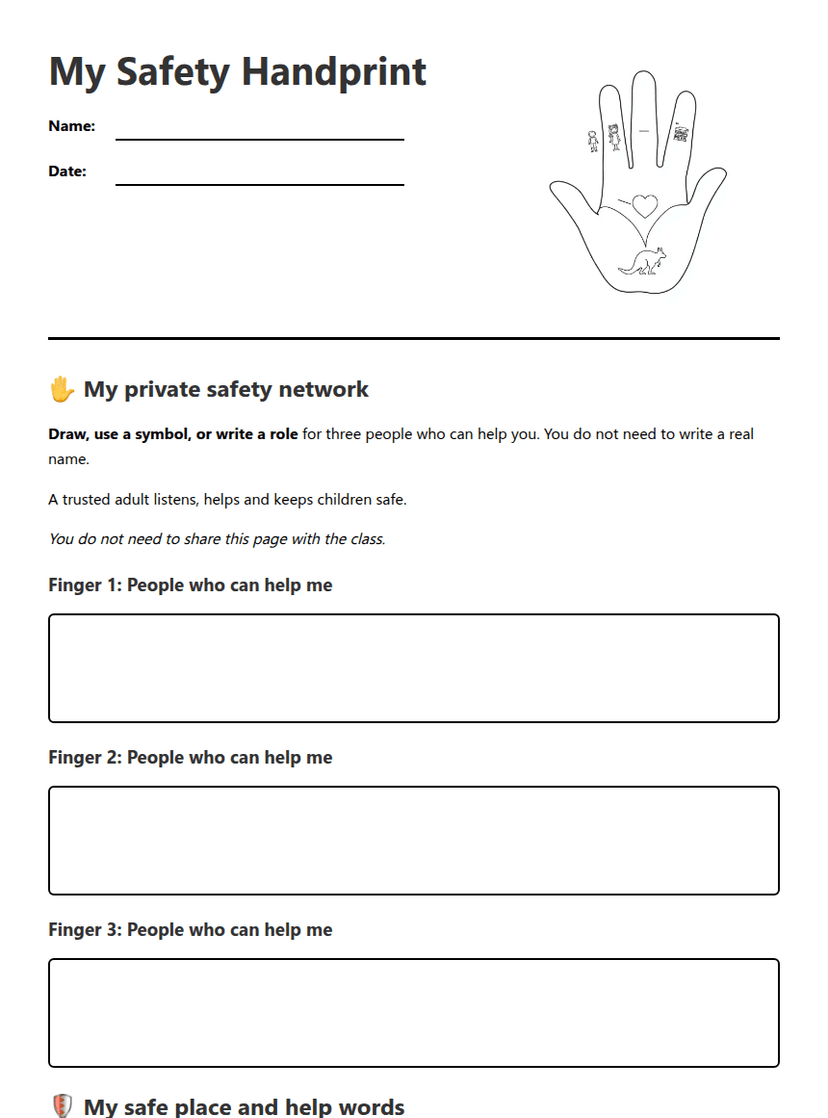
Year 1
My Safety Handprint
Free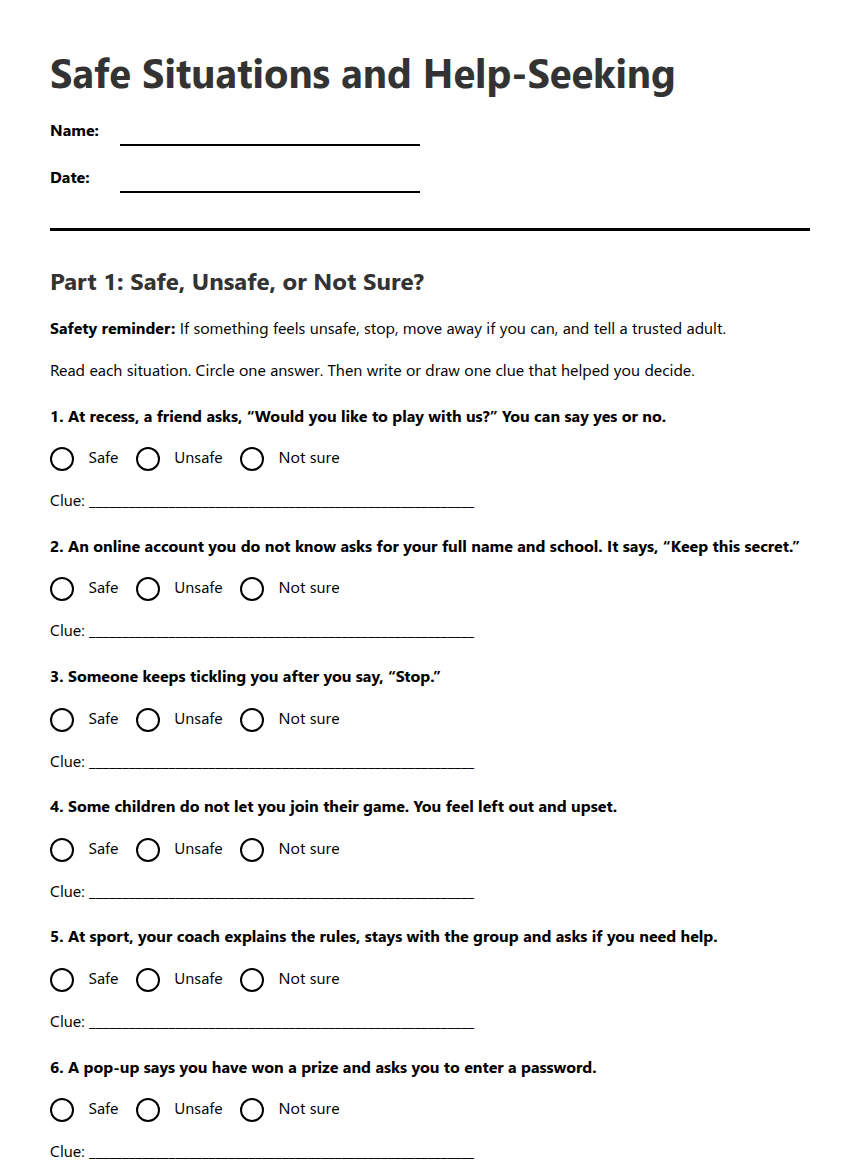
Year 3–4
Safe Situations and Help-Seeking
Free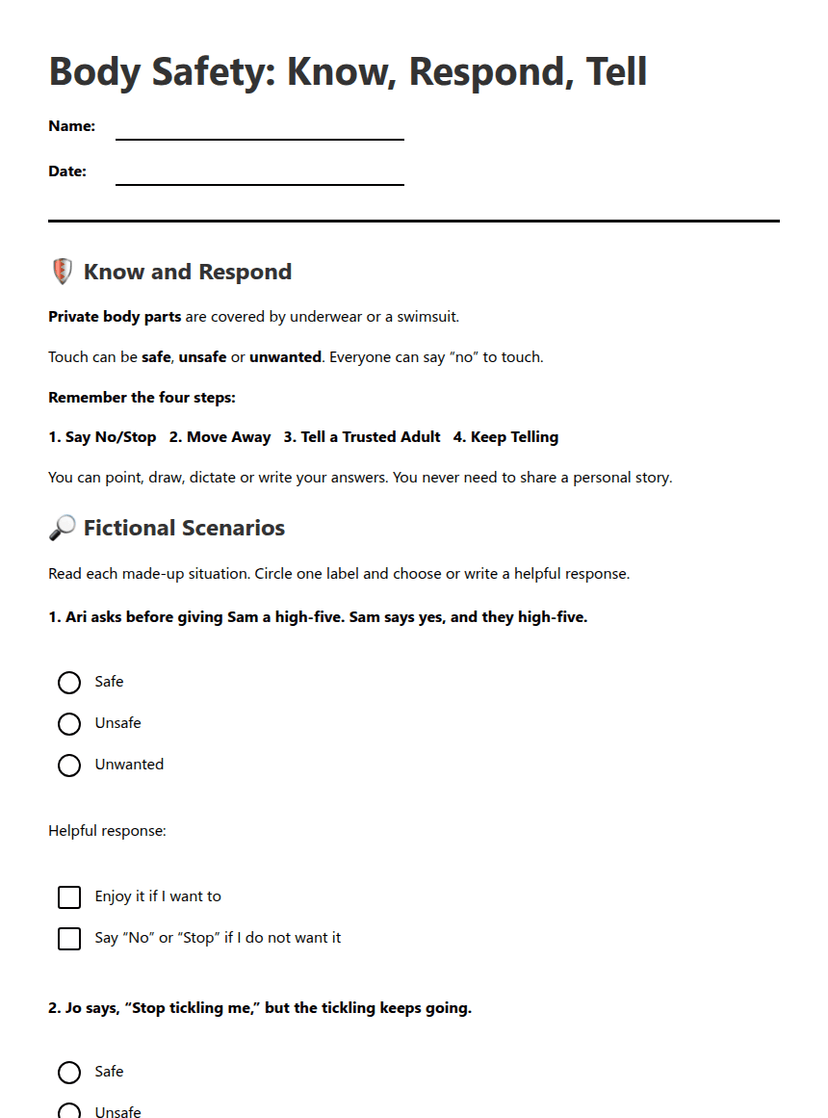
Year 1
Body Safety: Know, Respond, Tell
Free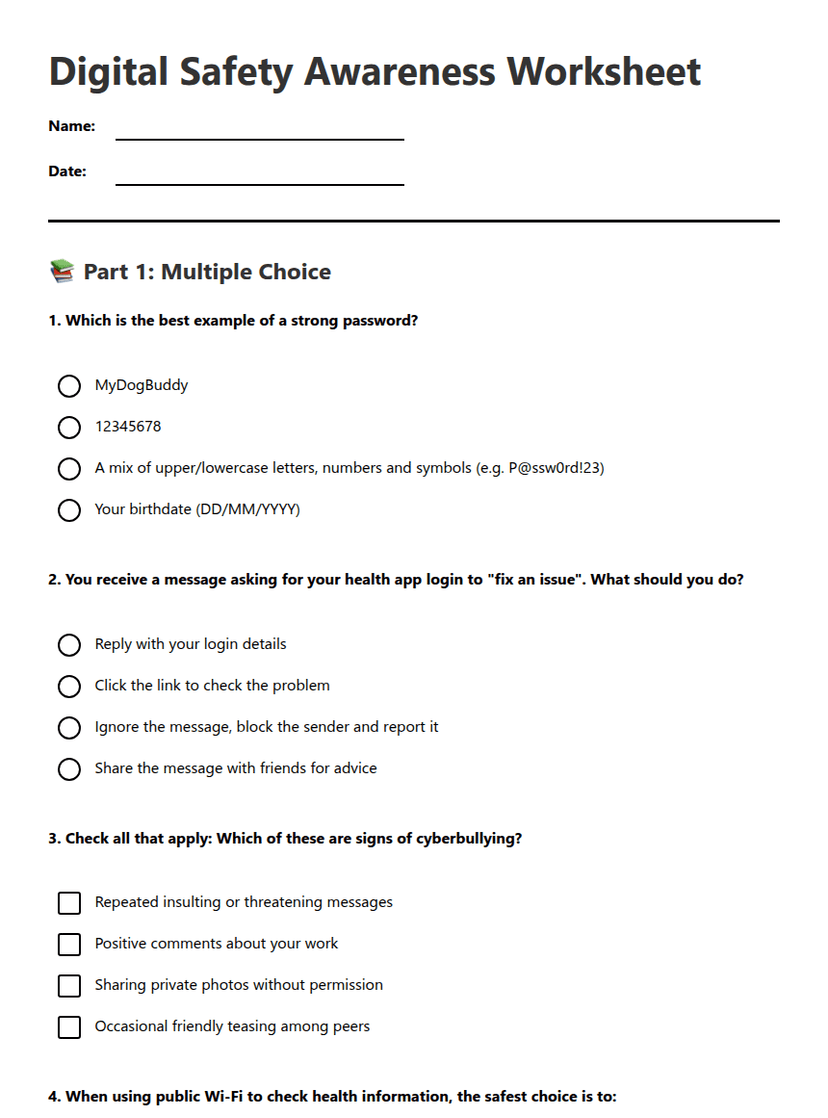
Year 7
Digital Safety Awareness Worksheet
Free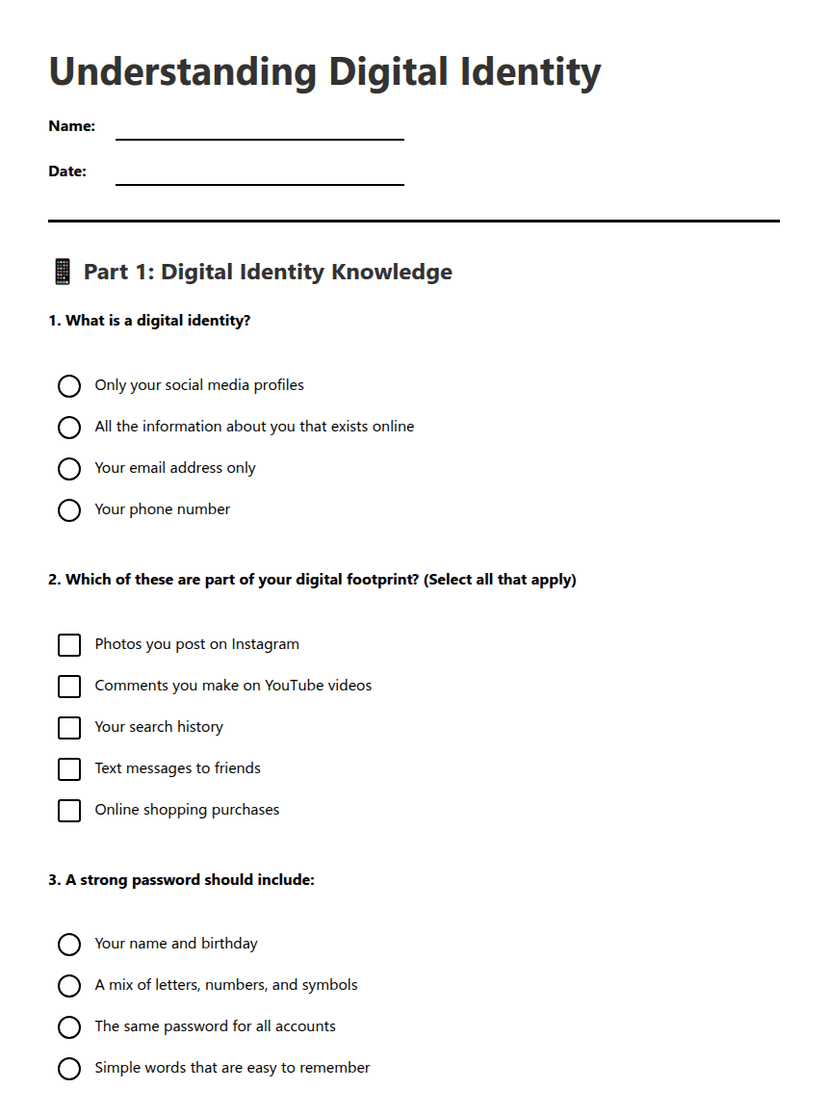
Year 7
Understanding Digital Identity
Free
Year 1–4
Beach Safety Sorting Activity
Free
Year 1–4