Radioactive Decay Half-Life
A free science worksheet ready for your classroom. Open in Kuraplan to grab the print-ready PDF, customize it for your students, or generate a fresh version in seconds.
Radioactive Decay Half-Life
🎯 Success Criteria
By the end of this task, I can:
📚 Part 1: Understanding Atomic Models
🧮 Part 2: Half-Life Calculations
Half-life = _________ years
Amount remaining = _________ grams
✏️ Part 3: Extended Response
🎯 Teacher Notes: Differentiation & Support
For Diverse Learners:
• Provide half-life formula sheet for questions 4-5
• Allow use of calculators for all mathematical calculations
• Offer visual decay curve examples for graph interpretation
Dyslexia-Friendly Options:
• Read questions aloud or provide audio recording
• Allow extra time (up to 60 minutes total)
• Accept point-form answers for extended responses
Extension for Advanced Learners:
• Complete question 8 with detailed research
• Calculate half-life for substances with different decay patterns
• Investigate alpha, beta, and gamma radiation differences
About This Worksheet
Free in Kuraplan
Sign up free, grab the PDF, and customize it for your class.
Print-Ready
Formatted for standard paper. Clean layout, easy to read.
AI-Generated
Created with Kuraplan's AI, designed for real classroom use.
For Teachers & Parents
Use in classrooms, for homework, tutoring, or homeschool.
Need a custom version of this worksheet?
Kuraplan's AI generates custom worksheets in seconds — differentiated for every learner, aligned to your curriculum.
Generate Custom Worksheets — FreeMore Science Worksheets
Atomic Theory Research Worksheet
Free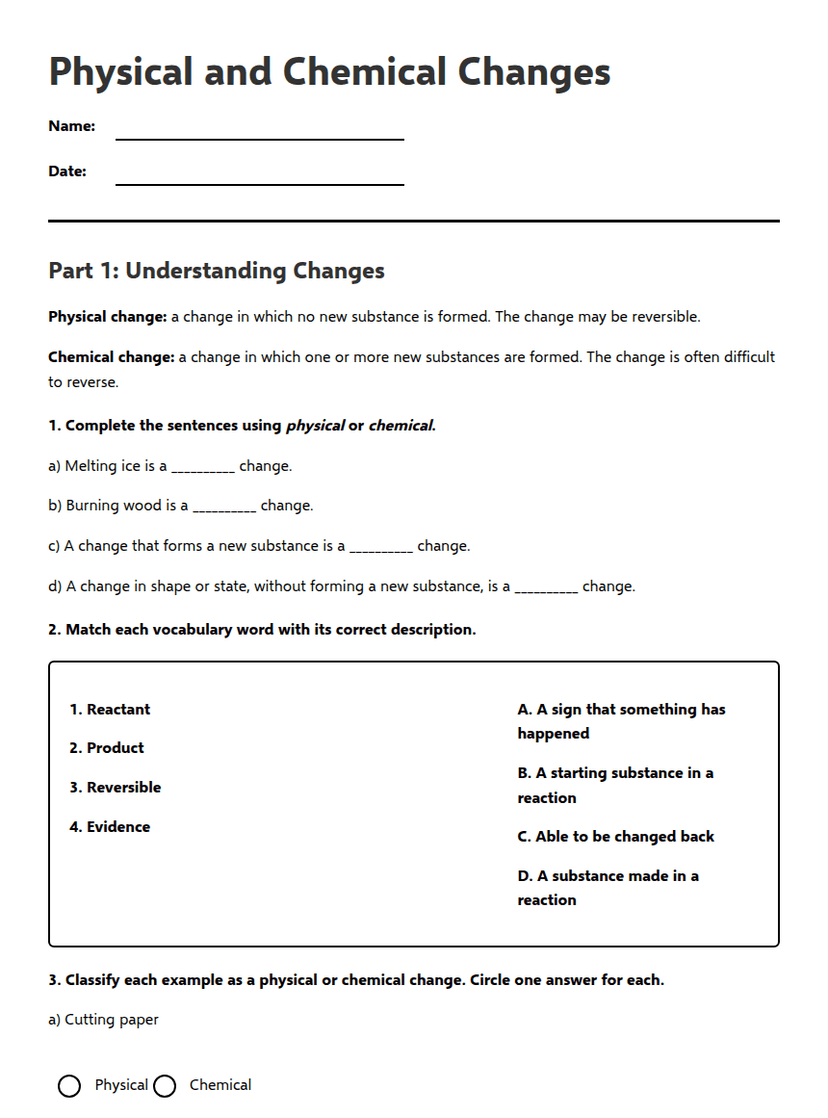
Physical and Chemical Changes
Free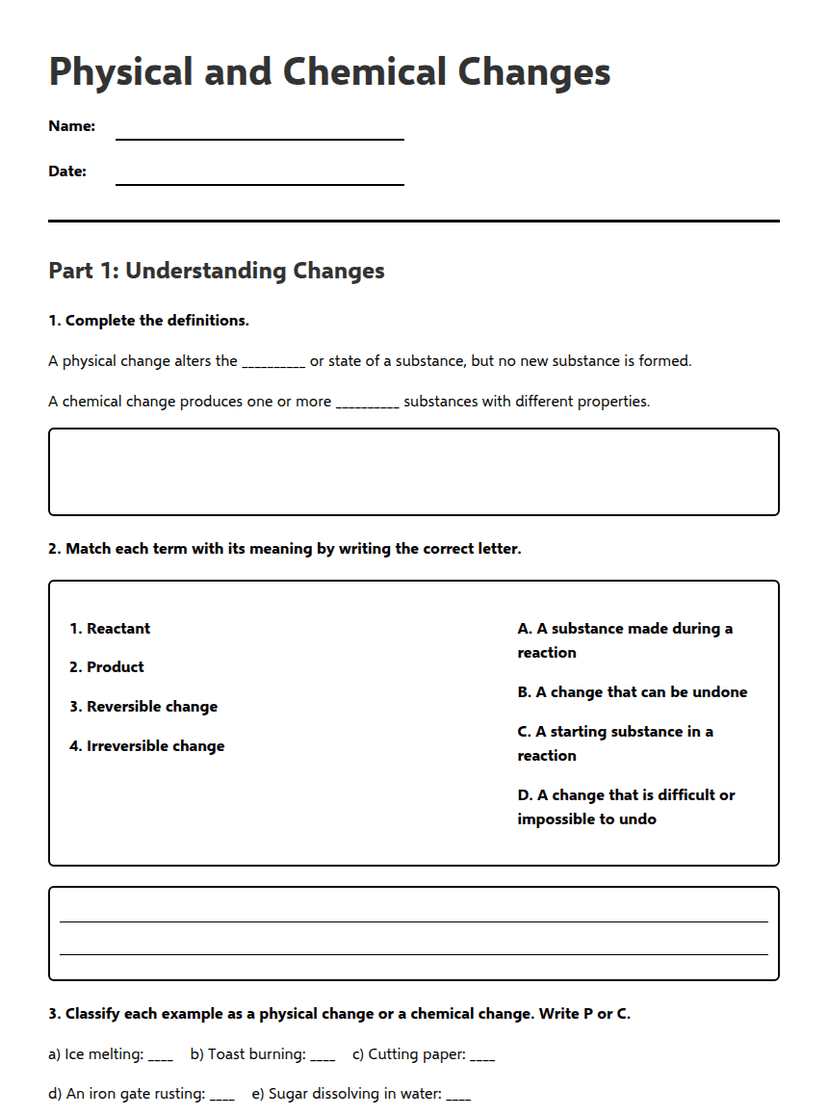
Physical and Chemical Changes
Free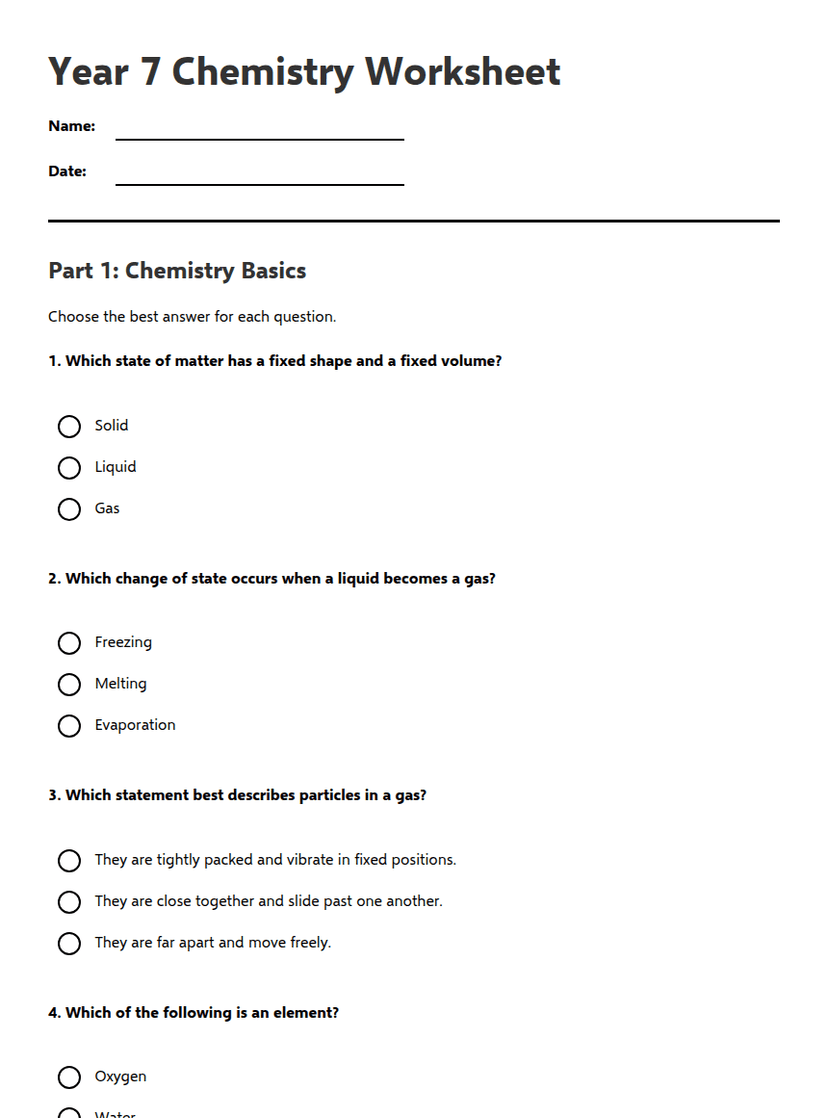
Year 7 Chemistry Worksheet
Free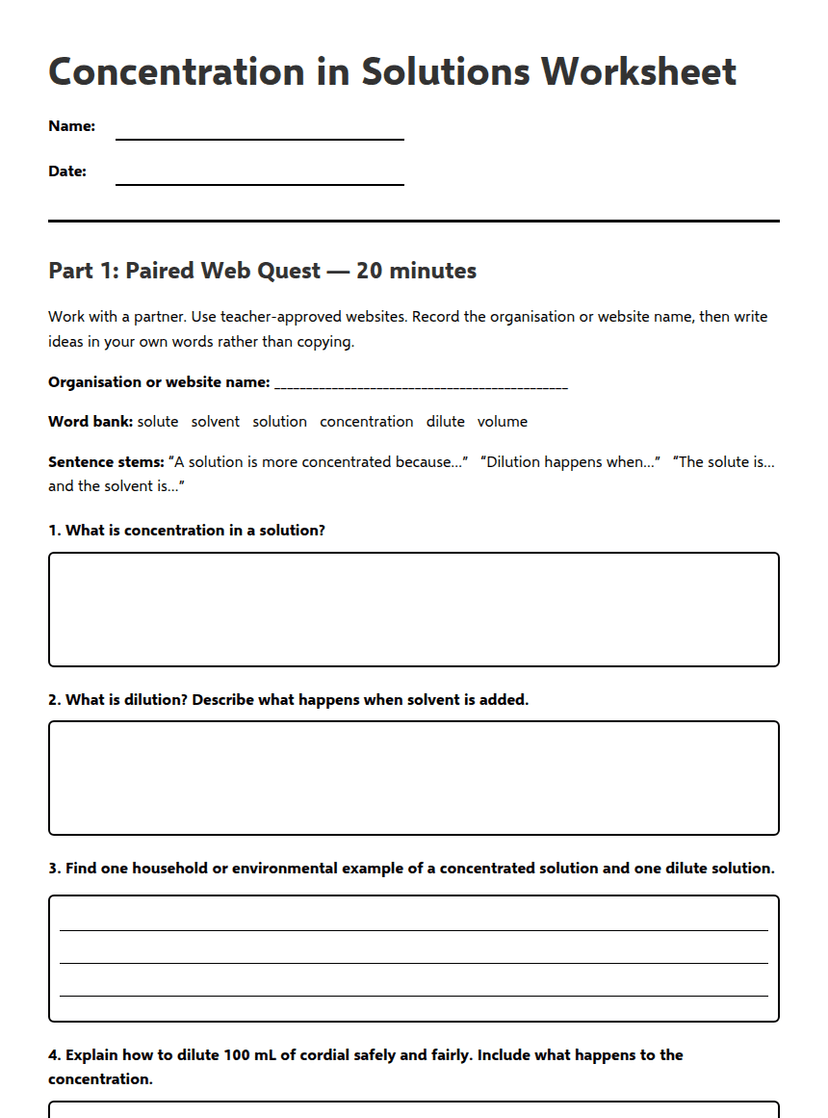
Concentration in Solutions Worksheet
Free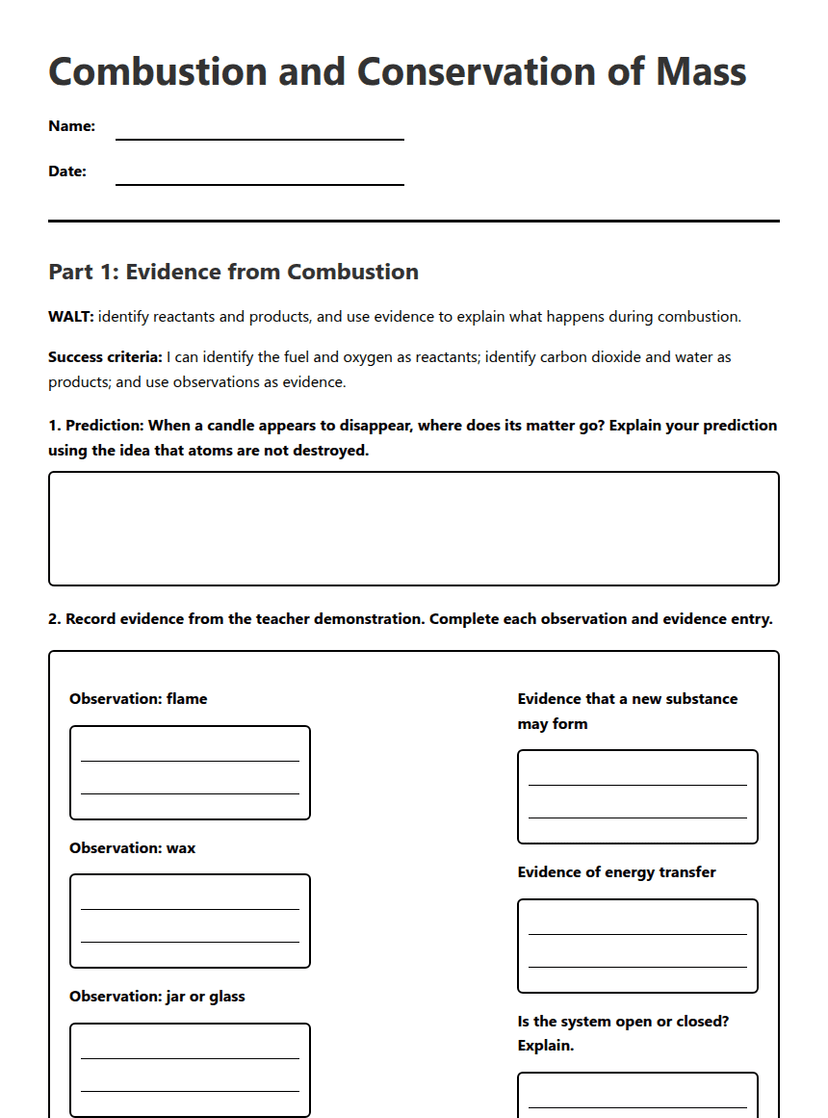
Combustion and Conservation of Mass
Free
Collision Theory and Reaction Rates
Free