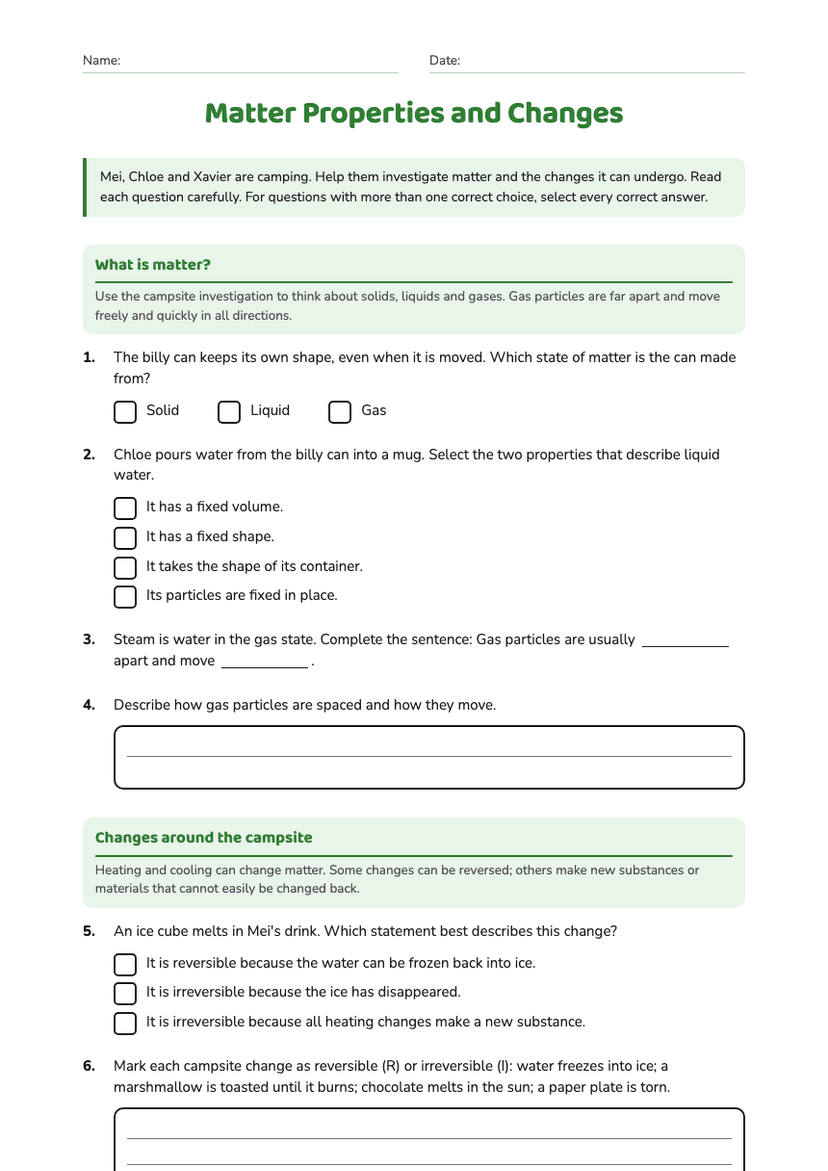
States of Matter
A free science worksheet ready for your classroom. Open in Kuraplan to grab the print-ready PDF, customize it for your students, or generate a fresh version in seconds.
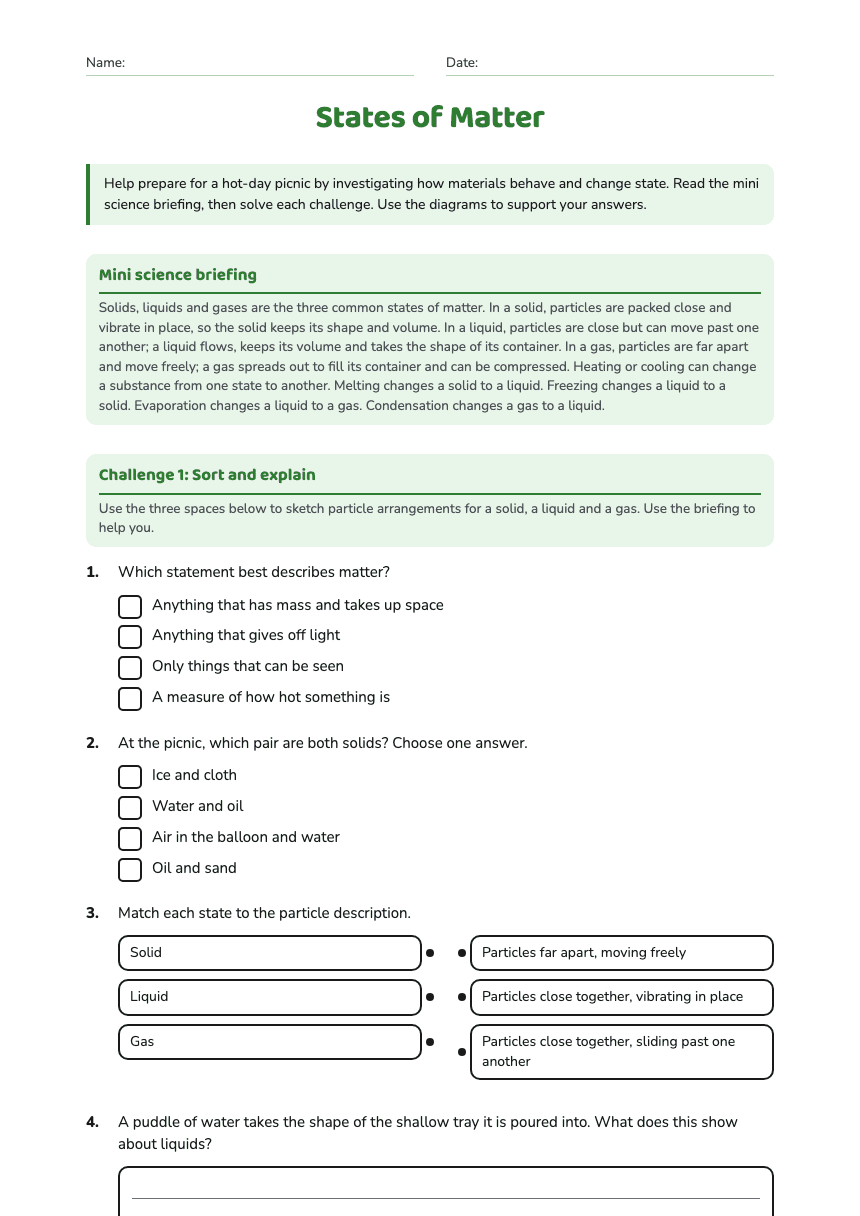
States of Matter
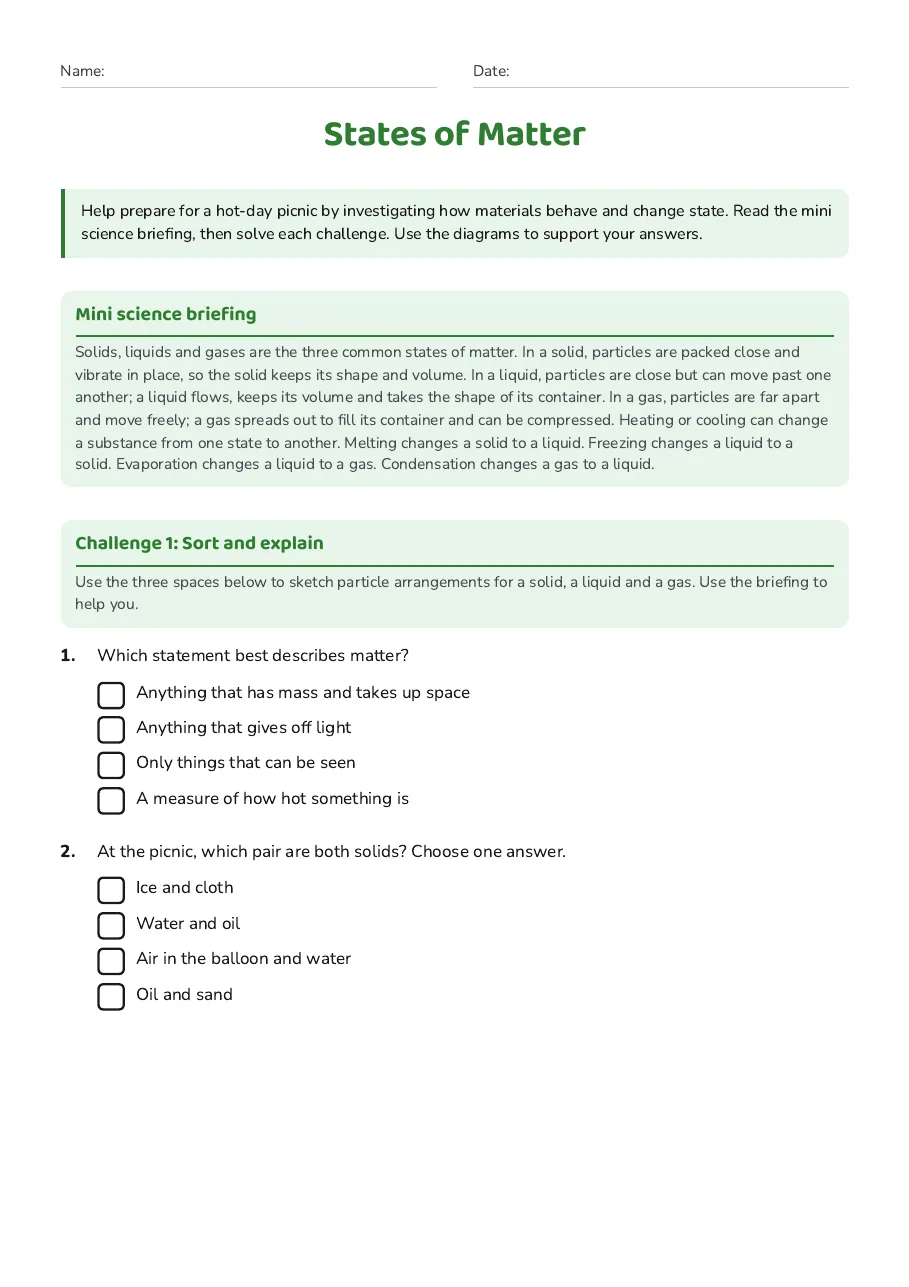
Mini science briefing
Solids, liquids and gases are the three common states of matter. In a solid, particles are packed close and vibrate in place, so the solid keeps its shape and volume. In a liquid, particles are close but can move past one another; a liquid flows, keeps its volume and takes the shape of its container. In a gas, particles are far apart and move freely; a gas spreads out to fill its container and can be compressed. Heating or cooling can change a substance from one state to another. Melting changes a solid to a liquid. Freezing changes a liquid to a solid. Evaporation changes a liquid to a gas. Condensation changes a gas to a liquid.
Challenge 1: Sort and explain
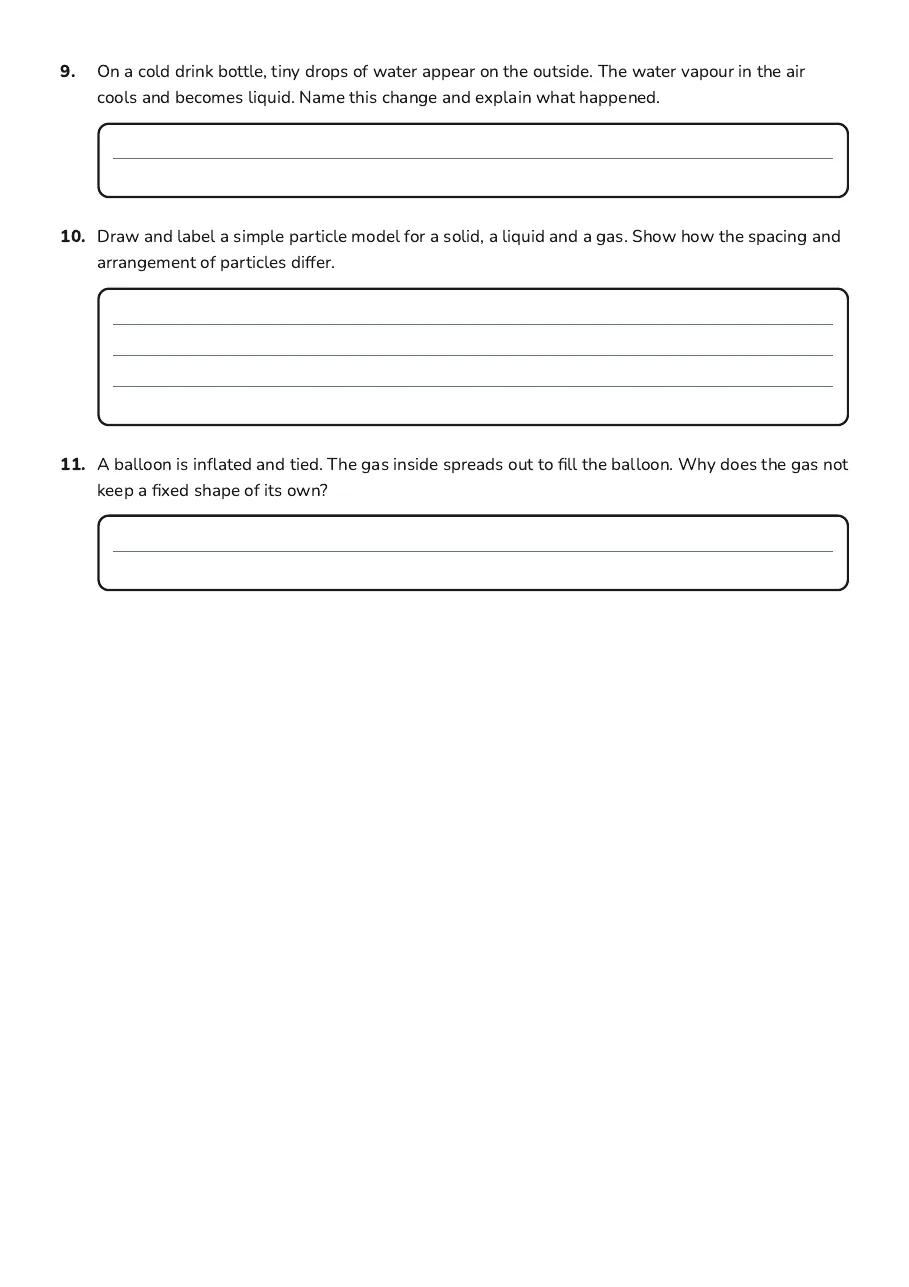
Use the three spaces below to sketch particle arrangements for a solid, a liquid and a gas. Use the briefing to help you.
- Anything that has mass and takes up space
- Anything that gives off light
- Only things that can be seen
- A measure of how hot something is
- Ice and cloth
- Water and oil
- Air in the balloon and water
- Oil and sand
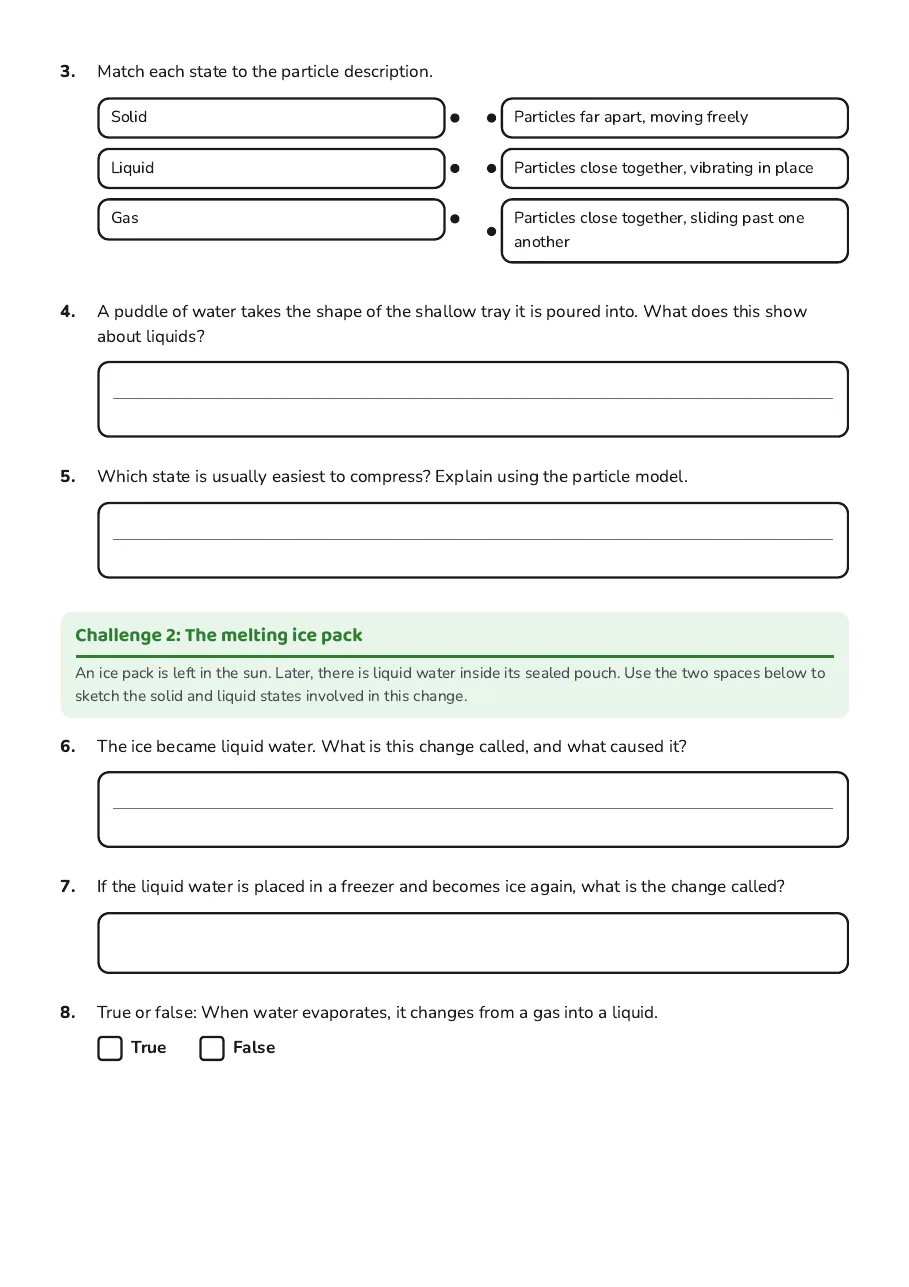
- Solid
- Liquid
- Gas
- Particles far apart, moving freely
- Particles close together, vibrating in place
- Particles close together, sliding past one another
Challenge 2: The melting ice pack
An ice pack is left in the sun. Later, there is liquid water inside its sealed pouch. Use the two spaces below to sketch the solid and liquid states involved in this change.
3 printable pages
Page 1
Page 2
Page 3
About This Worksheet
Free in Kuraplan
Sign up free, grab the PDF, and customize it for your class.
Print-Ready
Formatted for standard paper. Clean layout, easy to read.
AI-Generated
Created with Kuraplan's AI, designed for real classroom use.
For Teachers & Parents
Use in classrooms, for homework, tutoring, or homeschool.
Need a custom version of this worksheet?
Kuraplan's AI generates custom worksheets in seconds — differentiated for every learner, aligned to your curriculum.
Generate Custom Worksheets — FreeMore Science Worksheets
Recycled Materials Picture Worksheet
Free
Separating Mixtures Techniques
Free
Material Properties Basics
Free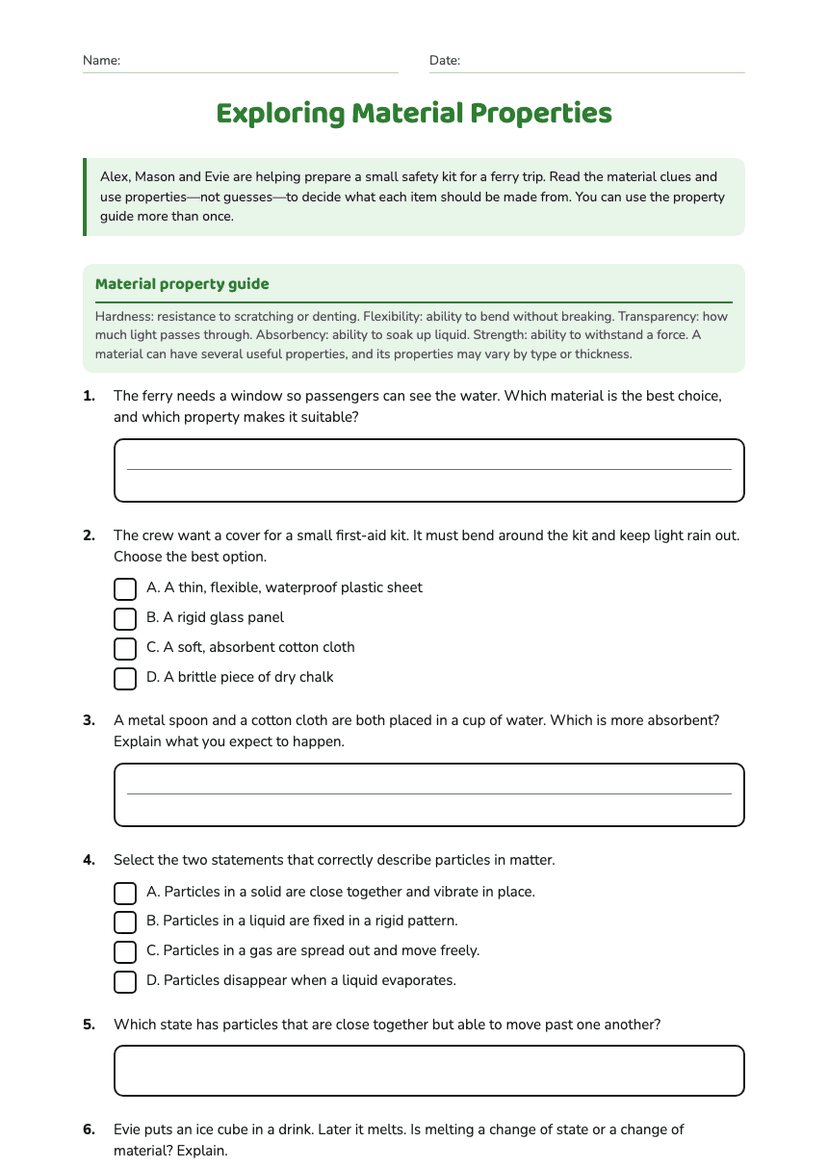
Exploring Material Properties
Free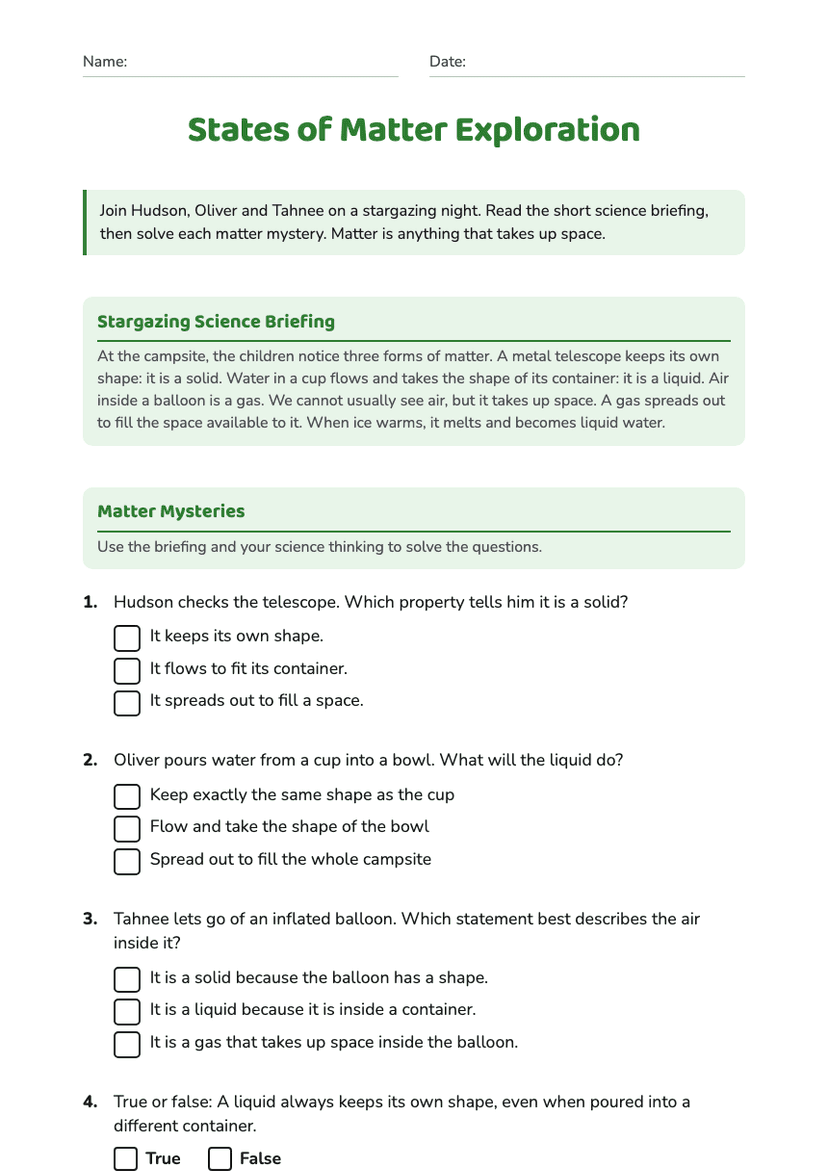
States of Matter Exploration
Free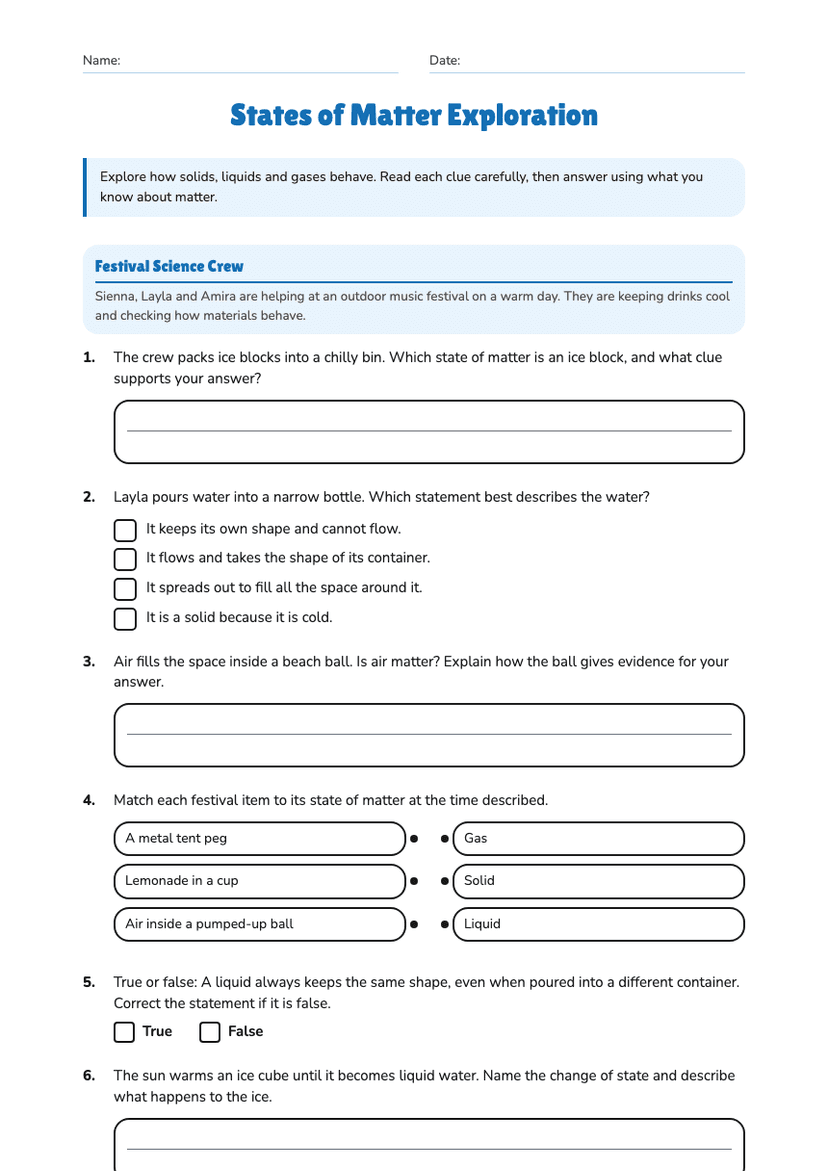
States of Matter Exploration
Free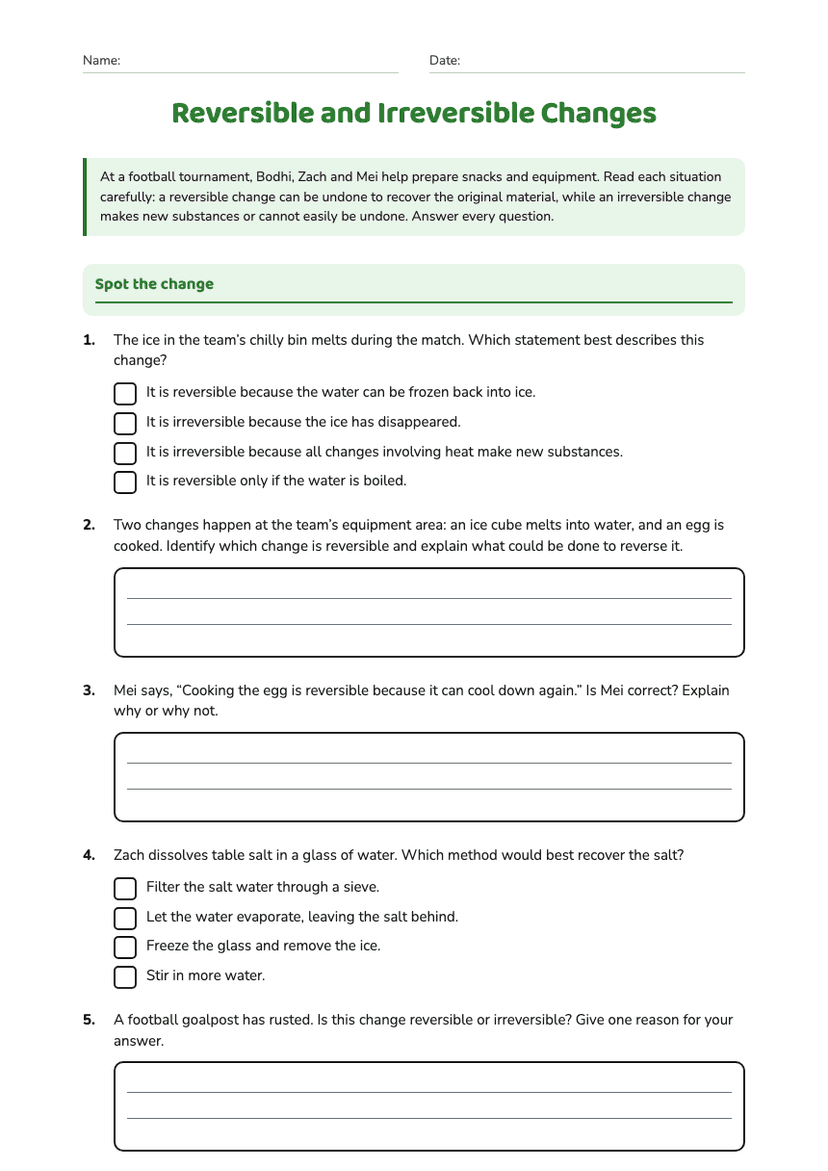
Reversible and Irreversible Changes
Free