Understanding Simple Circuits
A free science worksheet ready for your classroom. Open in Kuraplan to grab the print-ready PDF, customize it for your students, or generate a fresh version in seconds.
Understanding Simple Circuits
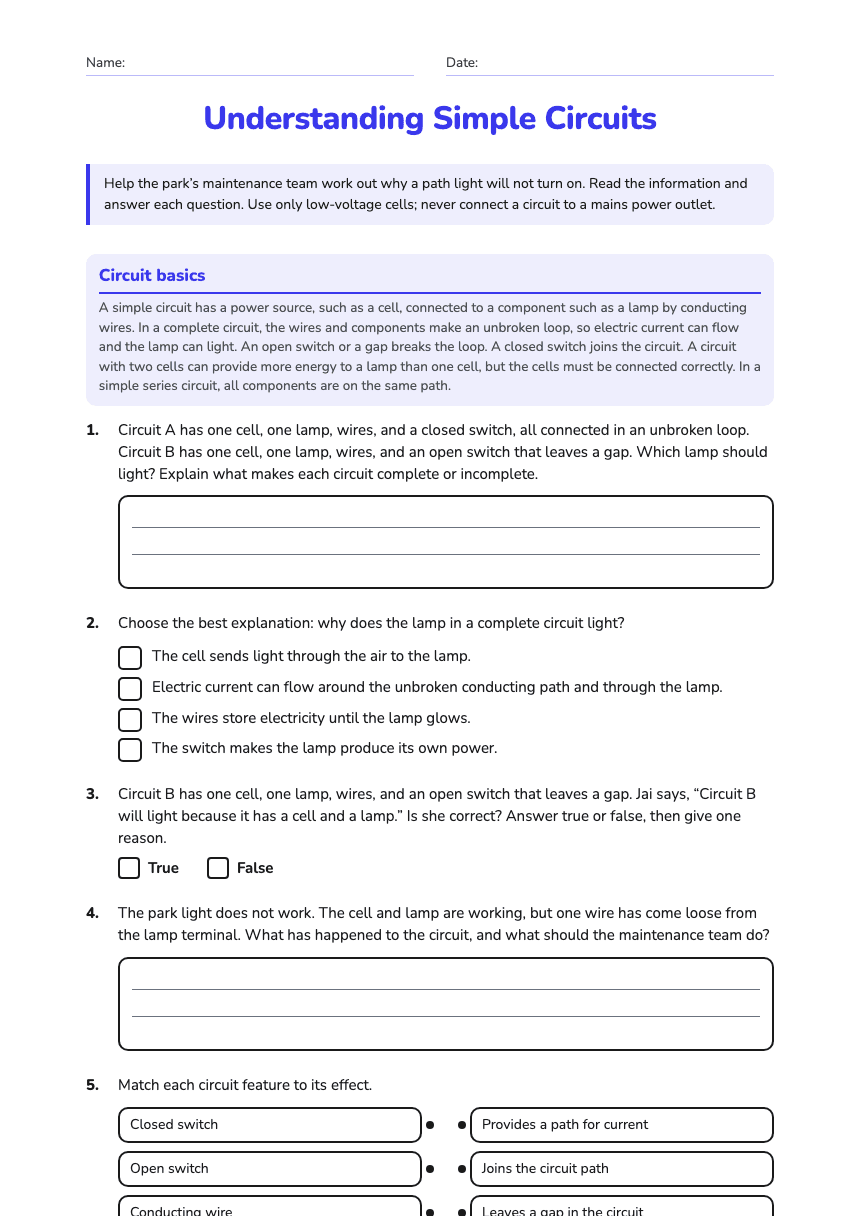
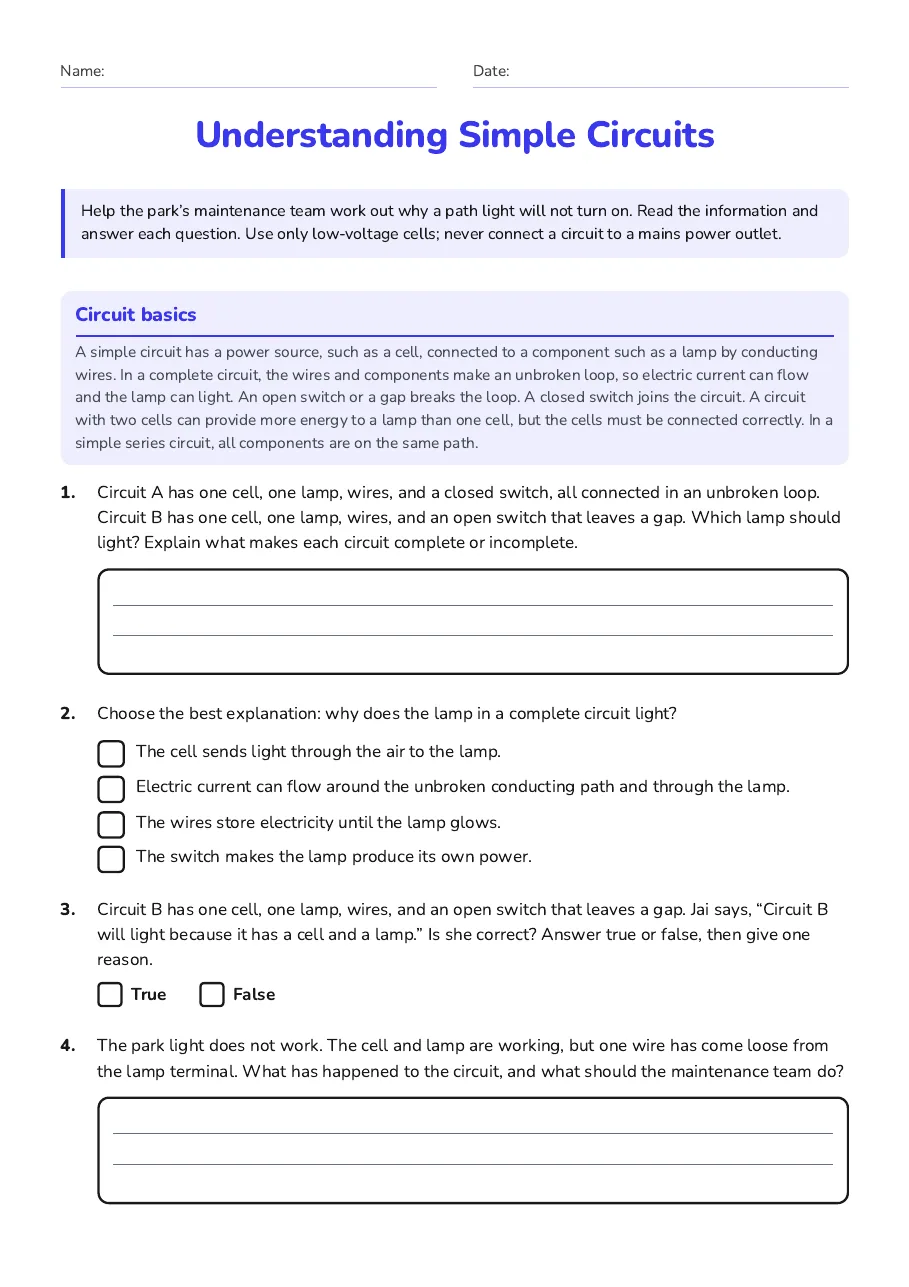
Circuit basics
A simple circuit has a power source, such as a cell, connected to a component such as a lamp by conducting wires. In a complete circuit, the wires and components make an unbroken loop, so electric current can flow and the lamp can light. An open switch or a gap breaks the loop. A closed switch joins the circuit. A circuit with two cells can provide more energy to a lamp than one cell, but the cells must be connected correctly. In a simple series circuit, all components are on the same path.
- The cell sends light through the air to the lamp.
- Electric current can flow around the unbroken conducting path and through the lamp.
- The wires store electricity until the lamp glows.
- The switch makes the lamp produce its own power.
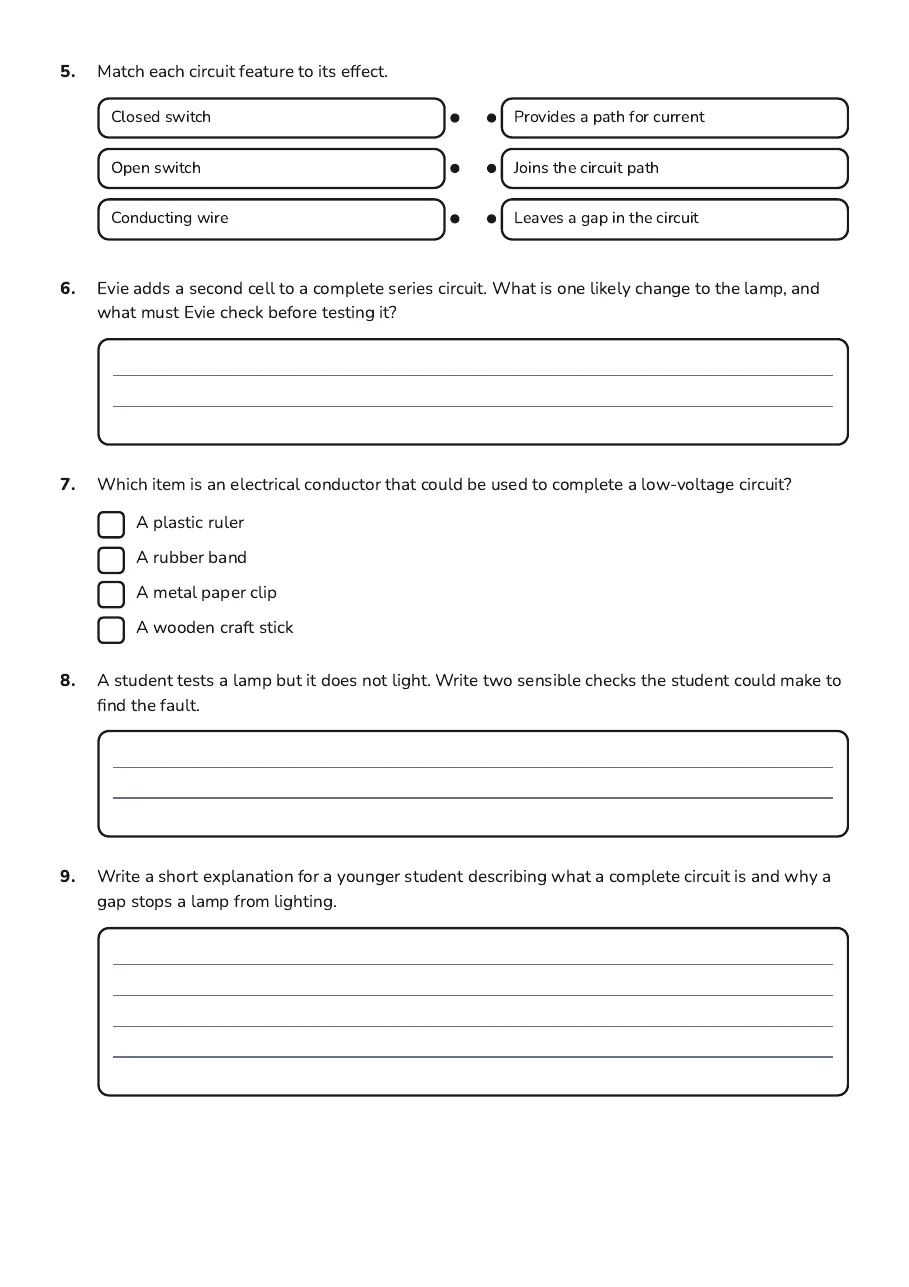
- Closed switch
- Open switch
- Conducting wire
- Provides a path for current
- Joins the circuit path
- Leaves a gap in the circuit
- A plastic ruler
- A rubber band
- A metal paper clip
- A wooden craft stick
2 printable pages
Page 1
Page 2
About This Worksheet
Free in Kuraplan
Sign up free, grab the PDF, and customize it for your class.
Print-Ready
Formatted for standard paper. Clean layout, easy to read.
AI-Generated
Created with Kuraplan's AI, designed for real classroom use.
For Teachers & Parents
Use in classrooms, for homework, tutoring, or homeschool.
Need a custom version of this worksheet?
Kuraplan's AI generates custom worksheets in seconds — differentiated for every learner, aligned to your curriculum.
Generate Custom Worksheets — FreeMore Science Worksheets
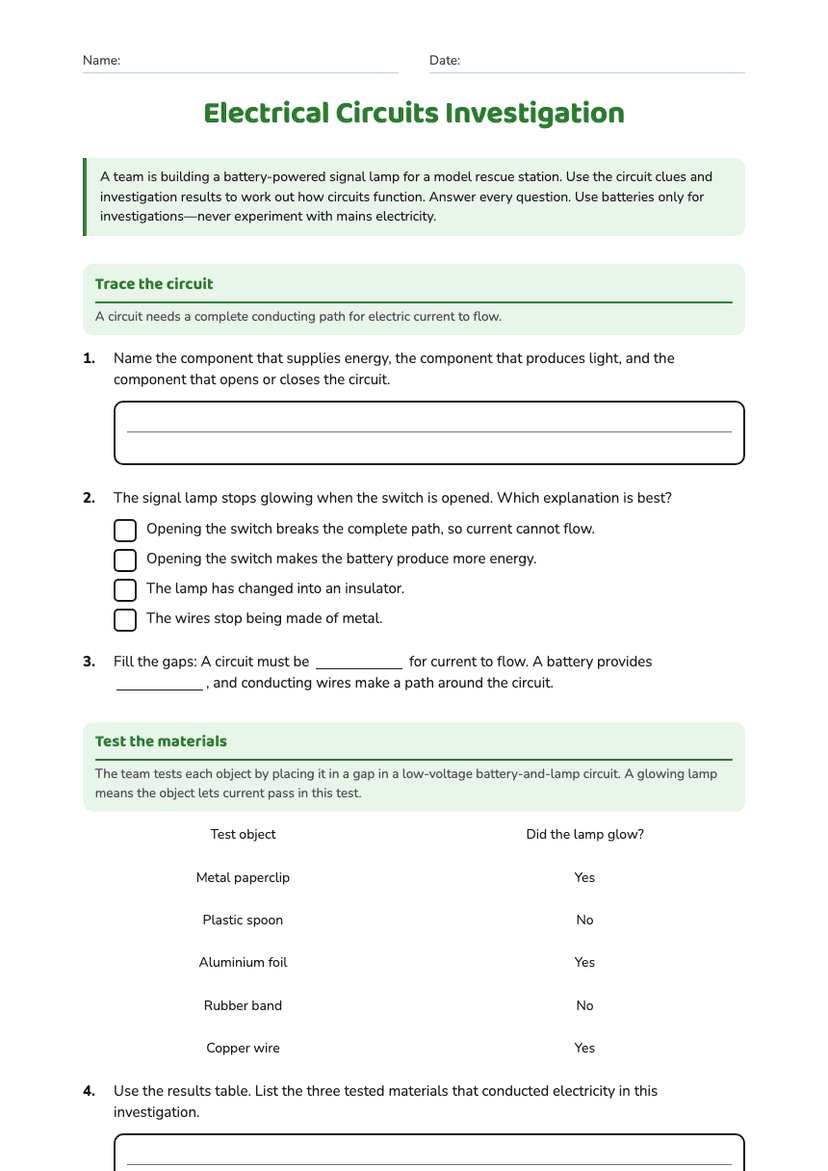
Electrical Circuits Investigation
Free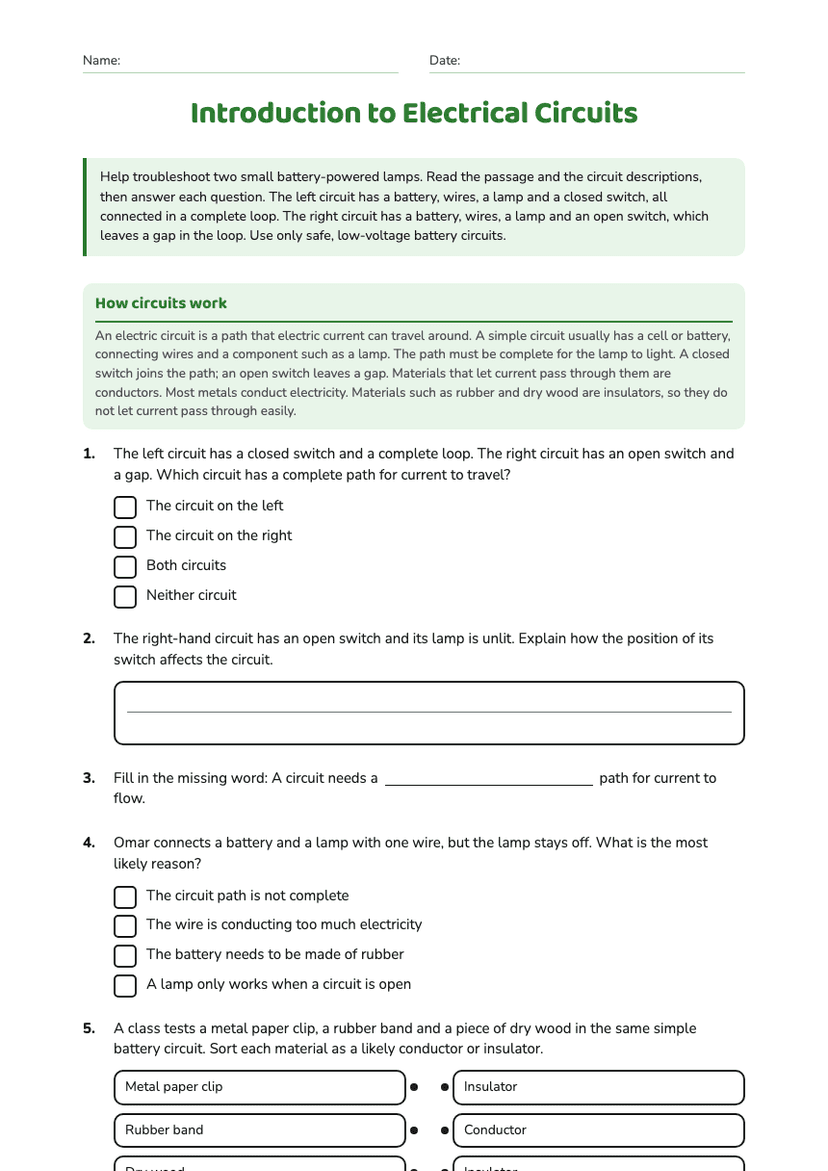
Introduction to Electrical Circuits
Free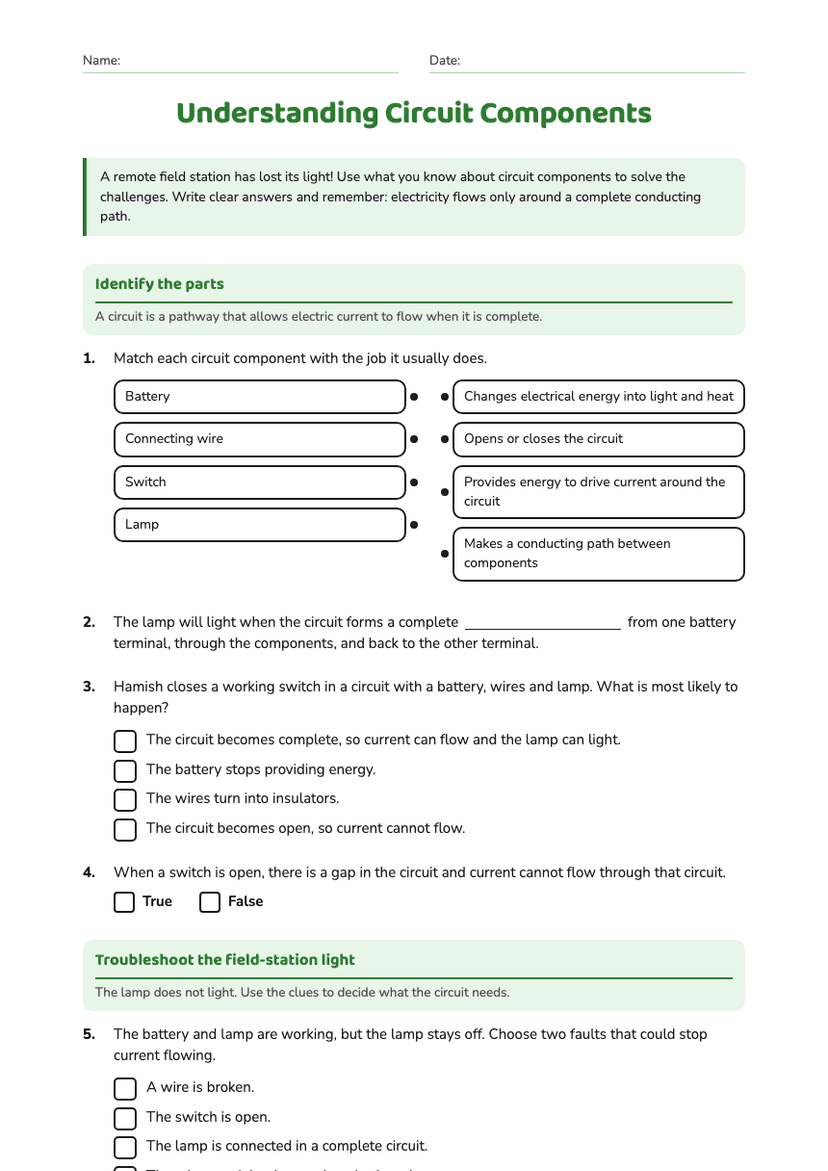
Understanding Circuit Components
Free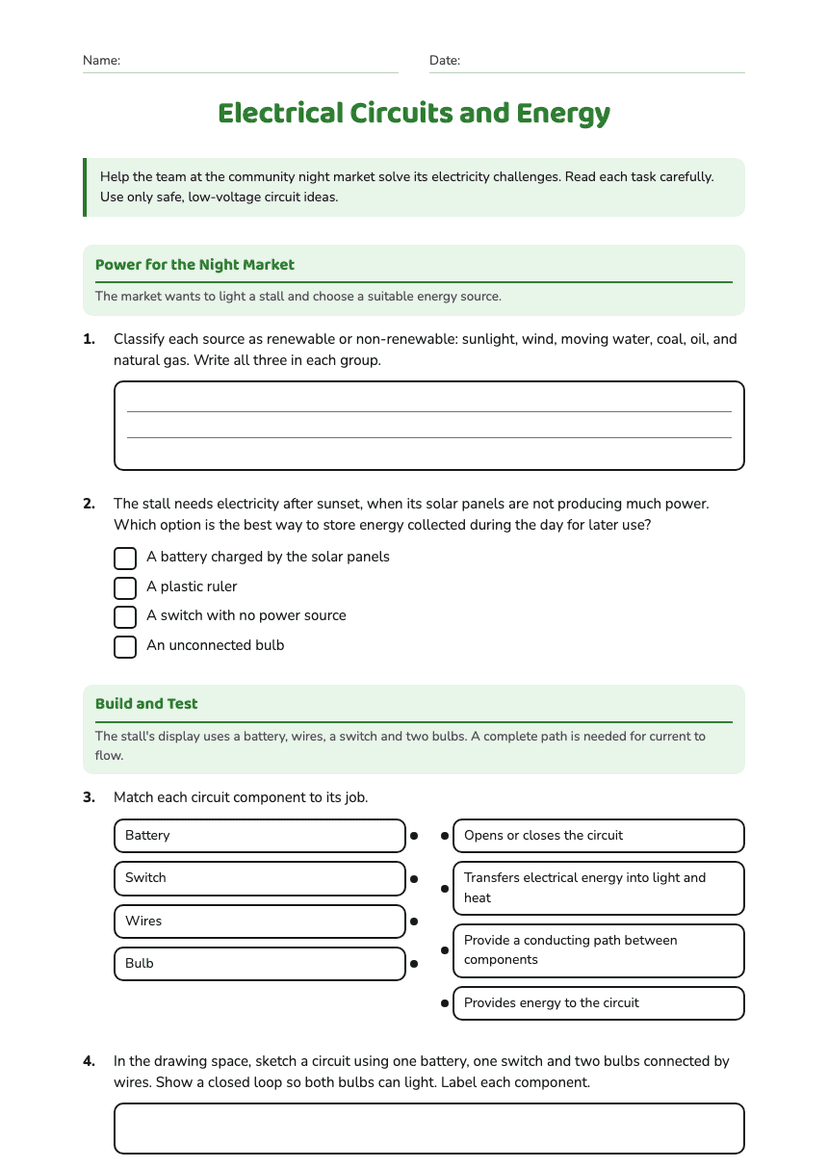
Electrical Circuits and Energy
Free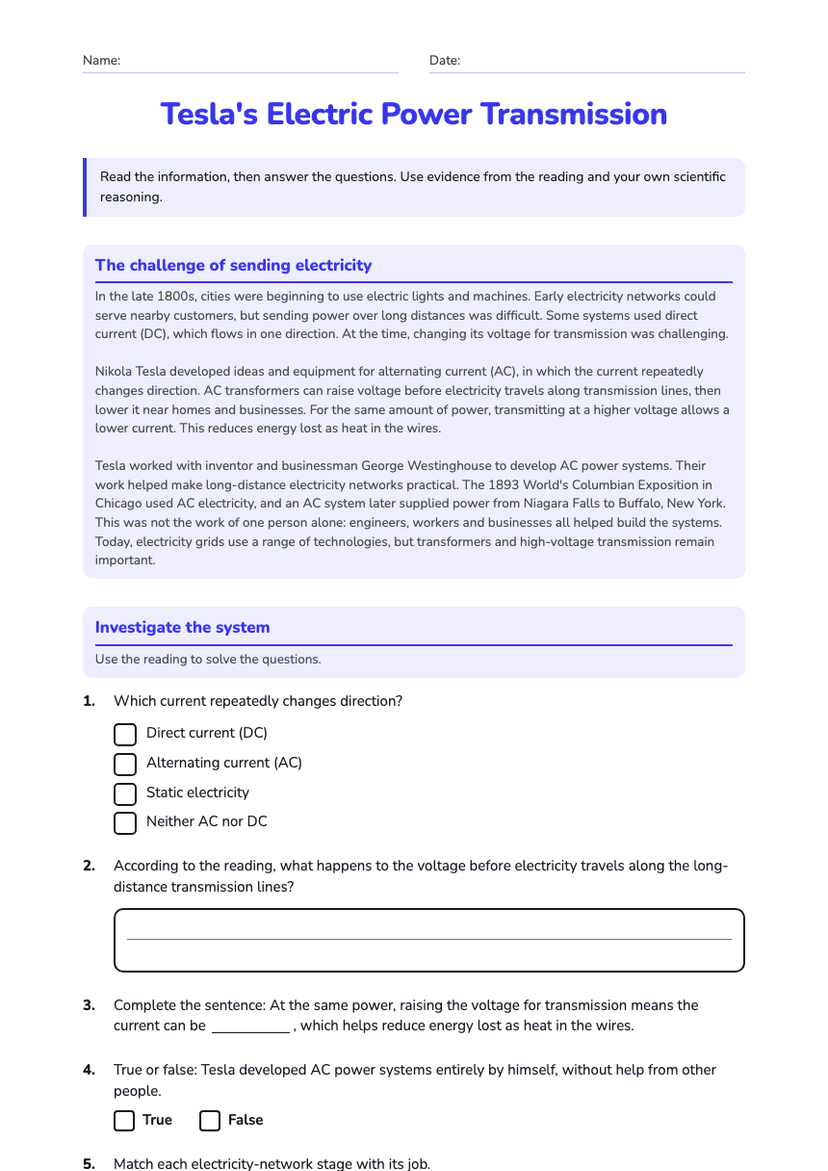
Tesla's Electric Power Transmission
Free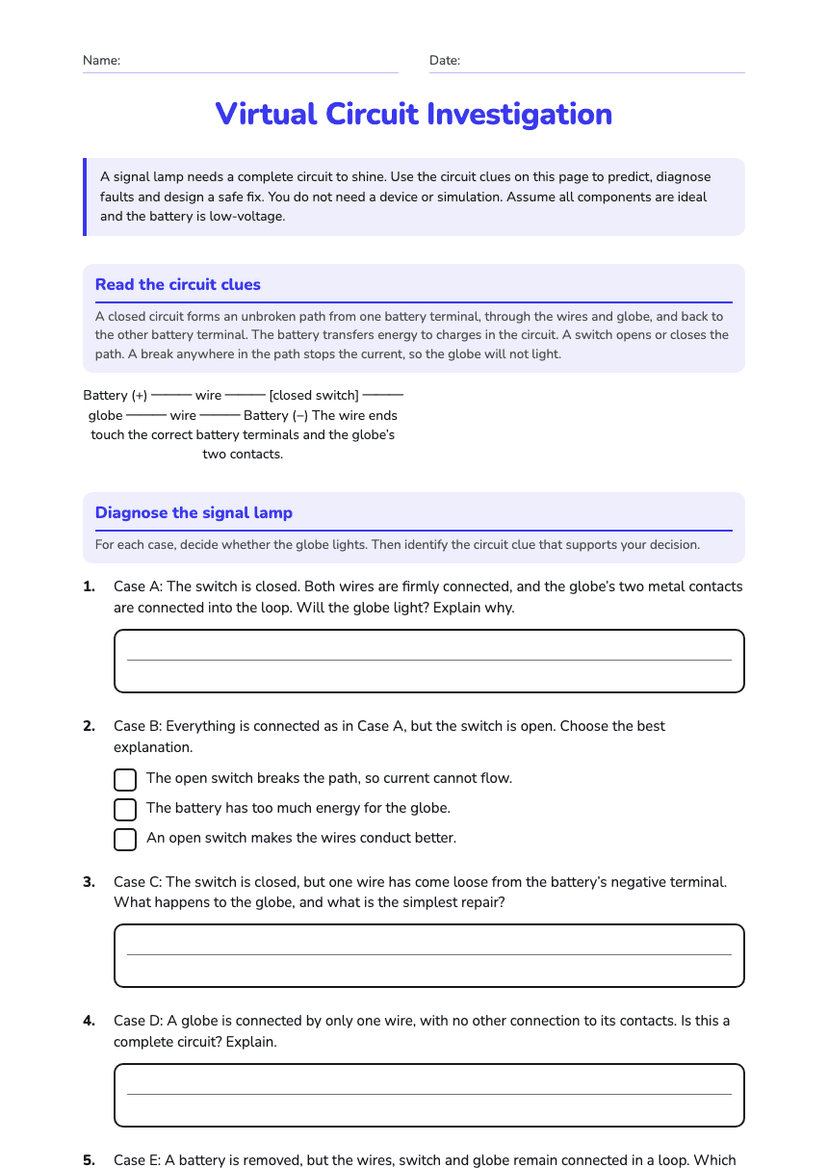
Virtual Circuit Investigation
Free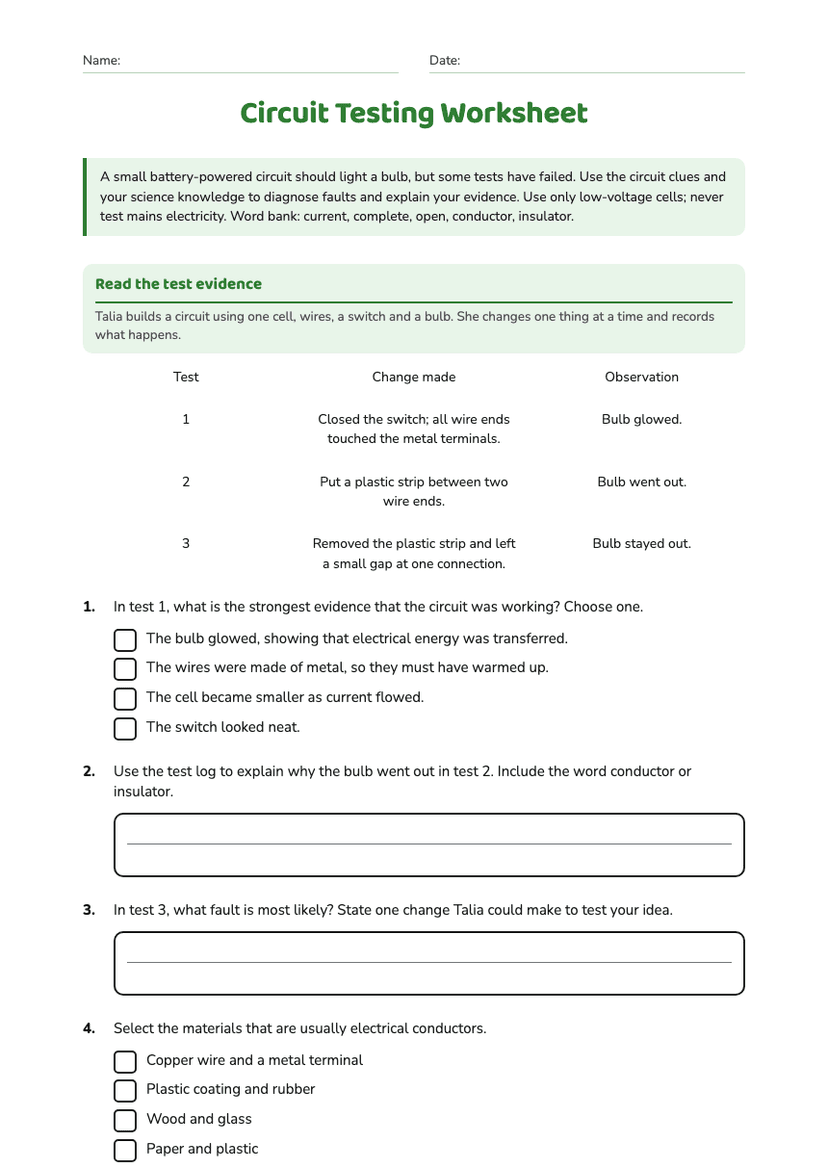
Circuit Testing Worksheet
Free