Earth's Layers Diagram
A free science worksheet ready for your classroom. Open in Kuraplan to grab the print-ready PDF, customize it for your students, or generate a fresh version in seconds.
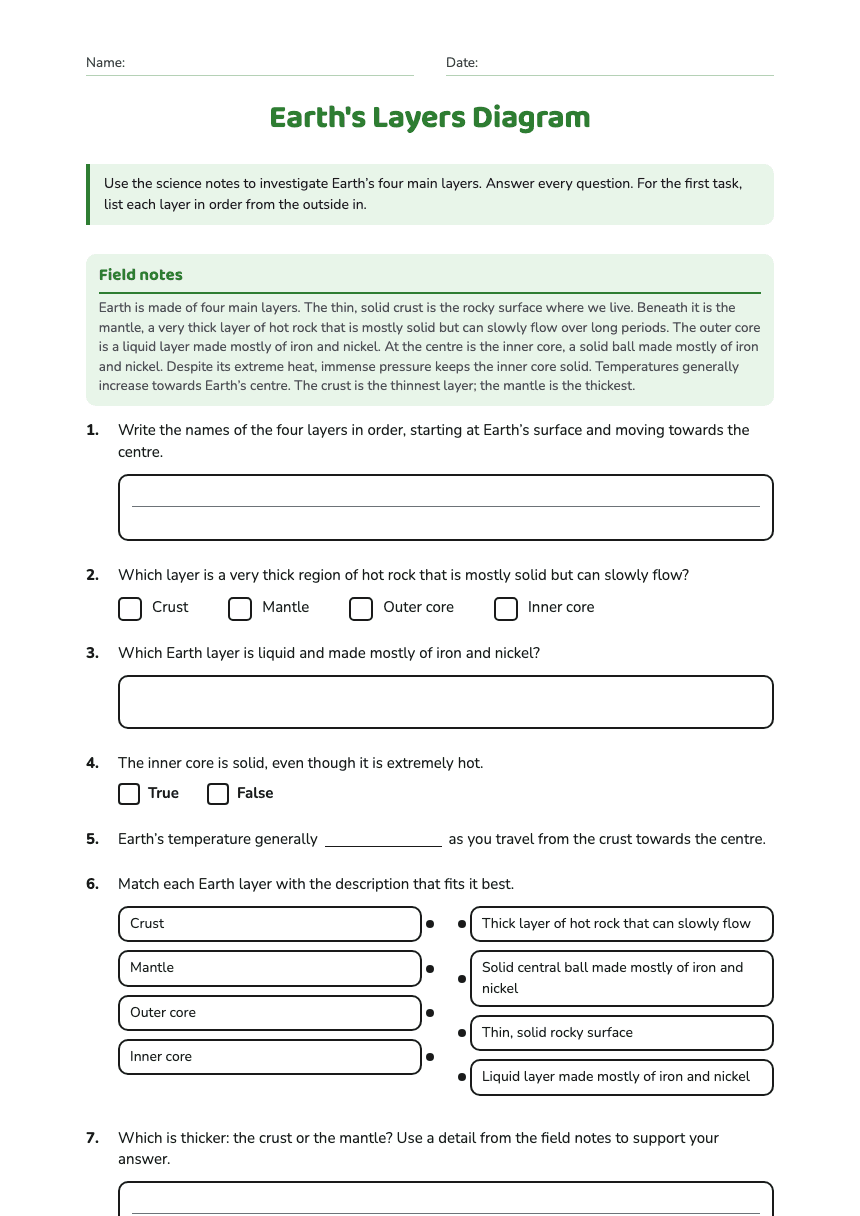
Earth's Layers Diagram
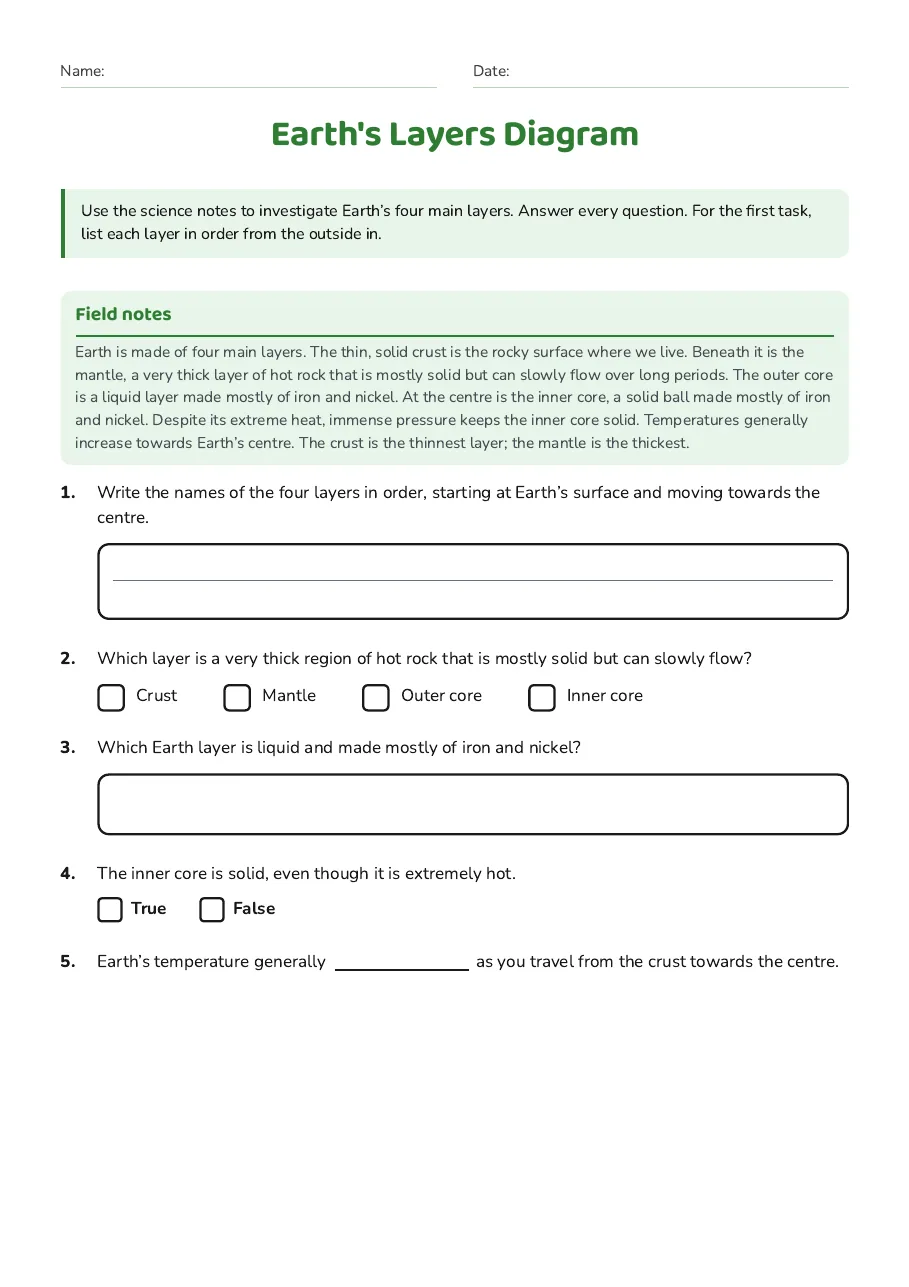
Field notes
Earth is made of four main layers. The thin, solid crust is the rocky surface where we live. Beneath it is the mantle, a very thick layer of hot rock that is mostly solid but can slowly flow over long periods. The outer core is a liquid layer made mostly of iron and nickel. At the centre is the inner core, a solid ball made mostly of iron and nickel. Despite its extreme heat, immense pressure keeps the inner core solid. Temperatures generally increase towards Earth’s centre. The crust is the thinnest layer; the mantle is the thickest.
- Crust
- Mantle
- Outer core
- Inner core
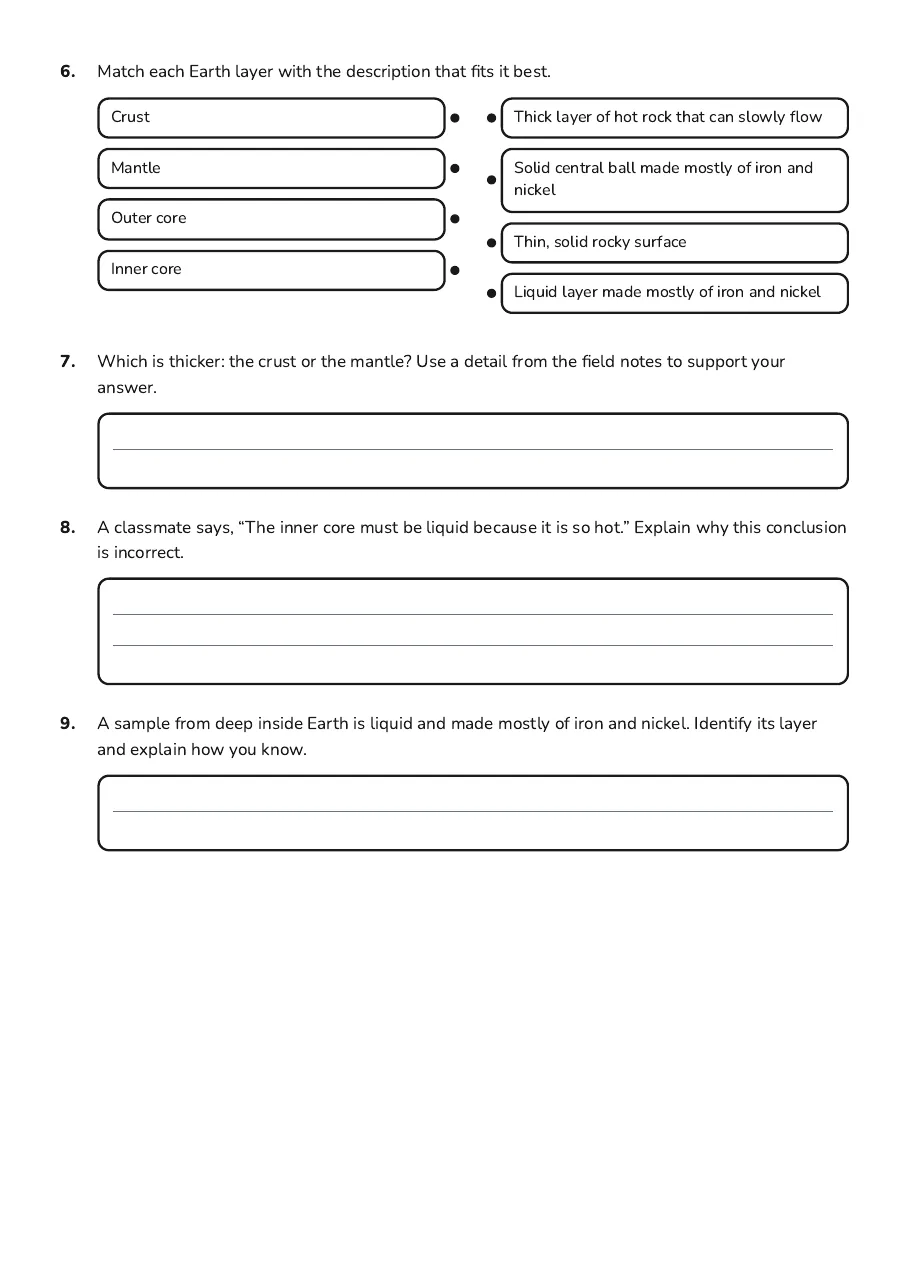
- Crust
- Mantle
- Outer core
- Inner core
- Thick layer of hot rock that can slowly flow
- Solid central ball made mostly of iron and nickel
- Thin, solid rocky surface
- Liquid layer made mostly of iron and nickel
2 printable pages
Page 1
Page 2
About This Worksheet
Free in Kuraplan
Sign up free, grab the PDF, and customize it for your class.
Print-Ready
Formatted for standard paper. Clean layout, easy to read.
AI-Generated
Created with Kuraplan's AI, designed for real classroom use.
For Teachers & Parents
Use in classrooms, for homework, tutoring, or homeschool.
Need a custom version of this worksheet?
Kuraplan's AI generates custom worksheets in seconds — differentiated for every learner, aligned to your curriculum.
Generate Custom Worksheets — Free