EnglishFreePrintable
South Caroline Section Analysis
A free english worksheet ready for your classroom. Open in Kuraplan to grab the print-ready PDF, customize it for your students, or generate a fresh version in seconds.
Name:Date:
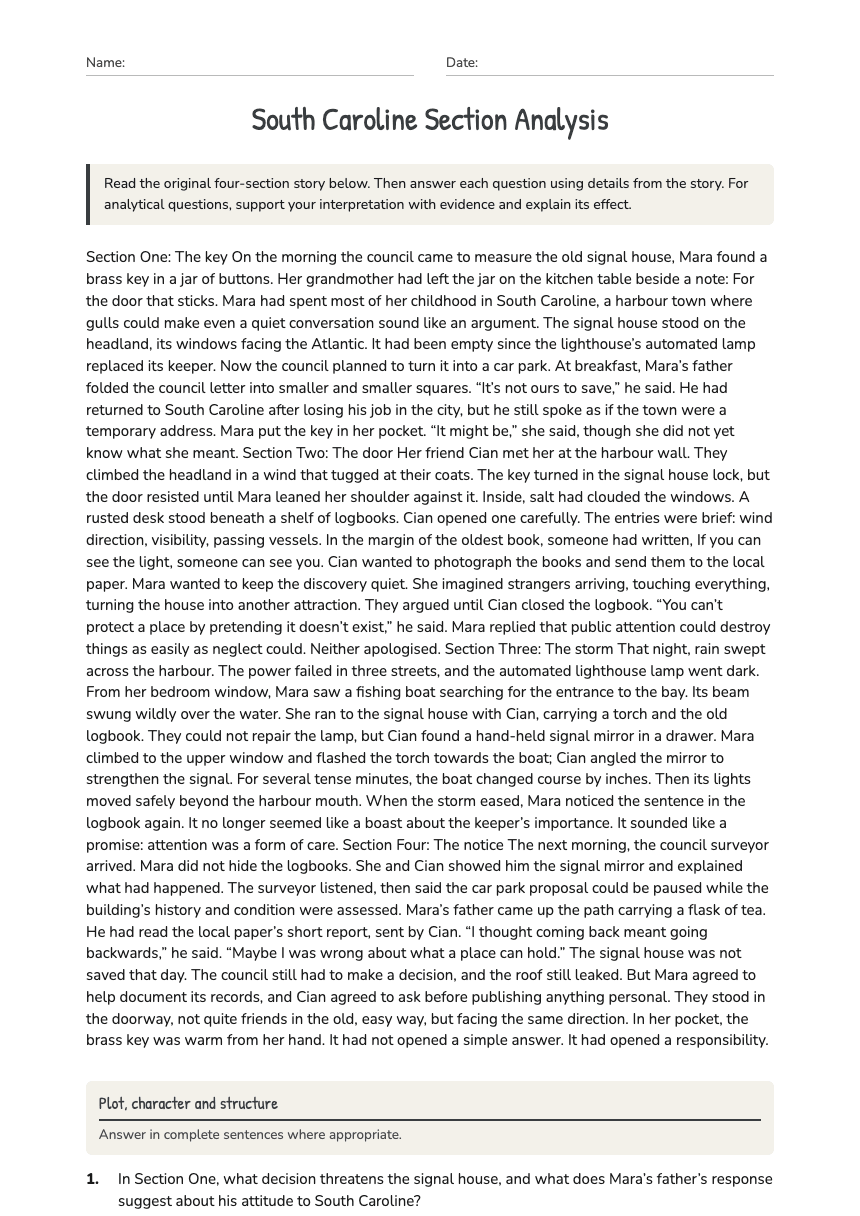
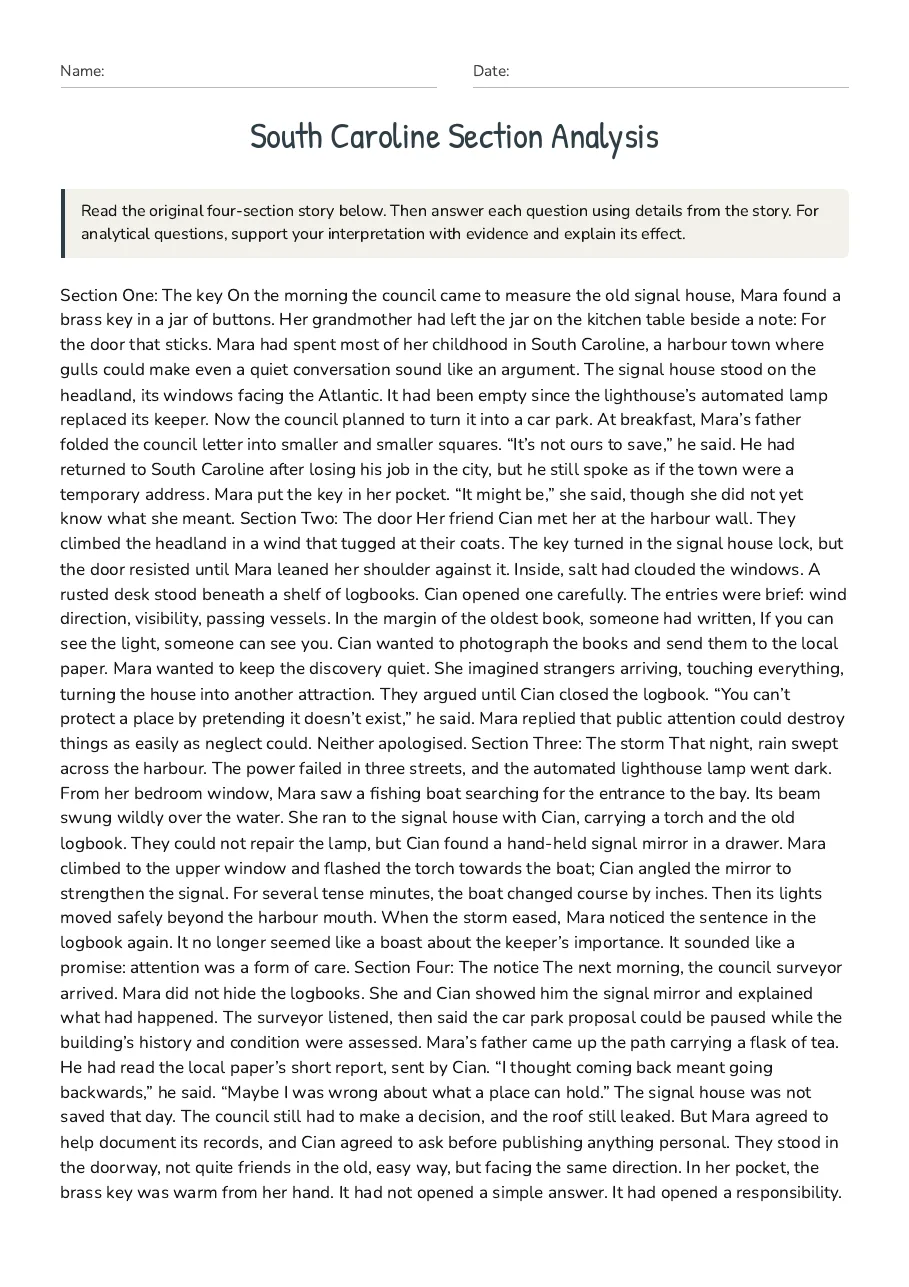
South Caroline Section Analysis
Read the original four-section story below. Then answer each question using details from the story. For analytical questions, support your interpretation with evidence and explain its effect.
Section One: The key
On the morning the council came to measure the old signal house, Mara found a brass key in a jar of buttons. Her grandmother had left the jar on the kitchen table beside a note: For the door that sticks.
Mara had spent most of her childhood in South Caroline, a harbour town where gulls could make even a quiet conversation sound like an argument. The signal house stood on the headland, its windows facing the Atlantic. It had been empty since the lighthouse’s automated lamp replaced its keeper. Now the council planned to turn it into a car park.
At breakfast, Mara’s father folded the council letter into smaller and smaller squares. “It’s not ours to save,” he said. He had returned to South Caroline after losing his job in the city, but he still spoke as if the town were a temporary address.
Mara put the key in her pocket. “It might be,” she said, though she did not yet know what she meant.
Section Two: The door
Her friend Cian met her at the harbour wall. They climbed the headland in a wind that tugged at their coats. The key turned in the signal house lock, but the door resisted until Mara leaned her shoulder against it.
Inside, salt had clouded the windows. A rusted desk stood beneath a shelf of logbooks. Cian opened one carefully. The entries were brief: wind direction, visibility, passing vessels. In the margin of the oldest book, someone had written, If you can see the light, someone can see you.
Cian wanted to photograph the books and send them to the local paper. Mara wanted to keep the discovery quiet. She imagined strangers arriving, touching everything, turning the house into another attraction. They argued until Cian closed the logbook.
“You can’t protect a place by pretending it doesn’t exist,” he said. Mara replied that public attention could destroy things as easily as neglect could. Neither apologised.
Section Three: The storm
That night, rain swept across the harbour. The power failed in three streets, and the automated lighthouse lamp went dark. From her bedroom window, Mara saw a fishing boat searching for the entrance to the bay. Its beam swung wildly over the water.
She ran to the signal house with Cian, carrying a torch and the old logbook. They could not repair the lamp, but Cian found a hand-held signal mirror in a drawer. Mara climbed to the upper window and flashed the torch towards the boat; Cian angled the mirror to strengthen the signal. For several tense minutes, the boat changed course by inches. Then its lights moved safely beyond the harbour mouth.
When the storm eased, Mara noticed the sentence in the logbook again. It no longer seemed like a boast about the keeper’s importance. It sounded like a promise: attention was a form of care.
Section Four: The notice
The next morning, the council surveyor arrived. Mara did not hide the logbooks. She and Cian showed him the signal mirror and explained what had happened. The surveyor listened, then said the car park proposal could be paused while the building’s history and condition were assessed.
Mara’s father came up the path carrying a flask of tea. He had read the local paper’s short report, sent by Cian. “I thought coming back meant going backwards,” he said. “Maybe I was wrong about what a place can hold.”
The signal house was not saved that day. The council still had to make a decision, and the roof still leaked. But Mara agreed to help document its records, and Cian agreed to ask before publishing anything personal. They stood in the doorway, not quite friends in the old, easy way, but facing the same direction.
In her pocket, the brass key was warm from her hand. It had not opened a simple answer. It had opened a responsibility.
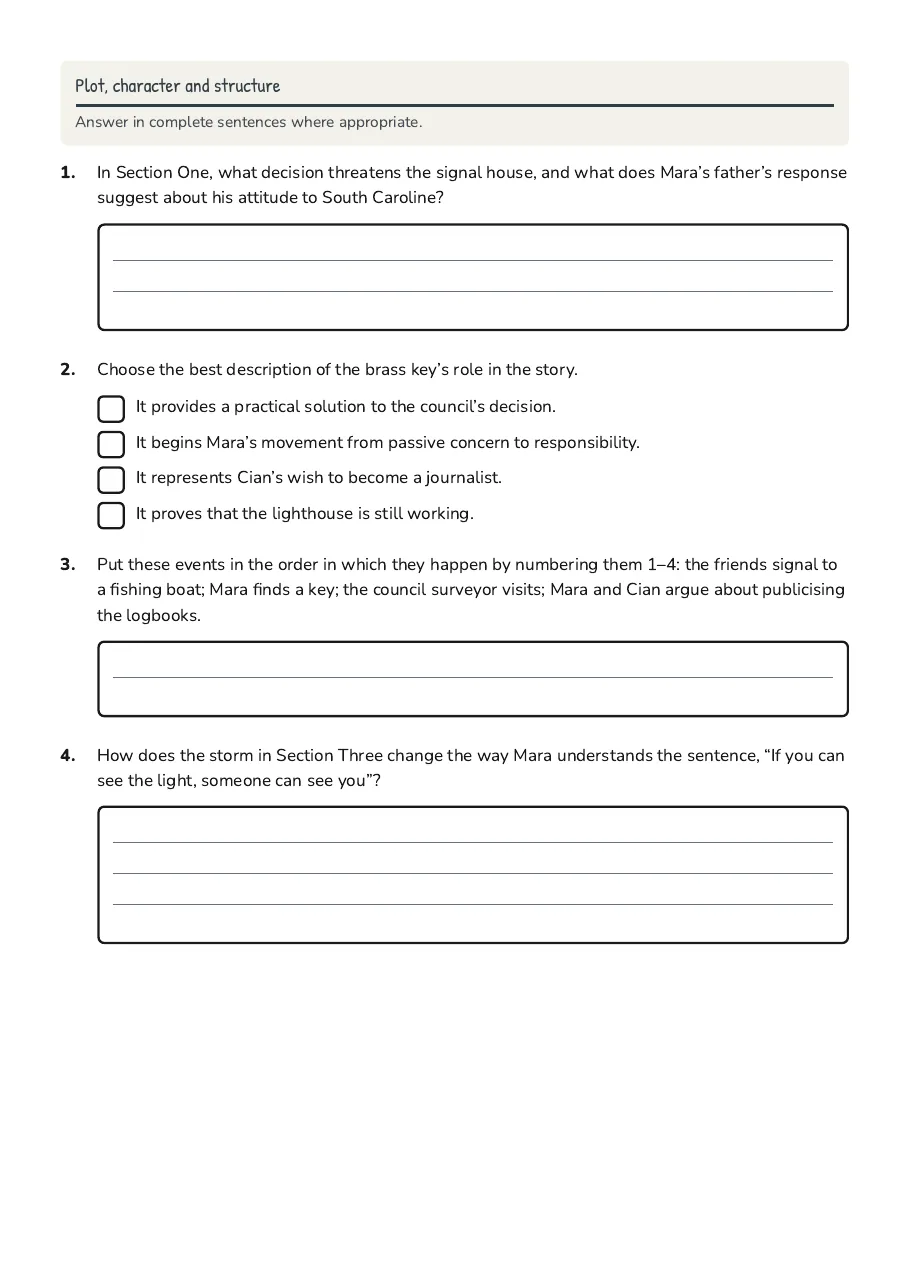
Plot, character and structure
Answer in complete sentences where appropriate.
1.In Section One, what decision threatens the signal house, and what does Mara’s father’s response suggest about his attitude to South Caroline?
2.Choose the best description of the brass key’s role in the story.
- It provides a practical solution to the council’s decision.
- It begins Mara’s movement from passive concern to responsibility.
- It represents Cian’s wish to become a journalist.
- It proves that the lighthouse is still working.
3.Put these events in the order in which they happen by numbering them 1–4: the friends signal to a fishing boat; Mara finds a key; the council surveyor visits; Mara and Cian argue about publicising the logbooks.
4.How does the storm in Section Three change the way Mara understands the sentence, “If you can see the light, someone can see you”?
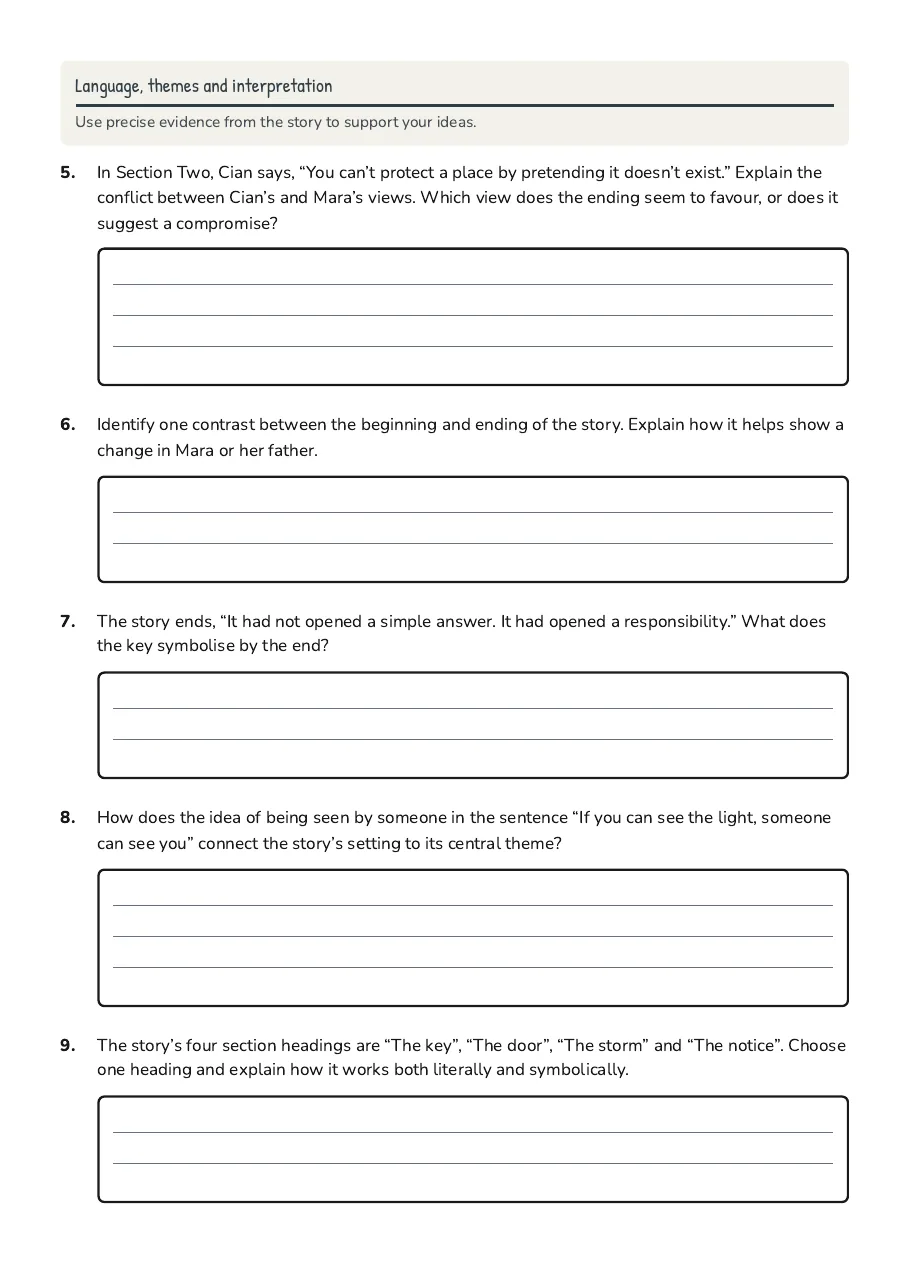
Language, themes and interpretation
Use precise evidence from the story to support your ideas.
5.In Section Two, Cian says, “You can’t protect a place by pretending it doesn’t exist.” Explain the conflict between Cian’s and Mara’s views. Which view does the ending seem to favour, or does it suggest a compromise?
6.Identify one contrast between the beginning and ending of the story. Explain how it helps show a change in Mara or her father.
7.The story ends, “It had not opened a simple answer. It had opened a responsibility.” What does the key symbolise by the end?
8.How does the idea of being seen by someone in the sentence “If you can see the light, someone can see you” connect the story’s setting to its central theme?
9.The story’s four section headings are “The key”, “The door”, “The storm” and “The notice”. Choose one heading and explain how it works both literally and symbolically.
10.Evaluate the ending: does it resolve the story’s central conflict? Give a judgement supported by two details from the final section.
4 printable pages
Page 1
Page 2
Page 3
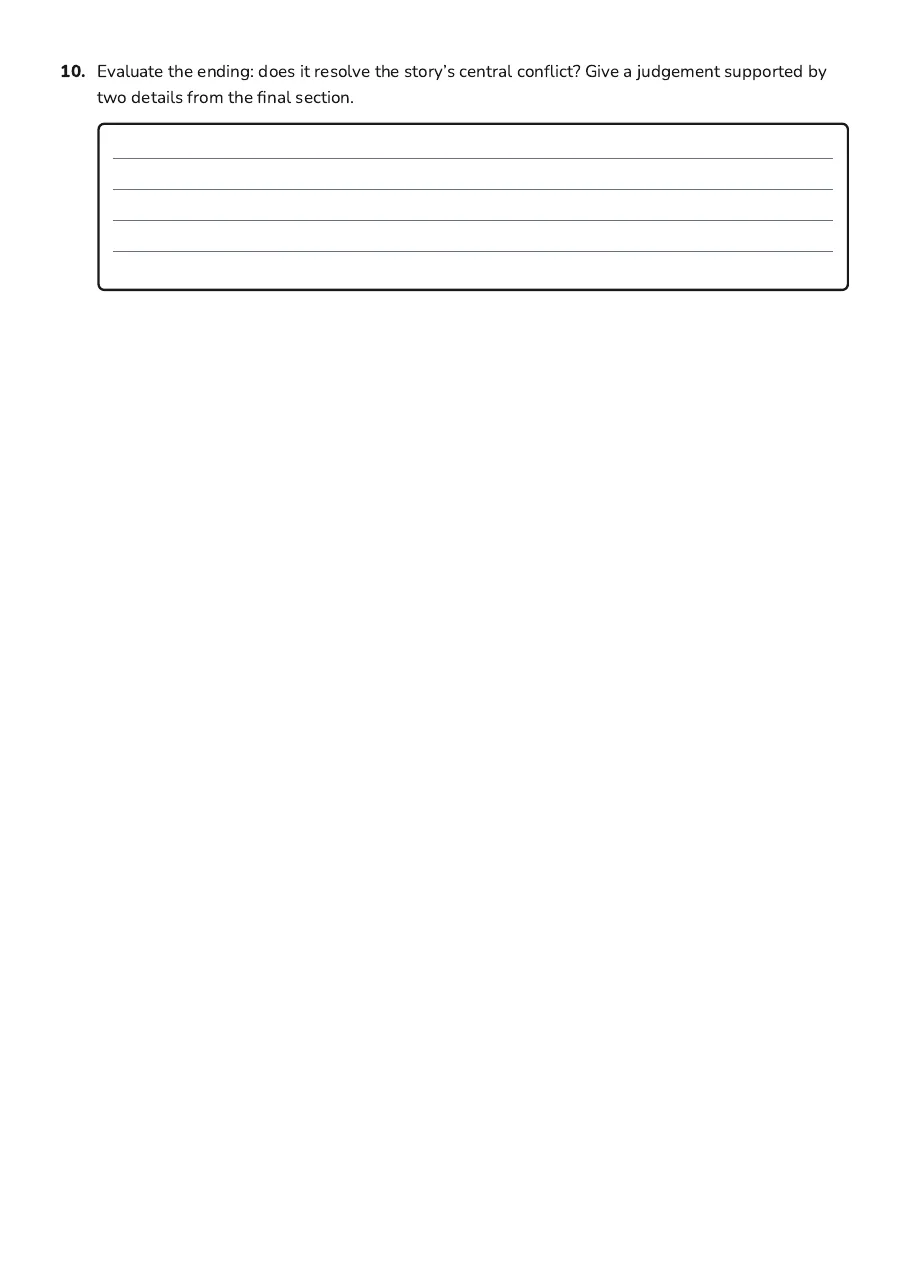
Page 4
About This Worksheet
Free in Kuraplan
Sign up free, grab the PDF, and customize it for your class.
Print-Ready
Formatted for standard paper. Clean layout, easy to read.
AI-Generated
Created with Kuraplan's AI, designed for real classroom use.
For Teachers & Parents
Use in classrooms, for homework, tutoring, or homeschool.
Need a custom version of this worksheet?
Kuraplan's AI generates custom worksheets in seconds — differentiated for every learner, aligned to your curriculum.
Generate Custom Worksheets — Free No credit card Curriculum-aligned Under 60 seconds
More English Worksheets
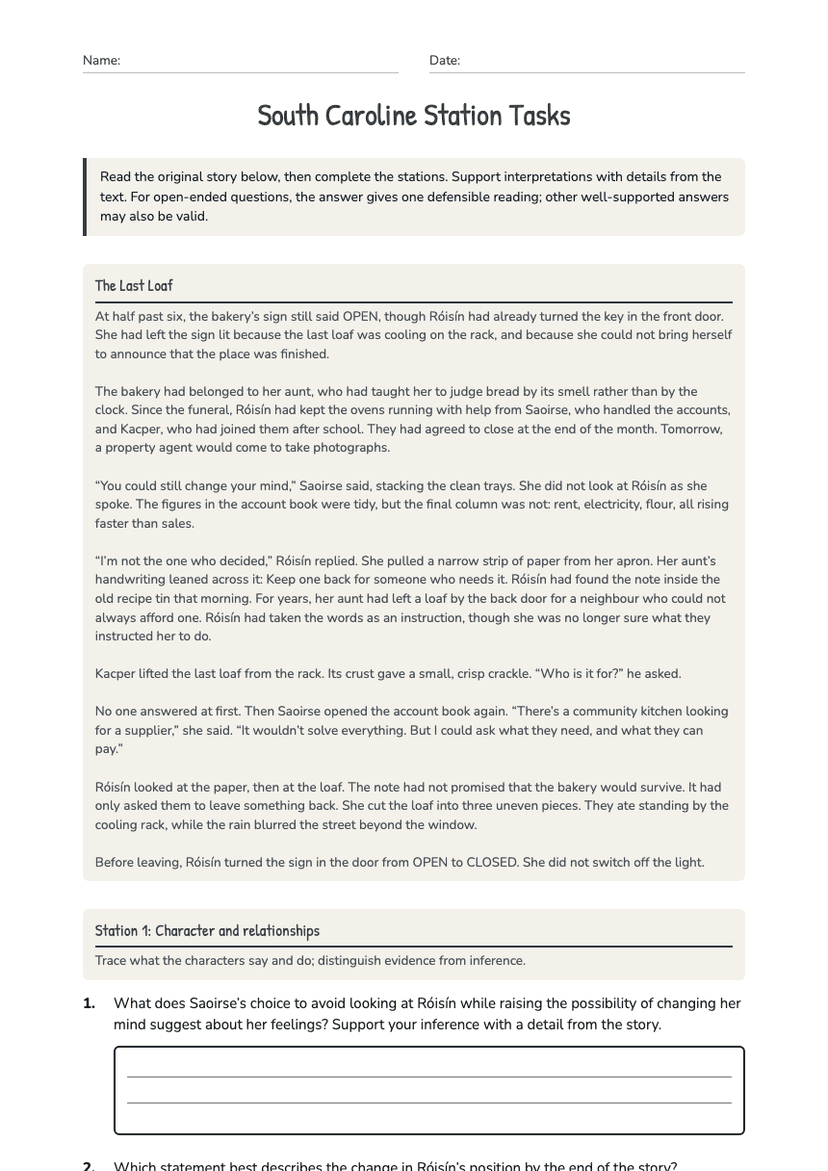
Year 11
South Caroline Station Tasks
Free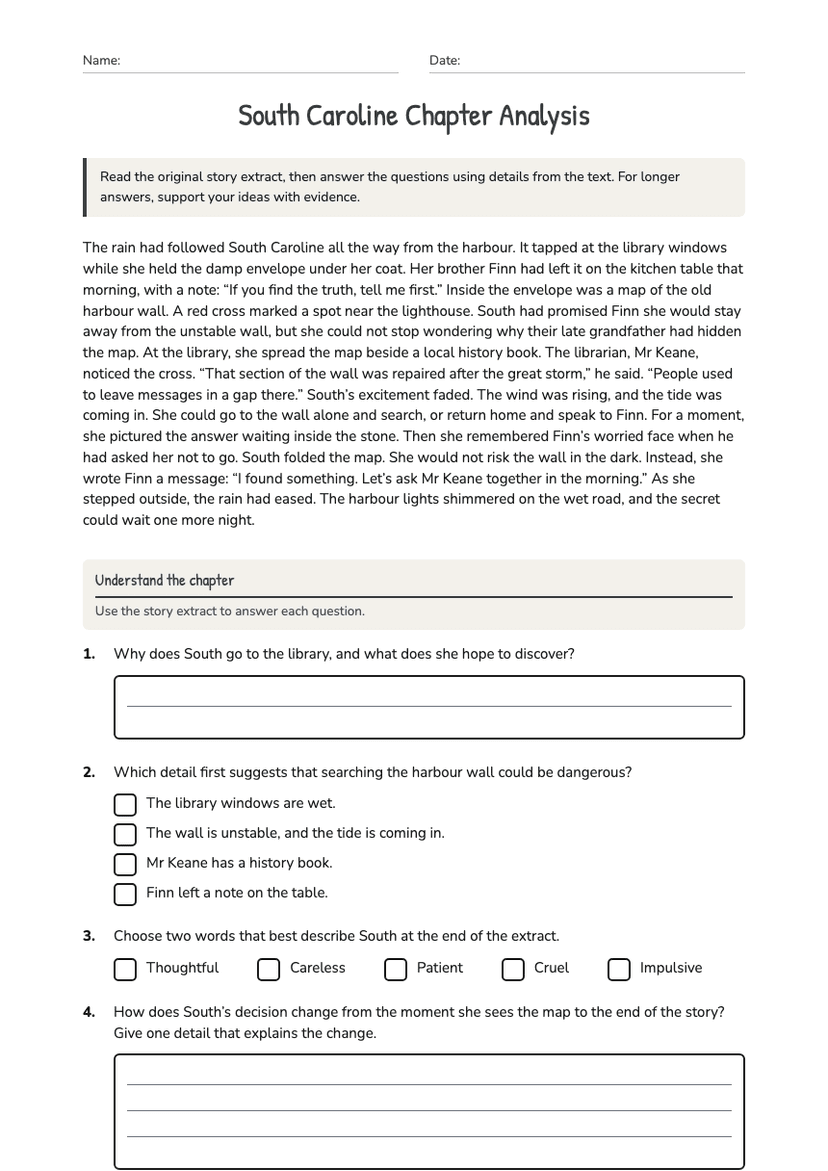
South Caroline Chapter Analysis
Free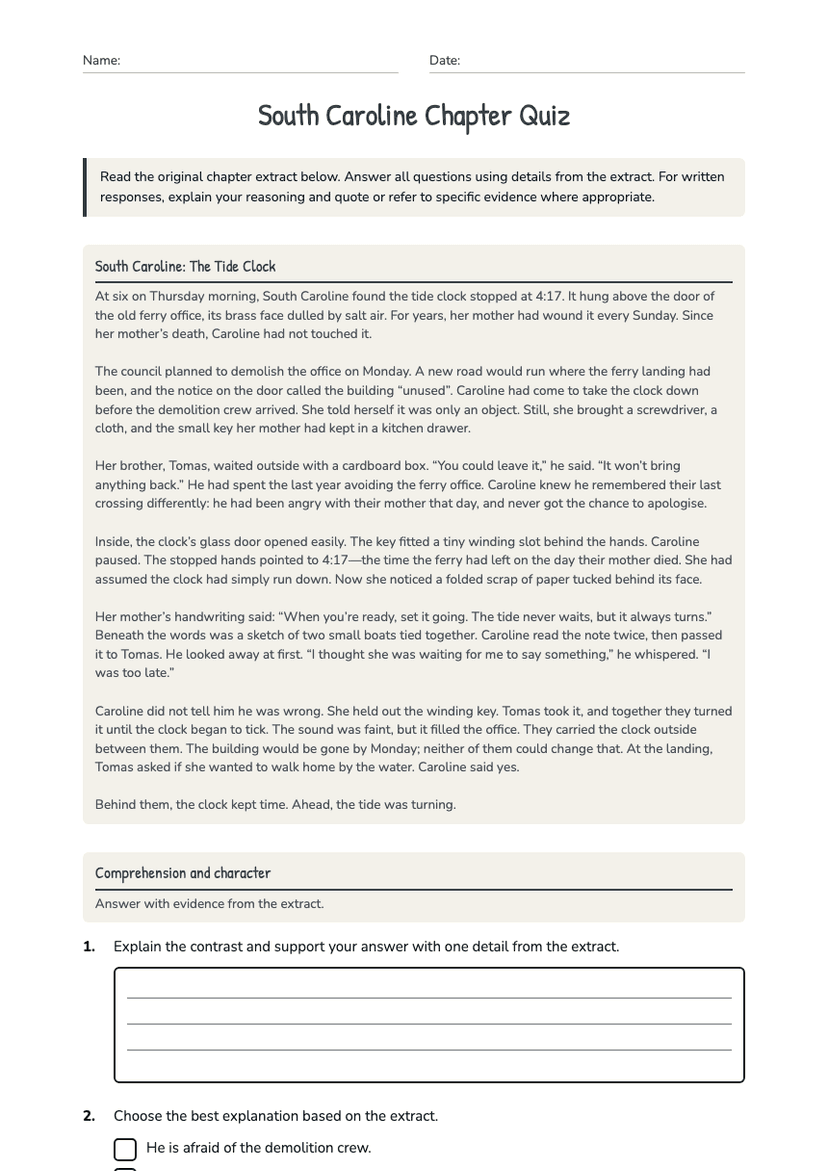
Year 11
South Caroline Chapter Quiz
Free
Second Class
Oxford Reading Tree Introduction
Free
Year 11
Ajarry Chapter One Worksheet
Free
Lighthouse Lunch Sequencing Activity
Free
Lighthouse Lunch Sequencing Activity
Free
Fifth Year