You write Students will improve their writing on the board. For an hour, the lesson looks successful: students talk through ideas, fill pages, and share sentences with partners. Then you collect their work and hit the awkward question: what, exactly, did anyone learn?
One student wrote more. Another corrected spellings. Another produced a polished paragraph with plenty of adult help. All made something, but the objective gives you no fair way to judge progress.
The fix isn't just more writing time. It's sharper learning objectives for writing: a visible performance, clear working conditions, and a standard students can recognize before they start. A beautifully worded objective won't rescue weak instruction, but a vague one makes useful feedback much harder.
If you can't say what you'll look for in the finished work, the objective isn't ready for the board.
Start with the writing students need to practice: narrative, informative summary, argument, textual evidence, revision, conventions, audience and purpose, or a task shaped by Bloom's taxonomy. Each needs a different kind of evidence, not just a different worksheet.
The examples below are ready to paste into a plan and adapt. They include grade-level versions, assessment ideas, and ways to adjust support without changing what you're teaching. Before the lesson, you'll also have a quick test: could you assess the work against this objective without guessing?
1. Narrative Writing With Sequenced Story Structure
A story can include plenty of action and still leave readers wondering what happened. Teach students to connect events before asking them to decorate every sentence with adjectives.
Paste-ready objective
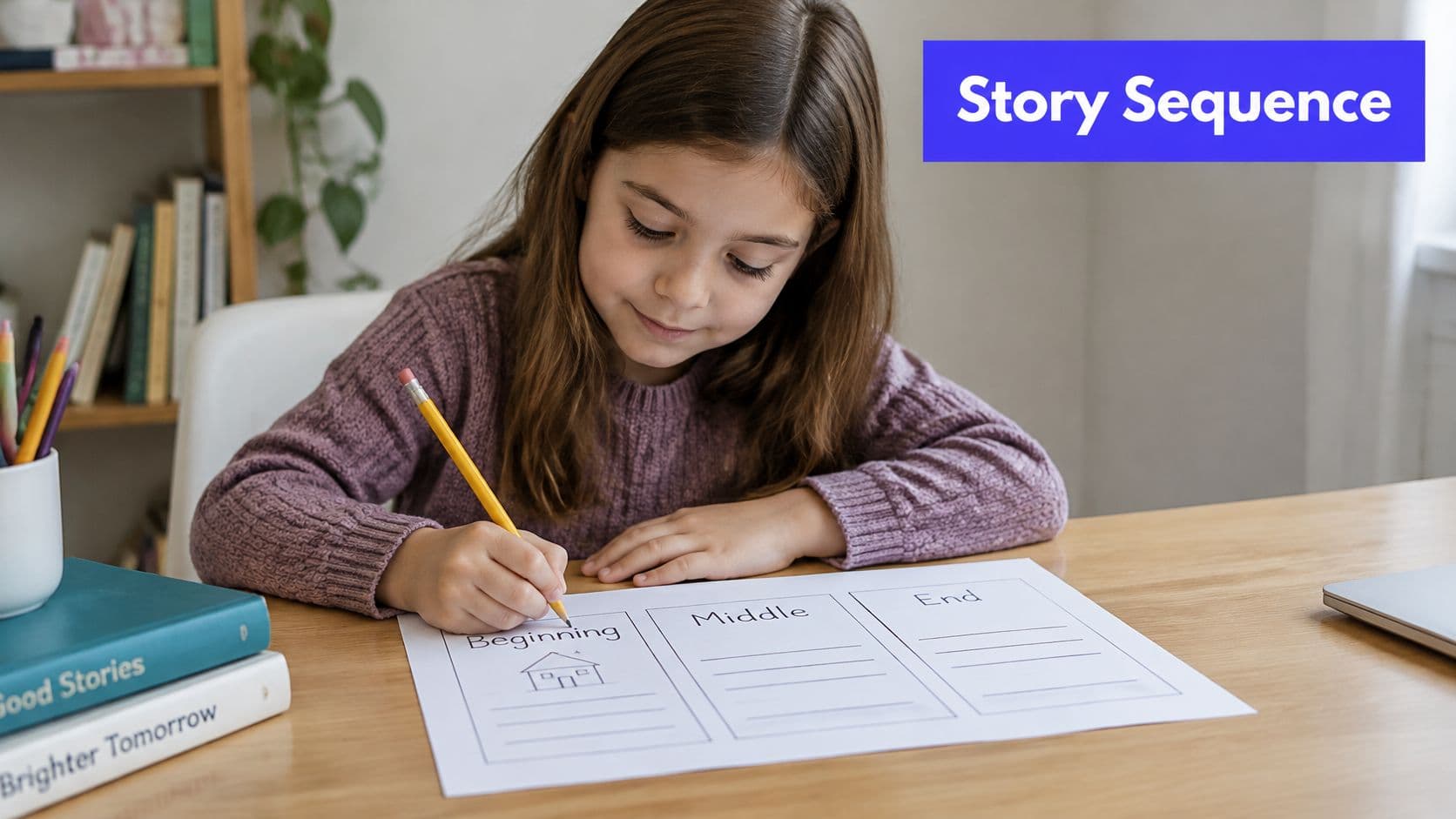
Students will write a three-paragraph personal narrative that introduces a setting and character, develops a central problem, and resolves it using at least three time-order transition words.
Adjust the Support, Keep the Story
- Grade 3: Students will write a narrative of at least five sentences about helping someone, using first, next, and finally.
- Grade 5: Students will write a three-paragraph narrative containing dialogue, a clear conflict, and a resolution connected to the opening scene.
Model a small event, such as returning a lost lunchbox. Think aloud about why the reader needs to know whose lunchbox it is before hearing how it was found. Use a planning sheet that matches the objective, such as Kuraplan's story-sequencing worksheet, rather than an organizer packed with unrelated requirements.
Watch for: Students can insert transition words without creating a logical sequence. Read the draft without those words: do the events still connect, and does the ending resolve the problem?
Before-lesson measurability check: Mark the setting, problem, and resolution in your model. If you can't locate them clearly, revise the model or objective before teaching it.
Allow oral rehearsal, picture planning, or speech-to-text when composition is the target. For older students moving toward personal statements, Mrs. College Counselor's essay writing guide offers a relevant extension, but don't turn an elementary narrative into an admissions essay.
2. Informative and Cross-Curricular Summary Writing
Give students a shared passage about butterflies and ask for a summary. Some will copy the opening; others will list every interesting fact. Neither response necessarily shows that they can identify what matters.
Paste-ready objective
Given a class reading, students will write a summary in their own words that identifies the main idea, includes relevant supporting details, and leaves out unrelated information.
Informative explanation and summary aren't interchangeable. An explanation teaches the reader about a topic; a summary condenses a particular source without changing its meaning.
Match the Product to the Content
- Grade 2: Students will write three sentences explaining one way local animals protect themselves, using at least two words from the class word wall.
- Grade 4: Students will write a three-sentence summary of a butterfly's life cycle, using their own words and including the four stages in order.
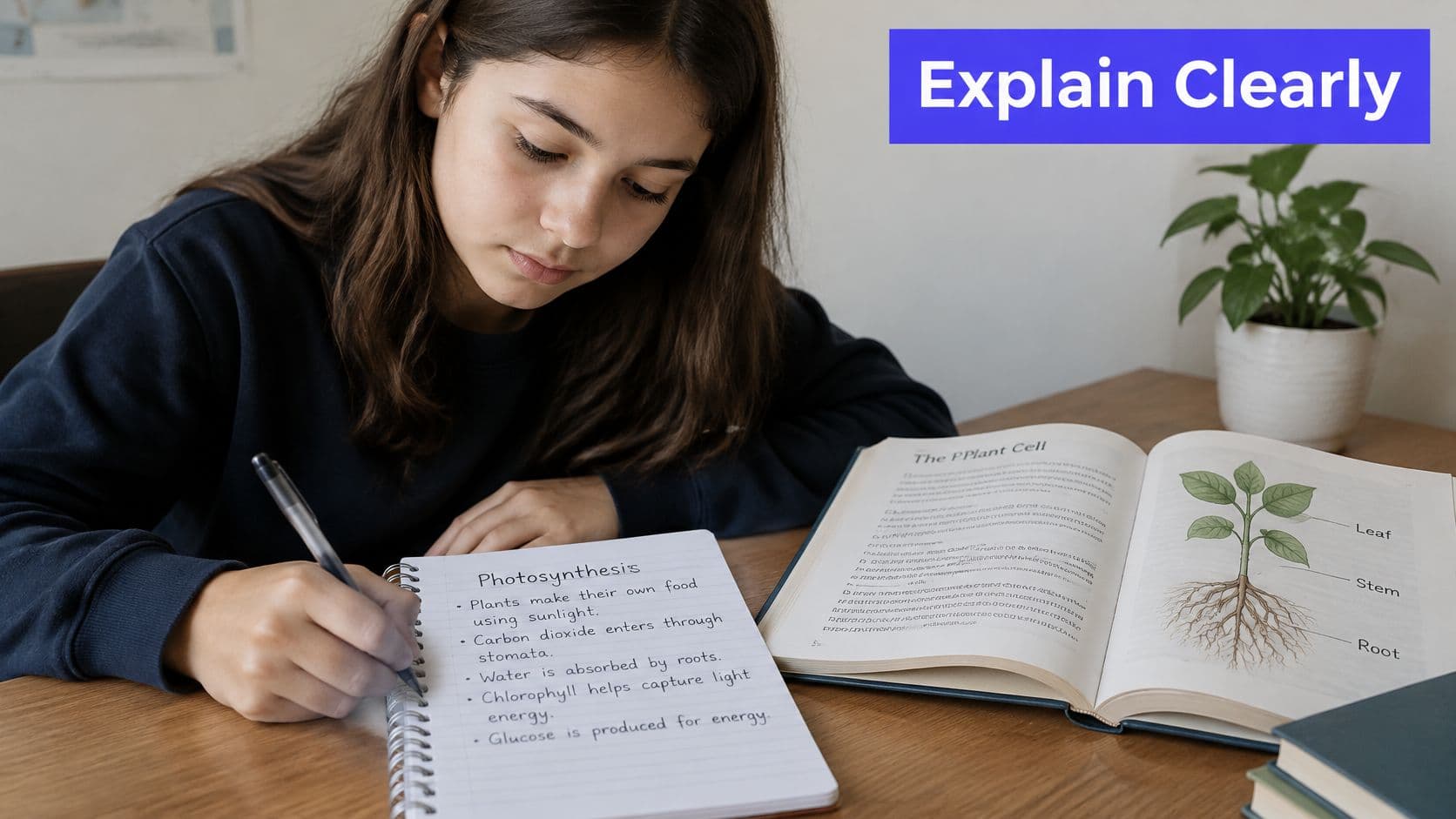
- Grade 6: Students will write a two-page explanation of the water cycle that defines three key terms, includes a labeled diagram, and cites two sources.
- Grade 8: Students will write a paragraph summarizing a renewable-energy article, identifying its main claim and two supporting details without copying phrases.
Watch for: Replacing individual words with synonyms isn't summarizing. Model how a summary selects the central message, while a paraphrase restates a particular passage.
Before-lesson measurability check: Draft an acceptable response yourself. Decide which ideas are essential and which omissions would make the explanation inaccurate.
For multilingual learners, supply vocabulary and permit bilingual planning. Kuraplan can generate diagrams matched to that vocabulary, but check every label yourself before students use the visual as a source.
3. Opinion and Argument Writing With Claims, Reasons, and Evidence
A confident opinion isn't automatically an argument. Students need to explain why a reader should accept the claim, not repeat it more loudly.
Paste-ready objective
Students will write an opinion paragraph stating whether the school should extend recess, providing three reasons and supporting each reason with an example.
Choose a topic students know enough about to discuss openly. If you ask them to argue about an unfamiliar issue without supplying information, you're assessing background knowledge as much as reasoning.
Separate a Reason From Its Support
- Grade 1: Students will write a sentence naming their favorite book and a reason for their choice.
- Grade 4: Students will write an argument paragraph about whether class pets are helpful, using two reasons and two facts from the class reading.
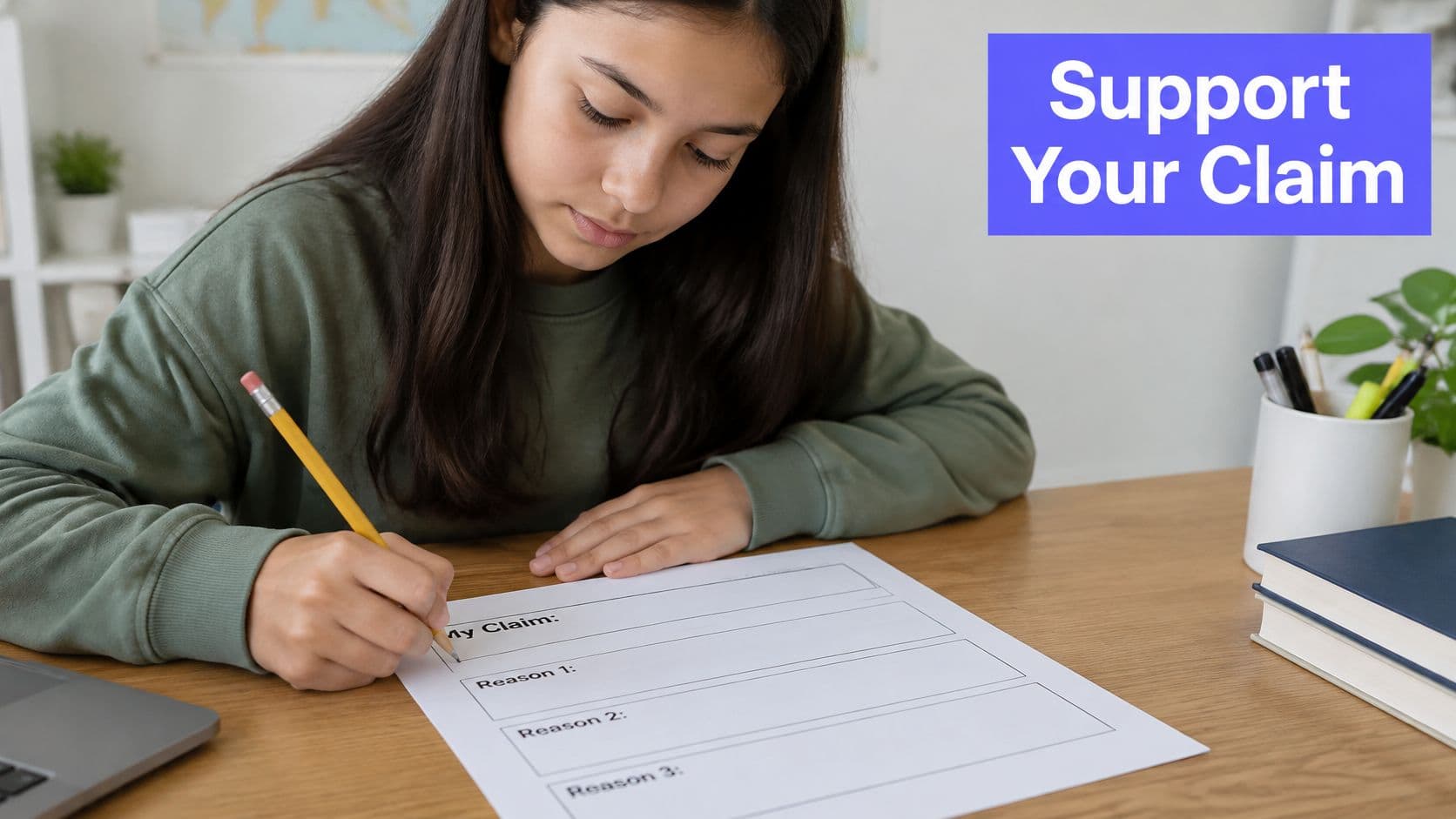
Use a claim-reason-evidence organizer to expose gaps before drafting. For a class-pet argument, companionship might be a reason; a relevant fact about animal care from the reading provides support. Another version of pets are nice doesn't.
Count reasons only after checking whether they're genuinely different. Repetition isn't stronger reasoning.
Watch for: Students may choose the position they think you prefer. Assess the support, not agreement with your opinion.
Before-lesson measurability check: Try scoring opposing responses with the same criteria. Both should be able to succeed if their claims are clear and their evidence is relevant.
Kuraplan's persuasive-writing guide can support planning from a simple claim toward a fuller argument. For students who need language support, offer sentence frames while leaving the choice of position and evidence to them.
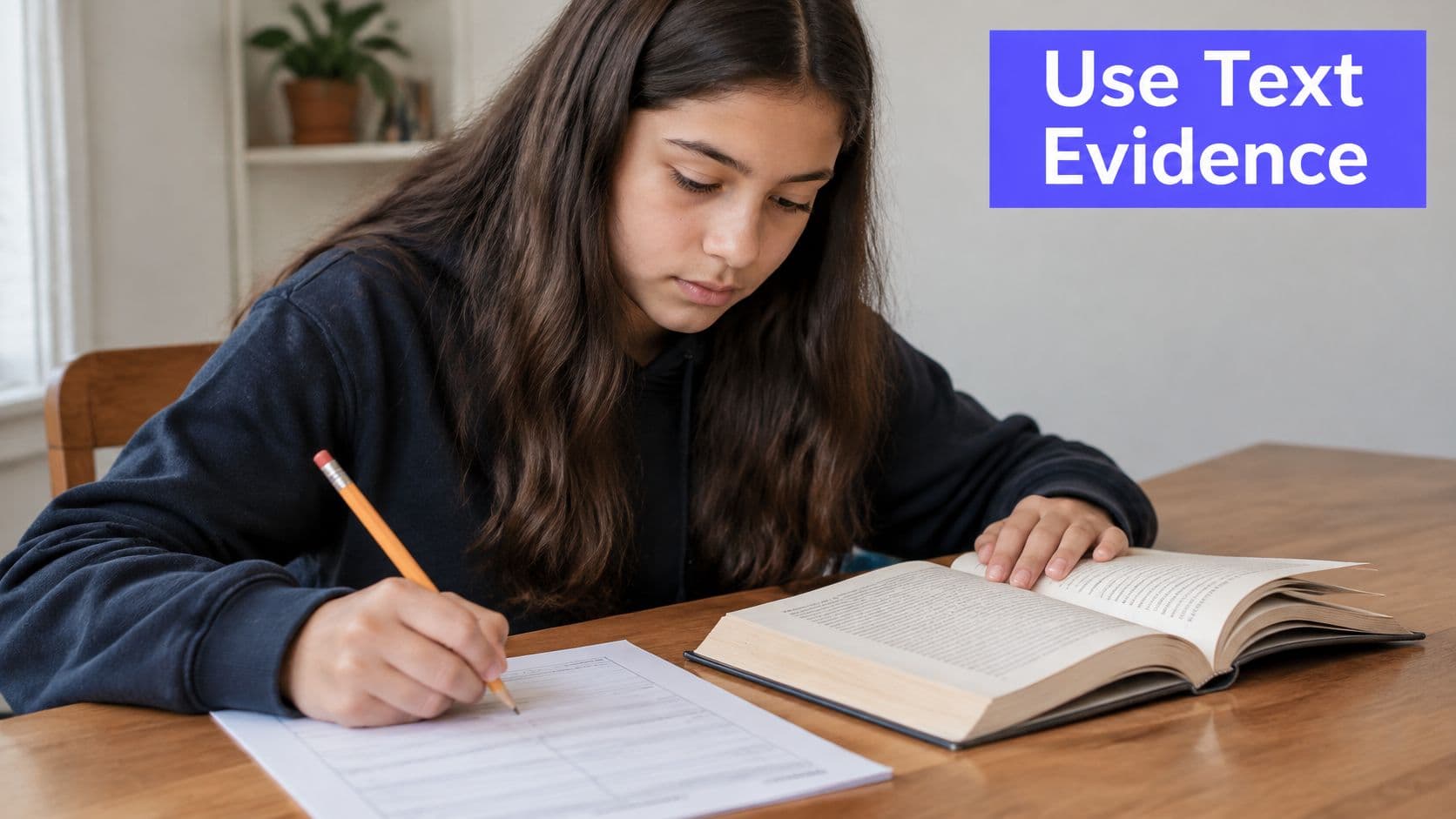
4. Evidence-Based Writing With Cited Text Support
Quotations don't explain themselves. A student can copy a perfectly relevant passage and still leave the reader to work out its connection to the answer.
Paste-ready objective
Given the class story, students will write a paragraph explaining why the character changes his mind, using two direct quotations and an explanatory sentence connecting each quotation to the answer.
The important work is the connection. Teach students to underline potential evidence before drafting, then reject passages that mention the character without explaining the change.
Make the Explanation Assessable
- Grade 4: Students will answer a story question using one quotation and one sentence explaining how it supports the answer.
- Grade 8: Students will write a paragraph analyzing how imagery reveals conflict, citing at least two passages and explaining each passage's relationship to the claim.
Watch for: A sentence that merely says the quotation proves the answer adds little. Ask students to identify the particular word, action, or image that supports their interpretation.
Before-lesson measurability check: Write a response containing accurate quotations but weak explanations. Your rubric should distinguish it from a response that reasons from evidence.
Use Kuraplan's citing-textual-evidence practice worksheet as a starting point, then check that its questions fit your text. Sentence frames can support explanation without supplying the interpretation.
Attribution also matters when students paraphrase. For older learners, a referencing guide for dissertation writers can extend that conversation, though citation conventions should match the assignment rather than overwhelm it.
5. Revision Objectives for Stronger Ideas and Organization
Don't write "revise your draft" and expect students to know where to begin. Many will correct spellings because those changes feel manageable, even when the actual problem is a missing explanation.
Paste-ready objective
Given feedback on relevance and sequence, students will revise their draft so that each paragraph develops its main point without unnecessary repetition.
Process deserves its own objective: the Writing Next synthesis reported an effect size of 0.82 for teaching writing strategies, including approaches to planning, drafting, revising, and editing. That's support for teaching the process explicitly, not a promise that any revision checklist will work.
Keep the Before-and-After Evidence
- Grade 3: Students will revise their paragraph by adding a describing word to each sentence and removing sentences unrelated to the topic.
- Grade 7: Students will revise their essay to strengthen the introduction, address a counterargument, and remove paragraphs that repeat an earlier point.
Watch for: Adding describing words can produce clutter rather than clarity. Use that younger-grade version for a focused practice task, then discuss which additions help the reader.
Before-lesson measurability check: Save an unrevised model and make the intended changes yourself. Could a colleague identify what improved without being told?
Show a draft being reconsidered, not merely corrected. This video can provide a starting point for a revision discussion.
For additional practice planning, Celprep's English writing practice guide offers a useful extension. Keep your assessment focused on the chosen revision target, with draft history or a brief explanation showing what the student changed.
6. Conventions Objectives for Sentence Structure and Mechanics
Correct punctuation on a worksheet doesn't guarantee correct punctuation in a story. Students need practice noticing sentence boundaries while they're also managing ideas.
Paste-ready objective
Students will write three complex sentences using a subordinating conjunction, correctly placing a comma after an introductory dependent clause.
Use sentences connected to the current writing task. In a science explanation, students might write: Because the soil was dry, the plant wilted. Then compare it with The plant wilted because the soil was dry, so students don't learn to place a comma before every because.
Teach a Convention Students Can Transfer
- Grade 2: Students will write three sentences that begin with capital letters and end with appropriate periods, question marks, or exclamation points.
- Grade 6: Students will combine two simple sentences into a compound sentence in each paragraph, using a comma and an appropriate coordinating conjunction.
Watch for: Requiring a compound sentence in every paragraph can make writing awkward. Use that version to rehearse the structure, then assess whether students can choose it appropriately in authentic writing.
Before-lesson measurability check: Prepare examples and near misses. Decide whether students must generate the structure independently or may use a conjunction bank; those conditions measure different degrees of independence.
Practical rule: If the objective targets sentence construction, a multiple-choice punctuation score isn't enough evidence.
Kuraplan can create focused convention worksheets, including multiple-choice practice. Follow that practice with student-generated sentences, and keep an anchor chart of useful examples from classroom writing.
For learners using assistive technology, check what the software supplies automatically. Auto-punctuation can support composition, but it can hide the very convention you're trying to assess.
7. Audience and Purpose Objectives for Genre-Specific Writing
An invitation needs enough information for someone to attend. A request needs enough detail for someone to respond. Genre features matter because readers need them, not because a worksheet has boxes to fill.
Paste-ready objective
Students will write a persuasive letter to the principal requesting a library book, using a polite greeting, a clear request, and two relevant reasons in a formal tone.
Start with an actual example of the genre. Compare a suitable request with a vague message demanding more books, and ask which message gives the principal enough information to act.
Give the Writing a Real Reader
- Grade 1: Students will write a thank-you note to a community helper, including a greeting, a sentence naming the helper's contribution, and a closing.
- Grade 5: Students will write a letter to a local business explaining a community-service idea, using a formal tone, a main reason, and a specific request.
Watch for: Formal tone doesn't mean oversized vocabulary. Students often make a clear request harder to understand when they try to sound important.
Before-lesson measurability check: Replace vague criteria such as appropriate style with observable features. For this task, look for respectful wording, enough context, and a request the recipient can understand.
Allow students to rehearse the request aloud or use a greeting-and-closing template. Keep the reasons and proposed action student-generated, or the template may do too much of the writing.
Kuraplan can create genre-specific templates and worksheets, but remove decorative sections that don't serve the purpose. If possible, send the finished letter to an actual reader; students take clarity more seriously when someone needs to use what they write.
8. Writing Objectives Built on Bloom's Taxonomy
Changing understand to analyze doesn't automatically make an objective rigorous. Students need specific content to analyze and a product that reveals their thinking.
The analysis published in CBE, Life Sciences Education examined 940 assessment items and found that knowledge type and cognitive process were related rather than independent. In practical terms, a verb alone doesn't tell you how demanding a writing task will be.
Match the Verb to the Thinking
Paste-ready objective
Given a graphic organizer, students will write a paragraph comparing two characters, including at least three specific details from the text.
- Grade 3: Given a sentence starter, students will write a paragraph of at least four sentences describing their favorite season, using at least two sensory words.
- Grade 9: Given two primary sources, students will write an analytical paragraph evaluating each author's credibility, citing at least two specific features of each source.
Watch for: The older-grade task requires evaluation, not merely identification of author and date. Students must explain how the source's features affect its credibility for the question being investigated.
Before-lesson measurability check: Match the task and rubric to the intended thinking. A recall quiz won't establish that students can evaluate credibility, even if they remember every source detail.
For a familiar planning framework, the North Carolina State University learning-objectives guide describes Bloom's six levels: remembering, understanding, applying, analyzing, evaluating, and creating. Choose the level that fits the learning need rather than forcing every lesson toward creating.
Use supports deliberately. A sentence starter can reduce the effort of getting started; a nearly completed comparison can remove the thinking you meant to assess.
How the eight writing objective types compare
| Item | Typical Grade Range | Core Skill | Easiest Way to Assess |
|---|---|---|---|
| Narrative Writing: Sequenced Story Structure | Grades 2–6 | Sequencing story elements | Checklist for beginning, middle, end, and transitions |
| Informative and Cross-Curricular Summary Writing | Grades 2–8 | Explaining or summarizing key information accurately | Check for main ideas, accuracy, and organization |
| Opinion and Argument Writing: Claim, Reasons, and Evidence | Grades 1–5 | Supporting a claim with reasons and evidence | Score the claim, reasons, and supporting details |
| Evidence-Based Writing: Citing Text Support | Grades 4–8 | Supporting answers with textual evidence | Check that evidence matches the claim and is explained |
| Revision Objectives: Strengthening Ideas and Organization | Grades 3–7 | Improving ideas, detail, and organization | Compare drafts using a focused revision checklist |
| Conventions Objectives: Sentence Structure and Mechanics | Grades 2–6 | Applying grammar, punctuation, and sentence skills | Use a targeted mechanics checklist |
| Audience and Purpose Objectives: Genre-Specific Writing | Grades 1–5 | Adapting tone and format to audience and purpose | Check genre features, tone, and purpose |
| Writing Objectives Built on Bloom's Taxonomy: Measurable Action Verbs | Grades 3–9 | Writing clear, measurable objectives | Check objectives for an observable action and success criteria |
Pick One Verb and Rewrite It Tomorrow
Return to the board: Students will improve their writing. It's a reasonable ambition, but it doesn't tell students what to practice or tell you what evidence to collect.
Try this instead: Given a class reading and a claim-evidence organizer, students will write an argument paragraph containing a clear claim, relevant evidence, and an explanation connecting the evidence to the claim. Now you have a verb, a product, a condition, and a degree of success expressed through required features.
The Rutgers guidance on writing objectives describes the useful core: observable performance, relevant conditions, and a criterion for acceptable performance. You don't need elaborate wording to include those elements.
Make the Objective Useful Before Making It Polished
Check the paragraph you expect students to produce. If a student includes evidence but doesn't explain it, have they met the objective? If you're unsure, clarify the criterion now rather than making that decision while marking papers.
- Keep the target stable: If you're teaching reasoning, assess the relationship between claim and evidence.
- Name permitted support: Record whether students may use sentence frames, a word bank, speech-to-text, or teacher prompting.
- Collect matching evidence: Save the organizer, draft, or revision explanation when the process is part of the objective.
Support doesn't automatically lower rigor, but it changes what you can conclude about independence. A student who writes a strong paragraph after substantial prompting has demonstrated something different from a student who organizes it independently.
The same distinction matters with AI assistance. If a student uses AI to suggest revisions, ask them to retain the original draft, identify the suggestions they accepted, and explain their choices. A polished submission alone won't tell you whether the student can make those decisions.
A manageable objective you actually assess is more useful than an impressive objective you never return to.
Before next week begins, rewrite a single objective from your plan. Choose the student action, name the product, state the working conditions, and define what acceptable work contains. Then ask the blunt question: could you grade student work against it without guessing?
Kuraplan can help draft objectives, connect them to standards, and produce aligned activities and rubrics. Treat the result as a planning draft: you still need to check the task, the criteria, and the support against the students you'll teach tomorrow.
Kuraplan offers standards-aligned lesson and unit planning, differentiated worksheets, and assessment rubrics for K–12 classrooms. Bring a vague writing objective to Kuraplan, draft a measurable version, and check that the activity and assessment ask students to demonstrate the same skill.