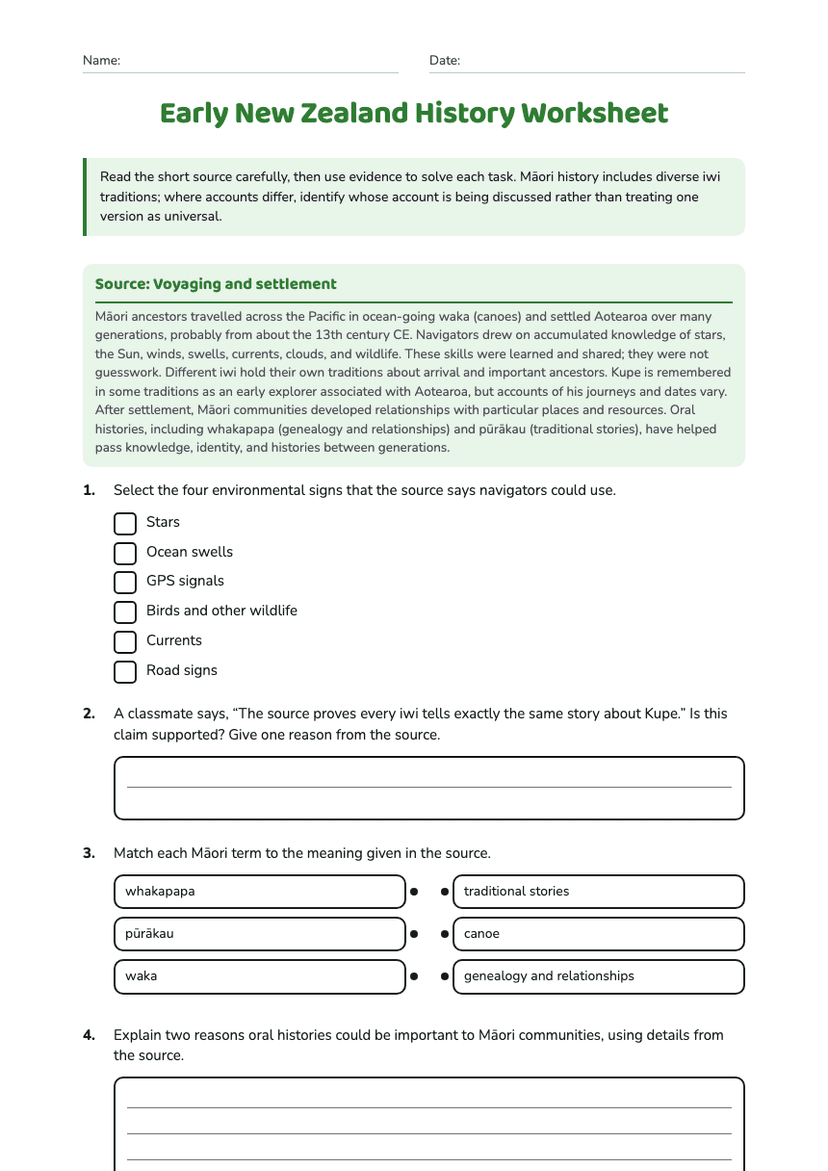
Ancient Civilisations Overview
A free social sciences worksheet ready for your classroom. Open in Kuraplan to grab the print-ready PDF, customize it for your students, or generate a fresh version in seconds.
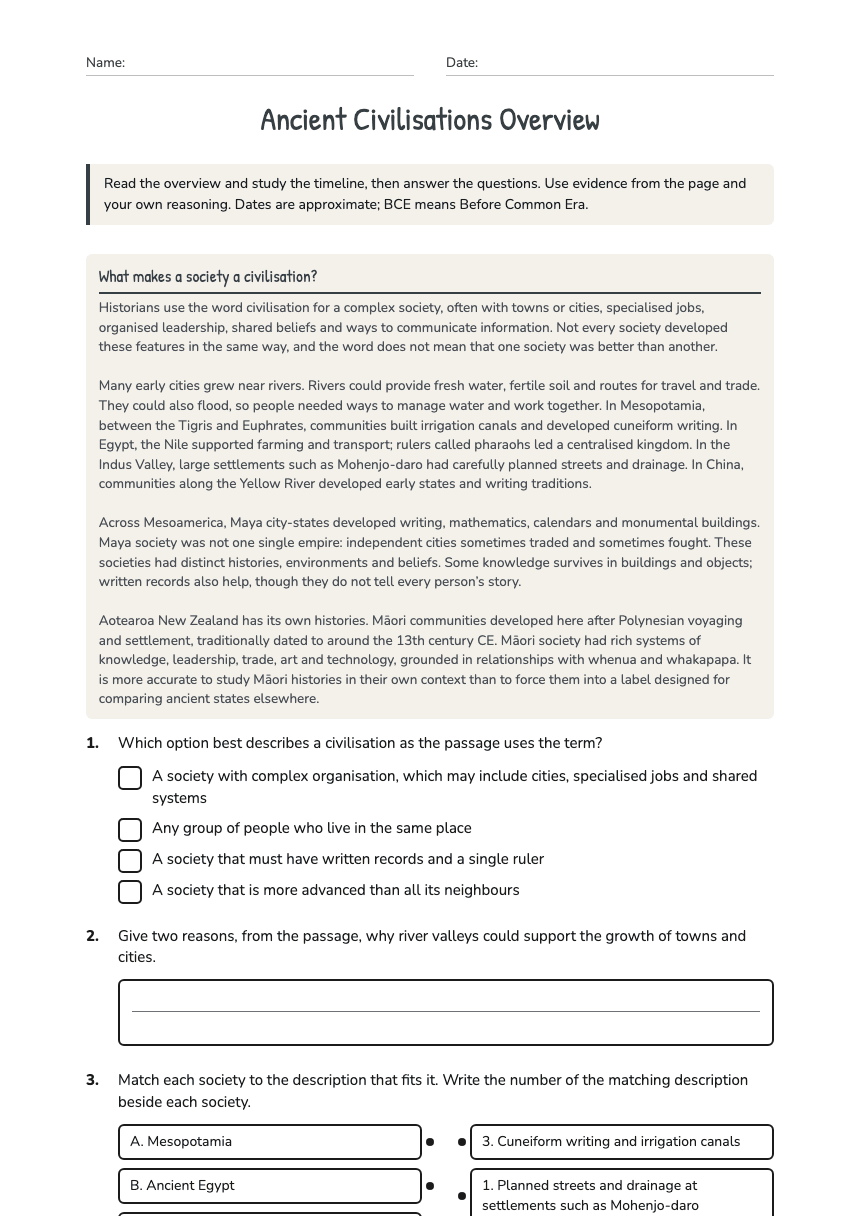
Ancient Civilisations Overview
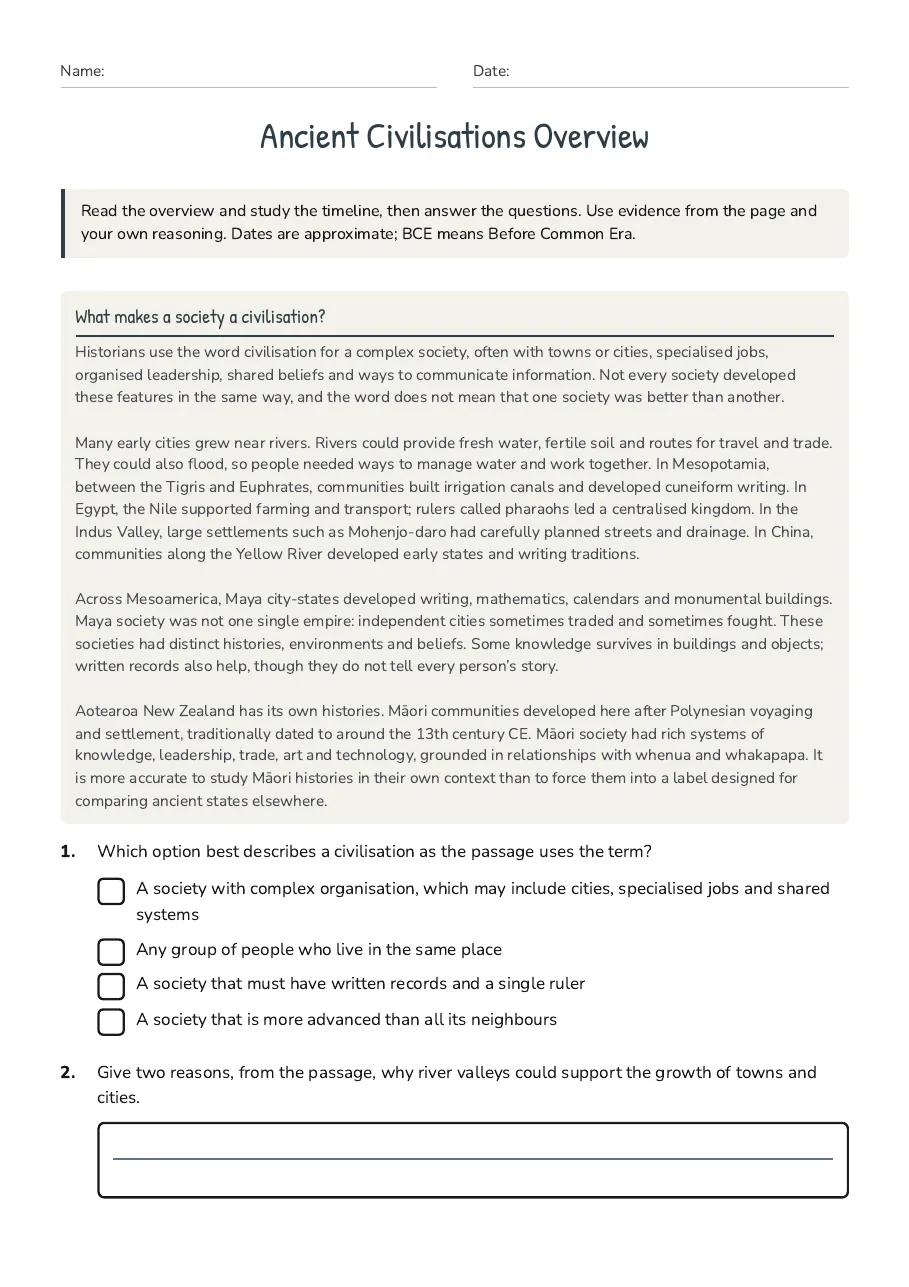
What makes a society a civilisation?
Historians use the word civilisation for a complex society, often with towns or cities, specialised jobs, organised leadership, shared beliefs and ways to communicate information. Not every society developed these features in the same way, and the word does not mean that one society was better than another. Many early cities grew near rivers. Rivers could provide fresh water, fertile soil and routes for travel and trade. They could also flood, so people needed ways to manage water and work together. In Mesopotamia, between the Tigris and Euphrates, communities built irrigation canals and developed cuneiform writing. In Egypt, the Nile supported farming and transport; rulers called pharaohs led a centralised kingdom. In the Indus Valley, large settlements such as Mohenjo-daro had carefully planned streets and drainage. In China, communities along the Yellow River developed early states and writing traditions. Across Mesoamerica, Maya city-states developed writing, mathematics, calendars and monumental buildings. Maya society was not one single empire: independent cities sometimes traded and sometimes fought. These societies had distinct histories, environments and beliefs. Some knowledge survives in buildings and objects; written records also help, though they do not tell every person’s story. Aotearoa New Zealand has its own histories. Māori communities developed here after Polynesian voyaging and settlement, traditionally dated to around the 13th century CE. Māori society had rich systems of knowledge, leadership, trade, art and technology, grounded in relationships with whenua and whakapapa. It is more accurate to study Māori histories in their own context than to force them into a label designed for comparing ancient states elsewhere.
- A society with complex organisation, which may include cities, specialised jobs and shared systems
- Any group of people who live in the same place
- A society that must have written records and a single ruler
- A society that is more advanced than all its neighbours
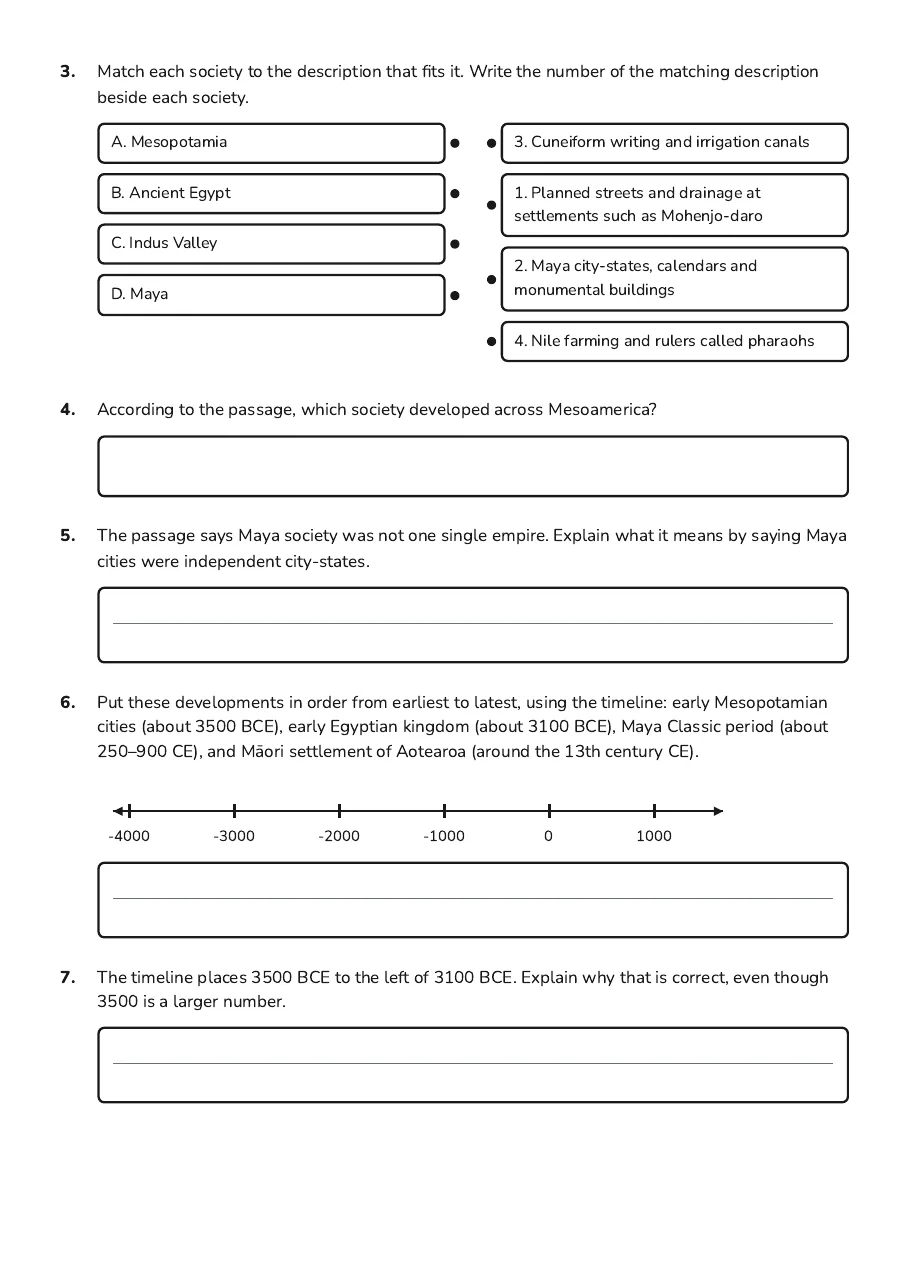
- A. Mesopotamia
- B. Ancient Egypt
- C. Indus Valley
- D. Maya
- 3. Cuneiform writing and irrigation canals
- 1. Planned streets and drainage at settlements such as Mohenjo-daro
- 2. Maya city-states, calendars and monumental buildings
- 4. Nile farming and rulers called pharaohs
3 printable pages
Page 1
Page 2
Page 3
About This Worksheet
Free in Kuraplan
Sign up free, grab the PDF, and customize it for your class.
Print-Ready
Formatted for standard paper. Clean layout, easy to read.
AI-Generated
Created with Kuraplan's AI, designed for real classroom use.
For Teachers & Parents
Use in classrooms, for homework, tutoring, or homeschool.
Need a custom version of this worksheet?
Kuraplan's AI generates custom worksheets in seconds — differentiated for every learner, aligned to your curriculum.
Generate Custom Worksheets — FreeMore Social Sciences Worksheets
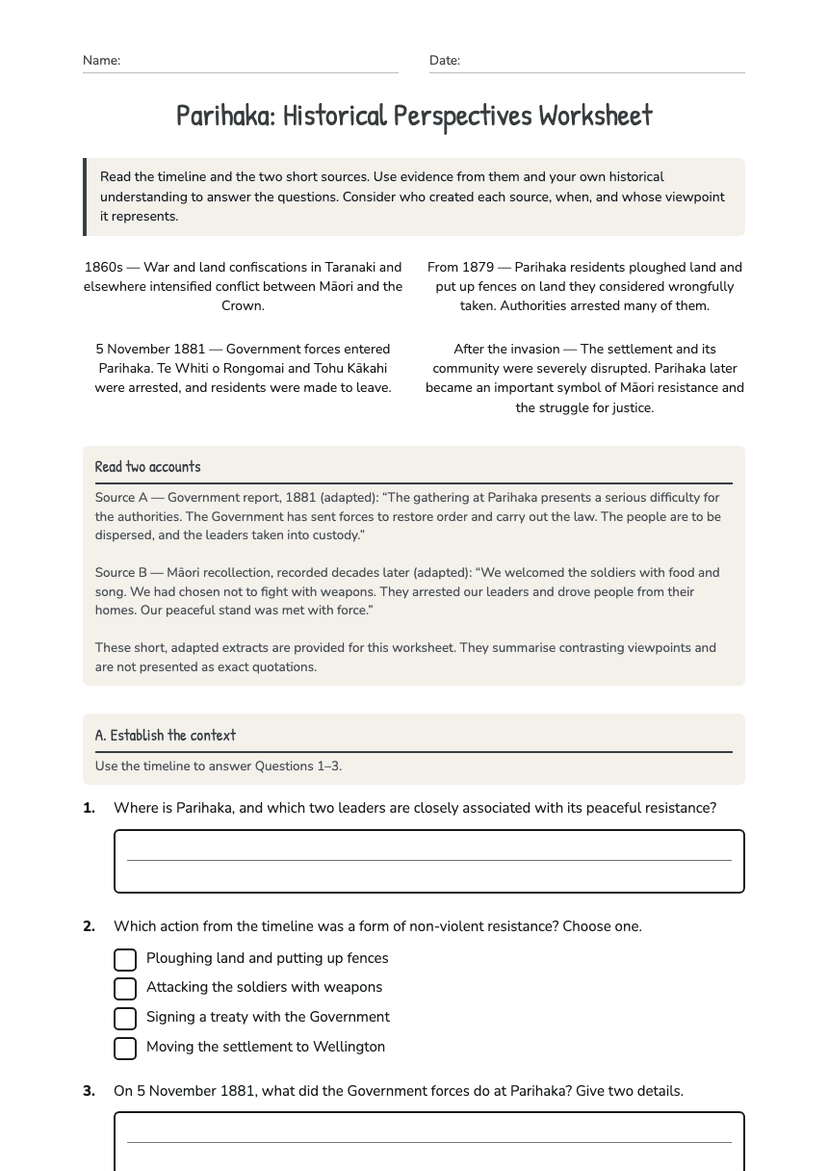
Parihaka: Historical Perspectives Worksheet
Free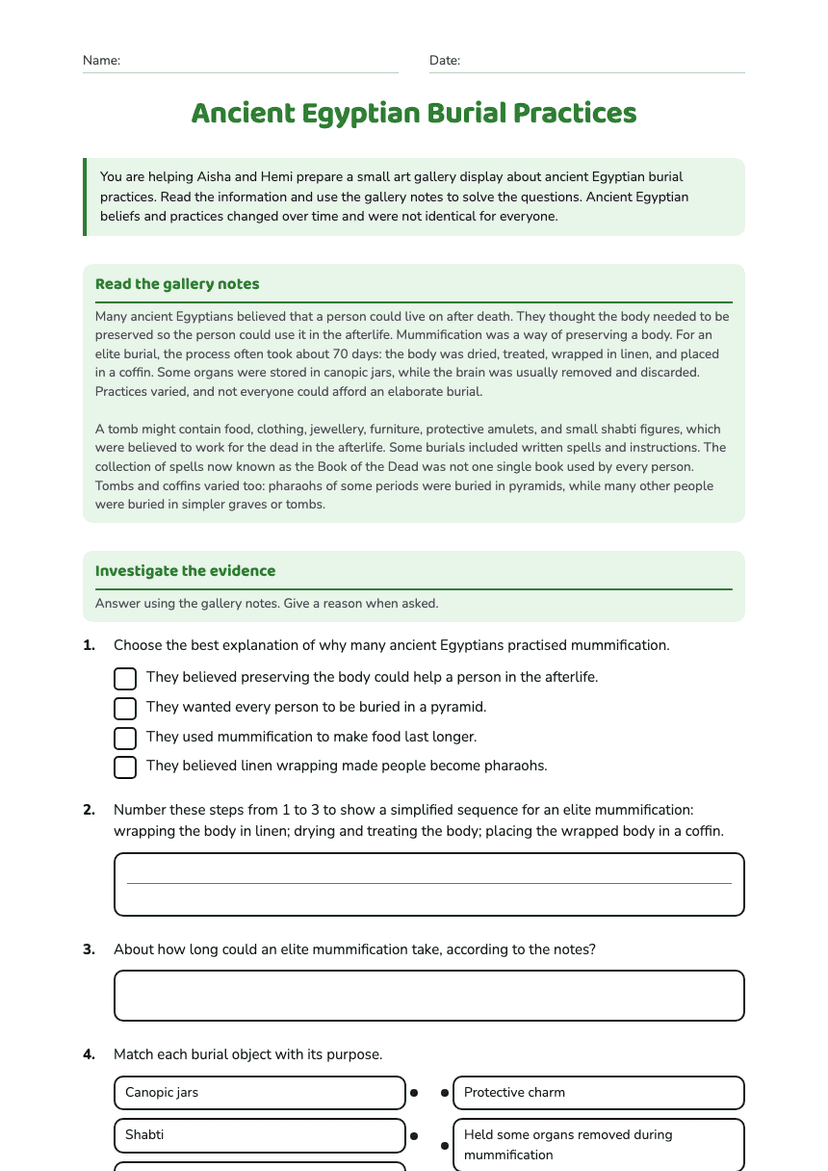
Ancient Egyptian Burial Practices
Free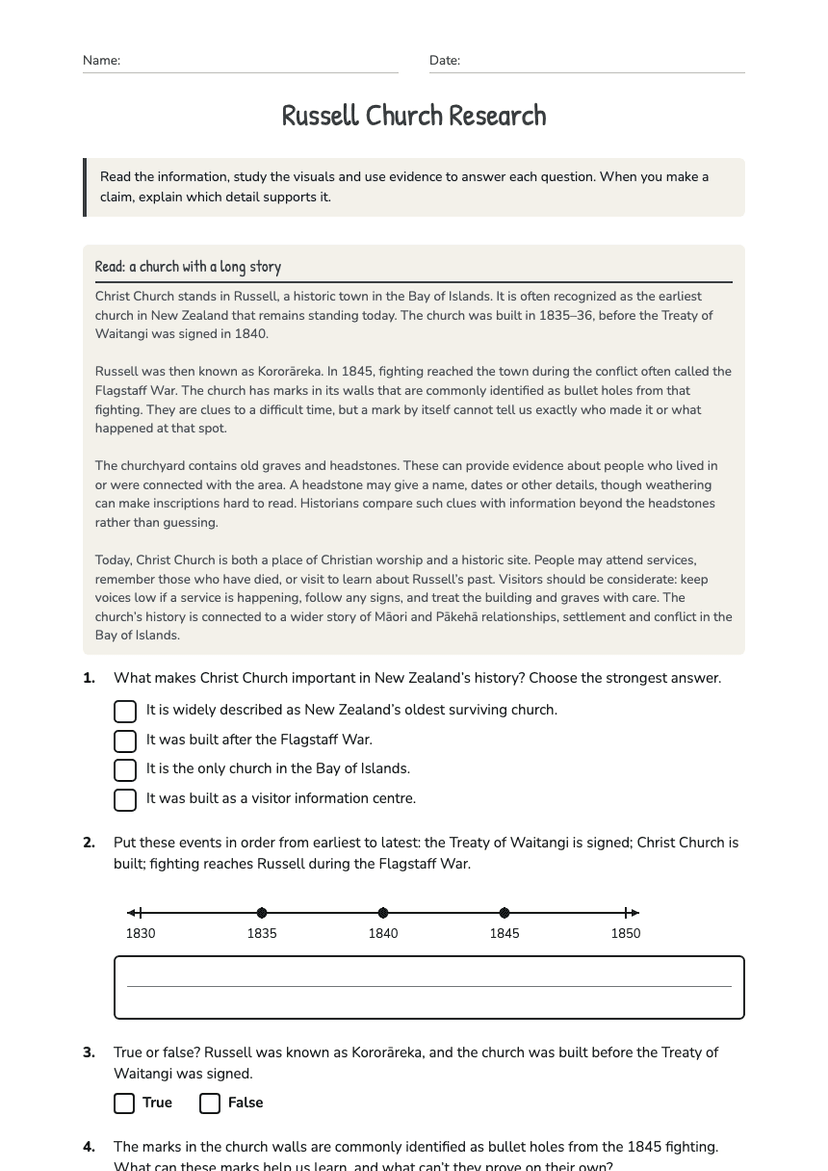
Russell Church Research
Free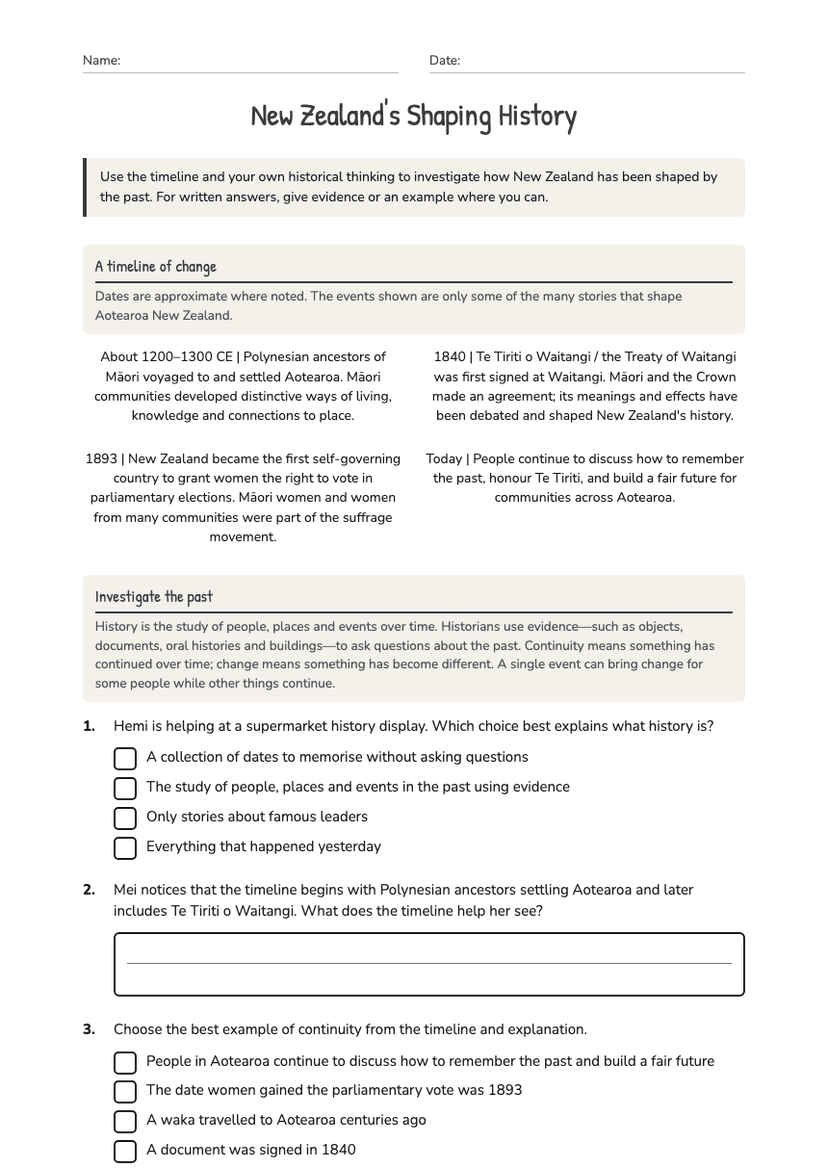
New Zealand's Shaping History
Free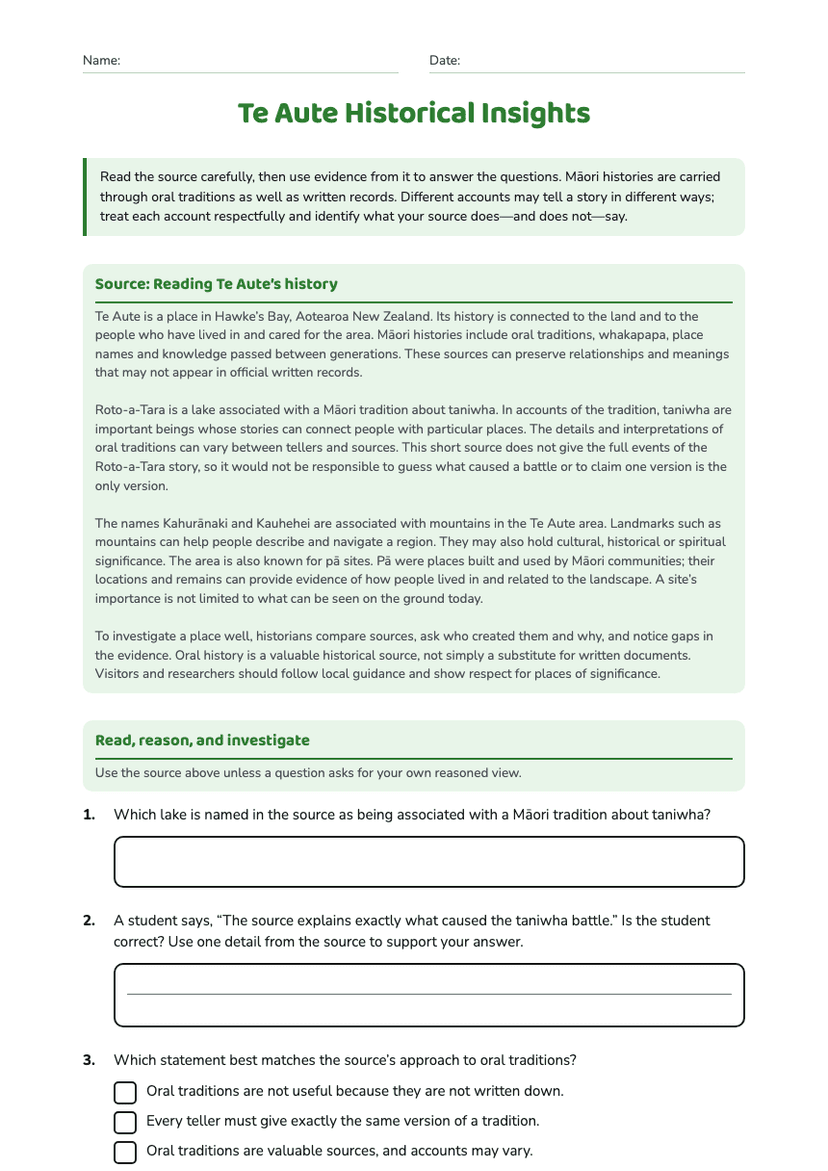
Te Aute Historical Insights
Free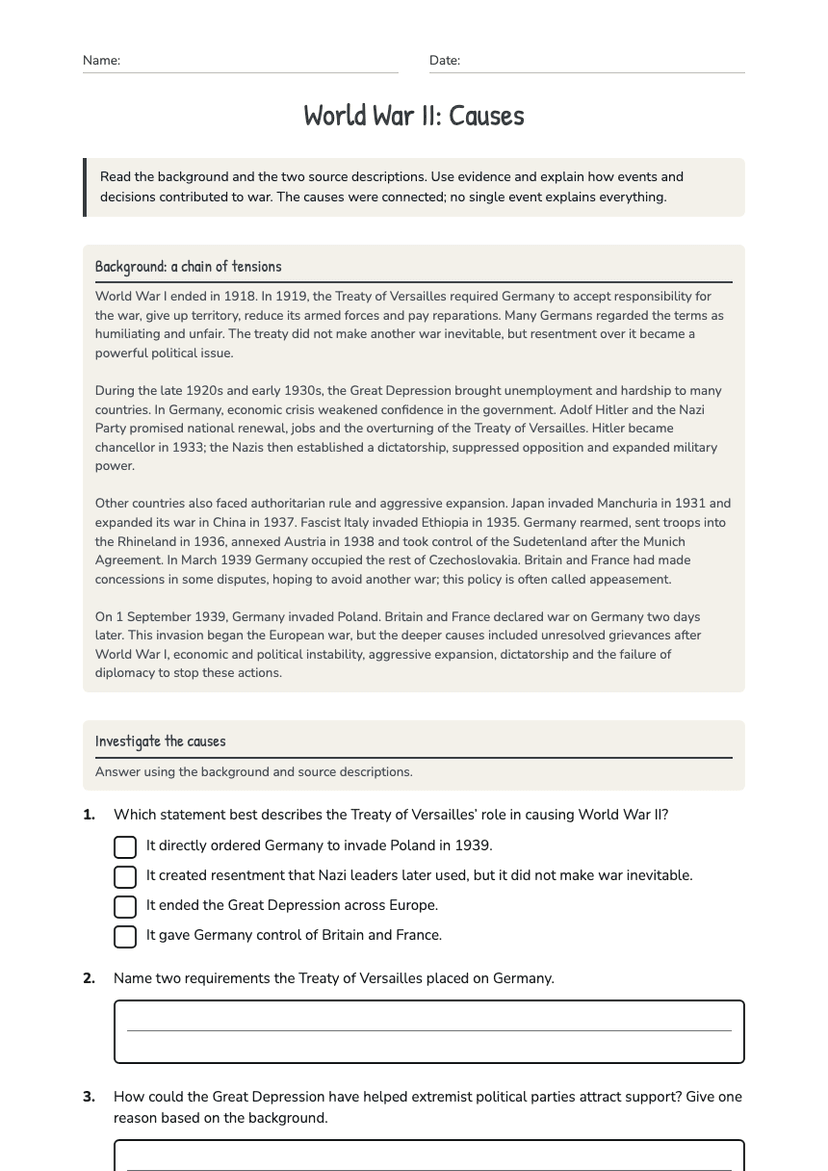
World War II: Causes
Free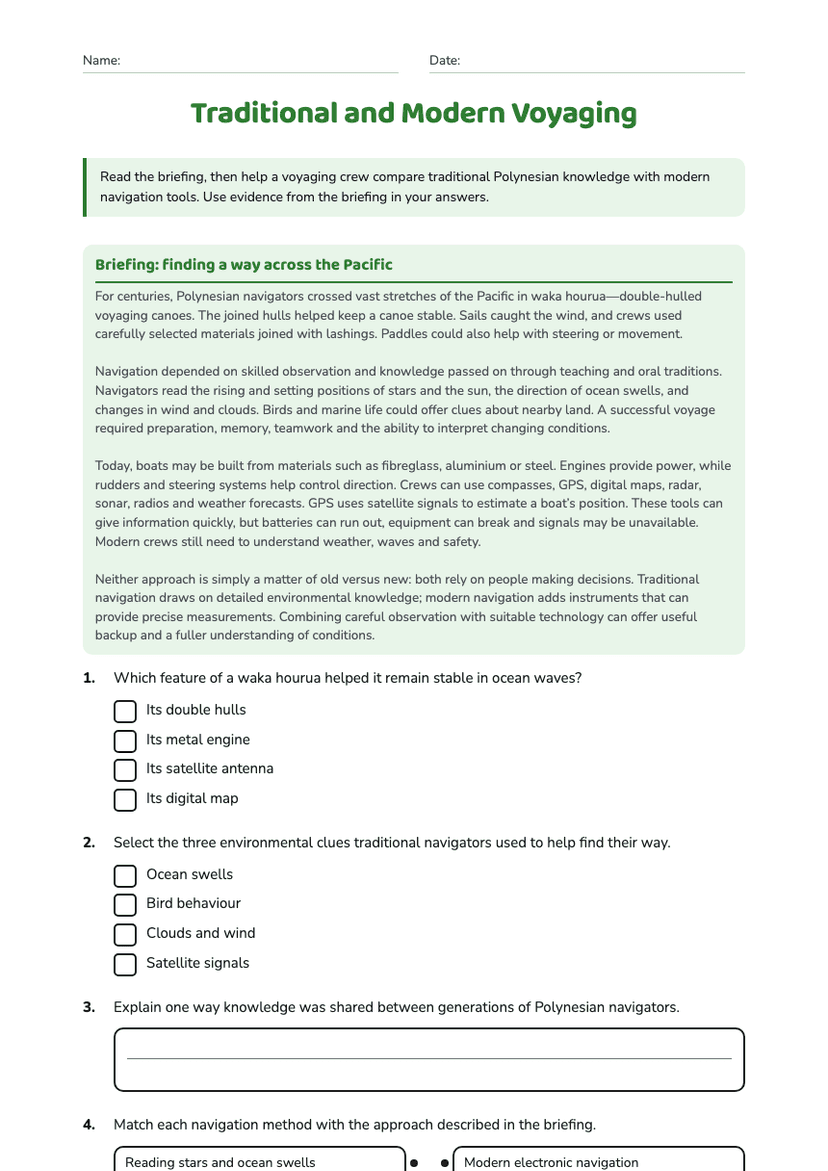
Traditional and Modern Voyaging
Free