Voting Rights History
A free social sciences worksheet ready for your classroom. Open in Kuraplan to grab the print-ready PDF, customize it for your students, or generate a fresh version in seconds.
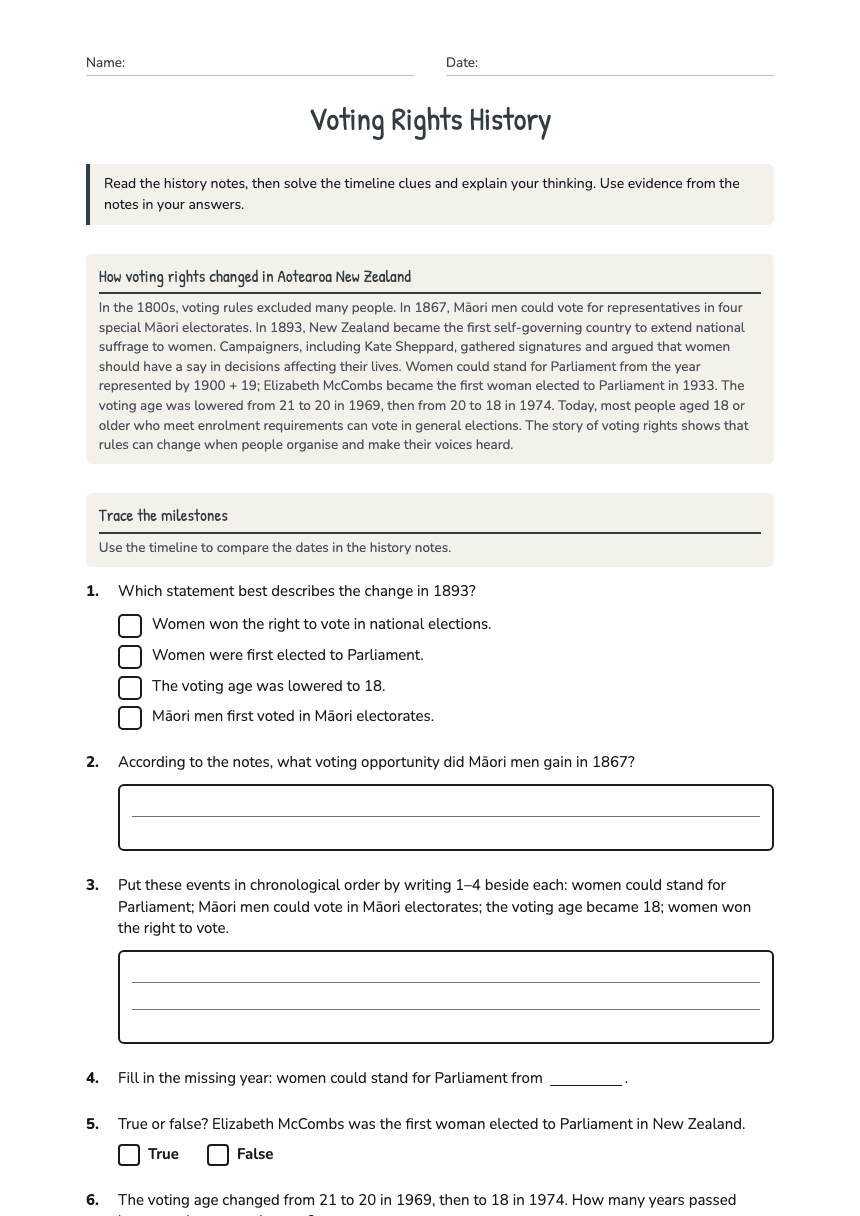
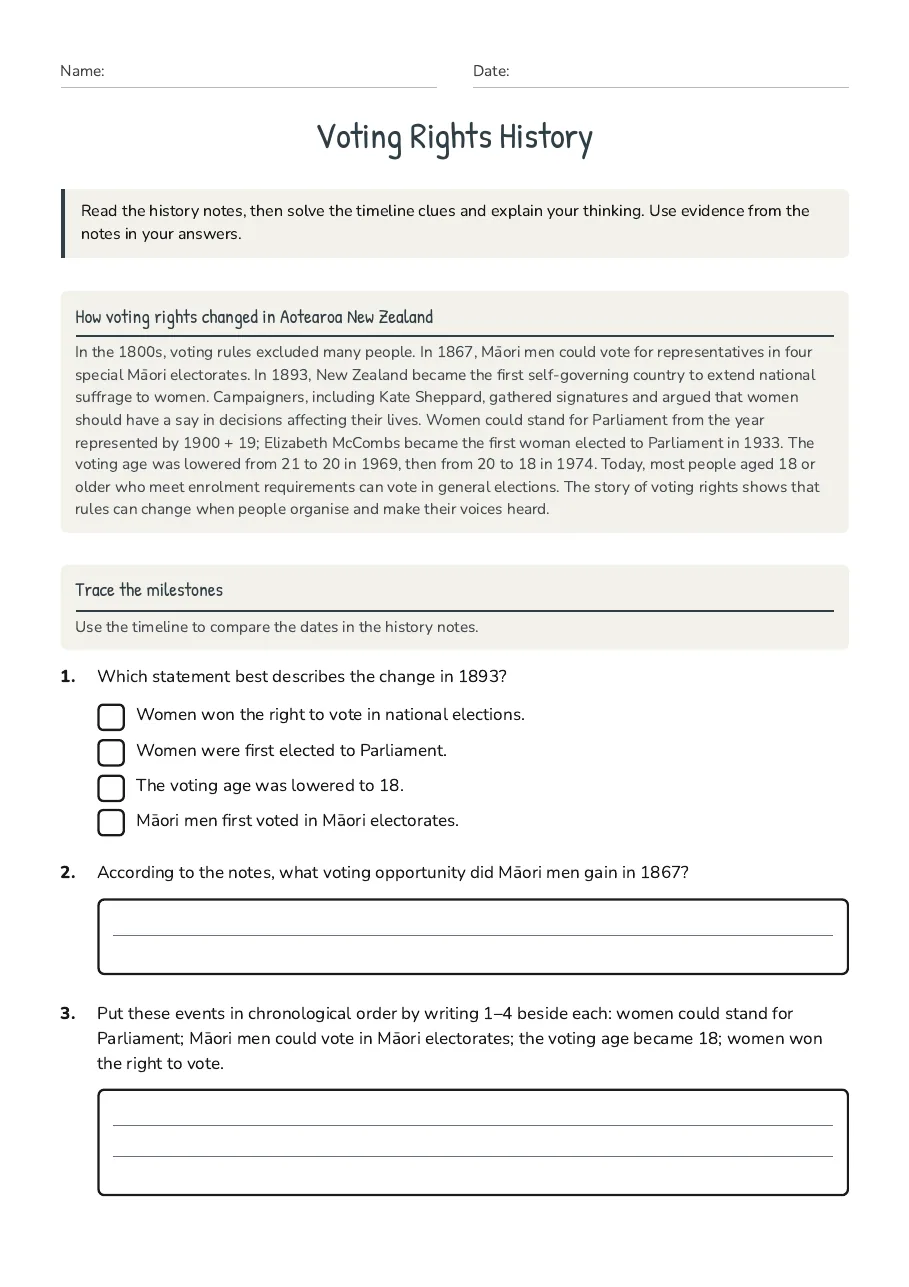
Voting Rights History
How voting rights changed in Aotearoa New Zealand
In the 1800s, voting rules excluded many people. In 1867, Māori men could vote for representatives in four special Māori electorates. In 1893, New Zealand became the first self-governing country to extend national suffrage to women. Campaigners, including Kate Sheppard, gathered signatures and argued that women should have a say in decisions affecting their lives. Women could stand for Parliament from the year represented by 1900 + 19; Elizabeth McCombs became the first woman elected to Parliament in 1933. The voting age was lowered from 21 to 20 in 1969, then from 20 to 18 in 1974. Today, most people aged 18 or older who meet enrolment requirements can vote in general elections. The story of voting rights shows that rules can change when people organise and make their voices heard.
Trace the milestones
Use the timeline to compare the dates in the history notes.
- Women won the right to vote in national elections.
- Women were first elected to Parliament.
- The voting age was lowered to 18.
- Māori men first voted in Māori electorates.
2 printable pages
Page 1
Page 2
About This Worksheet
Free in Kuraplan
Sign up free, grab the PDF, and customize it for your class.
Print-Ready
Formatted for standard paper. Clean layout, easy to read.
AI-Generated
Created with Kuraplan's AI, designed for real classroom use.
For Teachers & Parents
Use in classrooms, for homework, tutoring, or homeschool.
Need a custom version of this worksheet?
Kuraplan's AI generates custom worksheets in seconds — differentiated for every learner, aligned to your curriculum.
Generate Custom Worksheets — FreeMore Social Sciences Worksheets
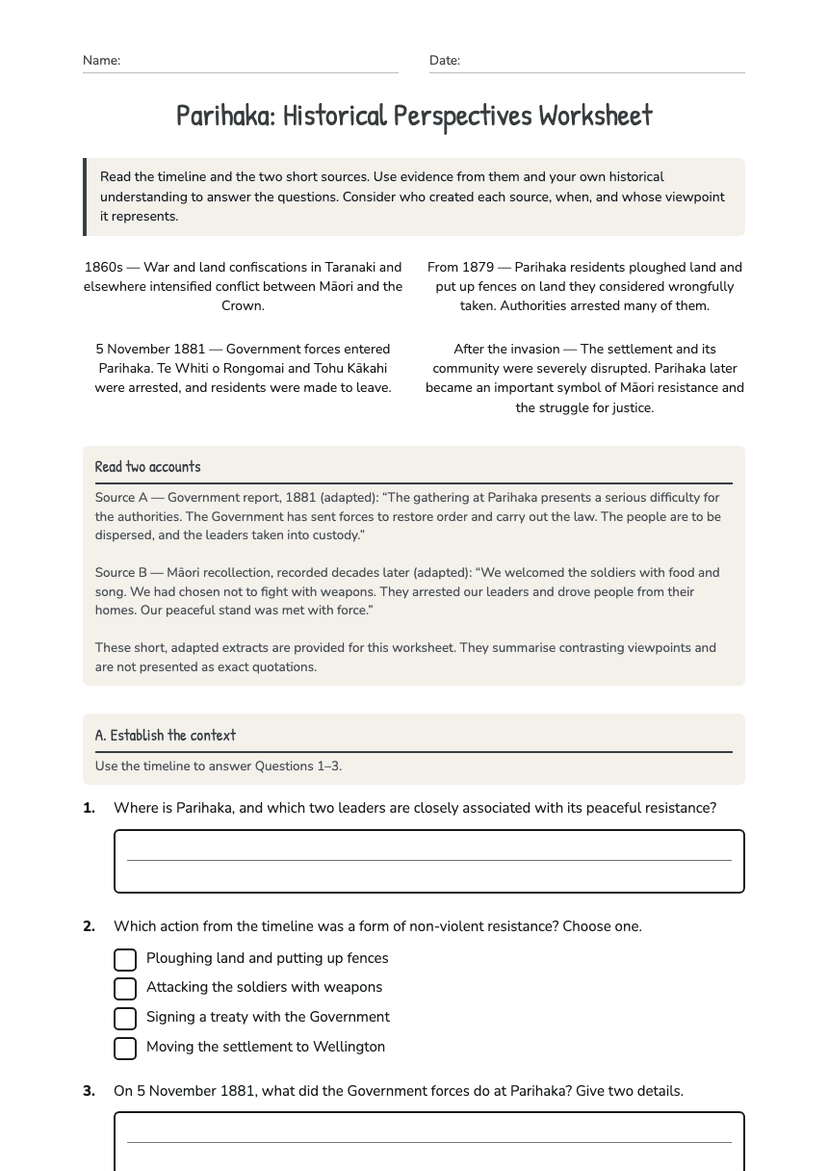
Parihaka: Historical Perspectives Worksheet
Free
Ancient Egyptian Burial Practices
Free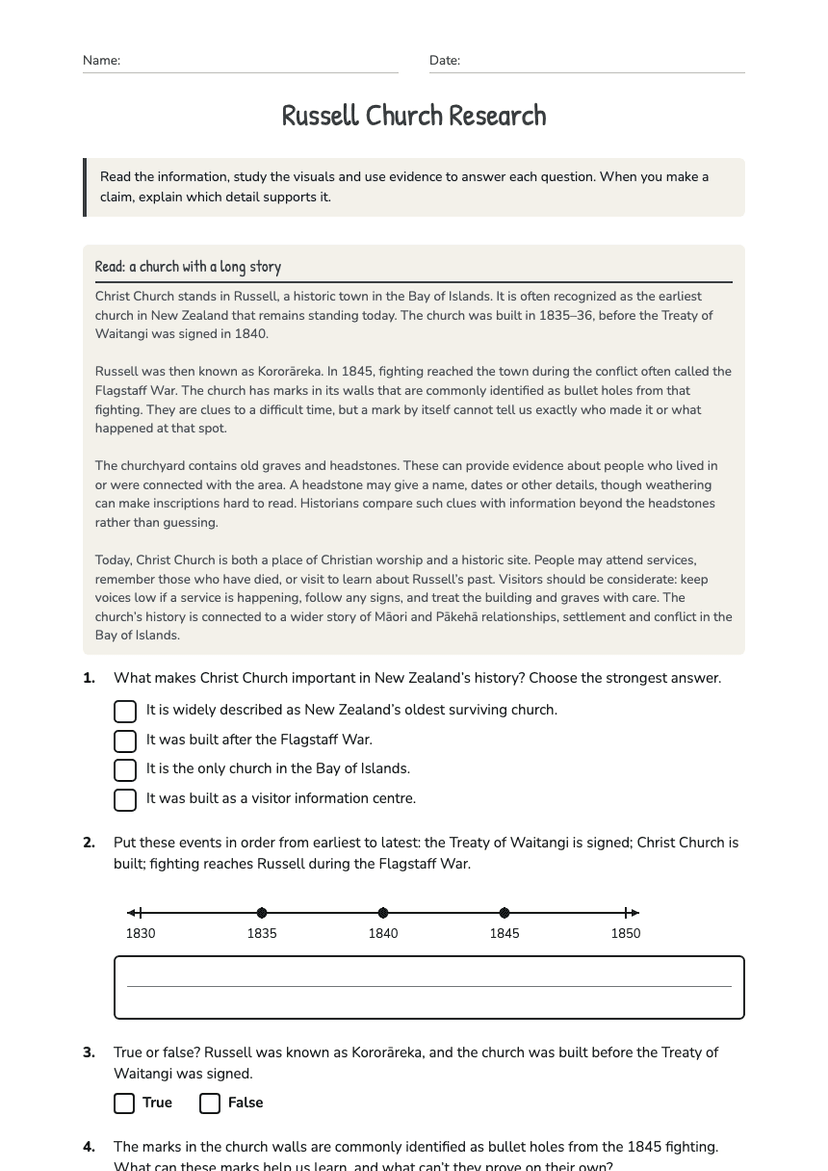
Russell Church Research
Free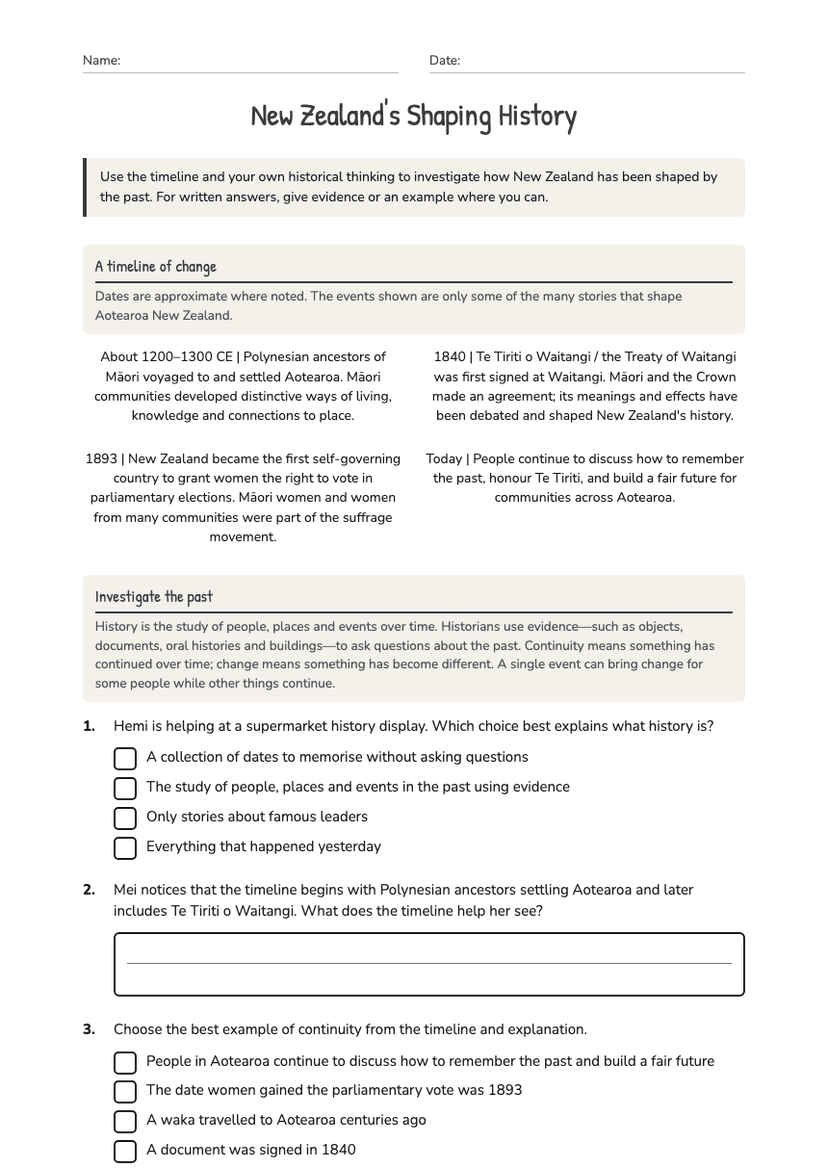
New Zealand's Shaping History
Free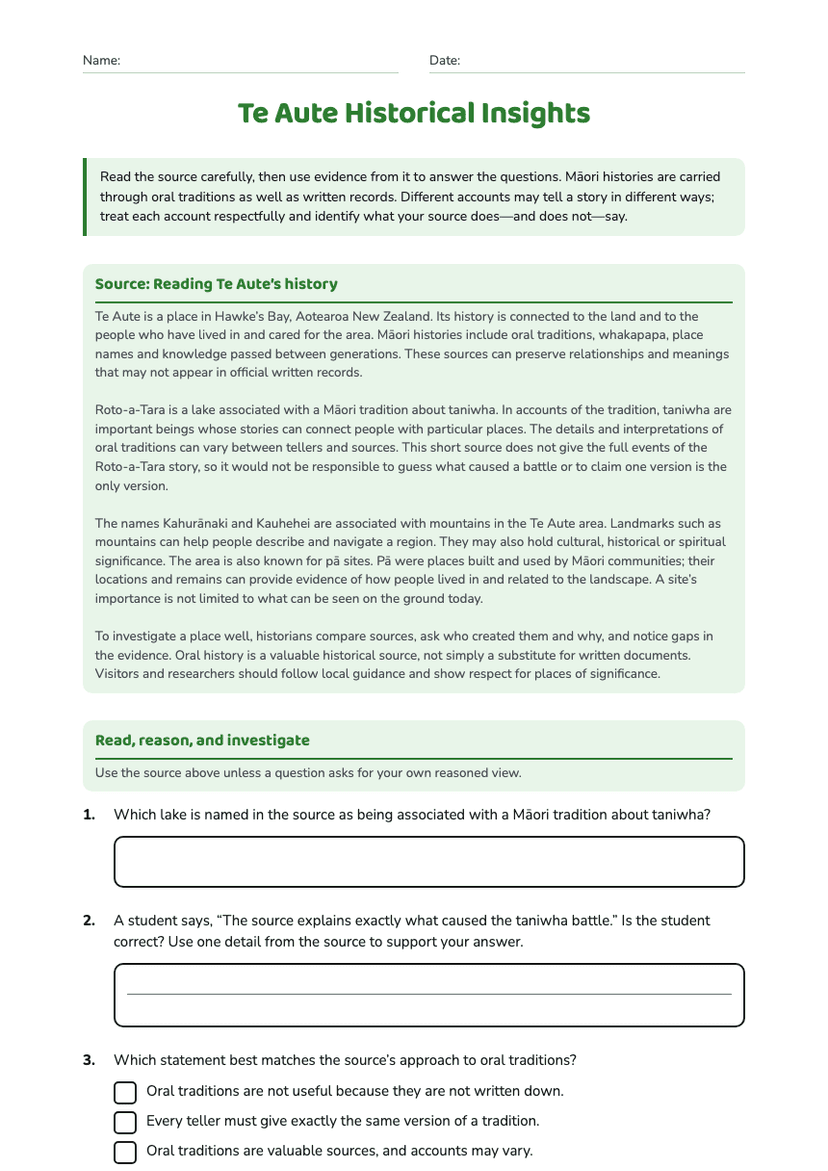
Te Aute Historical Insights
Free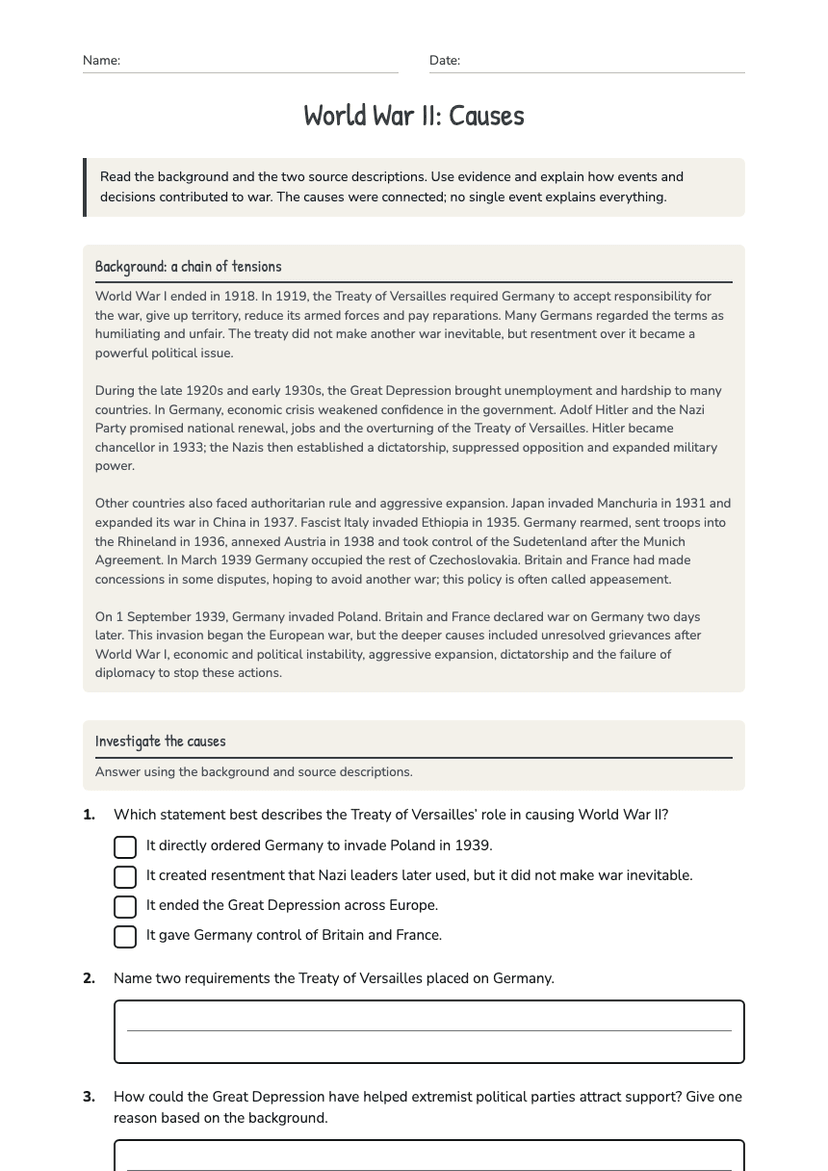
World War II: Causes
Free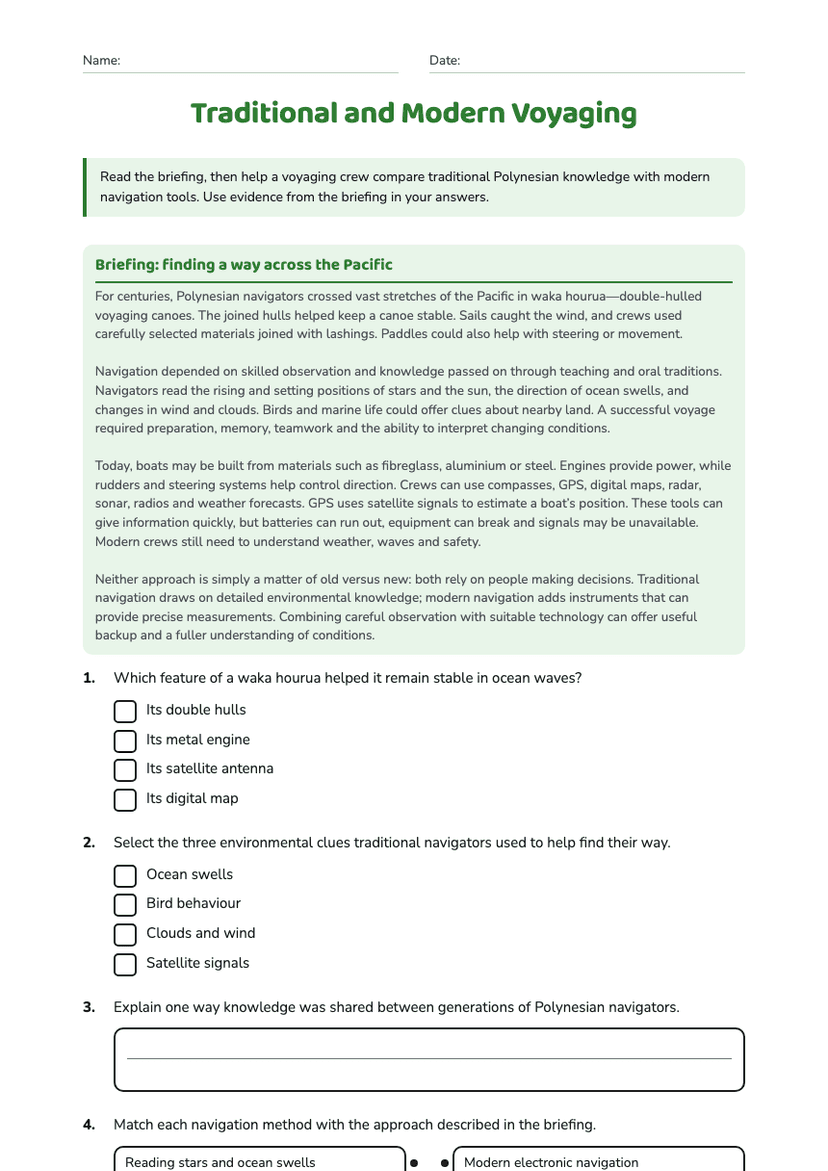
Traditional and Modern Voyaging
Free