Chemistry Data Interpretation Worksheet
A free science worksheet ready for your classroom. Open in Kuraplan to grab the print-ready PDF, customize it for your students, or generate a fresh version in seconds.
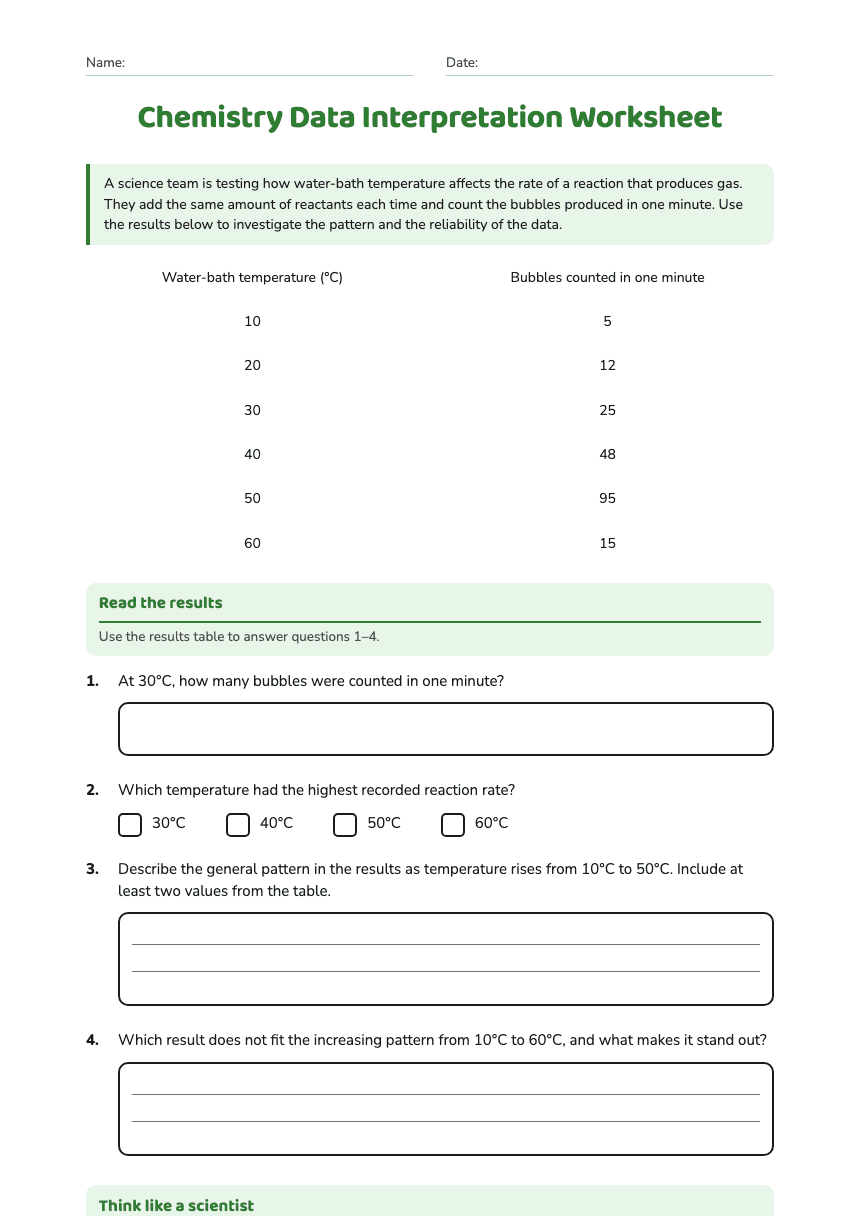
Chemistry Data Interpretation Worksheet
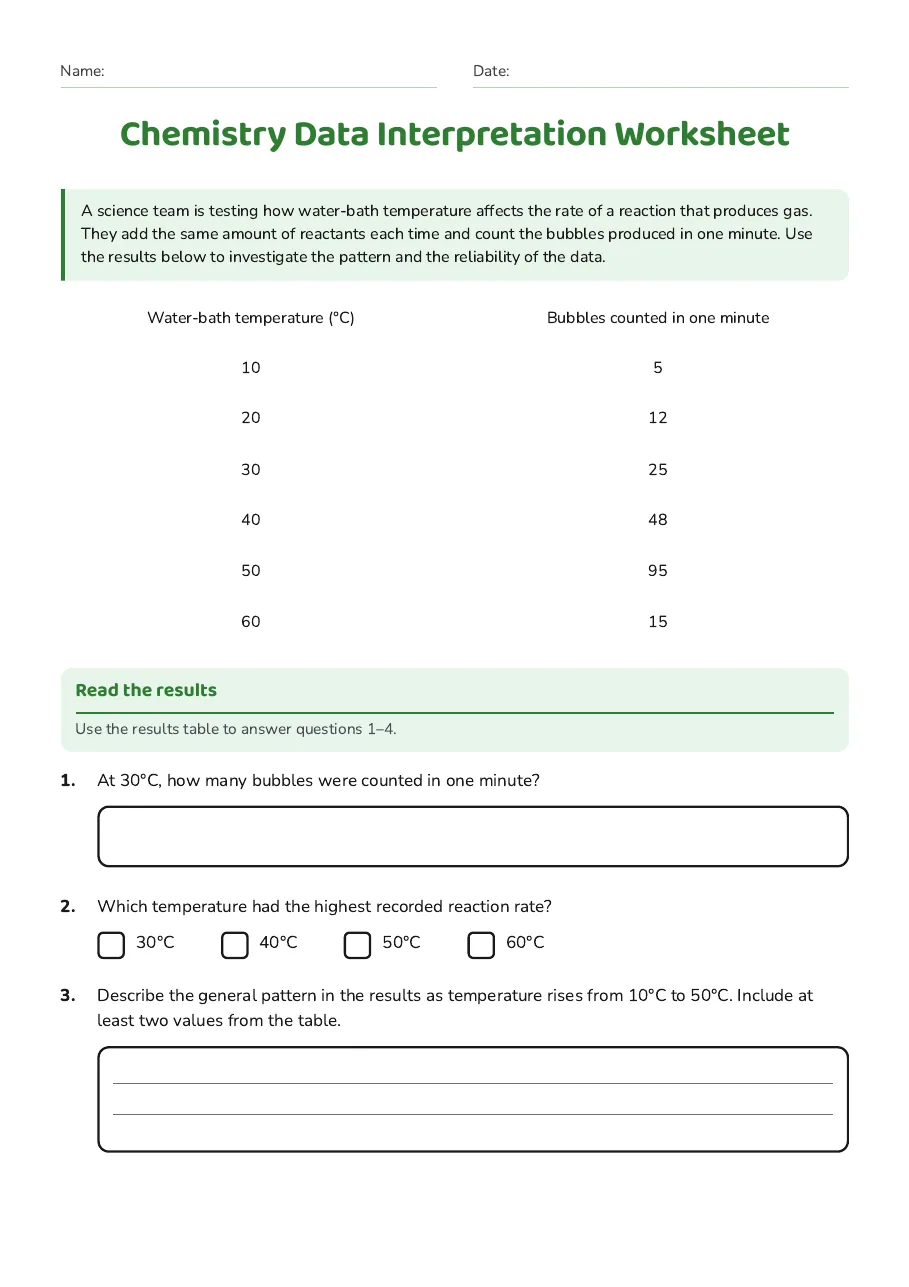
Water-bath temperature (°C)
Bubbles counted in one minute
10
5
20
12
30
25
40
48
50
95
60
15
Read the results
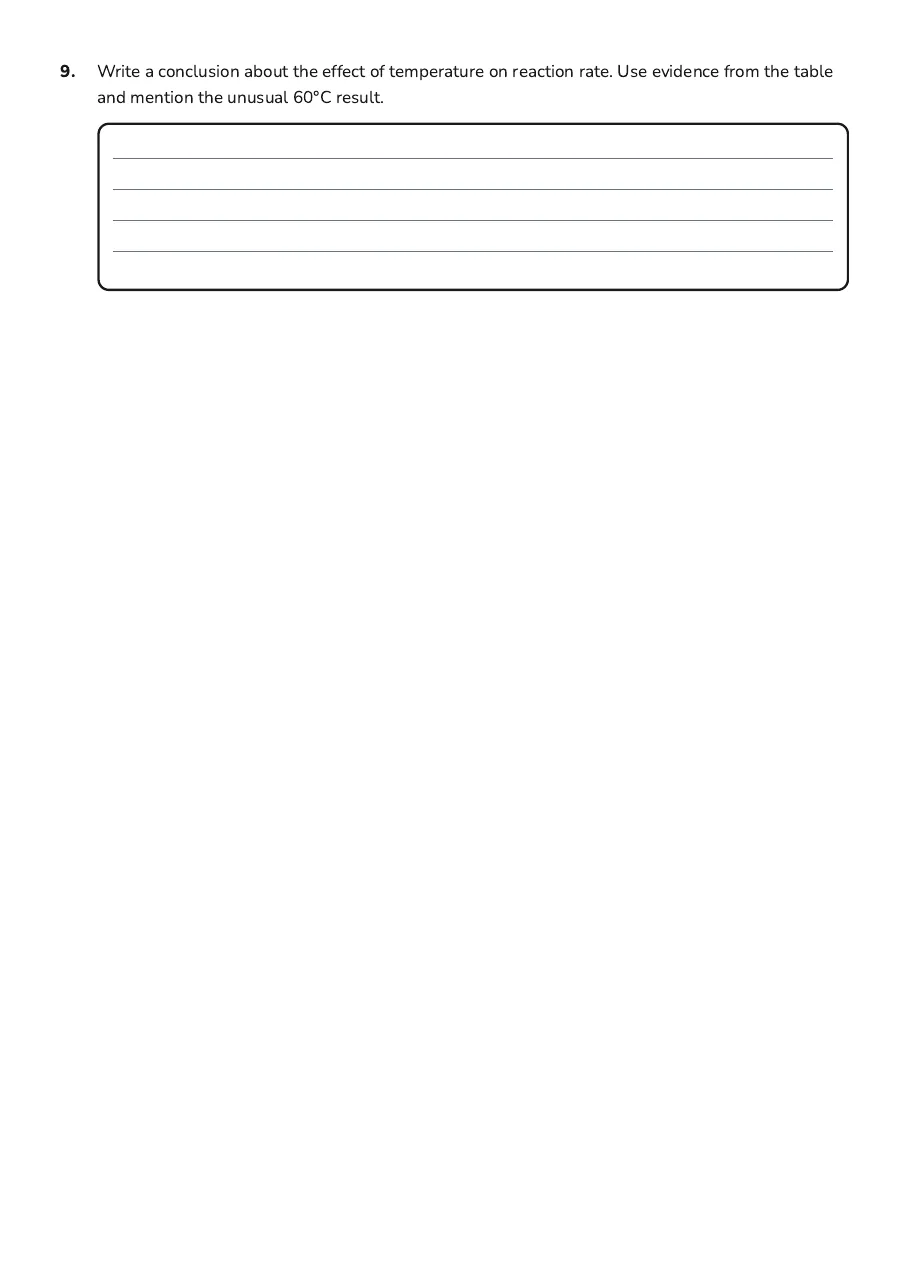
Use the results table to answer questions 1–4.
- 30°C
- 40°C
- 50°C
- 60°C
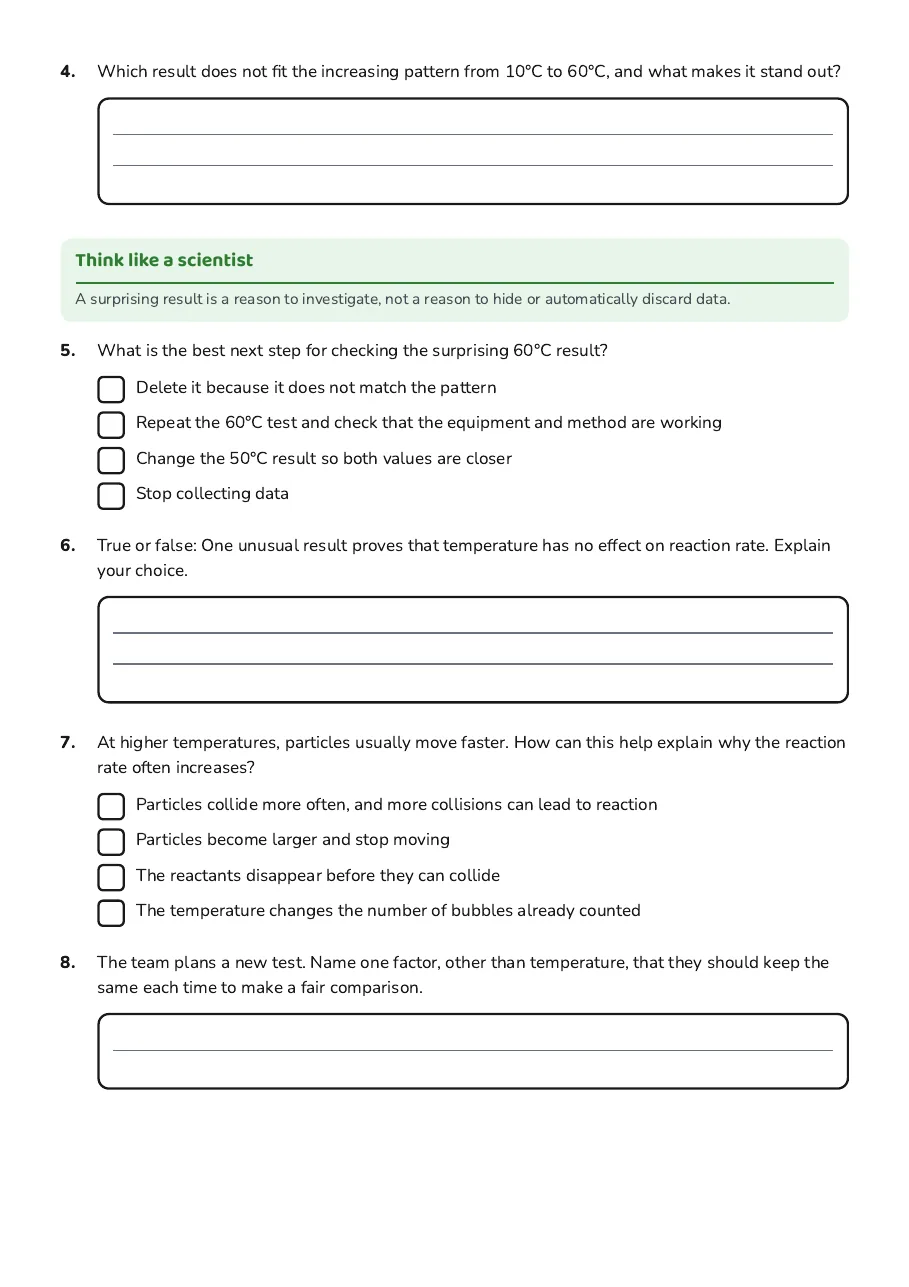
Think like a scientist
A surprising result is a reason to investigate, not a reason to hide or automatically discard data.
- Delete it because it does not match the pattern
- Repeat the 60°C test and check that the equipment and method are working
- Change the 50°C result so both values are closer
- Stop collecting data
- Particles collide more often, and more collisions can lead to reaction
- Particles become larger and stop moving
- The reactants disappear before they can collide
- The temperature changes the number of bubbles already counted
3 printable pages
Page 1
Page 2
Page 3
About This Worksheet
Free in Kuraplan
Sign up free, grab the PDF, and customize it for your class.
Print-Ready
Formatted for standard paper. Clean layout, easy to read.
AI-Generated
Created with Kuraplan's AI, designed for real classroom use.
For Teachers & Parents
Use in classrooms, for homework, tutoring, or homeschool.
Need a custom version of this worksheet?
Kuraplan's AI generates custom worksheets in seconds — differentiated for every learner, aligned to your curriculum.
Generate Custom Worksheets — FreeMore Science Worksheets
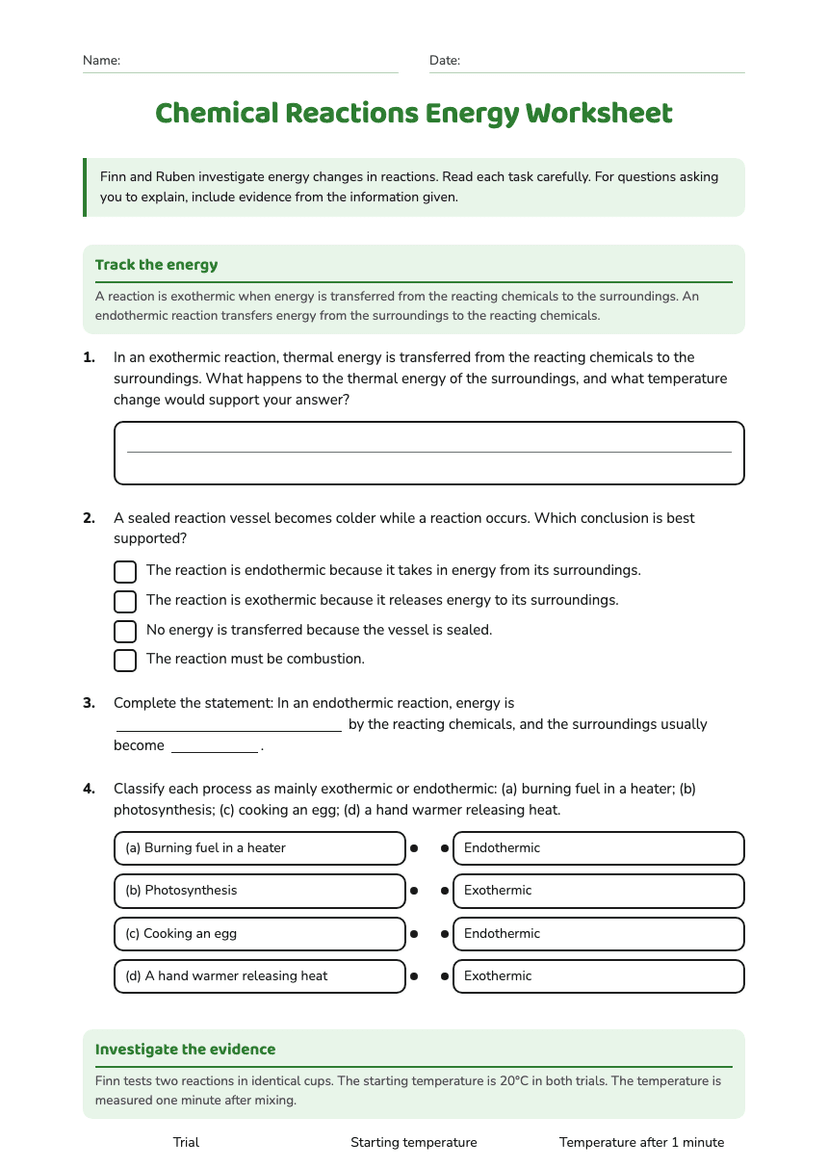
Chemical Reactions Energy Worksheet
Free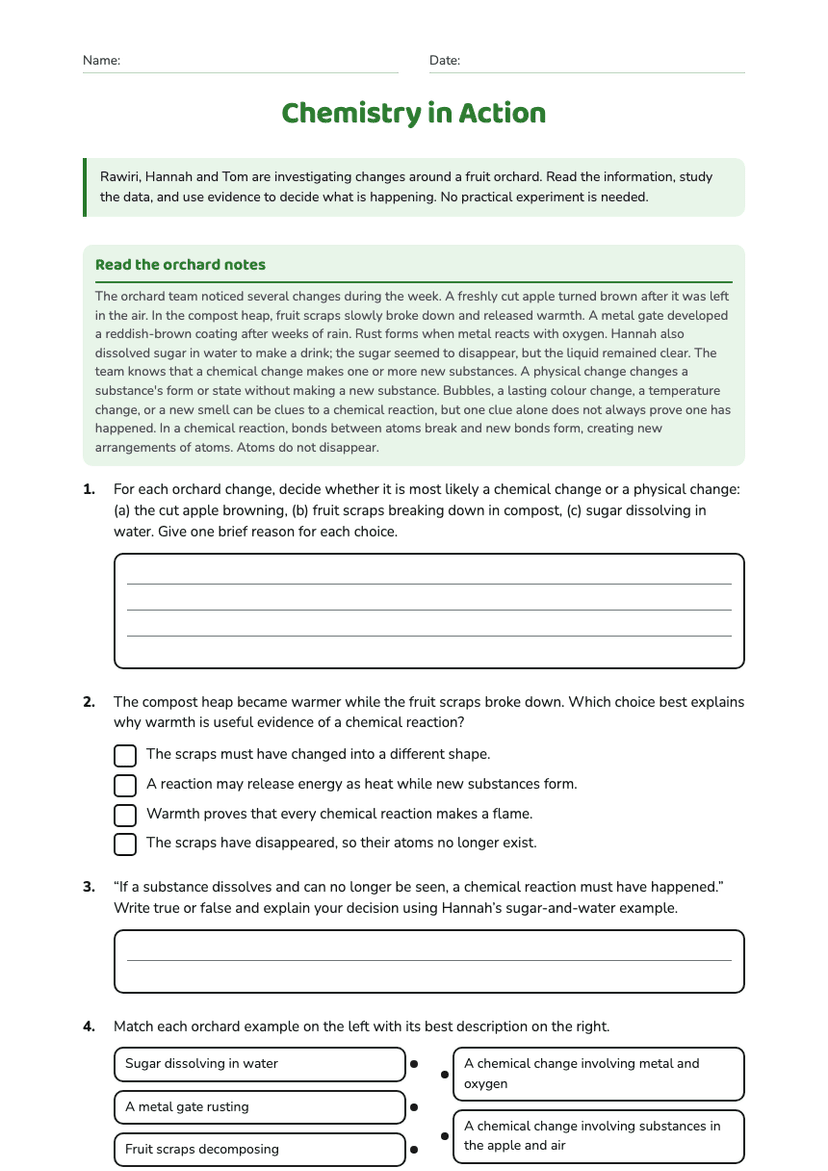
Chemistry in Action
Free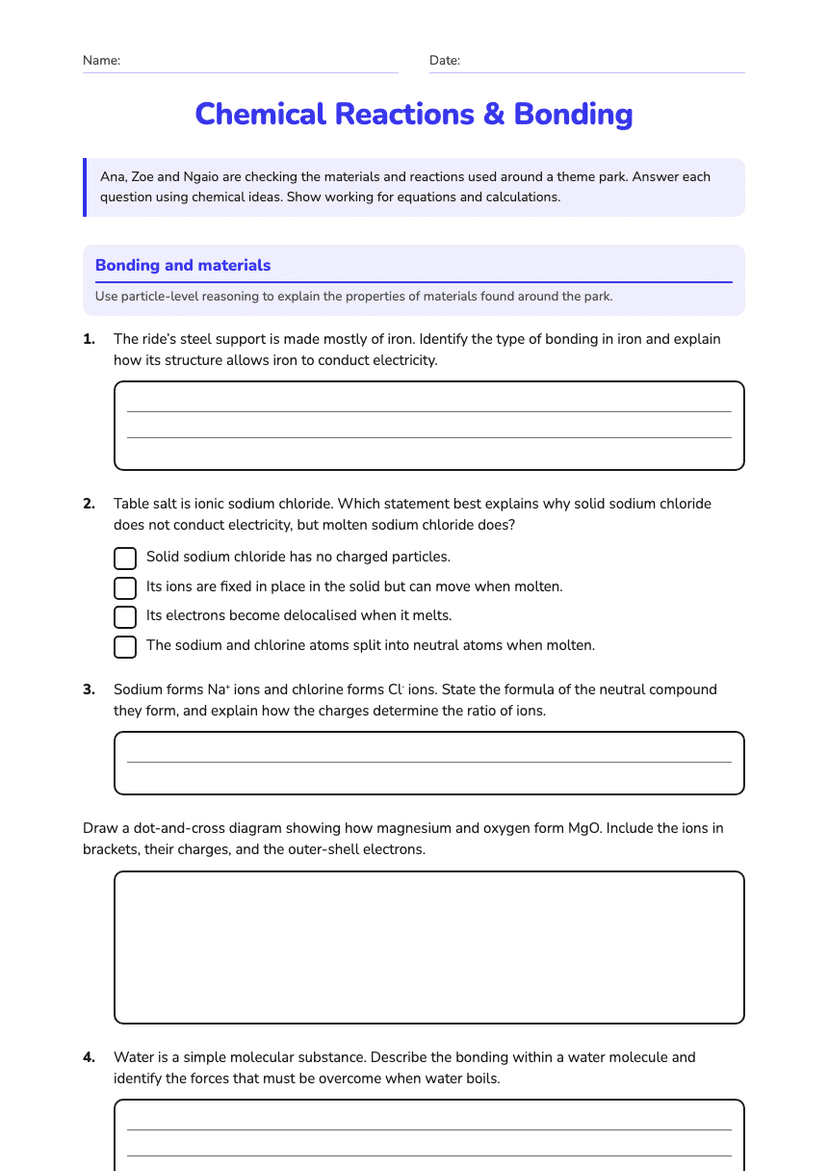
Chemical Reactions & Bonding
Free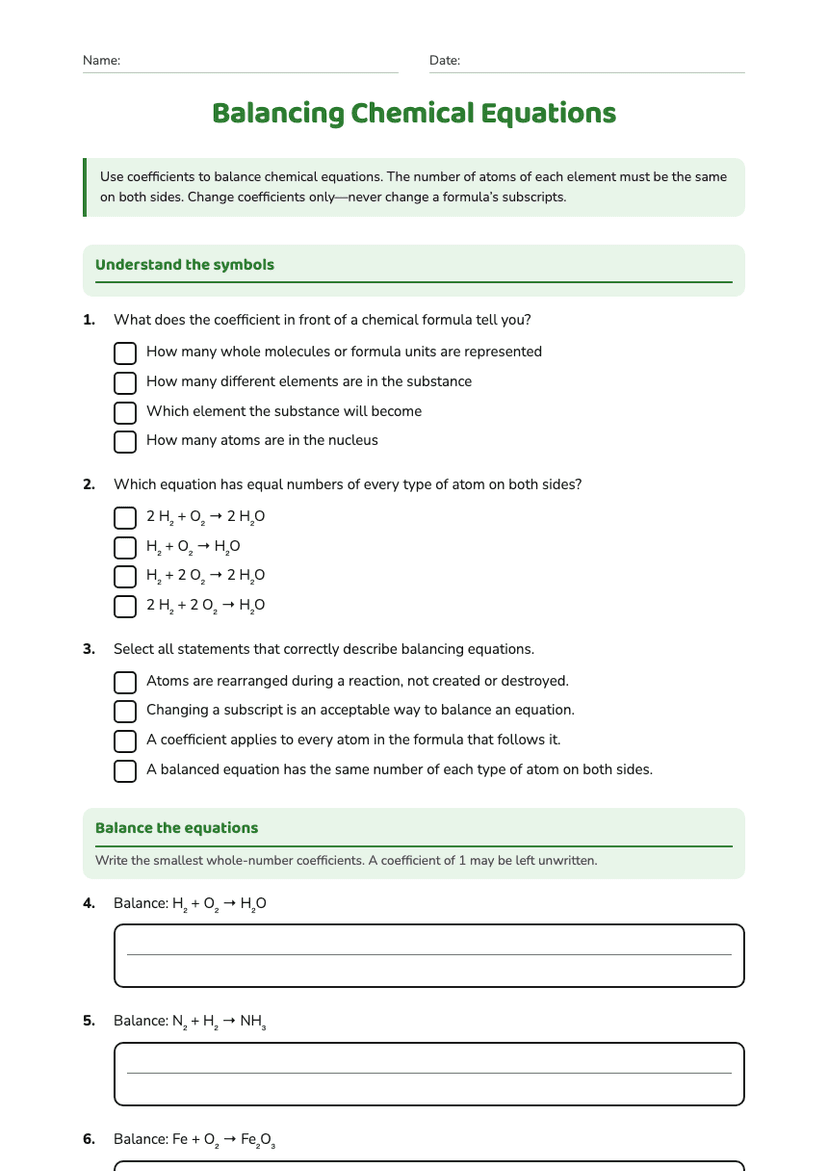
Balancing Chemical Equations
Free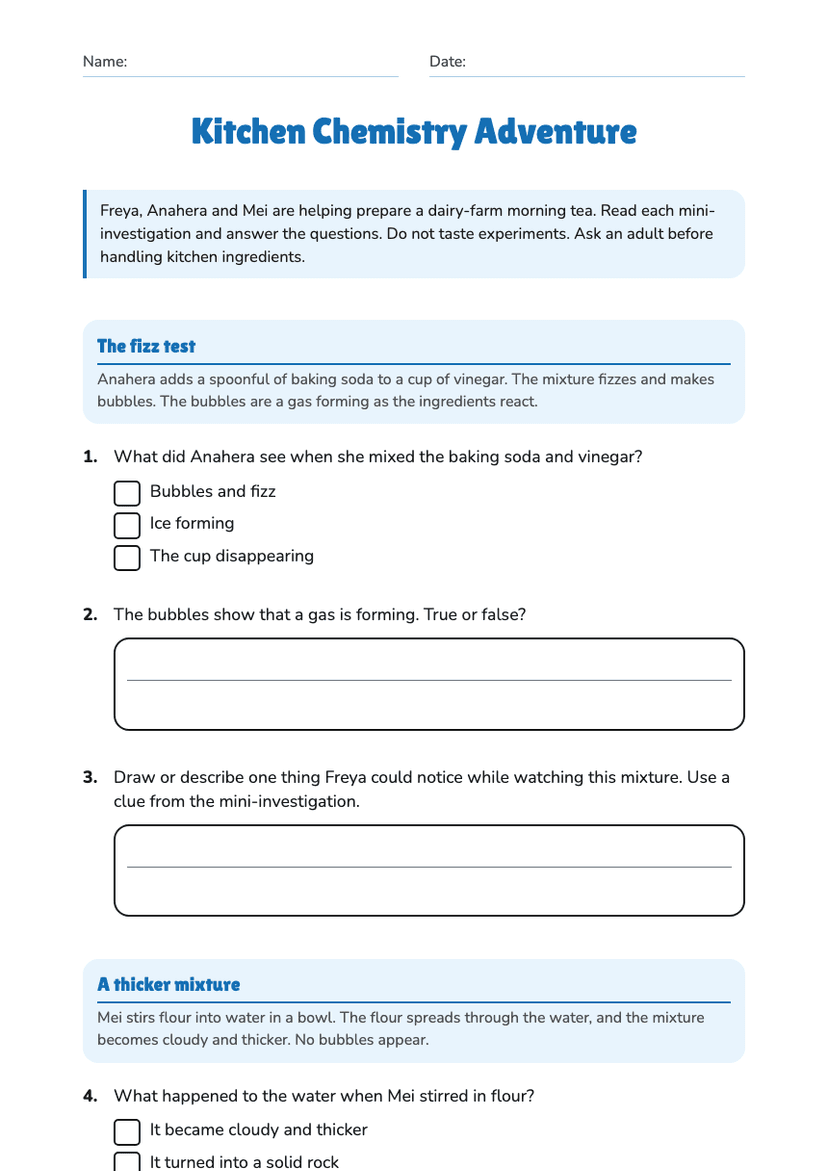
Kitchen Chemistry Adventure
Free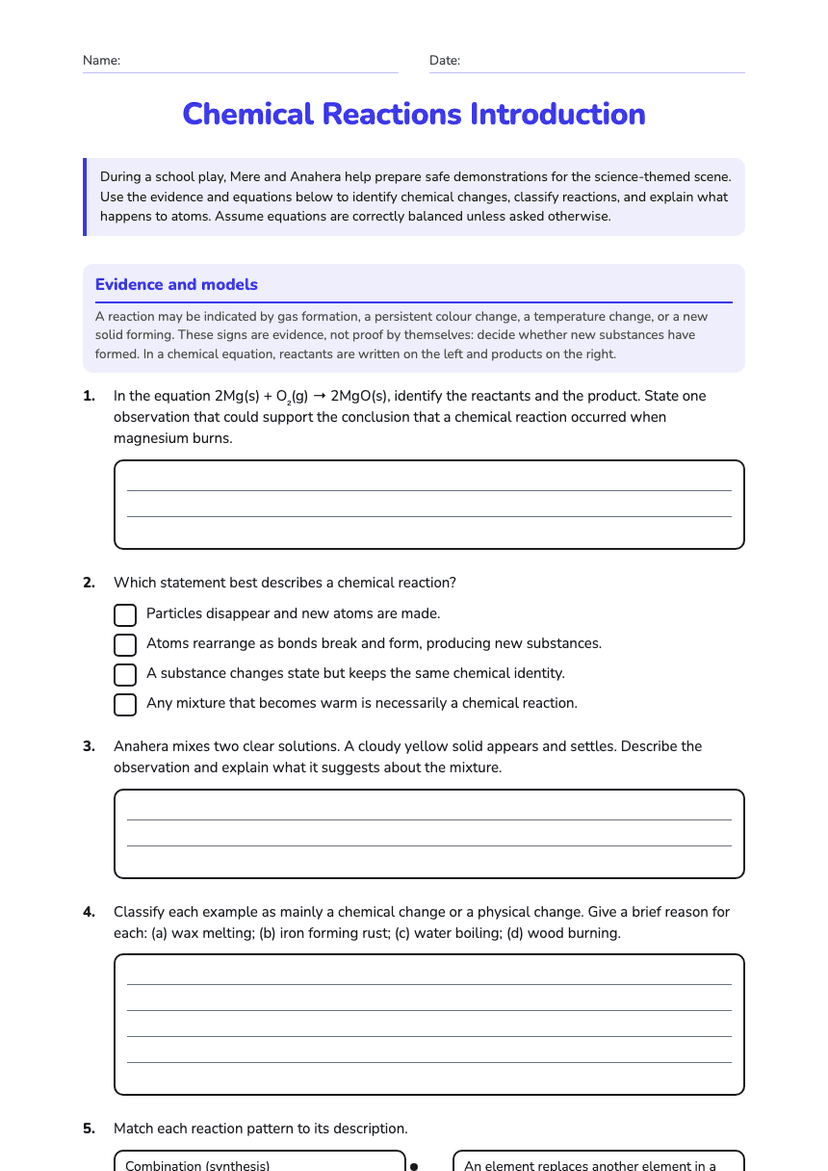
Chemical Reactions Introduction
Free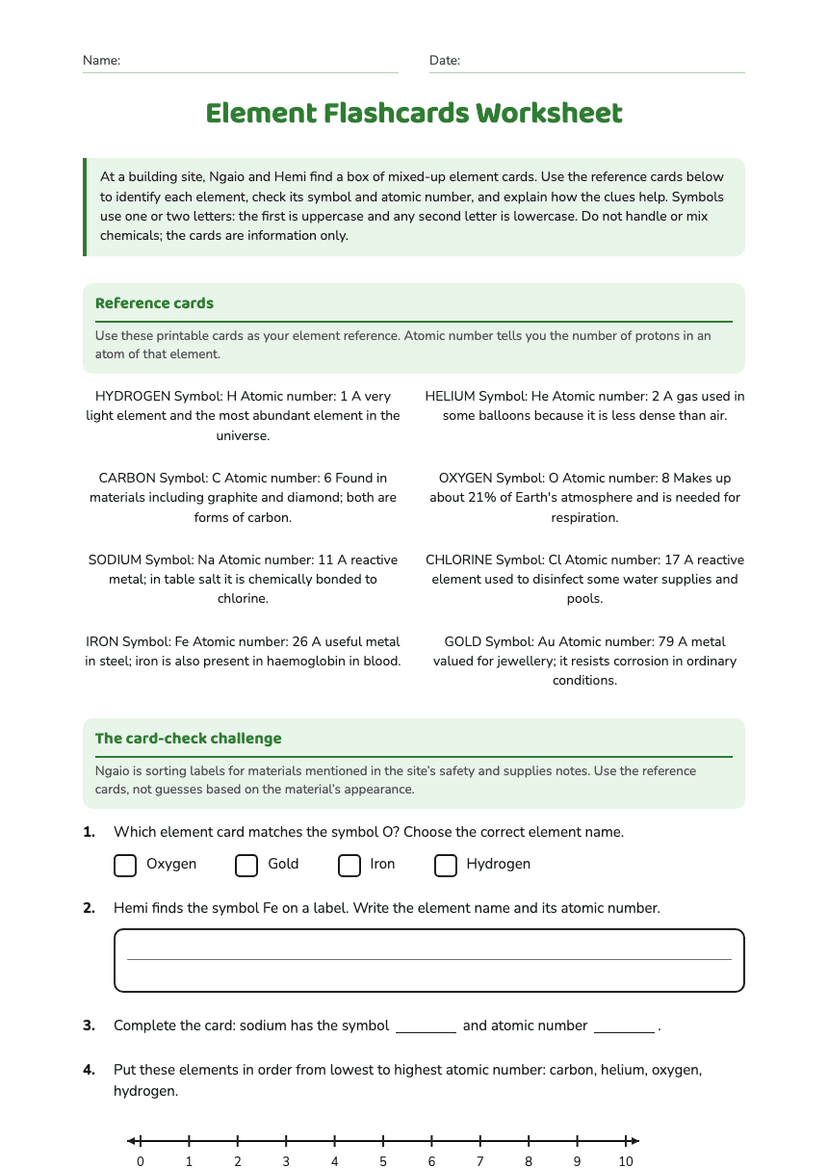
Element Flashcards Worksheet
Free