Christmas Decorations Reading Comprehension
A free english worksheet ready for your classroom. Open in Kuraplan to grab the print-ready PDF, customize it for your students, or generate a fresh version in seconds.
Christmas Decorations Reading Comprehension
📖 Reading Passage: The Symbolism of Christmas Decorations
Christmas decorations have adorned homes and churches for centuries, each carrying profound symbolic meaning that extends far beyond their aesthetic appeal. These ornamental traditions have evolved through generations, weaving together religious beliefs, cultural practices, and historical significance.
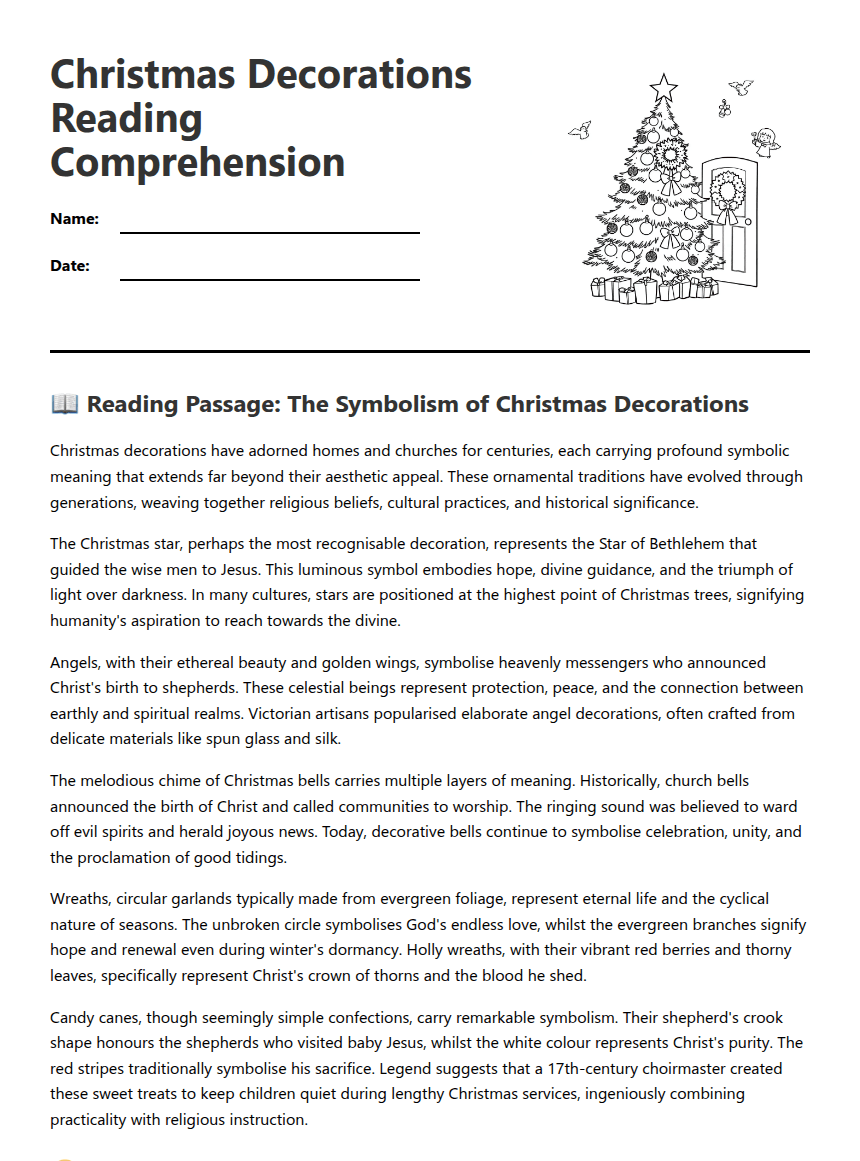
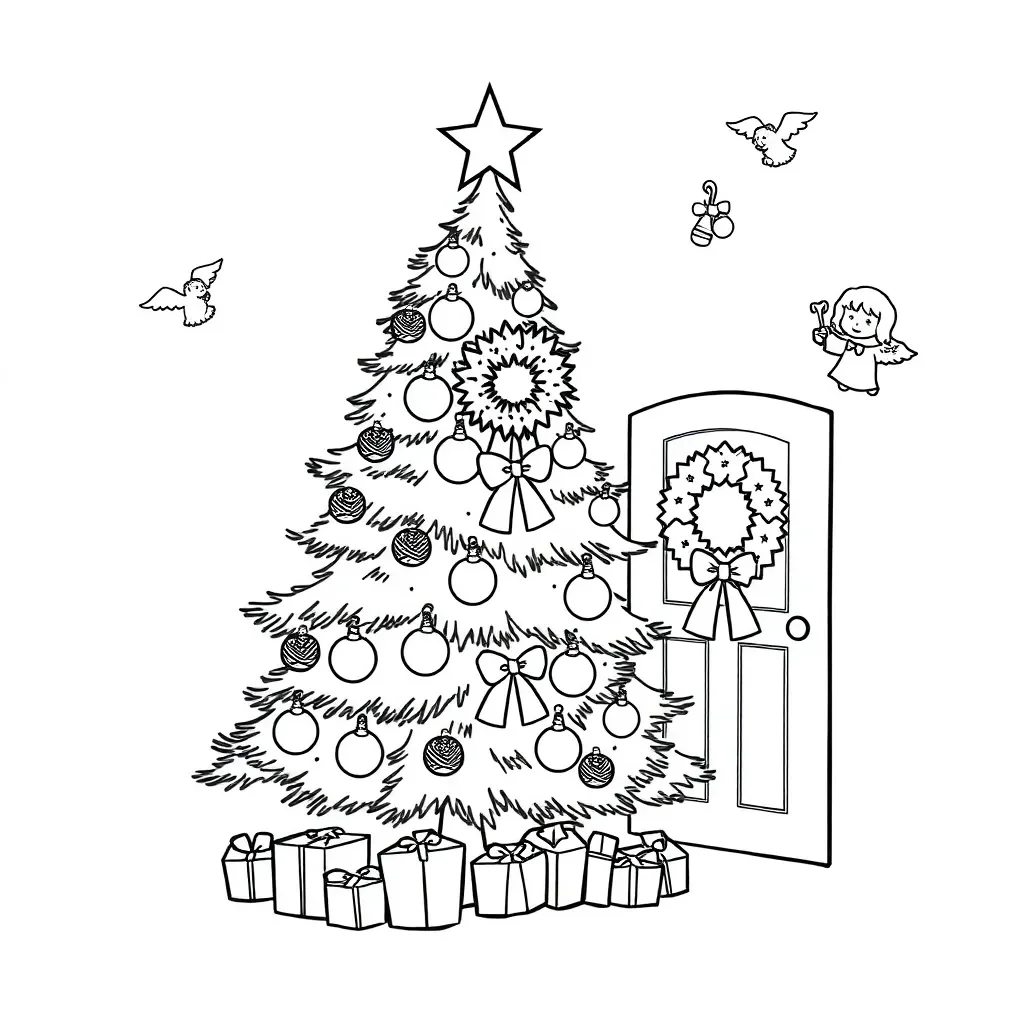
The Christmas star, perhaps the most recognisable decoration, represents the Star of Bethlehem that guided the wise men to Jesus. This luminous symbol embodies hope, divine guidance, and the triumph of light over darkness. In many cultures, stars are positioned at the highest point of Christmas trees, signifying humanity's aspiration to reach towards the divine.
Angels, with their ethereal beauty and golden wings, symbolise heavenly messengers who announced Christ's birth to shepherds. These celestial beings represent protection, peace, and the connection between earthly and spiritual realms. Victorian artisans popularised elaborate angel decorations, often crafted from delicate materials like spun glass and silk.
The melodious chime of Christmas bells carries multiple layers of meaning. Historically, church bells announced the birth of Christ and called communities to worship. The ringing sound was believed to ward off evil spirits and herald joyous news. Today, decorative bells continue to symbolise celebration, unity, and the proclamation of good tidings.
Wreaths, circular garlands typically made from evergreen foliage, represent eternal life and the cyclical nature of seasons. The unbroken circle symbolises God's endless love, whilst the evergreen branches signify hope and renewal even during winter's dormancy. Holly wreaths, with their vibrant red berries and thorny leaves, specifically represent Christ's crown of thorns and the blood he shed.
Candy canes, though seemingly simple confections, carry remarkable symbolism. Their shepherd's crook shape honours the shepherds who visited baby Jesus, whilst the white colour represents Christ's purity. The red stripes traditionally symbolise his sacrifice. Legend suggests that a 17th-century choirmaster created these sweet treats to keep children quiet during lengthy Christmas services, ingeniously combining practicality with religious instruction.
🤔 Part 1: Multiple Choice Questions
✍️ Part 2: Analysis and Reflection
About This Worksheet
Free in Kuraplan
Sign up free, grab the PDF, and customize it for your class.
Print-Ready
Formatted for standard paper. Clean layout, easy to read.
AI-Generated
Created with Kuraplan's AI, designed for real classroom use.
For Teachers & Parents
Use in classrooms, for homework, tutoring, or homeschool.
Need a custom version of this worksheet?
Kuraplan's AI generates custom worksheets in seconds — differentiated for every learner, aligned to your curriculum.
Generate Custom Worksheets — FreeMore English Worksheets
Camp D Tent Reading Comprehension
Free
Discover Tonga Reading Text
Free
Possum Text Evidence Worksheet
Free
Possum Fluency Practice
Free
Author’s Purpose P.I.E.
Free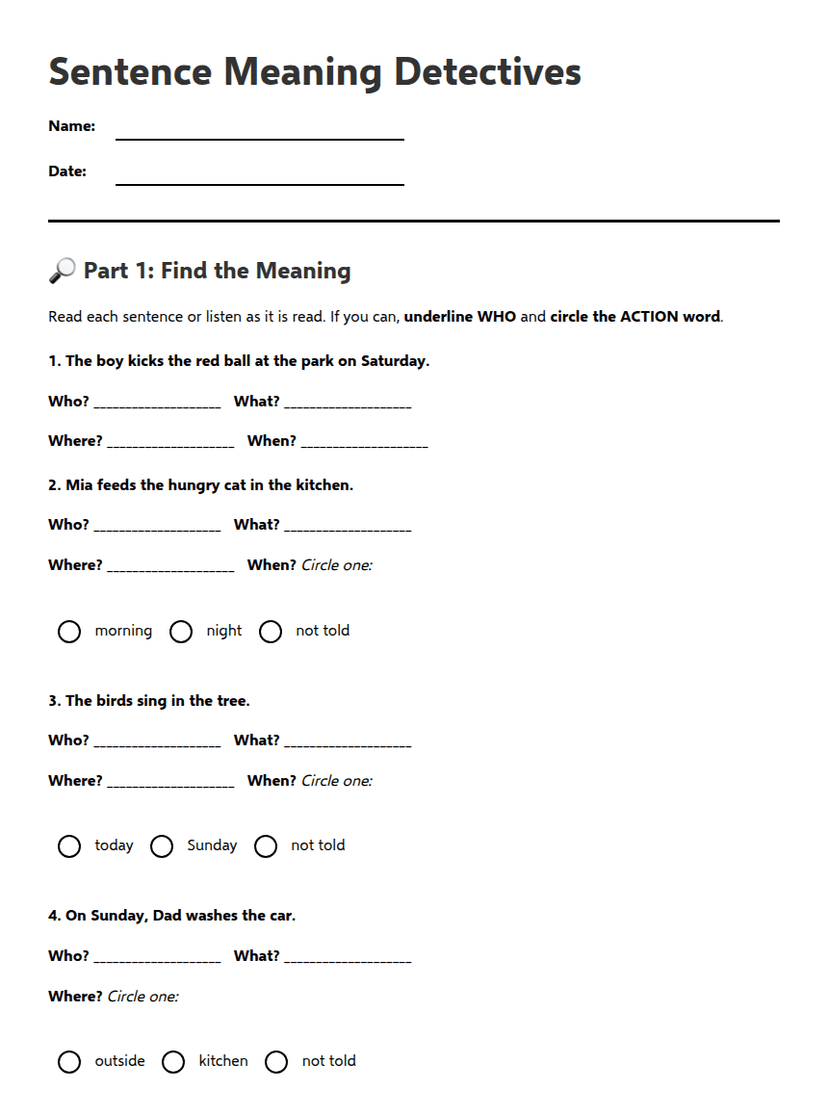
Sentence Meaning Detectives
Free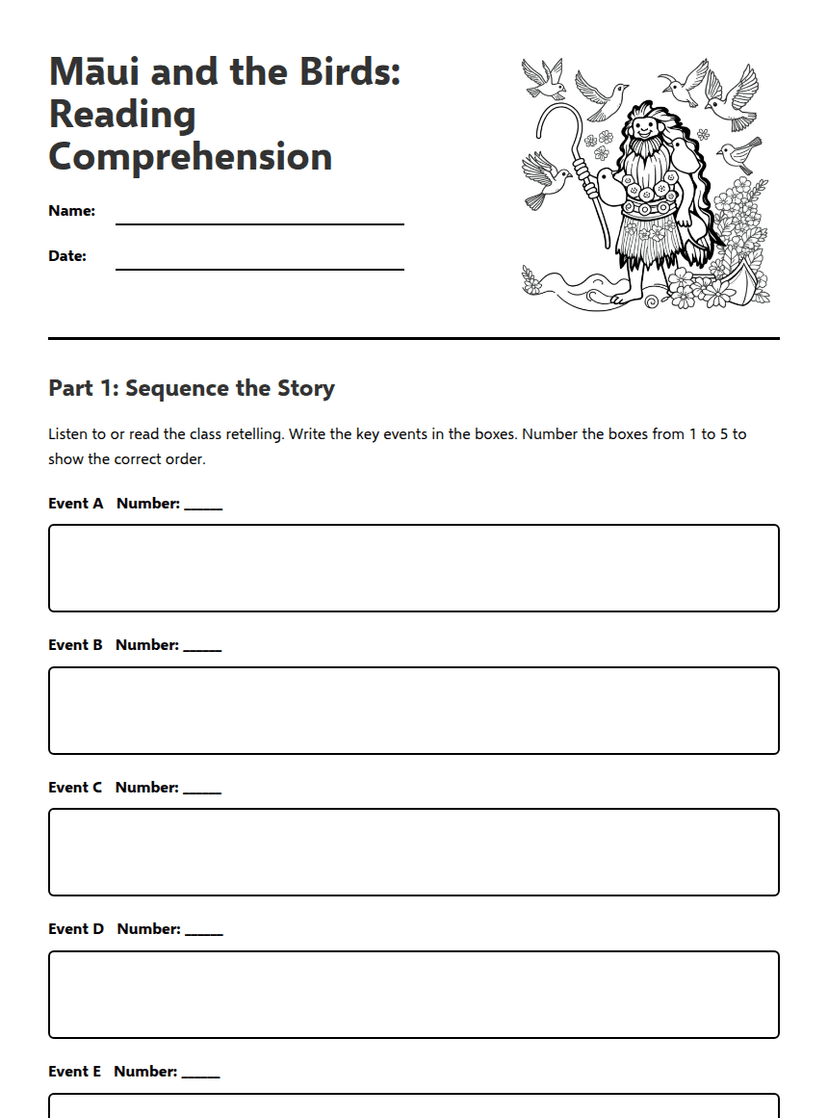
Māui and the Birds: Reading Comprehension
Free