Comprehension Skills Practice
A free english worksheet ready for your classroom. Open in Kuraplan to grab the print-ready PDF, customize it for your students, or generate a fresh version in seconds.

Comprehension Skills Practice
Part 1: Reading for Understanding
Read the passage carefully, then answer the questions below. Scaffolding tip: Look back at the text to find your answers — they are stated directly!
Passage: Tāmati has a dog named Kuri. Every morning, Tāmati takes Kuri for a walk to the park near their house. Kuri loves to run and chase birds. After the walk, Tāmati gives Kuri fresh water and a bowl of food. Tāmati says, "Looking after a pet is a big responsibility."
Tāmati takes Kuri for a walk every evening. TRUE FALSE
Scaffolding tip: Think — Who is it about? What do they do?
Part 2: Reading Between the Lines
Read the passage carefully, then answer the questions. Scaffolding tip: Some answers are not stated directly — use clues in the text to figure them out!
Passage: Aroha arrived at school with dark circles under her eyes. She yawned three times during the morning roll call and forgot to bring her homework. At lunchtime, instead of playing with her friends, she sat quietly by herself and stared at the ground. Her teacher, Ms Parata, noticed and brought her a glass of water. "Are you doing okay?" she asked gently.
Scaffolding tip: Look for things Aroha did or didn't do that give you hints about how she feels.
Clue 1: _____________________________________________________________
Clue 2: _____________________________________________________________
Ms Parata noticed that something seemed wrong with Aroha. TRUE FALSE
Scaffolding tip: Think about what Ms Parata observed. Start with: "Ms Parata probably asked because she noticed..."
Part 3: Summarising, Inferring & Self-Monitoring
Read the passage carefully. Scaffolding tip: If you are confused, re-read the tricky part. Ask yourself: "What is the author really trying to say here?"
Passage: In 2023, scientists in Aotearoa New Zealand reported that kākāpō numbers had risen to over 250 birds — a remarkable achievement for a species once considered on the brink of extinction. The kākāpō is the world's heaviest parrot and is completely flightless. For decades, introduced predators such as stoats, rats, and cats pushed the population to dangerously low numbers. Conservation teams now work around the clock on predator-free islands, monitoring every individual bird. Each kākāpō is fitted with a transmitter so rangers can track their health and behaviour. Despite this progress, experts warn that the species remains critically endangered and that sustained effort is essential. "We cannot afford to become complacent," said one ranger. "Every single bird matters."
Scaffolding tip: "Complacent" means feeling too relaxed or satisfied. Why might that be dangerous for the kākāpō?
Scaffolding tip: Use this structure — Topic sentence (main idea) → Detail 1 → Detail 2 → Closing thought.
About This Worksheet
Free in Kuraplan
Sign up free, grab the PDF, and customize it for your class.
Print-Ready
Formatted for standard paper. Clean layout, easy to read.
AI-Generated
Created with Kuraplan's AI, designed for real classroom use.
For Teachers & Parents
Use in classrooms, for homework, tutoring, or homeschool.
Need a custom version of this worksheet?
Kuraplan's AI generates custom worksheets in seconds — differentiated for every learner, aligned to your curriculum.
Generate Custom Worksheets — FreeMore English Worksheets
Camp D Tent Reading Comprehension
Free
Discover Tonga Reading Text
Free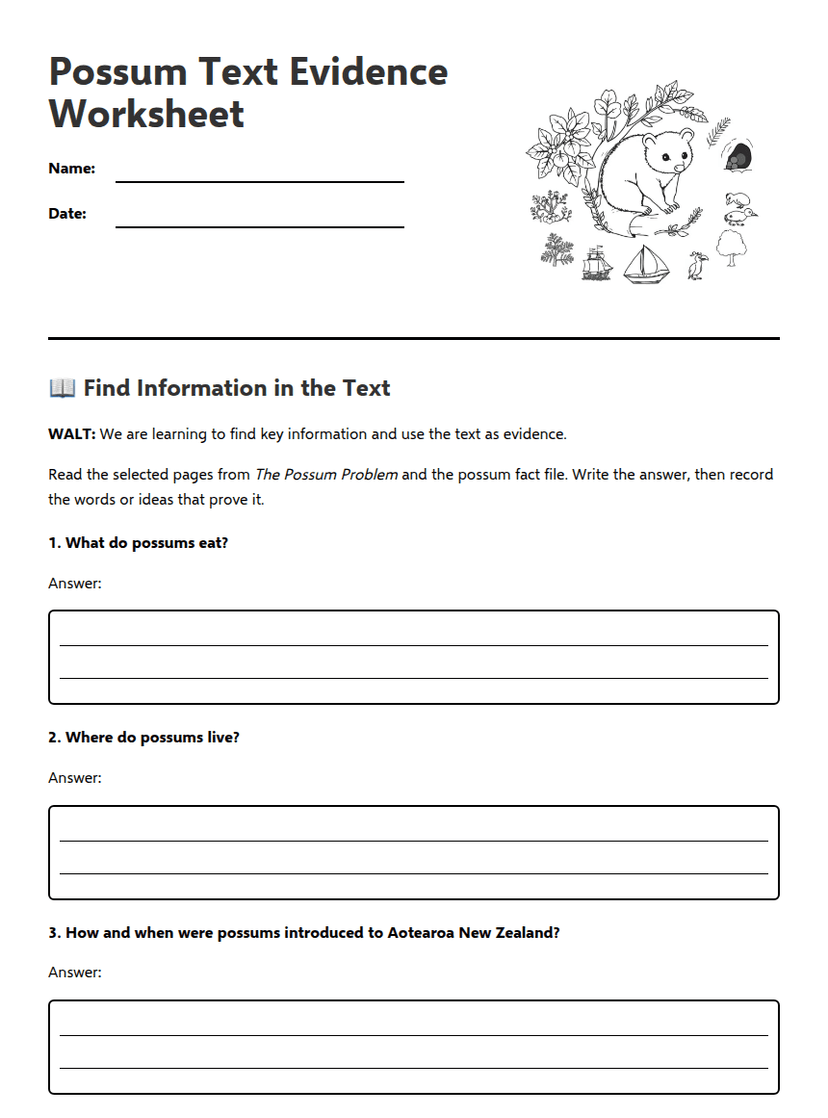
Possum Text Evidence Worksheet
Free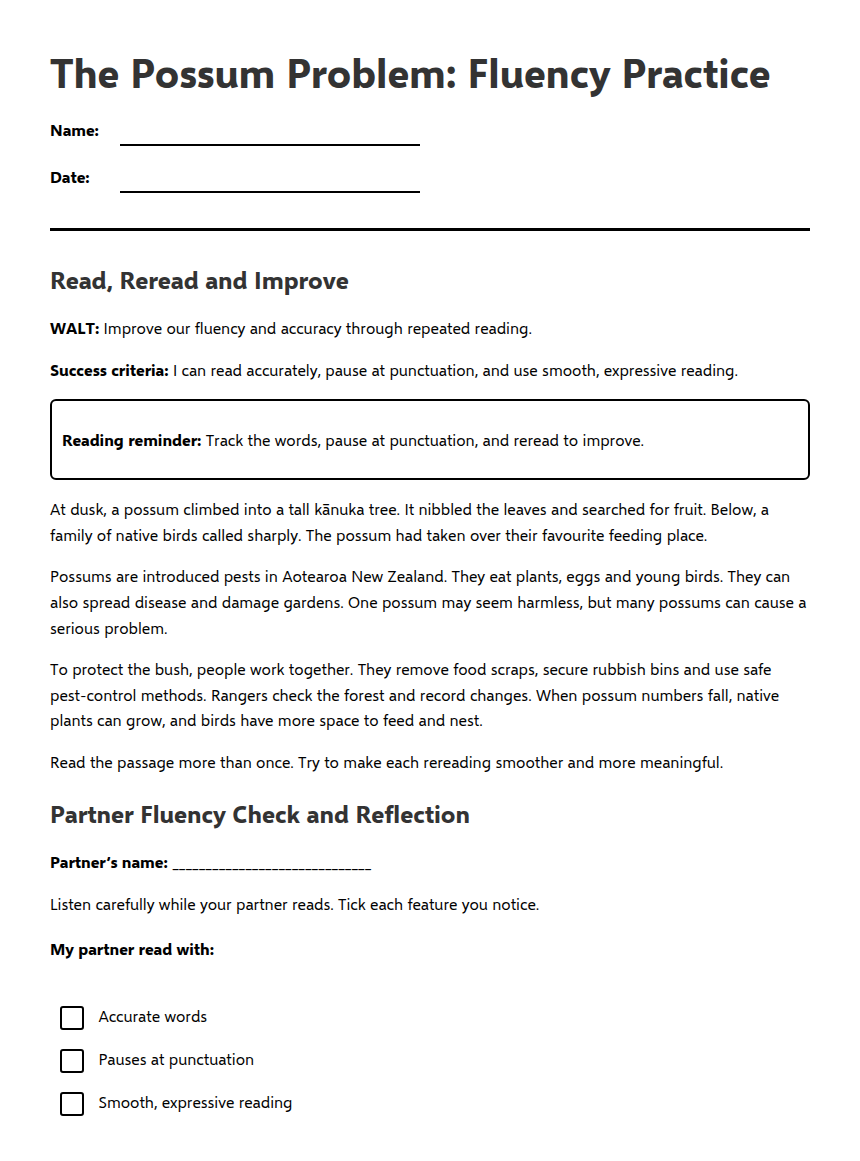
Possum Fluency Practice
Free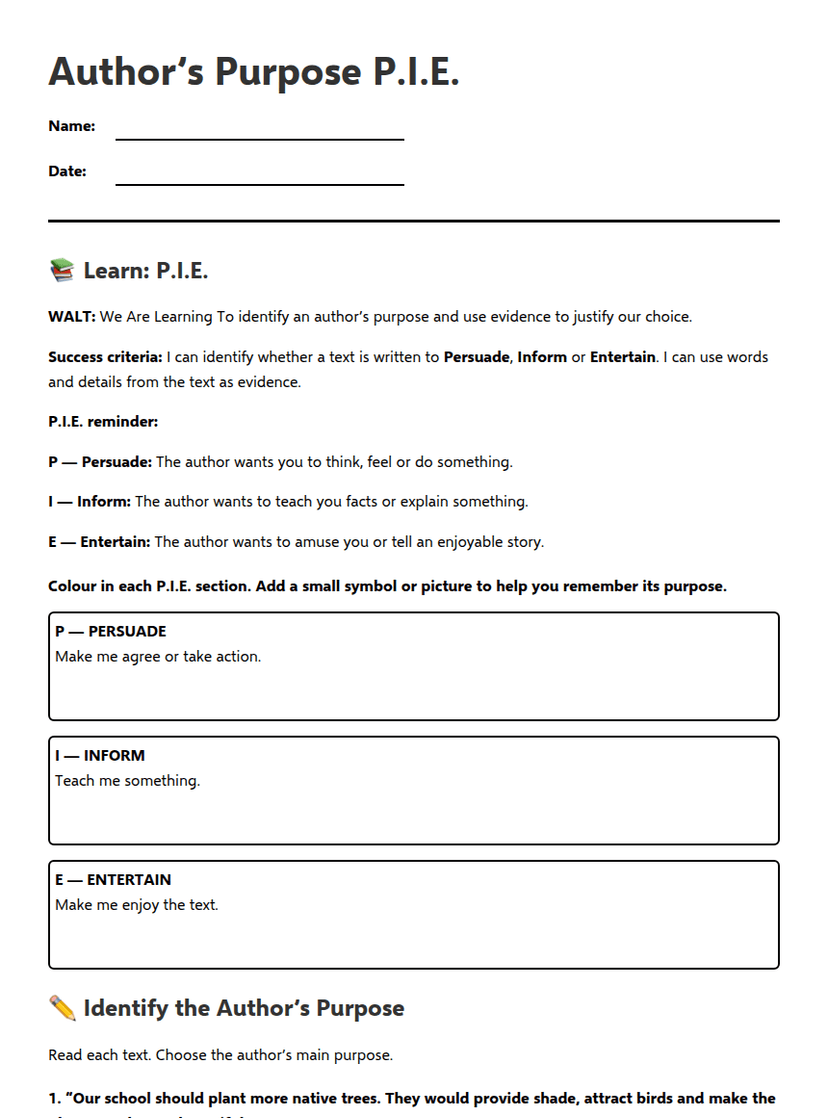
Author’s Purpose P.I.E.
Free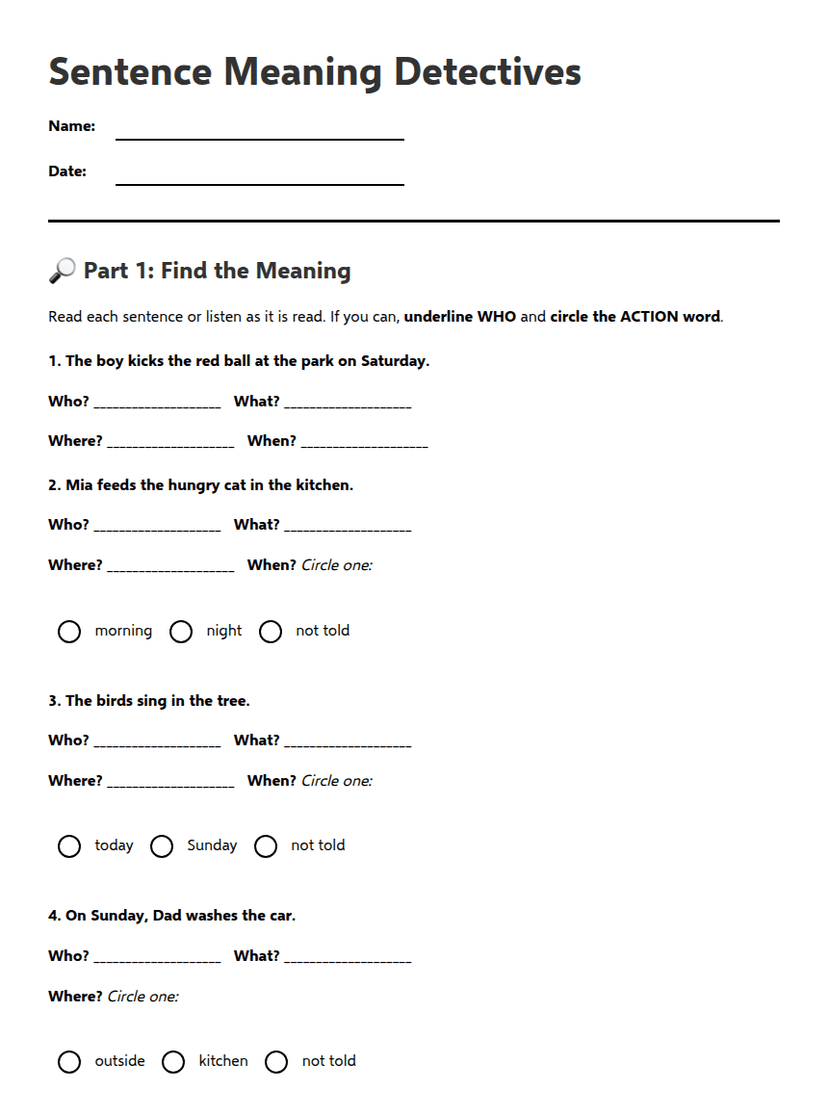
Sentence Meaning Detectives
Free
Māui and the Birds: Reading Comprehension
Free