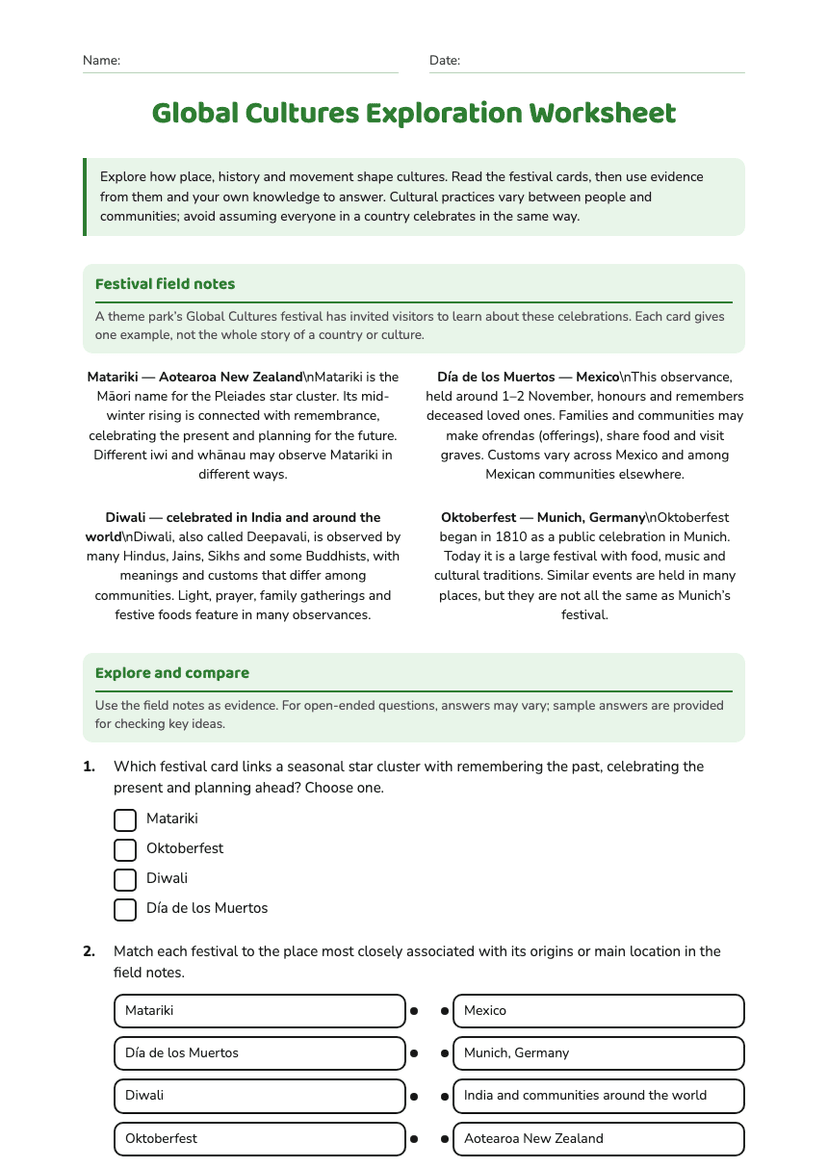
Cultural Responses to Climate Change
A free social sciences worksheet ready for your classroom. Open in Kuraplan to grab the print-ready PDF, customize it for your students, or generate a fresh version in seconds.
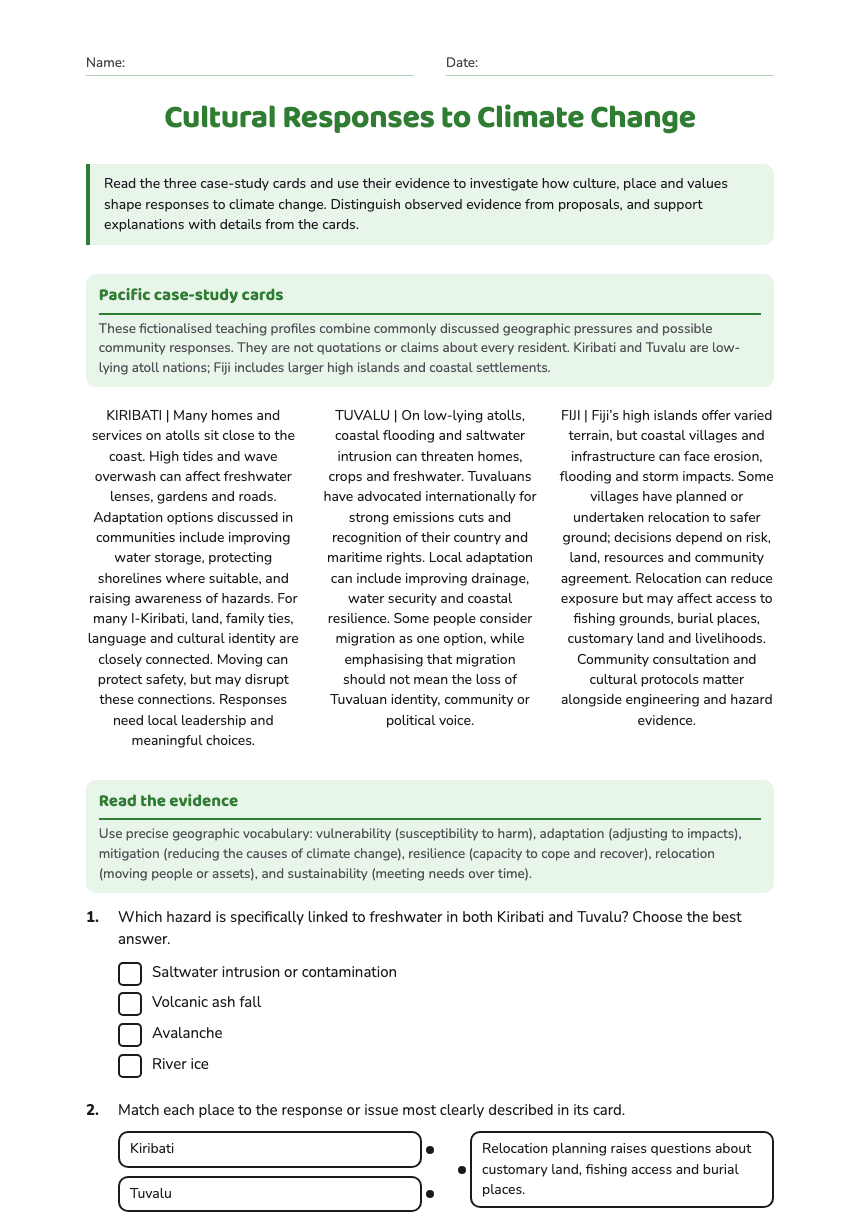
Cultural Responses to Climate Change
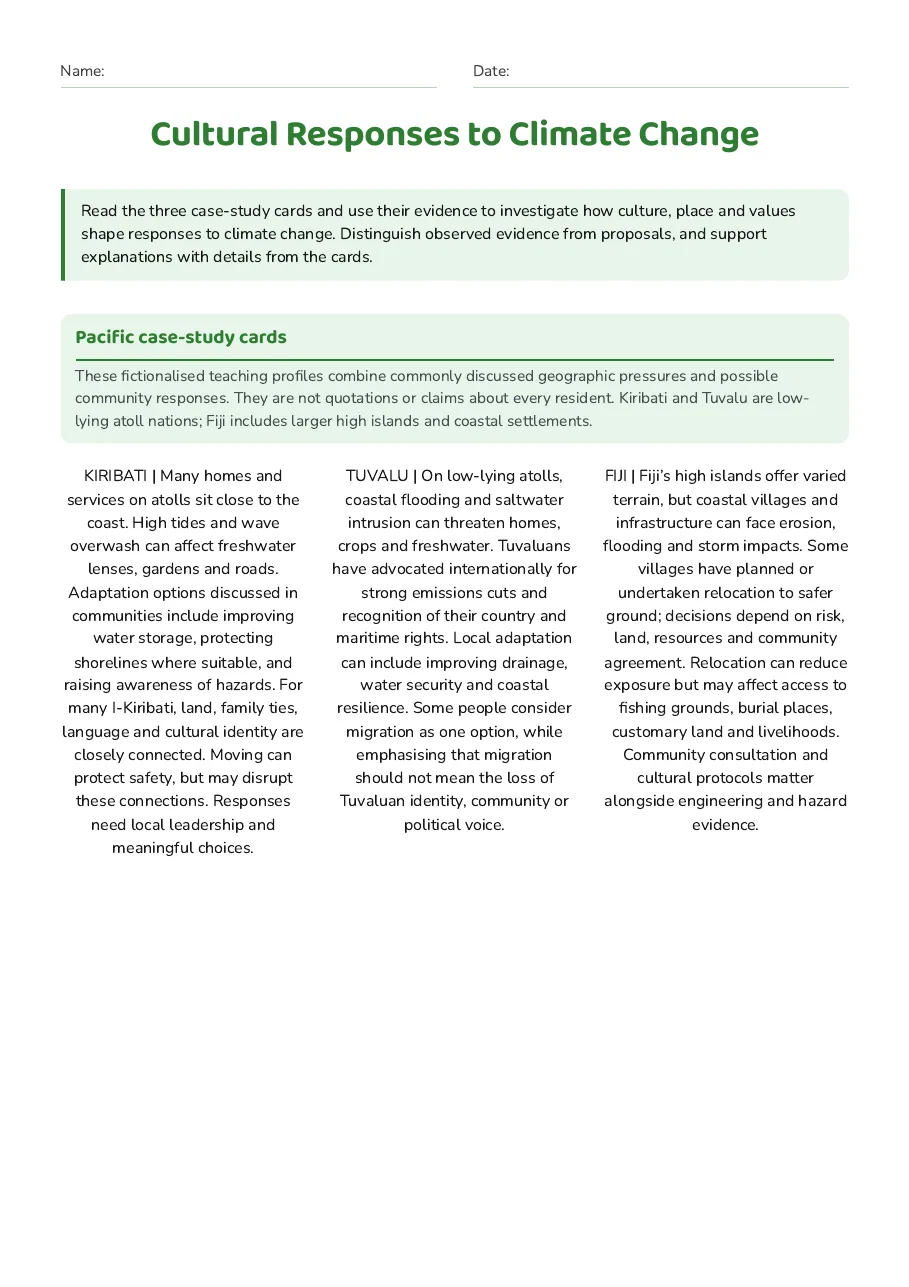
Pacific case-study cards
These fictionalised teaching profiles combine commonly discussed geographic pressures and possible community responses. They are not quotations or claims about every resident. Kiribati and Tuvalu are low-lying atoll nations; Fiji includes larger high islands and coastal settlements.
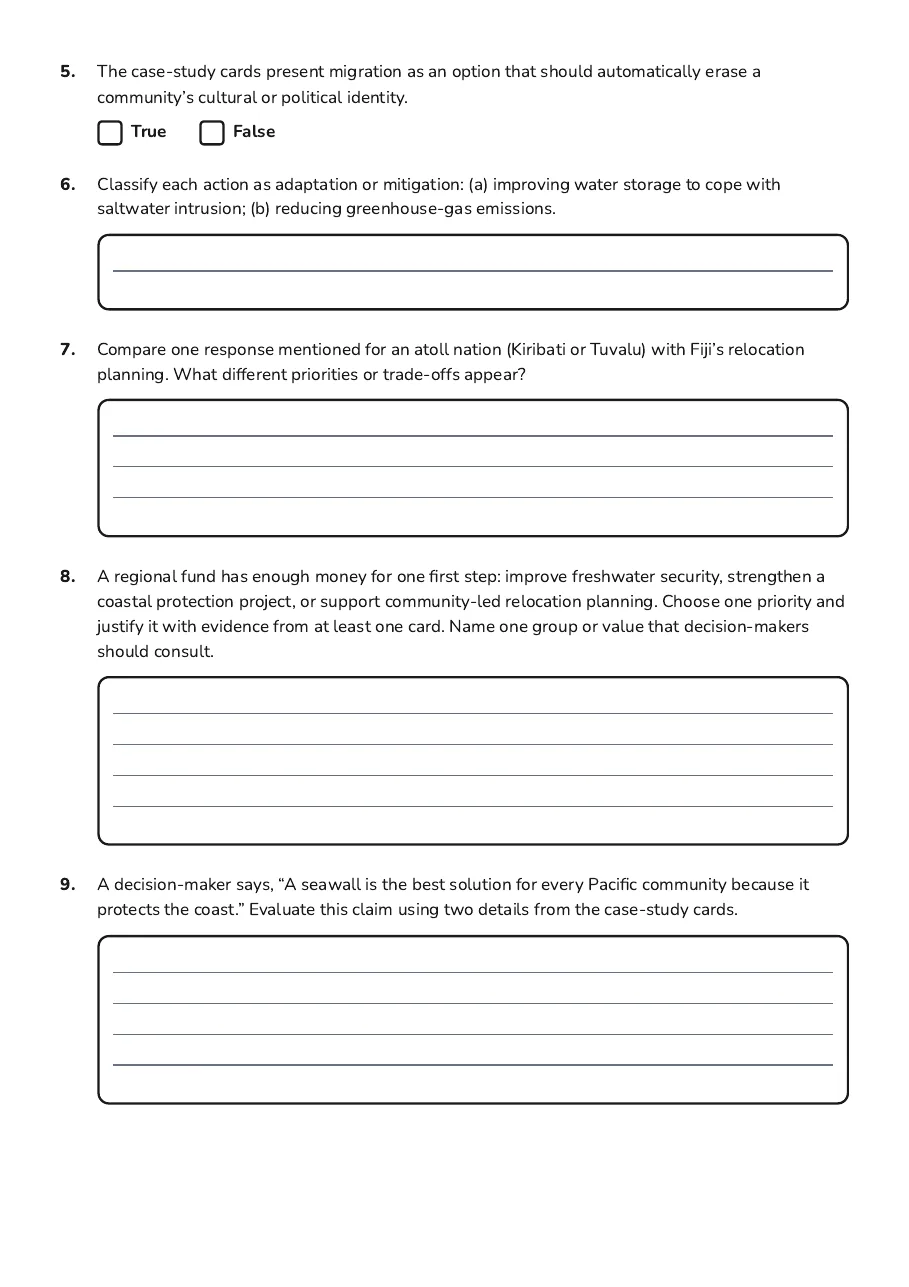
KIRIBATI | Many homes and services on atolls sit close to the coast. High tides and wave overwash can affect freshwater lenses, gardens and roads. Adaptation options discussed in communities include improving water storage, protecting shorelines where suitable, and raising awareness of hazards. For many I-Kiribati, land, family ties, language and cultural identity are closely connected. Moving can protect safety, but may disrupt these connections. Responses need local leadership and meaningful choices.
TUVALU | On low-lying atolls, coastal flooding and saltwater intrusion can threaten homes, crops and freshwater. Tuvaluans have advocated internationally for strong emissions cuts and recognition of their country and maritime rights. Local adaptation can include improving drainage, water security and coastal resilience. Some people consider migration as one option, while emphasising that migration should not mean the loss of Tuvaluan identity, community or political voice.
FIJI | Fiji’s high islands offer varied terrain, but coastal villages and infrastructure can face erosion, flooding and storm impacts. Some villages have planned or undertaken relocation to safer ground; decisions depend on risk, land, resources and community agreement. Relocation can reduce exposure but may affect access to fishing grounds, burial places, customary land and livelihoods. Community consultation and cultural protocols matter alongside engineering and hazard evidence.
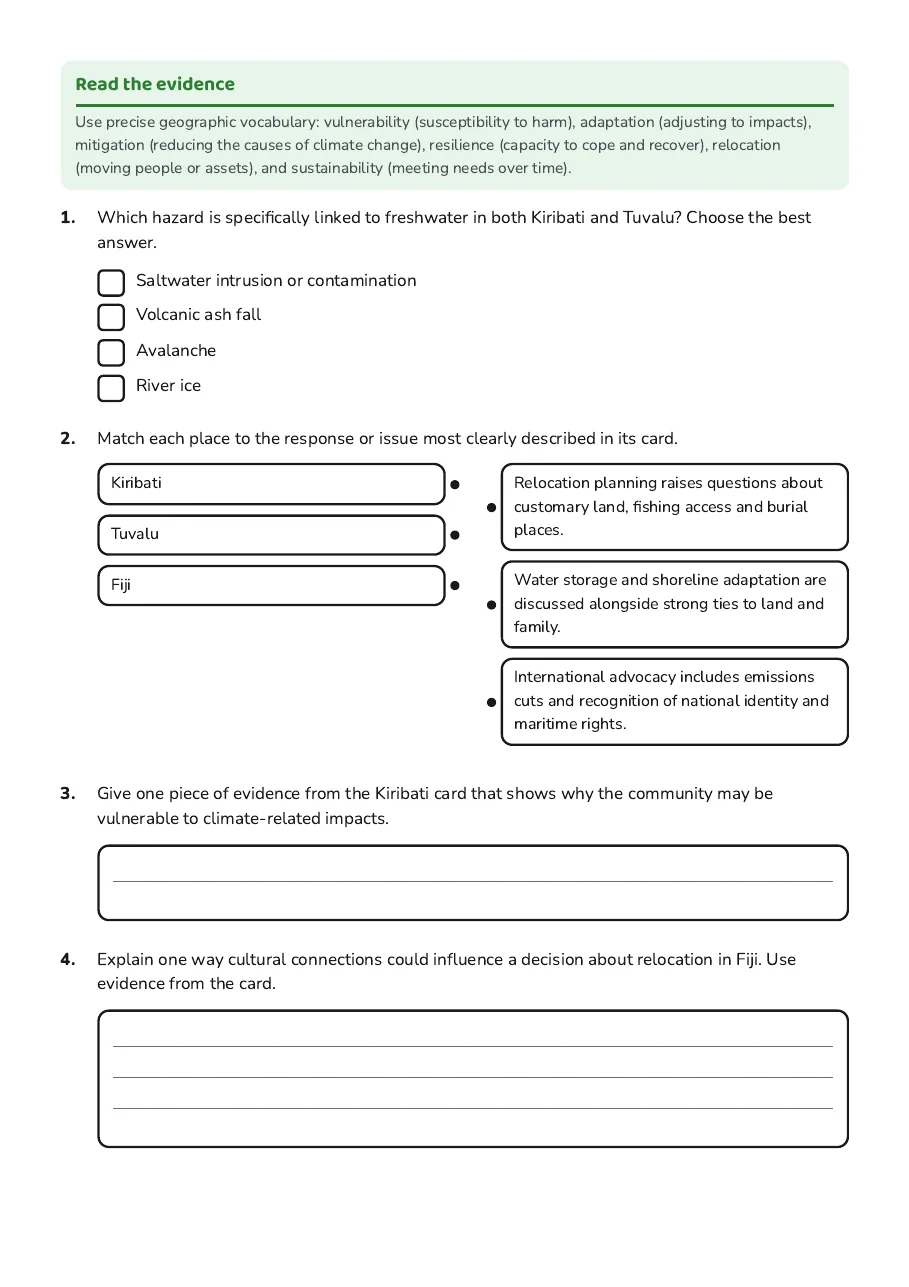
Read the evidence
Use precise geographic vocabulary: vulnerability (susceptibility to harm), adaptation (adjusting to impacts), mitigation (reducing the causes of climate change), resilience (capacity to cope and recover), relocation (moving people or assets), and sustainability (meeting needs over time).
- Saltwater intrusion or contamination
- Volcanic ash fall
- Avalanche
- River ice
- Kiribati
- Tuvalu
- Fiji
- Relocation planning raises questions about customary land, fishing access and burial places.
- Water storage and shoreline adaptation are discussed alongside strong ties to land and family.
- International advocacy includes emissions cuts and recognition of national identity and maritime rights.
4 printable pages
Page 1
Page 2
Page 3
Page 4
About This Worksheet
Free in Kuraplan
Sign up free, grab the PDF, and customize it for your class.
Print-Ready
Formatted for standard paper. Clean layout, easy to read.
AI-Generated
Created with Kuraplan's AI, designed for real classroom use.
For Teachers & Parents
Use in classrooms, for homework, tutoring, or homeschool.
Need a custom version of this worksheet?
Kuraplan's AI generates custom worksheets in seconds — differentiated for every learner, aligned to your curriculum.
Generate Custom Worksheets — FreeMore Social Sciences Worksheets
Migration, Culture and Belonging
Free
Te Taiao Year 9 Quiz
Free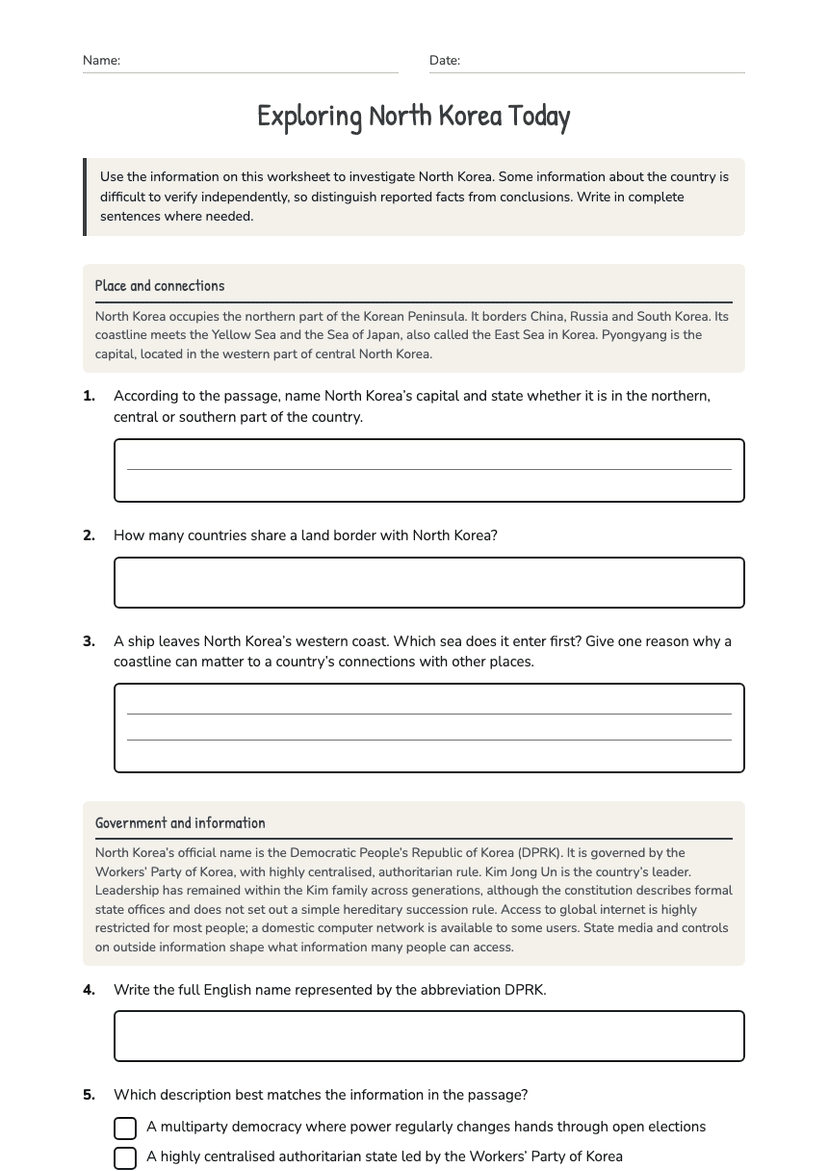
Exploring North Korea Today
Free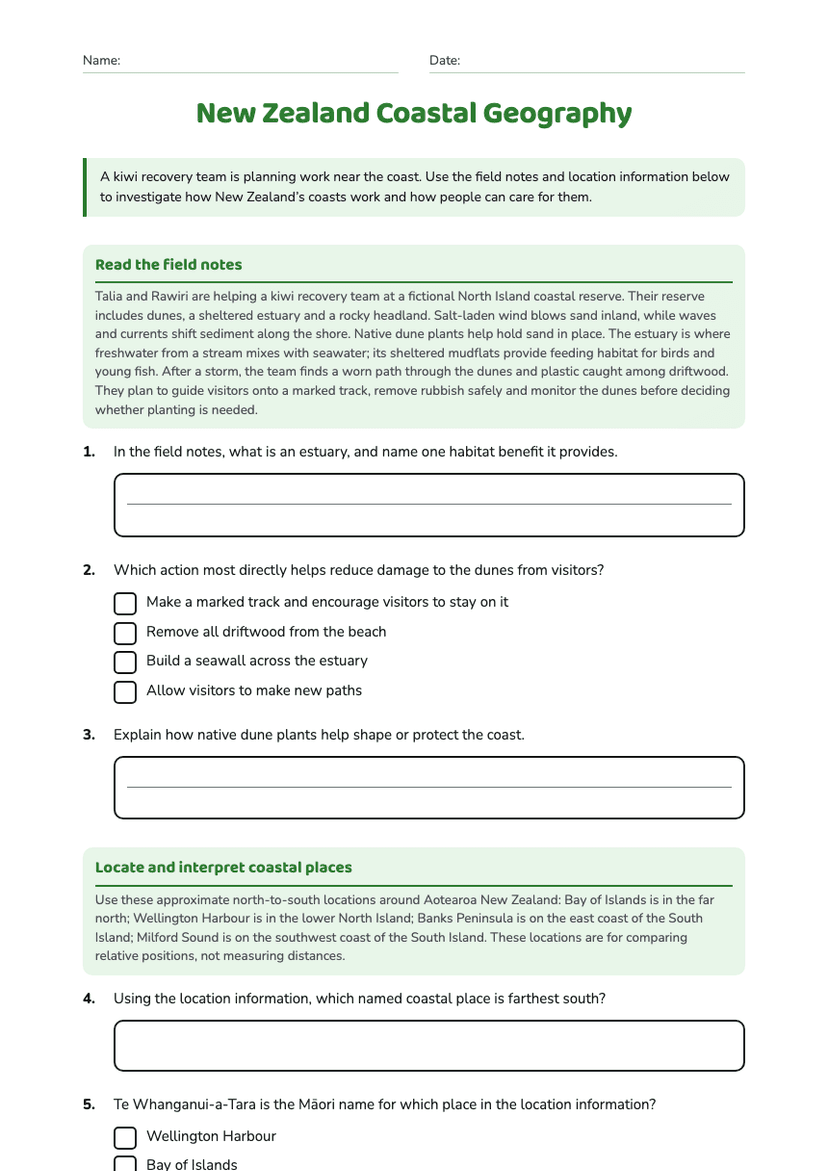
New Zealand Coastal Geography
Free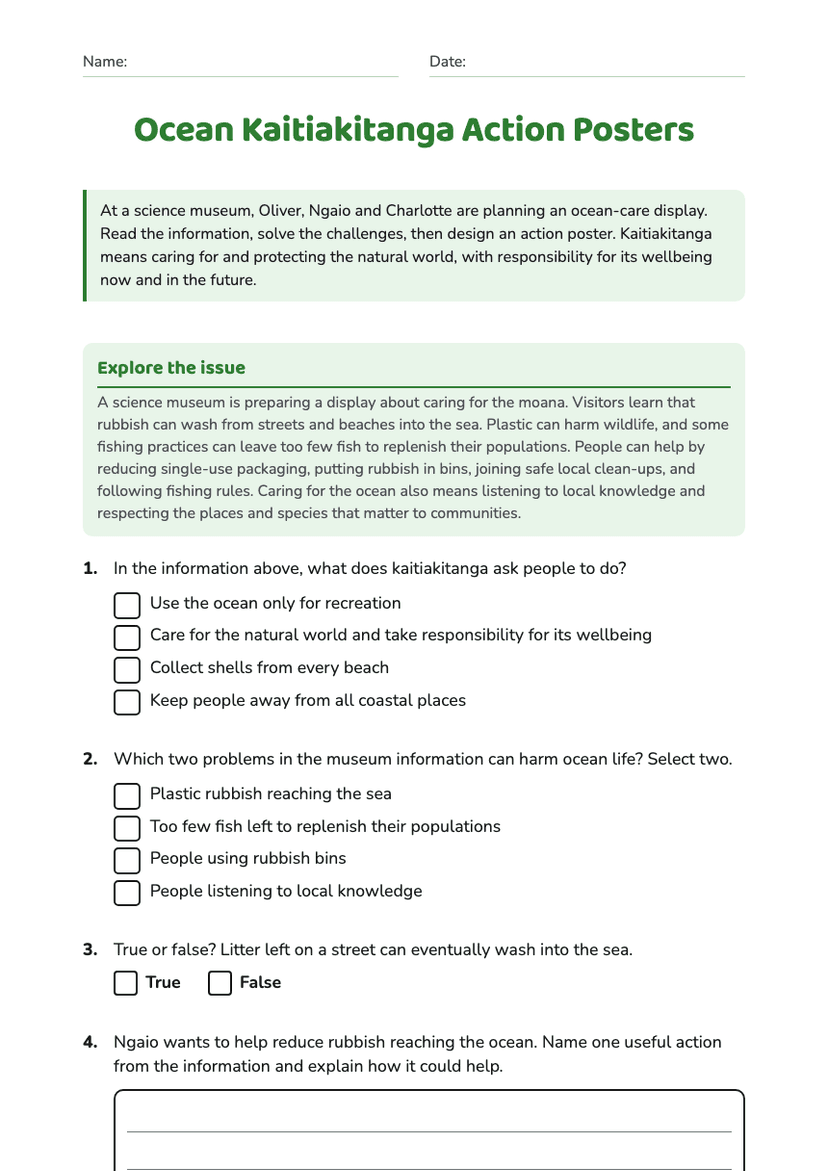
Ocean Kaitiakitanga Action Posters
Free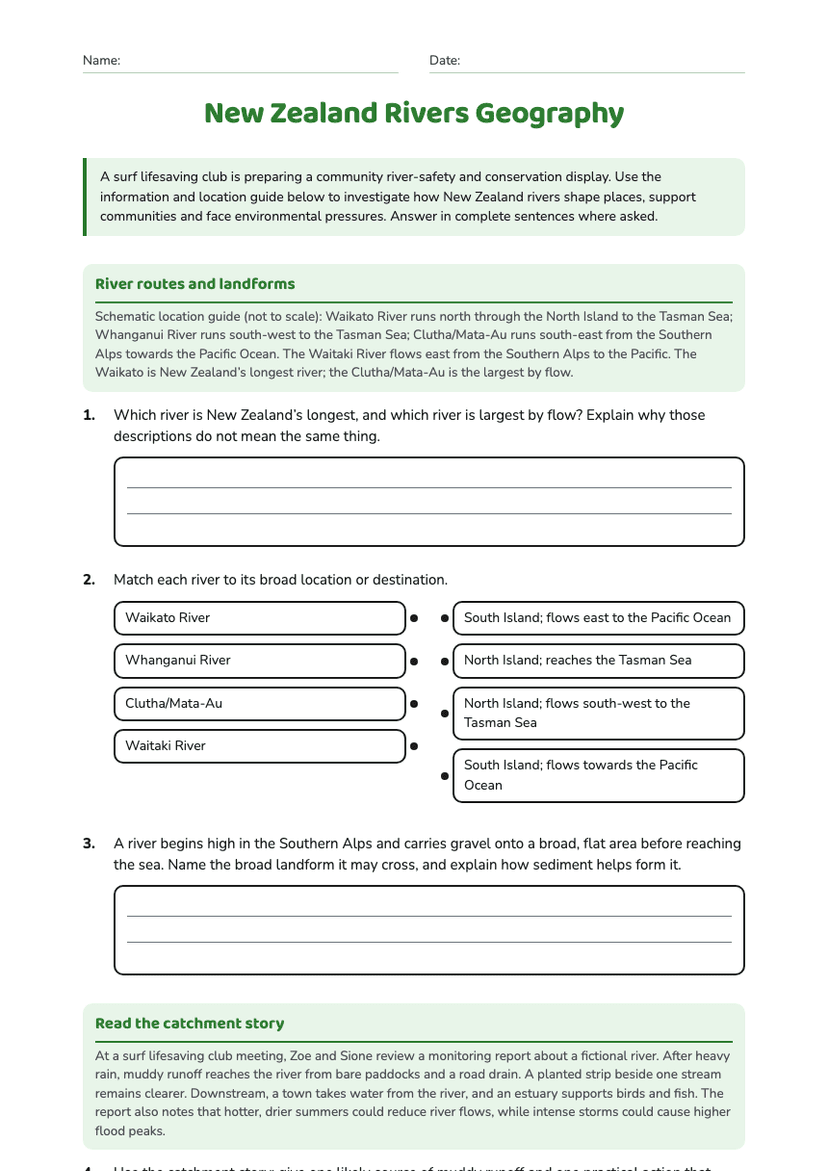
New Zealand Rivers Geography
Free
Hydrothermal Activity and Terraces
Free