Kīngitanga Movement Overview
A free social sciences worksheet ready for your classroom. Open in Kuraplan to grab the print-ready PDF, customize it for your students, or generate a fresh version in seconds.
Kīngitanga Movement Overview
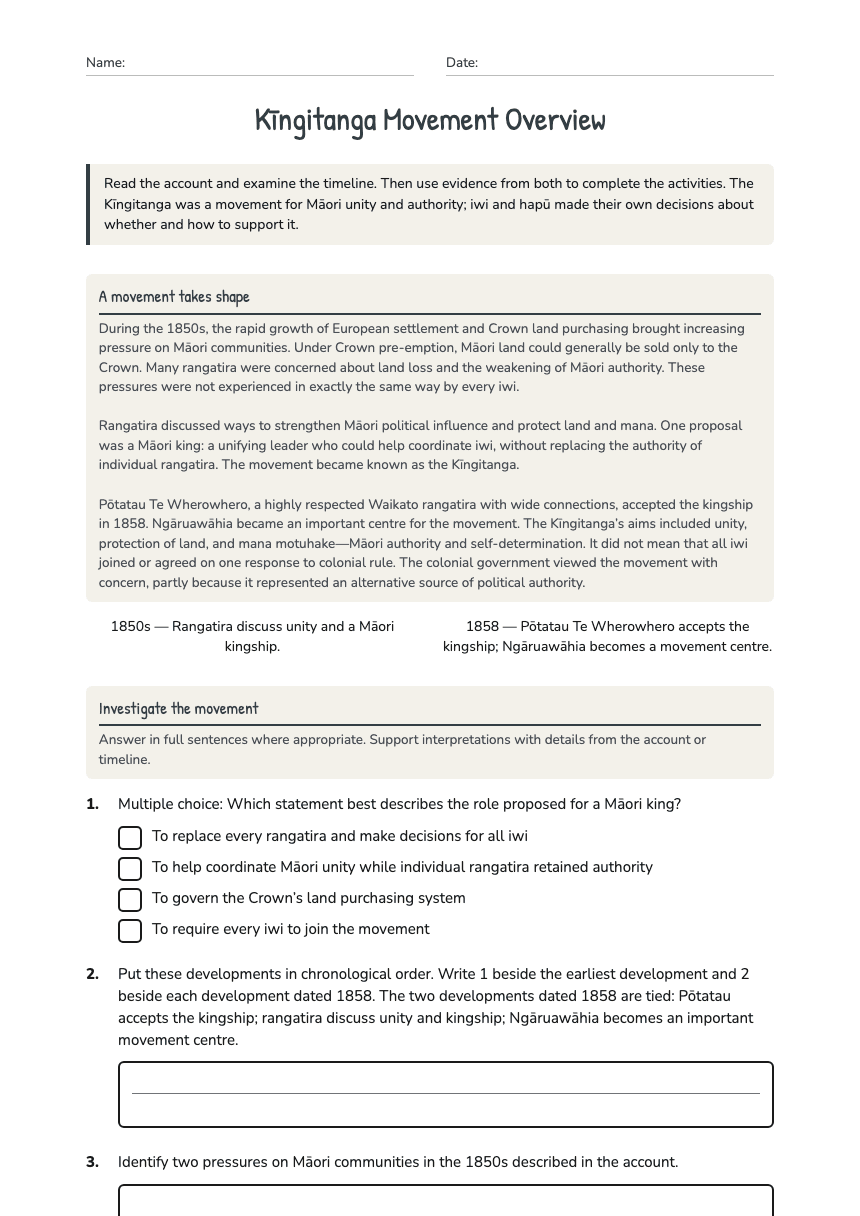
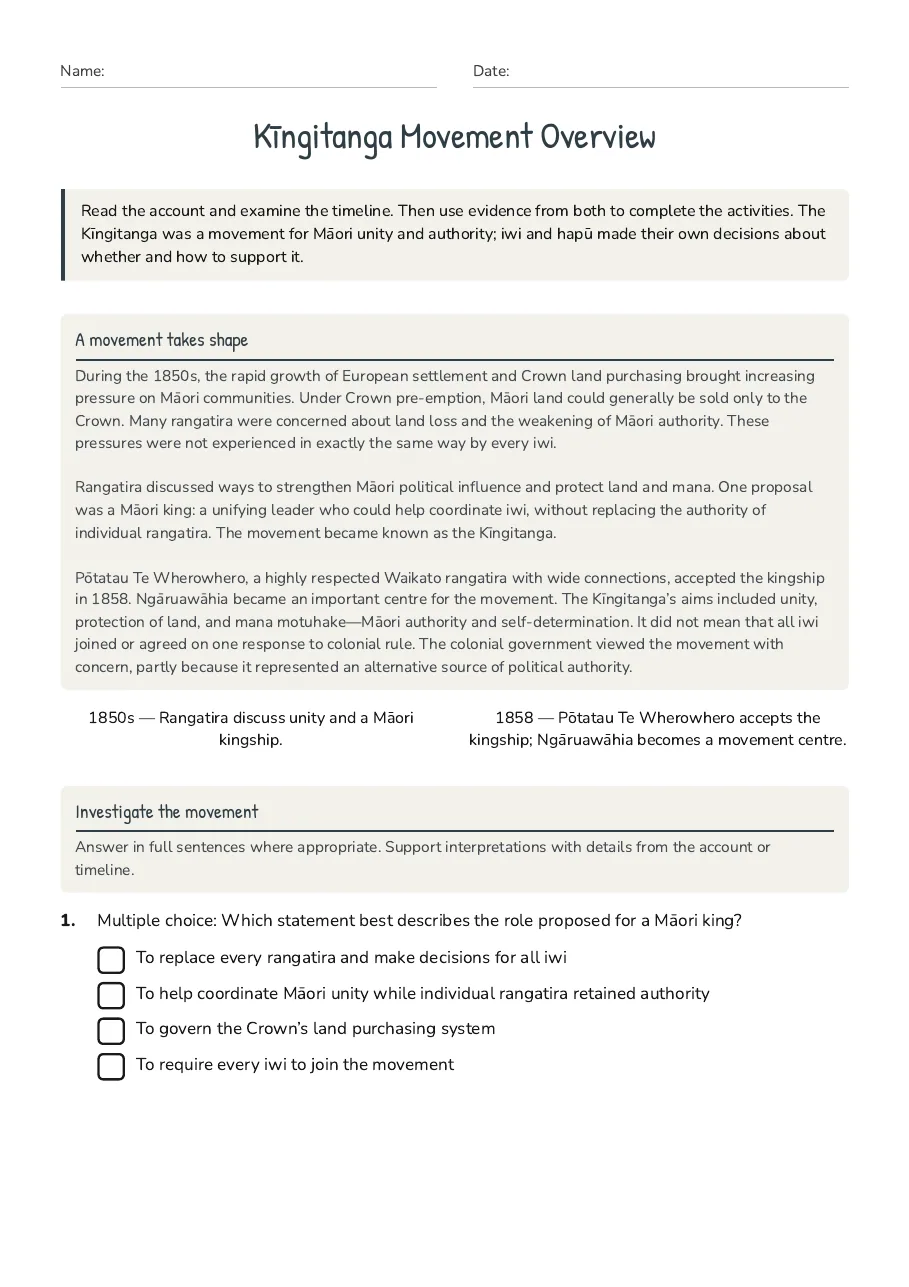
A movement takes shape
During the 1850s, the rapid growth of European settlement and Crown land purchasing brought increasing pressure on Māori communities. Under Crown pre-emption, Māori land could generally be sold only to the Crown. Many rangatira were concerned about land loss and the weakening of Māori authority. These pressures were not experienced in exactly the same way by every iwi. Rangatira discussed ways to strengthen Māori political influence and protect land and mana. One proposal was a Māori king: a unifying leader who could help coordinate iwi, without replacing the authority of individual rangatira. The movement became known as the Kīngitanga. Pōtatau Te Wherowhero, a highly respected Waikato rangatira with wide connections, accepted the kingship in 1858. Ngāruawāhia became an important centre for the movement. The Kīngitanga’s aims included unity, protection of land, and mana motuhake—Māori authority and self-determination. It did not mean that all iwi joined or agreed on one response to colonial rule. The colonial government viewed the movement with concern, partly because it represented an alternative source of political authority.
1850s — Rangatira discuss unity and a Māori kingship.
1858 — Pōtatau Te Wherowhero accepts the kingship; Ngāruawāhia becomes a movement centre.
Investigate the movement
Answer in full sentences where appropriate. Support interpretations with details from the account or timeline.
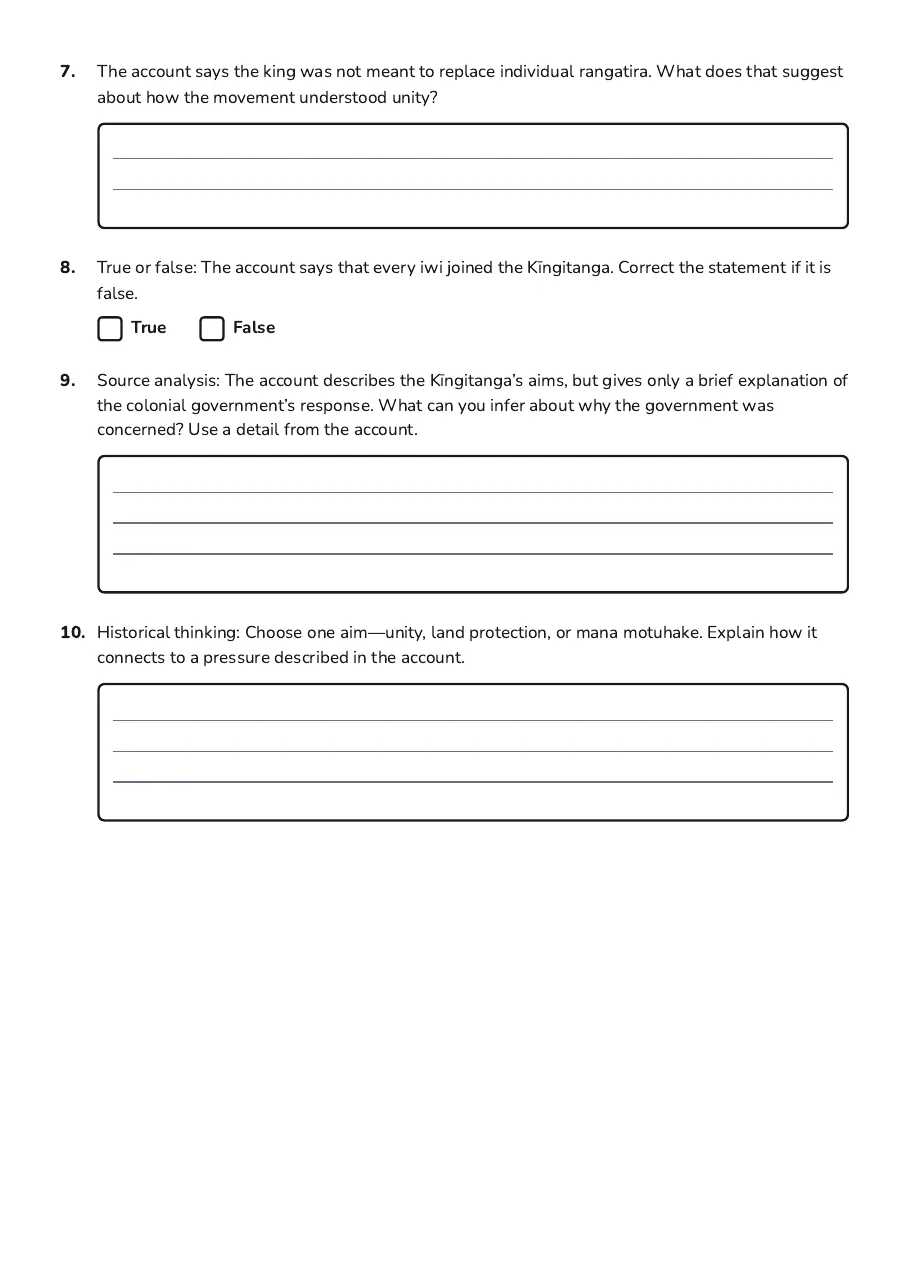
- To replace every rangatira and make decisions for all iwi
- To help coordinate Māori unity while individual rangatira retained authority
- To govern the Crown’s land purchasing system
- To require every iwi to join the movement
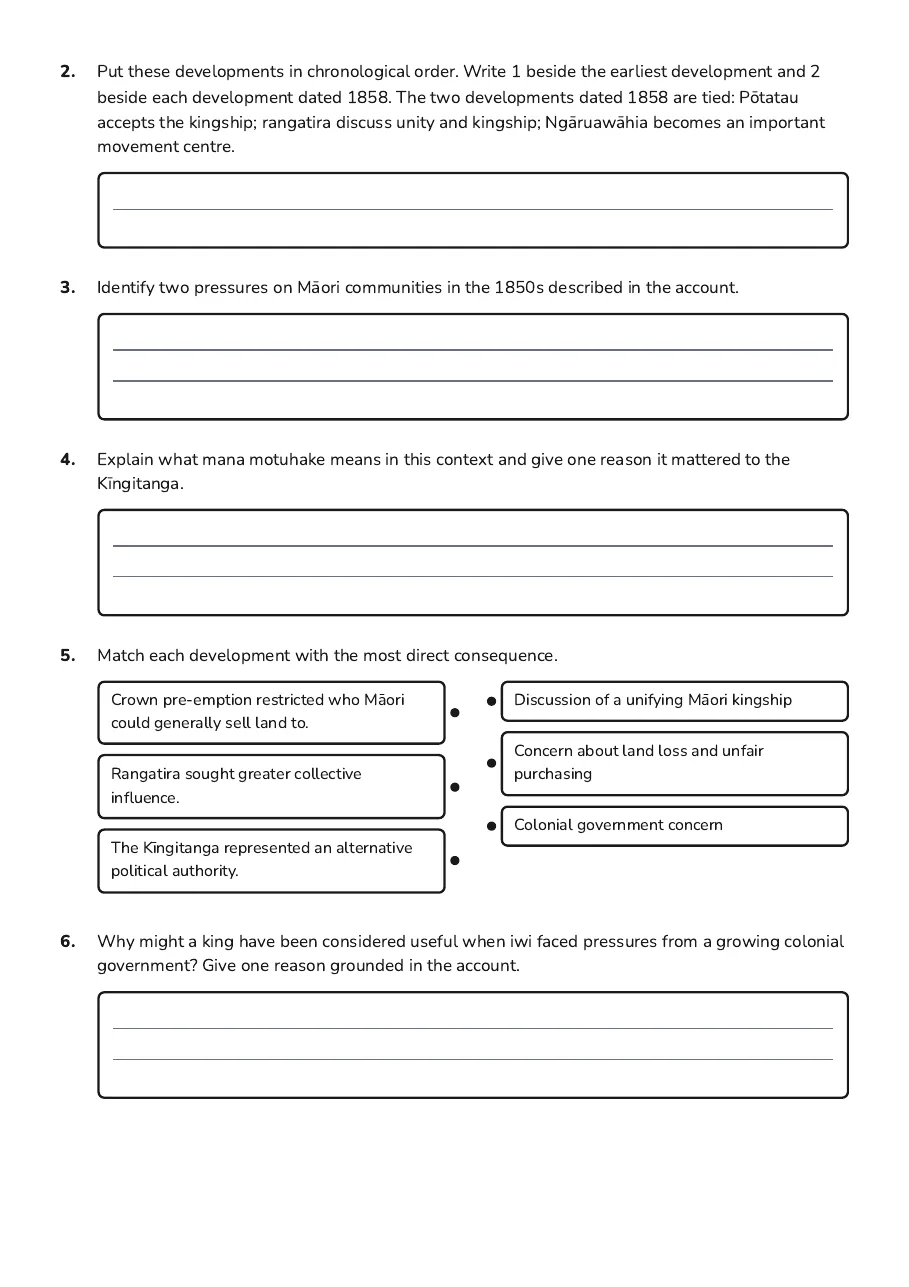
- Crown pre-emption restricted who Māori could generally sell land to.
- Rangatira sought greater collective influence.
- The Kīngitanga represented an alternative political authority.
- Discussion of a unifying Māori kingship
- Concern about land loss and unfair purchasing
- Colonial government concern
3 printable pages
Page 1
Page 2
Page 3
About This Worksheet
Free in Kuraplan
Sign up free, grab the PDF, and customize it for your class.
Print-Ready
Formatted for standard paper. Clean layout, easy to read.
AI-Generated
Created with Kuraplan's AI, designed for real classroom use.
For Teachers & Parents
Use in classrooms, for homework, tutoring, or homeschool.
Need a custom version of this worksheet?
Kuraplan's AI generates custom worksheets in seconds — differentiated for every learner, aligned to your curriculum.
Generate Custom Worksheets — FreeMore Social Sciences Worksheets
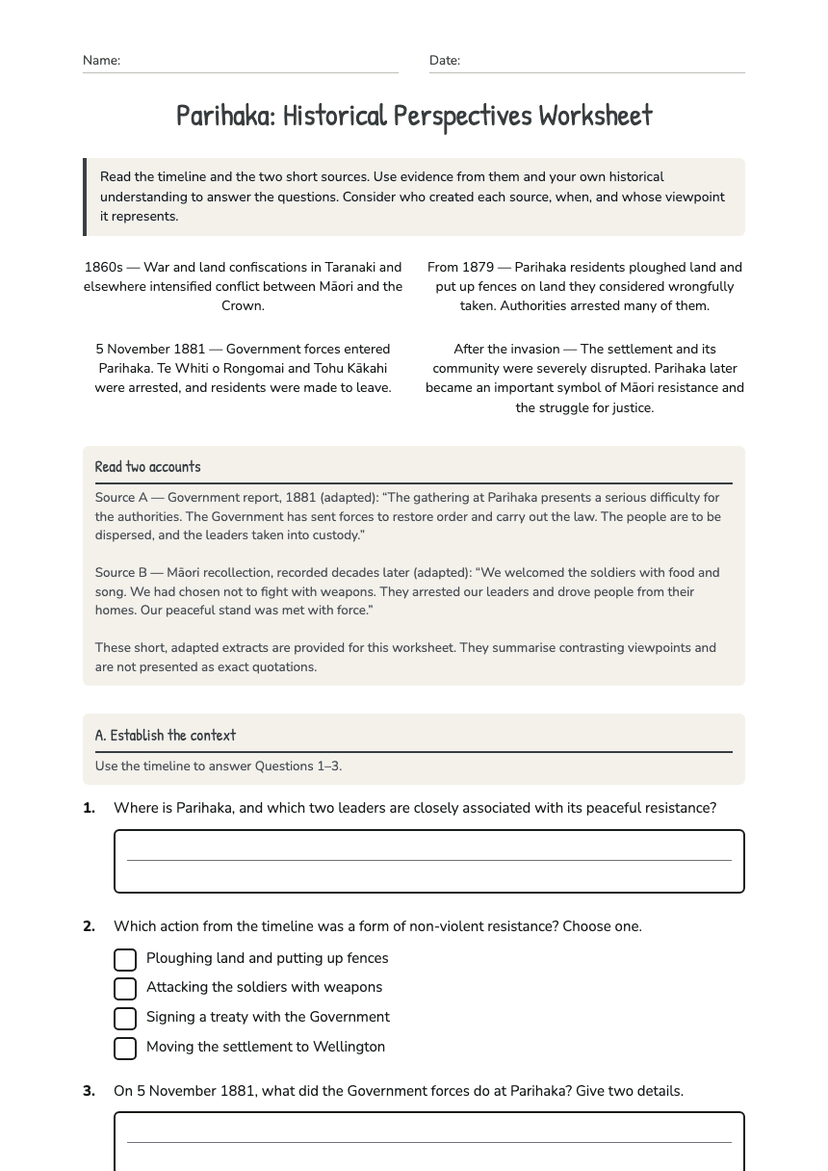
Parihaka: Historical Perspectives Worksheet
Free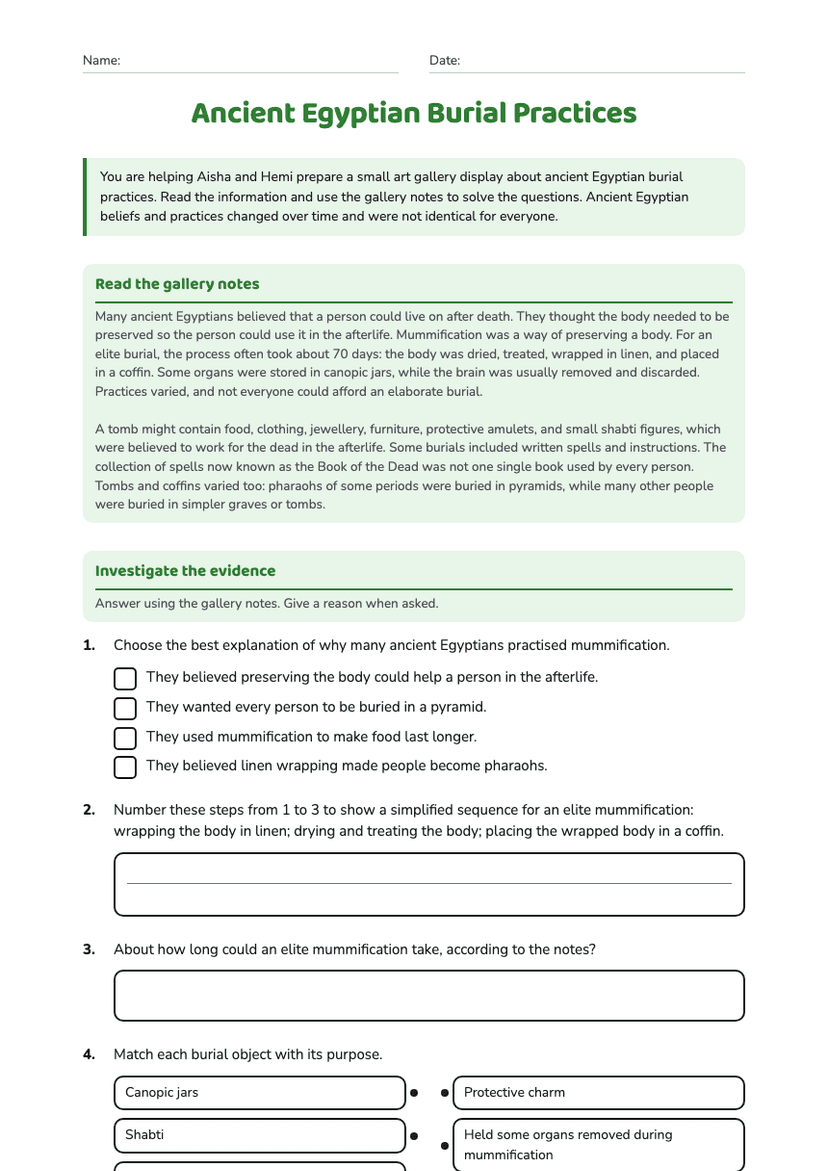
Ancient Egyptian Burial Practices
Free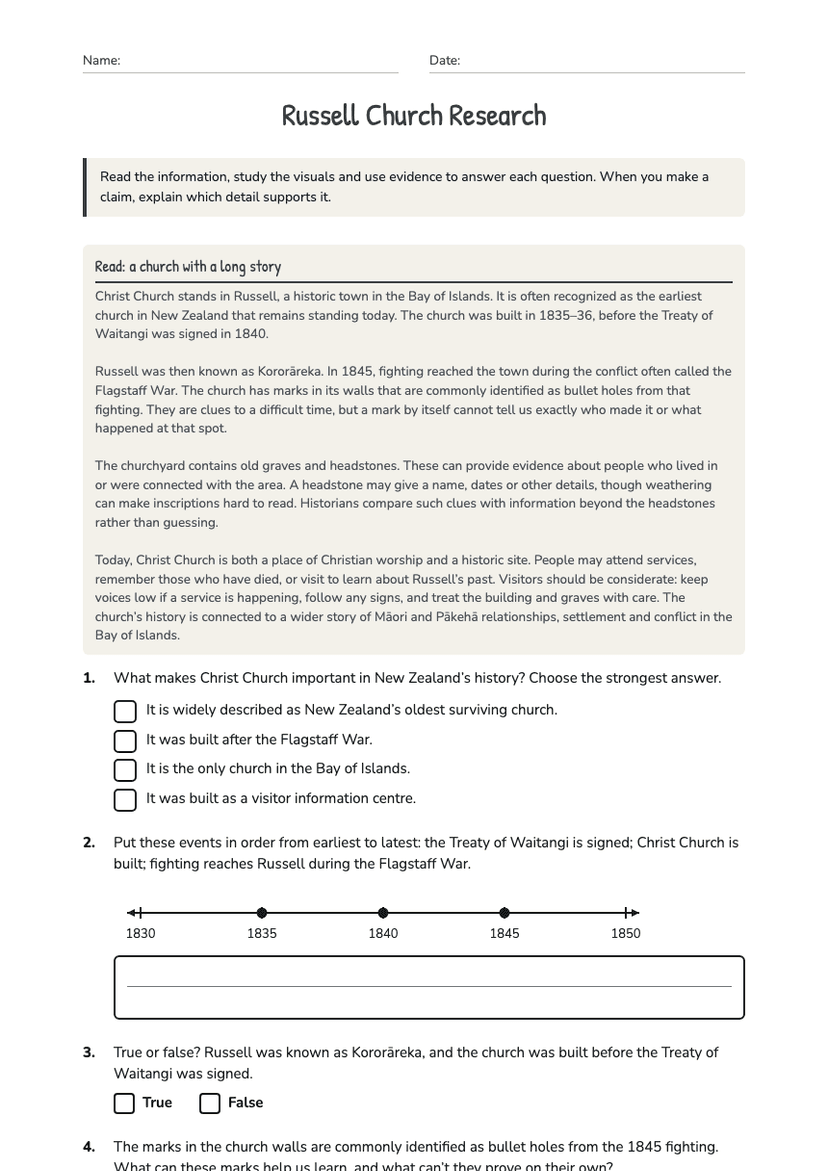
Russell Church Research
Free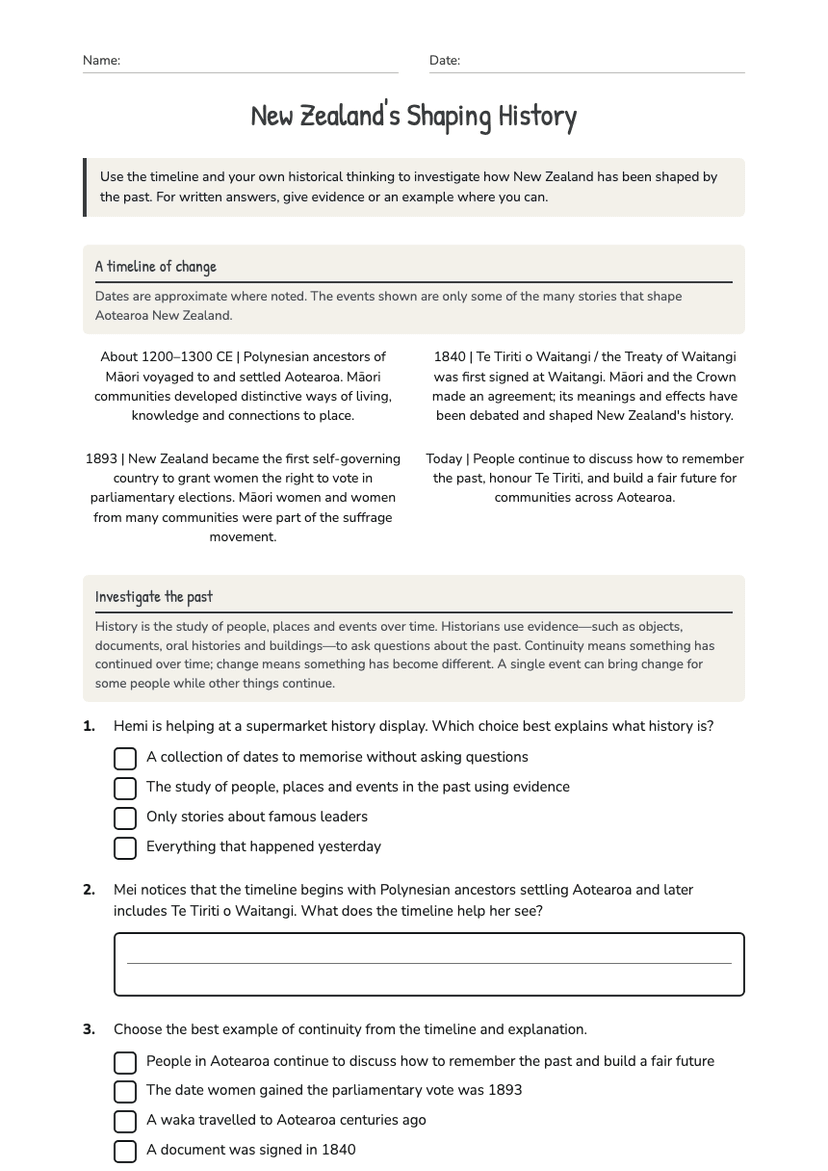
New Zealand's Shaping History
Free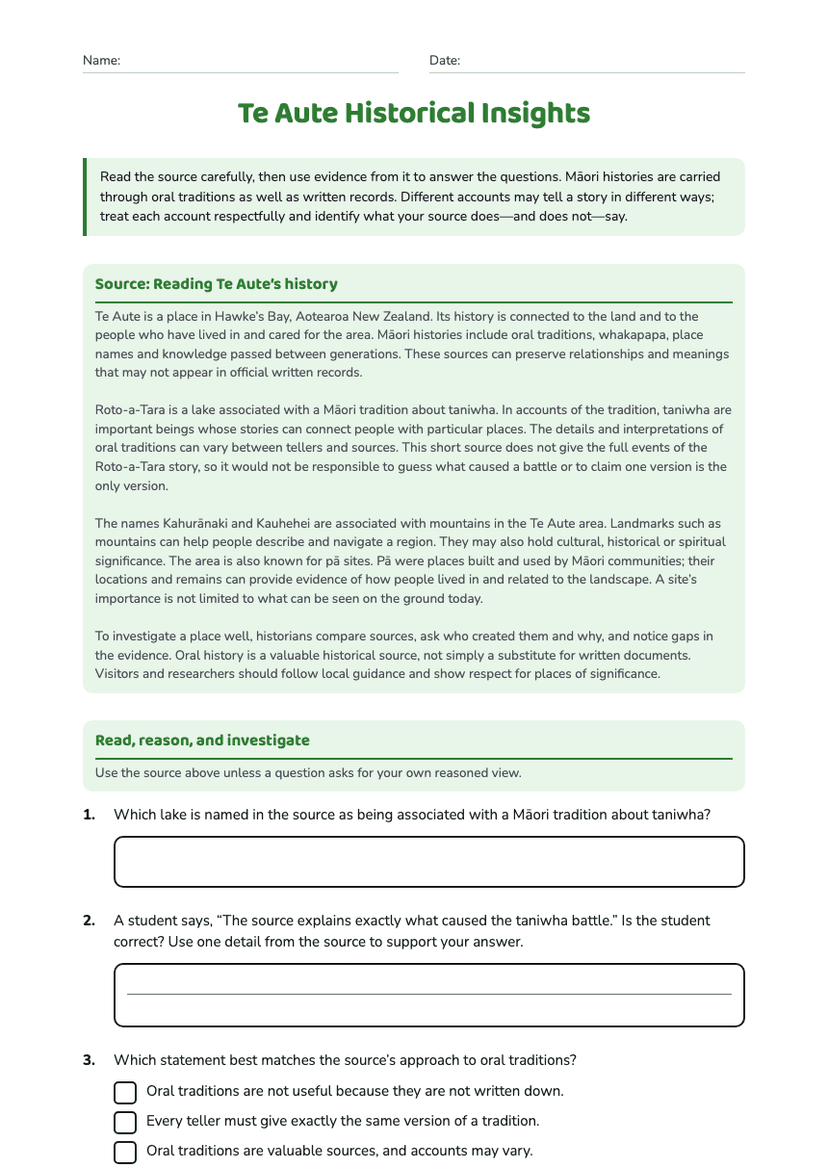
Te Aute Historical Insights
Free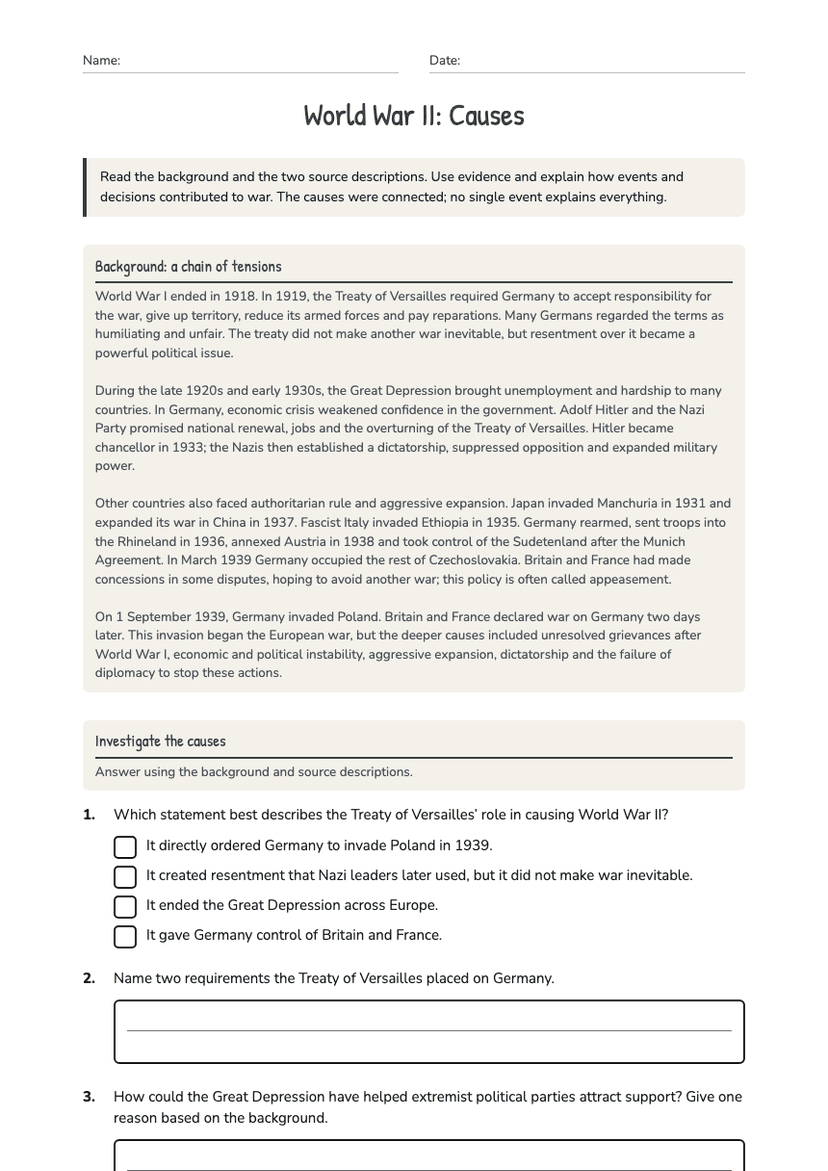
World War II: Causes
Free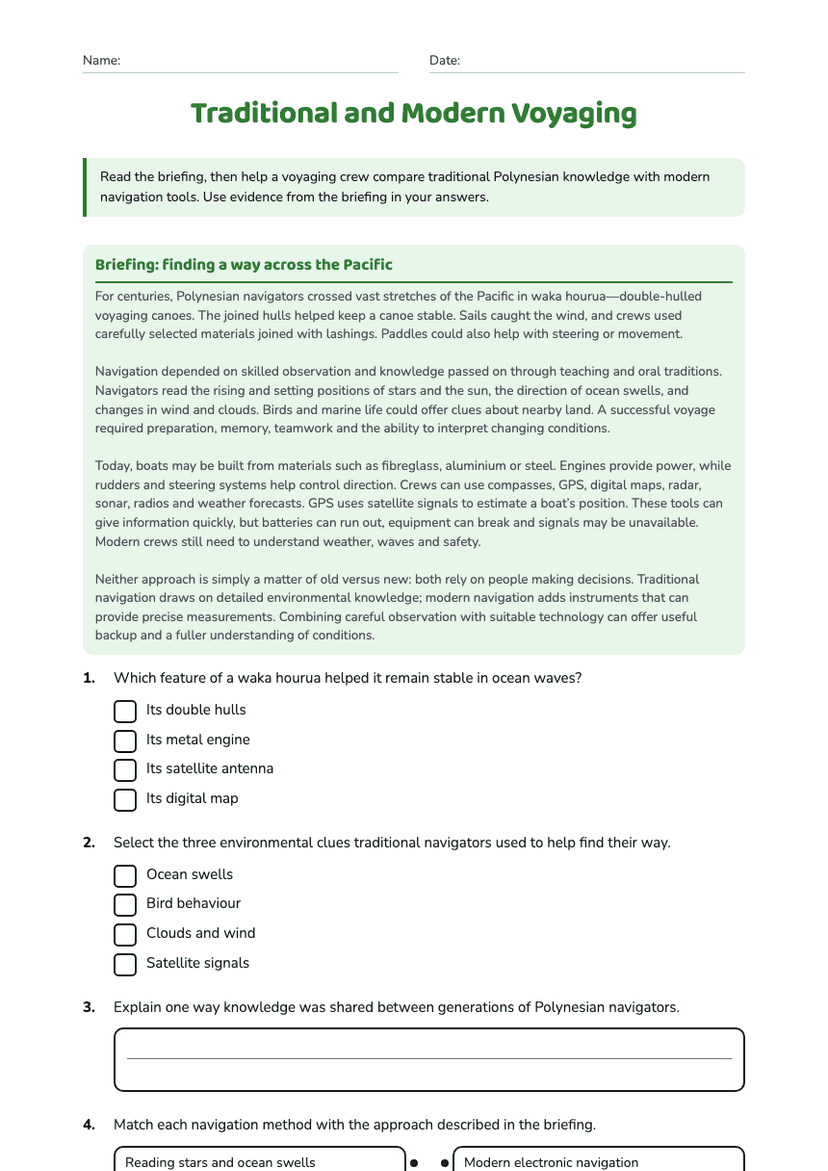
Traditional and Modern Voyaging
Free