Cursive Writing Introduction
A free english worksheet ready for your classroom. Open in Kuraplan to grab the print-ready PDF, customize it for your students, or generate a fresh version in seconds.
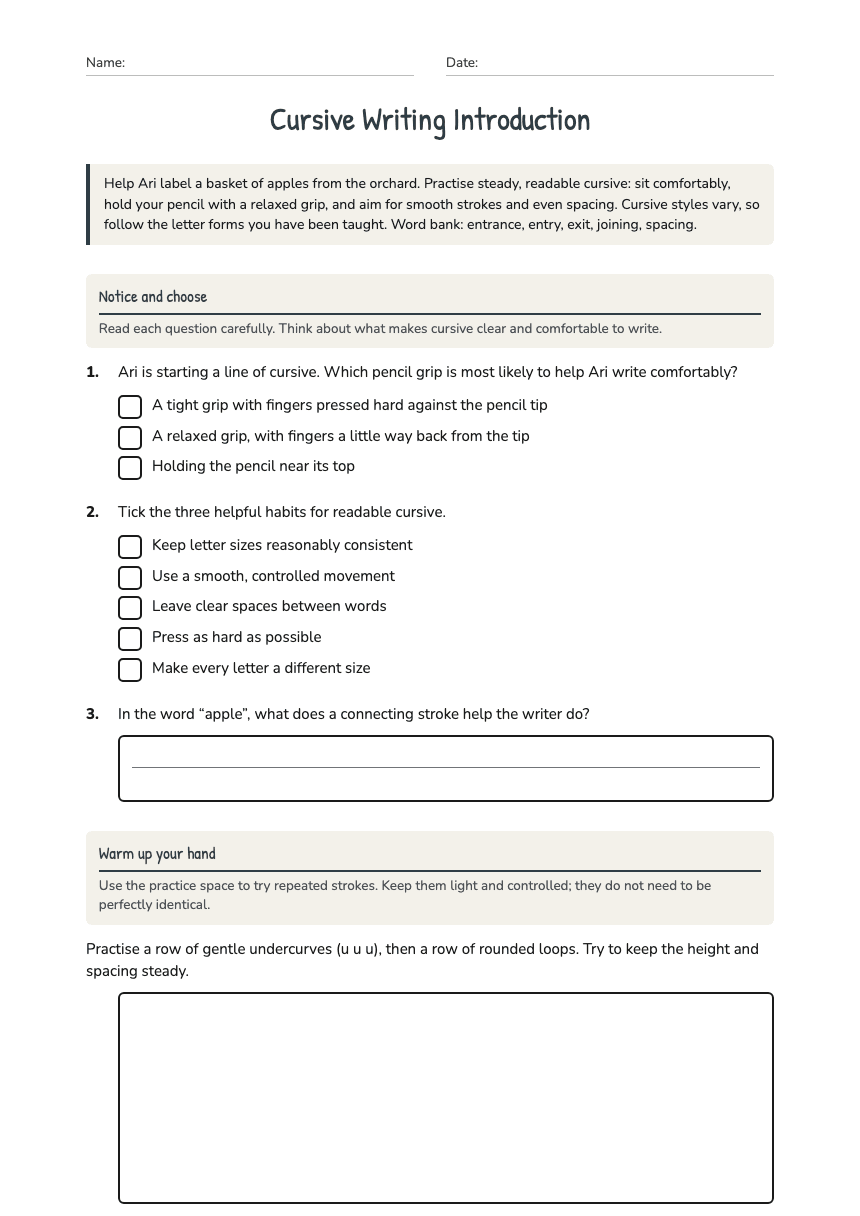
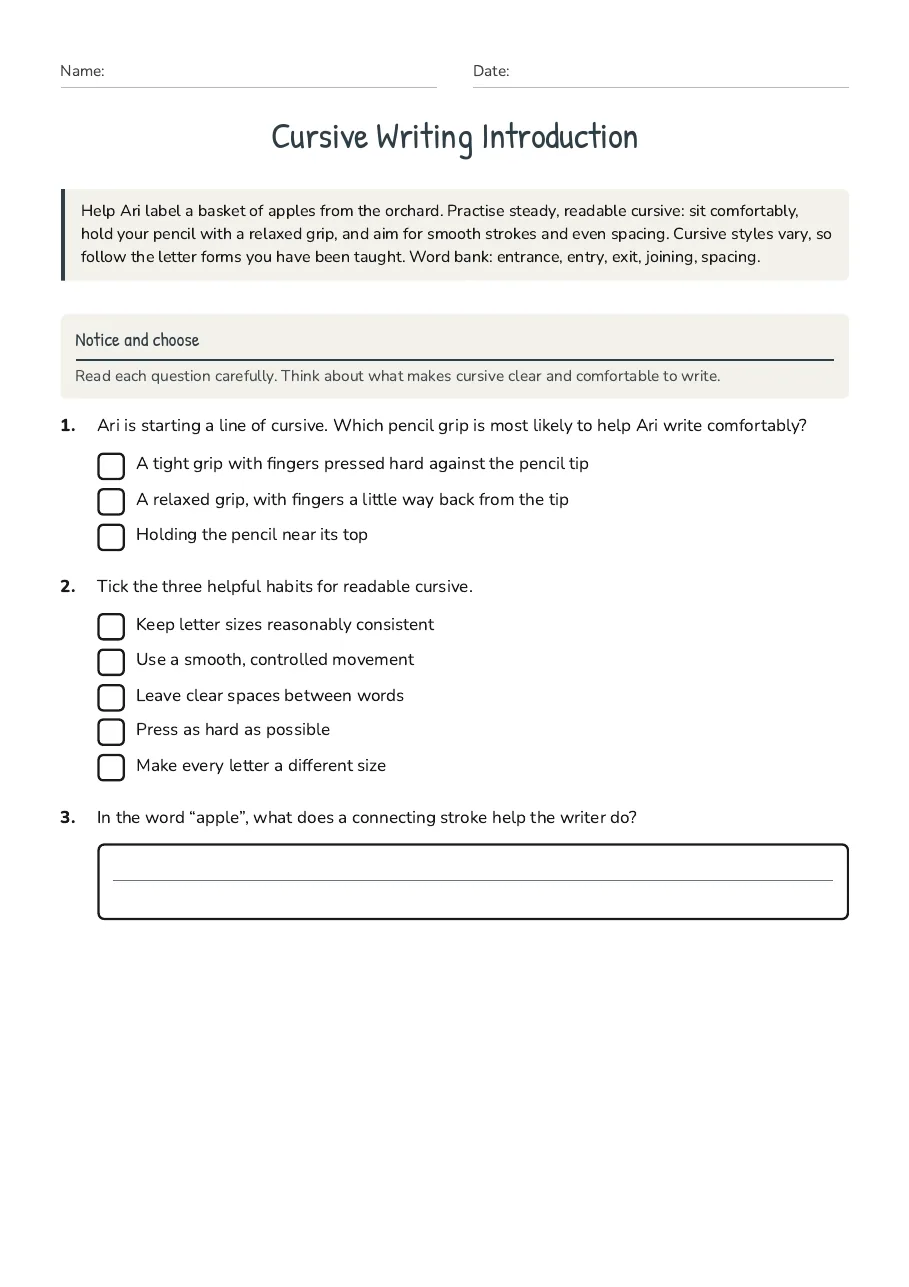
Cursive Writing Introduction
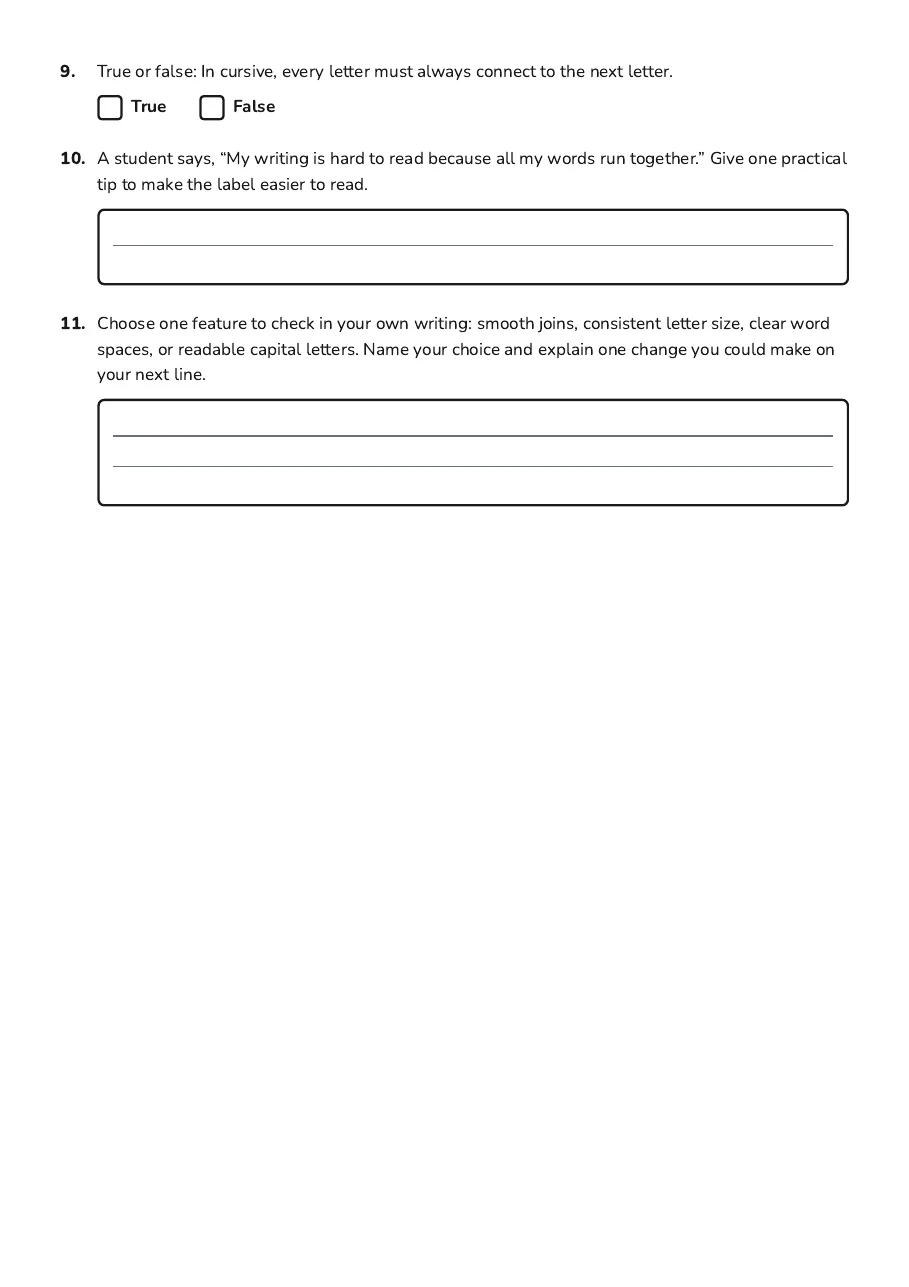
Notice and choose
Read each question carefully. Think about what makes cursive clear and comfortable to write.
- A tight grip with fingers pressed hard against the pencil tip
- A relaxed grip, with fingers a little way back from the tip
- Holding the pencil near its top
- Keep letter sizes reasonably consistent
- Use a smooth, controlled movement
- Leave clear spaces between words
- Press as hard as possible
- Make every letter a different size
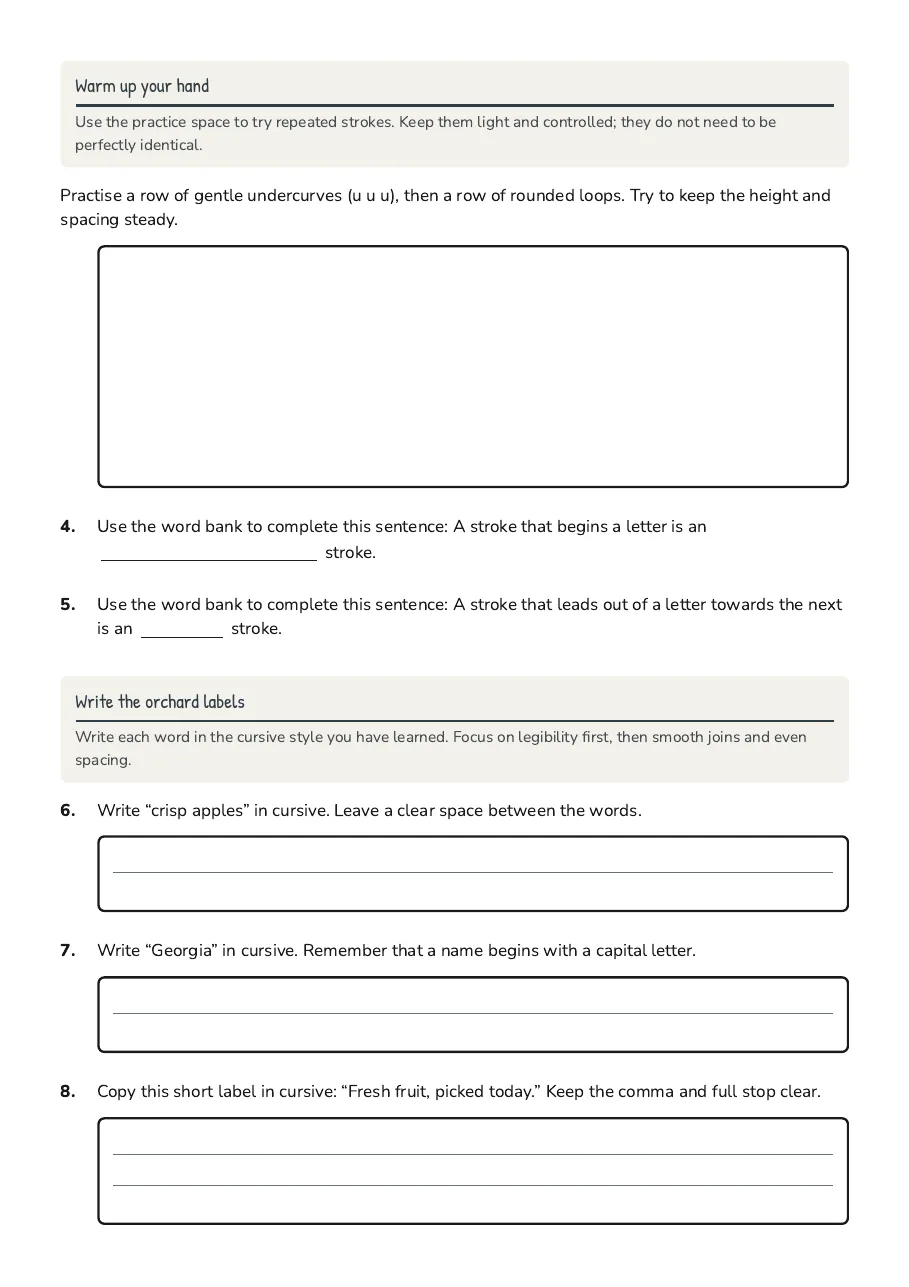
Warm up your hand
Use the practice space to try repeated strokes. Keep them light and controlled; they do not need to be perfectly identical.
Write the orchard labels
Write each word in the cursive style you have learned. Focus on legibility first, then smooth joins and even spacing.
3 printable pages
Page 1
Page 2
Page 3
About This Worksheet
Free in Kuraplan
Sign up free, grab the PDF, and customize it for your class.
Print-Ready
Formatted for standard paper. Clean layout, easy to read.
AI-Generated
Created with Kuraplan's AI, designed for real classroom use.
For Teachers & Parents
Use in classrooms, for homework, tutoring, or homeschool.
Need a custom version of this worksheet?
Kuraplan's AI generates custom worksheets in seconds — differentiated for every learner, aligned to your curriculum.
Generate Custom Worksheets — FreeMore English Worksheets
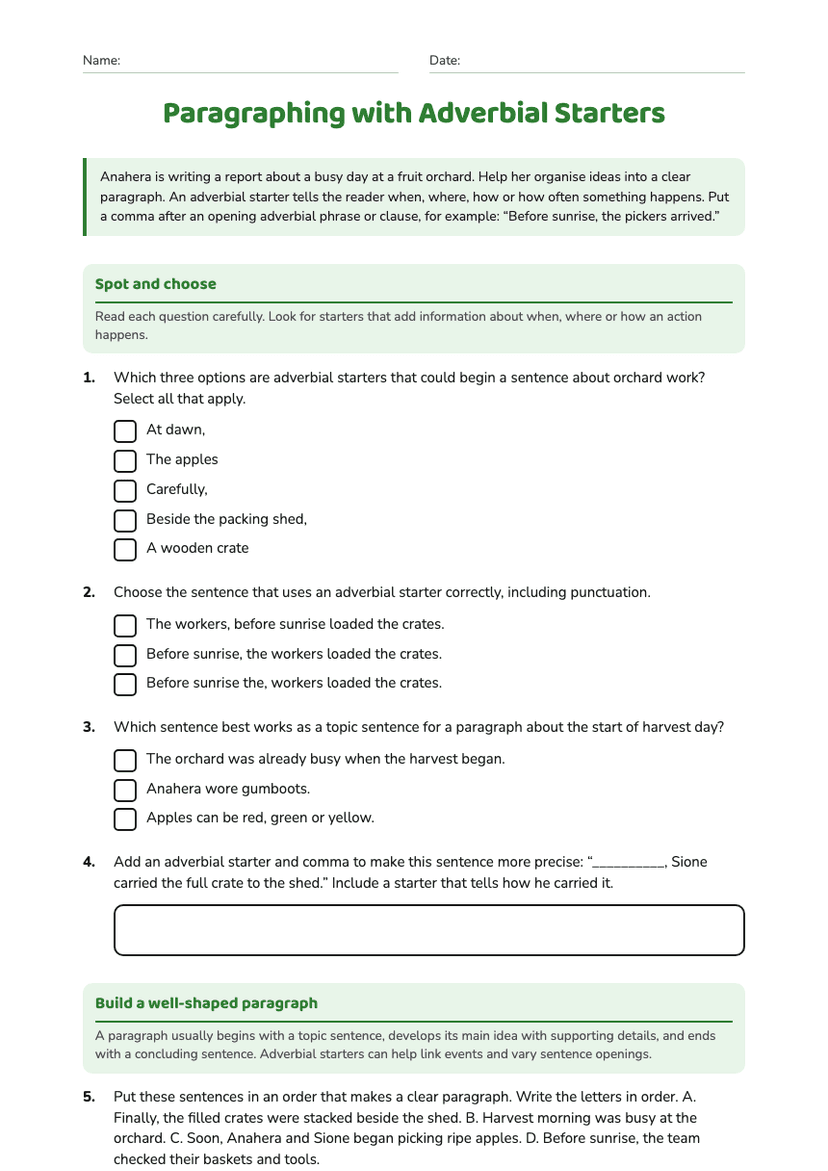
Paragraphing with Adverbial Starters
Free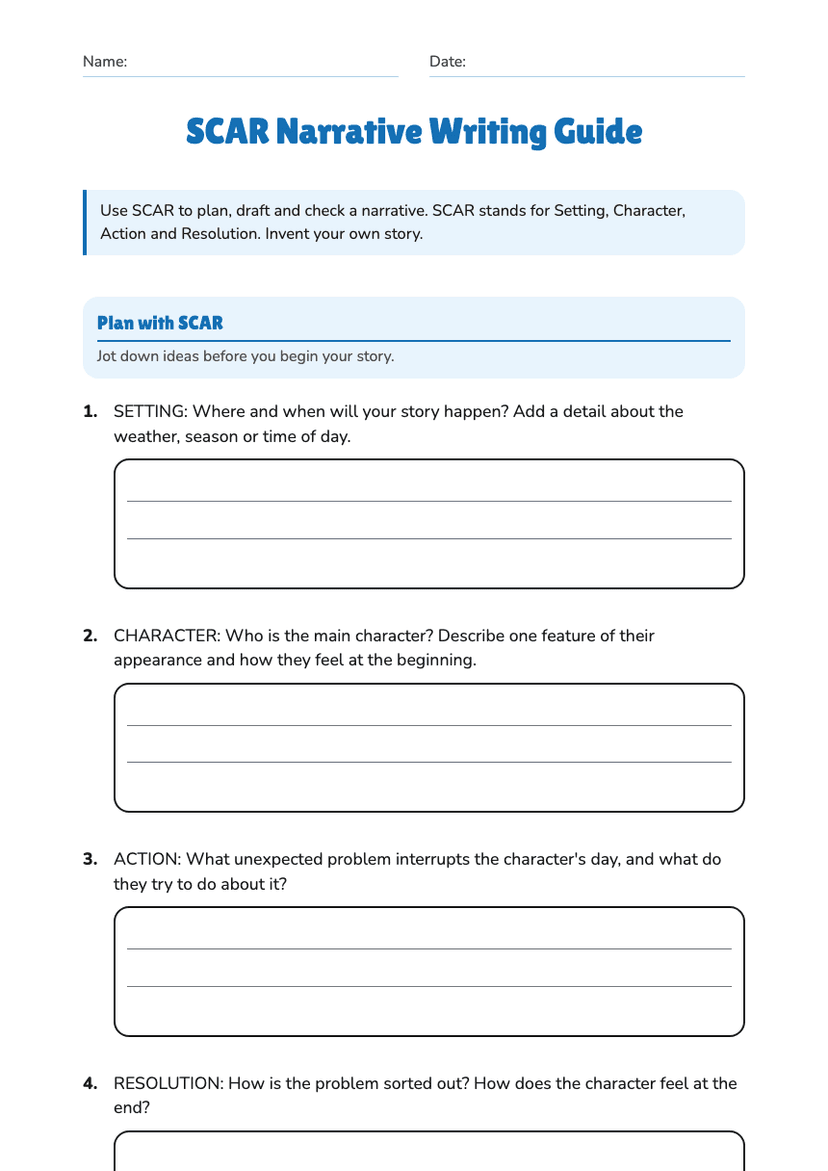
SCAR Narrative Writing Guide
Free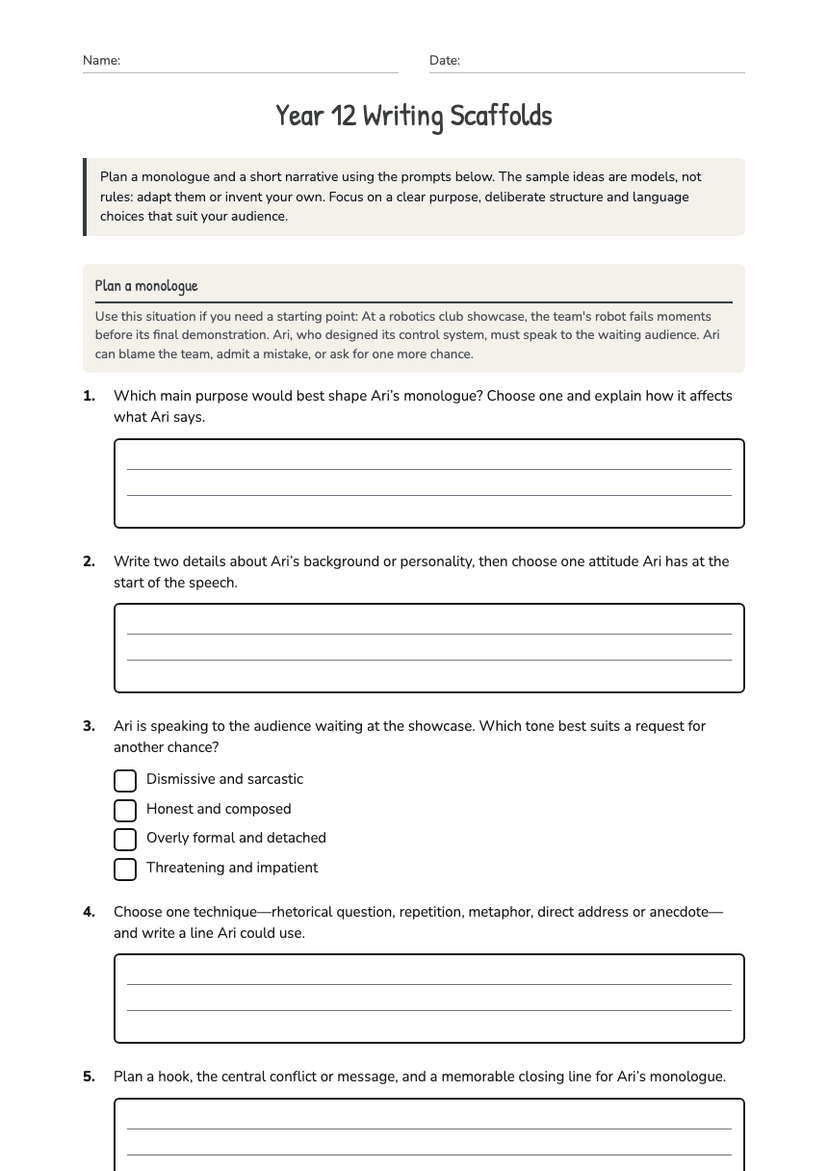
Year 12 Writing Scaffolds
Free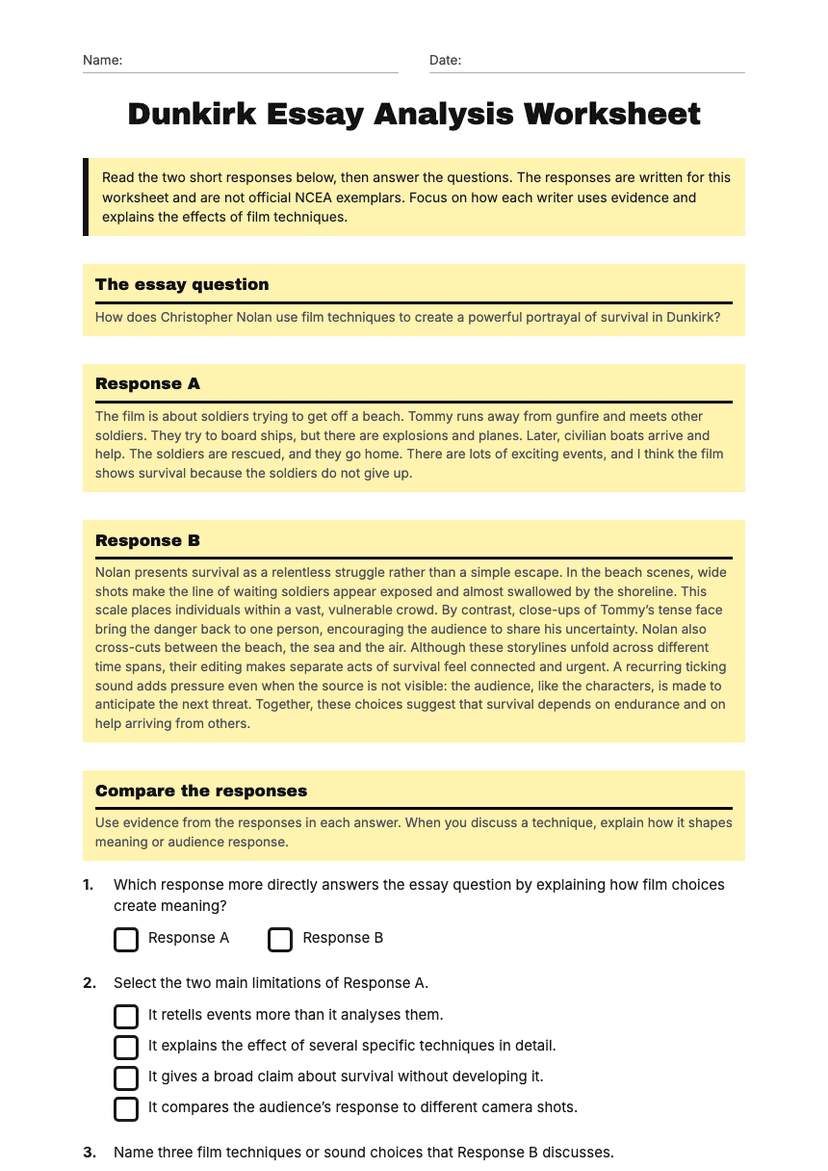
Dunkirk Essay Analysis Worksheet
Free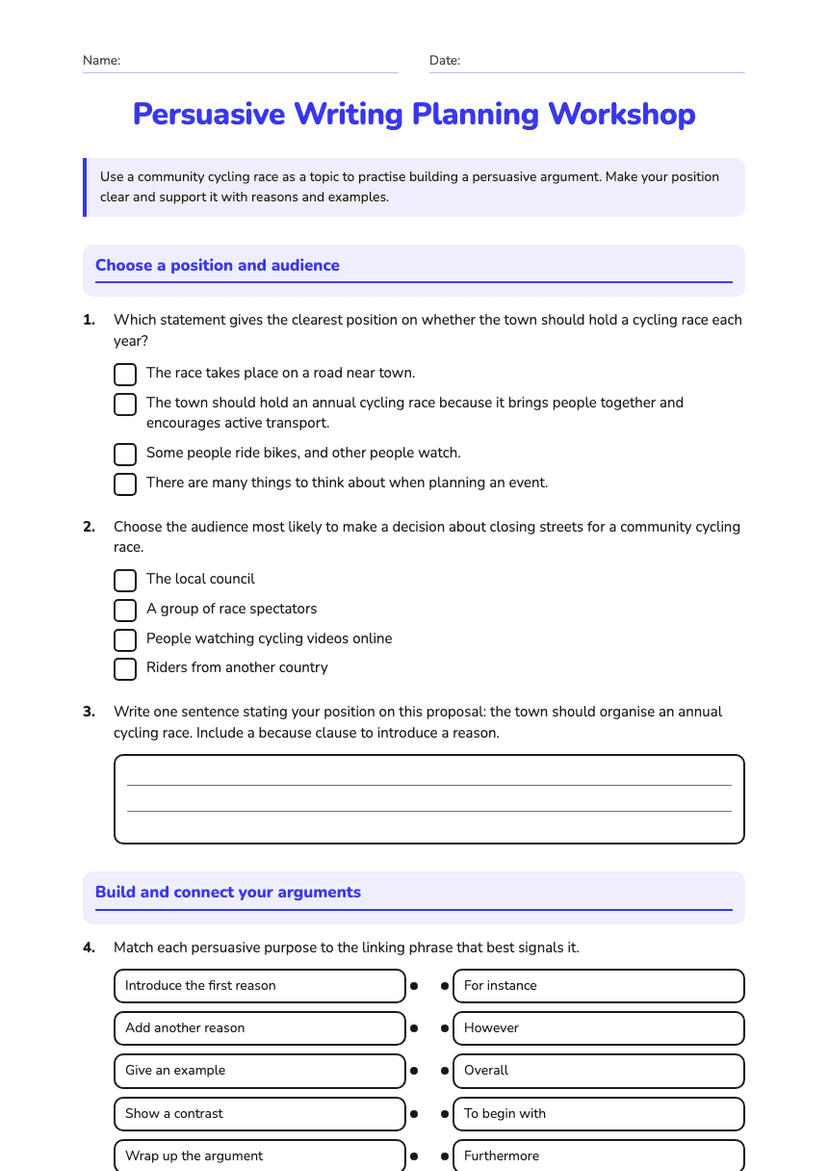
Persuasive Writing Planning Workshop
Free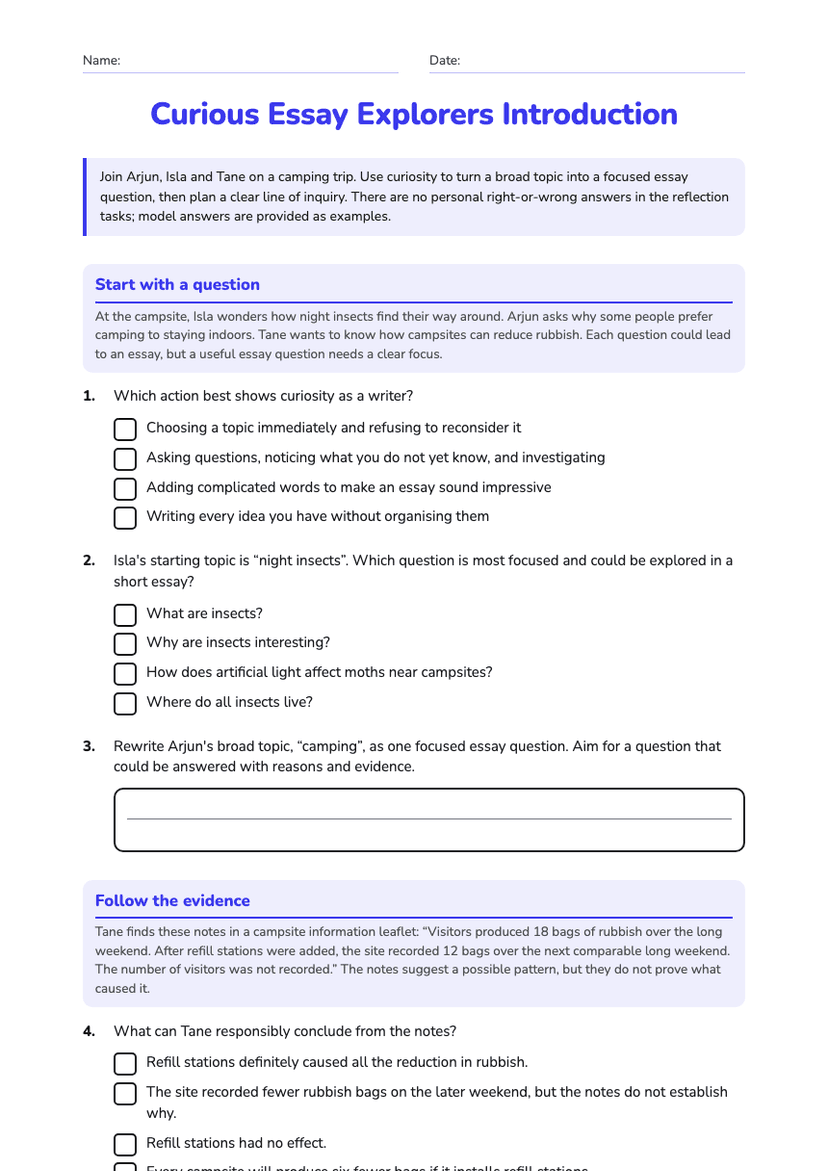
Curious Essay Explorers Introduction
Free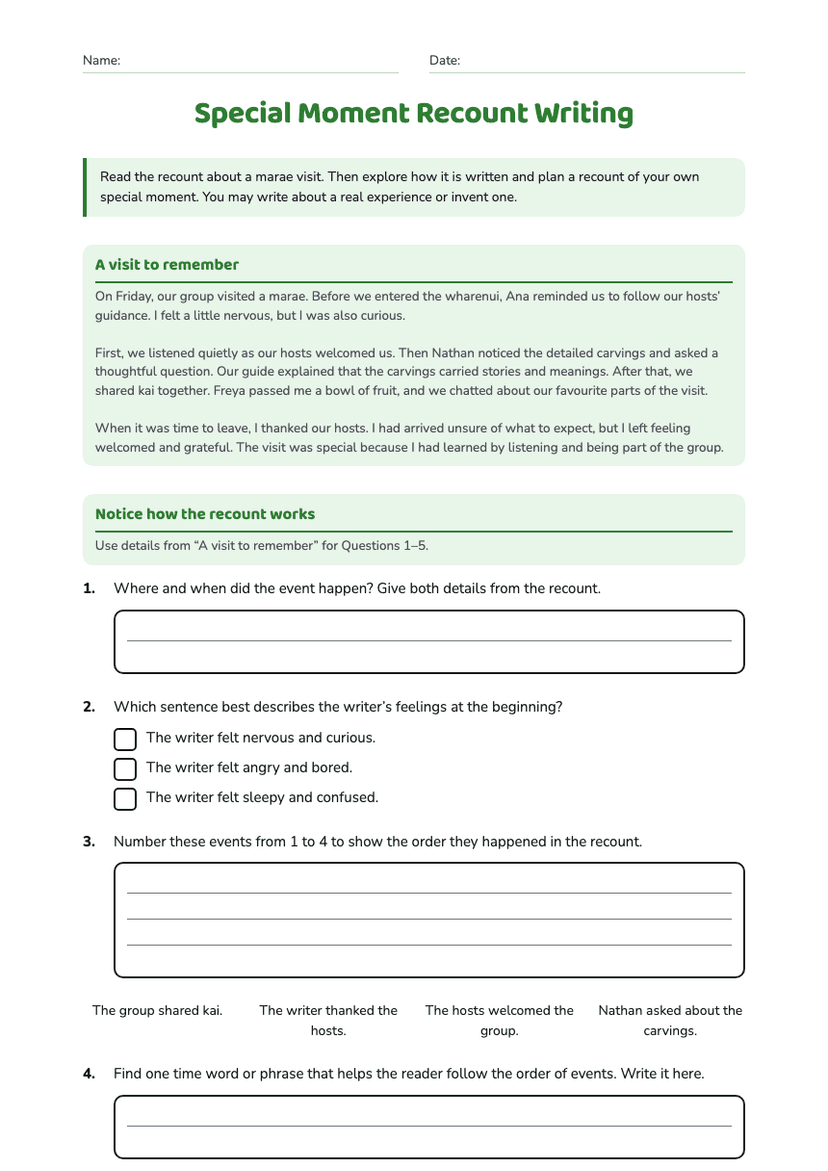
Special Moment Recount Writing
Free