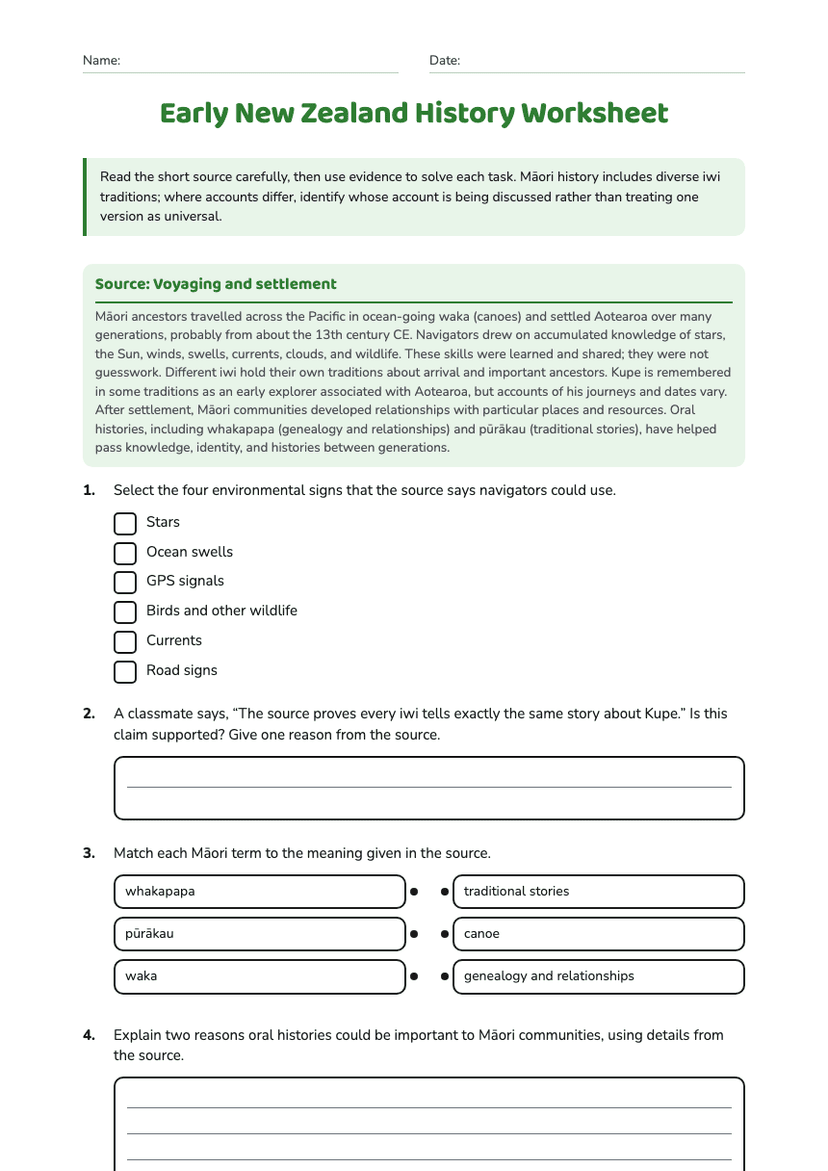
Dawn Raids: Inquiry and Justice
A free social sciences worksheet ready for your classroom. Open in Kuraplan to grab the print-ready PDF, customize it for your students, or generate a fresh version in seconds.

Dawn Raids: Inquiry and Justice
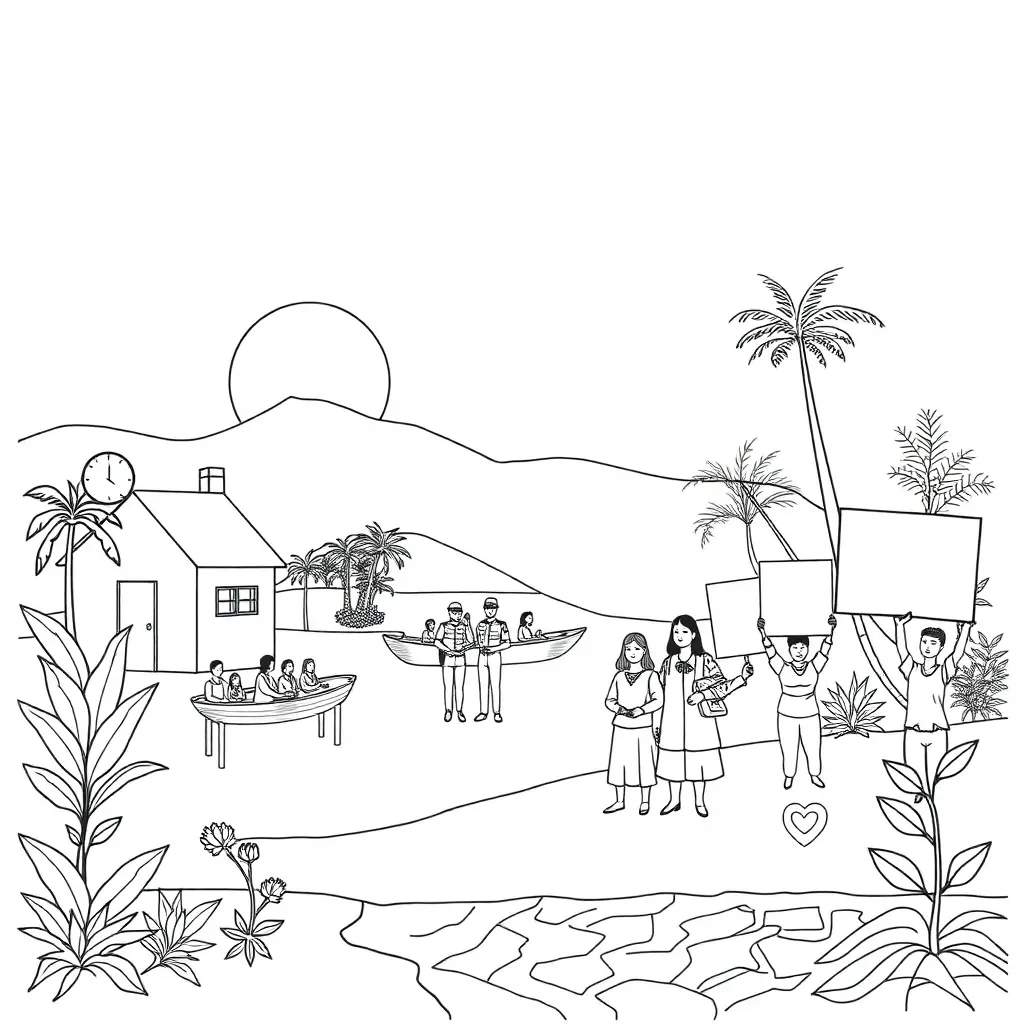
Part 1: Background and Timeline
From the 1950s, people from Pacific nations such as Samoa, Tonga, Fiji and the Cook Islands migrated to Aotearoa New Zealand. Many came to work in factories, transport, building and other industries. During the economic growth of the 1950s and 1960s, workers were needed. Pacific families helped build communities, businesses and cultural life in New Zealand.
By the early 1970s, economic conditions had changed. Unemployment increased, and some politicians and newspapers blamed migrants for social and economic problems. Immigration enforcement focused strongly on people thought to have overstayed their visas. Although people from different backgrounds overstayed, Pacific communities were disproportionately targeted.
The term Dawn Raids refers to immigration raids that often occurred early in the morning. Police and immigration officers entered homes to check immigration documents. Some people were stopped in public or at work. These actions caused fear and distress, including for New Zealand citizens and people who had valid permission to remain.
Pacific people and supporters protested against the unfair treatment. The Polynesian Panthers, formed in 1971, provided legal support, organised protests and helped families understand their rights. In 2021, the New Zealand Government formally apologised to Pacific communities for the discriminatory enforcement and the harm caused by the Dawn Raids.
_____ Pacific migration increased during economic growth.
_____ The Polynesian Panthers were formed.
_____ The Government issued a formal apology.
_____ Dawn Raids became a major public issue.
_____ Economic conditions worsened and unemployment increased.
Part 2: Investigating Sources
Important: The following are fictionalised classroom sources. They are based on historically grounded experiences and viewpoints, but they are not direct quotations.
Source A: A young Pacific New Zealander, 1970s
“My family kept our documents together, but we still felt frightened when officers arrived before sunrise. At school, some people acted as if Pacific families were the problem. We wanted to be treated fairly, like everyone else.”
Source B: A Government statement, 1970s
“Immigration officers must check whether people have permission to remain in New Zealand. The Government is concerned about the effects of overstaying during a difficult economic period.”
Source C: A Polynesian Panthers organiser, 1970s
“We are collecting stories, explaining people’s rights and speaking publicly. Immigration rules may exist, but enforcement should not target one community or ignore the dignity of families.”
Part 3: Justice, Fairness and Historical Thinking
Teacher Answer Guide
1. New Zealand needed workers during a period of economic growth.
2. Immigration enforcement actions that often happened early in the morning.
3. Correct order: Pacific migration increased during economic growth – 1; economic conditions worsened and unemployment increased – 2; Dawn Raids became a major public issue – 3; Polynesian Panthers formed – 4; formal apology – 5.
4. Source A is an affected community member and uses personal experiences of fear and unfair treatment. Source B is the Government and focuses on immigration rules, overstaying and economic concerns. Students should identify that each source presents a particular viewpoint.
5. Strength: Source B shows the official reasoning used by the Government. Limitation: it may minimise or leave out the experiences and harm suffered by affected families.
6. Possible causes include economic decline, unemployment, political pressure and discriminatory enforcement. Consequences include fear, distress, damaged trust and pressure on Pacific families and communities.
7. Enforcement practices and public understanding changed, and the Government formally apologised in 2021. The need for dignity, equal treatment, recognition and justice continued to matter.
8–10. Accept well-supported responses. Look for accurate use of evidence, recognition of perspective and bias, clear links between cause and consequence, and thoughtful connections between historical justice and fairness today.
About This Worksheet
Free in Kuraplan
Sign up free, grab the PDF, and customize it for your class.
Print-Ready
Formatted for standard paper. Clean layout, easy to read.
AI-Generated
Created with Kuraplan's AI, designed for real classroom use.
For Teachers & Parents
Use in classrooms, for homework, tutoring, or homeschool.
Need a custom version of this worksheet?
Kuraplan's AI generates custom worksheets in seconds — differentiated for every learner, aligned to your curriculum.
Generate Custom Worksheets — FreeMore Social Sciences Worksheets
Parihaka: Historical Perspectives Worksheet
Free
Ancient Egyptian Burial Practices
Free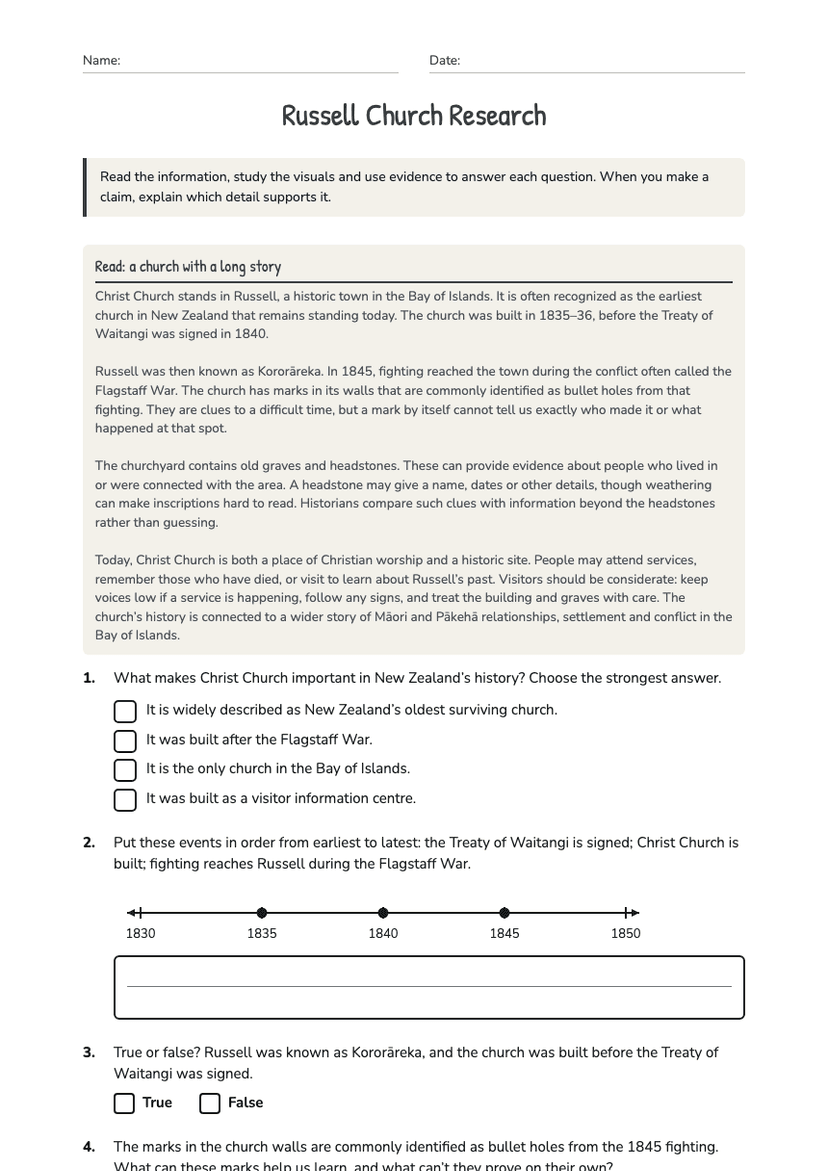
Russell Church Research
Free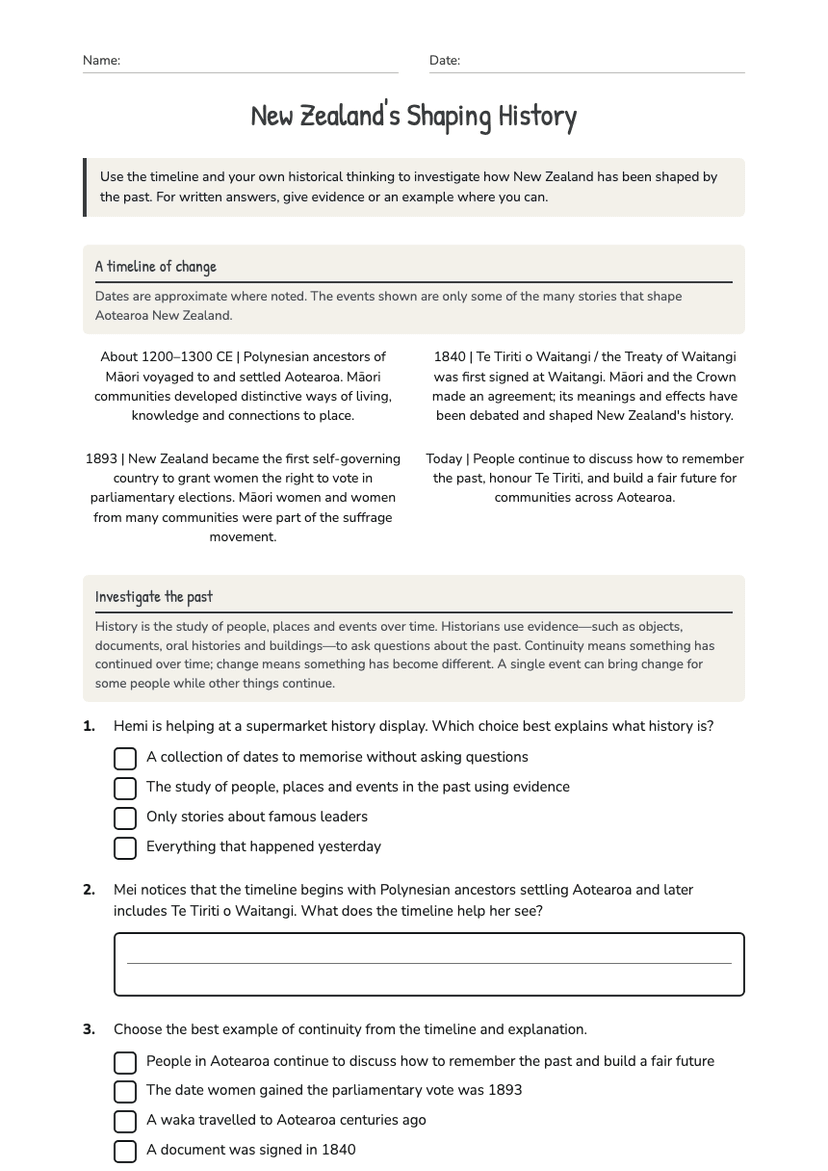
New Zealand's Shaping History
Free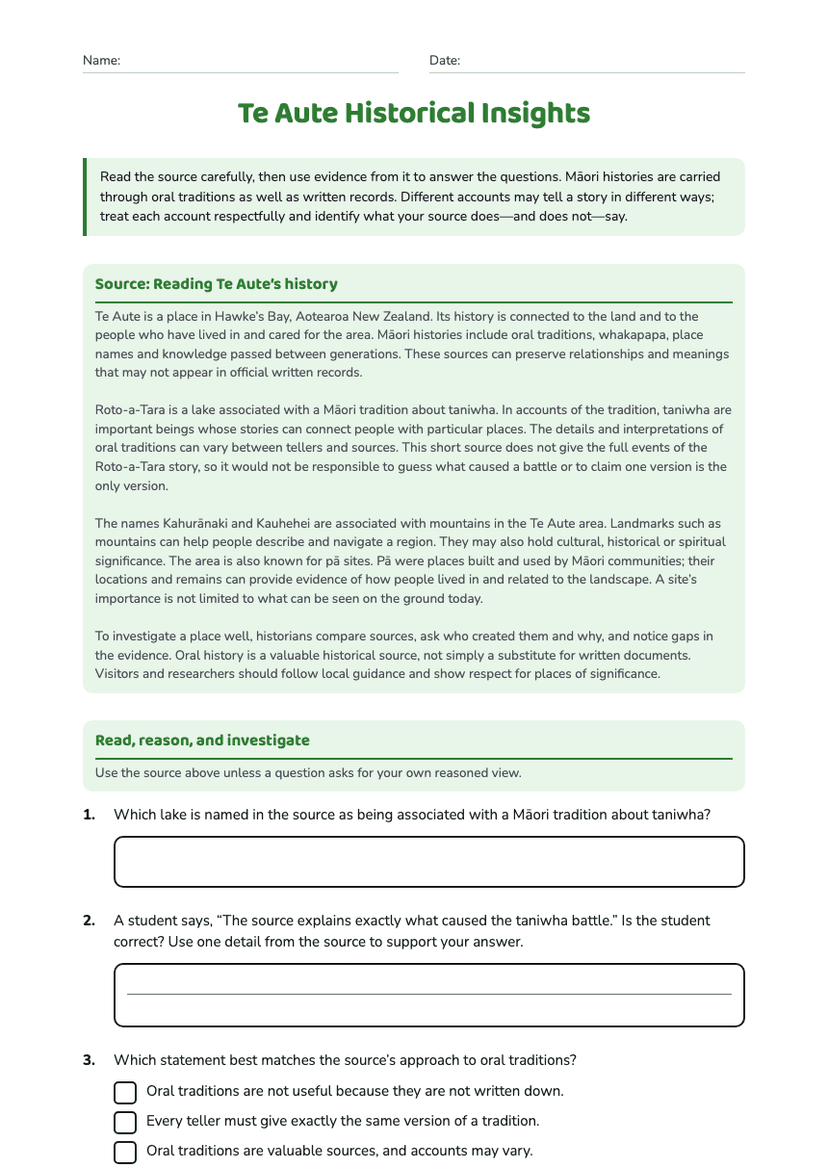
Te Aute Historical Insights
Free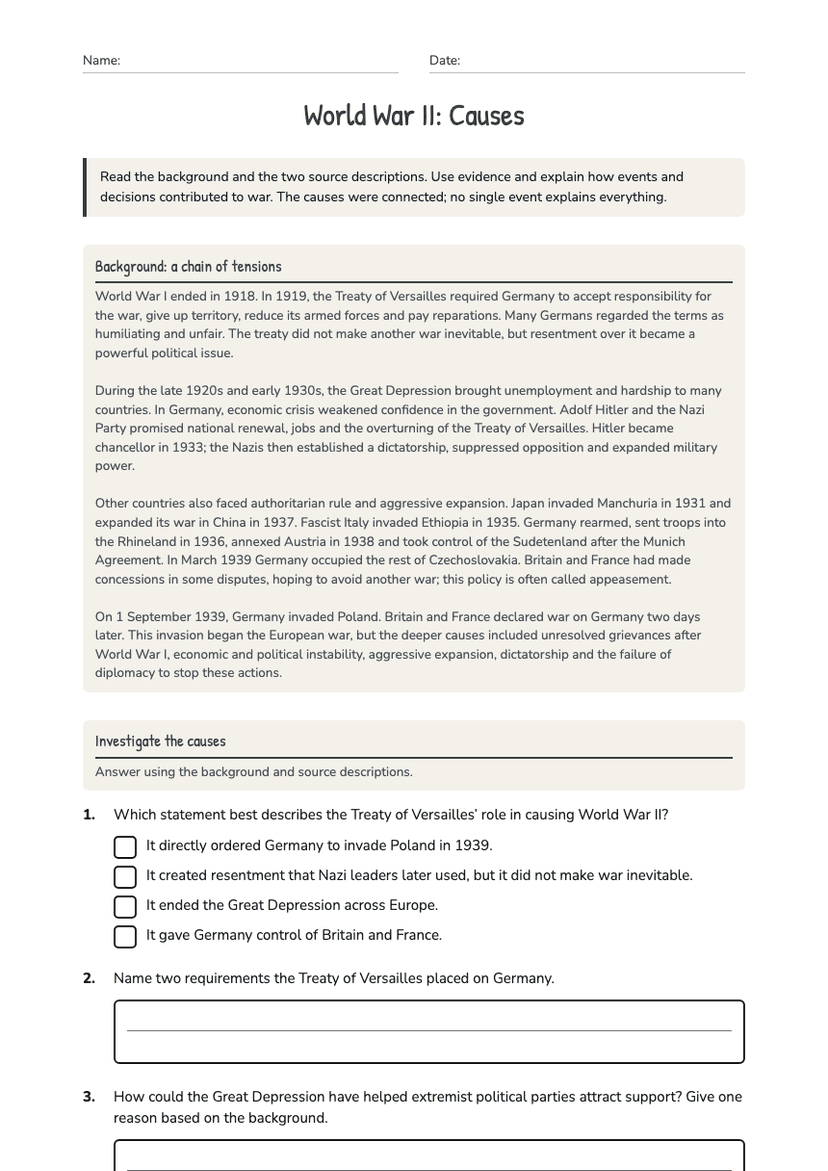
World War II: Causes
Free
Traditional and Modern Voyaging
Free