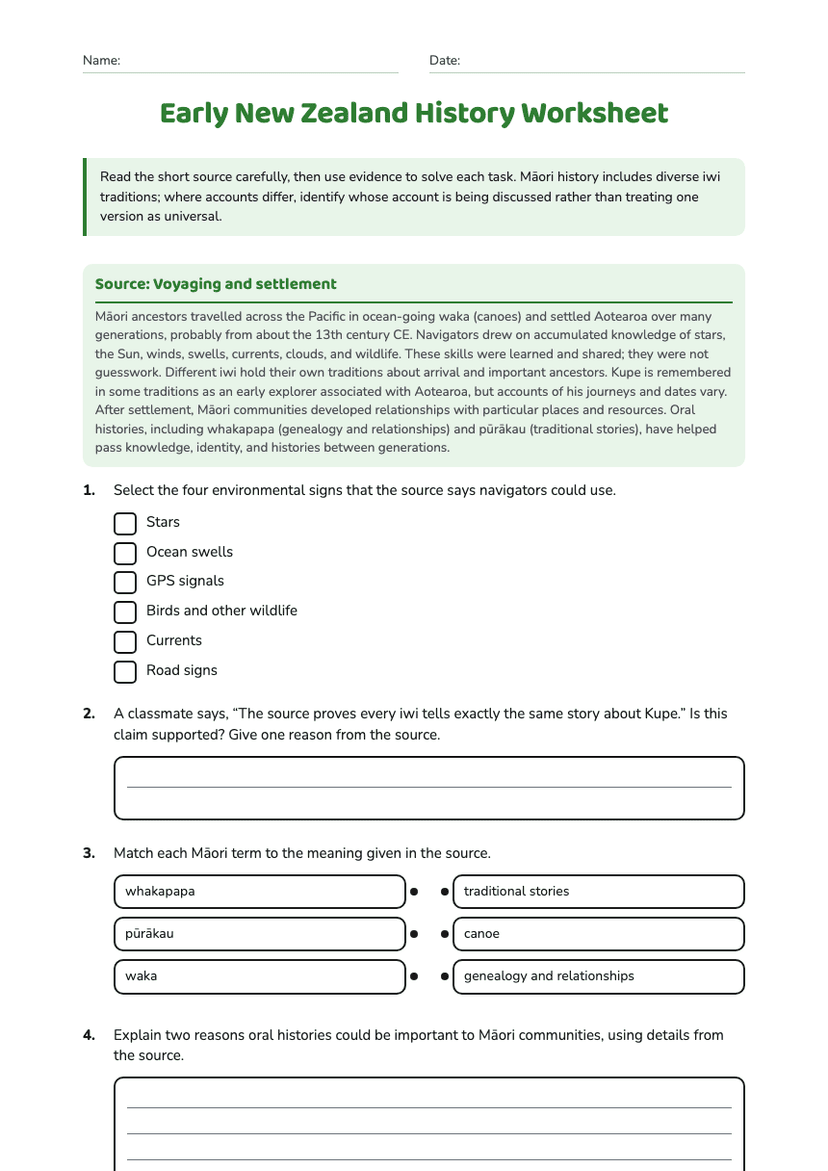
Dawn Raids: Key Dates and People
A free social sciences worksheet ready for your classroom. Open in Kuraplan to grab the print-ready PDF, customize it for your students, or generate a fresh version in seconds.
The Dawn Raids: Important Dates, People and Events
✂️ Cue Cards: Dates, People and Events
Cut out the cards and use them to revise the history of the Dawn Raids. Some dates describe a period rather than one single event.
1950s–1960s: Pacific migration
Many people from Samoa, Tonga, the Cook Islands, Niue and other Pacific nations came to New Zealand for work and new opportunities. Pacific communities became an important part of Aotearoa New Zealand.
1970s: Economic downturn
When the economy weakened, unemployment increased. Some politicians and media blamed Pacific migrants unfairly, and anti-Pacific racism grew.
1973–1976: Dawn Raids begin and intensify
Police and immigration officials carried out checks for people believed to have overstayed their visas. Raids became especially frequent and intimidating during the mid-1970s.
Dawn raids and immigration checks
Officials sometimes visited homes early in the morning, searched for people and checked passports or permits. These actions caused fear and disrupted families.
Who was affected?
Samoan communities were strongly affected, along with people from Tonga, Fiji, the Cook Islands, Niue and other Pacific communities. Not every person targeted was an overstayer.
Racial double standards
Pacific people were targeted more often than overstaying visitors from Britain, Australia and the United States. This unequal treatment showed the influence of racism.
1971: Polynesian Panthers
The Polynesian Panthers were founded in Auckland. They challenged racism, supported Pacific families and campaigned for social justice.
Key activists
Will ‘Ilolahia and Tigilau Ness were important Polynesian Panthers activists. They helped organise support, protest actions and public education.
Community resistance
Communities resisted the raids by sharing information, supporting families and observing police activity. Some groups used “pig patrols” to warn people when police were nearby.
1975: Pacific protests and marches
Pacific communities and their supporters marched and protested against the raids, racism and unfair immigration enforcement.
1976–1977: Raids decline
Public criticism increased, political attention grew and the raids declined and ended as a regular policing practice by 1976–77.
1986: Government inquiry
A Government inquiry examined police practices. It found that the treatment of Pacific peoples involved serious unfairness and racial discrimination.
2002: Apology to Chinese New Zealanders
The Government apologised for the historical poll tax imposed on Chinese immigrants. This was a separate historical injustice, but it provides context for how governments acknowledge past discrimination.
2021: Formal apology to Pacific communities
Prime Minister Jacinda Ardern formally apologised to Pacific communities for the discriminatory Dawn Raids. The apology recognised the harm caused to individuals, families and communities.
Ongoing significance
The Dawn Raids remain important when learning about racism, migration, protest and historical justice. Remembering the past can support fairer treatment today.
Dates and historical periods
Dates such as 1950s–1960s and 1976–77 mark periods of change. They do not always identify one exact event or one day.
📝 Task Cards
Task Card 1: Put the dates in order
Arrange these events from earliest to latest: 2021 apology; 1971 Polynesian Panthers founded; 1986 inquiry; 1950s–1960s Pacific migration; 1975 protests; 2002 poll tax apology; 1973–76 raids.
Task Card 2: Match people to actions
Match each person to the correct description.
A. Will ‘Ilolahia B. Tigilau Ness C. Jacinda Ardern
1. Prime Minister who gave the 2021 formal apology
2. Polynesian Panthers activist who helped organise resistance
3. Polynesian Panthers activist involved in campaigning for Pacific justice
Task Card 3: Identify cause and consequence
Choose one cause of the Dawn Raids and one consequence. Explain how the cause led to the consequence.
Task Card 4: Why did the apology matter?
Explain why the 2021 apology was important to Pacific communities and to New Zealand’s understanding of historical justice.
🔑 Teacher Answer Key
Task 1: 1950s–1960s Pacific migration; 1971 Polynesian Panthers founded; 1973–76 Dawn Raids; 1975 protests and marches; 1986 Government inquiry; 2002 poll tax apology; 2021 formal apology.
Task 2: A–2, B–3, C–1.
Task 3: Accept well-supported answers. Possible cause: economic downturn, unemployment and anti-Pacific racism. Possible consequence: police targeted Pacific communities through dawn raids and immigration checks, causing fear, family disruption and protests.
Task 4: Accept well-supported answers. The apology mattered because it officially recognised the harm and discrimination caused by the Dawn Raids, acknowledged the experiences of Pacific communities and supported healing, accountability and historical justice. It was separate from the 2002 apology to Chinese New Zealanders for the poll tax.
About This Worksheet
Free in Kuraplan
Sign up free, grab the PDF, and customize it for your class.
Print-Ready
Formatted for standard paper. Clean layout, easy to read.
AI-Generated
Created with Kuraplan's AI, designed for real classroom use.
For Teachers & Parents
Use in classrooms, for homework, tutoring, or homeschool.
Need a custom version of this worksheet?
Kuraplan's AI generates custom worksheets in seconds — differentiated for every learner, aligned to your curriculum.
Generate Custom Worksheets — FreeMore Social Sciences Worksheets
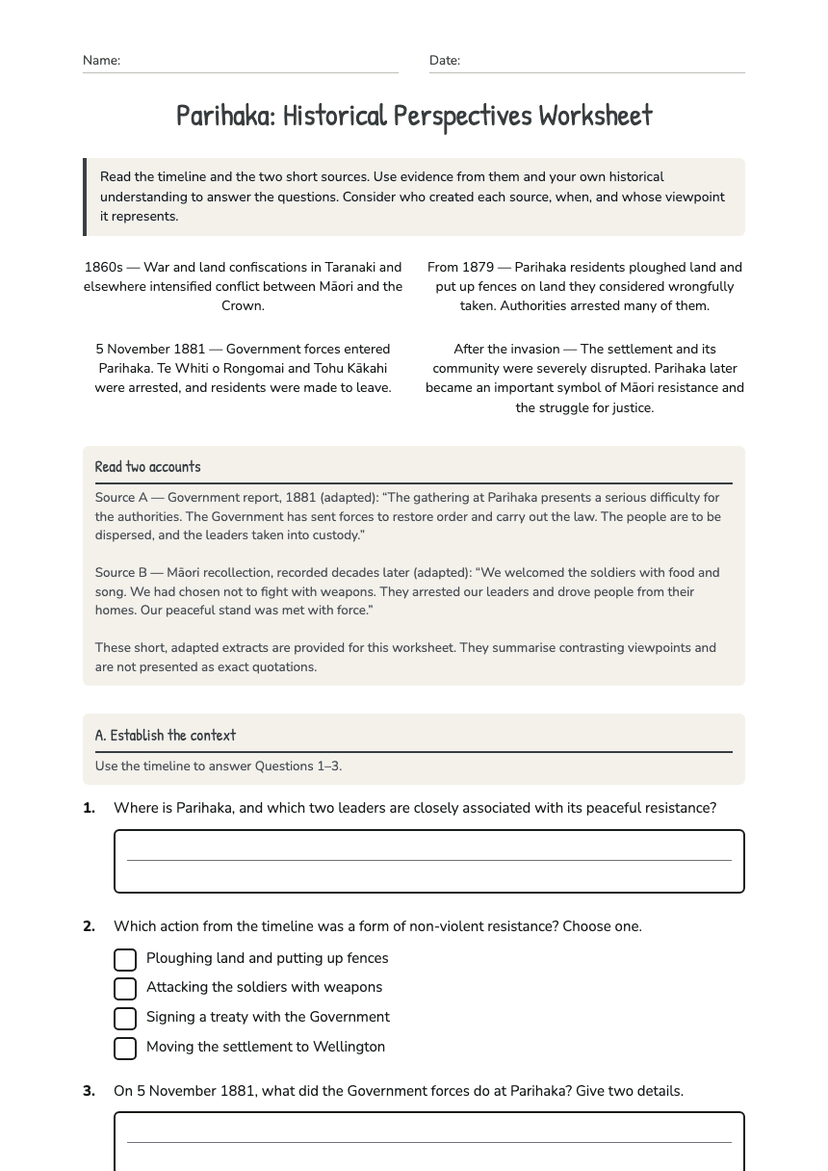
Parihaka: Historical Perspectives Worksheet
Free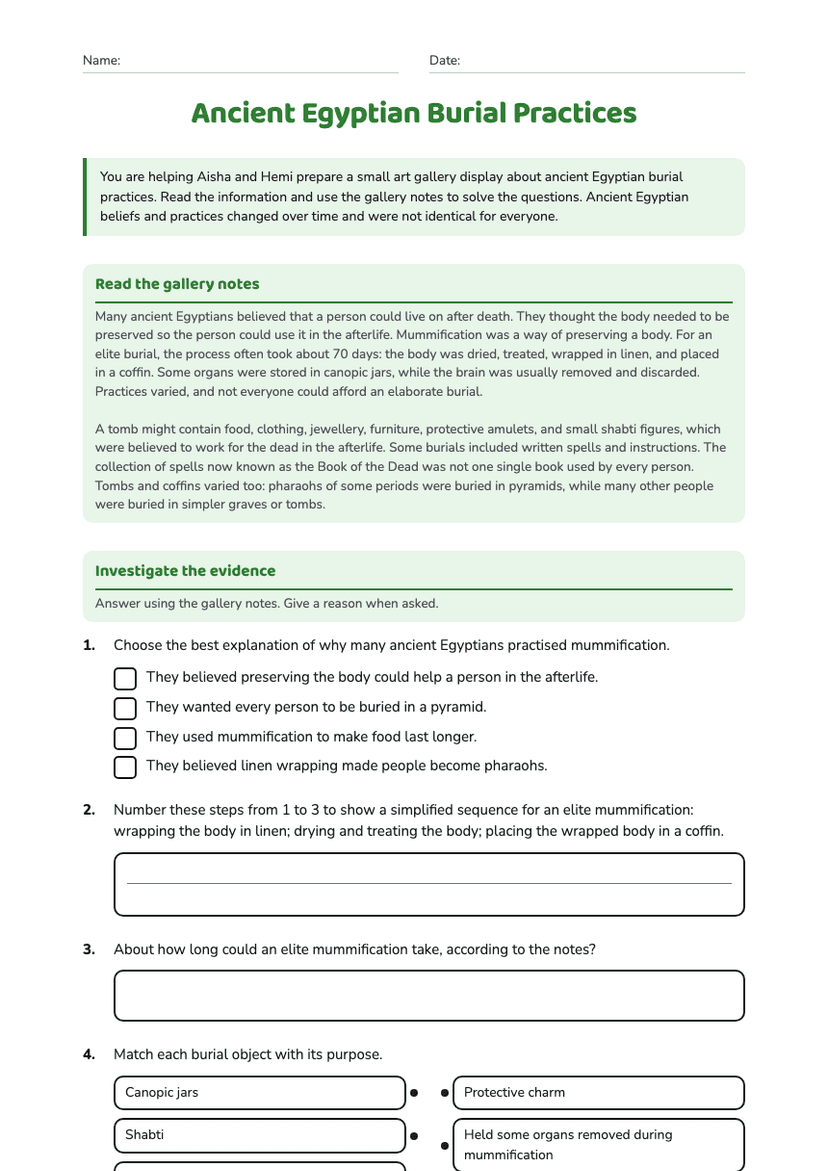
Ancient Egyptian Burial Practices
Free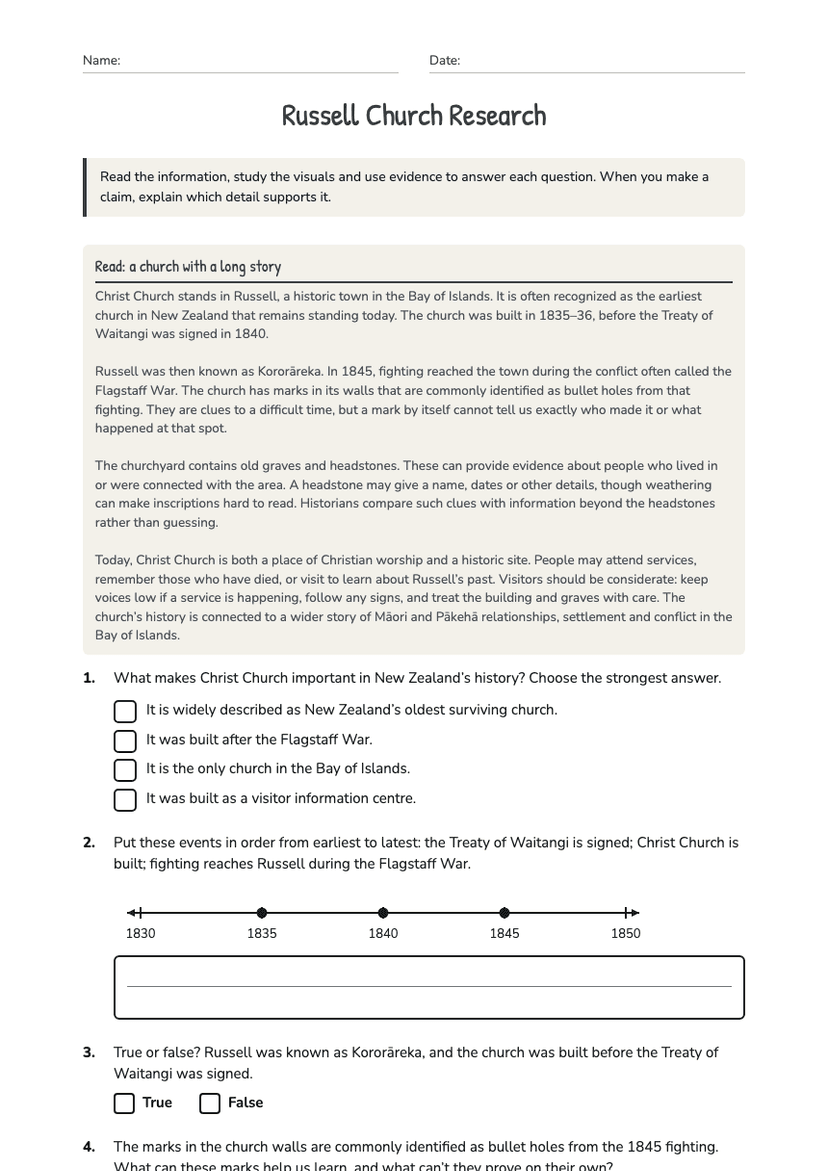
Russell Church Research
Free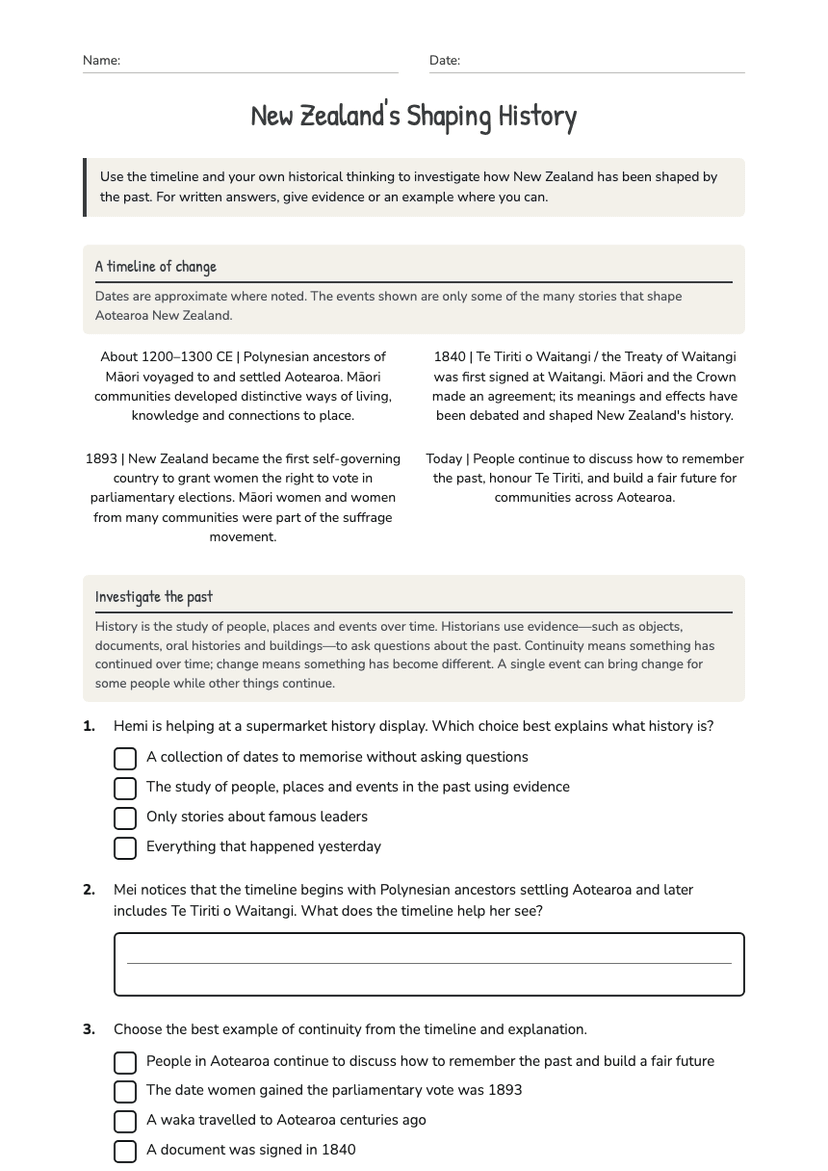
New Zealand's Shaping History
Free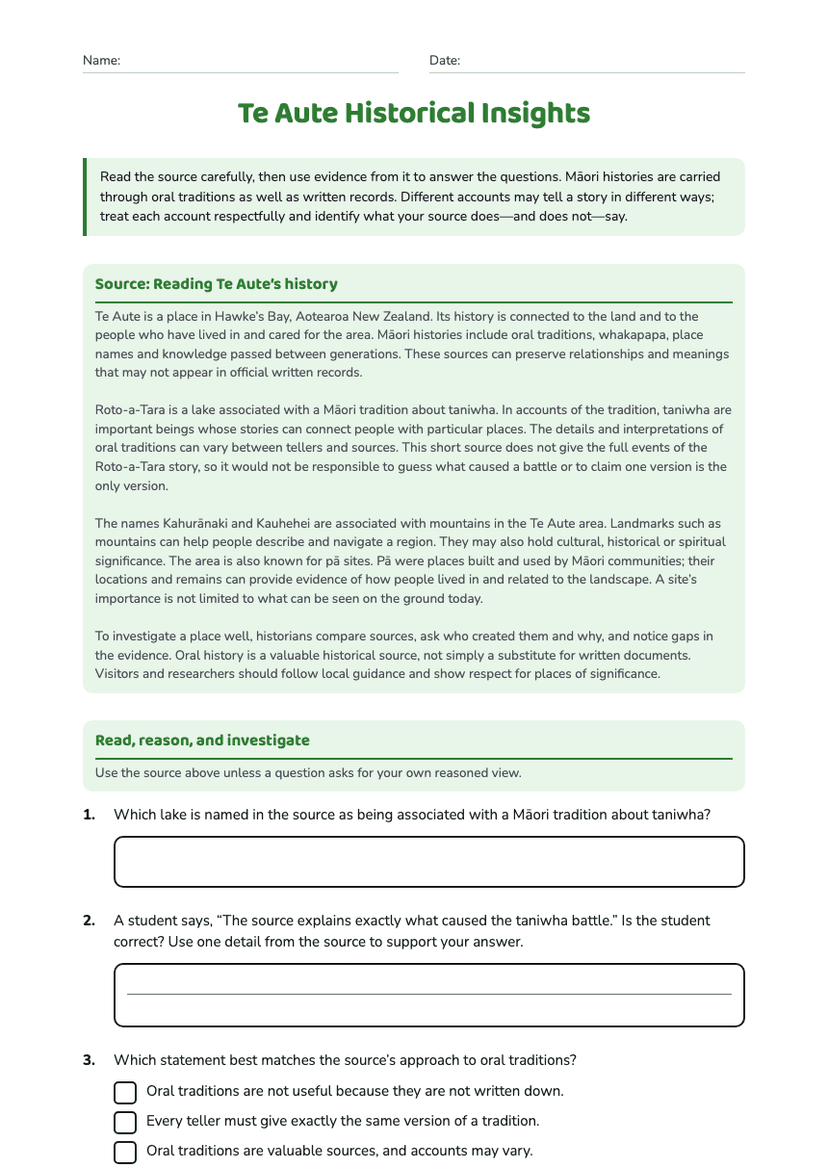
Te Aute Historical Insights
Free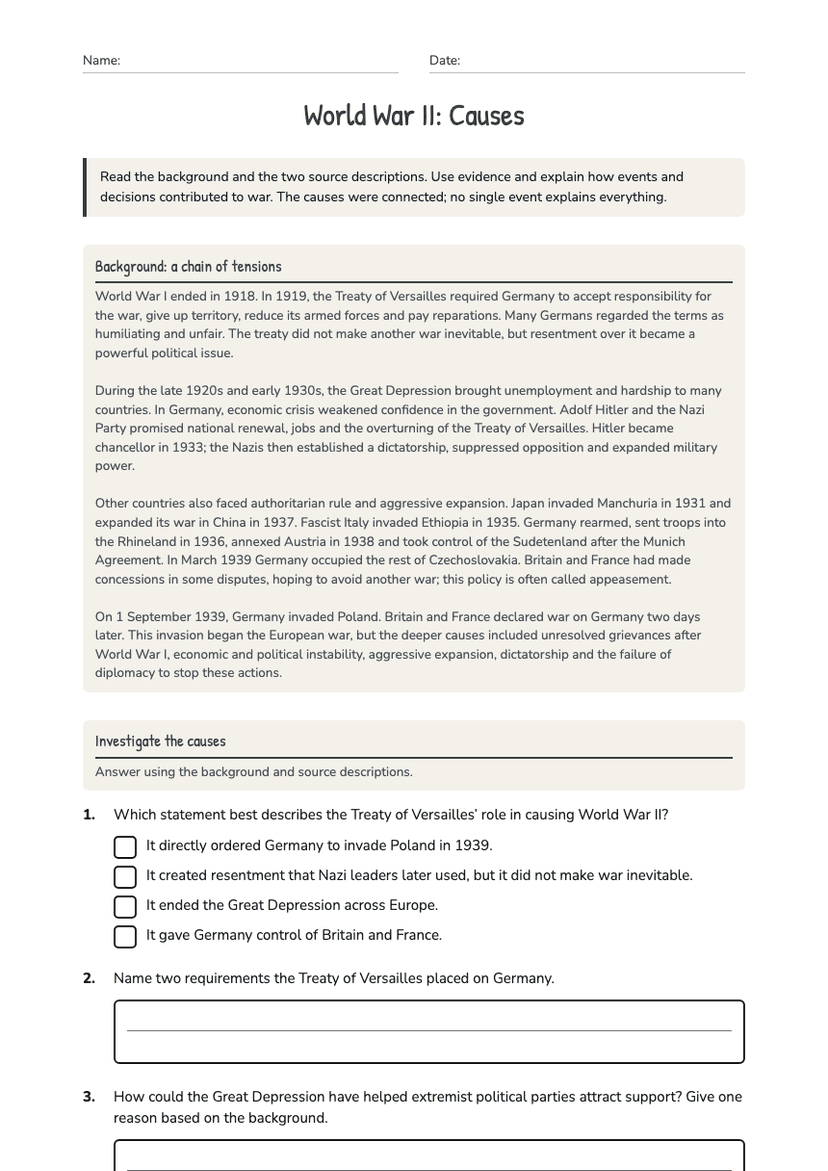
World War II: Causes
Free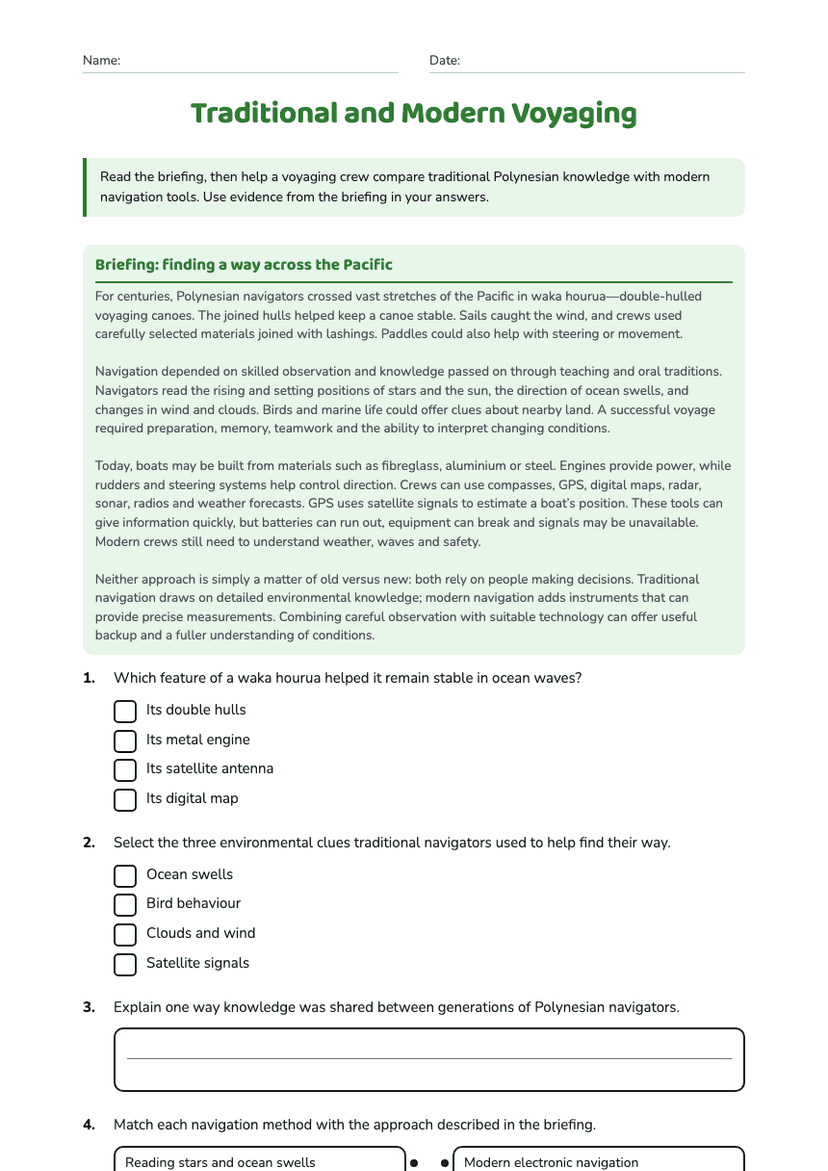
Traditional and Modern Voyaging
Free