Decomposition Investigation Worksheet
A free science worksheet ready for your classroom. Open in Kuraplan to grab the print-ready PDF, customize it for your students, or generate a fresh version in seconds.
Decomposition Investigation Worksheet
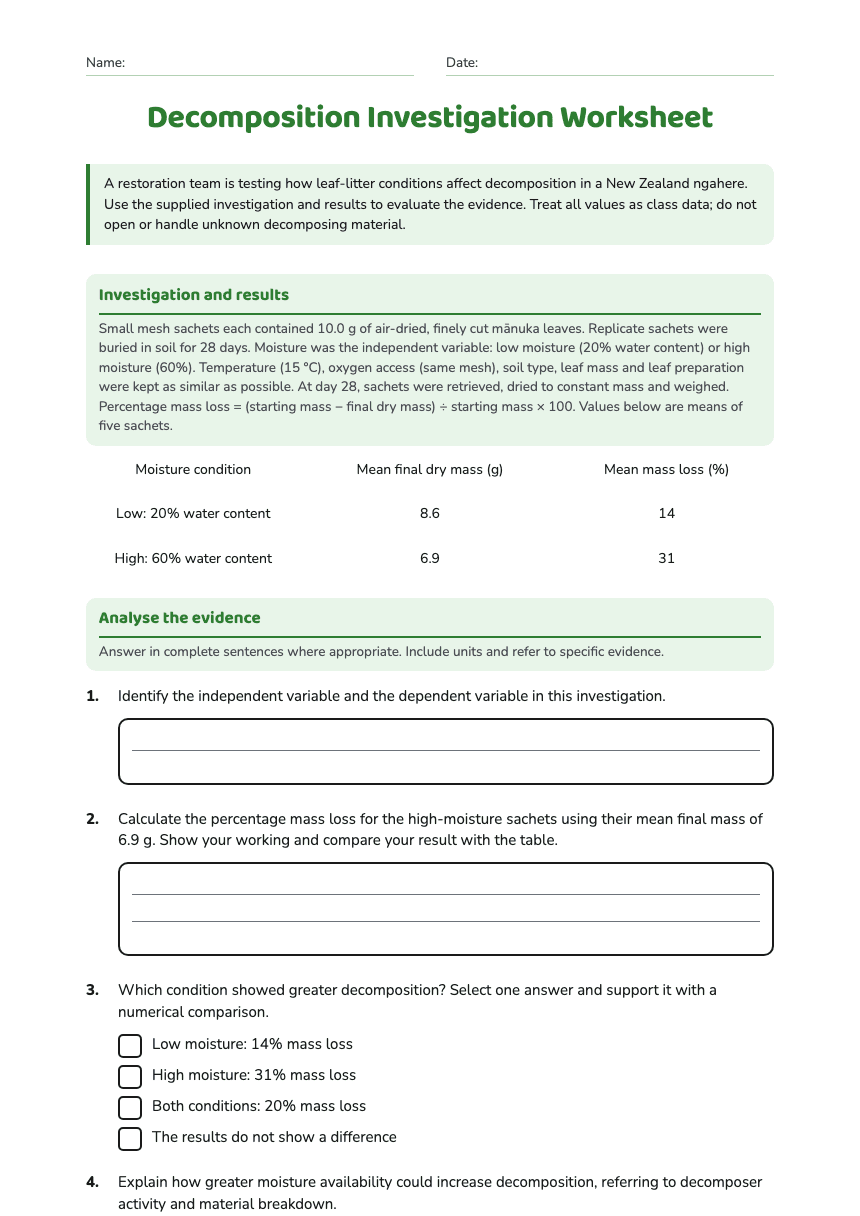
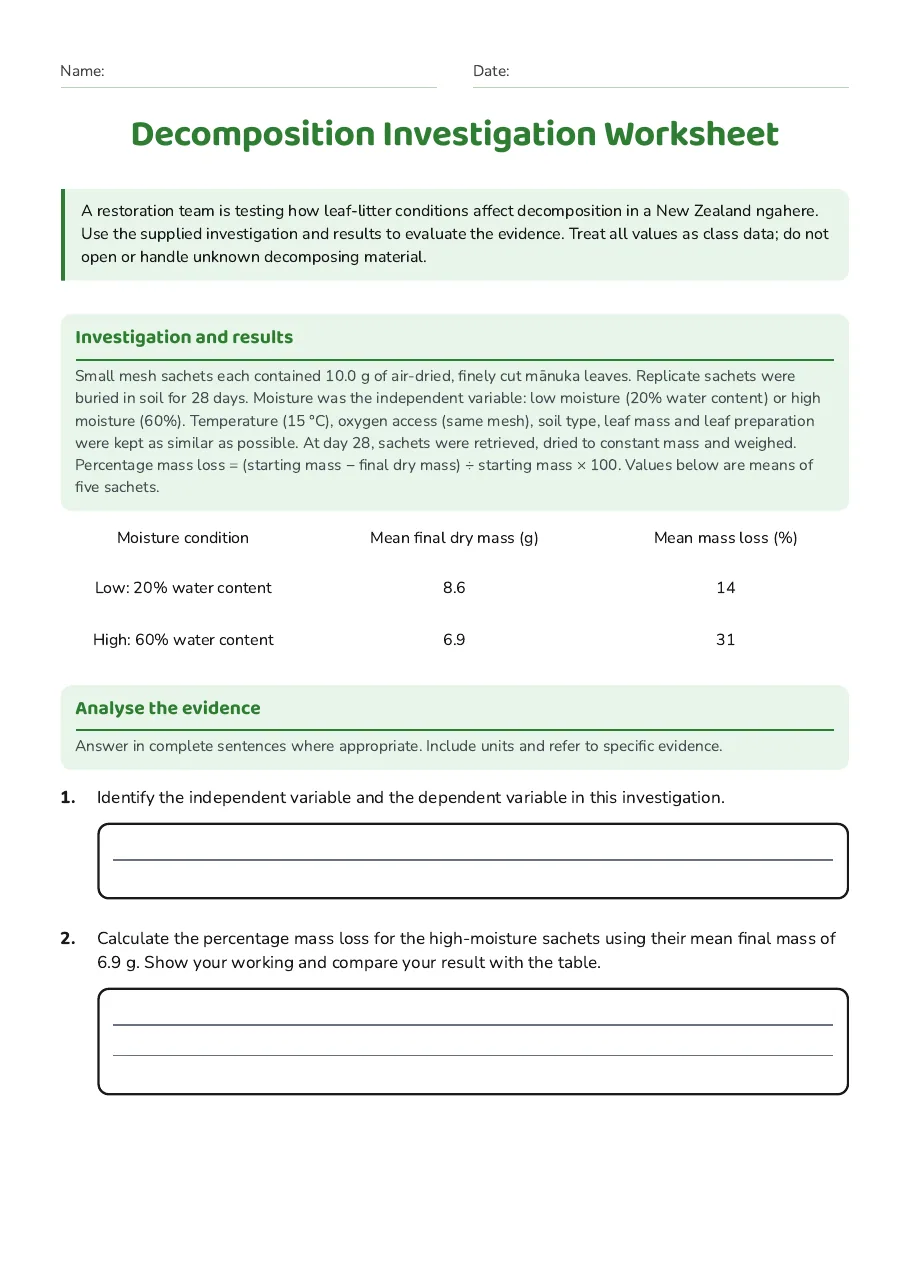
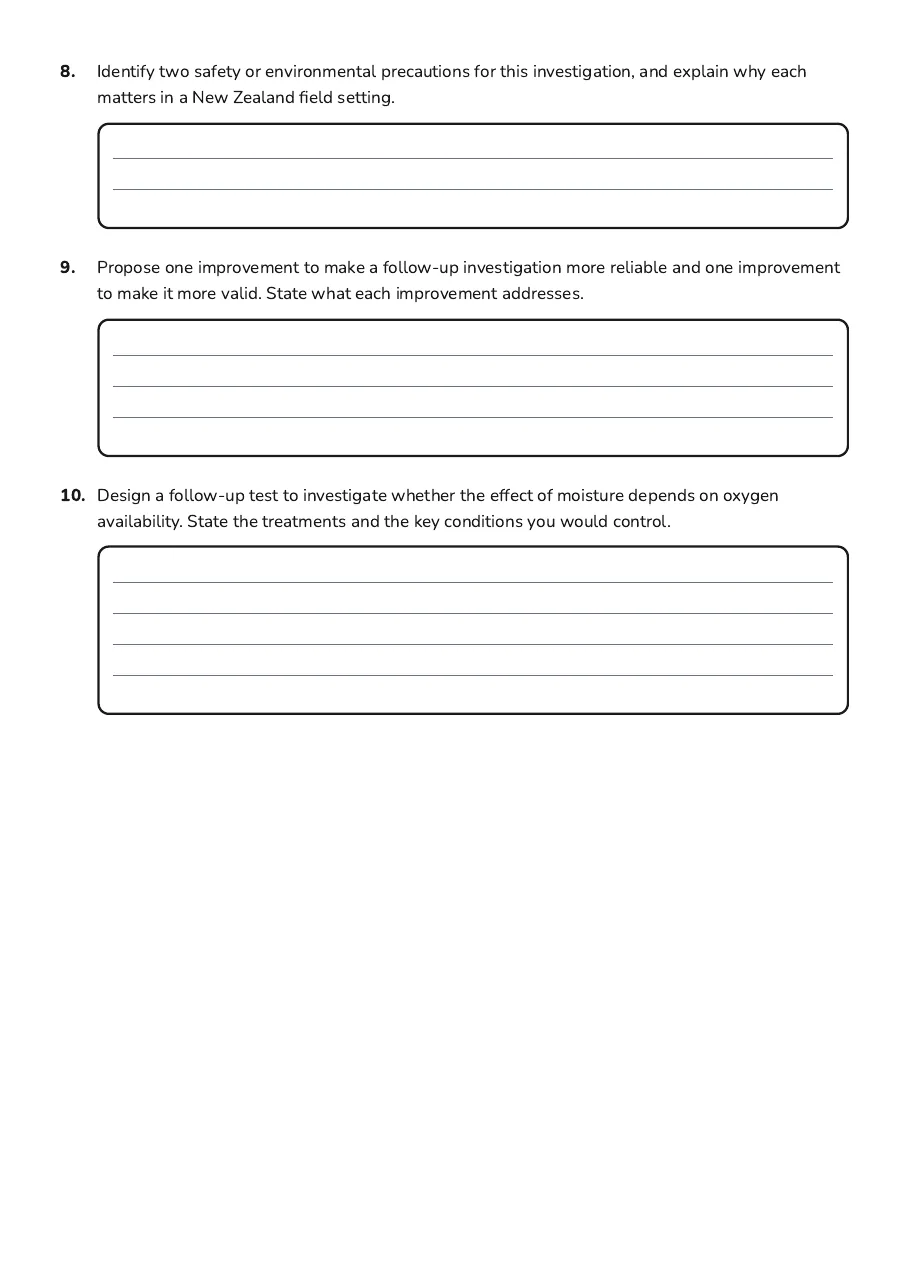
Investigation and results
Small mesh sachets each contained 10.0 g of air-dried, finely cut mānuka leaves. Replicate sachets were buried in soil for 28 days. Moisture was the independent variable: low moisture (20% water content) or high moisture (60%). Temperature (15 °C), oxygen access (same mesh), soil type, leaf mass and leaf preparation were kept as similar as possible. At day 28, sachets were retrieved, dried to constant mass and weighed. Percentage mass loss = (starting mass − final dry mass) ÷ starting mass × 100. Values below are means of five sachets.
Moisture condition
Mean final dry mass (g)
Mean mass loss (%)
Low: 20% water content
8.6
14
High: 60% water content
6.9
31
Analyse the evidence
Answer in complete sentences where appropriate. Include units and refer to specific evidence.
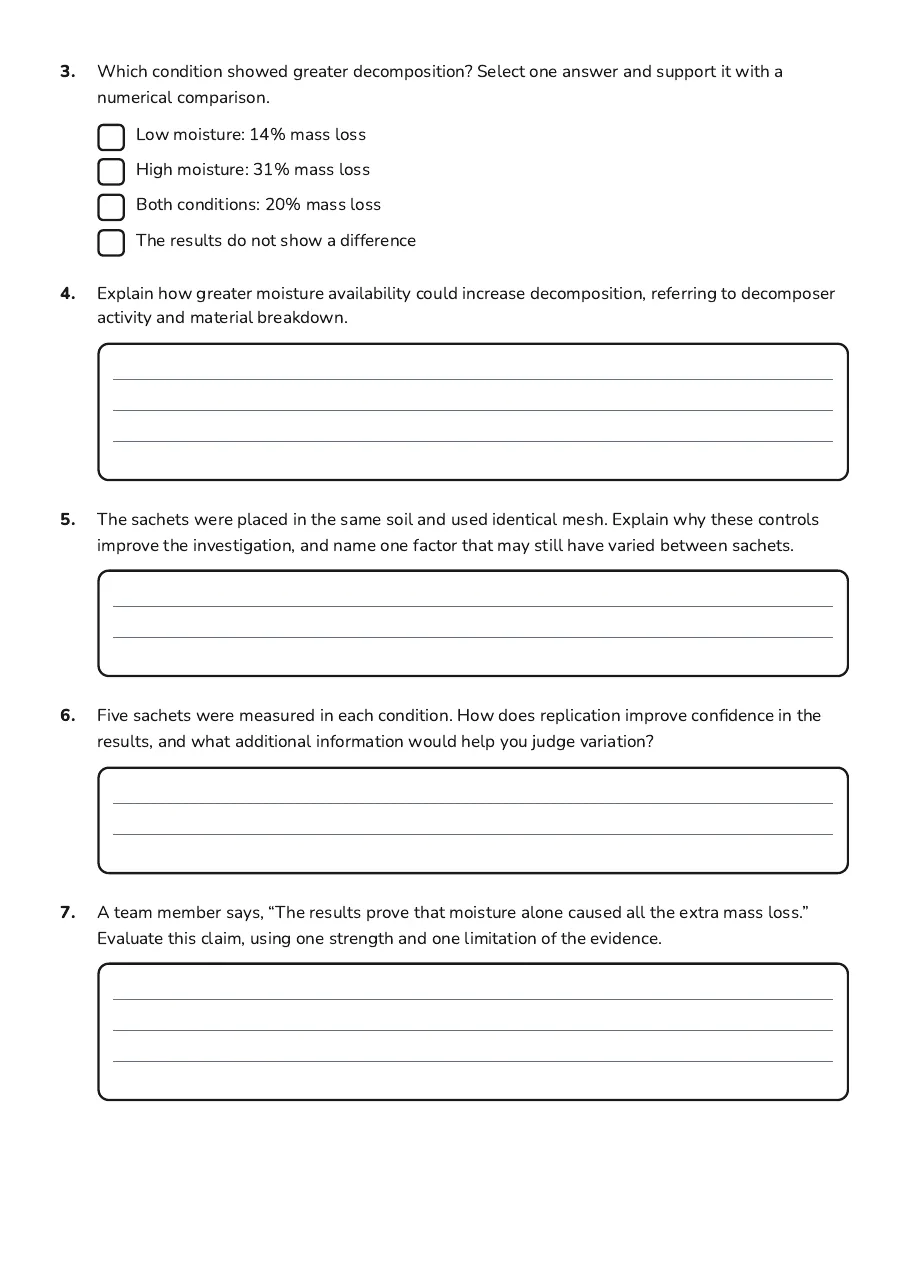
- Low moisture: 14% mass loss
- High moisture: 31% mass loss
- Both conditions: 20% mass loss
- The results do not show a difference
3 printable pages
Page 1
Page 2
Page 3
About This Worksheet
Free in Kuraplan
Sign up free, grab the PDF, and customize it for your class.
Print-Ready
Formatted for standard paper. Clean layout, easy to read.
AI-Generated
Created with Kuraplan's AI, designed for real classroom use.
For Teachers & Parents
Use in classrooms, for homework, tutoring, or homeschool.
Need a custom version of this worksheet?
Kuraplan's AI generates custom worksheets in seconds — differentiated for every learner, aligned to your curriculum.
Generate Custom Worksheets — FreeMore Science Worksheets
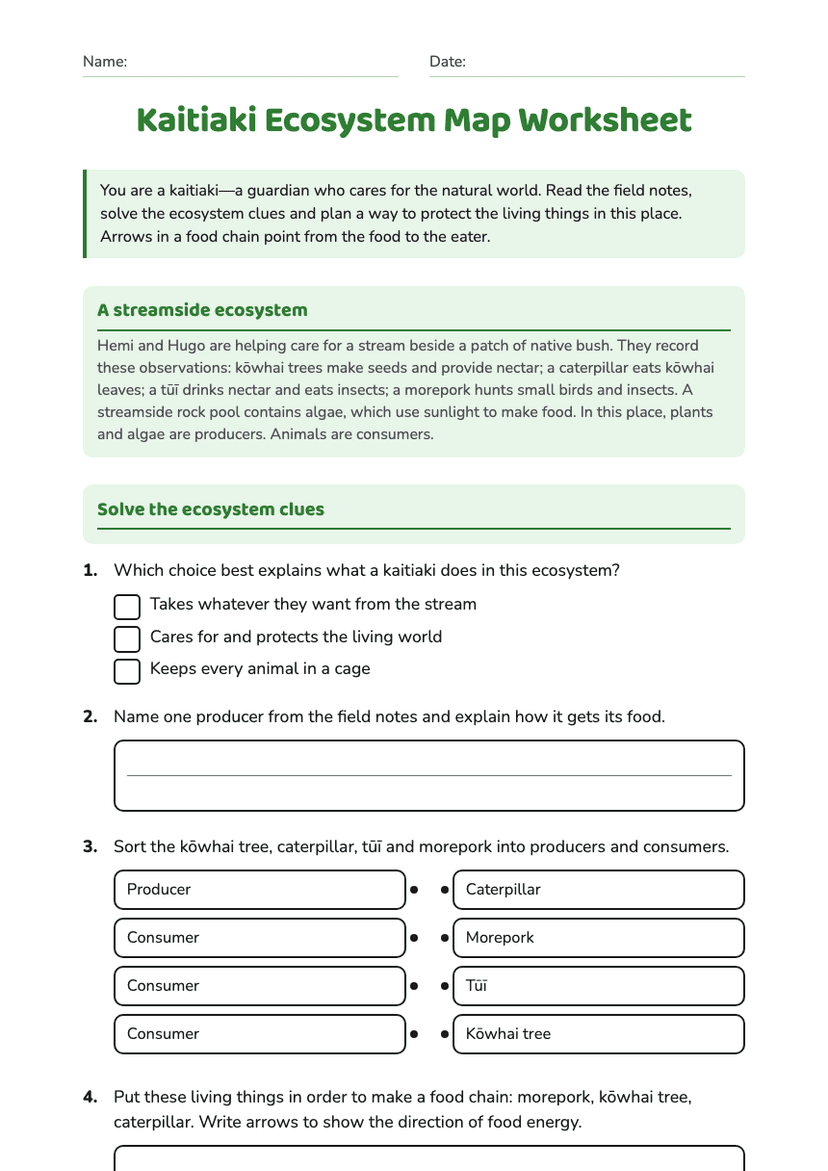
Kaitiaki Ecosystem Map Worksheet
Free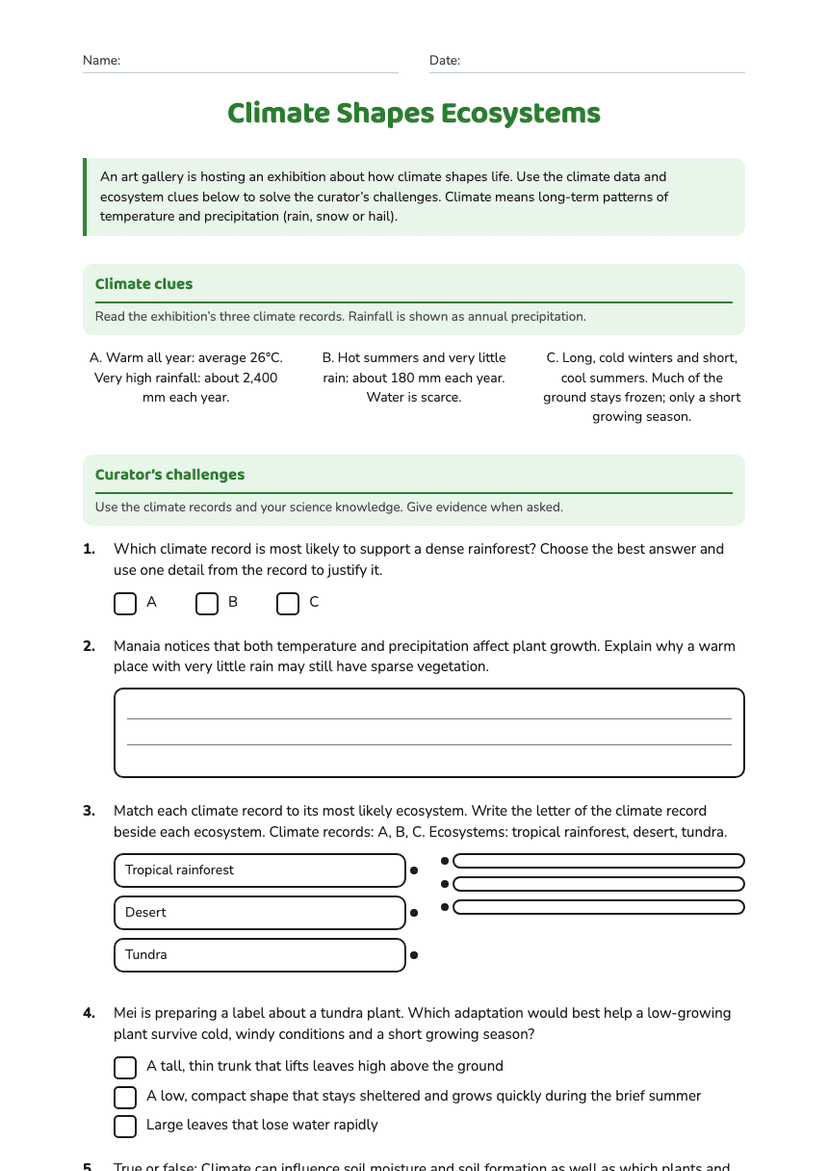
Climate Shapes Ecosystems
Free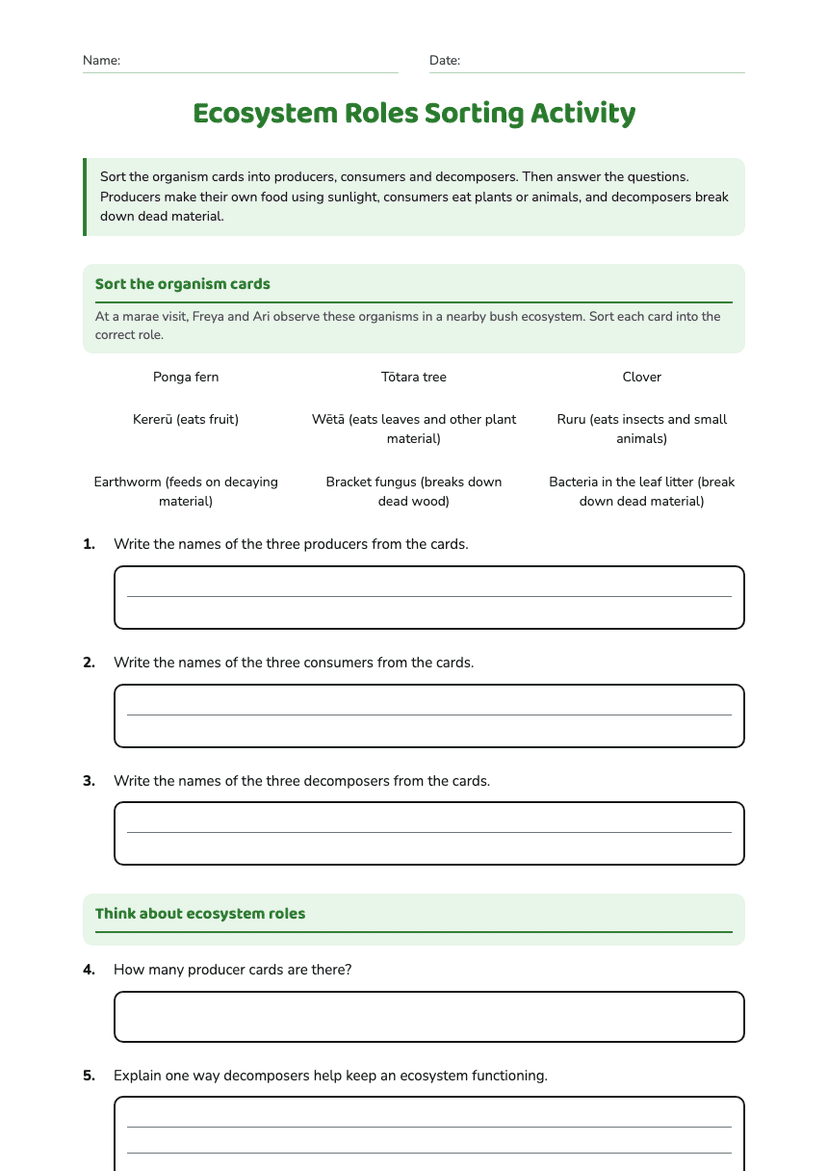
Ecosystem Roles Sorting Activity
Free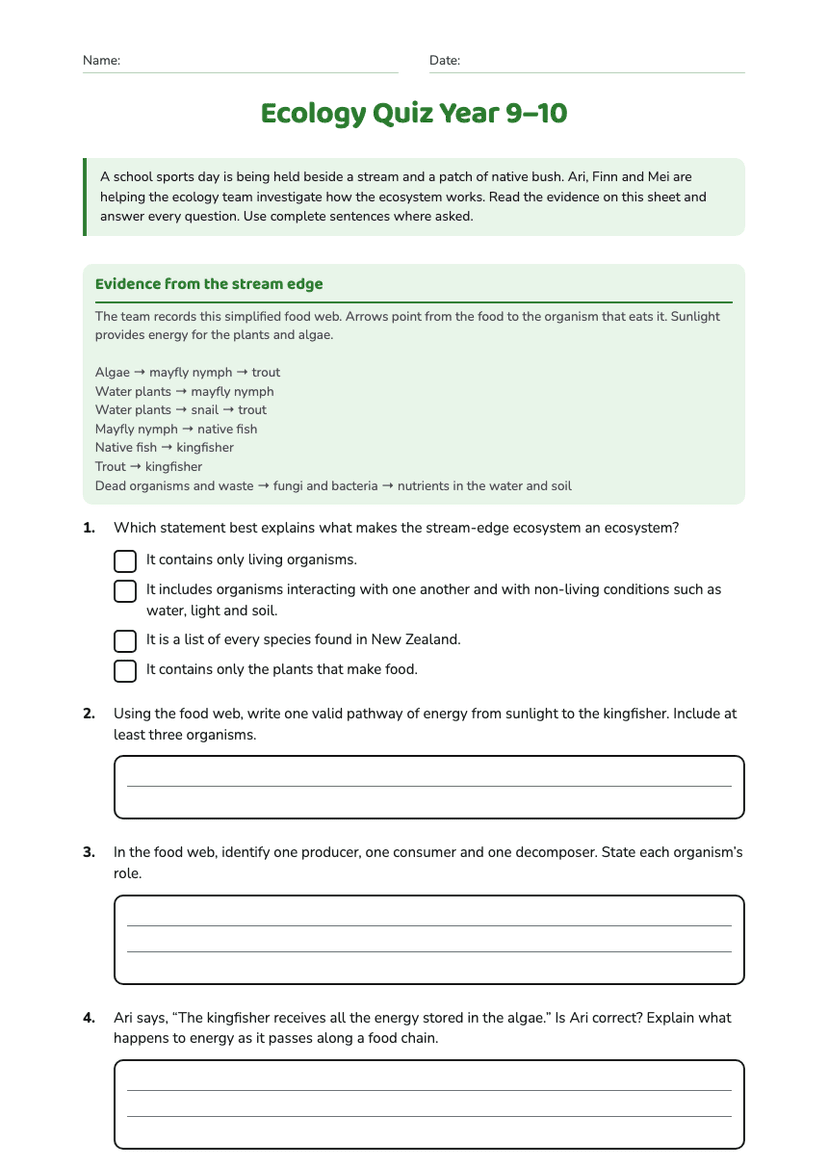
Ecology Quiz Year 9–10
Free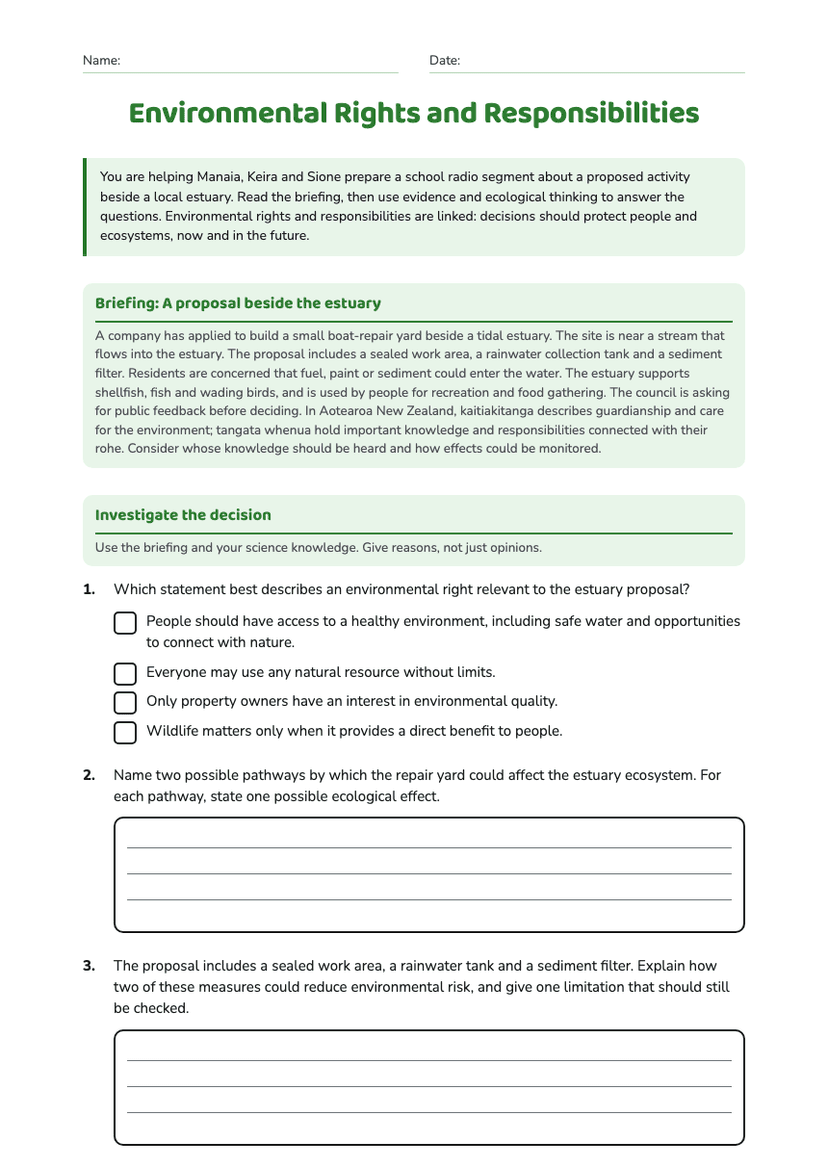
Environmental Rights and Responsibilities
Free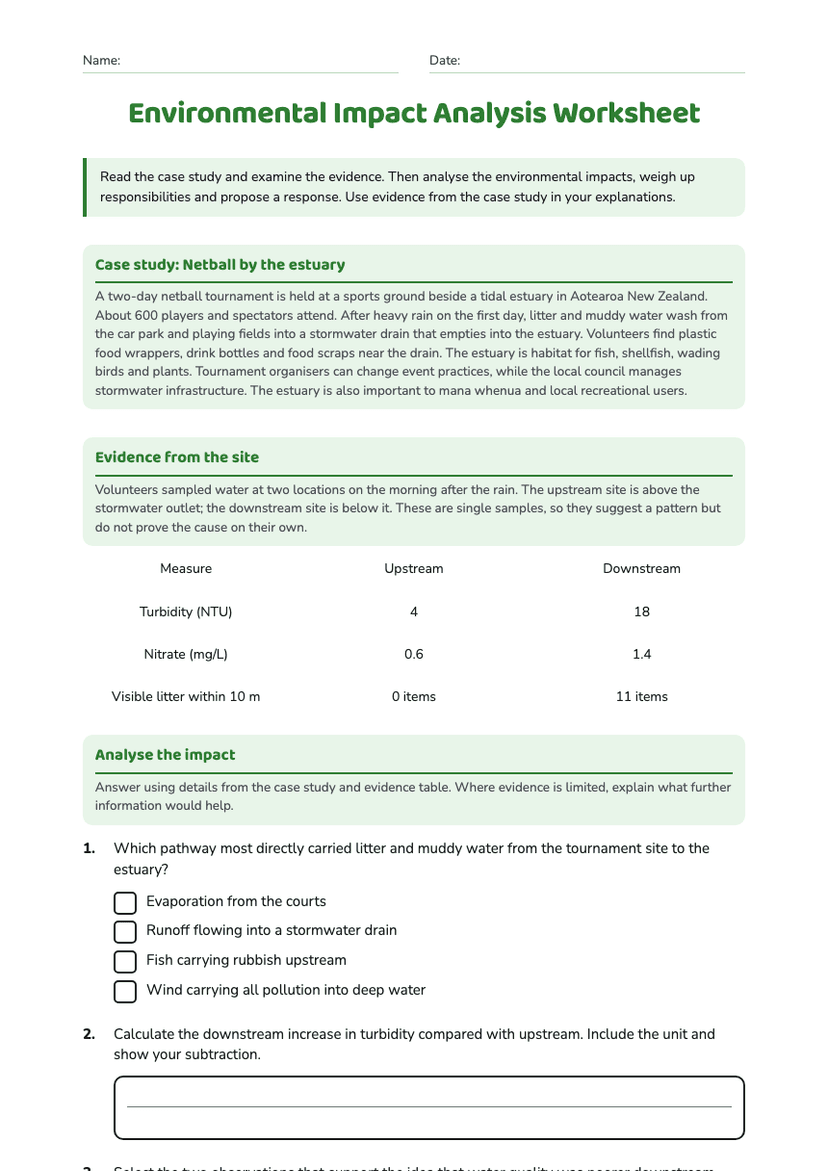
Environmental Impact Analysis Worksheet
Free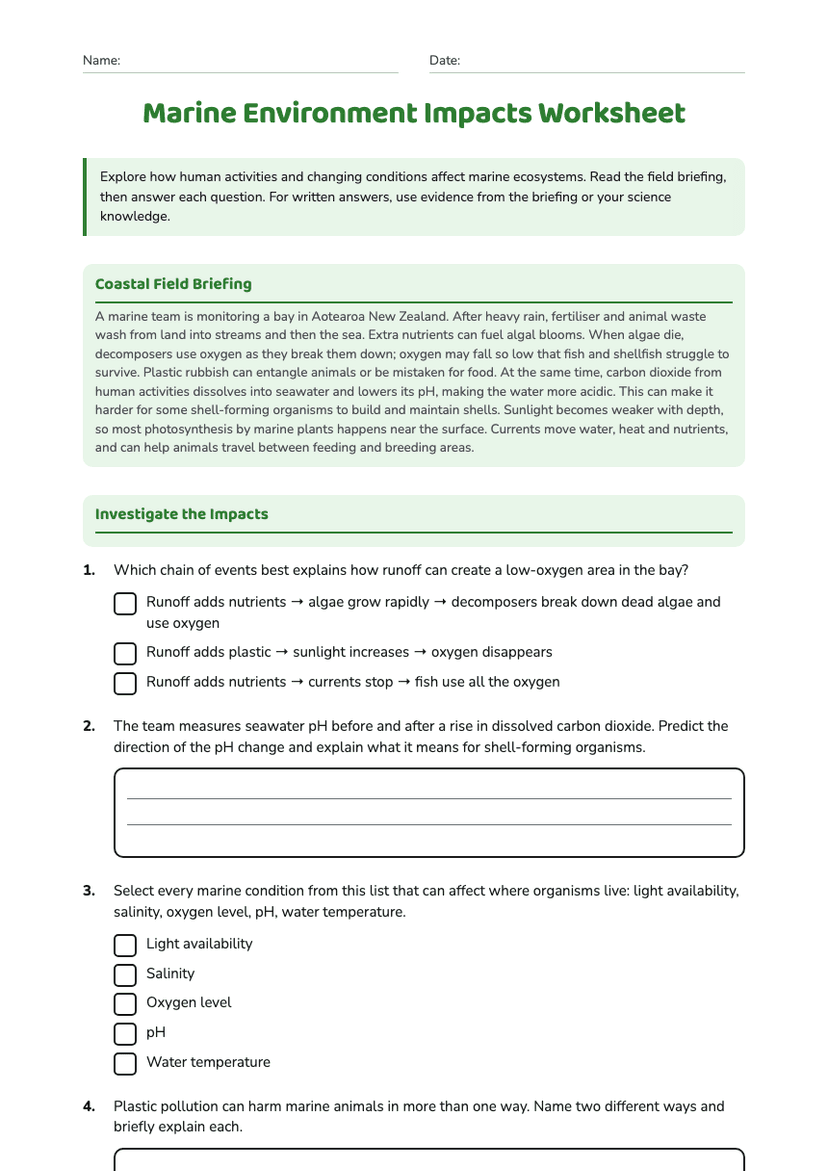
Marine Environment Impacts Worksheet
Free