Digital Safety Scenarios
A free health worksheet ready for your classroom. Open in Kuraplan to grab the print-ready PDF, customize it for your students, or generate a fresh version in seconds.
Digital Safety Scenarios
🚨 Part 1: Recognising Unsafe Digital Situations
💪 Part 2: Assertive Responses & Support Networks
Scenario A: Someone keeps asking for your home address after you've said no.
Your response: ________________________________________________
Scenario B: A group chat is sharing mean memes about students at your school.
Your response: ________________________________________________
🎯 Part 3: Real-World Action Plan
My digital boundaries are: (What I will/won't share, who I'll talk to online)
If I feel unsafe online, my action steps are:
About This Worksheet
Free in Kuraplan
Sign up free, grab the PDF, and customize it for your class.
Print-Ready
Formatted for standard paper. Clean layout, easy to read.
AI-Generated
Created with Kuraplan's AI, designed for real classroom use.
For Teachers & Parents
Use in classrooms, for homework, tutoring, or homeschool.
Need a custom version of this worksheet?
Kuraplan's AI generates custom worksheets in seconds — differentiated for every learner, aligned to your curriculum.
Generate Custom Worksheets — FreeMore Health Worksheets
Brain Lobes and Substances
Free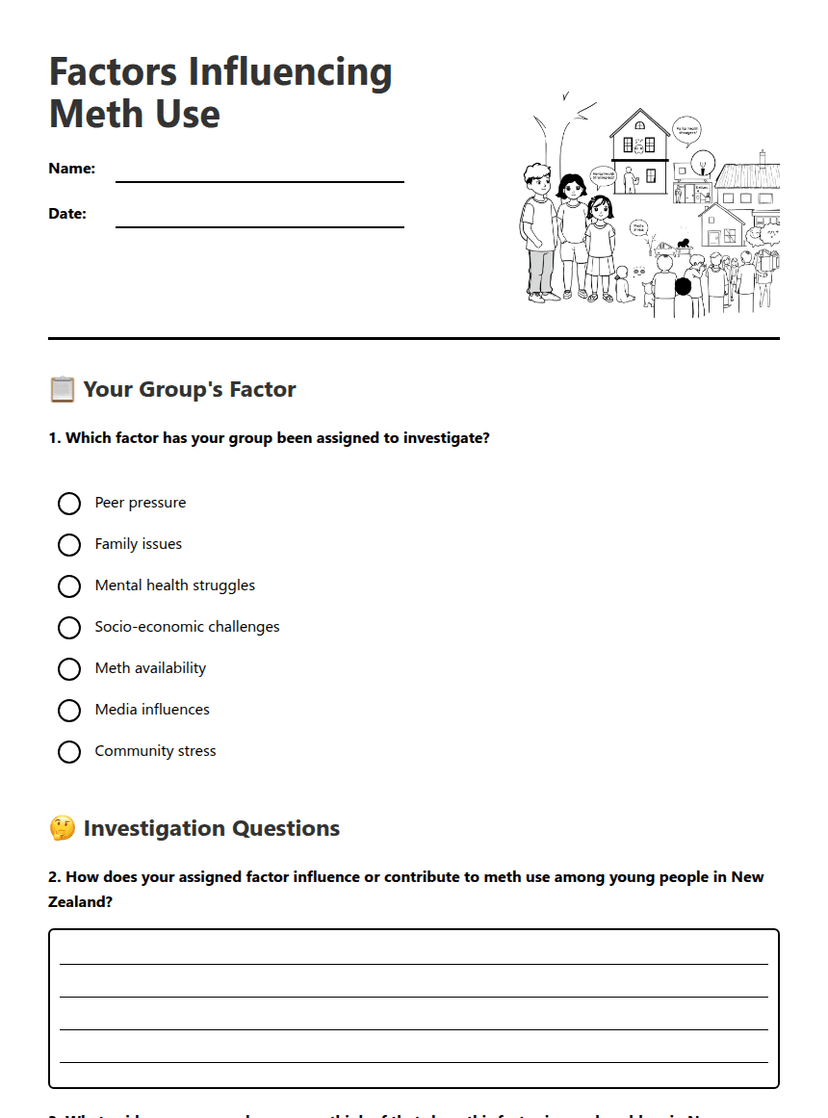
Factors Influencing Meth Use
Free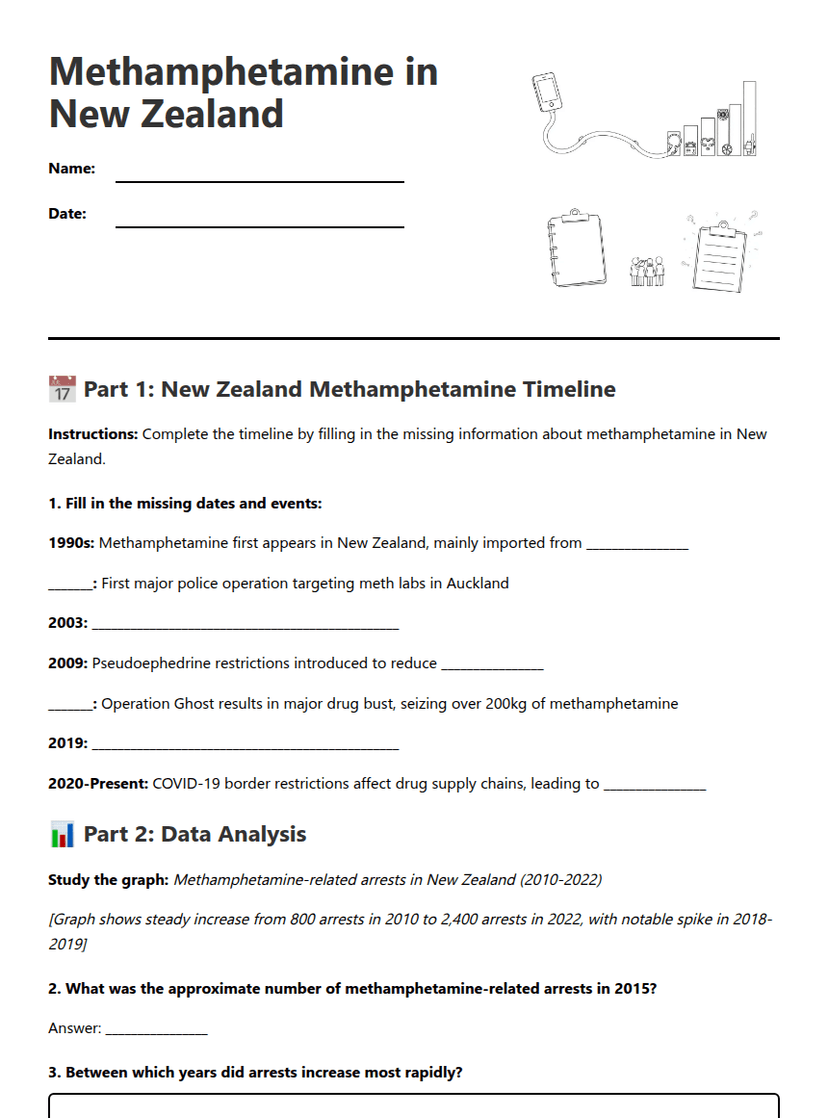
Methamphetamine in New Zealand
Free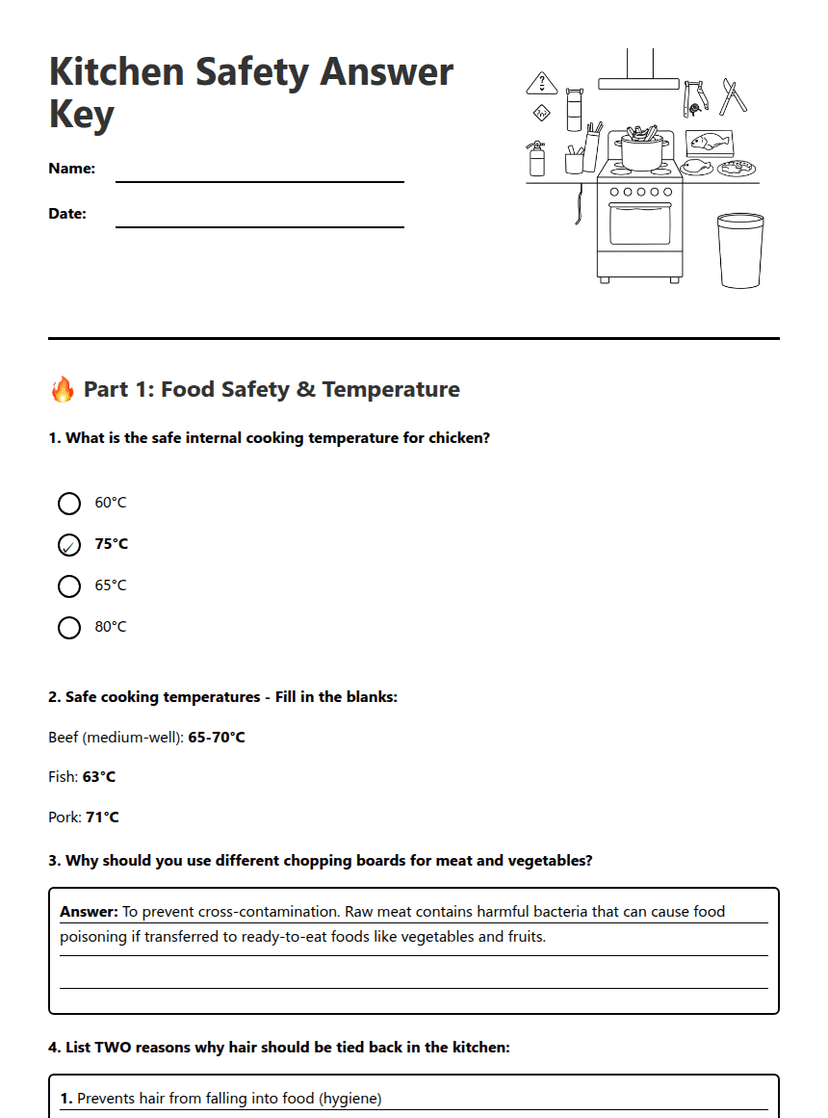
Kitchen Safety Answer Key
Free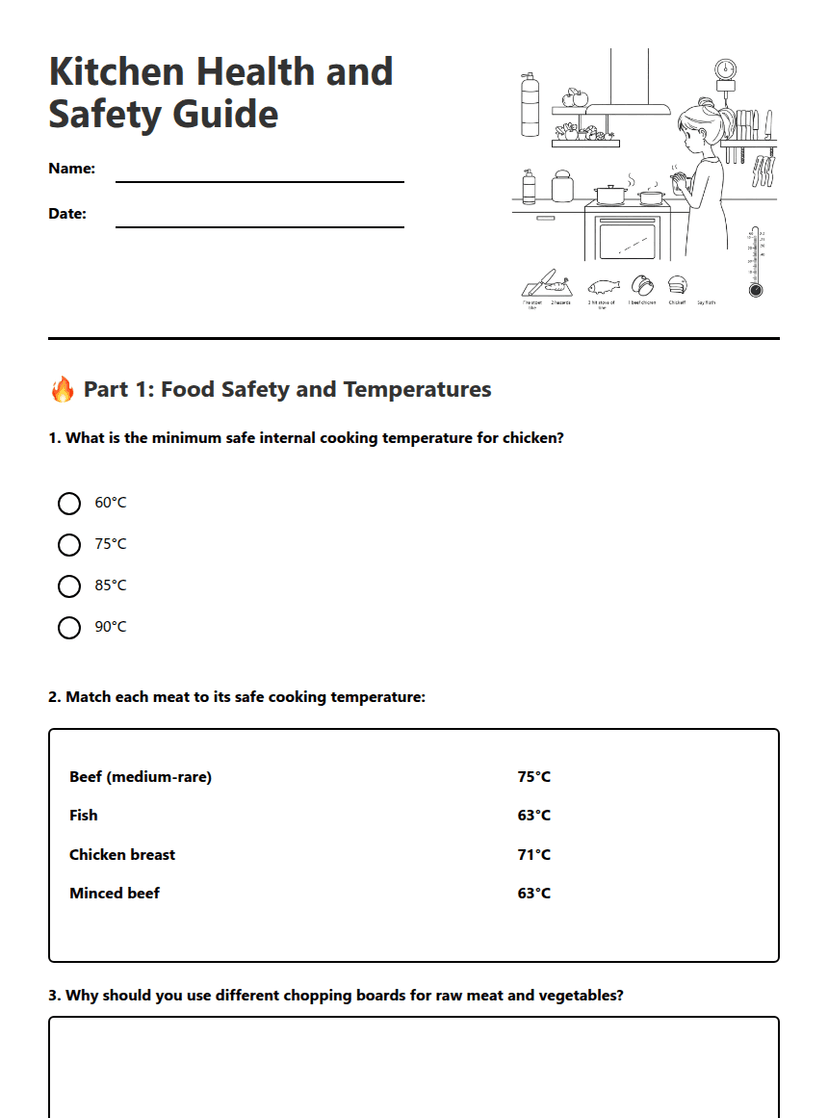
Kitchen Health and Safety Guide
Free
Body Awareness and Safety
Free
Woodshop Health and Safety
Free