Electrolysis Practical Investigation
A free science worksheet ready for your classroom. Open in Kuraplan to grab the print-ready PDF, customize it for your students, or generate a fresh version in seconds.
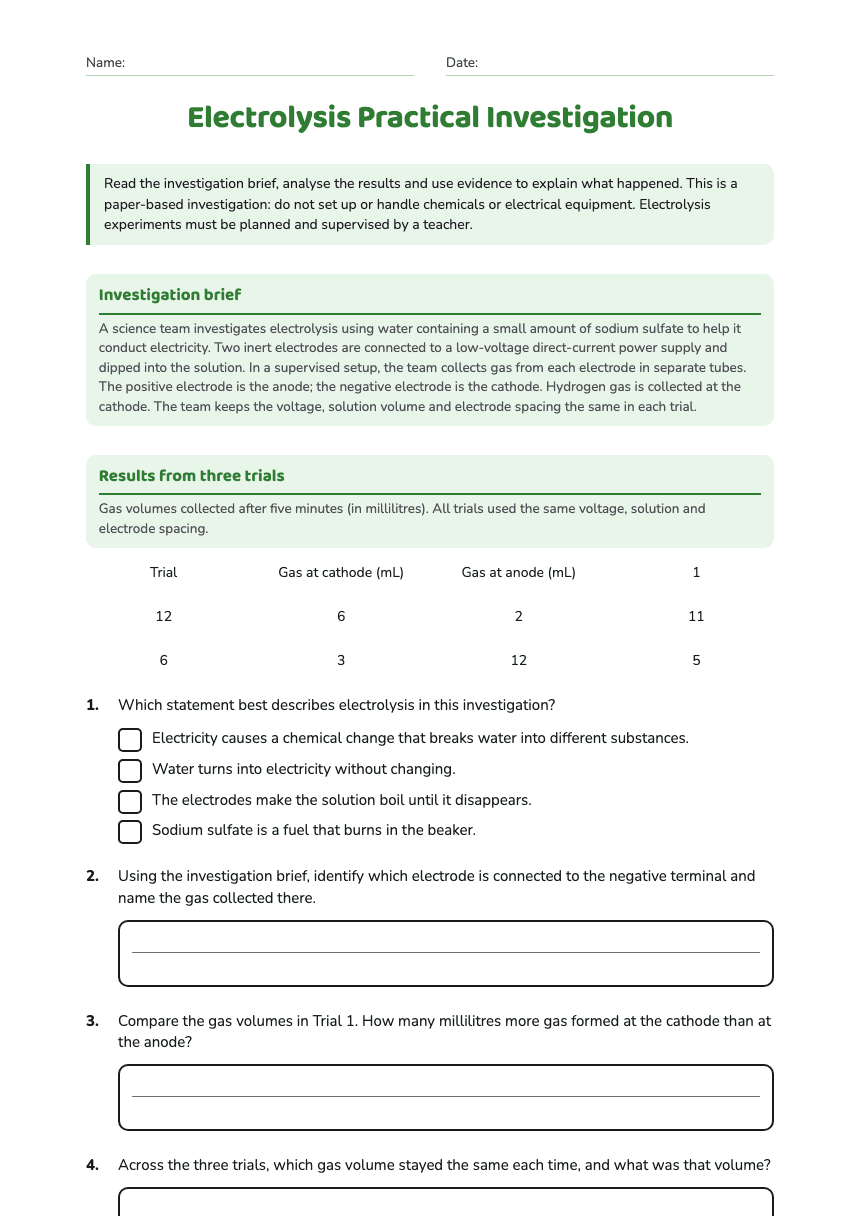
Electrolysis Practical Investigation
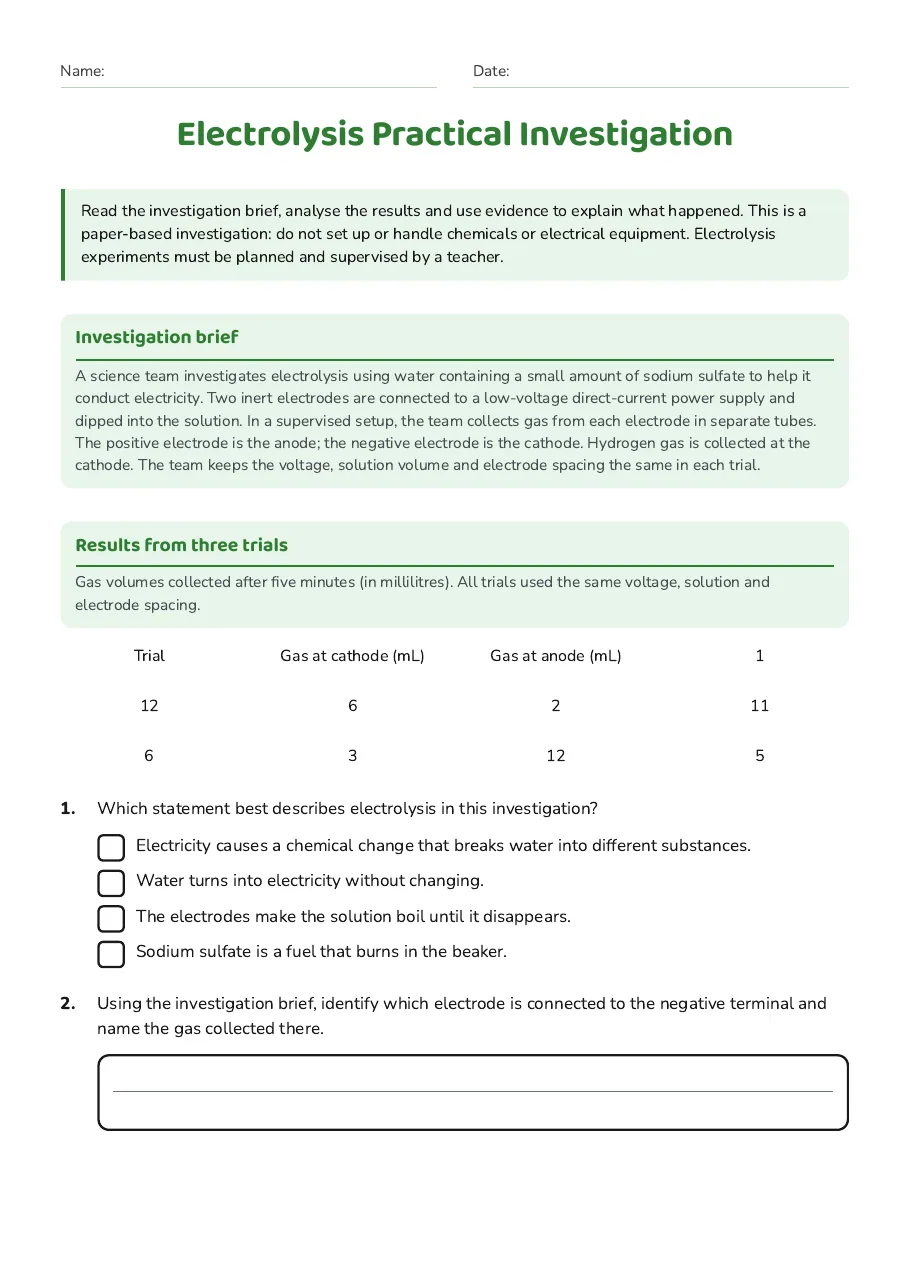
Investigation brief
A science team investigates electrolysis using water containing a small amount of sodium sulfate to help it conduct electricity. Two inert electrodes are connected to a low-voltage direct-current power supply and dipped into the solution. In a supervised setup, the team collects gas from each electrode in separate tubes. The positive electrode is the anode; the negative electrode is the cathode. Hydrogen gas is collected at the cathode. The team keeps the voltage, solution volume and electrode spacing the same in each trial.
Results from three trials
Gas volumes collected after five minutes (in millilitres). All trials used the same voltage, solution and electrode spacing.
Trial
Gas at cathode (mL)
Gas at anode (mL)
1
12
6
2
11
6
3
12
5
- Electricity causes a chemical change that breaks water into different substances.
- Water turns into electricity without changing.
- The electrodes make the solution boil until it disappears.
- Sodium sulfate is a fuel that burns in the beaker.
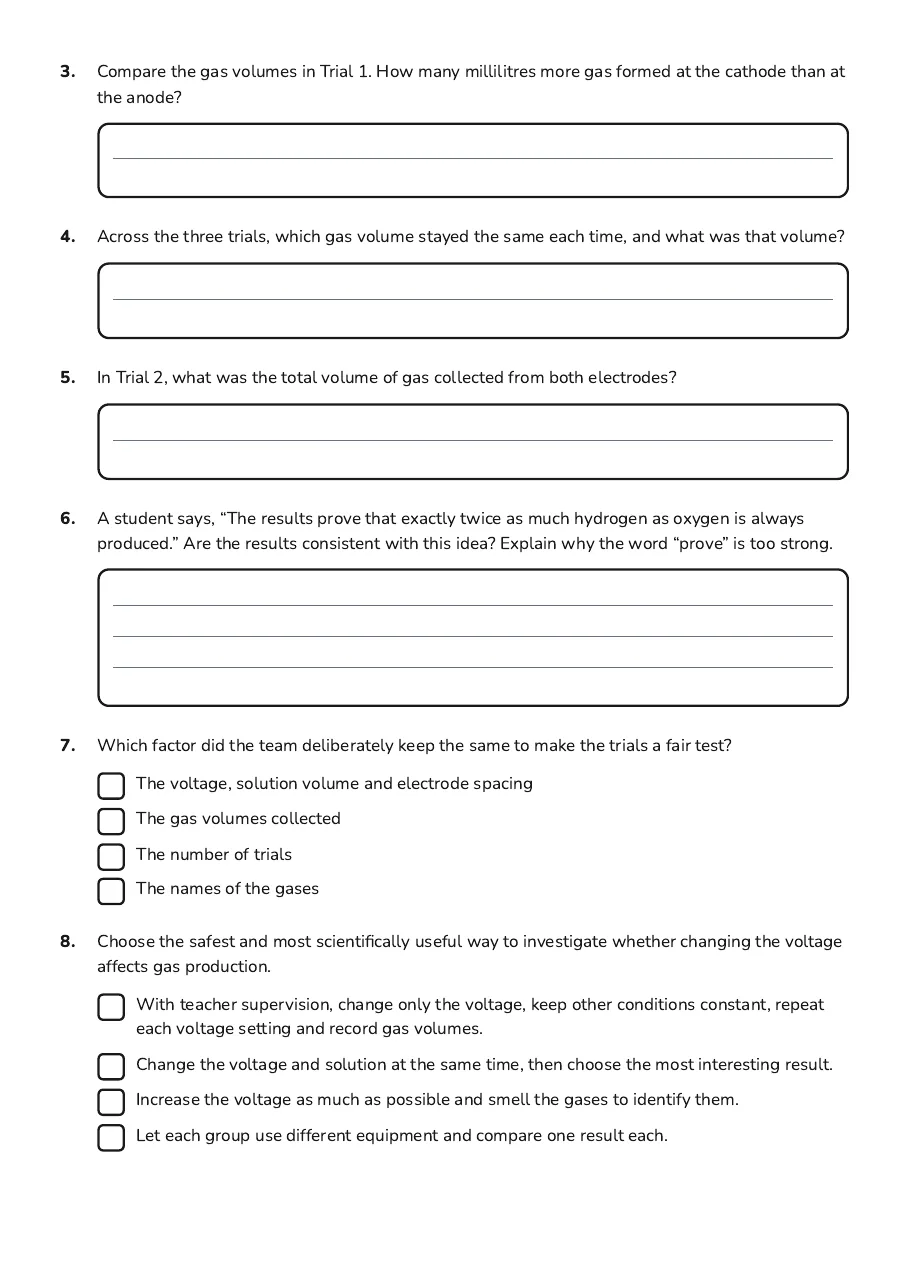
- The voltage, solution volume and electrode spacing
- The gas volumes collected
- The number of trials
- The names of the gases
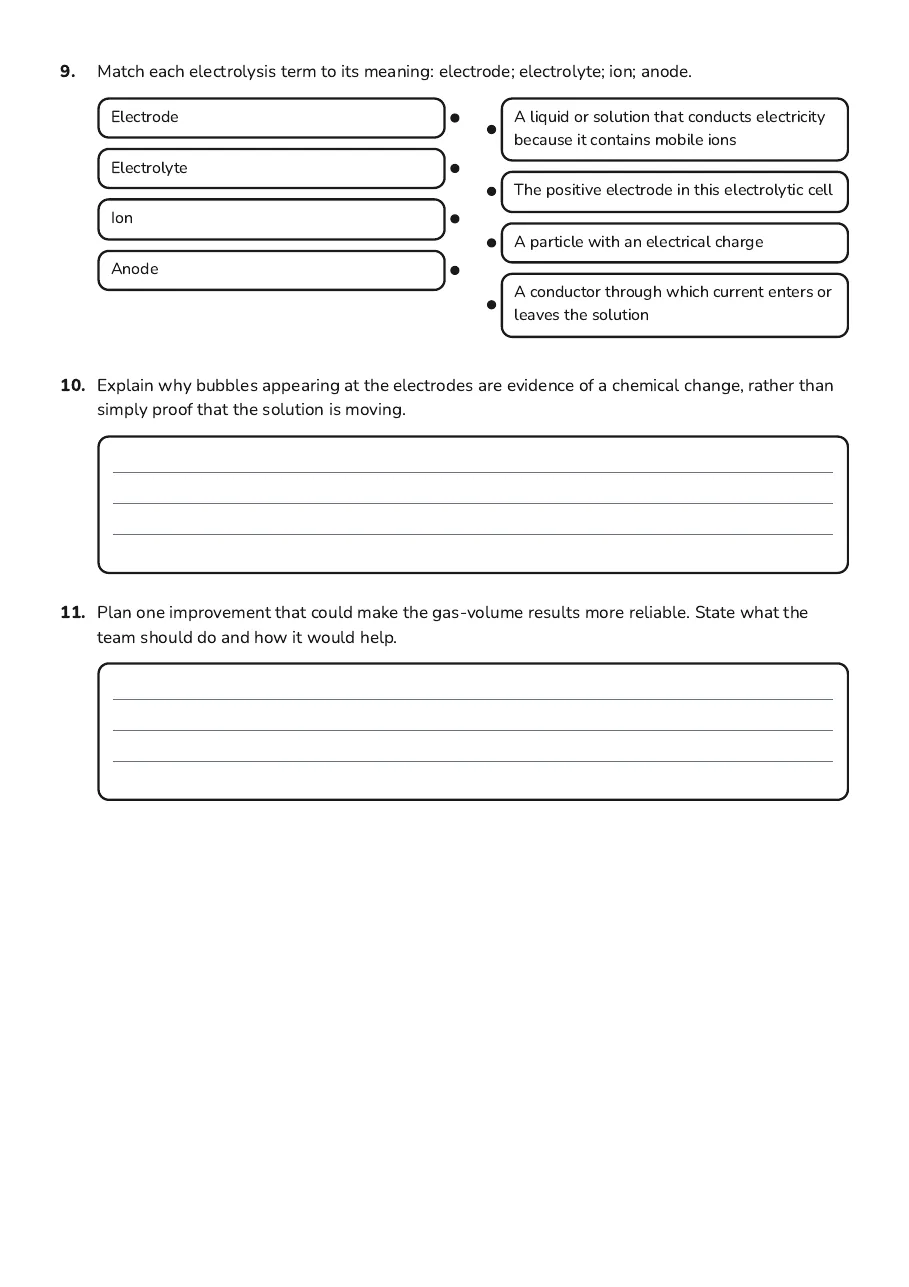
- With teacher supervision, change only the voltage, keep other conditions constant, repeat each voltage setting and record gas volumes.
- Change the voltage and solution at the same time, then choose the most interesting result.
- Increase the voltage as much as possible and smell the gases to identify them.
- Let each group use different equipment and compare one result each.
- Electrode
- Electrolyte
- Ion
- Anode
- A liquid or solution that conducts electricity because it contains mobile ions
- The positive electrode in this electrolytic cell
- A particle with an electrical charge
- A conductor through which current enters or leaves the solution
3 printable pages
Page 1
Page 2
Page 3
About This Worksheet
Free in Kuraplan
Sign up free, grab the PDF, and customize it for your class.
Print-Ready
Formatted for standard paper. Clean layout, easy to read.
AI-Generated
Created with Kuraplan's AI, designed for real classroom use.
For Teachers & Parents
Use in classrooms, for homework, tutoring, or homeschool.
Need a custom version of this worksheet?
Kuraplan's AI generates custom worksheets in seconds — differentiated for every learner, aligned to your curriculum.
Generate Custom Worksheets — FreeMore Science Worksheets
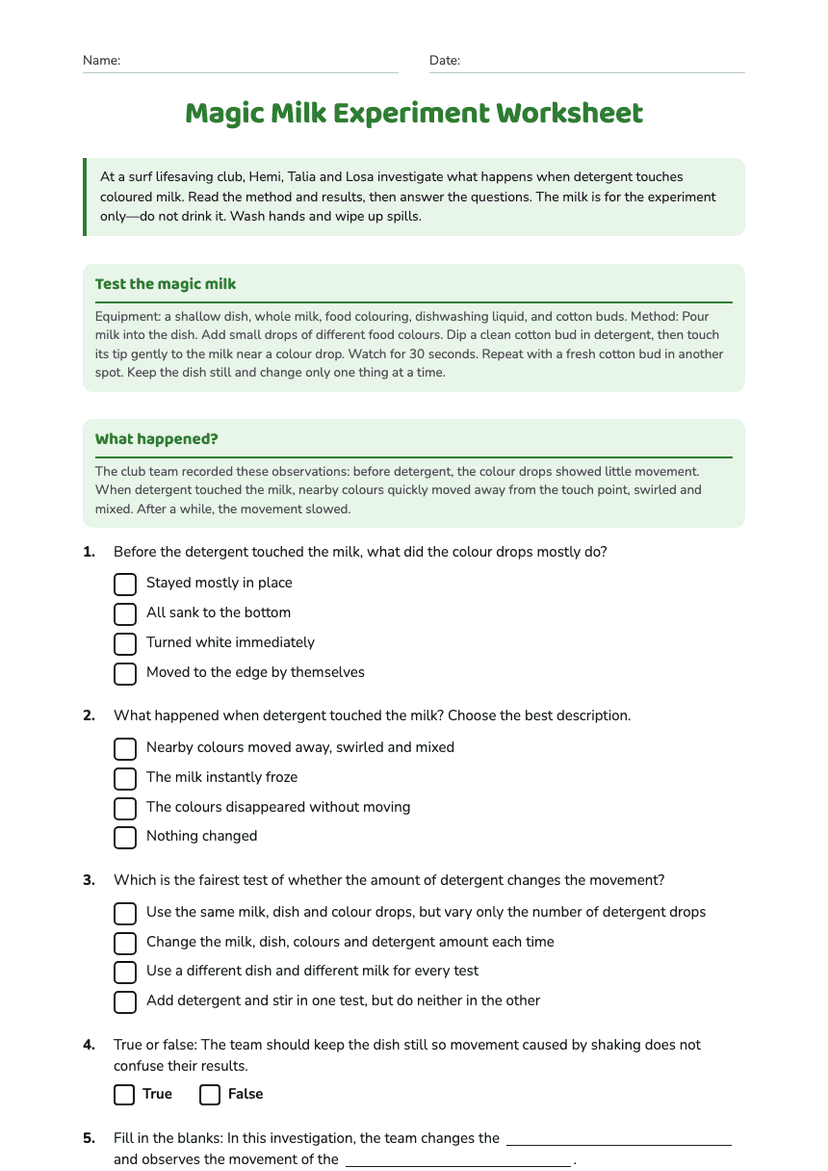
Magic Milk Experiment Worksheet
Free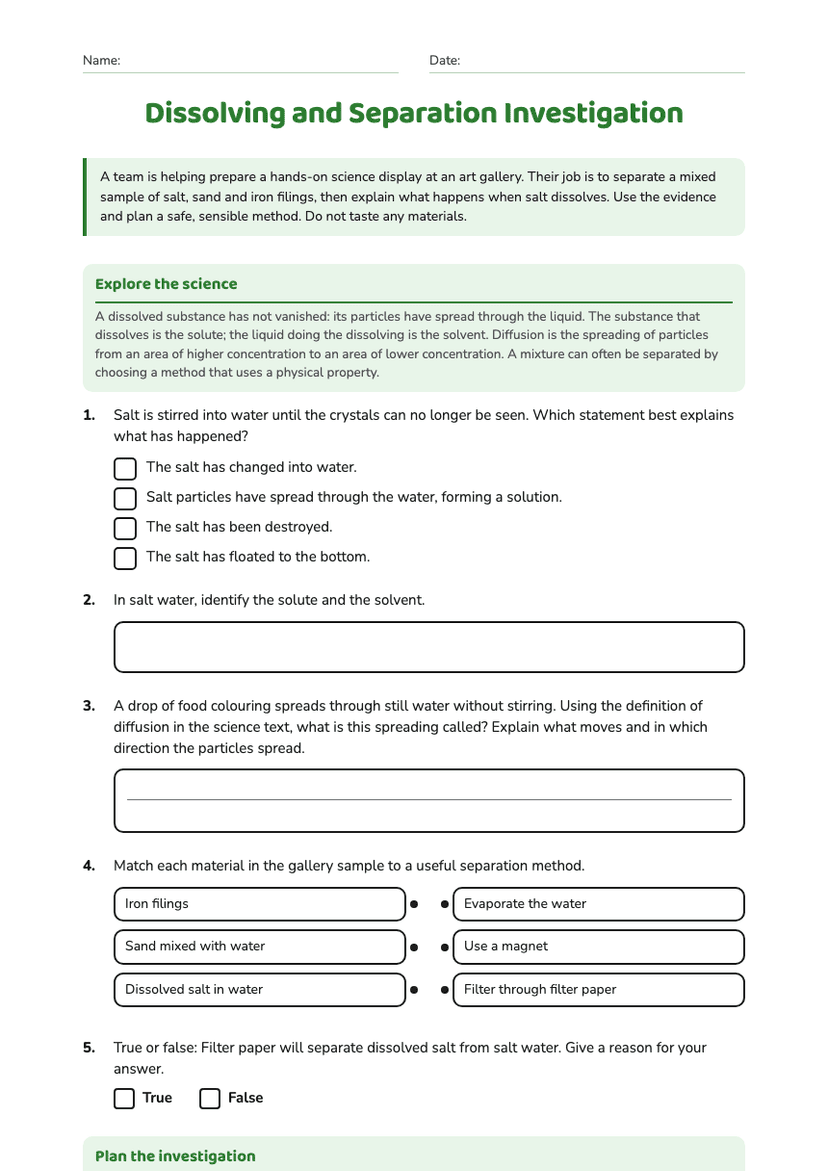
Dissolving and Separation Investigation
Free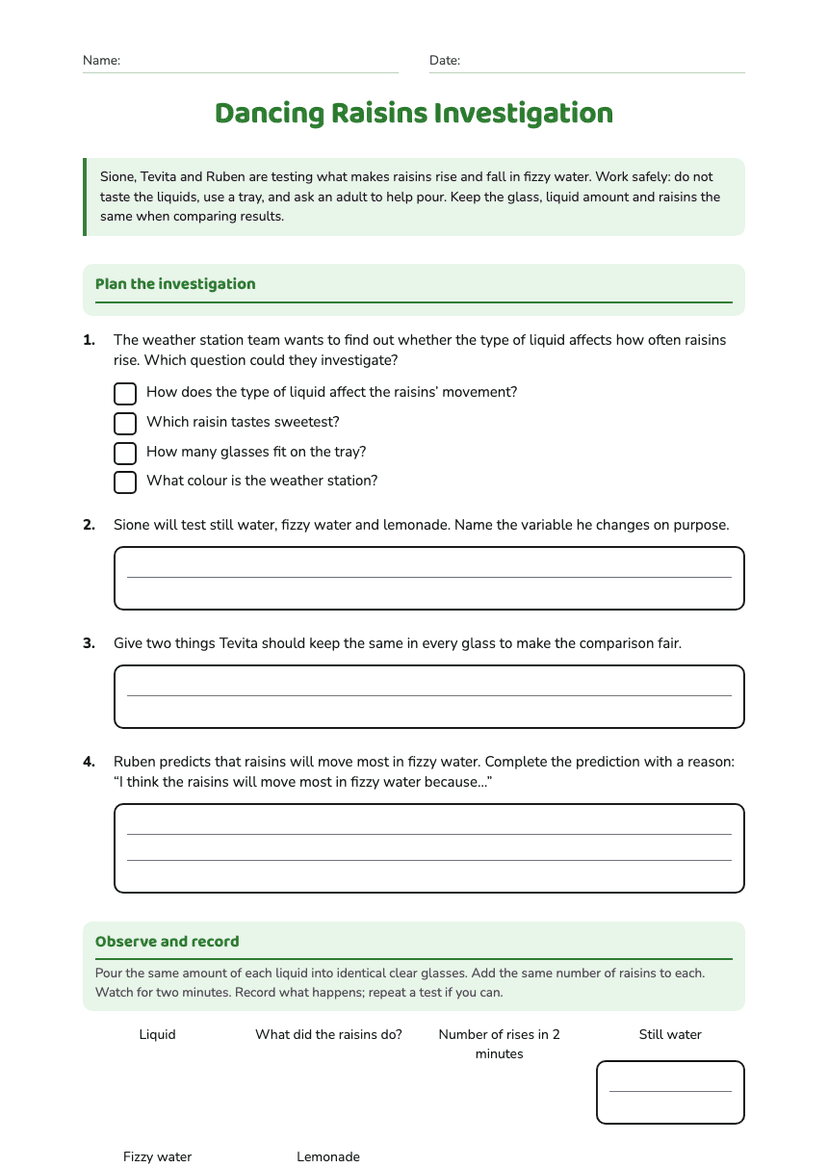
Dancing Raisins Investigation
Free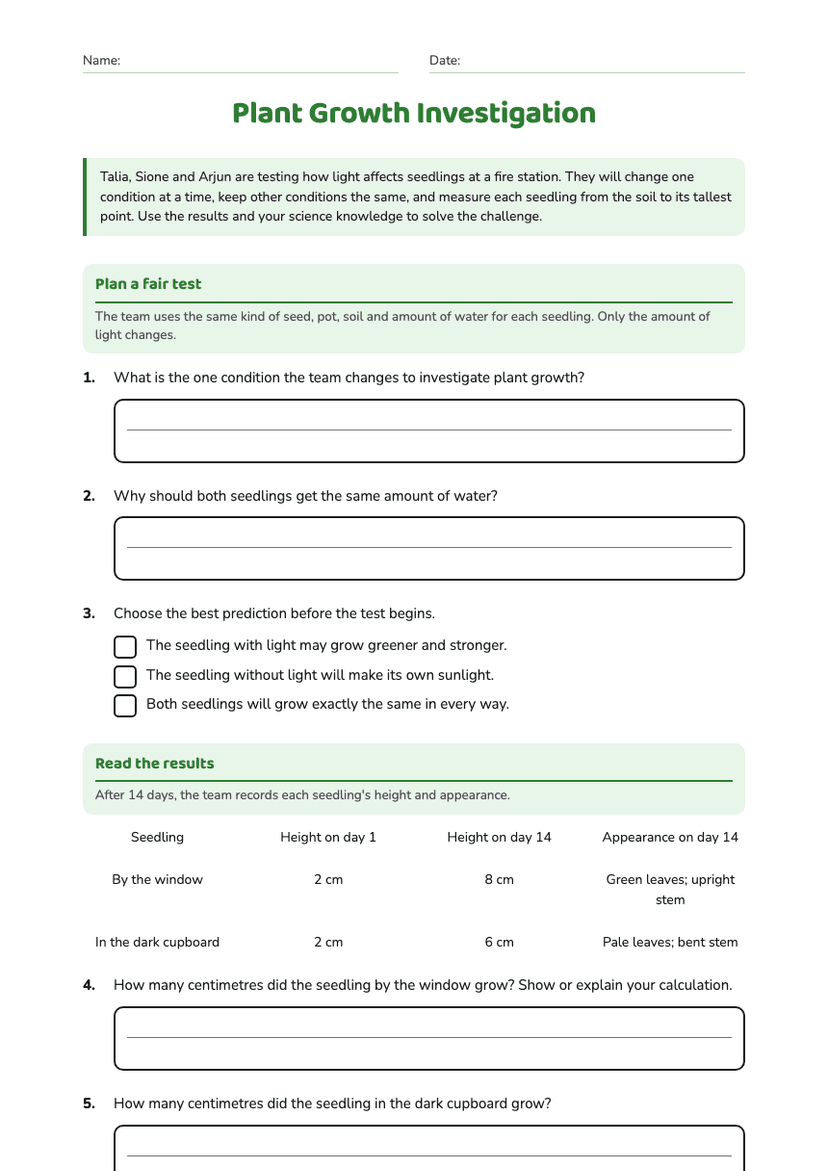
Plant Growth Investigation
Free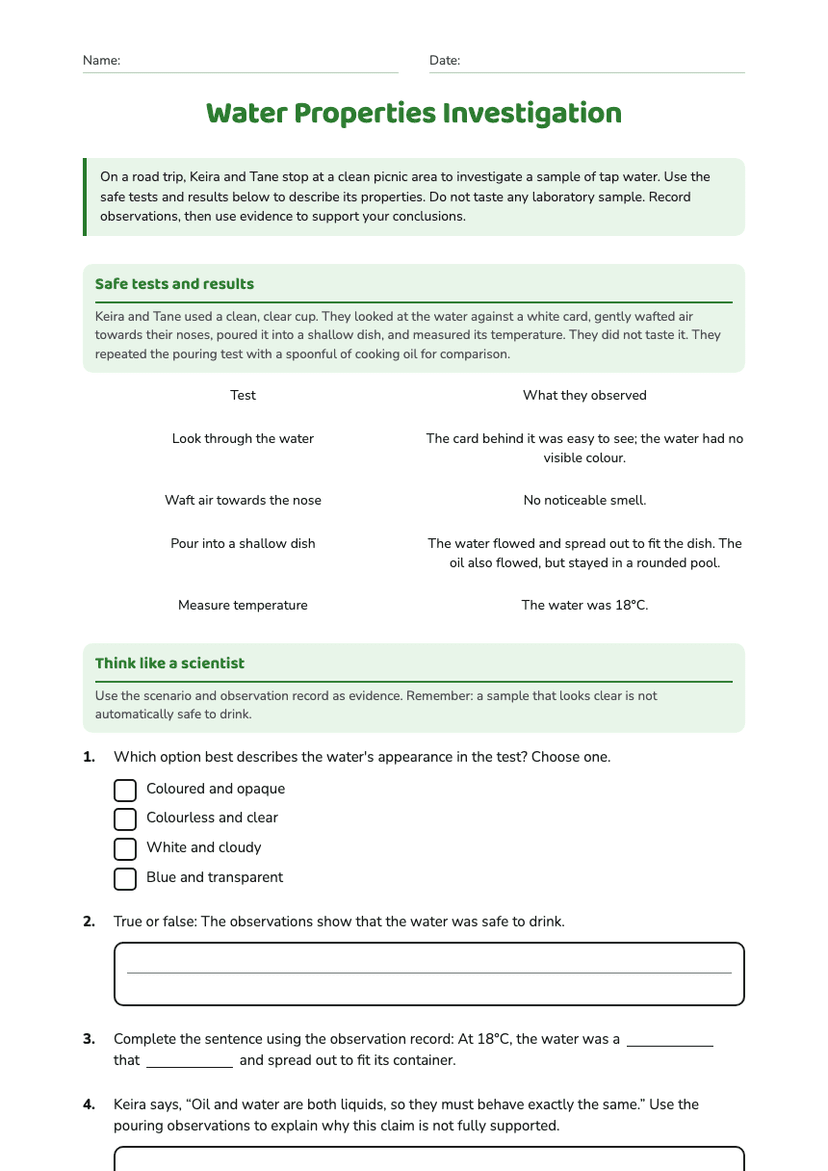
Water Properties Investigation
Free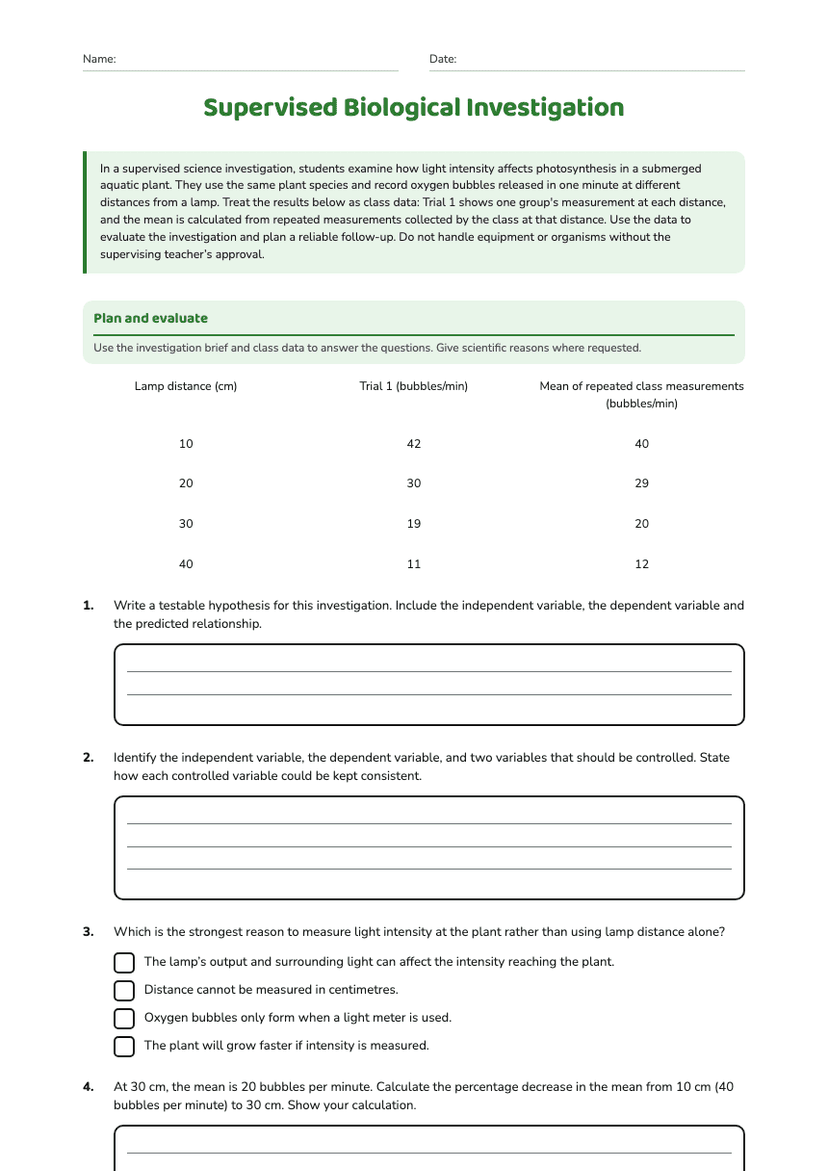
Supervised Biological Investigation
Free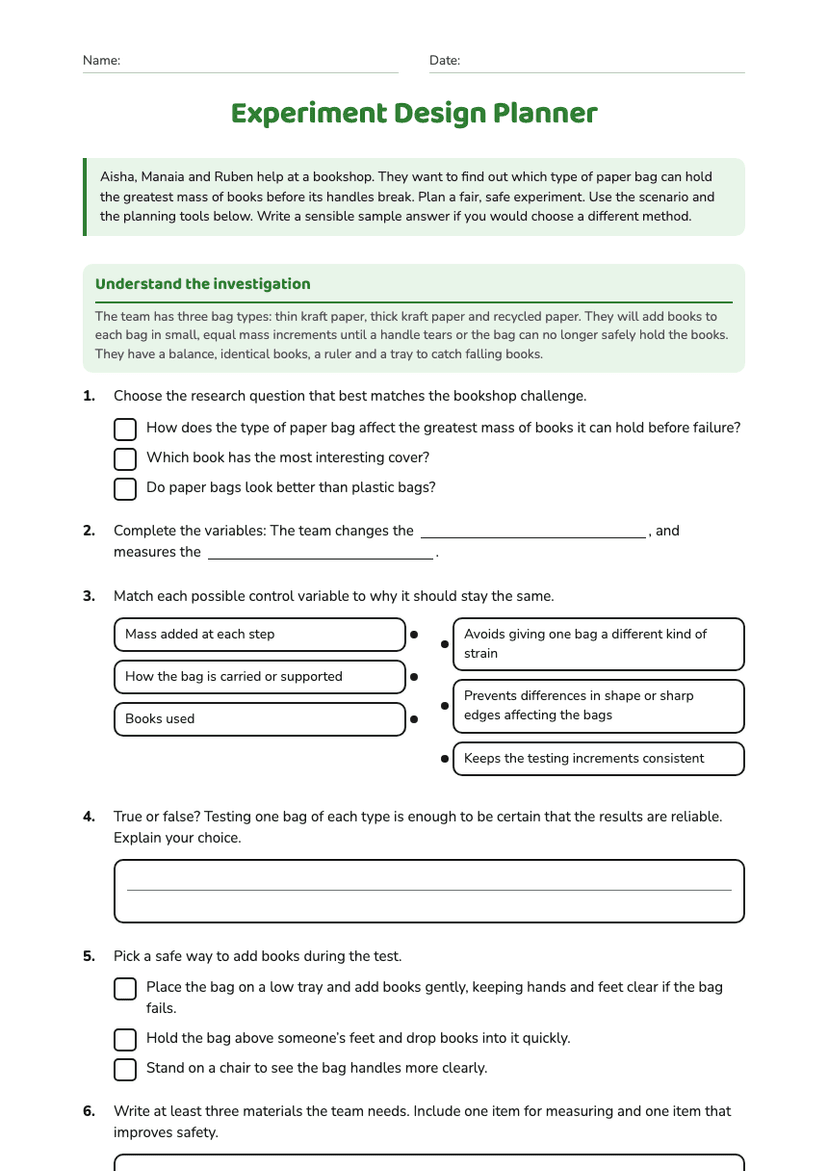
Experiment Design Planner
Free