Elements and Compounds Structures
A free science worksheet ready for your classroom. Open in Kuraplan to grab the print-ready PDF, customize it for your students, or generate a fresh version in seconds.
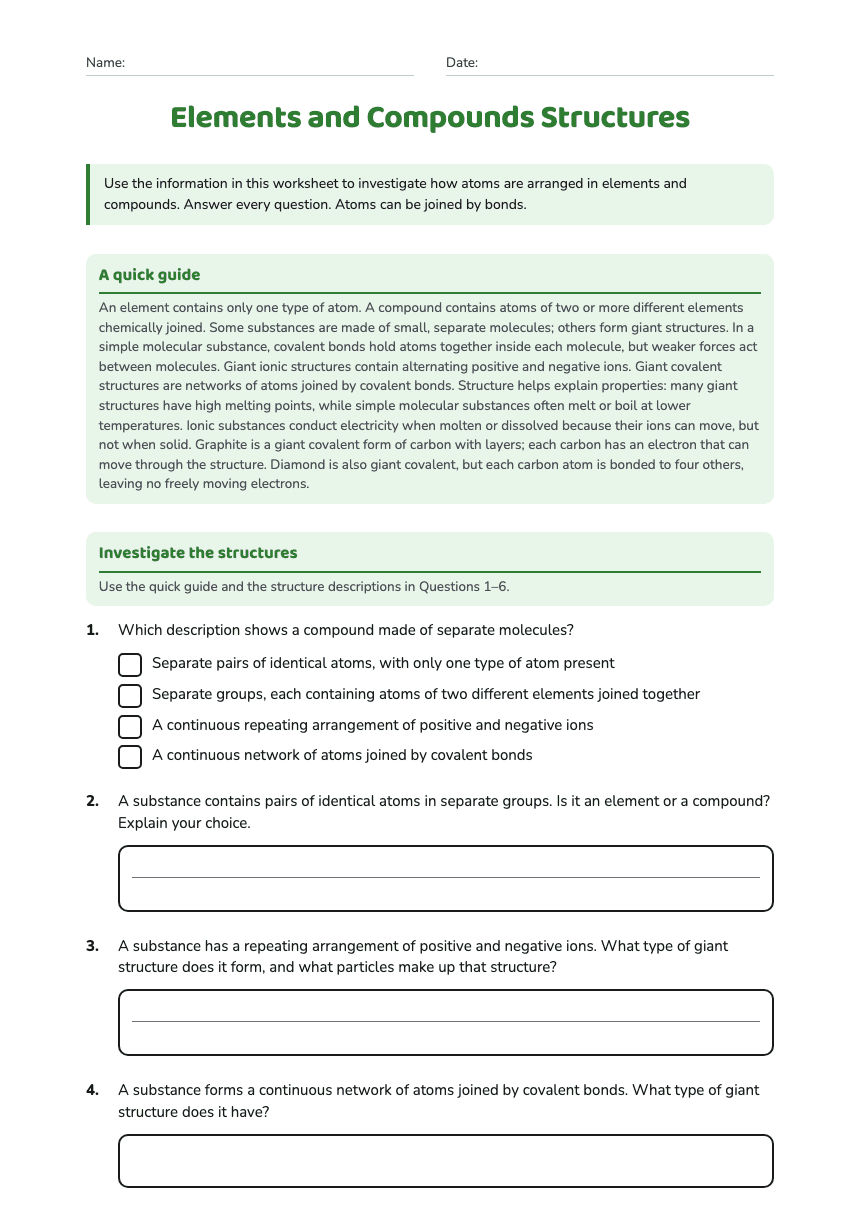
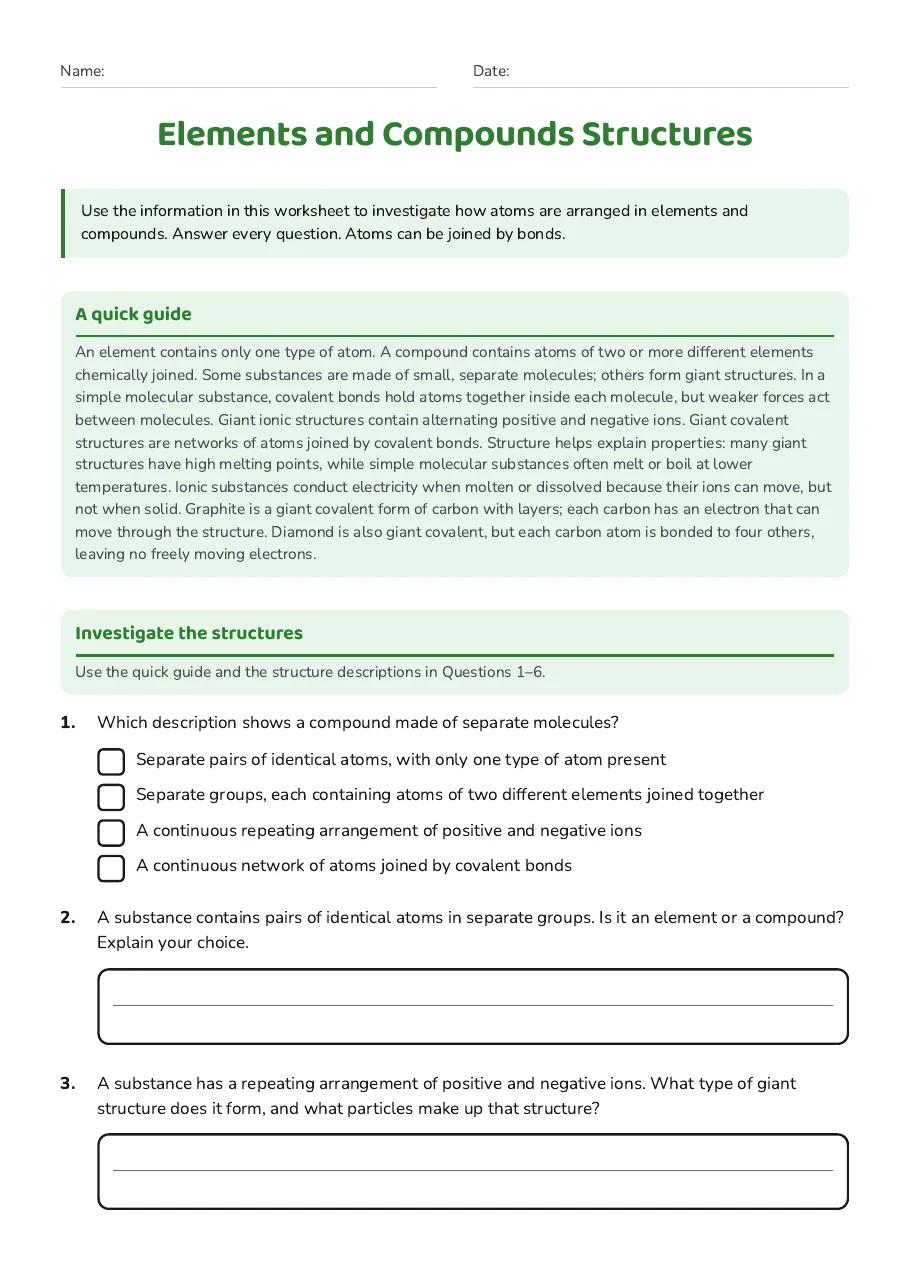
Elements and Compounds Structures
A quick guide
An element contains only one type of atom. A compound contains atoms of two or more different elements chemically joined. Some substances are made of small, separate molecules; others form giant structures. In a simple molecular substance, covalent bonds hold atoms together inside each molecule, but weaker forces act between molecules. Giant ionic structures contain alternating positive and negative ions. Giant covalent structures are networks of atoms joined by covalent bonds. Structure helps explain properties: many giant structures have high melting points, while simple molecular substances often melt or boil at lower temperatures. Ionic substances conduct electricity when molten or dissolved because their ions can move, but not when solid. Graphite is a giant covalent form of carbon with layers; each carbon has an electron that can move through the structure. Diamond is also giant covalent, but each carbon atom is bonded to four others, leaving no freely moving electrons.
Investigate the structures
Use the quick guide and the structure descriptions in Questions 1–6.
- Separate pairs of identical atoms, with only one type of atom present
- Separate groups, each containing atoms of two different elements joined together
- A continuous repeating arrangement of positive and negative ions
- A continuous network of atoms joined by covalent bonds
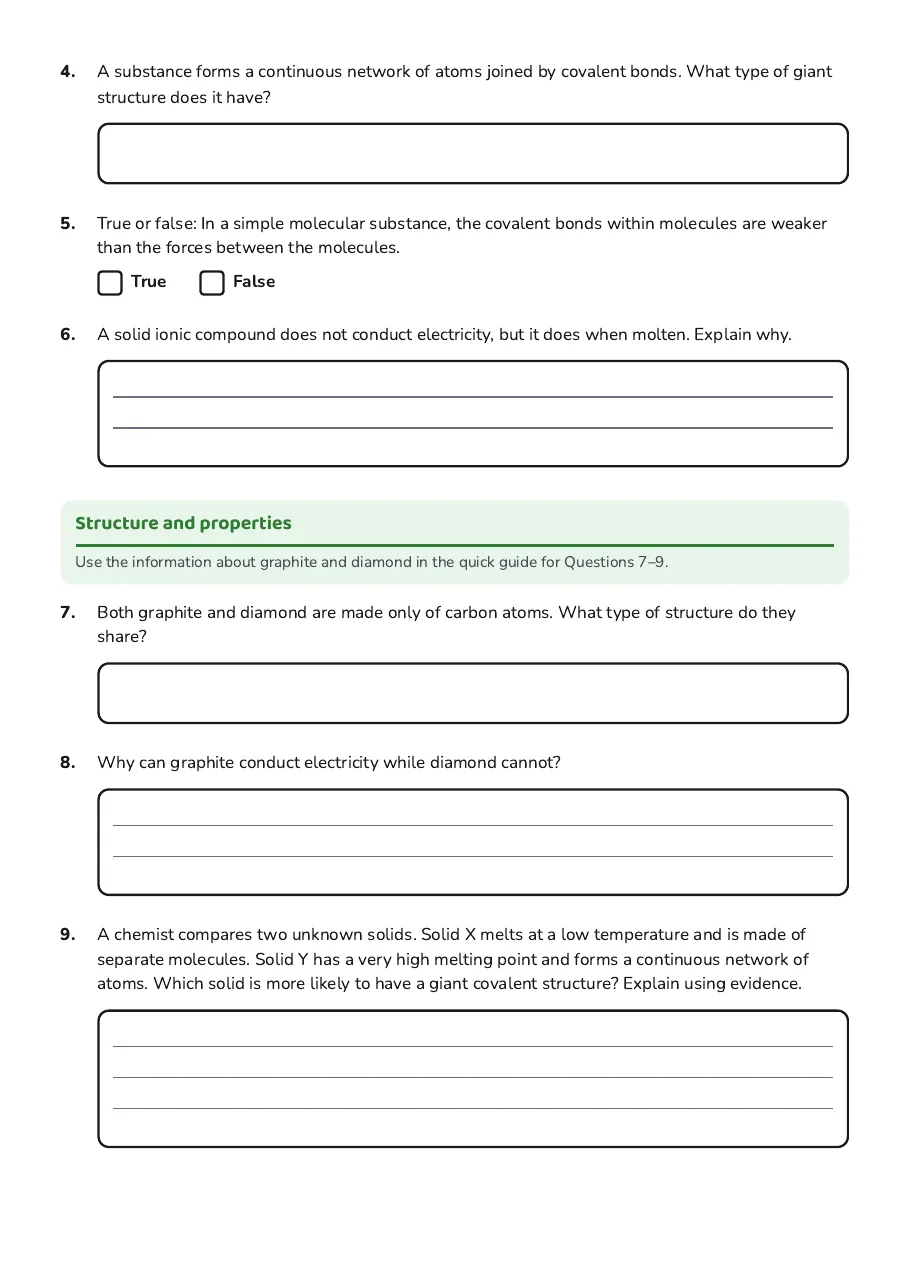
Structure and properties
Use the information about graphite and diamond in the quick guide for Questions 7–9.
2 printable pages
Page 1
Page 2
About This Worksheet
Free in Kuraplan
Sign up free, grab the PDF, and customize it for your class.
Print-Ready
Formatted for standard paper. Clean layout, easy to read.
AI-Generated
Created with Kuraplan's AI, designed for real classroom use.
For Teachers & Parents
Use in classrooms, for homework, tutoring, or homeschool.
Need a custom version of this worksheet?
Kuraplan's AI generates custom worksheets in seconds — differentiated for every learner, aligned to your curriculum.
Generate Custom Worksheets — FreeMore Science Worksheets
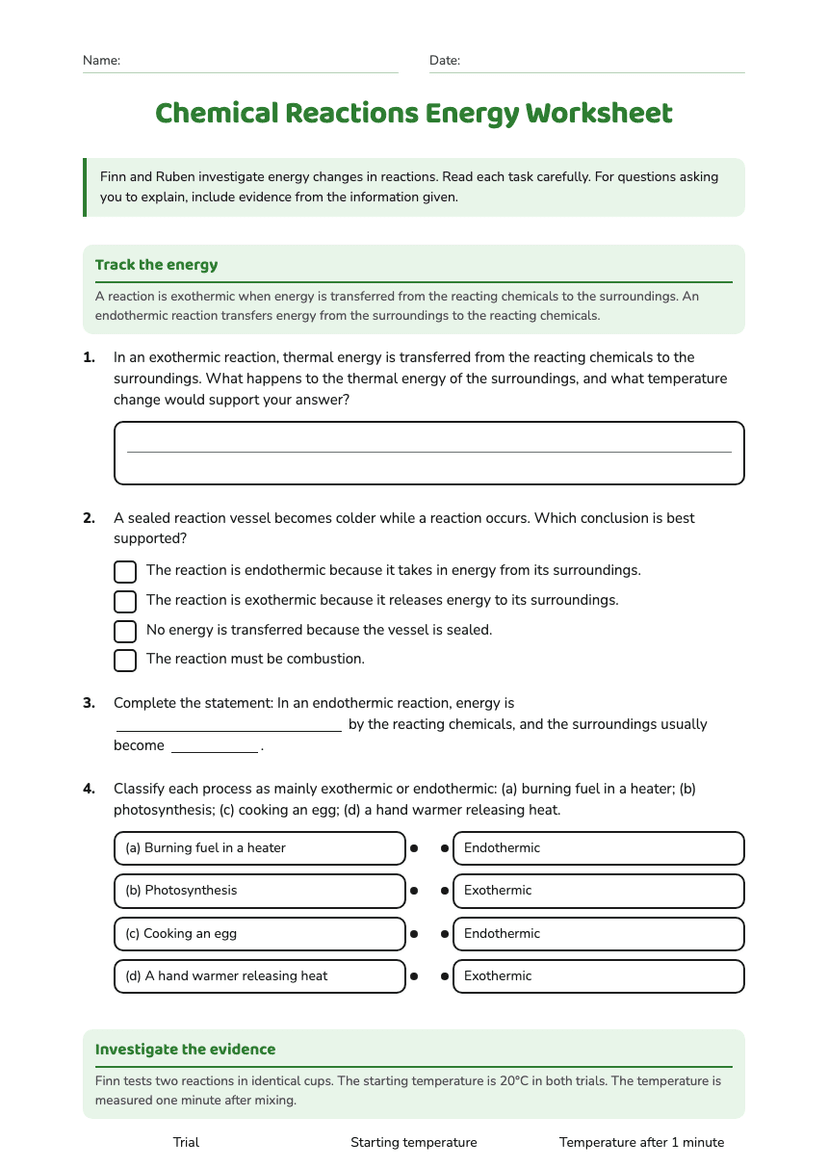
Chemical Reactions Energy Worksheet
Free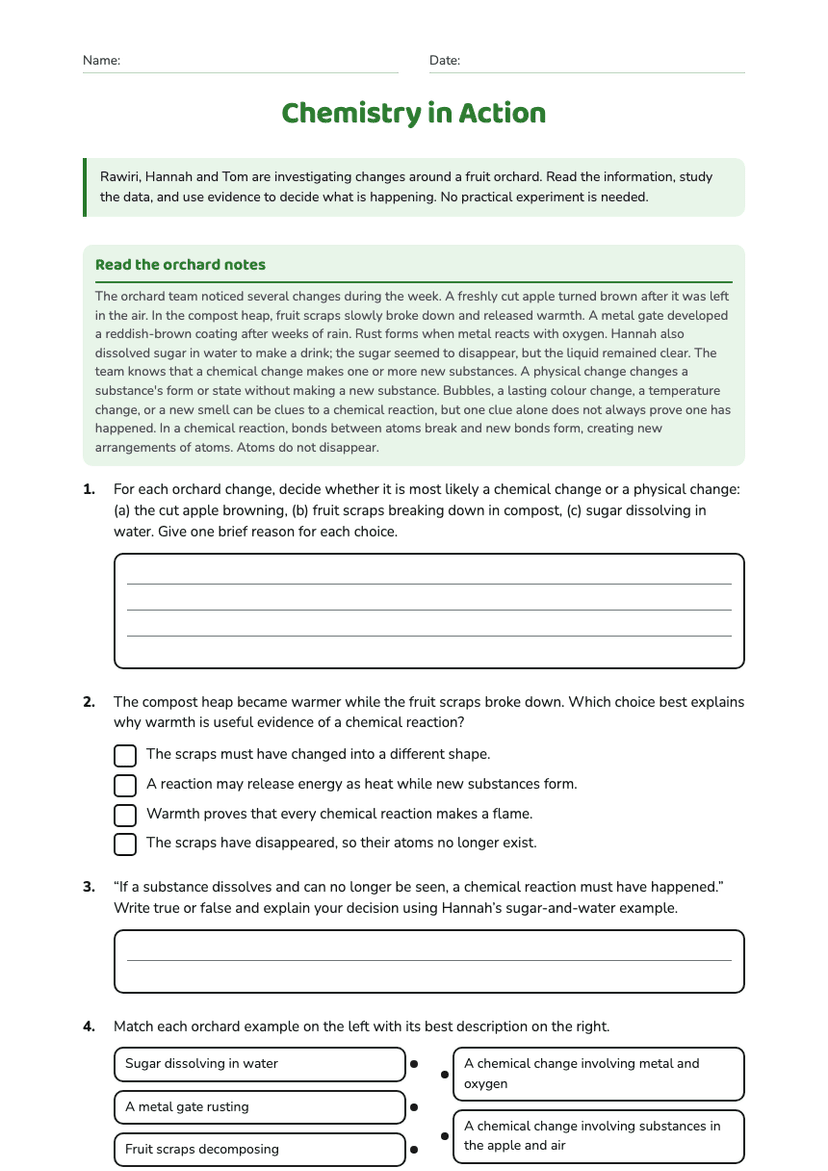
Chemistry in Action
Free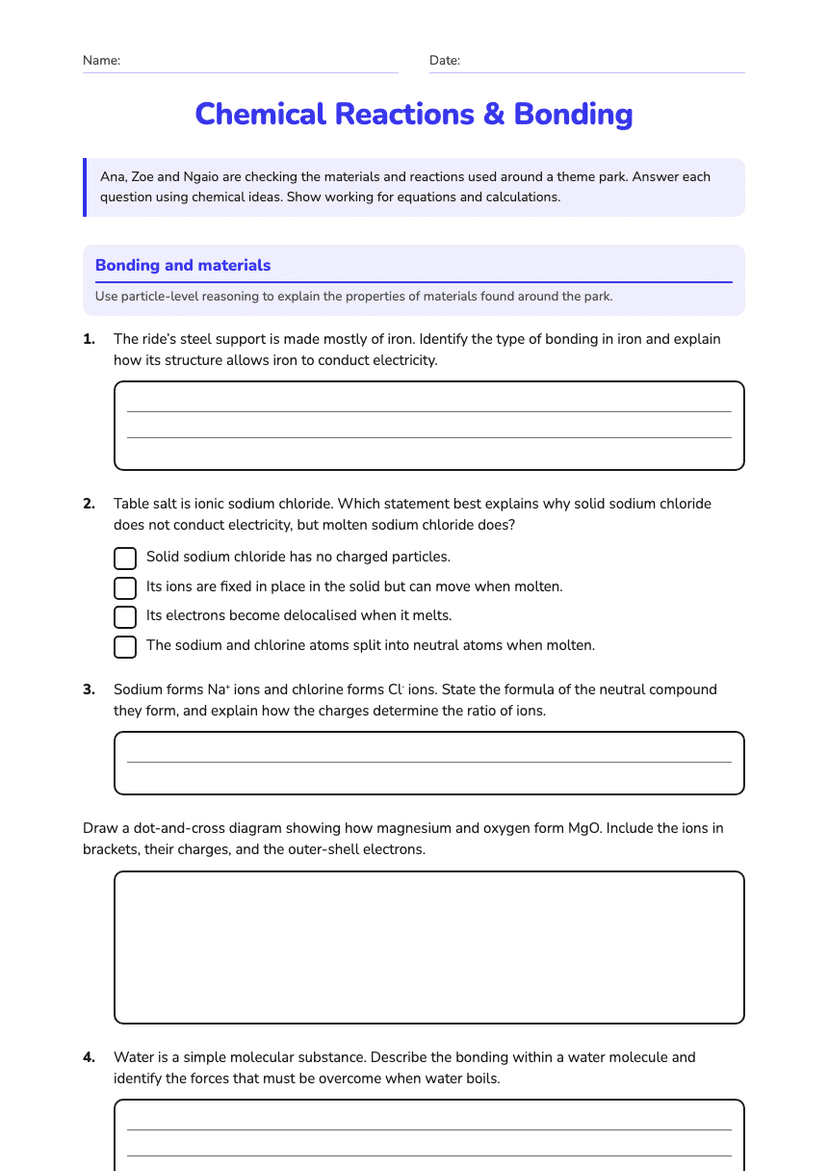
Chemical Reactions & Bonding
Free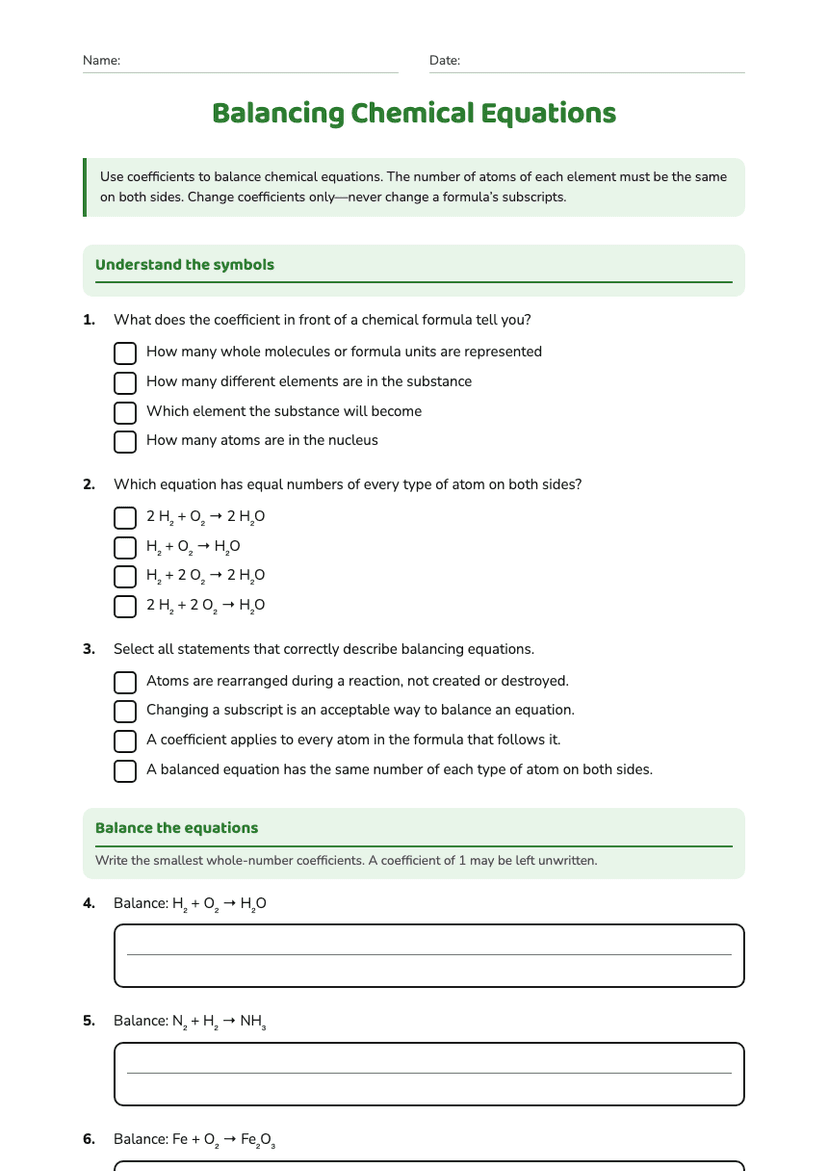
Balancing Chemical Equations
Free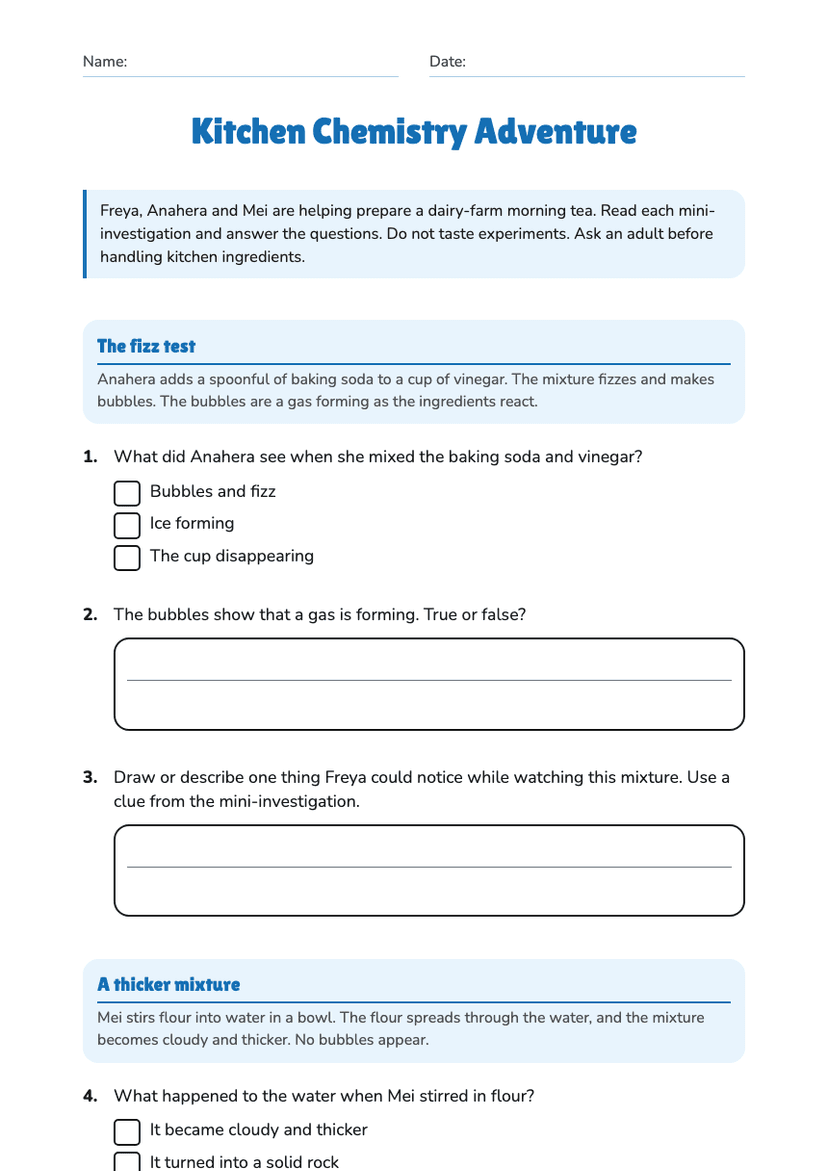
Kitchen Chemistry Adventure
Free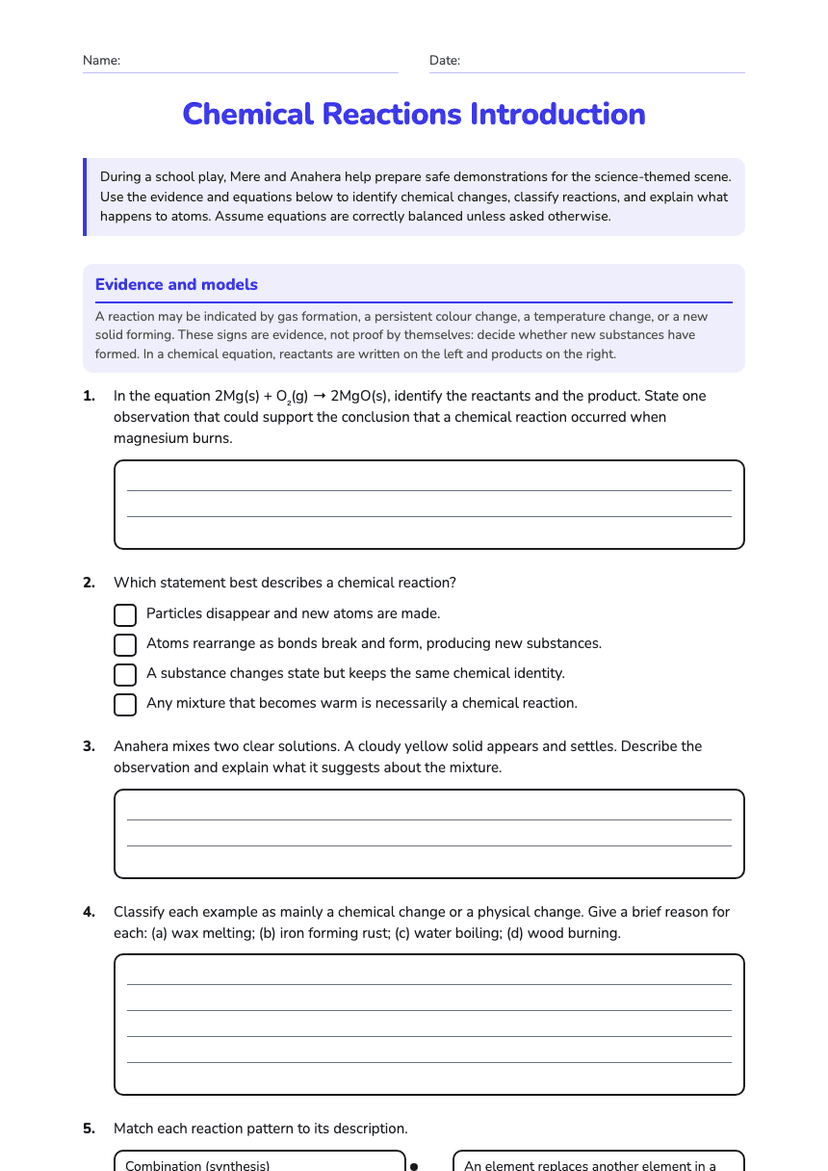
Chemical Reactions Introduction
Free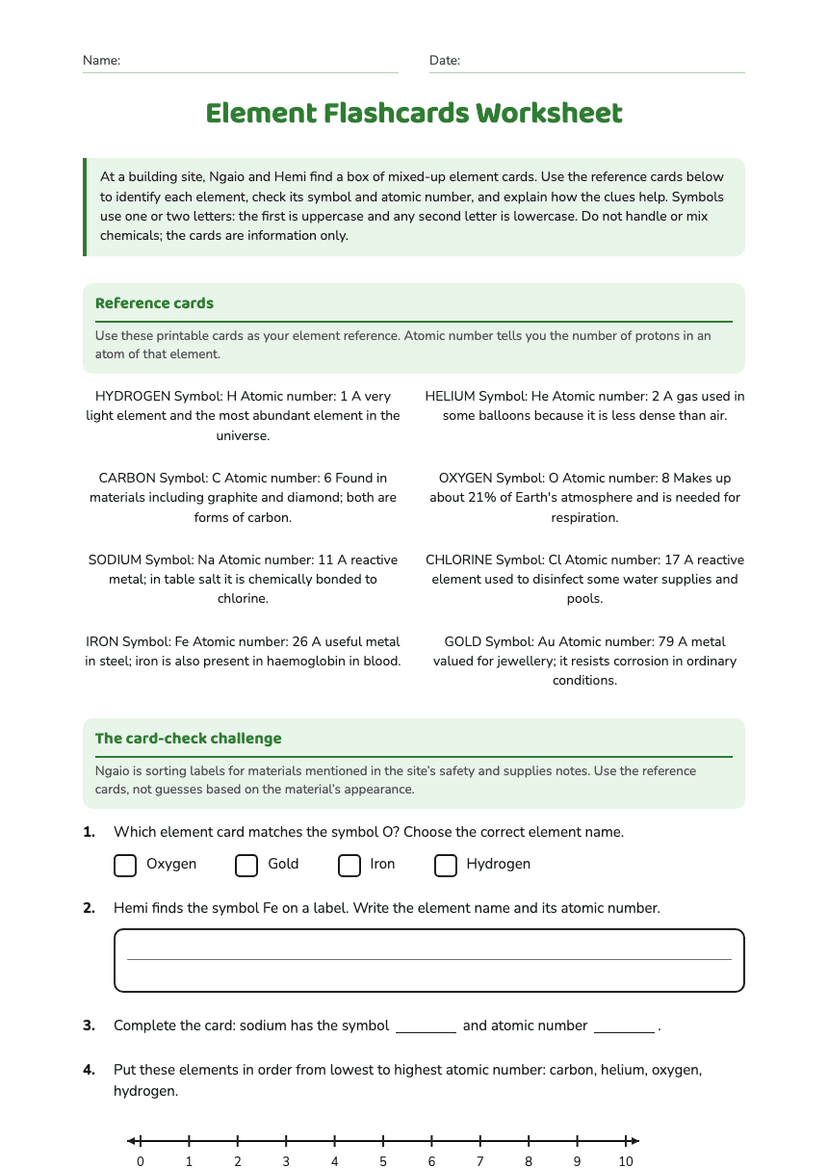
Element Flashcards Worksheet
Free