Exploring Chemical Reactions
A free science worksheet ready for your classroom. Open in Kuraplan to grab the print-ready PDF, customize it for your students, or generate a fresh version in seconds.
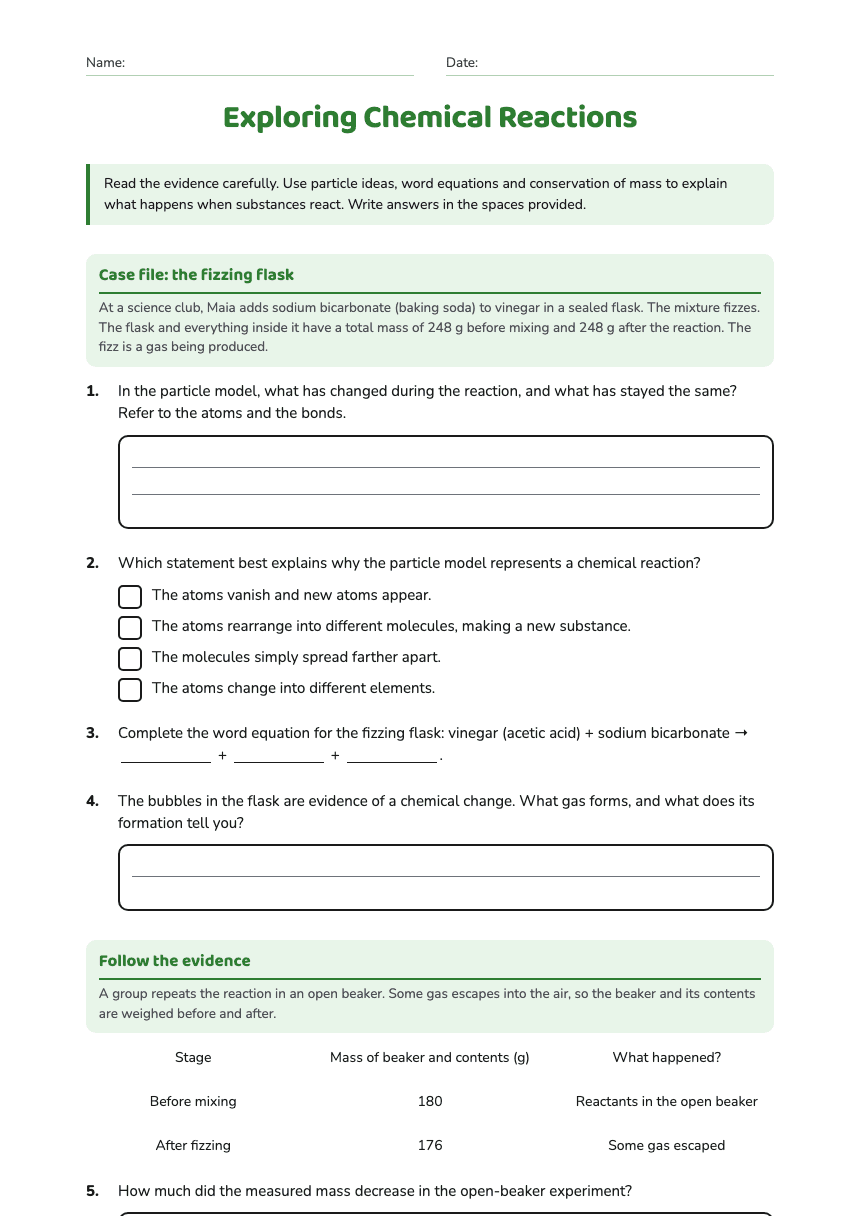
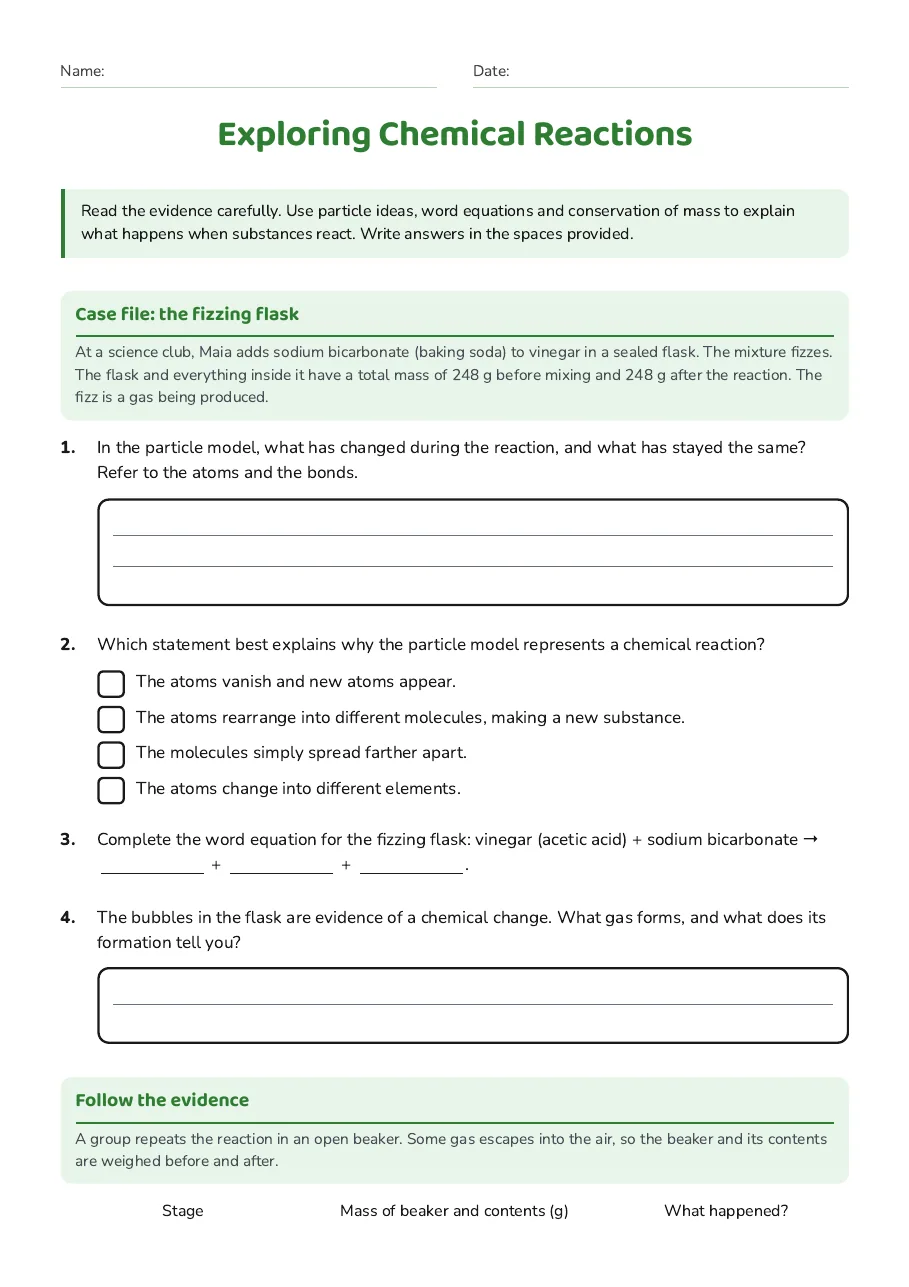
Exploring Chemical Reactions
Case file: the fizzing flask
At a science club, Maia adds sodium bicarbonate (baking soda) to vinegar in a sealed flask. The mixture fizzes. The flask and everything inside it have a total mass of 248 g before mixing and 248 g after the reaction. The fizz is a gas being produced.
- The atoms vanish and new atoms appear.
- The atoms rearrange into different molecules, making a new substance.
- The molecules simply spread farther apart.
- The atoms change into different elements.
Follow the evidence
A group repeats the reaction in an open beaker. Some gas escapes into the air, so the beaker and its contents are weighed before and after.
Stage
Mass of beaker and contents (g)
What happened?
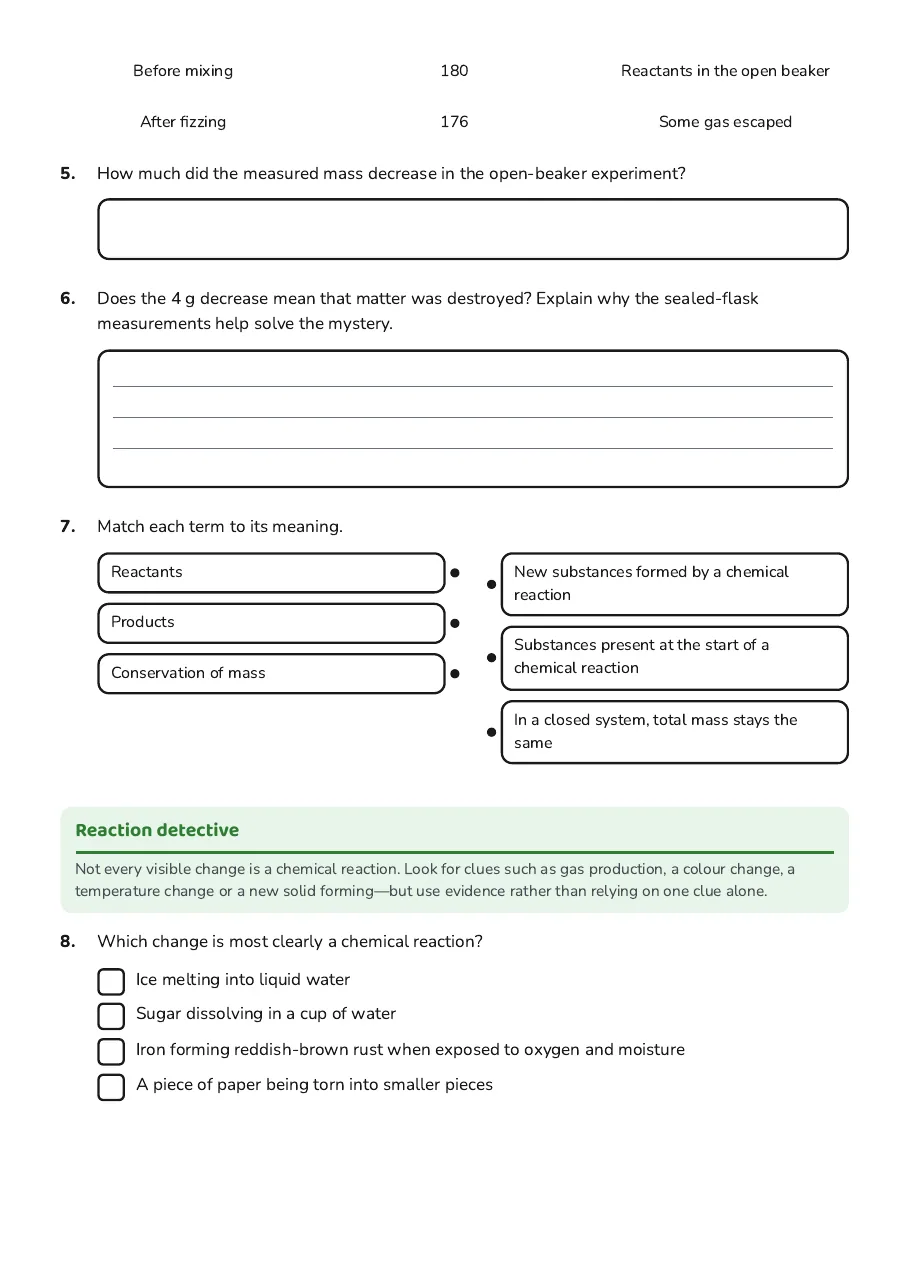
Before mixing
180
Reactants in the open beaker
After fizzing
176
Some gas escaped
- Reactants
- Products
- Conservation of mass
- New substances formed by a chemical reaction
- Substances present at the start of a chemical reaction
- In a closed system, total mass stays the same
Reaction detective
Not every visible change is a chemical reaction. Look for clues such as gas production, a colour change, a temperature change or a new solid forming—but use evidence rather than relying on one clue alone.
- Ice melting into liquid water
- Sugar dissolving in a cup of water
- Iron forming reddish-brown rust when exposed to oxygen and moisture
- A piece of paper being torn into smaller pieces
3 printable pages
Page 1
Page 2
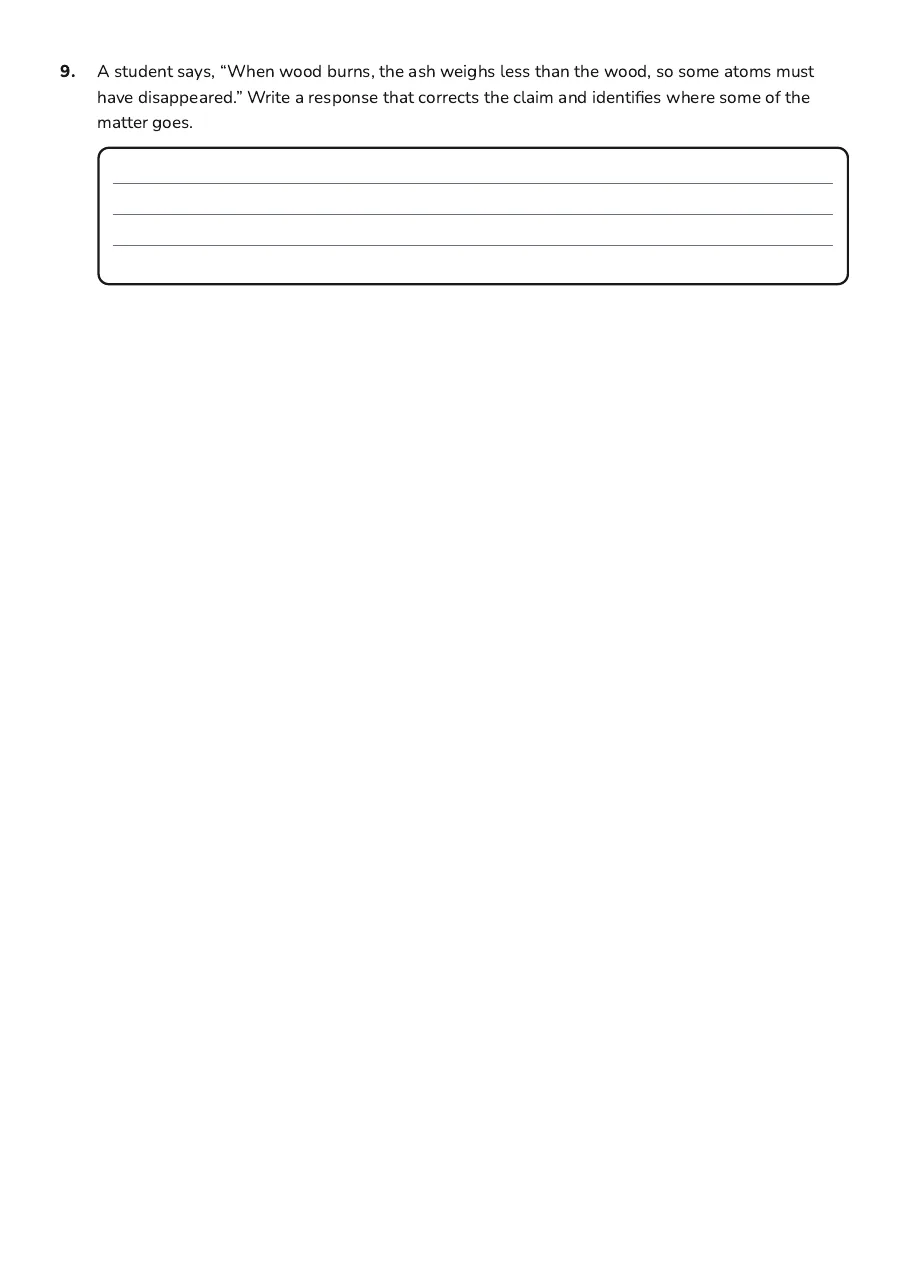
Page 3
About This Worksheet
Free in Kuraplan
Sign up free, grab the PDF, and customize it for your class.
Print-Ready
Formatted for standard paper. Clean layout, easy to read.
AI-Generated
Created with Kuraplan's AI, designed for real classroom use.
For Teachers & Parents
Use in classrooms, for homework, tutoring, or homeschool.
Need a custom version of this worksheet?
Kuraplan's AI generates custom worksheets in seconds — differentiated for every learner, aligned to your curriculum.
Generate Custom Worksheets — FreeMore Science Worksheets
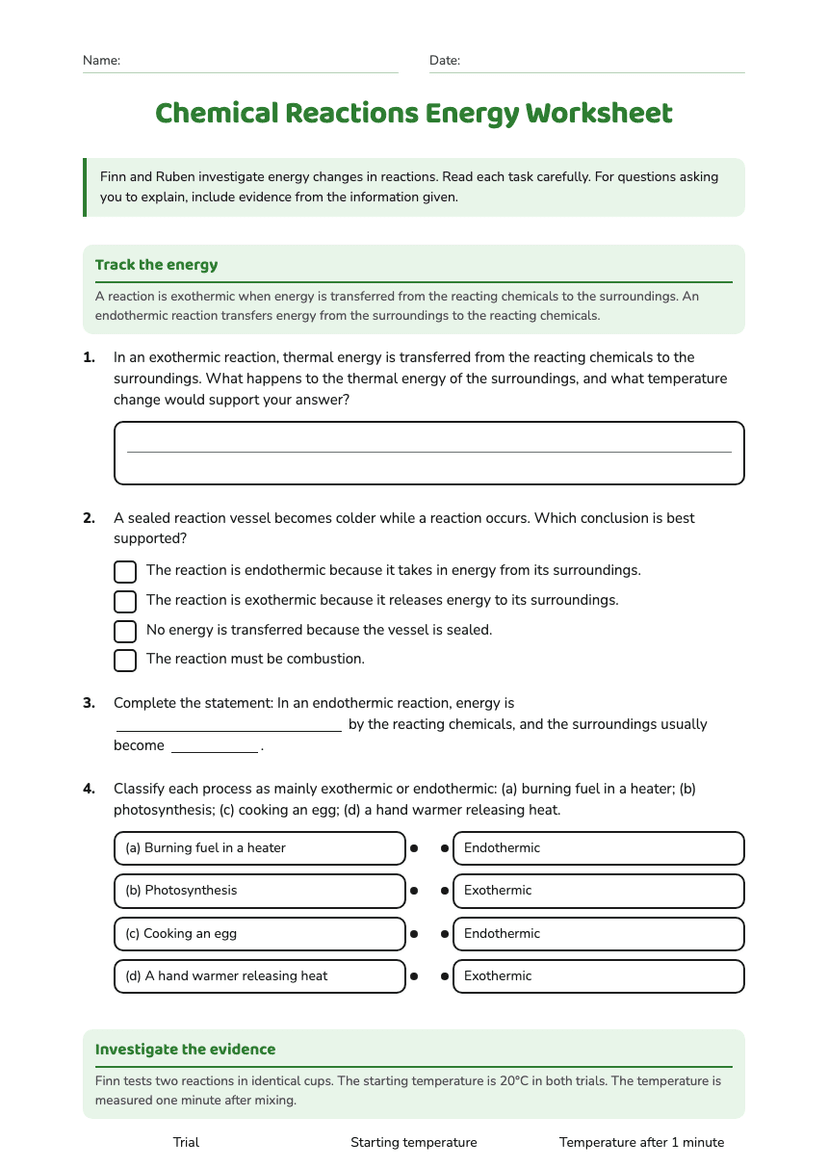
Chemical Reactions Energy Worksheet
Free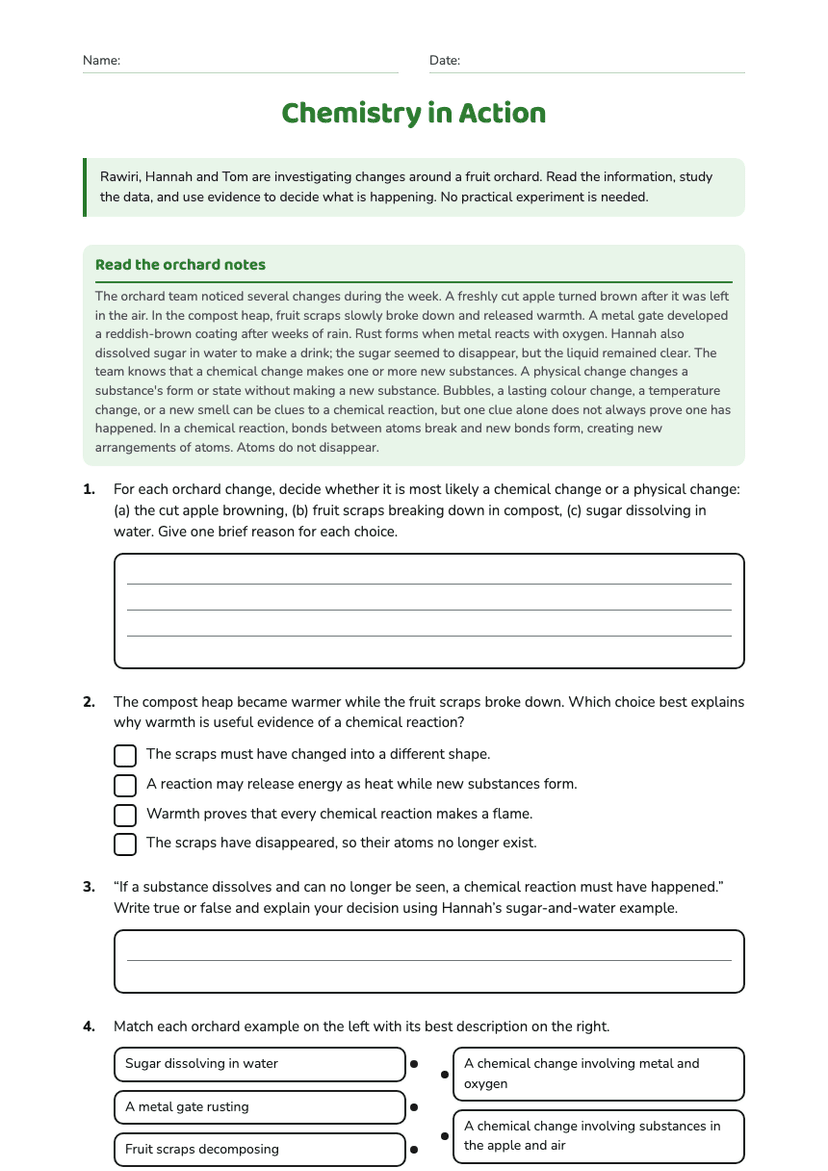
Chemistry in Action
Free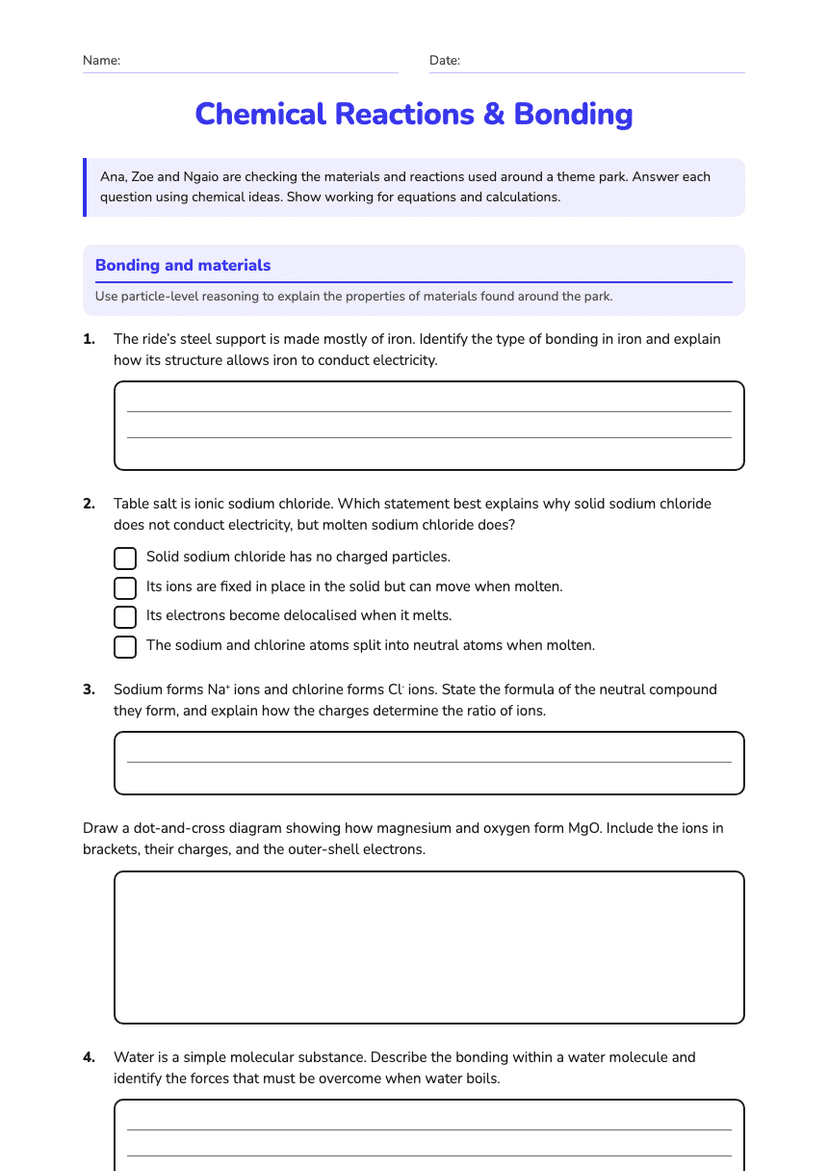
Chemical Reactions & Bonding
Free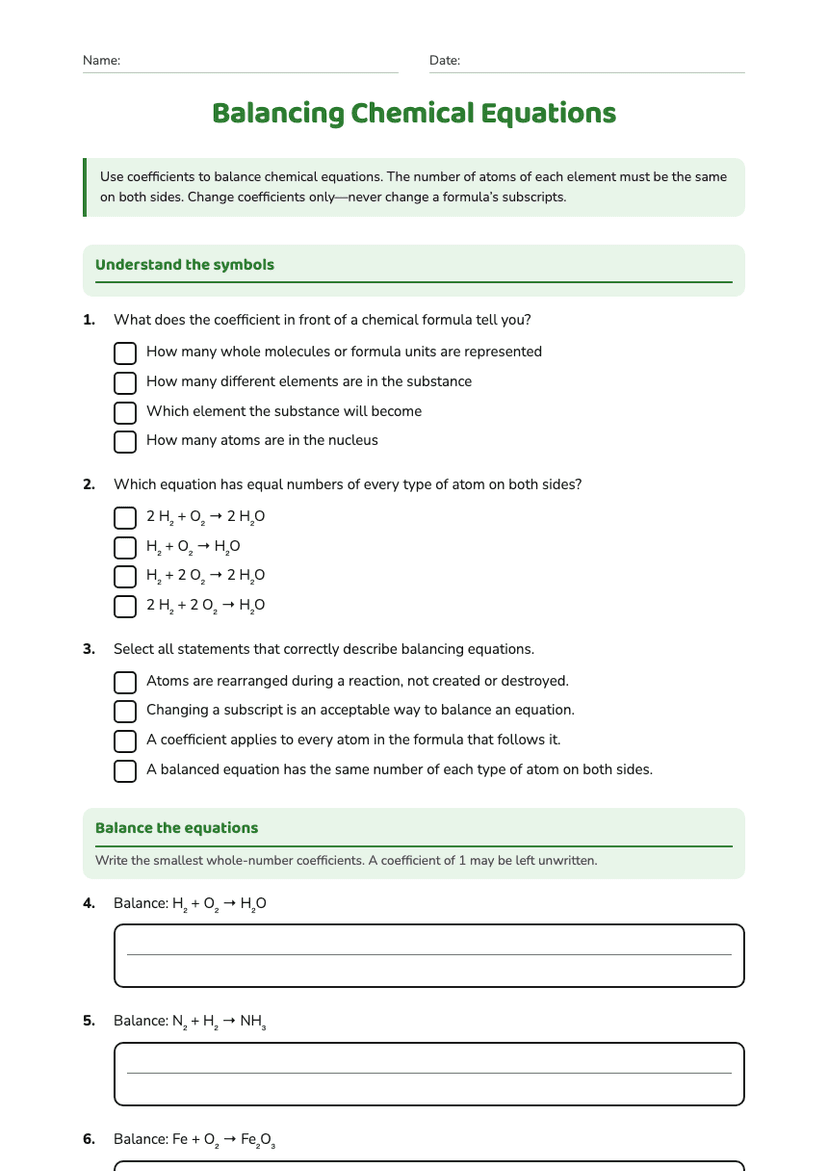
Balancing Chemical Equations
Free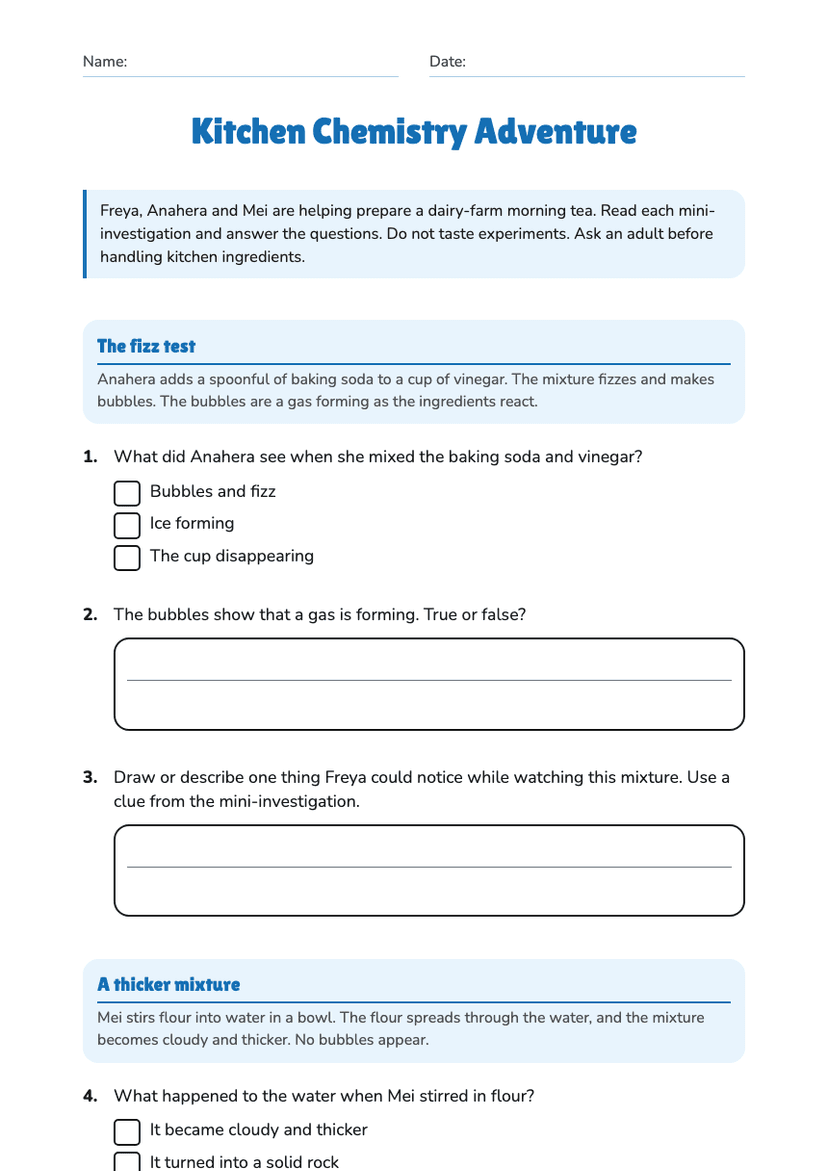
Kitchen Chemistry Adventure
Free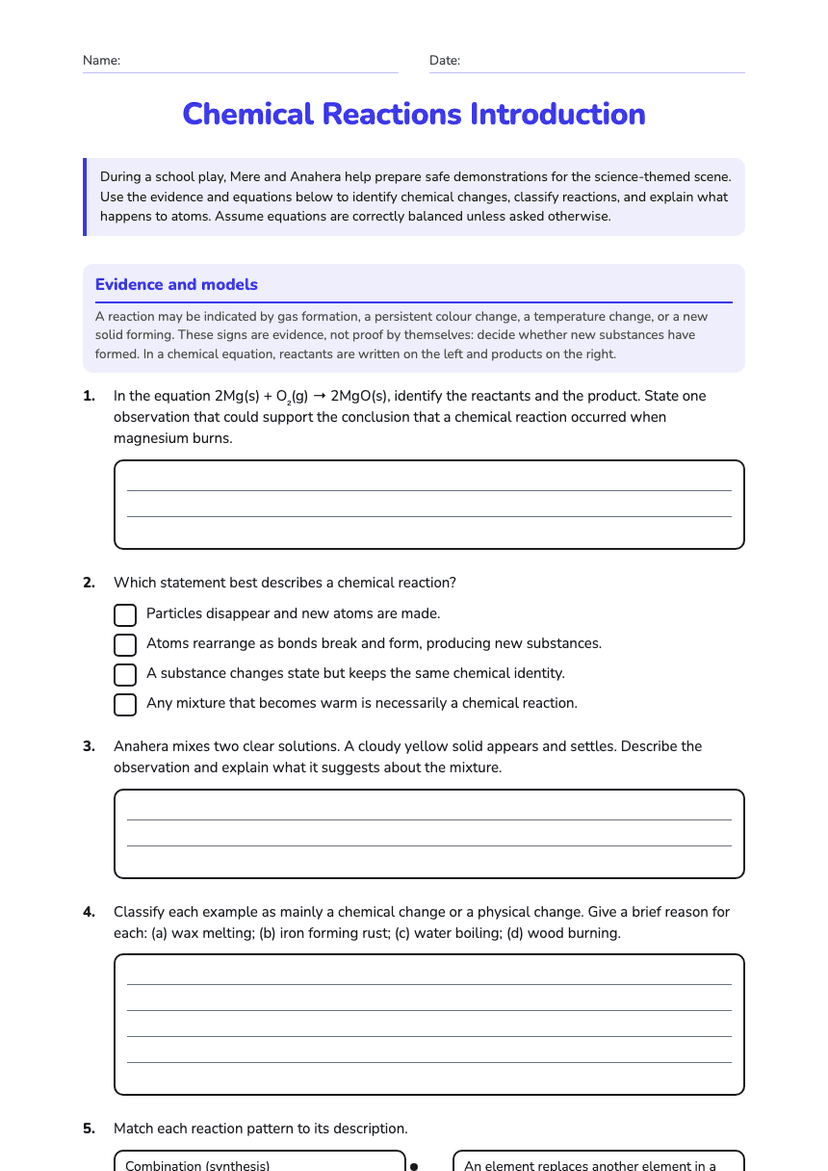
Chemical Reactions Introduction
Free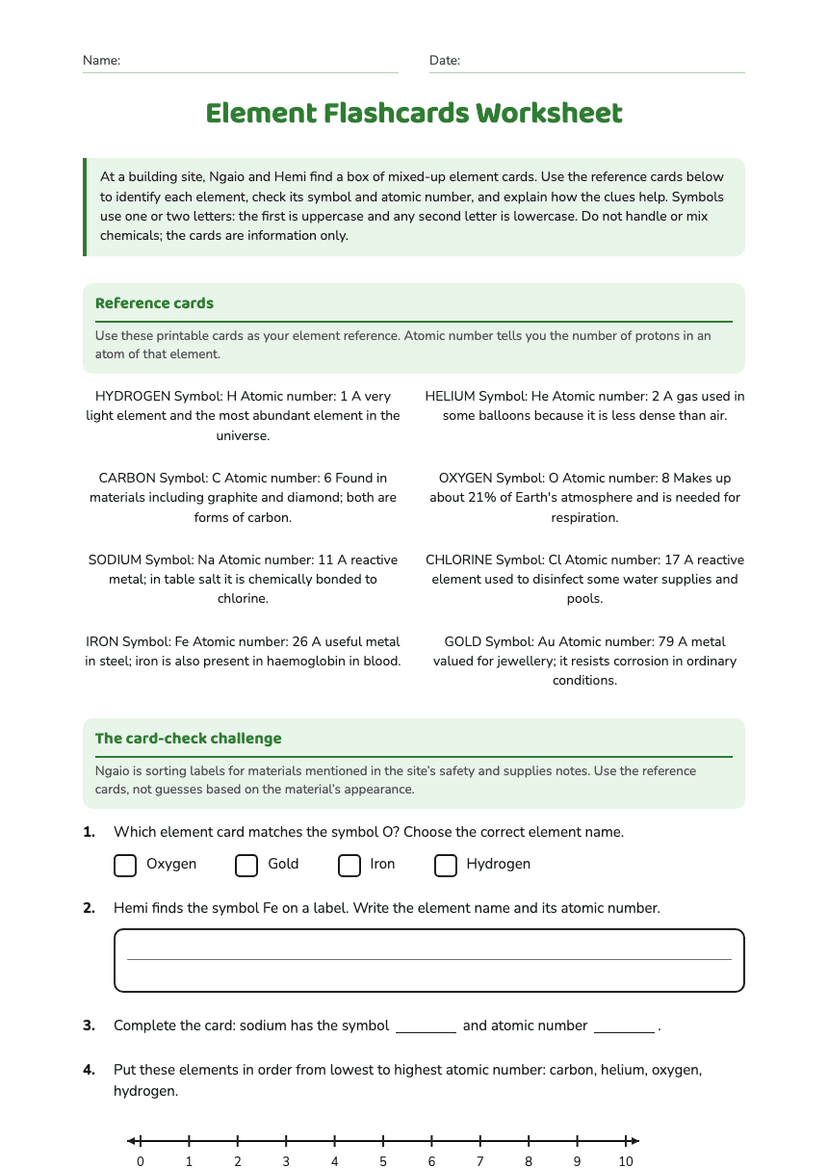
Element Flashcards Worksheet
Free