Exploring Ecosystems Introduction
A free science worksheet ready for your classroom. Open in Kuraplan to grab the print-ready PDF, customize it for your students, or generate a fresh version in seconds.
Exploring Ecosystems Introduction
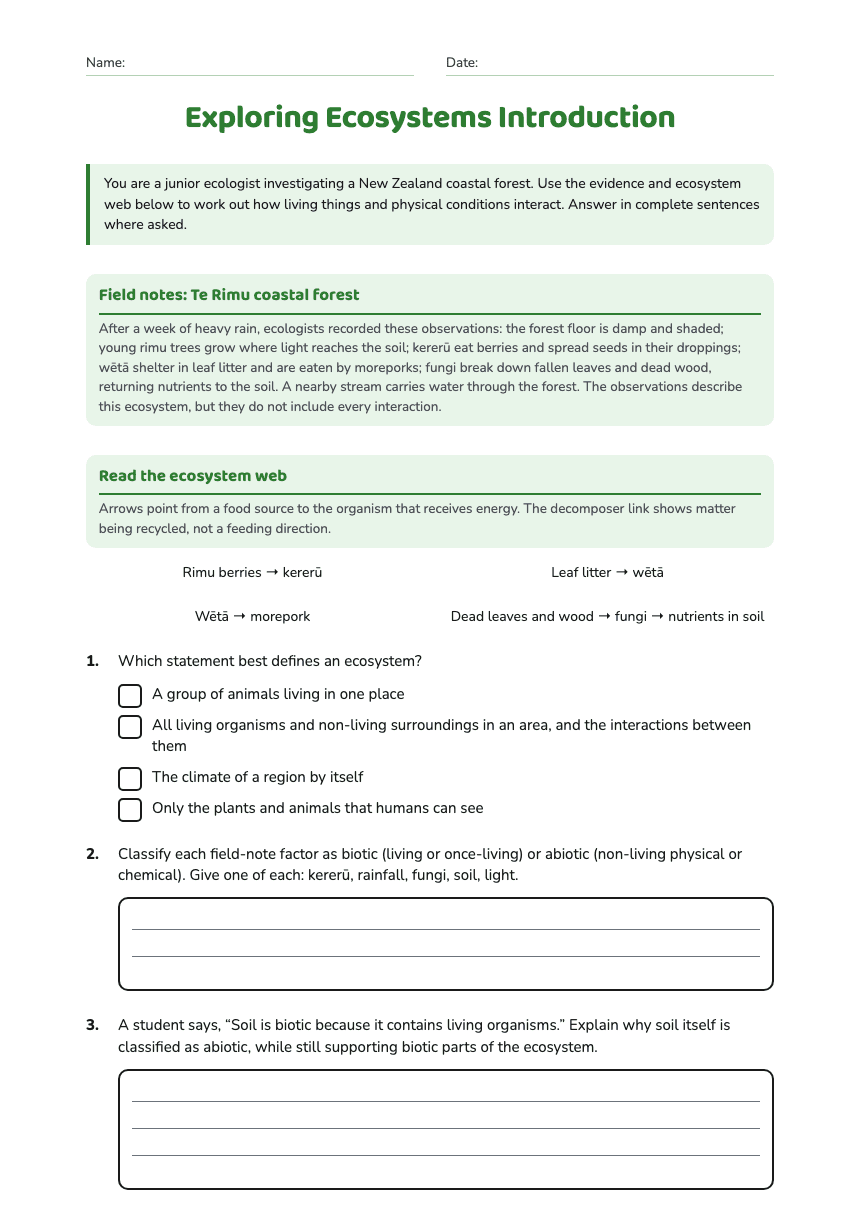
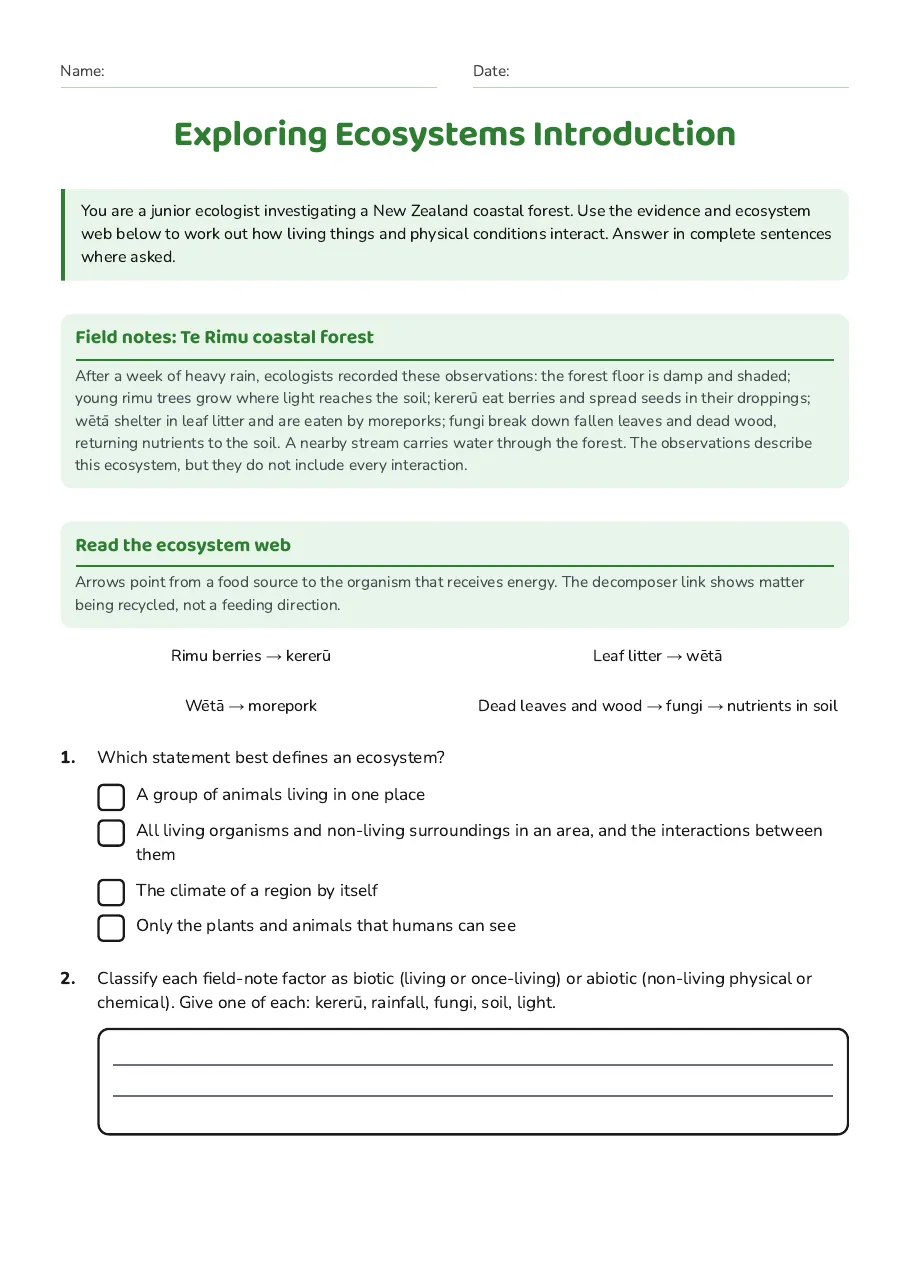
Field notes: Te Rimu coastal forest
After a week of heavy rain, ecologists recorded these observations: the forest floor is damp and shaded; young rimu trees grow where light reaches the soil; kererū eat berries and spread seeds in their droppings; wētā shelter in leaf litter and are eaten by moreporks; fungi break down fallen leaves and dead wood, returning nutrients to the soil. A nearby stream carries water through the forest. The observations describe this ecosystem, but they do not include every interaction.
Read the ecosystem web
Arrows point from a food source to the organism that receives energy. The decomposer link shows matter being recycled, not a feeding direction.
Rimu berries → kererū
Leaf litter → wētā
Wētā → morepork
Dead leaves and wood → fungi → nutrients in soil
- A group of animals living in one place
- All living organisms and non-living surroundings in an area, and the interactions between them
- The climate of a region by itself
- Only the plants and animals that humans can see
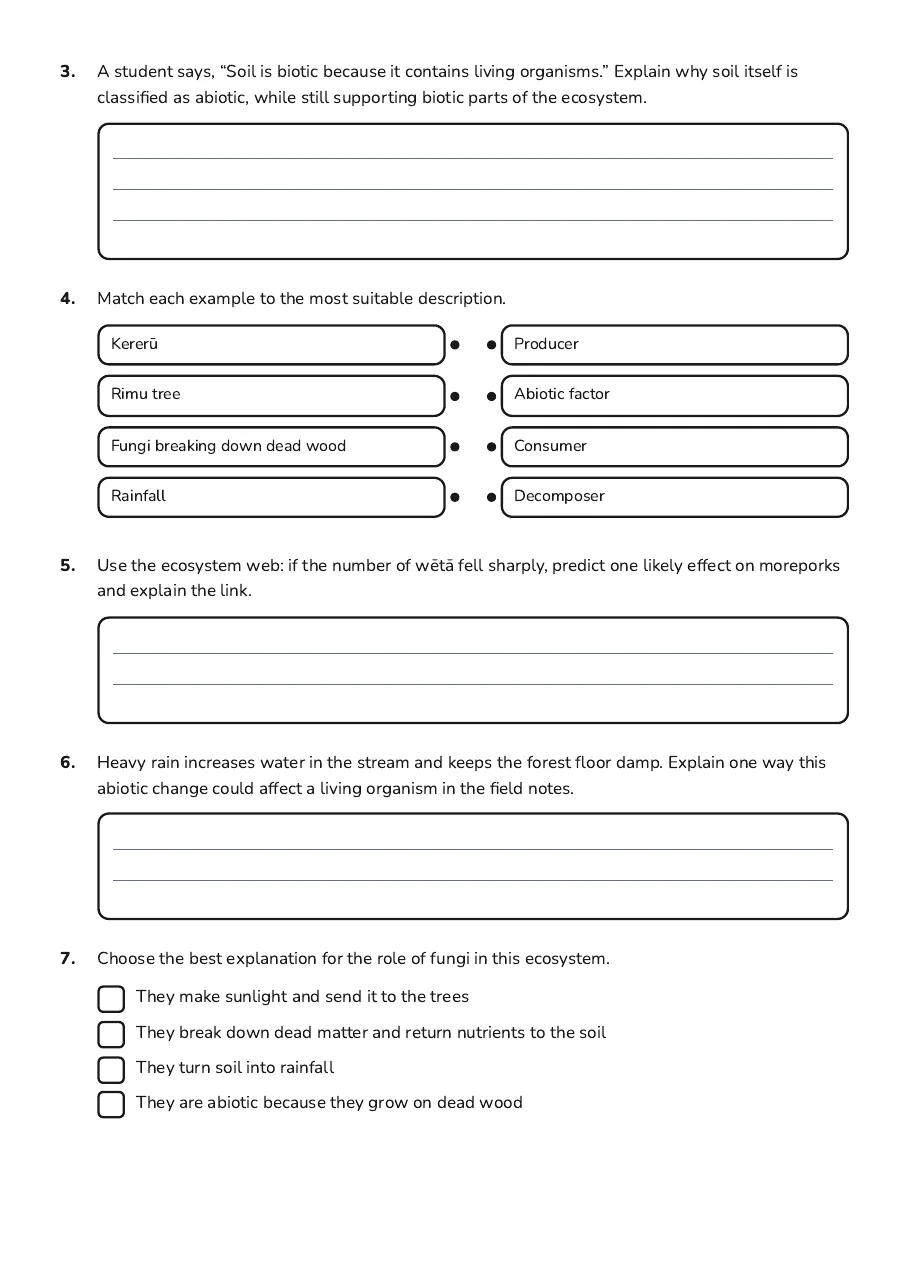
- Kererū
- Rimu tree
- Fungi breaking down dead wood
- Rainfall
- Producer
- Abiotic factor
- Consumer
- Decomposer
- They make sunlight and send it to the trees
- They break down dead matter and return nutrients to the soil
- They turn soil into rainfall
- They are abiotic because they grow on dead wood
3 printable pages
Page 1
Page 2
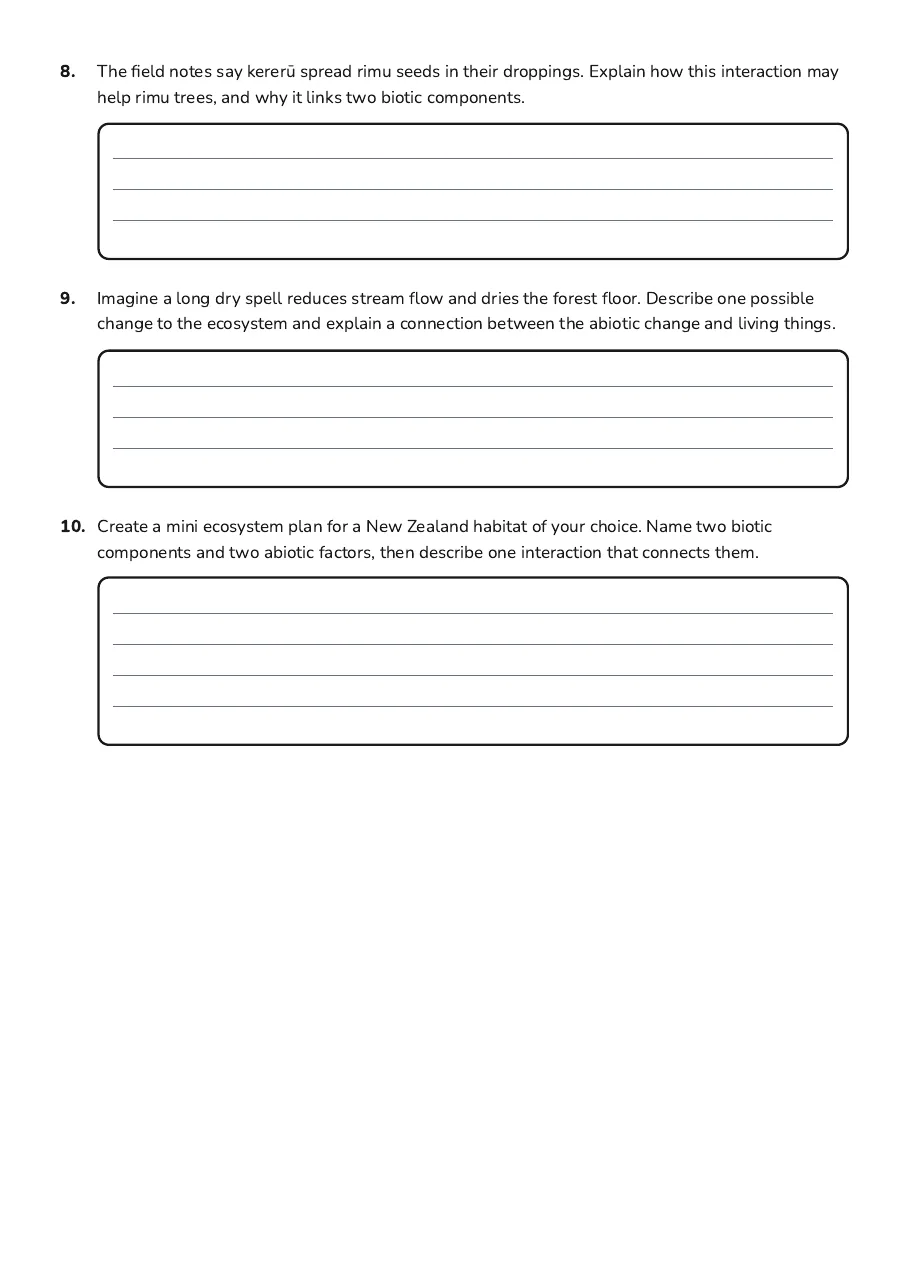
Page 3
About This Worksheet
Free in Kuraplan
Sign up free, grab the PDF, and customize it for your class.
Print-Ready
Formatted for standard paper. Clean layout, easy to read.
AI-Generated
Created with Kuraplan's AI, designed for real classroom use.
For Teachers & Parents
Use in classrooms, for homework, tutoring, or homeschool.
Need a custom version of this worksheet?
Kuraplan's AI generates custom worksheets in seconds — differentiated for every learner, aligned to your curriculum.
Generate Custom Worksheets — FreeMore Science Worksheets
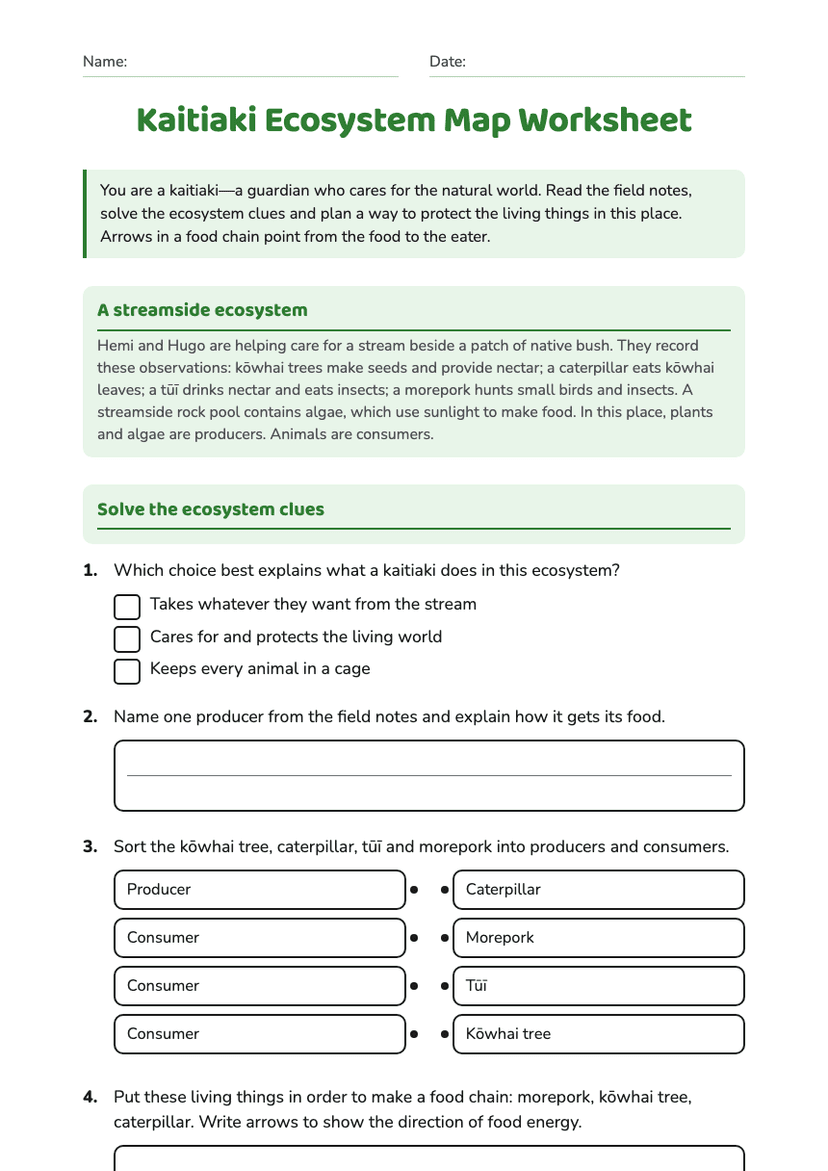
Kaitiaki Ecosystem Map Worksheet
Free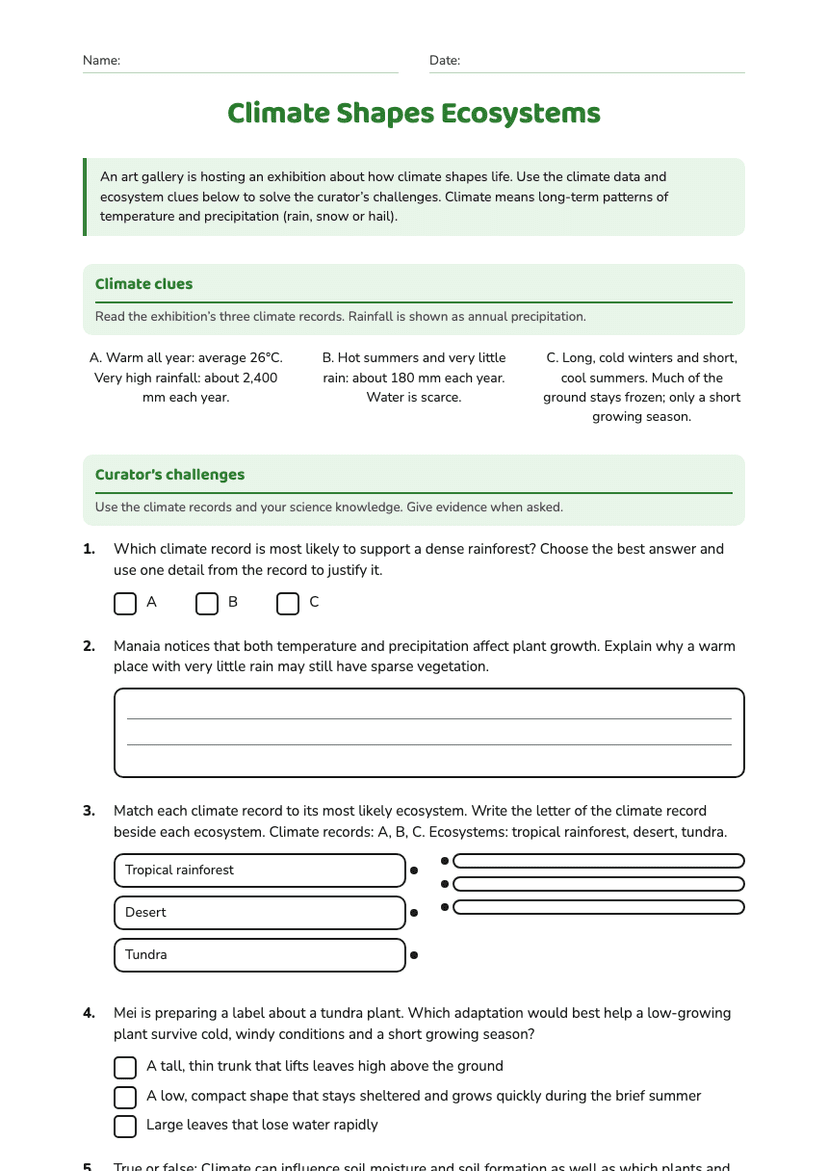
Climate Shapes Ecosystems
Free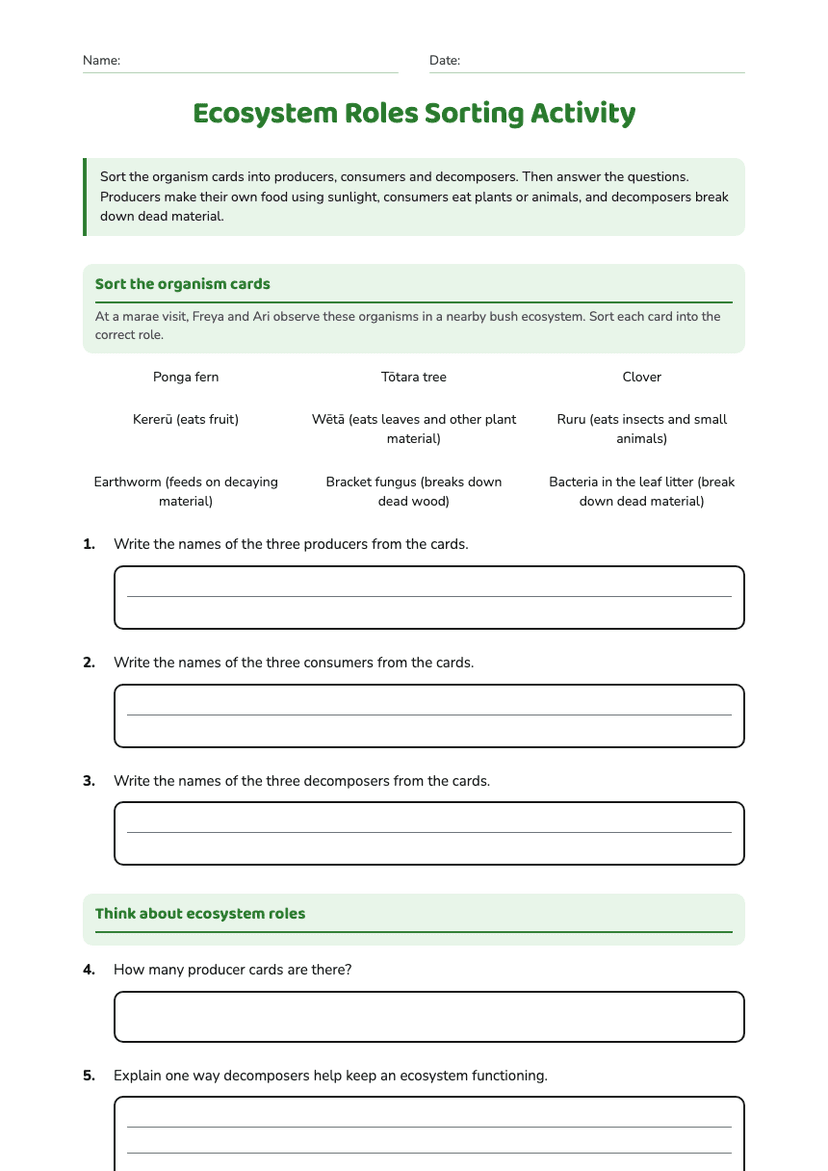
Ecosystem Roles Sorting Activity
Free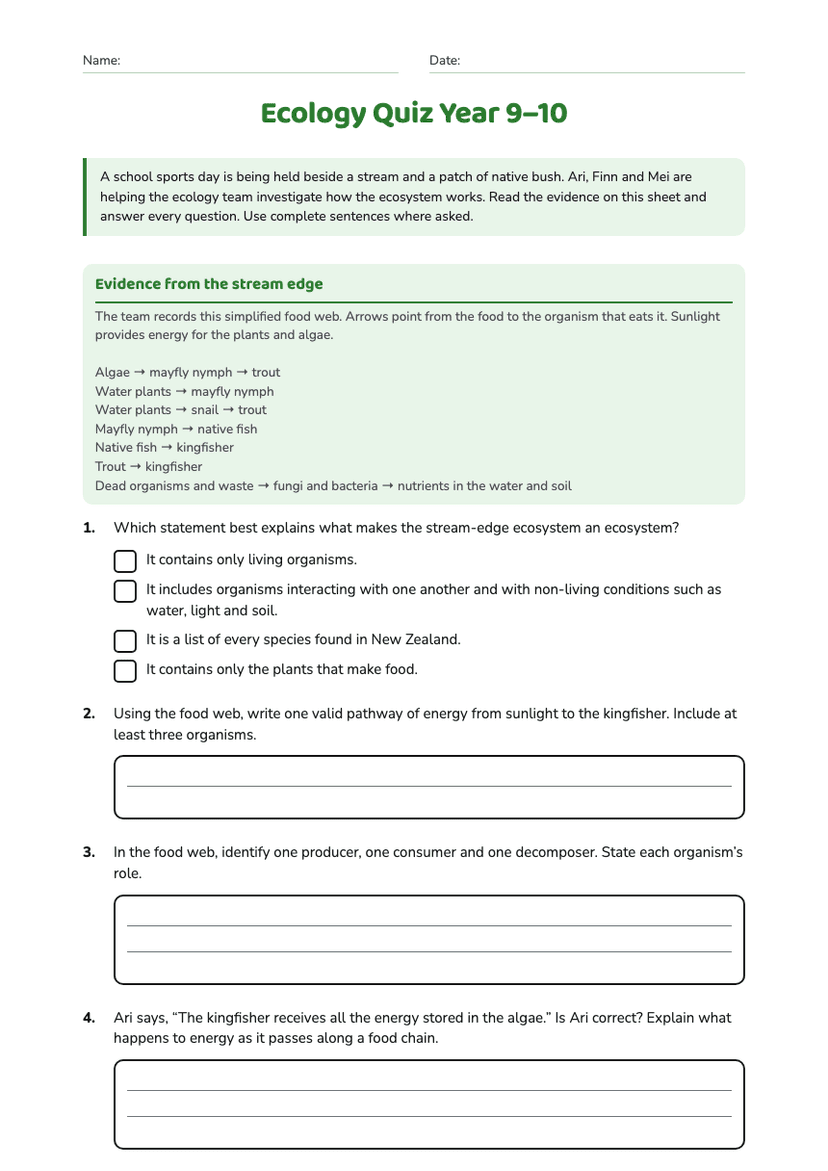
Ecology Quiz Year 9–10
Free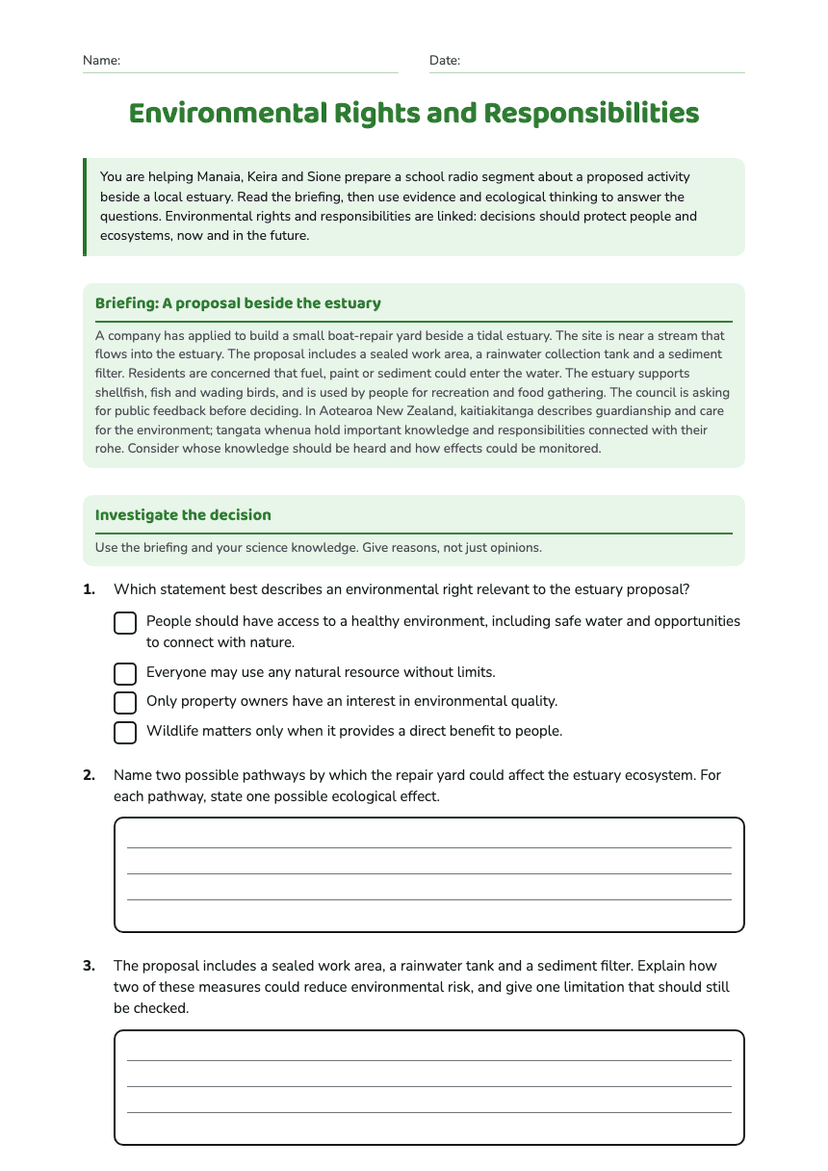
Environmental Rights and Responsibilities
Free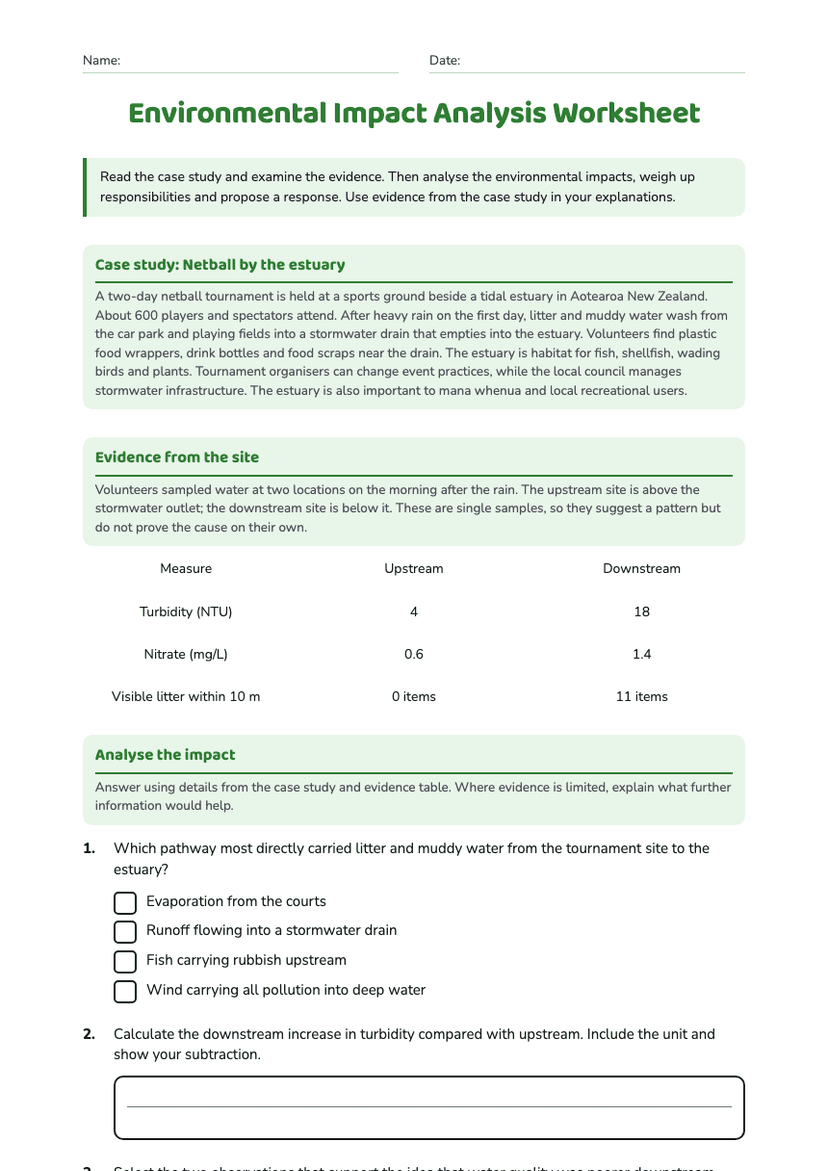
Environmental Impact Analysis Worksheet
Free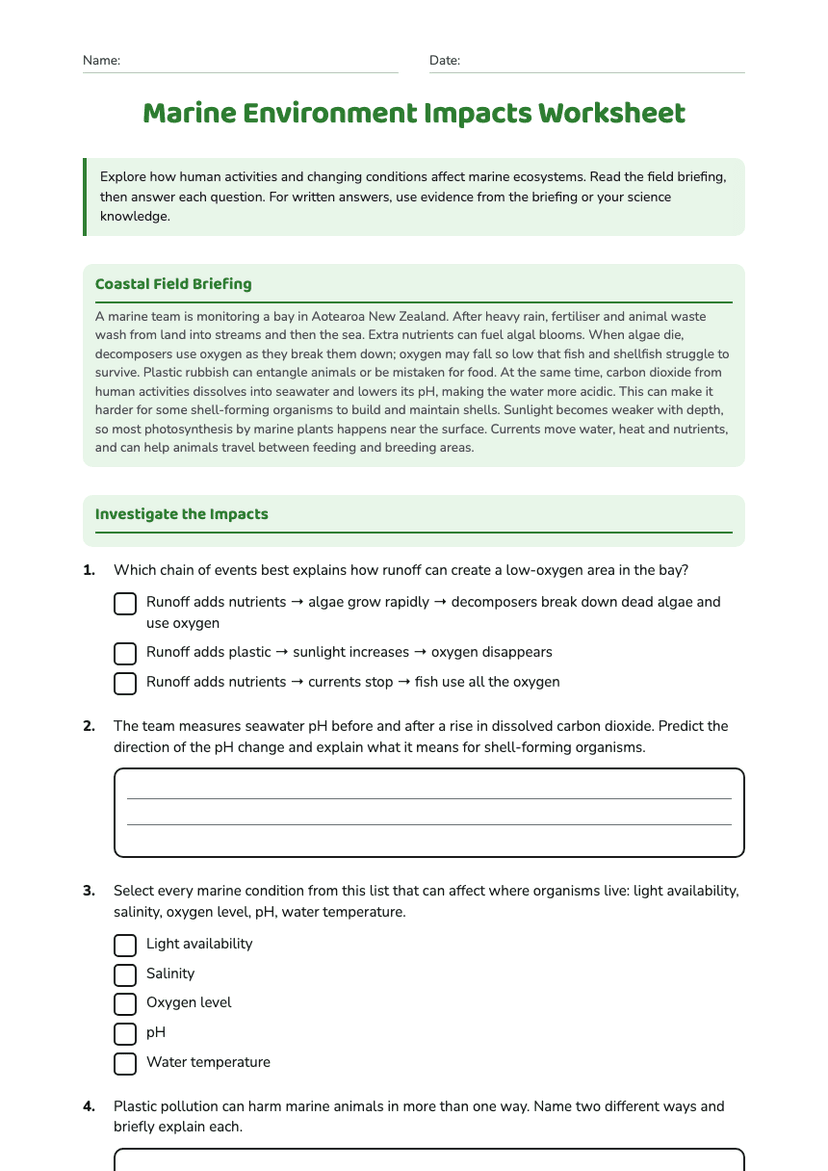
Marine Environment Impacts Worksheet
Free