Density Experiment Worksheet
A free science worksheet ready for your classroom. Open in Kuraplan to grab the print-ready PDF, customize it for your students, or generate a fresh version in seconds.
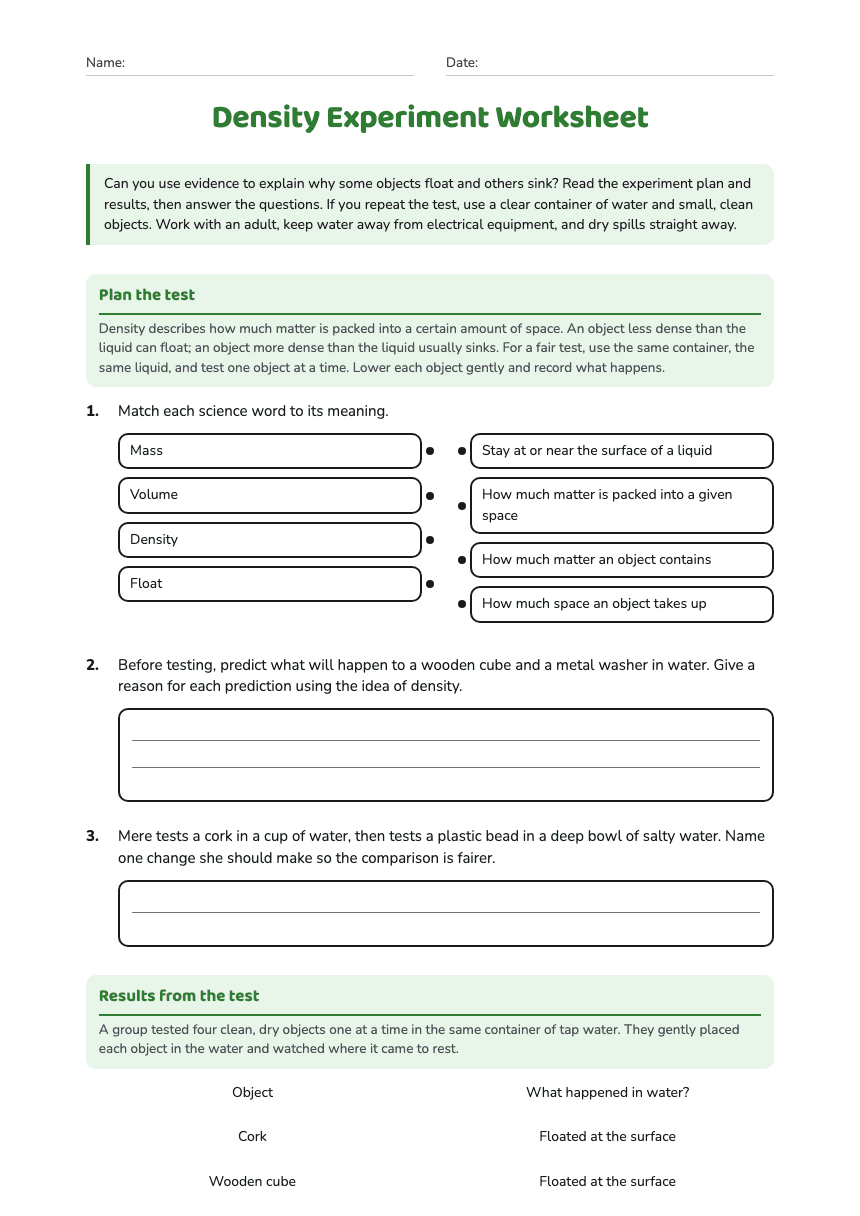
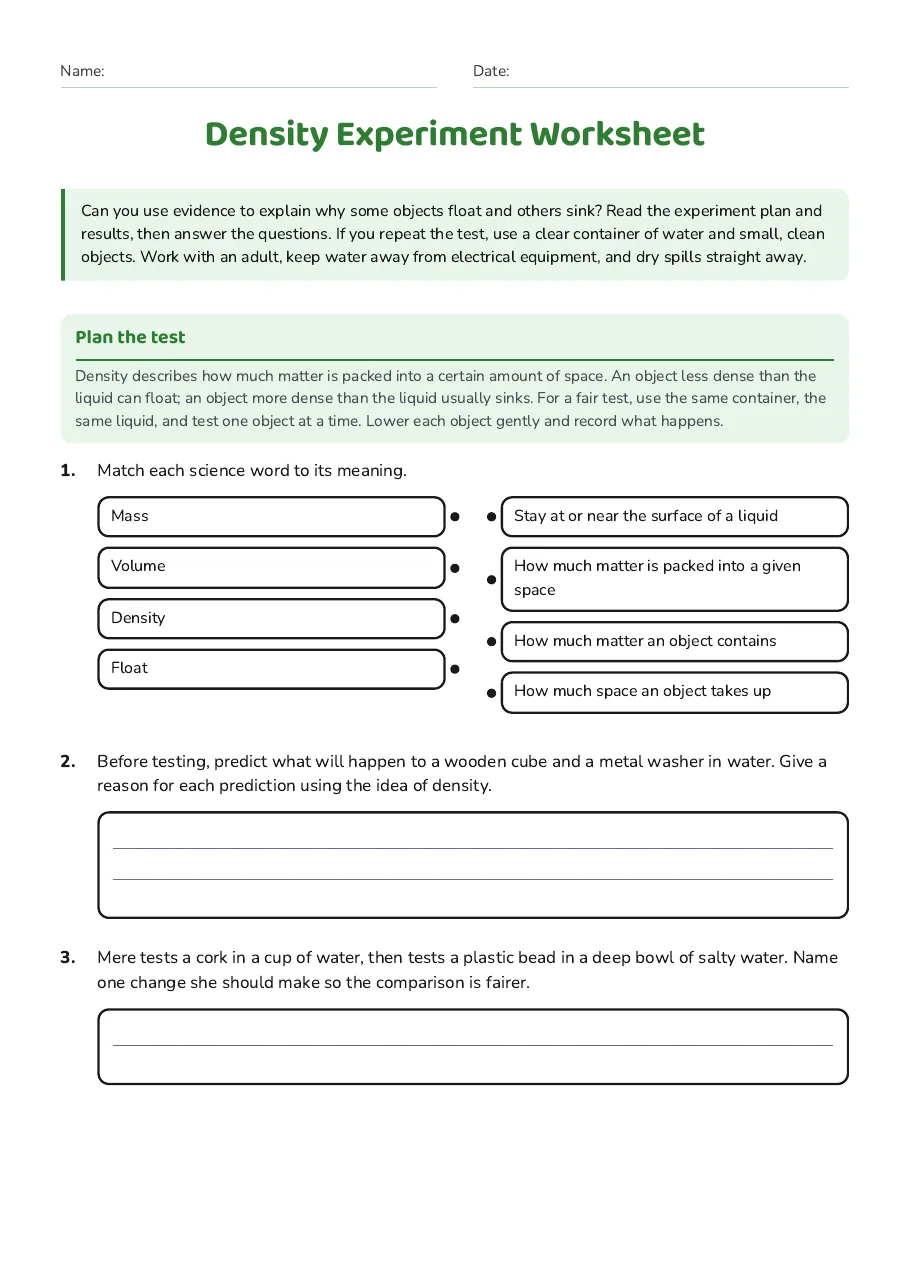
Density Experiment Worksheet
Plan the test
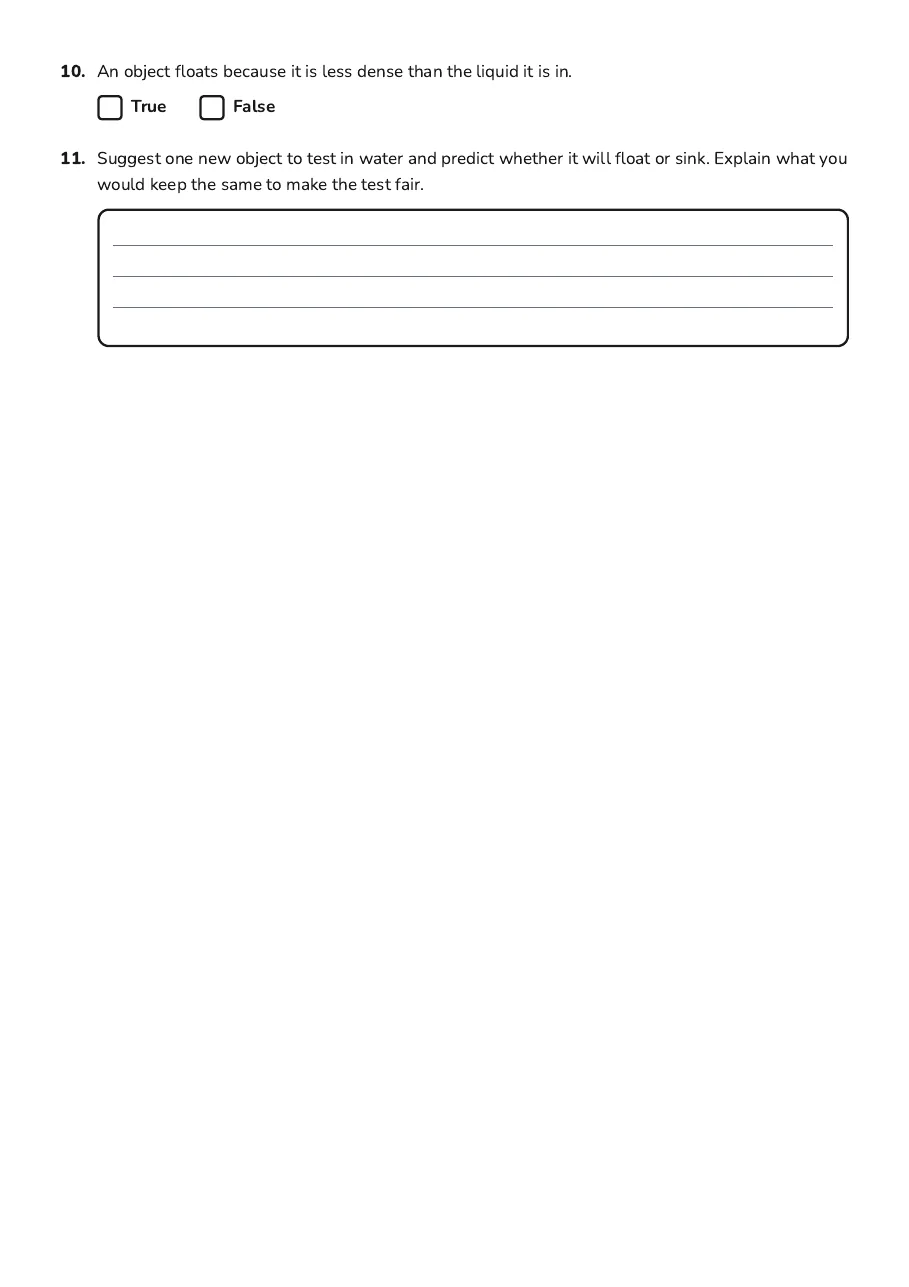
Density describes how much matter is packed into a certain amount of space. An object less dense than the liquid can float; an object more dense than the liquid usually sinks. For a fair test, use the same container, the same liquid, and test one object at a time. Lower each object gently and record what happens.
- Mass
- Volume
- Density
- Float
- Stay at or near the surface of a liquid
- How much matter is packed into a given space
- How much matter an object contains
- How much space an object takes up
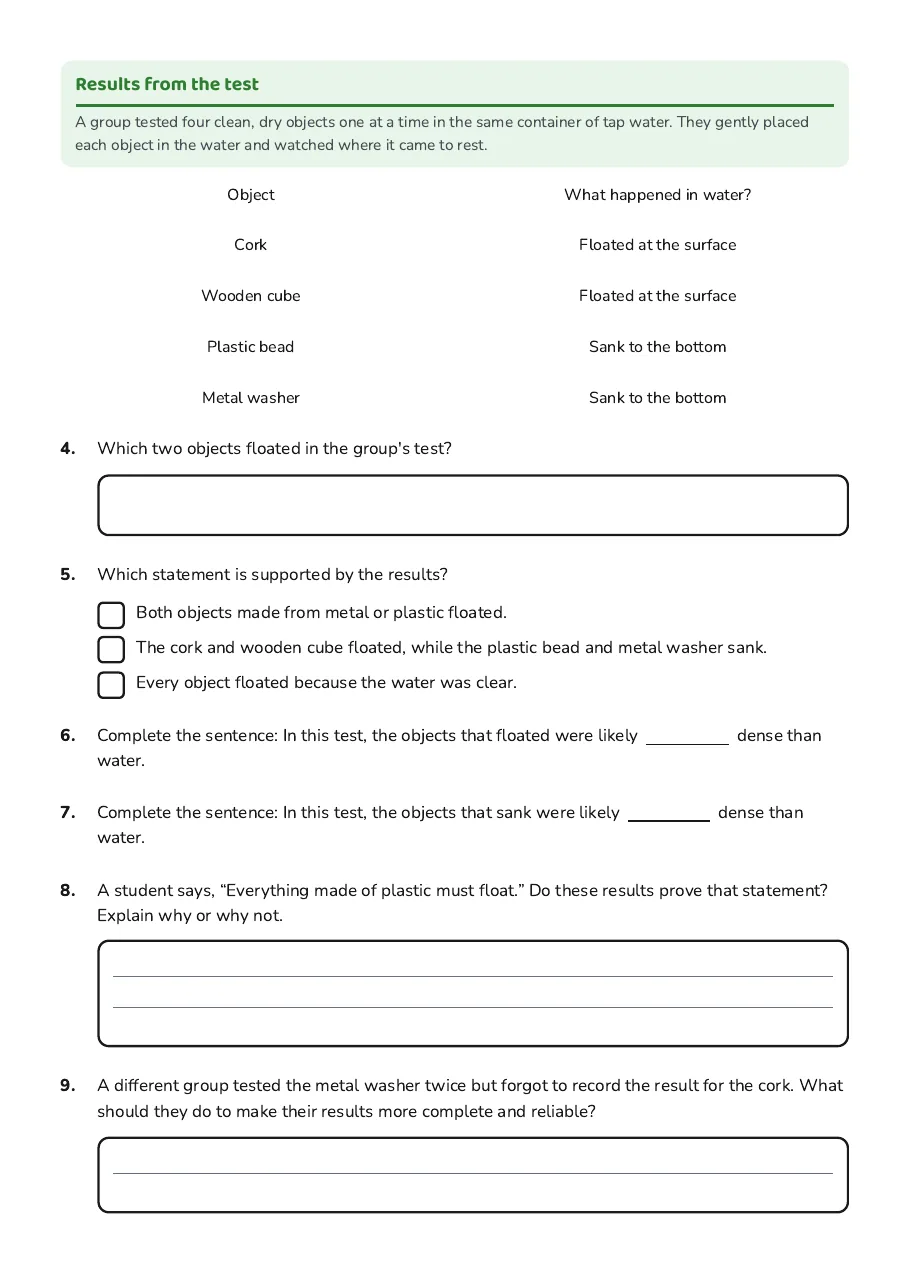
Results from the test
A group tested four clean, dry objects one at a time in the same container of tap water. They gently placed each object in the water and watched where it came to rest.
Object
What happened in water?
Cork
Floated at the surface
Wooden cube
Floated at the surface
Plastic bead
Sank to the bottom
Metal washer
Sank to the bottom
- Both objects made from metal or plastic floated.
- The cork and wooden cube floated, while the plastic bead and metal washer sank.
- Every object floated because the water was clear.
3 printable pages
Page 1
Page 2
Page 3
About This Worksheet
Free in Kuraplan
Sign up free, grab the PDF, and customize it for your class.
Print-Ready
Formatted for standard paper. Clean layout, easy to read.
AI-Generated
Created with Kuraplan's AI, designed for real classroom use.
For Teachers & Parents
Use in classrooms, for homework, tutoring, or homeschool.
Need a custom version of this worksheet?
Kuraplan's AI generates custom worksheets in seconds — differentiated for every learner, aligned to your curriculum.
Generate Custom Worksheets — FreeMore Science Worksheets
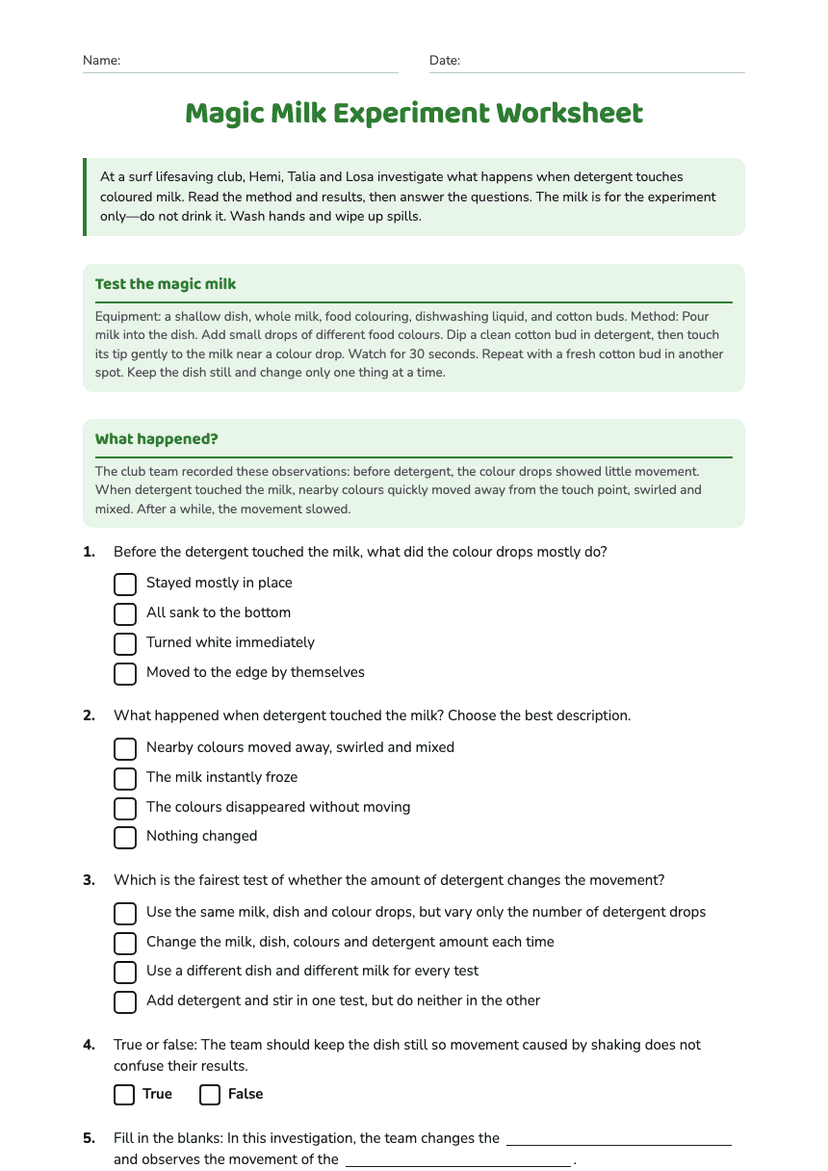
Magic Milk Experiment Worksheet
Free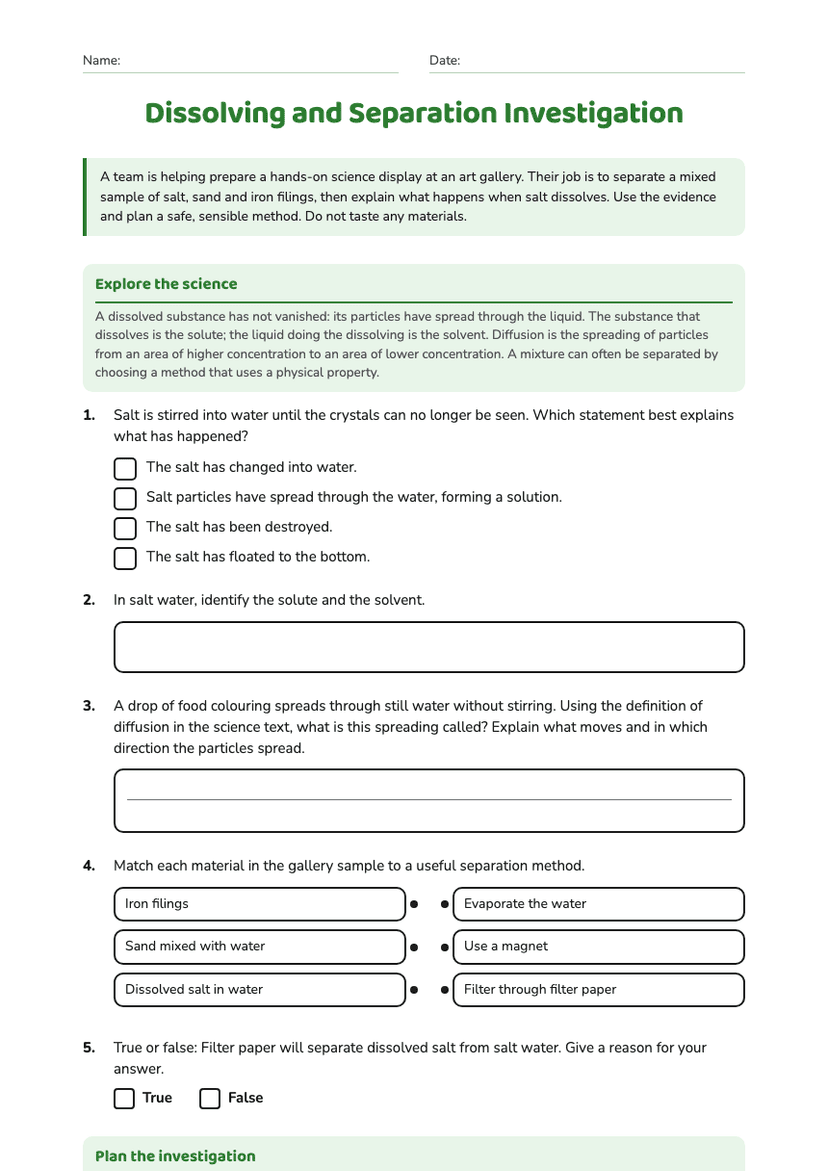
Dissolving and Separation Investigation
Free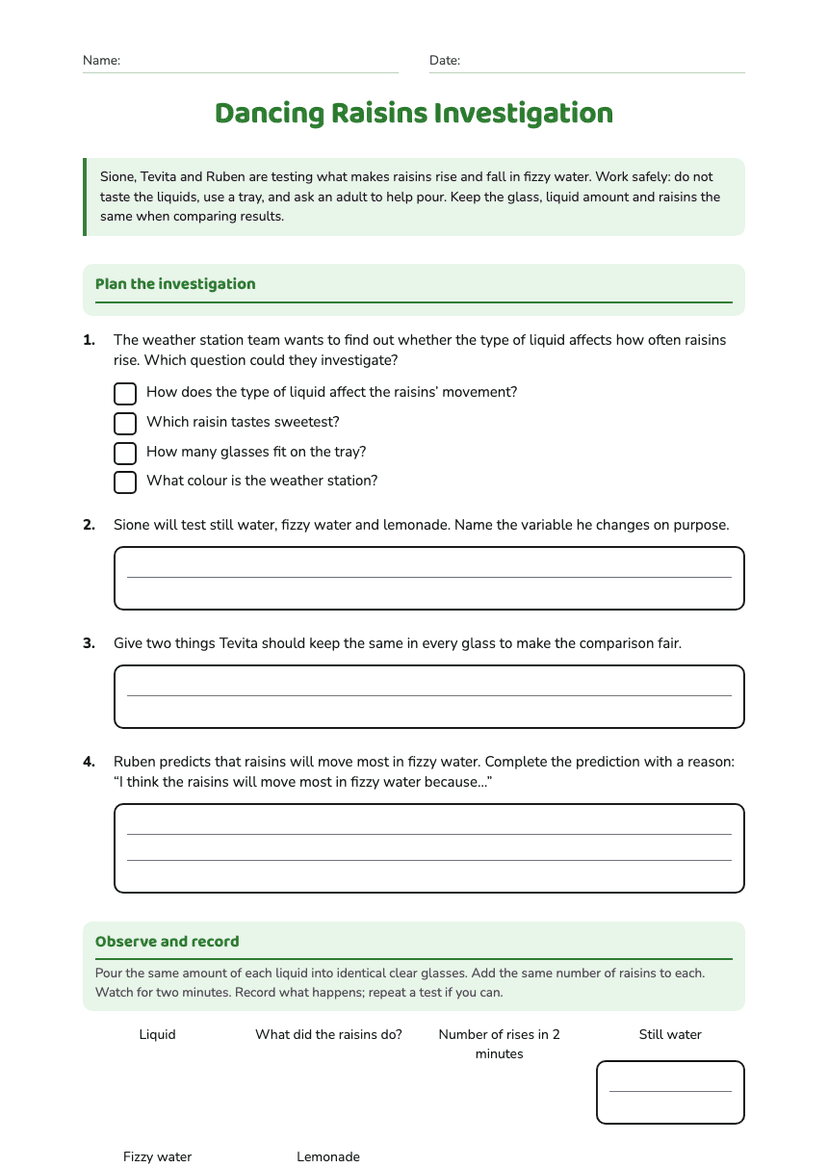
Dancing Raisins Investigation
Free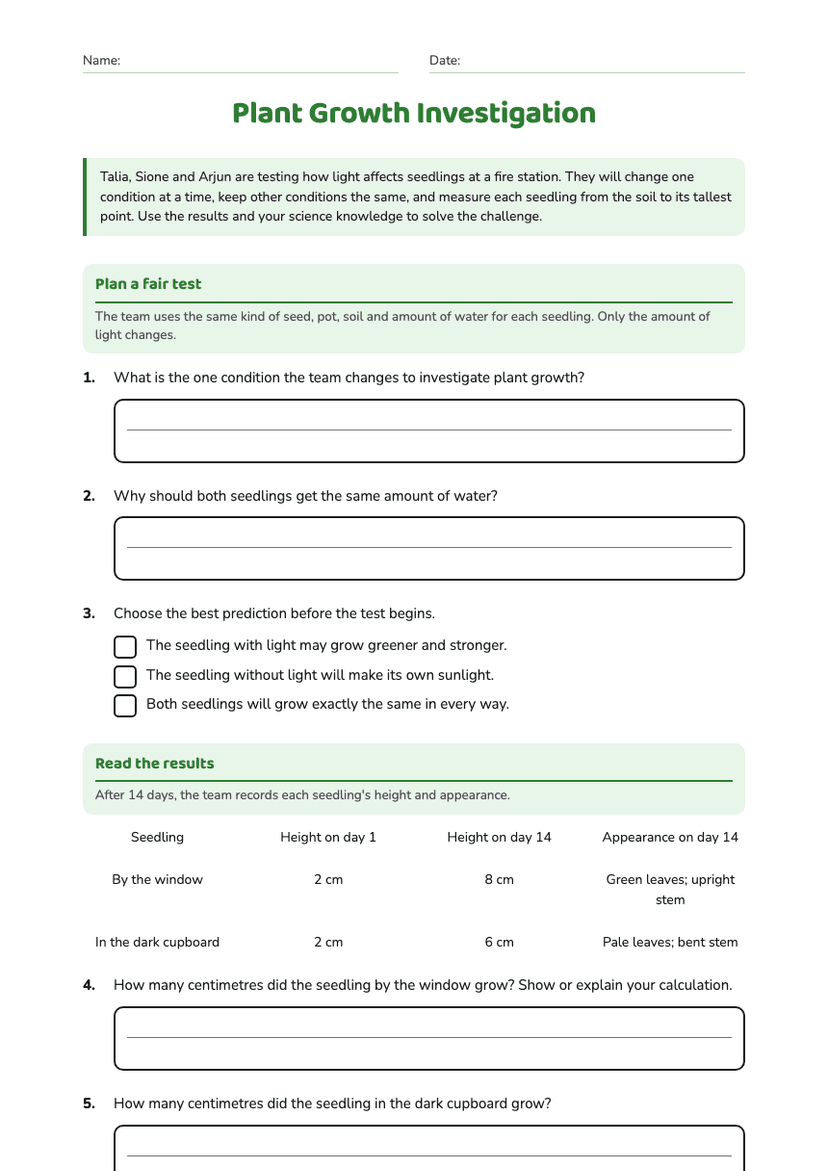
Plant Growth Investigation
Free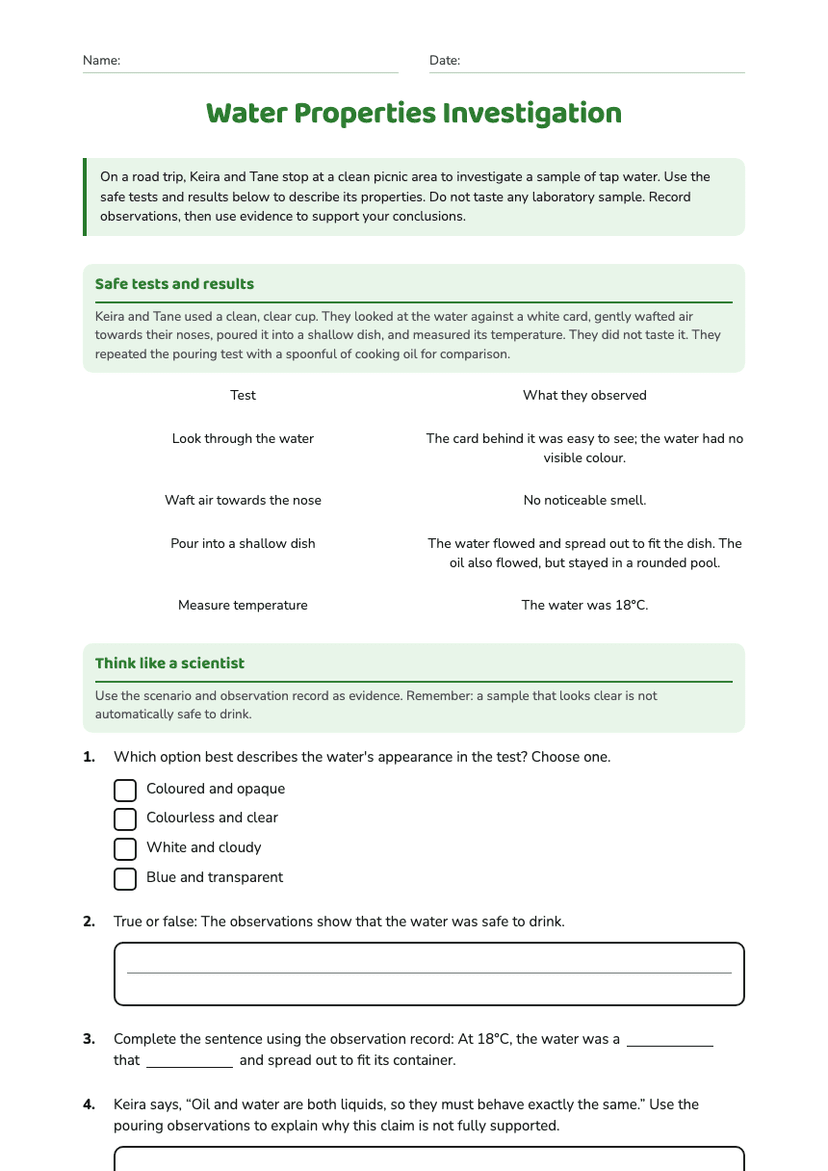
Water Properties Investigation
Free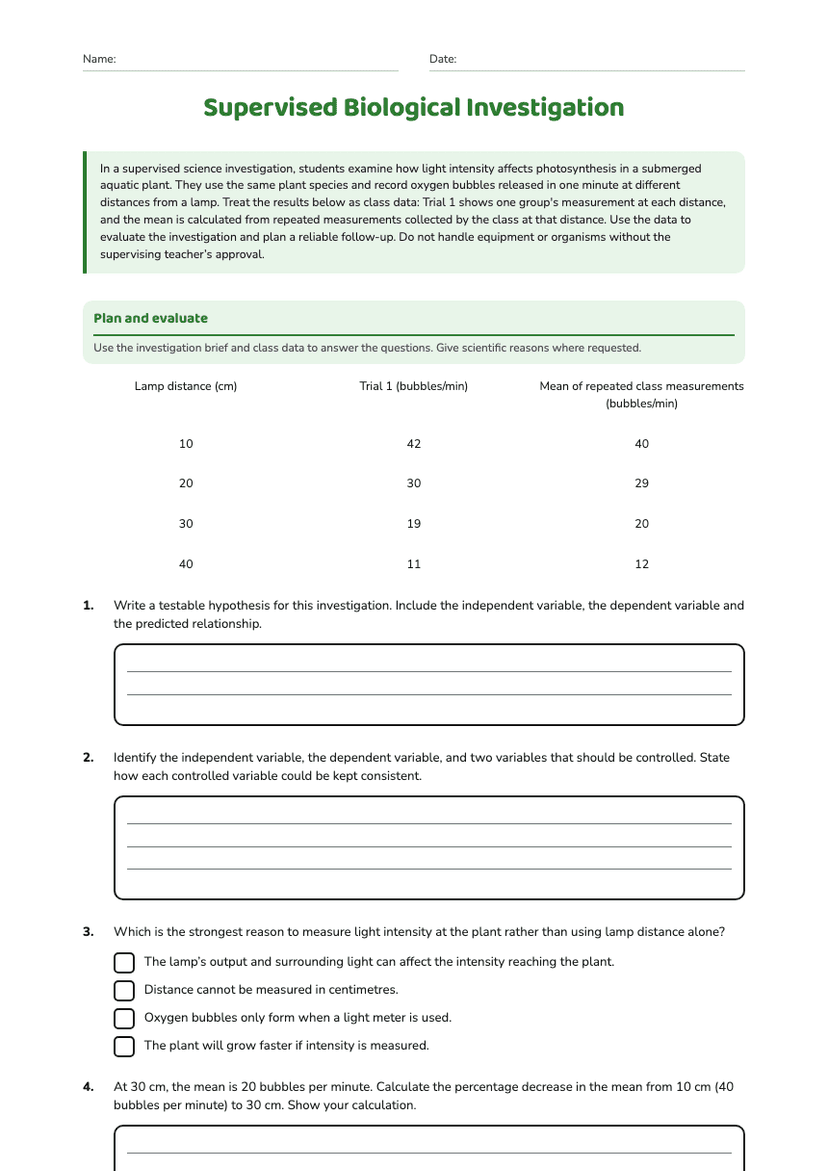
Supervised Biological Investigation
Free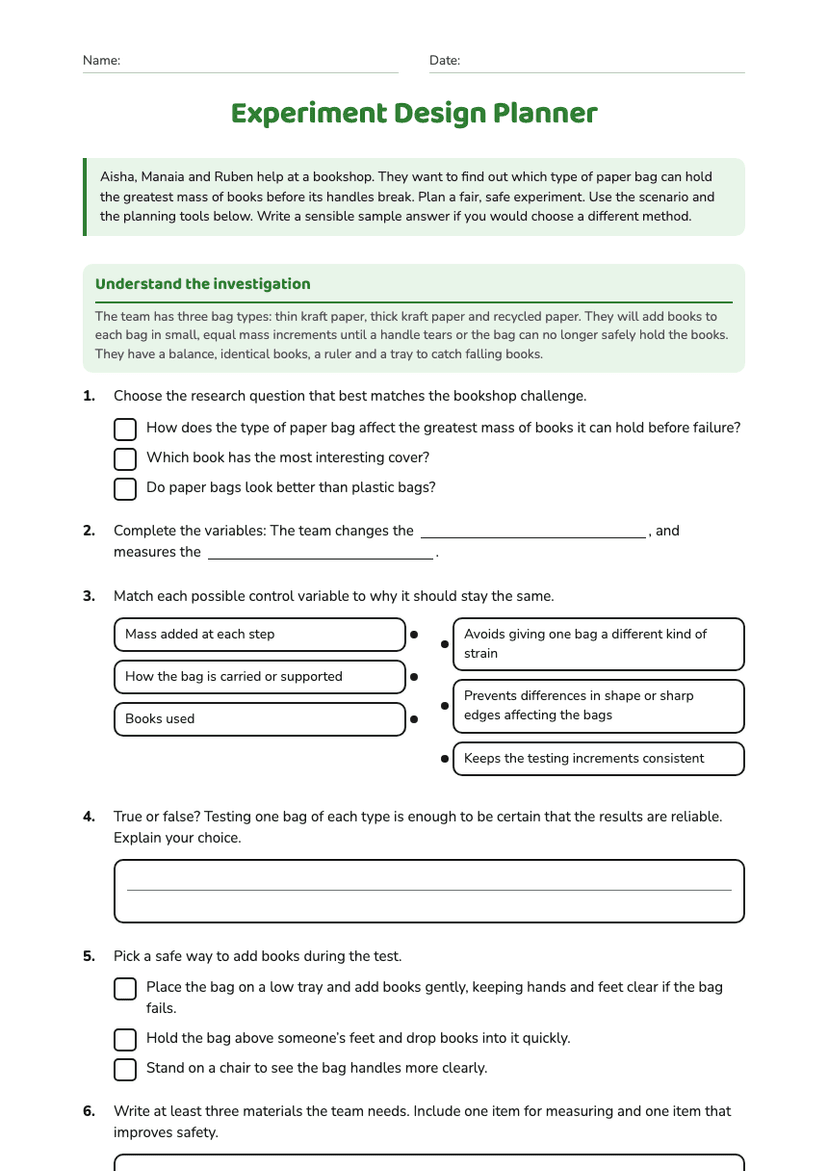
Experiment Design Planner
Free