Friction and Surface Investigation
A free science worksheet ready for your classroom. Open in Kuraplan to grab the print-ready PDF, customize it for your students, or generate a fresh version in seconds.

Friction and Surface Investigation
🔬 Part 1: Predictions and Vocabulary
📊 Part 2: Recording Our Results
Sandpaper (māro surface):
Trial 1: _______ seconds Trial 2: _______ seconds Trial 3: _______ seconds
Average time: _______ seconds
Plastic sheet (smooth surface):
Trial 1: _______ seconds Trial 2: _______ seconds Trial 3: _______ seconds
Average time: _______ seconds
Fabric surface:
Trial 1: _______ seconds Trial 2: _______ seconds Trial 3: _______ seconds
Average time: _______ seconds
Cardboard surface:
Trial 1: _______ seconds Trial 2: _______ seconds Trial 3: _______ seconds
Average time: _______ seconds
🤔 Part 3: Understanding Friction (Pāngia)
When surfaces are __________, they create more __________ which makes objects move __________. When surfaces are __________, there is less friction and objects can move __________.
💭 Part 4: Reflection and Thinking
Friction is helpful when: _________________________________
Friction is not helpful when: _________________________________
About This Worksheet
Free in Kuraplan
Sign up free, grab the PDF, and customize it for your class.
Print-Ready
Formatted for standard paper. Clean layout, easy to read.
AI-Generated
Created with Kuraplan's AI, designed for real classroom use.
For Teachers & Parents
Use in classrooms, for homework, tutoring, or homeschool.
Need a custom version of this worksheet?
Kuraplan's AI generates custom worksheets in seconds — differentiated for every learner, aligned to your curriculum.
Generate Custom Worksheets — FreeMore Science Worksheets
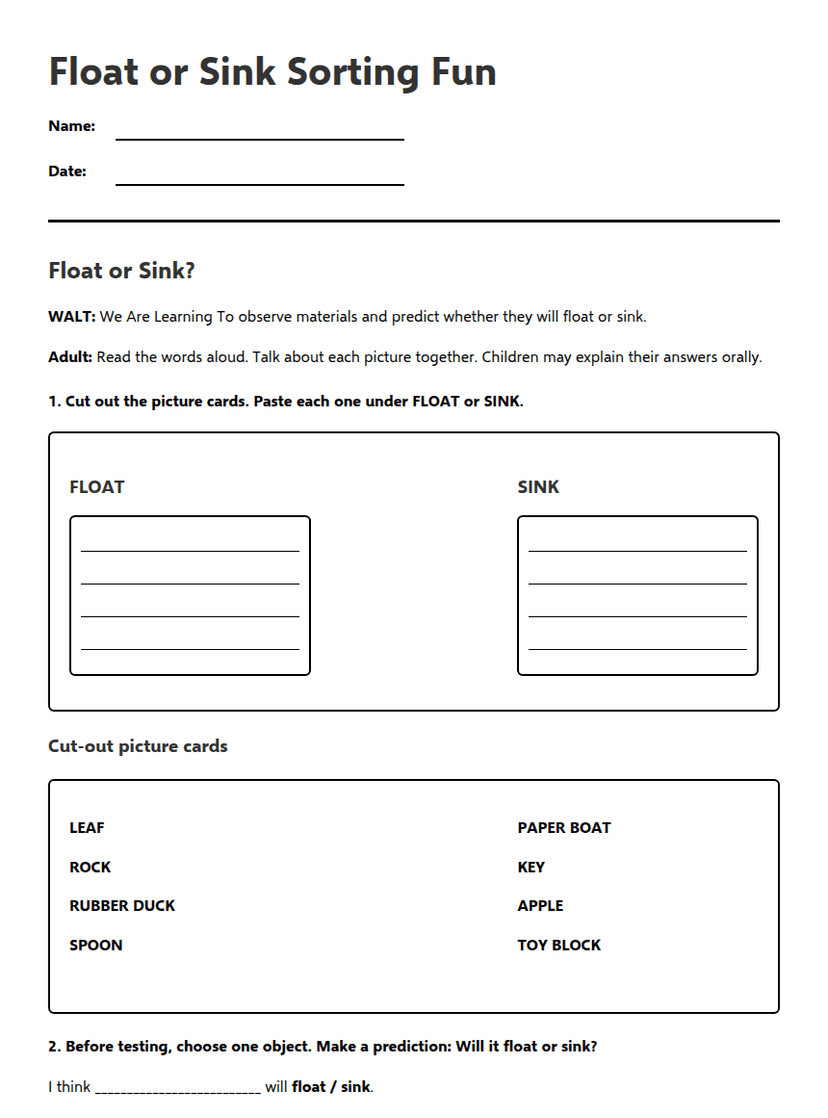
Float or Sink Sorting Fun
Free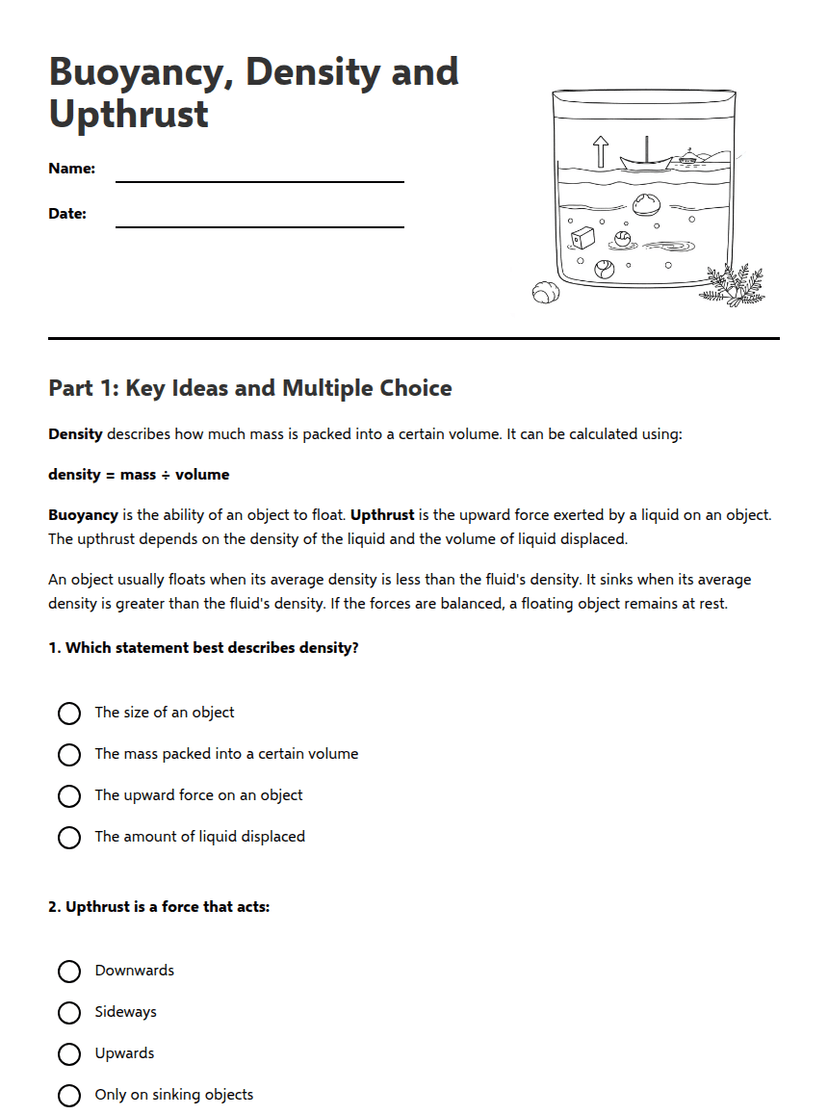
Buoyancy, Density and Upthrust
Free
Waka Buoyancy Science Worksheet
Free
Ō Ahupūngao: Forces and Motion
Free
Aircraft Design and Aerodynamics
Free
Circular Motion Physics
Free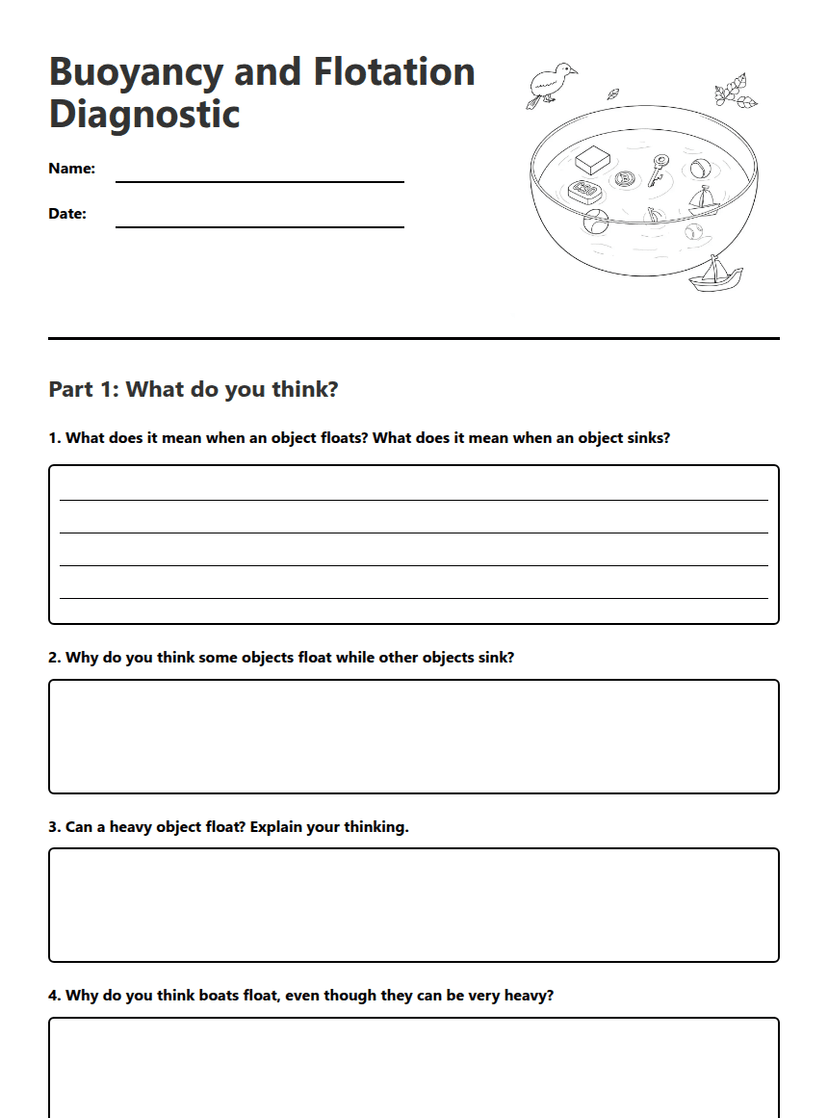
Buoyancy and Flotation Diagnostic
Free