Kinematic Motion Claims Testing
A free science worksheet ready for your classroom. Open in Kuraplan to grab the print-ready PDF, customize it for your students, or generate a fresh version in seconds.
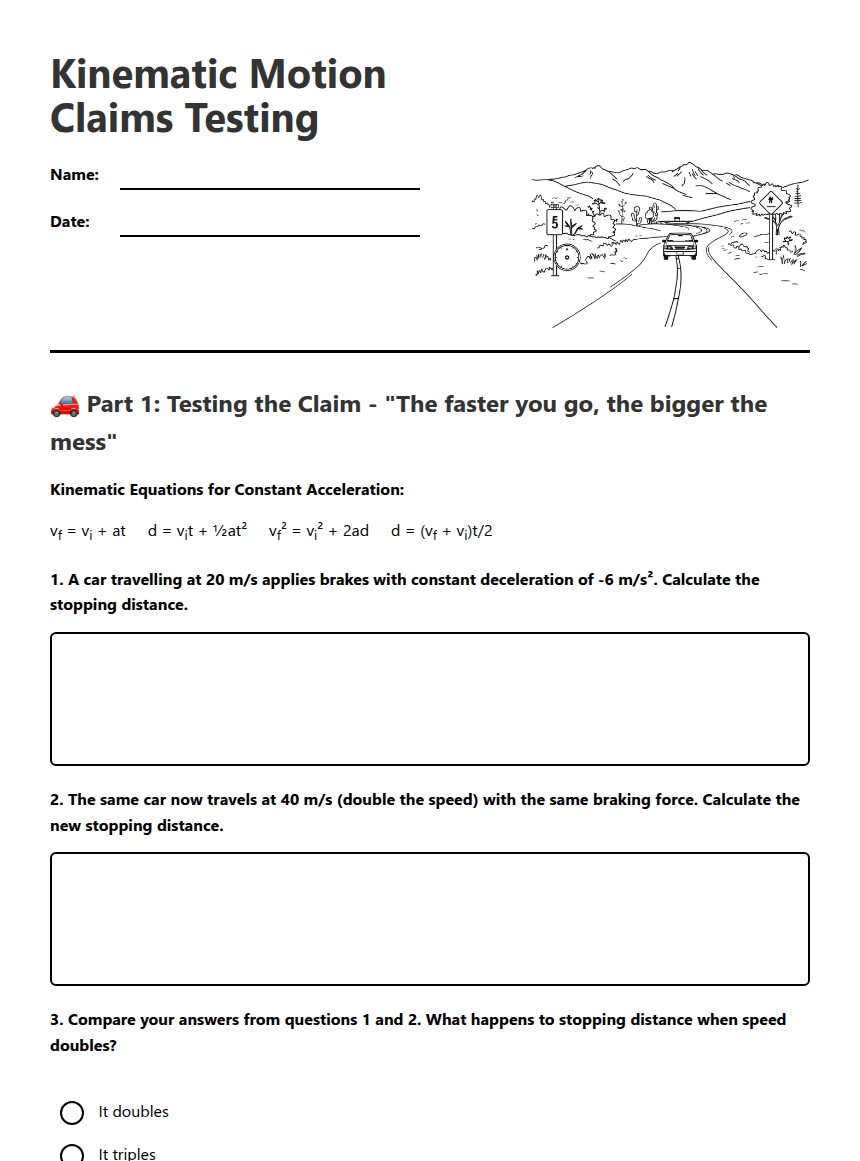
Kinematic Motion Claims Testing
🚗 Part 1: Testing the Claim - "The faster you go, the bigger the mess"
Kinematic Equations for Constant Acceleration:
vf = vi + at d = vit + ½at² vf² = vi² + 2ad d = (vf + vi)t/2
📊 Part 2: Data Analysis - Speed vs Stopping Distance
| Initial Speed (m/s) | Stopping Distance (m) | Show calculation |
|---|---|---|
| 10 | _______ | |
| 20 | _______ | |
| 30 | _______ | |
| 40 | _______ |
🧠 Part 3: Critical Evaluation
a) _________________________________________________
b) _________________________________________________
c) _________________________________________________
About This Worksheet
Free in Kuraplan
Sign up free, grab the PDF, and customize it for your class.
Print-Ready
Formatted for standard paper. Clean layout, easy to read.
AI-Generated
Created with Kuraplan's AI, designed for real classroom use.
For Teachers & Parents
Use in classrooms, for homework, tutoring, or homeschool.
Need a custom version of this worksheet?
Kuraplan's AI generates custom worksheets in seconds — differentiated for every learner, aligned to your curriculum.
Generate Custom Worksheets — FreeMore Science Worksheets
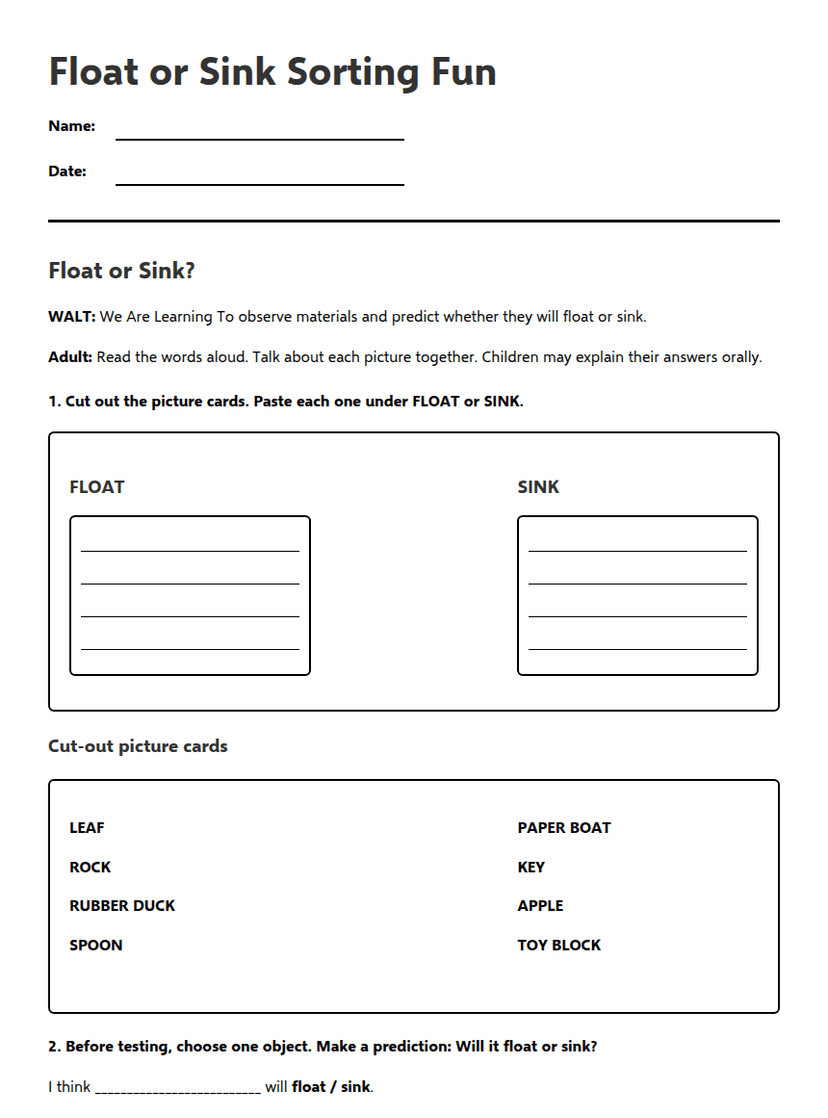
Float or Sink Sorting Fun
Free
Buoyancy, Density and Upthrust
Free
Waka Buoyancy Science Worksheet
Free
Ō Ahupūngao: Forces and Motion
Free
Aircraft Design and Aerodynamics
Free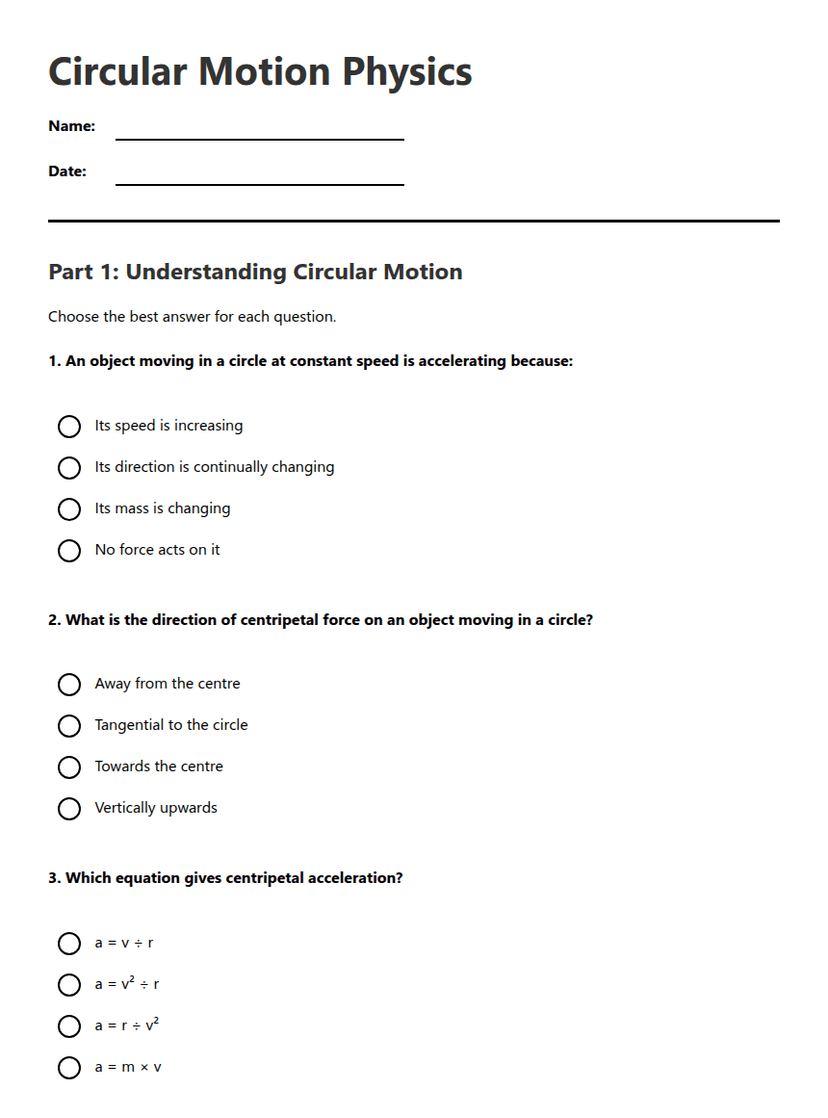
Circular Motion Physics
Free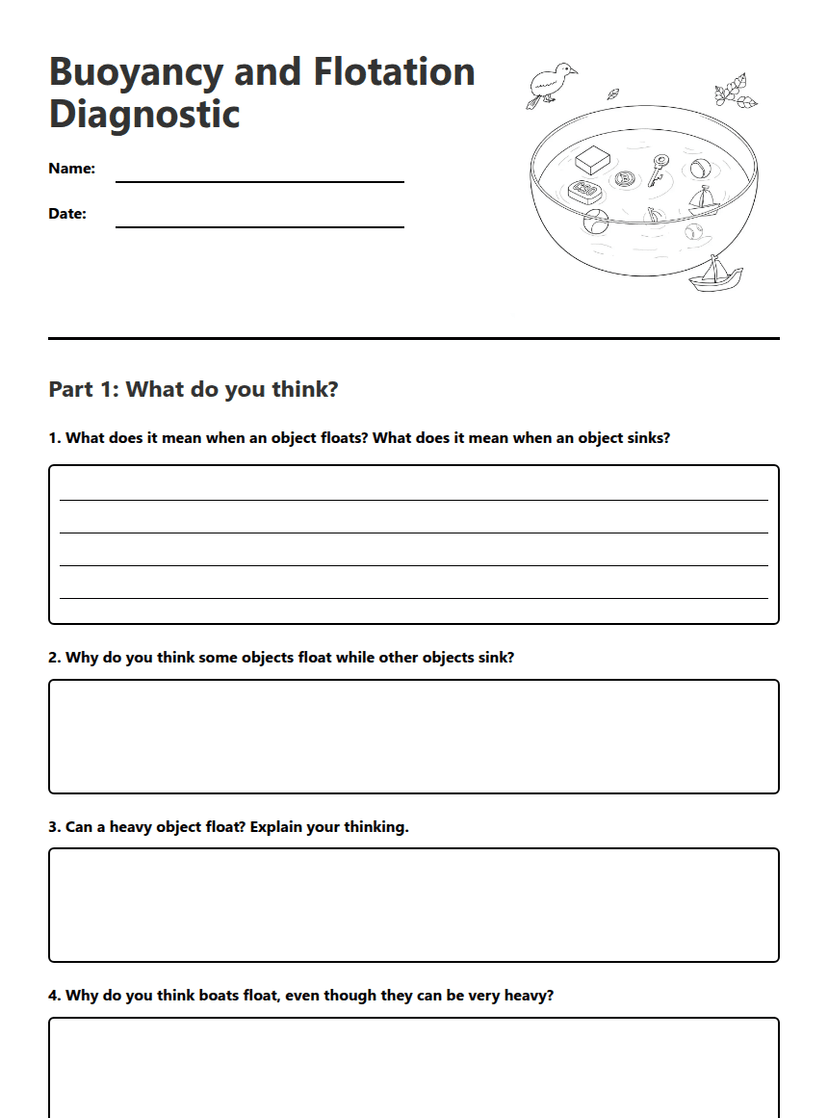
Buoyancy and Flotation Diagnostic
Free