Government Presentation Skills Workshop
A free social sciences worksheet ready for your classroom. Open in Kuraplan to grab the print-ready PDF, customize it for your students, or generate a fresh version in seconds.
Government Presentation Skills Workshop
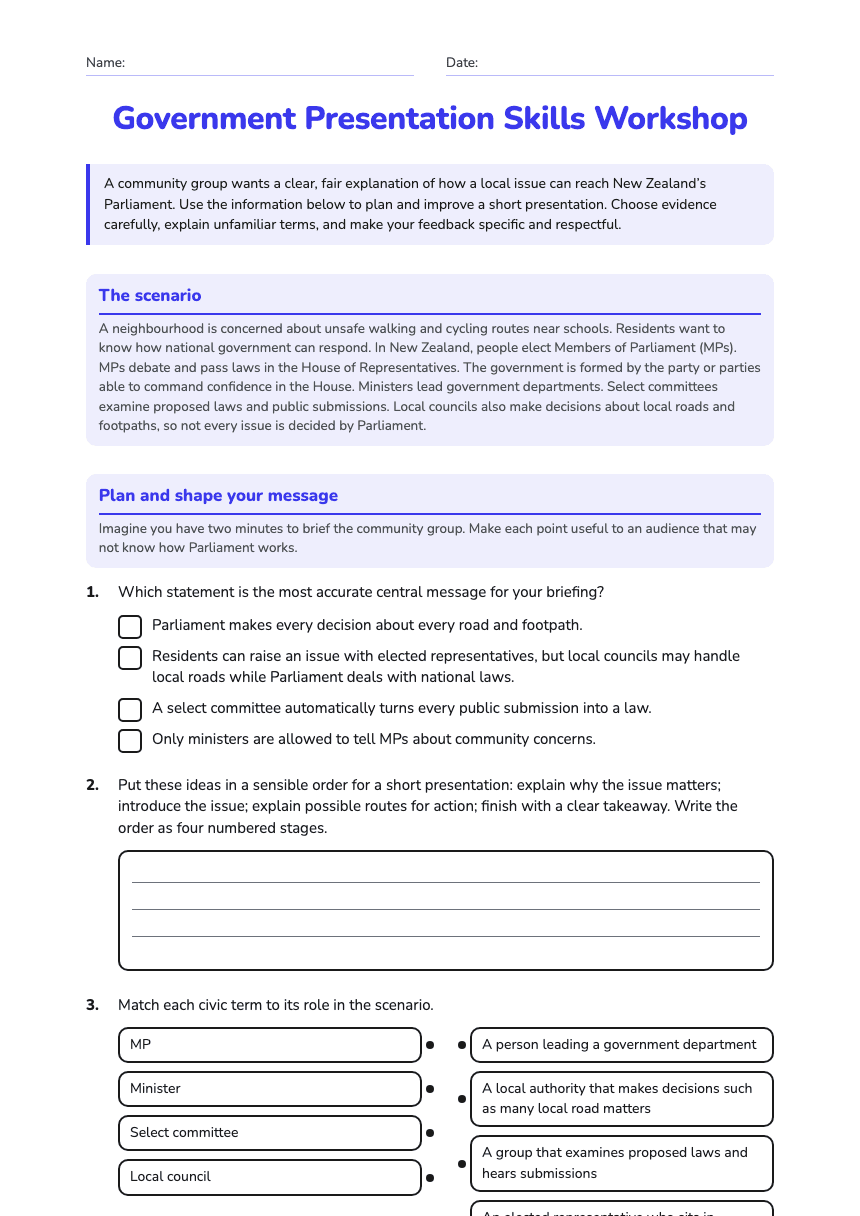
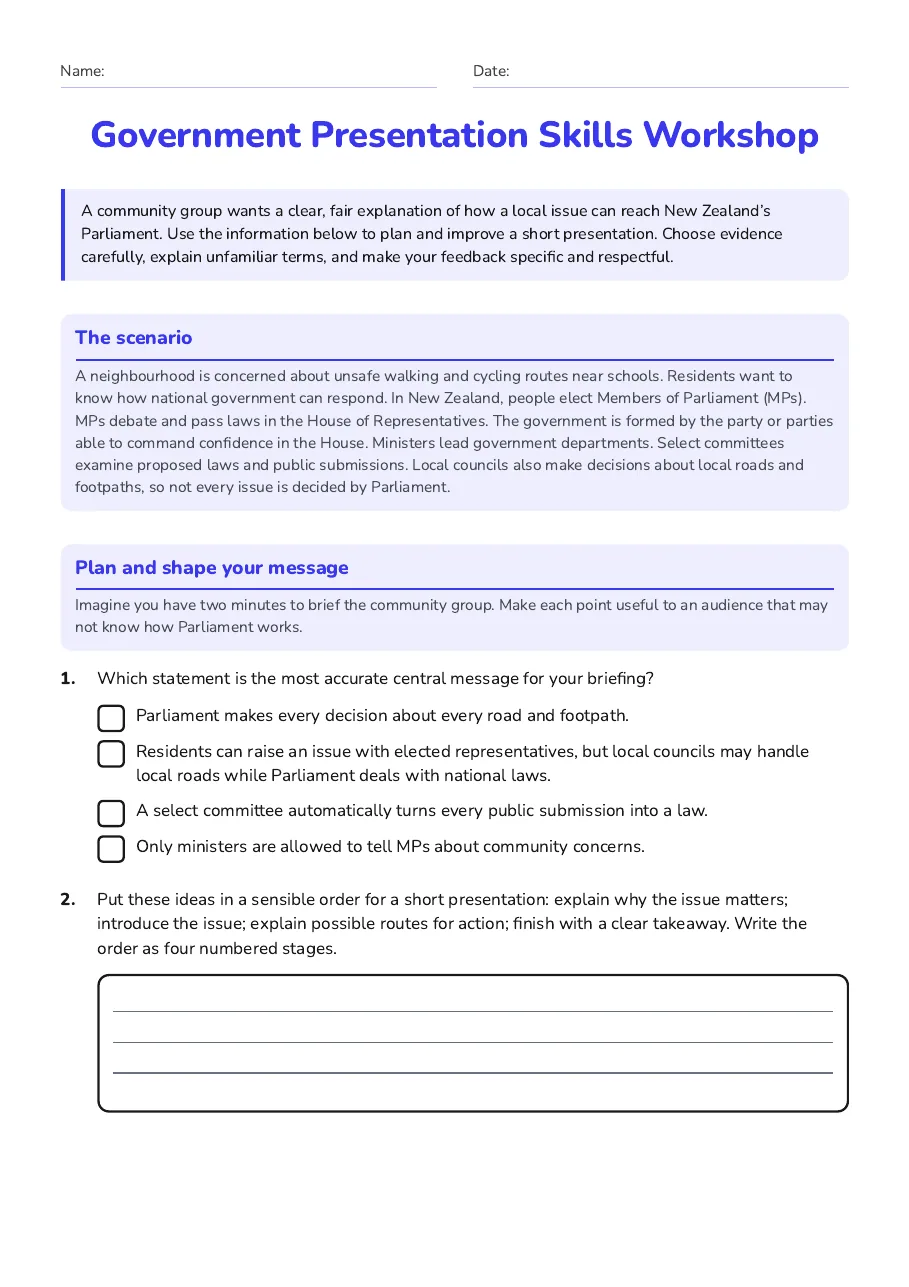
The scenario
A neighbourhood is concerned about unsafe walking and cycling routes near schools. Residents want to know how national government can respond. In New Zealand, people elect Members of Parliament (MPs). MPs debate and pass laws in the House of Representatives. The government is formed by the party or parties able to command confidence in the House. Ministers lead government departments. Select committees examine proposed laws and public submissions. Local councils also make decisions about local roads and footpaths, so not every issue is decided by Parliament.
Plan and shape your message
Imagine you have two minutes to brief the community group. Make each point useful to an audience that may not know how Parliament works.
- Parliament makes every decision about every road and footpath.
- Residents can raise an issue with elected representatives, but local councils may handle local roads while Parliament deals with national laws.
- A select committee automatically turns every public submission into a law.
- Only ministers are allowed to tell MPs about community concerns.
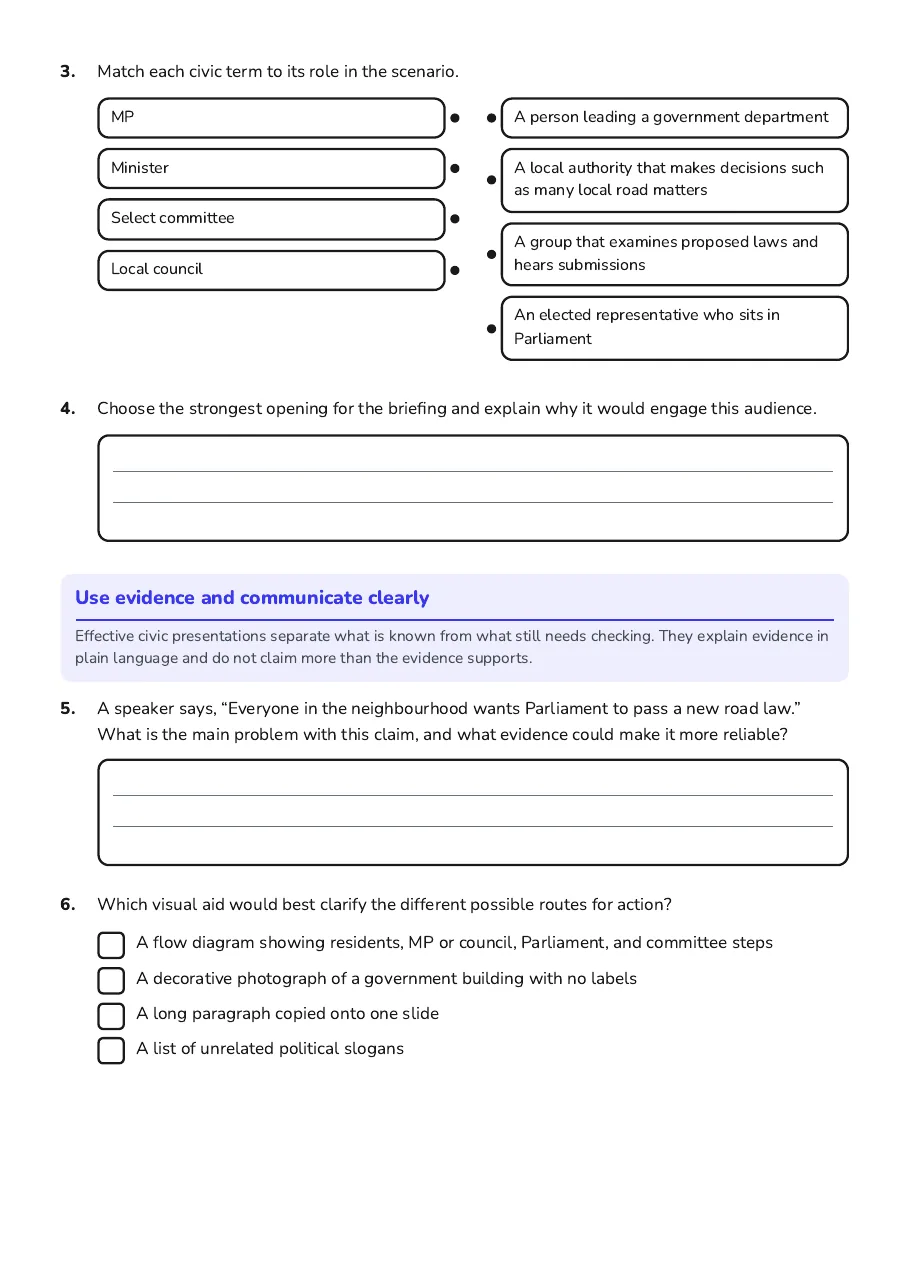
- MP
- Minister
- Select committee
- Local council
- A person leading a government department
- A local authority that makes decisions such as many local road matters
- A group that examines proposed laws and hears submissions
- An elected representative who sits in Parliament
Use evidence and communicate clearly
Effective civic presentations separate what is known from what still needs checking. They explain evidence in plain language and do not claim more than the evidence supports.
- A flow diagram showing residents, MP or council, Parliament, and committee steps
- A decorative photograph of a government building with no labels
- A long paragraph copied onto one slide
- A list of unrelated political slogans
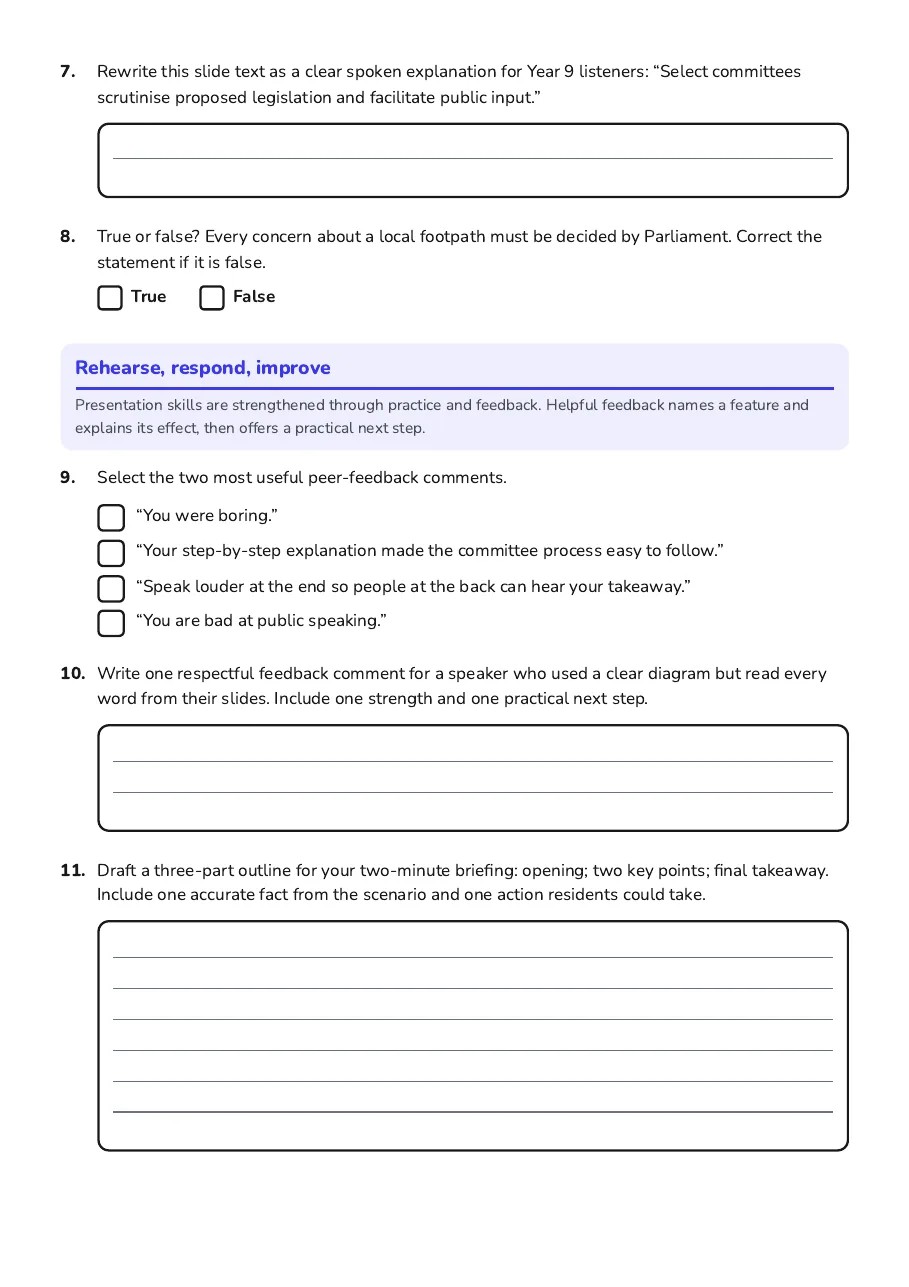
Rehearse, respond, improve
Presentation skills are strengthened through practice and feedback. Helpful feedback names a feature and explains its effect, then offers a practical next step.
- “You were boring.”
- “Your step-by-step explanation made the committee process easy to follow.”
- “Speak louder at the end so people at the back can hear your takeaway.”
- “You are bad at public speaking.”
4 printable pages
Page 1
Page 2
Page 3

Page 4
About This Worksheet
Free in Kuraplan
Sign up free, grab the PDF, and customize it for your class.
Print-Ready
Formatted for standard paper. Clean layout, easy to read.
AI-Generated
Created with Kuraplan's AI, designed for real classroom use.
For Teachers & Parents
Use in classrooms, for homework, tutoring, or homeschool.
Need a custom version of this worksheet?
Kuraplan's AI generates custom worksheets in seconds — differentiated for every learner, aligned to your curriculum.
Generate Custom Worksheets — FreeMore Social Sciences Worksheets
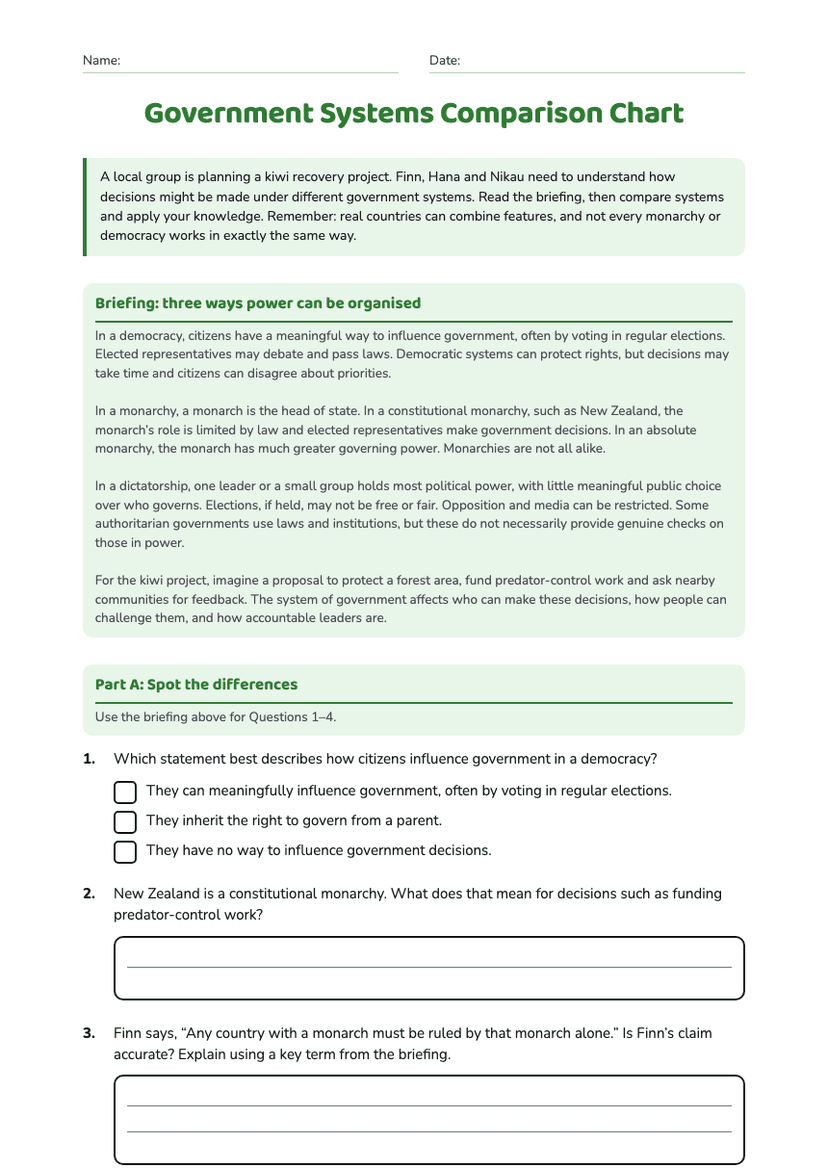
Government Systems Comparison Chart
Free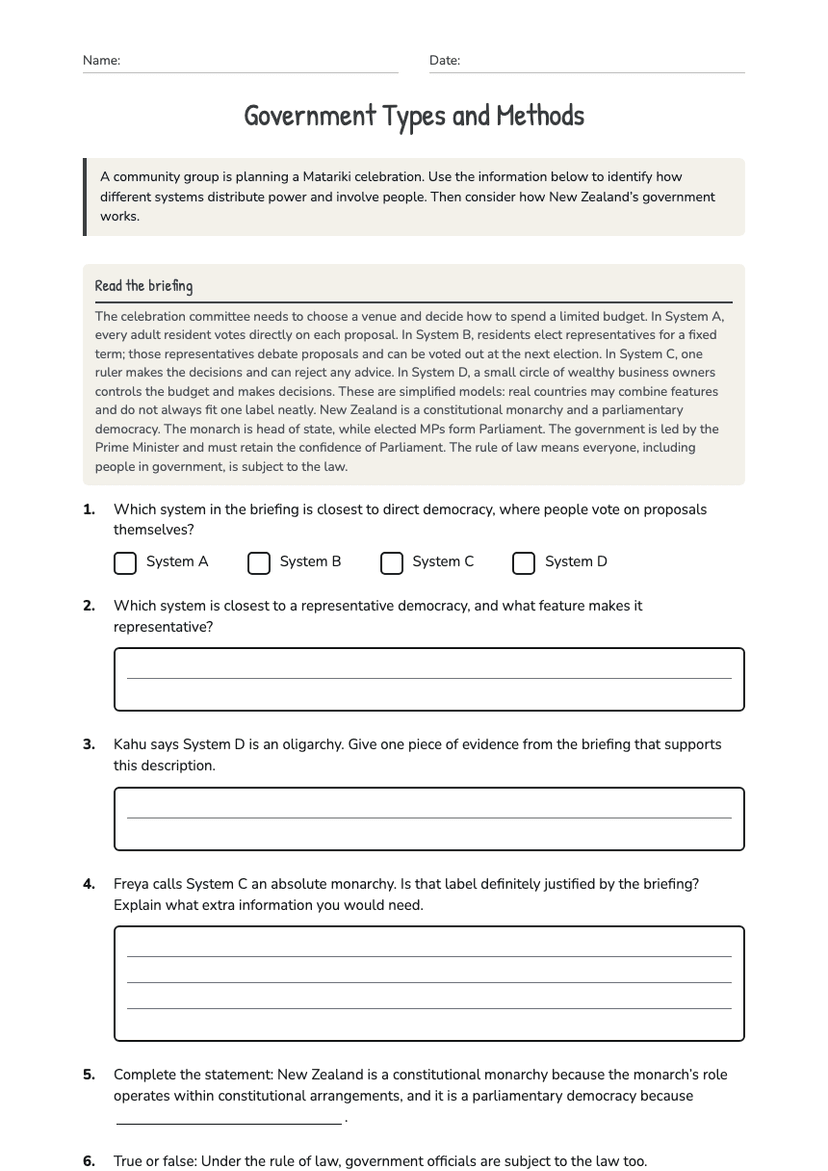
Government Types and Methods
Free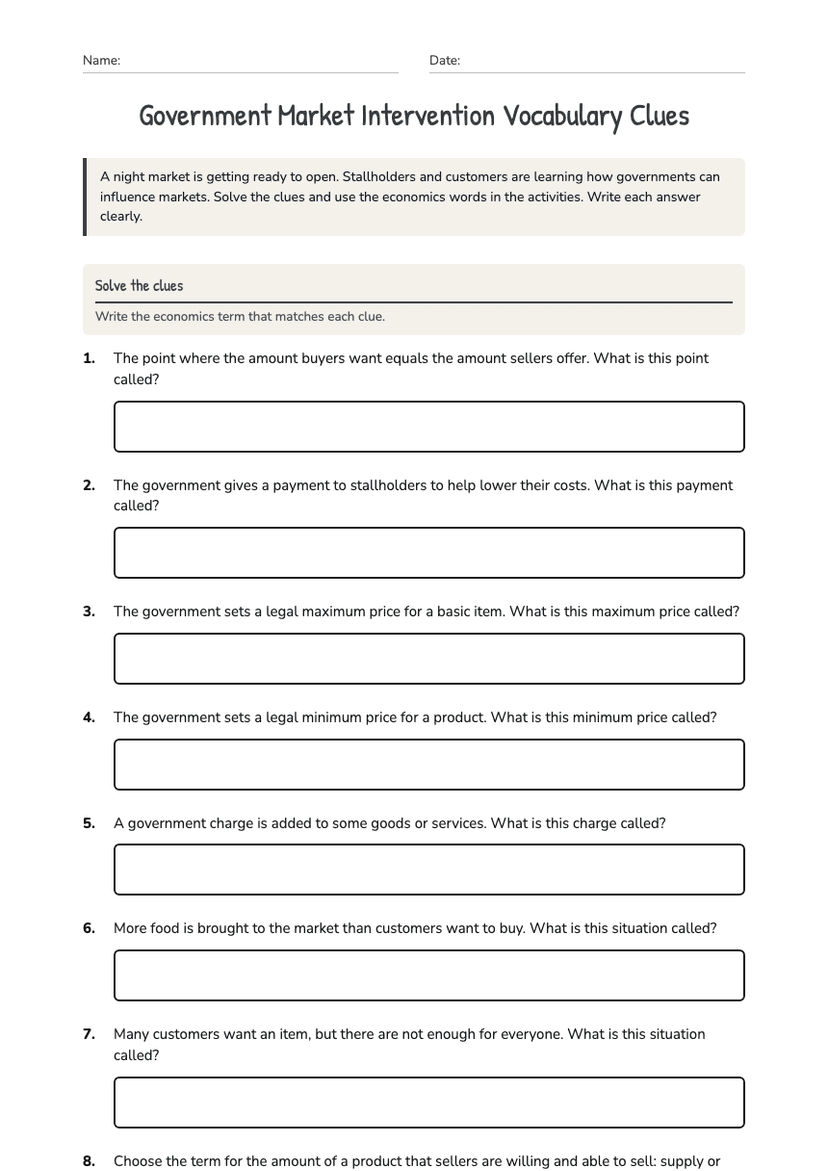
Government Market Intervention Vocabulary Clues
Free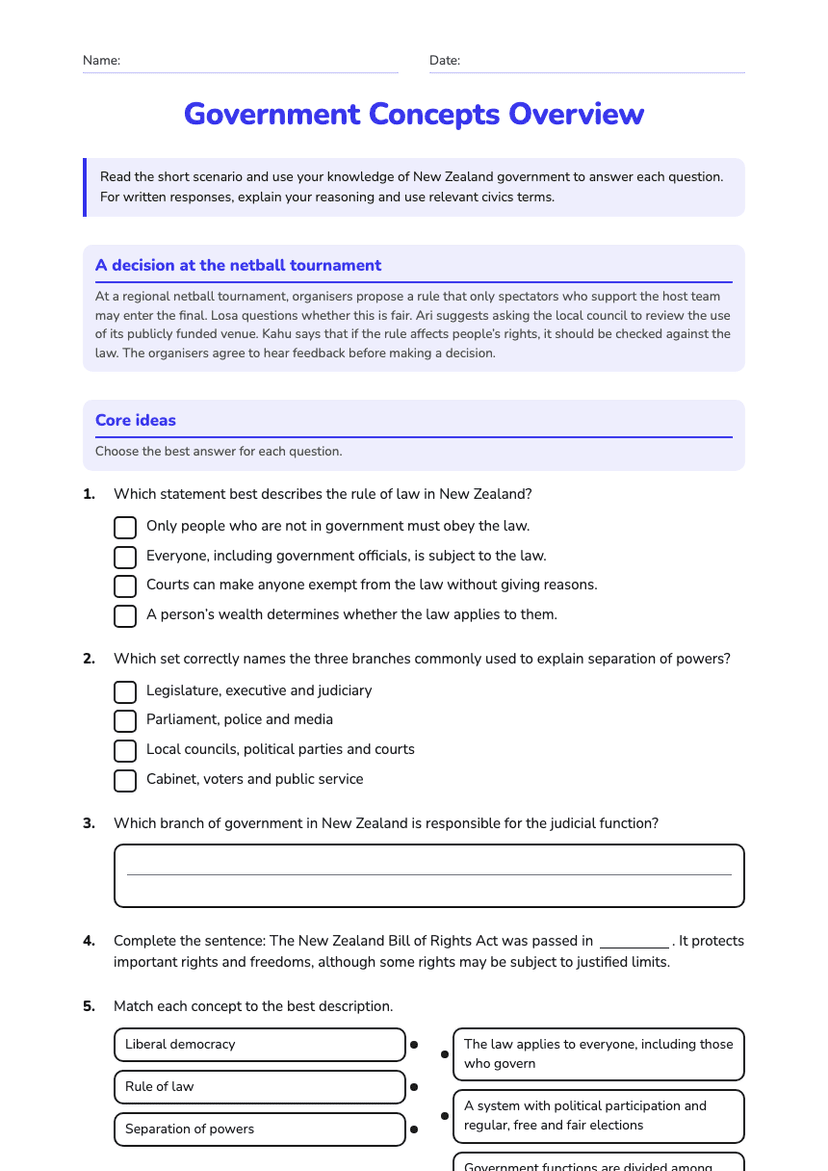
Government Concepts Overview
Free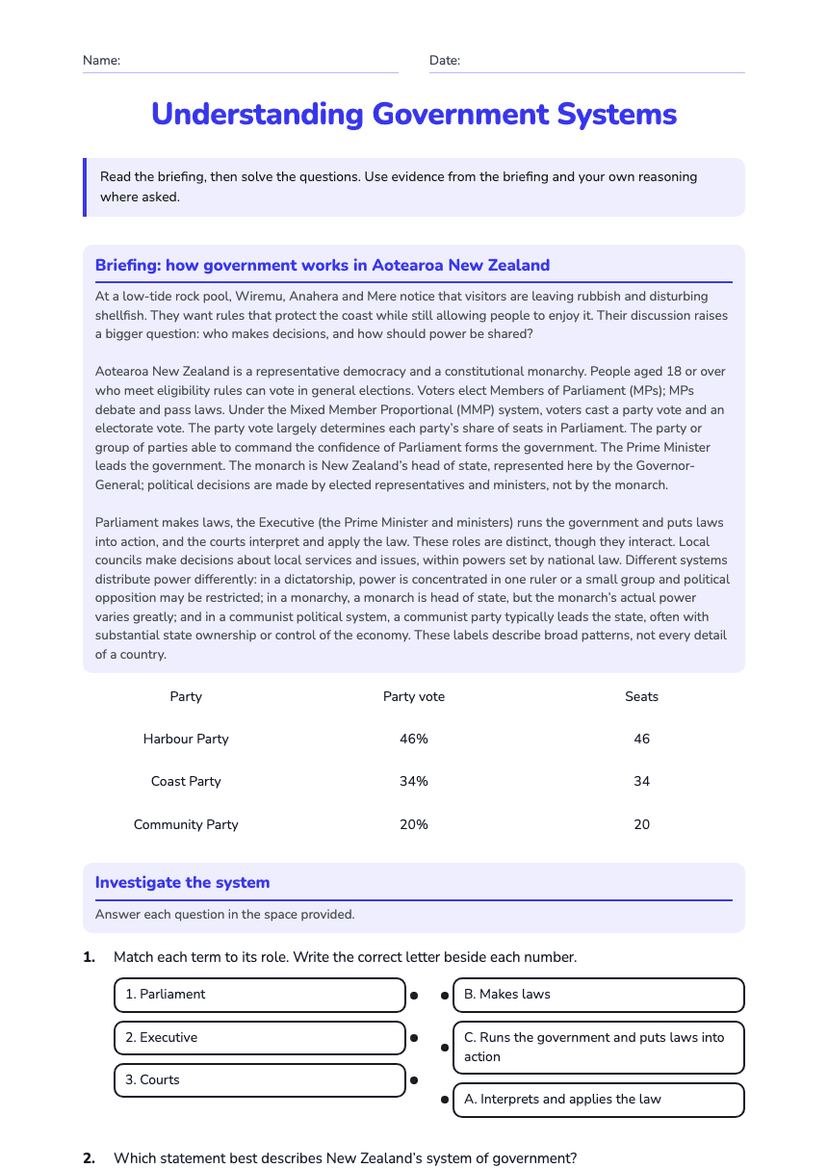
Understanding Government Systems
Free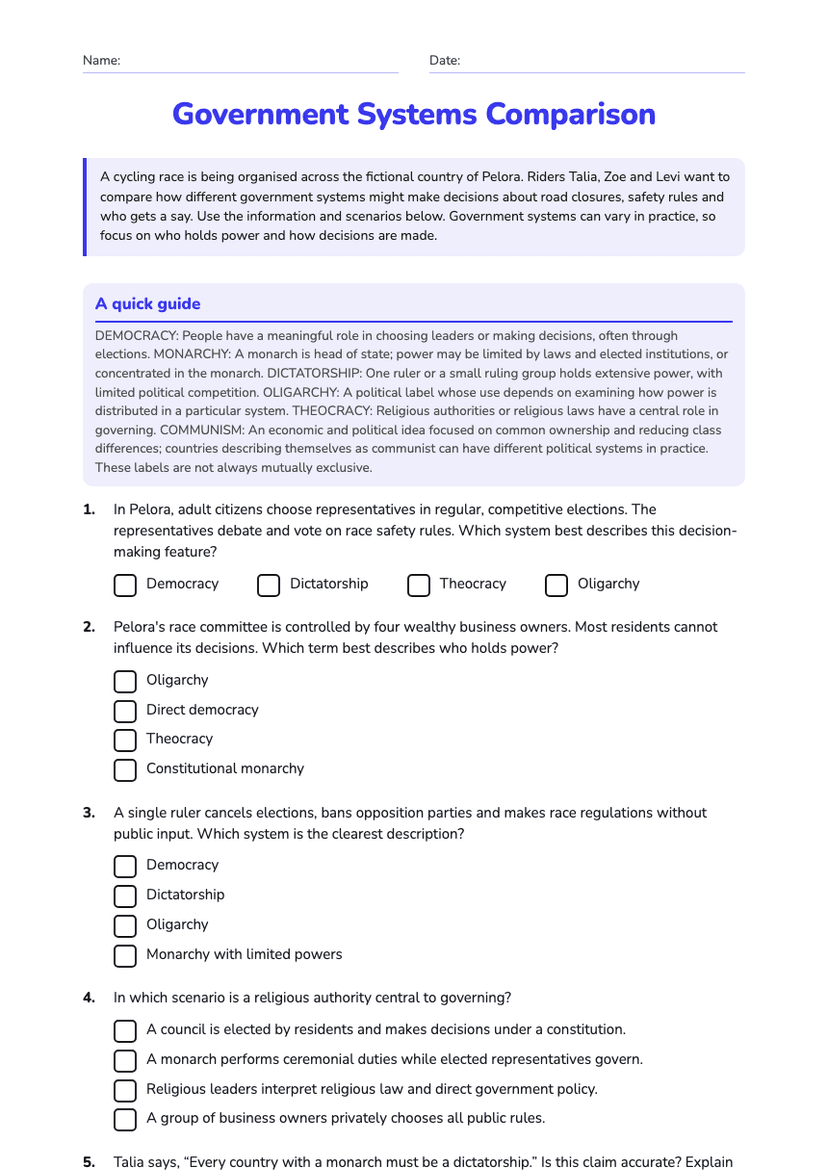
Government Systems Comparison
Free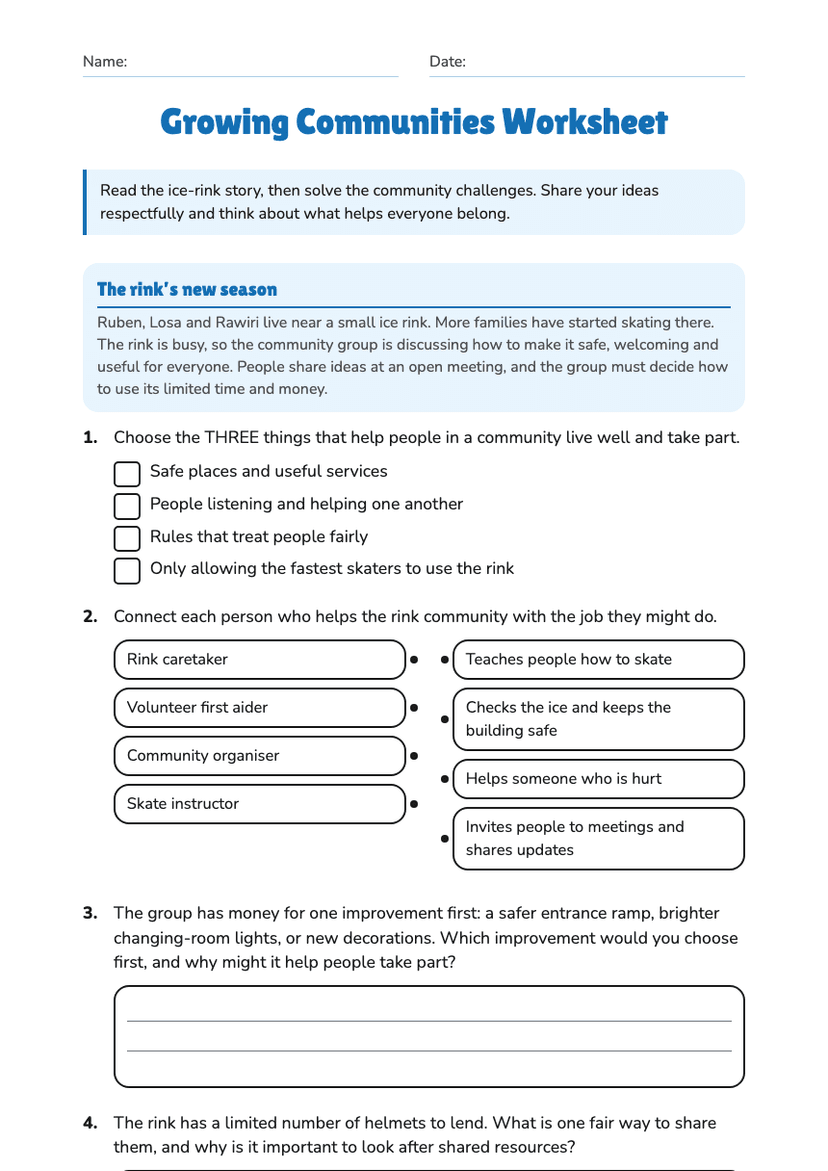
Growing Communities Worksheet
Free