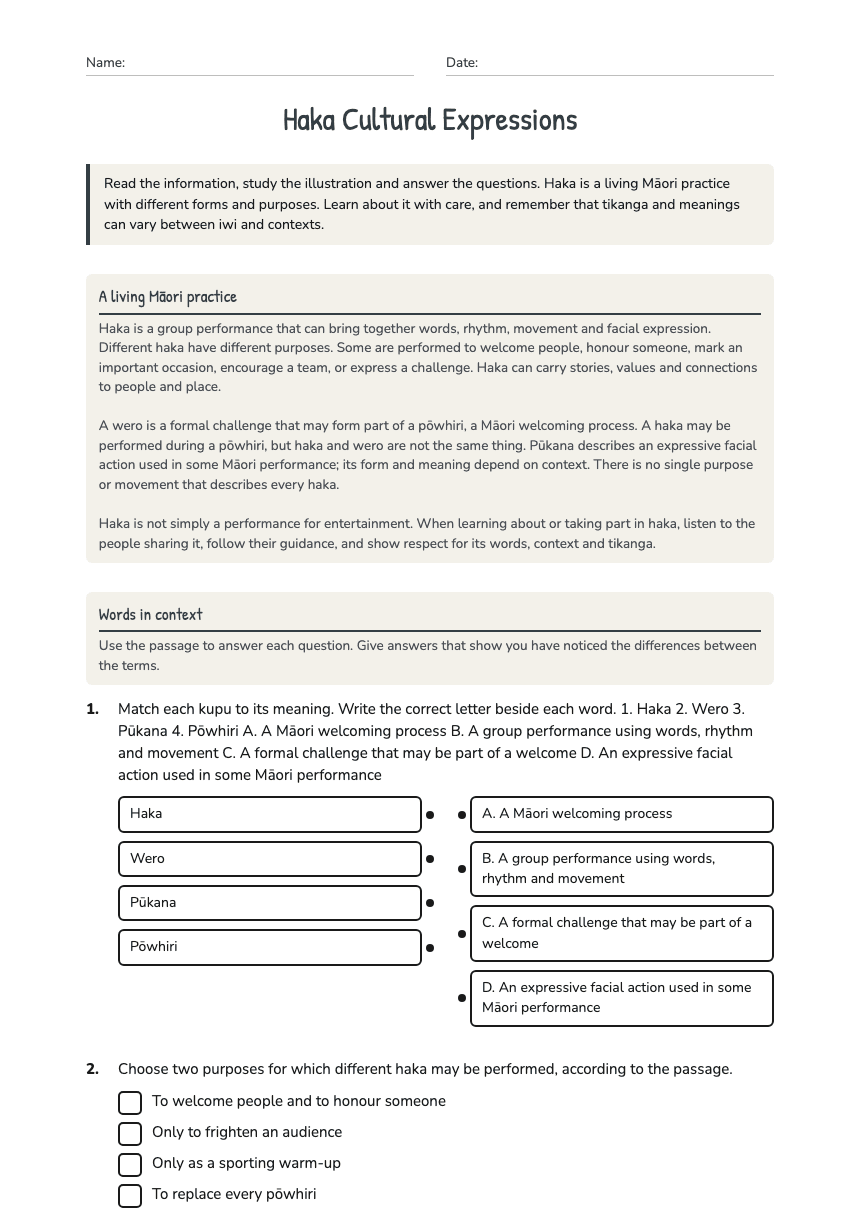
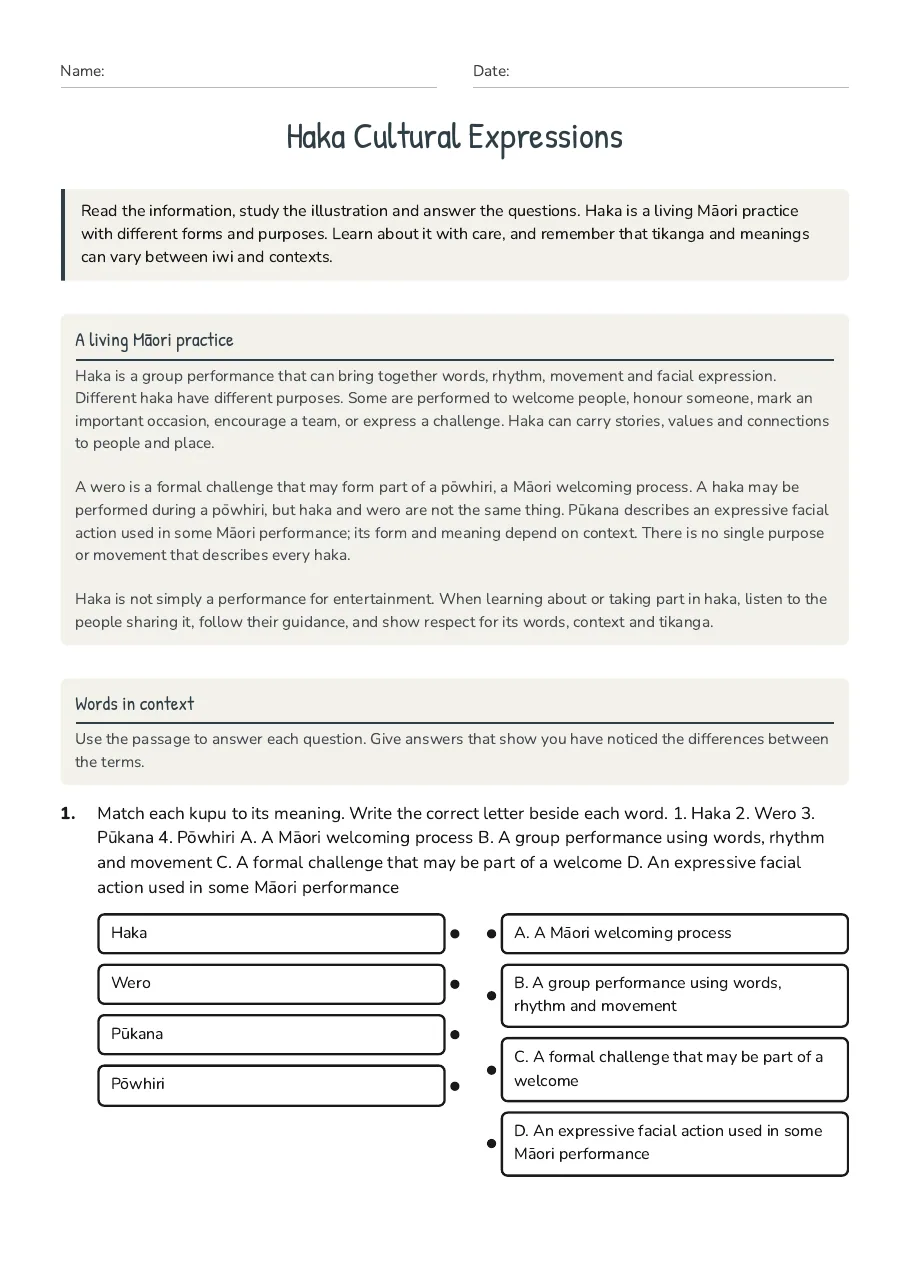
Haka Cultural Expressions
A free te reo māori worksheet ready for your classroom. Open in Kuraplan to grab the print-ready PDF, customize it for your students, or generate a fresh version in seconds.
Haka Cultural Expressions
A living Māori practice
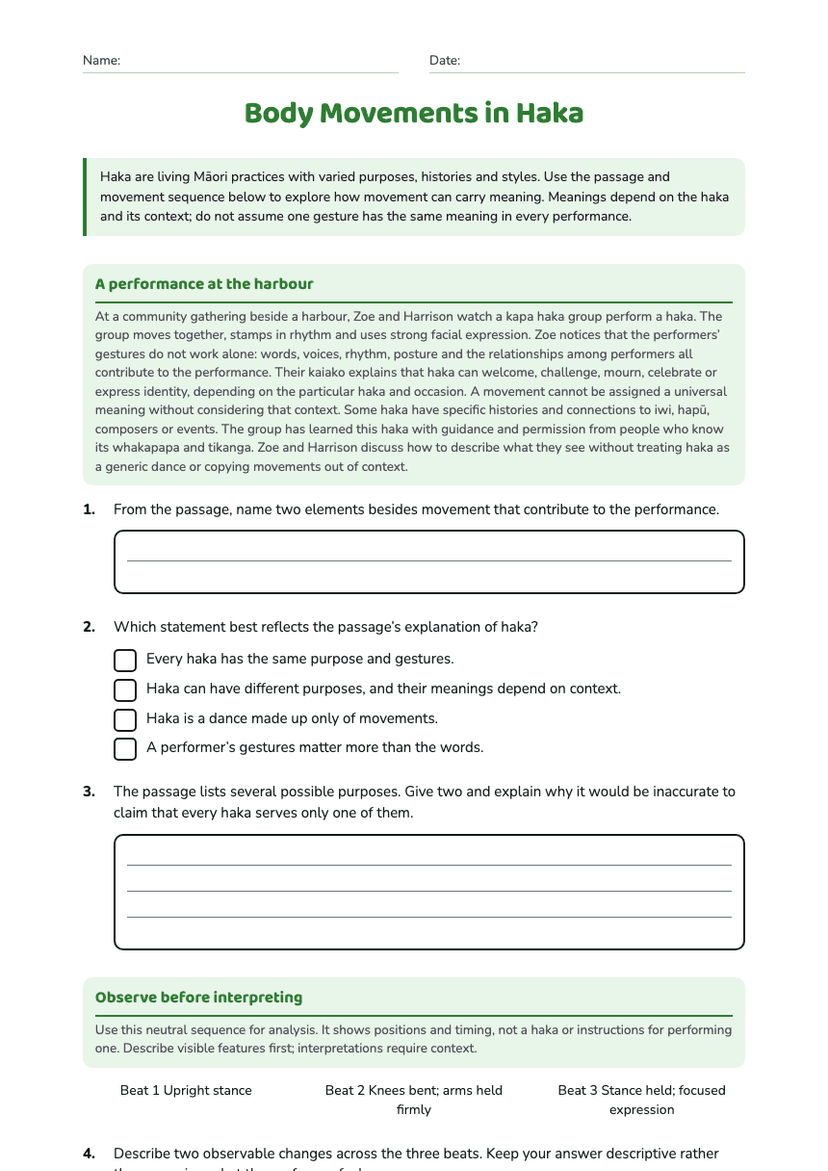
Haka is a group performance that can bring together words, rhythm, movement and facial expression. Different haka have different purposes. Some are performed to welcome people, honour someone, mark an important occasion, encourage a team, or express a challenge. Haka can carry stories, values and connections to people and place. A wero is a formal challenge that may form part of a pōwhiri, a Māori welcoming process. A haka may be performed during a pōwhiri, but haka and wero are not the same thing. Pūkana describes an expressive facial action used in some Māori performance; its form and meaning depend on context. There is no single purpose or movement that describes every haka. Haka is not simply a performance for entertainment. When learning about or taking part in haka, listen to the people sharing it, follow their guidance, and show respect for its words, context and tikanga.
Words in context
Use the passage to answer each question. Give answers that show you have noticed the differences between the terms.
- Haka
- Wero
- Pūkana
- Pōwhiri
- A. A Māori welcoming process
- B. A group performance using words, rhythm and movement
- C. A formal challenge that may be part of a welcome
- D. An expressive facial action used in some Māori performance
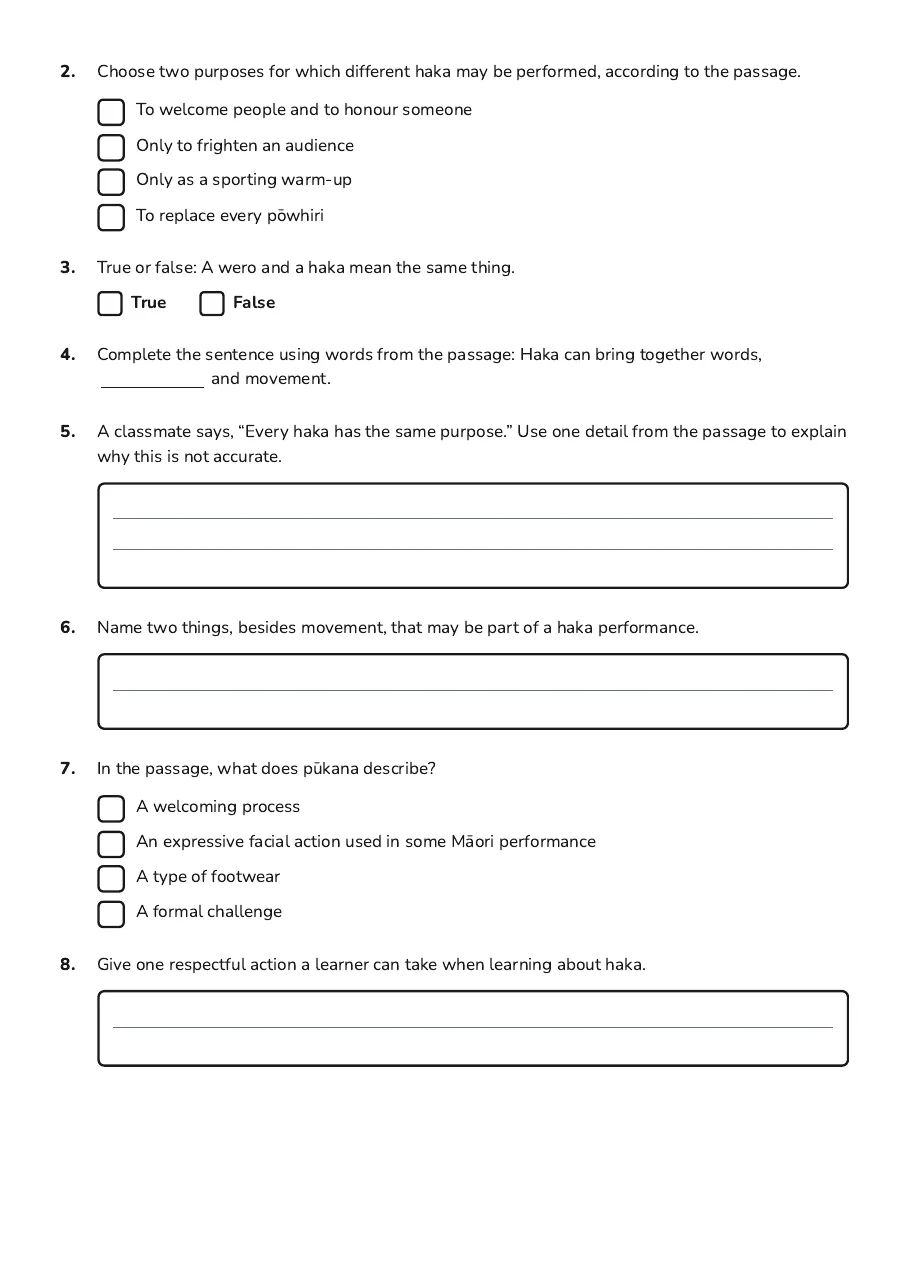
- To welcome people and to honour someone
- Only to frighten an audience
- Only as a sporting warm-up
- To replace every pōwhiri
- A welcoming process
- An expressive facial action used in some Māori performance
- A type of footwear
- A formal challenge
3 printable pages
Page 1
Page 2
Page 3
About This Worksheet
Free in Kuraplan
Sign up free, grab the PDF, and customize it for your class.
Print-Ready
Formatted for standard paper. Clean layout, easy to read.
AI-Generated
Created with Kuraplan's AI, designed for real classroom use.
For Teachers & Parents
Use in classrooms, for homework, tutoring, or homeschool.
Need a custom version of this worksheet?
Kuraplan's AI generates custom worksheets in seconds — differentiated for every learner, aligned to your curriculum.
Generate Custom Worksheets — Free