Historical Crisis Timeline
A free social sciences worksheet ready for your classroom. Open in Kuraplan to grab the print-ready PDF, customize it for your students, or generate a fresh version in seconds.
Historical Crisis Timeline
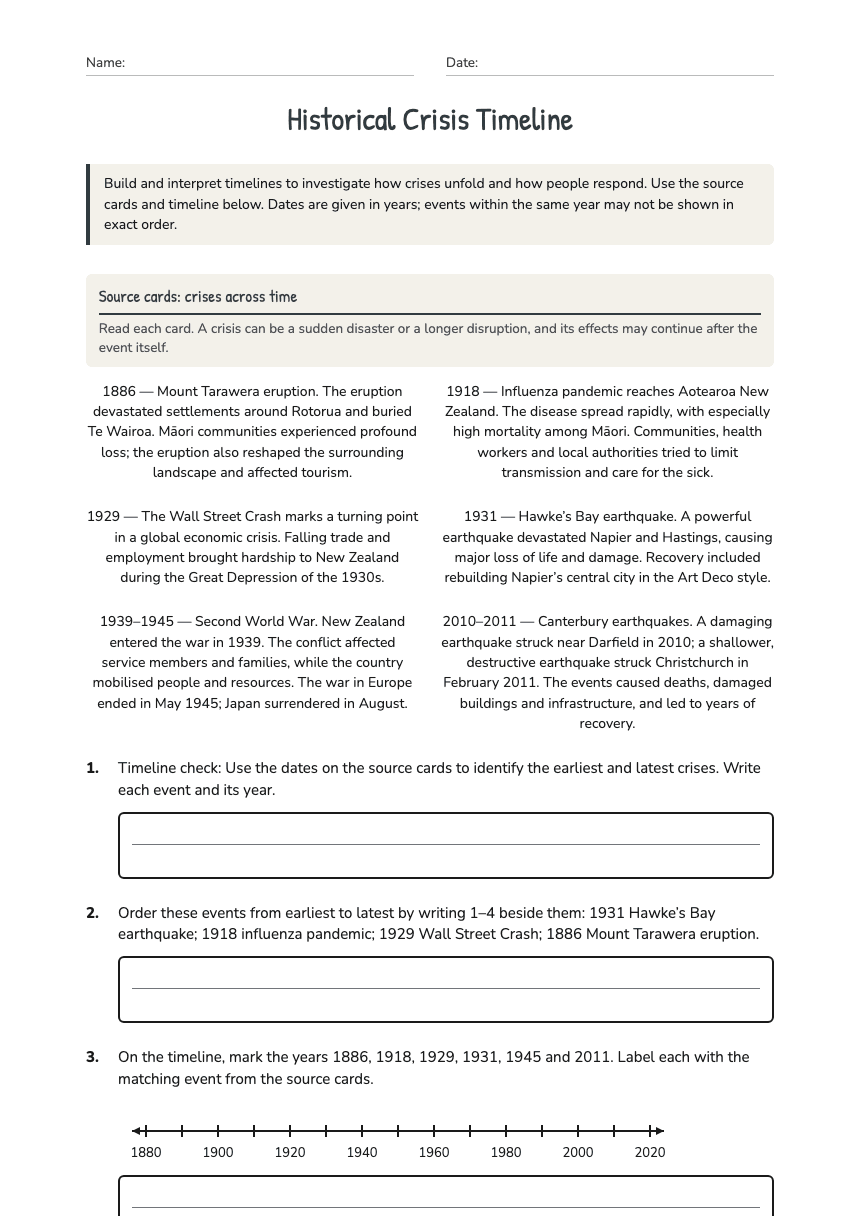
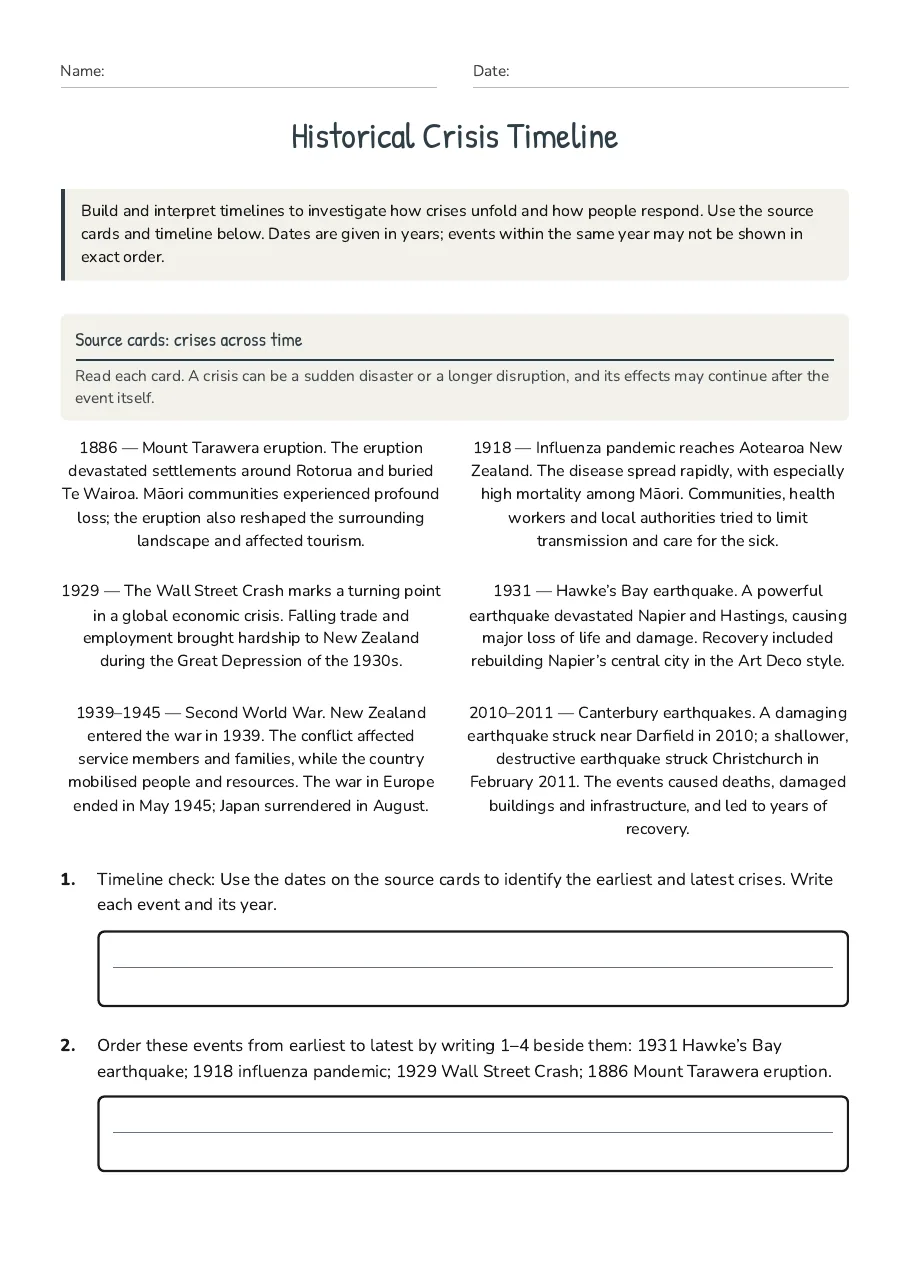
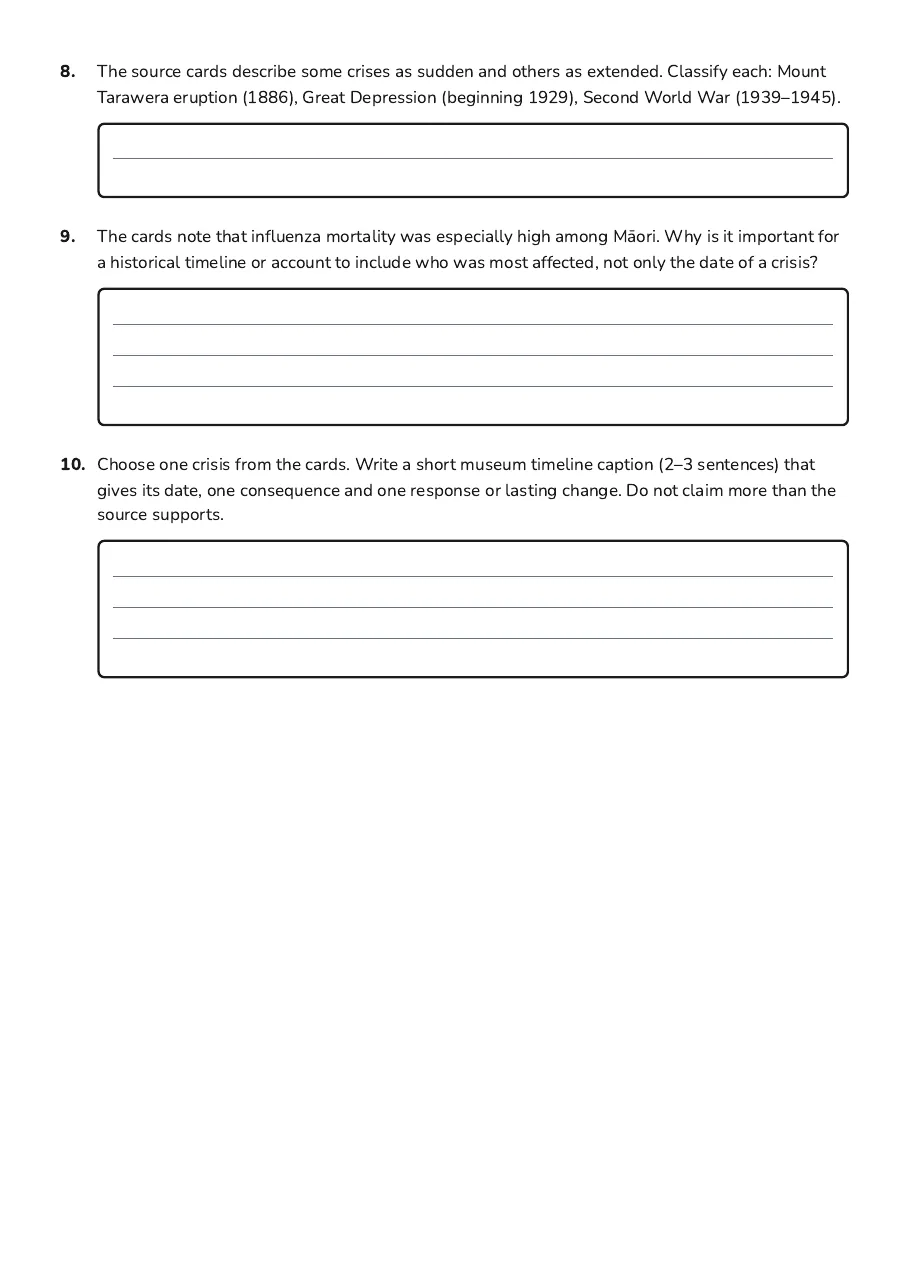
Source cards: crises across time
Read each card. A crisis can be a sudden disaster or a longer disruption, and its effects may continue after the event itself.
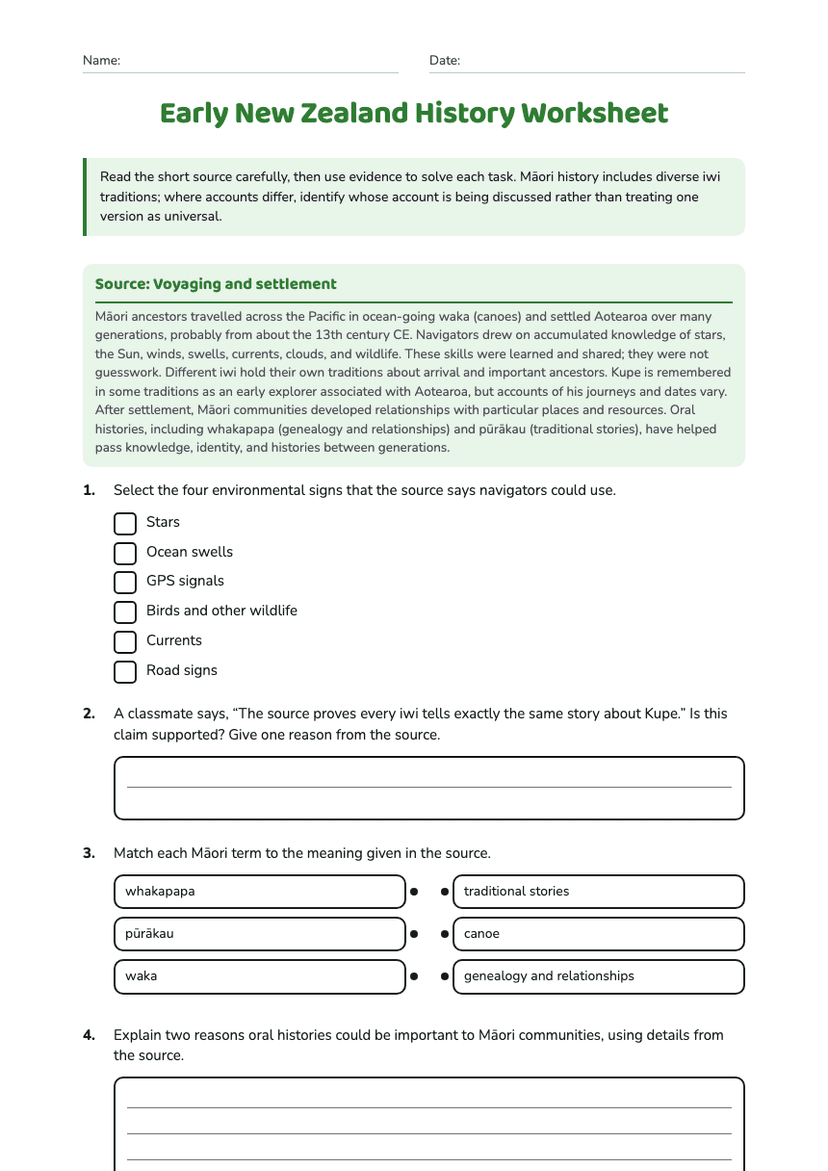
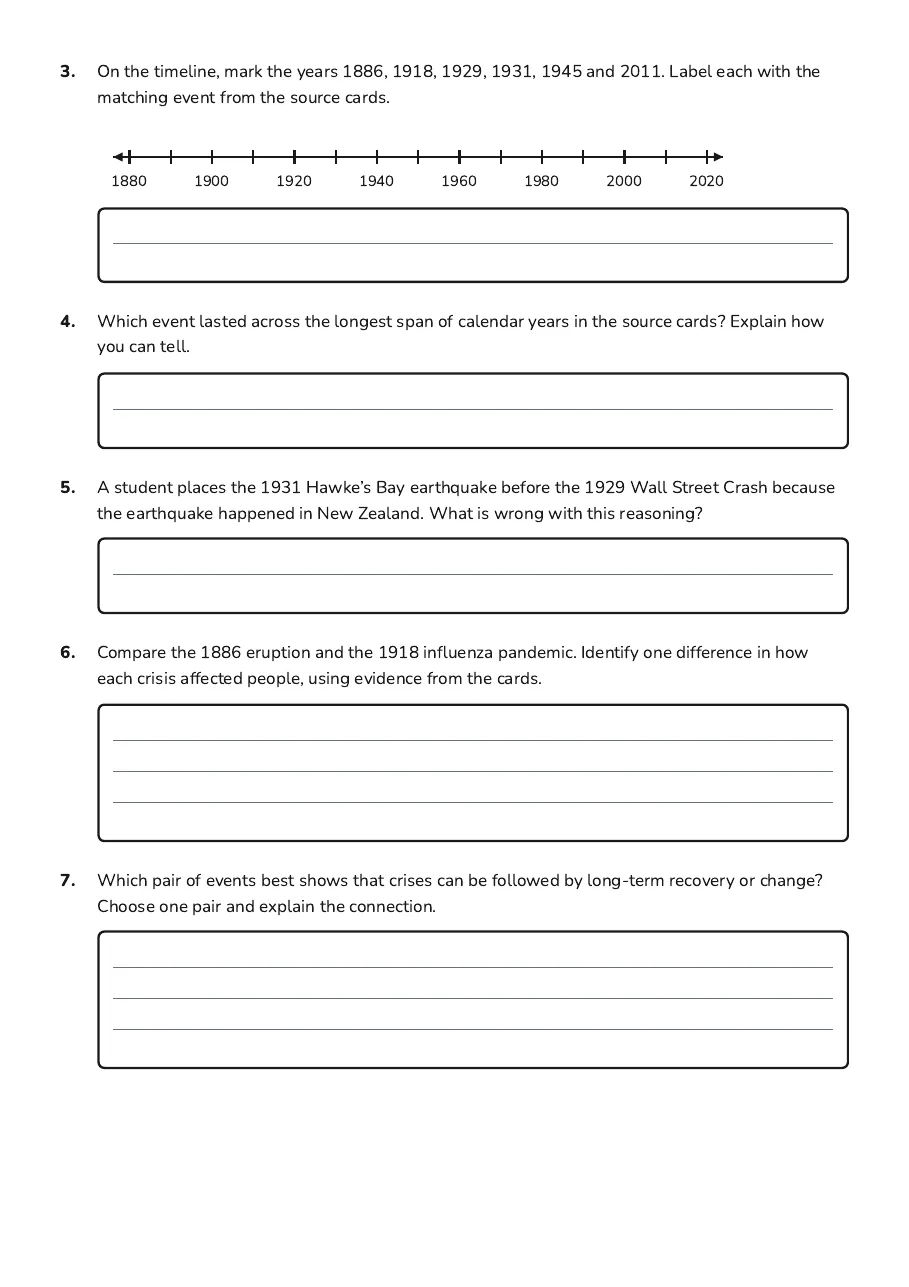
1886 — Mount Tarawera eruption. The eruption devastated settlements around Rotorua and buried Te Wairoa. Māori communities experienced profound loss; the eruption also reshaped the surrounding landscape and affected tourism.
1918 — Influenza pandemic reaches Aotearoa New Zealand. The disease spread rapidly, with especially high mortality among Māori. Communities, health workers and local authorities tried to limit transmission and care for the sick.
1929 — The Wall Street Crash marks a turning point in a global economic crisis. Falling trade and employment brought hardship to New Zealand during the Great Depression of the 1930s.
1931 — Hawke’s Bay earthquake. A powerful earthquake devastated Napier and Hastings, causing major loss of life and damage. Recovery included rebuilding Napier’s central city in the Art Deco style.
1939–1945 — Second World War. New Zealand entered the war in 1939. The conflict affected service members and families, while the country mobilised people and resources. The war in Europe ended in May 1945; Japan surrendered in August.
2010–2011 — Canterbury earthquakes. A damaging earthquake struck near Darfield in 2010; a shallower, destructive earthquake struck Christchurch in February 2011. The events caused deaths, damaged buildings and infrastructure, and led to years of recovery.
3 printable pages
Page 1
Page 2
Page 3
About This Worksheet
Free in Kuraplan
Sign up free, grab the PDF, and customize it for your class.
Print-Ready
Formatted for standard paper. Clean layout, easy to read.
AI-Generated
Created with Kuraplan's AI, designed for real classroom use.
For Teachers & Parents
Use in classrooms, for homework, tutoring, or homeschool.
Need a custom version of this worksheet?
Kuraplan's AI generates custom worksheets in seconds — differentiated for every learner, aligned to your curriculum.
Generate Custom Worksheets — FreeMore Social Sciences Worksheets
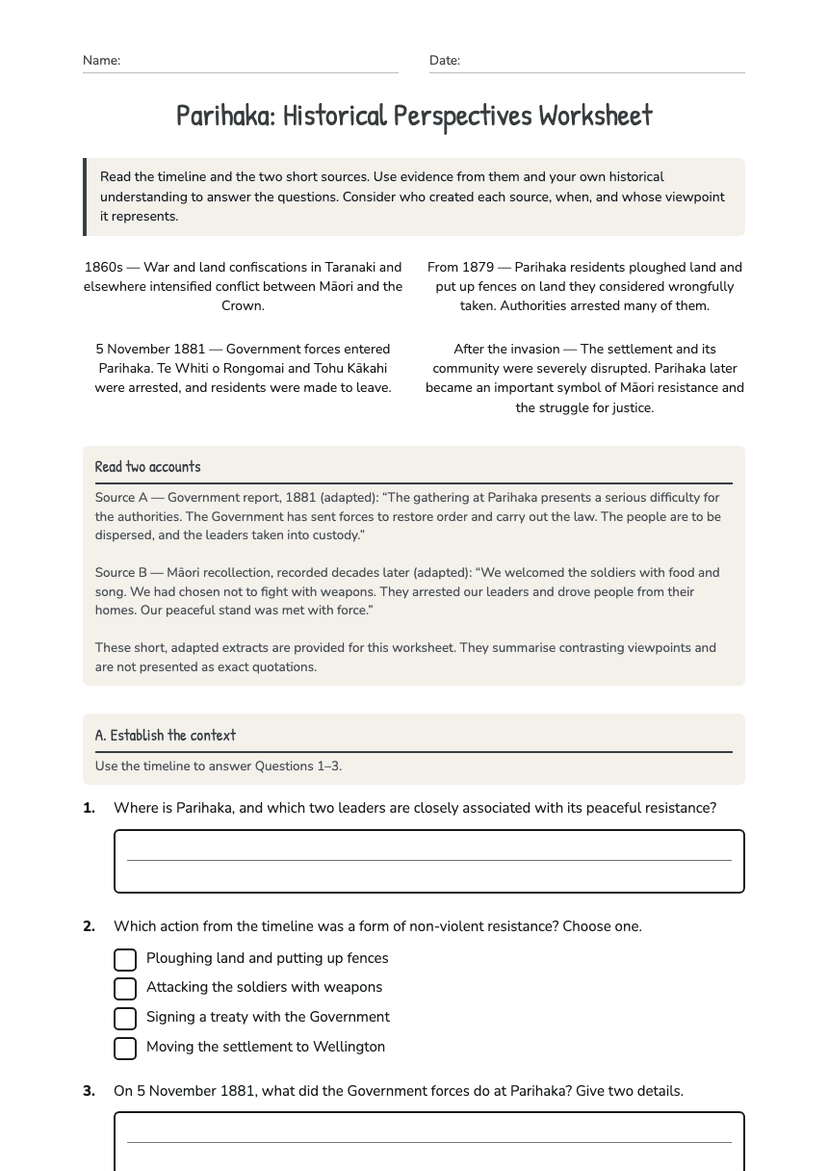
Parihaka: Historical Perspectives Worksheet
Free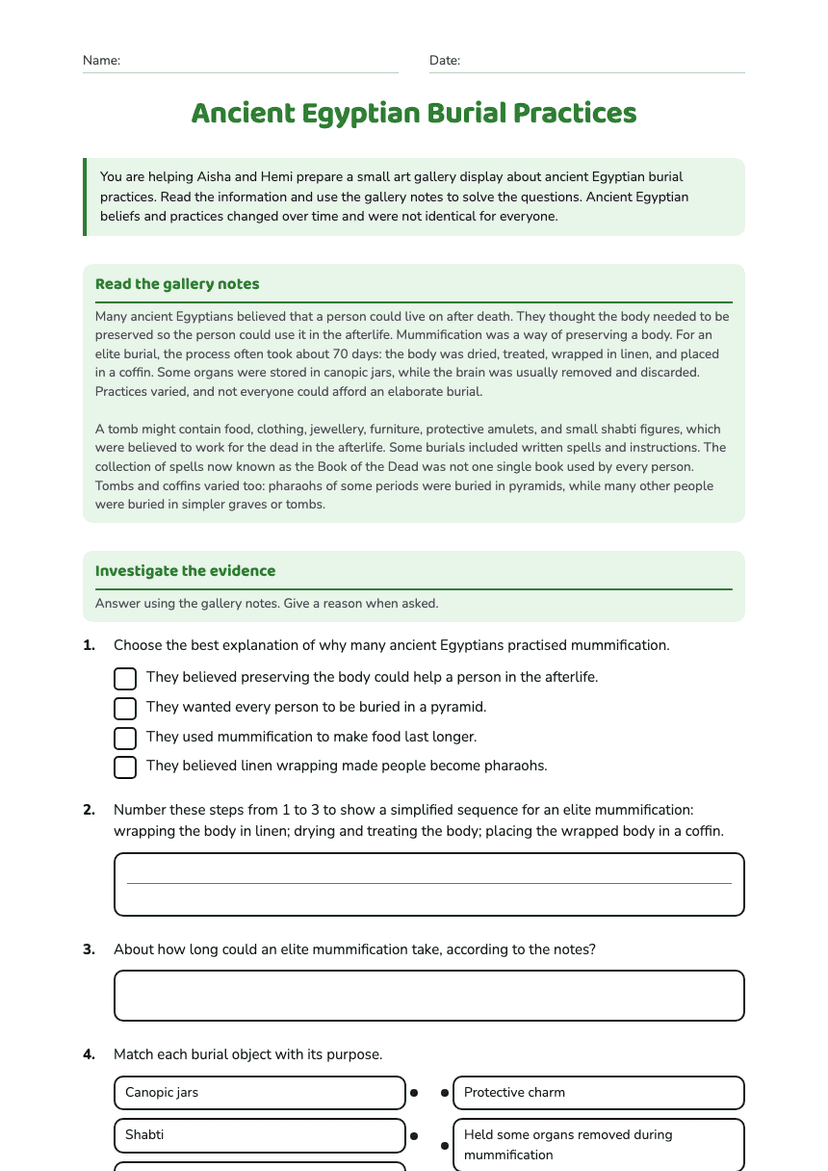
Ancient Egyptian Burial Practices
Free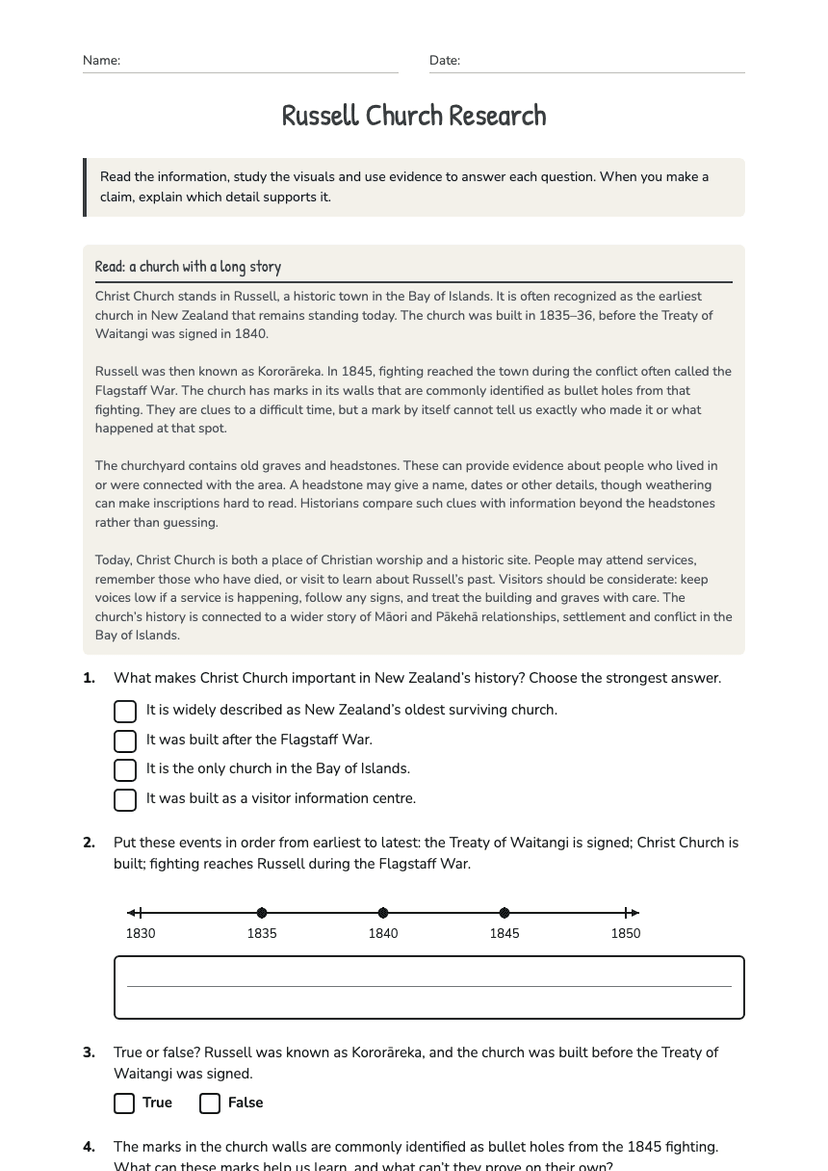
Russell Church Research
Free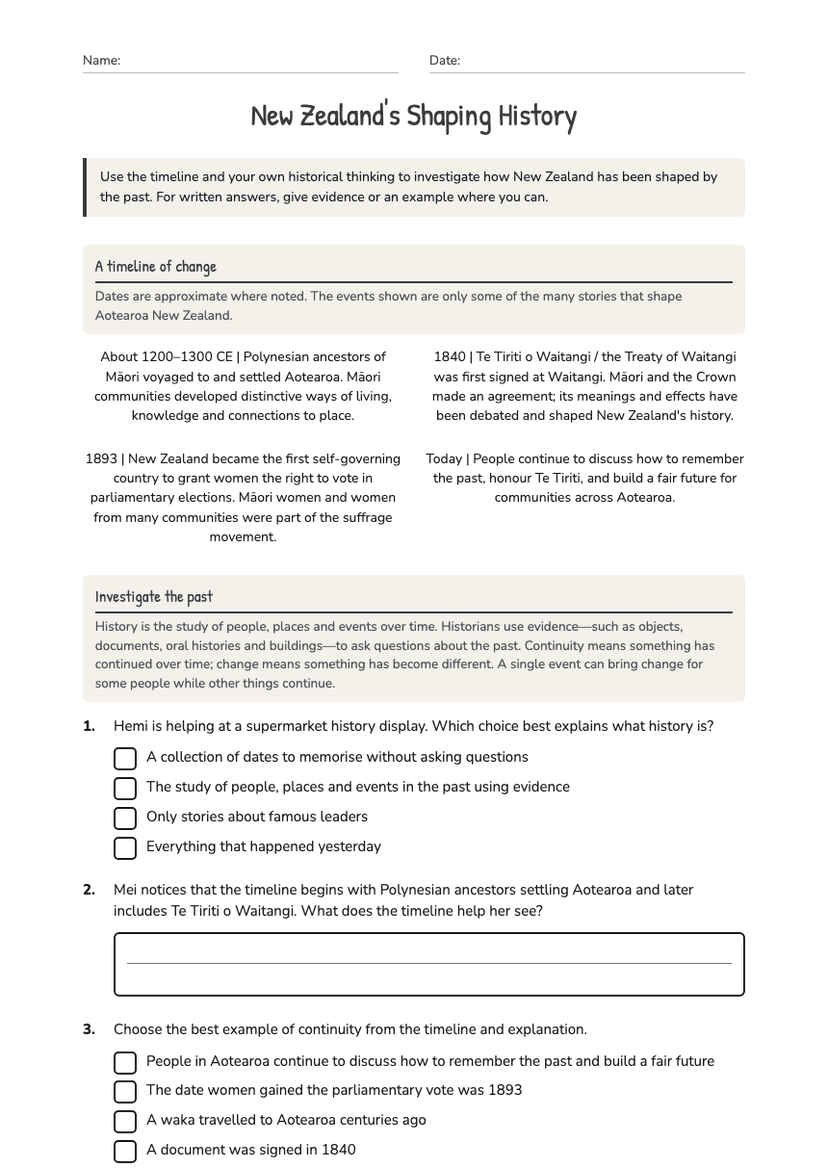
New Zealand's Shaping History
Free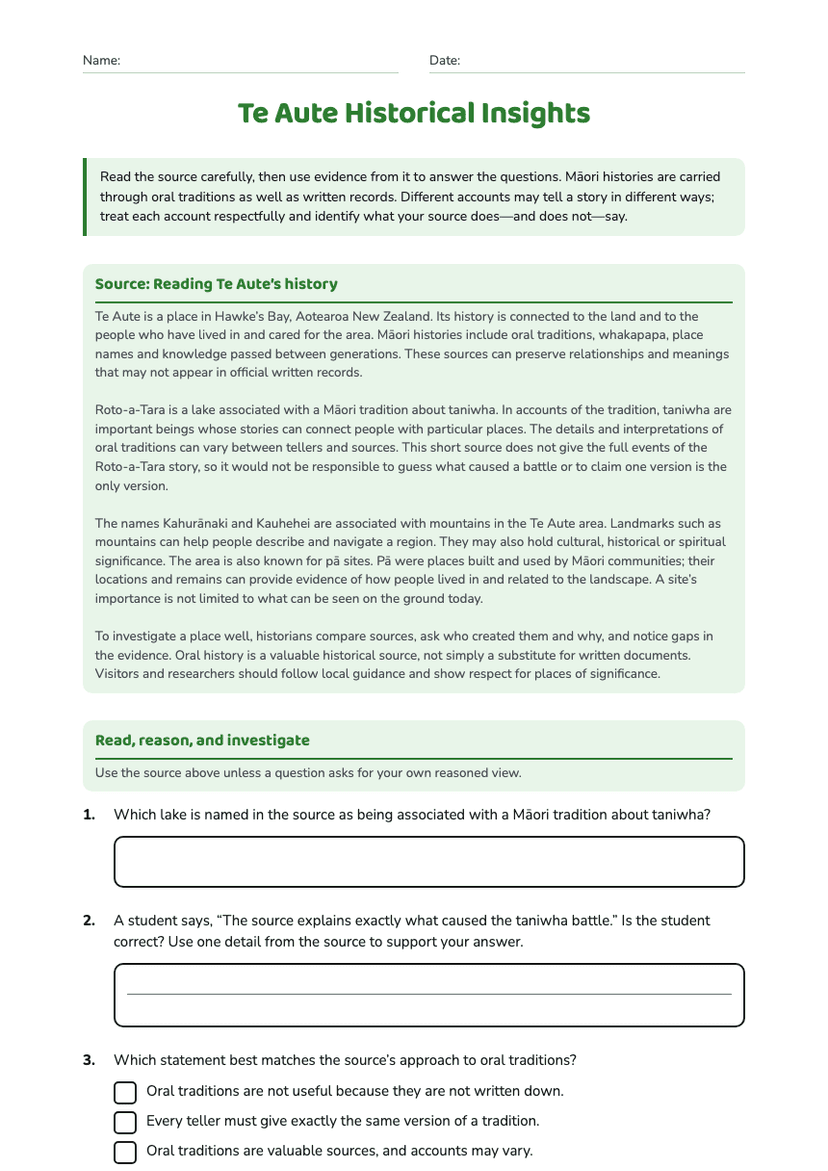
Te Aute Historical Insights
Free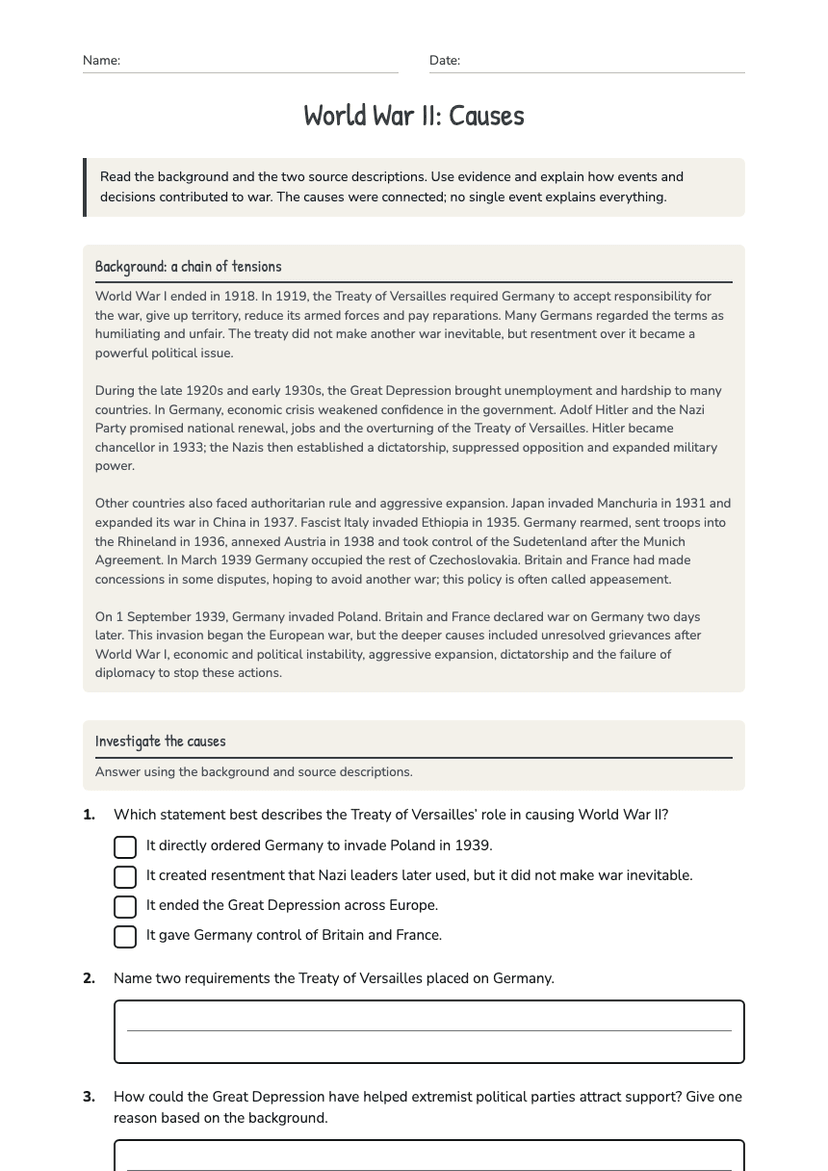
World War II: Causes
Free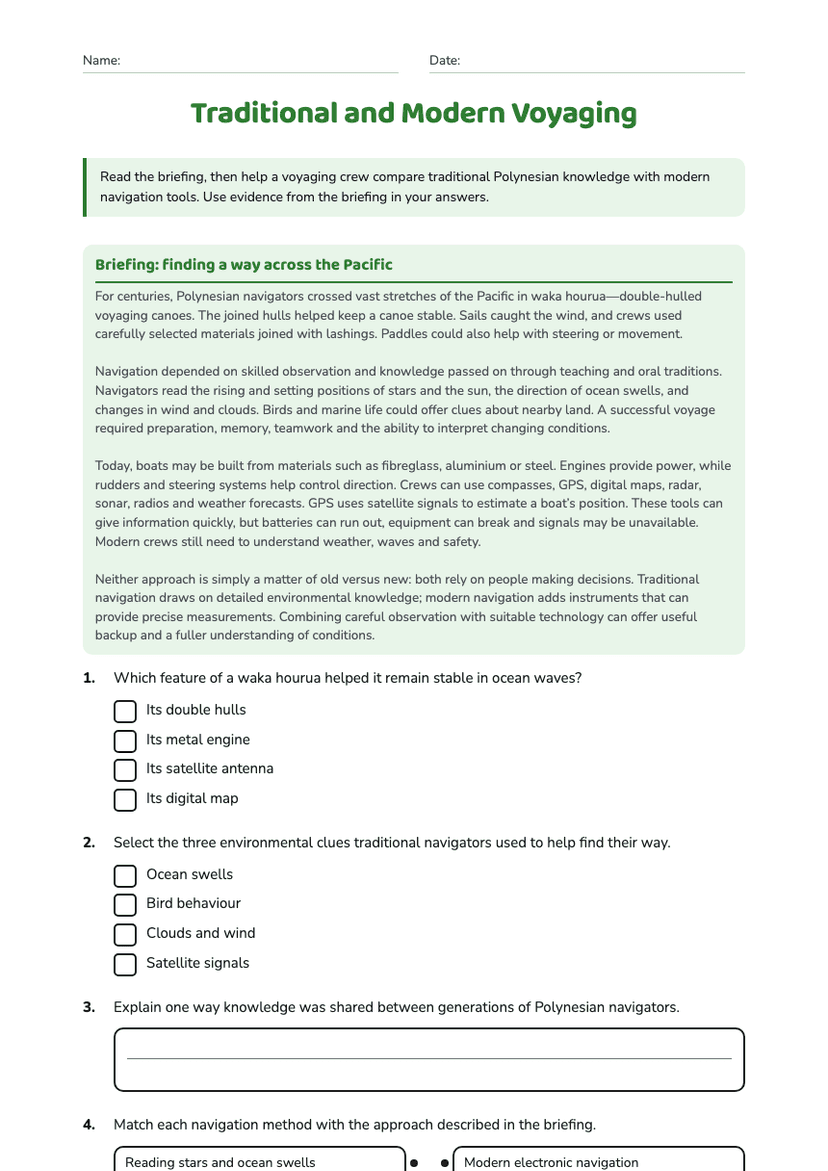
Traditional and Modern Voyaging
Free